Atypical hepatitis B surface antigen escape mutations in an HIV-positive patient in South Africa
A 44-year-old woman with human immunodeficiency virus (HIV), chronic kidney disease and chronic diarrhoea presented with worsening gastrointestinal symptoms and renal impairment. Despite reported adherence, she had HIV viraemia and atypical hepatitis B serology (absence of hepatitis B core antibody and co-existence of hepatitis B surface antigen (HBsAg) and hepatitis B surface antibody) with high hepatitis B virus DNA. Whole genome sequencing of hepatitis B virus was performed using Oxford Nanopore Technologies sequencing on the Oxford Nanopore Technologies GridION (ONT, Oxford, United Kingdom). Genotype A infection with HBsAg immune escape mutations D144G/G145E was identified, without drug-resistance mutations. CONTRIBUTION: Findings are most consistent with hepatitis B virus reactivation following prior natural infection and subsequent loss of immune control
hepatitis B virus; HIV; antiretroviral therapy; immune escape mutations; viral reactivation; whole-genome sequencing
CASE REPORT
Atypical hepatitis B surface antigen escape mutations in an HIV-positive patient in South Africa
Menzi B. NkosiI, II; Marije van SchalkwykIII; Tongai G. MapongaI, II; Yoliswa Z. ChiliI, II; Devon MuirI, II; Paula R. DelportI, II; Susan S. HugoIII; Zahiera IsmailIII; Jantjie TaljaardIII; Gert U. van ZylI, II; Wolfgang PreiserI, II
IDivision of Medical Virology, Department of Pathology, Faculty of Medicine and Health Sciences, Stellenbosch University, Cape Town, South Africa
IITygerberg Business Unit, National Health Laboratory Service, Tygerberg Hospital, Cape Town, South Africa
IIIDivision of Infectious Diseases, Department of Medicine, Faculty of Medicine and Health Sciences, Stellenbosch University, Cape Town, South Africa
A 44-year-old woman with human immunodeficiency virus (HIV), chronic kidney disease and chronic diarrhoea presented with worsening gastrointestinal symptoms and renal impairment. Despite reported adherence, she had HIV viraemia and atypical hepatitis B serology (absence of hepatitis B core antibody and co-existence of hepatitis B surface antigen (HBsAg) and hepatitis B surface antibody) with high hepatitis B virus DNA. Whole genome sequencing of hepatitis B virus was performed using Oxford Nanopore Technologies sequencing on the Oxford Nanopore Technologies GridION (ONT, Oxford, United Kingdom). Genotype A infection with HBsAg immune escape mutations D144G/G145E was identified, without drug-resistance mutations.
CONTRIBUTION: Findings are most consistent with hepatitis B virus reactivation following prior natural infection and subsequent loss of immune control
Keywords: hepatitis B virus; HIV; antiretroviral therapy; immune escape mutations; viral reactivation; whole-genome sequencing.
Case presentation
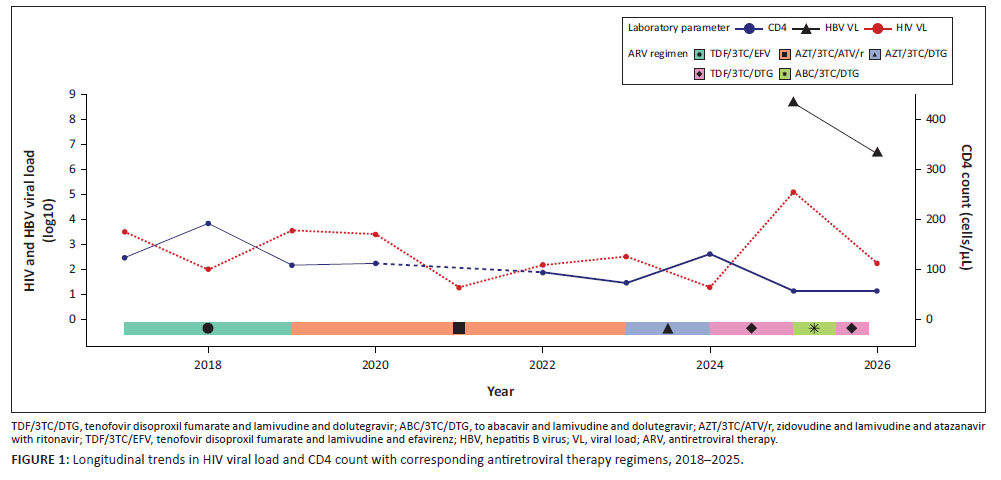
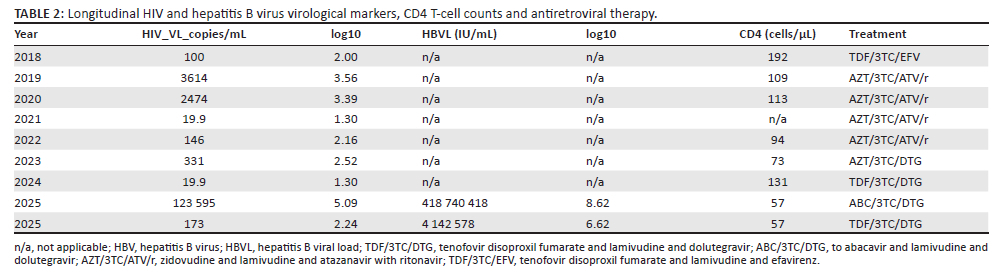
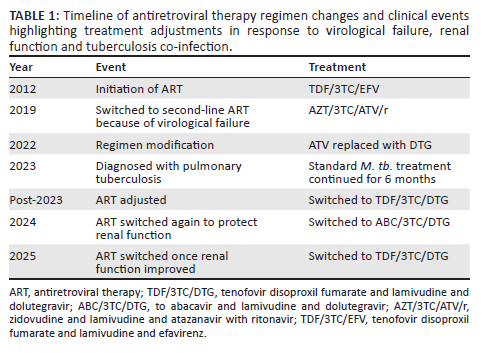
A 44-year-old woman living with human immunodeficiency virus (WLHIV)1Clostridium difficile infection and commenced on oral Vancomycin. She had initiated antiretroviral therapy (ART) in 2012 on tenofovir disoproxil fumarate and lamivudine and efavirenz (TDF/3TC/EFV) and was switched to second-line ART with zidovudine and lamivudine and atazanavir and ritonavir (AZT/3TC/ATV/r) in 2019 because of virological failure. She tested negative for hepatitis B surface antigen (HBsAg) at the time, and her HIV viral load was suppressed soon thereafter. Atazanavir was replaced with dolutegravir in 2022, and in 2023, she was diagnosed with pulmonary tuberculosis, which was treated with a standard 6-month course of Mycobacterium tuberculosis (M. tb) therapy, after which she achieved clinical resolution. She was subsequently switched to tenofovir disoproxil fumarate and lamivudine and dolutegravir (TDF/3TC/DTG) and on 26/03/2024 to abacavir and lamivudine and dolutegravir (ABC/3TC/DTG) regimen to protect against further renal injury (Table 1). One year later, despite self-reported adherence, the patient exhibited an HIV viral load of log10 4.33 and a cluster of differentiation 4 (CD4) count of 131 cells/mm3Figure 1; Table 2); however, intermittent gaps in hepatitis B viral load (HBVL) and CD4 measurements limited the completeness of the longitudinal analysis.
Routine inpatient workup included hepatitis B virus (HBV) markers and revealed positive results for HBsAg and hepatitis B surface antibody (anti-HBs) at 37 IU/mL with a negative hepatitis B core IgM (IgM anti-HBc) and core total antibody (anti-HBc). Extended testing found a positive hepatitis B e antigen (HBeAg) and negative hepatitis B e antibody (anti-HBe). The HBVL was log10 8.4 IU/mL. An elevated alkaline phosphatase was observed at 116 U/L (normal range of 42 U/L - 98 U/L); however, the rest of her liver function tests was within normal limits. She had no history of prior HBV vaccination and was asymptomatic for a viral hepatitis syndrome with normal aminotransferase levels and no fibrosis detected on FibroScan®.
Research methods and design
All routine laboratory tests were conducted by the National Health Laboratory Service at Tygerberg Hospital at the Divisions of Haematological Pathology, Chemical Pathology and Medical Virology. Serological tests were done on the Roche cobas® e 601 instrument (Roche Diagnostics, Mannheim, Germany). Quantitative PCR testing was done on the Abbott Alinity™ m Diagnostics System (Abbott Molecular Inc., Des Plaines, IL, United States).
Whole-genome sequencing of HBV was performed on a plasma sample obtained on 07 March 2025 using Oxford Nanopore Technologies (ONT) sequencing on the ONT GridION (ONT, Oxford, United Kingdom) using a protocol established by Tshiabuila et al. in 2024.2342
Mutations resulting in D144G and G145E substitutions were detected in the 'a' determinant of the surface gene (S gene). These are rare mutations previously described in only a single recipient of an allogeneic haematopoietic stem cell transplant from an HBV-vaccinated donor56
Discussion
In South Africa, the estimated prevalence of HBsAg seropositivity among people living with HIV (PWH) is estimated to be between 5% and 17%.778
• Occult HBV infection - defined as the presence of HBV DNA in the liver, in the absence of detectable HBsAg, with or without HBV DNA detection in the blood.9
• High HBV DNA loads - HIV-related depletion of CD4+ T lymphocytes, together with CD8+ T-cell dysregulation, promotes increased transcription of covalently closed circular DNA, thereby facilitating higher HBV replication.9
• Seroreversion to HBsAg positivity - HIV-induced immunosuppression impairs HBV-specific T- and B-lymphocyte responses, resulting in loss of immune surveillance and re-emergence of HBsAg.9
Given the above clinical outcomes and the shared transmission routes, routine HBV screening in PWH is essential. The 2023 South African antiretroviral clinical guidelines recommend testing for HBsAg at HIV diagnosis, before modifying ART regimens, prior to any changes in HBV-active antivirals, during pregnancy, and in cases of unexplained liver function abnormalities.10,11
In HIV and HBV co-infection, antiretroviral regimens with dual activity, most notably tenofovir disoproxil fumarate, tenofovir alafenamide, lamivudine and emtricitabine, are recommended. The most recent South African antiretroviral clinical guidelines advocate for tenofovir-based therapy as first-line therapy because of its dual efficacy, while entecavir is advised in cases of tenofovir-associated toxicity. Lamivudine monotherapy is discouraged because of the increased risk of acquiring drug-resistance mutations.10,11,1213,14M. tb. treatment also unlikely contributed to decreased antiretroviral exposure in this case, as the patient was prescribed twice daily dolutegravir.151617
Immune escape mutations in HBV most often involve substitutions in the S gene, particularly within the 'a' determinant region, which is the primary target of neutralising anti-HBs antibodies. A common example is the glycine substitution at amino acid 145. The D144G and G145E substitutions identified in this case similarly alter antigenic epitopes, preventing recognition by neutralising antibodies. These mutations may arise naturally during chronic HBV infection, under selective immune pressure from active or passive immunisation, or in association with antiviral therapy as a result of the overlap between the S and polymerase genes. Clinically, immune escape mutations can cause diagnostic challenges, depending on the assay used for HBsAg detection, and may present as breakthrough infection in vaccinated individuals or reactivation in those with prior natural immunity.18
The atypical serological profile seen in this case of HBsAg positivity without detectable anti-HBc has been reported elsewhere. Brousseau et al. reported that long-term persistence of HBsAg with delayed seroconversion to anti-HBc can occur in immunosuppressed individuals.1920321
Possible explanations for the absence of hepatitis B core antibody and co-existence of hepatitis B surface antigen and hepatitis B surface antibody include: (1) Reactivation of HBV infection during severe immune suppression, a phenomenon well-documented in individuals who had previously cleared the virus and developed anti-HBs16
We would like to extend our sincere gratitude to National Health Laboratory Service (NHLS) Tygerberg Divisions of Medical Virology, Haematological and Chemical Pathology for their support and professionalism in processing and testing the clinical samples in this study. We are deeply appreciative of the clinicians involved in the care of the patients, whose innumerable contributions were invaluable to the development of this case report.
Competing interests
The authors declare that they have no financial or personal relationships that may have inappropriately influenced them in writing this article.
CRediT authorship contribution
Menzi B. Nkosi: Conceptualisation, Data curation, Investigation, Project administration, Resources Writing - original draft. Marije Van Schalkwyk: Data curation, Investigation, Resources, Supervision, Writing - review & editing. Tongai G. Maponga: Data curation, Investigation, Methodology, Supervision, Writing - review & editing. Yoliswa Z. Chili: Data curation, Formal analysis, Project administration, Writing - review & editing. Devon Muir: Investigation, Methodology, Supervision, Writing - review & editing. Paula R. Delport: Investigation, Methodology, Supervision, Writing - review & editing. Susan S. Hugo: Data curation, Investigation, Resources. Zahiera Ismail: Data curation, Investigation, Resources. Jantjie Taljaard: Data curation, Methodology, Supervision, Writing - review & editing. Gert U. van Zyl: Formal analysis, Investigation, Supervision, Visualisation, Writing - review & editing. Wolfgang Preiser: Conceptualisation, Data curation, Formal analysis, Investigation, Supervision, Writing - review & editing. All authors reviewed the article, contributed to the discussion of results, approved the final version for submission and publication and take responsibility for the integrity of its findings.
Ethical considerations
Ethical clearance to conduct this study was obtained from the Stellenbosch University Health Research Ethics Committee (No. C25/06/025).
Funding information
This research received no specific grant from any funding agency in the public, commercial or not-for-profit sectors.
Data availability
The data that support the findings of this study are available from the corresponding author, Menzi B. Nkosi, upon reasonable request.
Disclaimer
The views and opinions expressed in this article are those of the authors and are the product of professional research. It does not necessarily reflect the official policy or position of any affiliated institution, funder, agency or that of the publisher. The authors are responsible for this article's results, findings and content.
Acknowledgements
This article is based on a conference paper originally presented at the 7th Southern African HIV Clinicians Society Conference, held in Cape Town, South Africa, on 20-22 August 2025. The conference paper, titled 'Atypical HBsAg escape mutations in an HIV infected patient in South Africa', was subsequently expanded and revised for this journal publication. This republication is done with permission from the conference organisers.
References
-
1.UNAIDS. UNAIDS terminology guidelines 2024 [homepage on the Internet]. Geneva: UNAIDS; 2024 [cited 2025 Aug 04]. Available from: https://www.unaids.org
» https://www.unaids.org -
2.Tshiabuila D, Choga W, James SE, et al. An Oxford Nanopore Technology-based hepatitis B virus sequencing protocol suitable for genomic surveillance within clinical diagnostic settings [preprint]. medRxiv. 2024 Jan 25. https://doi.org/10.1101/2024.01.19.24301519
» https://doi.org/10.1101/2024.01.19.24301519 -
3.Vilsker M, Moosa Y, Nooij S, et al. Genome detective: An automated system for virus identification from high-throughput sequencing data. Bioinformatics. 2019;35(5):871-873. https://doi.org/10.1093/bioinformatics/bty695
» https://doi.org/10.1093/bioinformatics/bty695 -
4.Stanford HIV Drug Resistance Database. HBVseq: Sequence analysis [homepage on the Internet]. Stanford University; 2026 [cited 2026 Apr 06]. Available from: https://hivdb.stanford.edu/HBV/HBVseq/development/hbvseq.pl?action=showSequenceForm
» https://hivdb.stanford.edu/HBV/HBVseq/development/hbvseq.pl?action=showSequenceForm -
5.Knöll A, Boehm S, Hahn J, Holler E, Jilg W. Long-term surveillance of haematopoietic stem cell recipients with resolved hepatitis B: High risk of viral reactivation even in a recipient with a vaccinated donor. J Viral Hepat. 2007;14(7):478-483. https://doi.org/10.1111/j.1365-2893.2006.00830.x
» https://doi.org/10.1111/j.1365-2893.2006.00830.x -
6.Du Y, Chi X, Wang C, et al. Quantifying perinatal transmission of hepatitis B viral quasispecies by tag linkage deep sequencing. Sci Rep. 2017;7(1):10168. https://doi.org/10.1038/s41598-017-10591-9
» https://doi.org/10.1038/s41598-017-10591-9 -
7.Muir D, Vawda S, Bester PA, Van Rooyen C, Goedhals D. Hepatitis B seroprevalence among HIV-positive adults in the Free State, South Africa. S Afr J HIV Med. 2025;26(1):1654. https://doi.org/10.4102/sajhivmed.v26i1.1654
» https://doi.org/10.4102/sajhivmed.v26i1.1654 -
8.Maponga TG, McNaughton AL, Van Schalkwyk M, et al. Treatment advantage in HBV/HIV coinfection compared to HBV monoinfection in a South African cohort. J Infect. 2020;81(1):121-130. https://doi.org/10.1016/j.jinf.2020.04.037
» https://doi.org/10.1016/j.jinf.2020.04.037 -
9.Kumar R. Review on hepatitis B virus precore/core promoter mutations and their correlation with genotypes and liver disease severity. World J Hepatol. 2022;14(4):708-718. https://doi.org/10.4254/wjh.v14.i4.708
» https://doi.org/10.4254/wjh.v14.i4.708 - 10.National Department of Health (South Africa). 2023 ART clinical guidelines for the management of HIV in adults, pregnancy and breastfeeding, adolescents, children, infants and neonates. Pretoria: National Department of Health; 2023.
-
11.Pollicino T, Cacciola I, Saffioti F, Raimondo G. Hepatitis B virus PreS/S gene variants: Pathobiology and clinical implications. J Hepatol. 2014;61(2):408-417. https://doi.org/10.1016/j.jhep.2014.04.041
» https://doi.org/10.1016/j.jhep.2014.04.041 -
12.Terrault NA, Bzowej NH, Chang KM, Hwang JP, Jonas MM, Murad MH. AASLD guidelines for treatment of chronic hepatitis B. Hepatology. 2016;63(1):261-283. https://doi.org/10.1002/hep.28156
» https://doi.org/10.1002/hep.28156 -
13.Dillingham R, Leger P, Beauharnais CA, et al. AIDS diarrhea and antiretroviral drug concentrations: A matched-pair cohort study in Port au Prince, Haiti. Am J Trop Med Hyg. 2011;84(6):878-882. https://doi.org/10.4269/ajtmh.2011.10-0541
» https://doi.org/10.4269/ajtmh.2011.10-0541 -
14.Cervino Ahern L, Nixon D, Fulco PP. Antiretroviral therapeutic drug monitoring in a patient with small bowel resection and new HIV diagnosis. IDCases. 2024;37:e02017. https://doi.org/10.1016/j.idcr.2024.e02017
» https://doi.org/10.1016/j.idcr.2024.e02017 - 15.National Department of Health. 2023 ART clinical guidelines for the management of HIV in adults, pregnancy and breastfeeding, adolescents, children, infants and neonates. Pretoria: National Department of Health; 2023.
-
16.Sarmati L, Malagnino V. HBV infection in HIV-driven immune suppression. Viruses. 2019;11(11):1077. https://doi.org/10.3390/v11111077
» https://doi.org/10.3390/v11111077 -
17.Pallier C, Castéra L, Soulier A, Hézode C, Nordmann P, Dhumeaux D, Pawlotsky J-M. Dynamics of hepatitis B virus resistance to lamivudine. J Virol. 2006;80(2):643-653. https://doi.org/10.1128/JVI.80.2.643-653.2006
» https://doi.org/10.1128/JVI.80.2.643-653.2006 -
18.IAS-USA. Topics in antiviral medicine [homepage on the Internet]. San Francisco, CA: IAS-USA; 2023 [cited 2025 Jul 30]. Available from: https://www.iasusa.org
» https://www.iasusa.org -
19.Brousseau N, Murphy DG, Gilca V, Larouche J, Mandal S, Tedder RS. Acute hepatitis B virus infection with delayed appearance of hepatitis B core antibody in an immunocompromised patient: A case report. J Med Case Rep. 2017;11(1):111. https://doi.org/10.1186/s13256-017-1264-9
» https://doi.org/10.1186/s13256-017-1264-9 -
20.Phinius BB, Anderson M, Mokomane M, et al. Atypical hepatitis B virus serology profile - Hepatitis B surface antigen-positive/hepatitis B core antibody-negative - In hepatitis B virus/HIV coinfected individuals in Botswana. Viruses. 2023;15(7):1544. https://doi.org/10.3390/v15071544
» https://doi.org/10.3390/v15071544 -
21.Yotsuyanagi H, Ito K, Yamada N, et al. High levels of hepatitis B virus after the onset of disease lead to chronic infection in patients with acute hepatitis B. Clin Infect Dis. 2013;57(7):935-942. https://doi.org/10.1093/cid/cit348
» https://doi.org/10.1093/cid/cit348

Accepted: 10 Apr. 2026
Published: 30 June 2026