Carbapenem-resistant Enterobacterales bacteraemia at a tertiary hospital: A five-year review
Abstract
BACKGROUND: Carbapenem-resistant Enterobacterales (CRE) pose a critical threat to public health, marked by limited therapeutic options, high mortality rates and significant pressure on healthcare systems. Despite the growing global burden, our region remains under-represented in national surveillance efforts, with a notable absence of local data. OBJECTIVES: This study aims to describe the epidemiological, clinical and microbiological characteristics, as well as patient outcomes, of CRE bacteraemia at Universitas Academic Hospital in Bloemfontein, South Africa, over a 5-year period METHOD: A retrospective file review was performed for all adult in-patients with confirmed CRE bacteraemia admitted between 2019 and 2023. Data collected included patient demographics, comorbidities and clinical data pertaining to admission, microbial characteristics and clinical outcomes. RESULTS: Ninety-four episodes of CRE bacteraemia were identified in 88 patients. Prior antibiotic exposure was present in 90.9%, while 79.5% had comorbidities and 61.4% acute renal impairment. Klebsiella pneumoniae (84%) and Enterobacter cloacae (9.6%) were the predominant organisms cultured, with oxacillinase-48 (OXA-48) (78.4%) and New Delhi metallo-β-lactamase (NDM) (6.7%) being the most common carbapenemase genes detected. Only 13.8% of OXA-48-positive episodes received recommended first-line antibiotics. In-hospital mortality reached 56.8%, with immunosuppressive therapy significantly associated with death (p = 0.0165). CONCLUSION: Mortality in our setting was substantially higher than national and international reports. Suboptimal treatment and limited access to effective antimicrobials likely contributed to these poor outcomes. CONTRIBUTION: This is the first outcome-focused CRE study in this region, highlighting an urgent need for improved diagnostic capacity, antimicrobial access and targeted intervention strategies in under-resourced healthcare settings.
Carbapenem-resistant Enterobacterales (CRE); bacteraemia; Klebsiella pneumoniae; antimicrobial resistance; under-resourced healthcare setting
Introduction
Antimicrobial resistance (AMR) is a growing global health concern and, in 2021, was linked to 1.14 million deaths worldwide, with projections estimating this figure could rise up to 10 million deaths annually by 2050.12,345,6
Enterobacterales, a group of Gram-negative, rod-shaped bacteria, are commonly implicated in both healthcare-associated and community-acquired infections.7Klebsiella pneumoniae carbapenemase (KPC), New Delhi metallo-β-lactamase (NDM), oxacillinase-48 (OXA-48), Guiana extended-spectrum β-lactamase (GES) and Verona integron-encoded metallo-β-lactamase (VIM).866,9
Despite national surveillance efforts, data from the Free State Province remain sparse. The most recent national surveillance study by the Group for Enteric, Respiratory and Meningeal Disease Surveillance in South Africa (GERMS-SA) (2019-2020) included only 41 Free State cases out of 2144 nationally, limiting the applicability of findings to this region.6
Research methods and design
Study design
A retrospective descriptive study was performed.
Setting
This study was conducted at Universitas Academic Hospital in Bloemfontein, located in Free State Province of South Africa. The hospital is a 636-bed public healthcare facility that functions as a tertiary referral centre for the Free State and Northern Cape provinces. It houses the only Clinical Haematology Unit in Central South Africa and offers specialised intensive care across various medical and surgical disciplines. In addition, the hospital provides sub-specialist services to Lesotho, a sovereign enclave within South Africa.
Study population
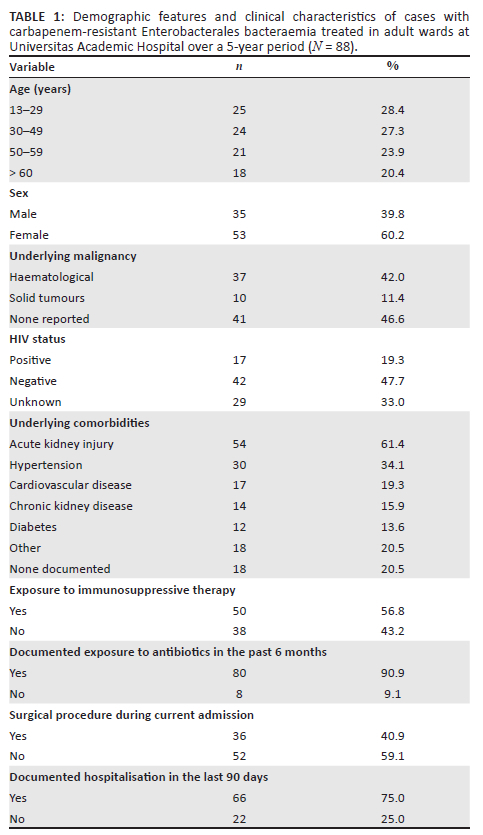
Results of all patients aged 13 years and older with CRE bacteraemia who were admitted to adult wards between 01 January 2019 and 31 December 2023 were included.
Carbapenem-resistant Enterobacterales bacteraemia was defined in line with the criteria established by the Centers for Disease Control and Prevention (CDC). A case was identified when a patient had at least one positive blood culture for an Enterobacterales species resistant to at least one carbapenem antibiotic - ertapenem, meropenem, imipenem or doripenem. This included organisms that produced carbapenemase enzymes. For organisms such as Proteus spp., Morganella spp. and Providencia spp., which inherently exhibit elevated minimum inhibitory concentrations (MICs) to imipenem, susceptibility to ertapenem, meropenem and doripenem was used to determine whether the isolate met the definition of a CRE.8
Data collection
Cases were identified through the Infection Prevention and Control (IPC) unit, which receives CRE-positive blood culture notifications from the Divisions of Medical Microbiology (National Health Laboratory Services, NHLS) and Infectious Diseases, Free State Department of Health. These cases are recorded on an internal electronic alert organism spreadsheet. Eligible cases were captured using REDCap data collection software, with identifiers (name, surname, hospital number) entered on a separate enrolment sheet, distinct from the main data collection tool. Each case was assigned a unique study number to ensure pseudo-anonymisation. The enrolment sheet linked each CRE case to the corresponding clinical, pharmacy and laboratory data.
Additional positive blood cultures for the same CRE organism in a single patient were counted as a new episode if cultured more than 21 days after the preceding culture. For patients in whom more than one CRE organism was cultured, separate episodes were entered under the same participant.
Variables
Comprehensive demographic and clinical data were collected. Numerical variables included age, length of stay at the time of positive blood culture and total hospital stay. Categorical variables included sex, comorbidities, recent surgeries, antibiotic use within 6 months, current exposure to immunosuppressive therapy, ward location and admissions in the preceding 90 days. Microbiological data encompassed organism type, susceptibility profile, resistance genes and concurrent sites of CRE isolation. The Vitek2 system was used for phenotypic microbial identification and antimicrobial susceptibility testing. The antimicrobial susceptibility testing results were interpreted in accordance with the Clinical and Laboratory Standards Institute (CLSI) guidelines, categorising isolates as susceptible, intermediate or resistant, based on established breakpoints. During the study period, the E-test method was not locally used to determine carbapenem MICs, nor was the MIC result reported to the treating clinician. Isolates were referred to the National Institute for Communicable Diseases for determination of resistance genes using molecular methods. Antimicrobial treatment received was recorded from electronic pharmacy records. During the study period, it was local practice to prescribe carbapenem monotherapy for isolates demonstrating full susceptibility to a carbapenem, based on Vitek2 system results. For isolates where no carbapenem was fully susceptible, a combination of a carbapenem and colistin was prescribed. Ceftazidime-avibactam became available towards the end of the study period, and, per local practice, patients who were critically ill, neutropenic or not responding to alternative regimens were changed to this drug once OXA-48 enzyme production was confirmed. Outcomes recorded were total hospital stay and in-hospital mortality. Specific definitions of variables can be found in Appendix 1.
Data analysis
Descriptive statistics were calculated, including frequencies and percentages for categorical data, and medians with interquartile ranges for numerical data (since the distribution was skewed). The number of days between episodes was assessed using the Wilcoxon signed-rank test.
The analysis was conducted by the Department of Biostatistics, University of the Free State, using SAS/STAT software, Version 9.4 of the SAS System for Windows (Copyright © 2013 SAS Institute Inc.). The association between clinical outcomes and factors such as sex, underlying malignancy, HIV status, comorbid conditions, current use of immunosuppressive therapy, documented antibiotic exposure within the past 6 months, recent surgical procedures and hospitalisations within the last 90 days was examined using the chi-square test or Fisher's exact test (for sparse data) for categorical variables. A p < 0.05 was considered to be statistically significant.
Ethical considerations
Ethical approval was obtained from the Health Sciences Research Ethics Committee (HSREC) of the University of the Free State (No. UFS-HSD2024/0277/1806). Data collection began only after permissions were granted by the Free State Department of Health, the Head of Internal Medicine at Universitas Academic Hospital and the NHLS Business Manager.
All data were collected retrospectively and managed in line with ethical standards to ensure confidentiality. The enrolment sheet containing personal identifiers was securely stored on REDCap, accessible only to the principal researcher, and will be retained for 5 years. No identifying data were included in the main dataset, in compliance with the Protection of Personal Information Act (POPIA, 2013). As the study used anonymised retrospective data with no patient contact, informed consent was not required.
Results
A total of 88 patients with CRE bacteraemia were reported to the IPC department during the 5-year study period. Of these, six patients had a second episode of CRE bacteraemia, with a median (interquartile range [IQR]) interval of 25 (range: 0-176) days between episodes. Of these six patients, two had two distinct CRE isolates cultured on the same day, while the remaining four developed a second episode more than 21 days apart. The same organism was isolated in three of the four recurrent episodes. Therefore, in total, 94 episodes of CRE bacteraemia were recorded.
Characteristics of cases diagnosed with carbapenem-resistant Enterobacterales bacteraemia
The clinical characteristics of cases are described in Table 1. Notably, most cases (79.5%, n = 70/88) had one or more comorbid conditions, with 53.4% (n = 47/88) of cases diagnosed with an underlying malignancy. HIV status was documented for only 67% (n = 59/88) of cases. Other comorbidities not initially listed were documented in 20.5% (n = 18/88). These included bronchiectasis and chronic obstructive pulmonary disease, chronic liver disease, dyslipidaemia, hypothyroidism, systemic lupus erythematosus, obesity, chronic pancreatitis, epilepsy and gout. Exposure to immunosuppressive therapy was documented in 56.8% (n = 50/88) of cases. Antibiotic exposure in the 6 months prior to CRE bacteraemia was widespread, with 90.9% (n = 80/88) of cases having a documented history of prior antibiotic use.
The median length of hospital stay at the time of the positive blood culture was 15 days (IQR: 0-148).
Logistical data
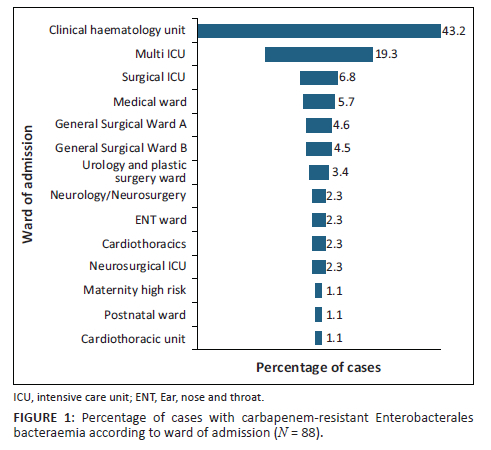
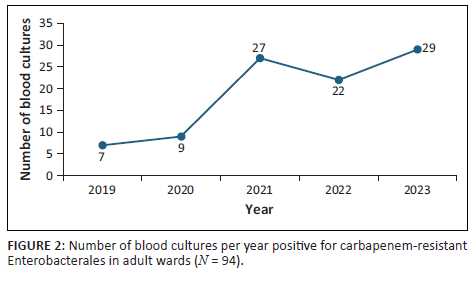
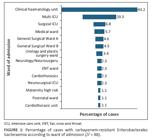
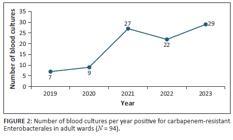
Most cases were reported from the Clinical Haematology Unit, followed by the multi-disciplinary and surgical intensive care units (ICUs) (Figure 1). A trend towards an increase in the number of reported CRE bacteraemia cases was seen from 2019 to 2020 onwards (Figure 2).
Patient outcomes
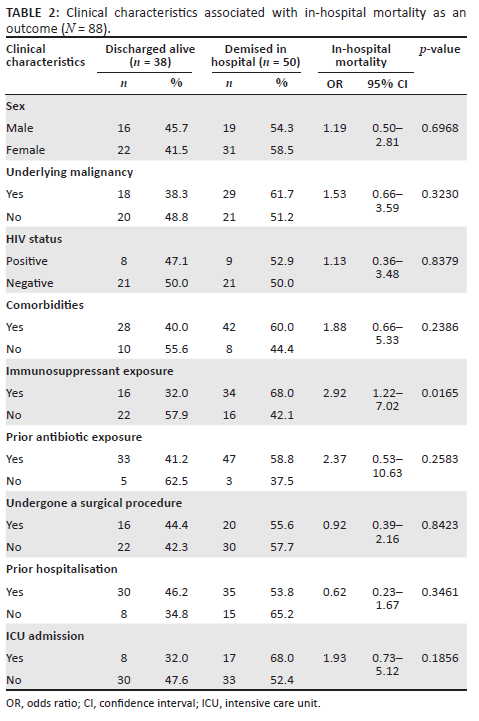
The in-hospital mortality rate among cases with CRE bacteraemia was 56.8% (n = 50/88). Exposure to immunosuppressive therapy was associated with a statistically significant increase in in-hospital mortality, with 68% (n = 34/50) of deceased cases having a documented recent exposure (odds ratio [OR]: 2.92; 95% confidence interval [CI]: 1.22-7.02). The median length of hospital stay was 26 days (IQR: 4-191). Other clinical characteristics and outcome associations are summarised in Table 2.
Characteristics of organisms
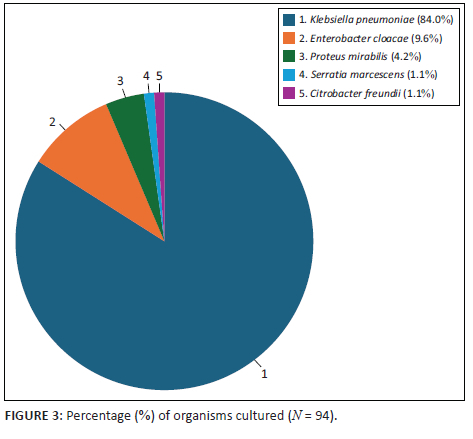
Among the 94 episodes of CRE bacteraemia, 84% (n = 79/94) of cultures were positive for Klebsiella pneumoniae, followed by Enterobacter cloacae at 9.6% (n = 9/94) and Proteus mirabilis with 4.3% (n = 4/94). Other organisms accounted for less than 5% of the total burden (Figure 3).
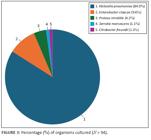
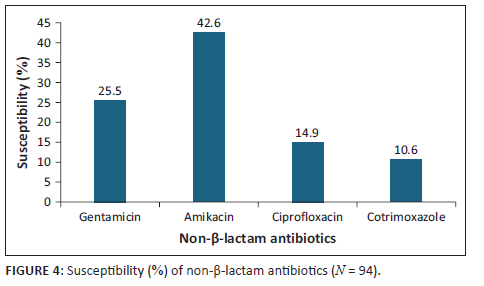
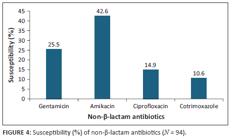
Figure 4 illustrates the antibiotic susceptibility patterns of the isolates to non-β-lactam antibiotics. Polymyxin susceptibility data were not available as broth micro-dilution was not performed locally during the study period. Carbapenem MICs were not available for this study; however, based on VITEK2 system automated antimicrobial susceptibility testing, ertapenem was reported as susceptible in 3.2% (n = 3/94), imipenem in 16% (n = 15/94) and meropenem in 30.9% (n = 29/94) of isolates.
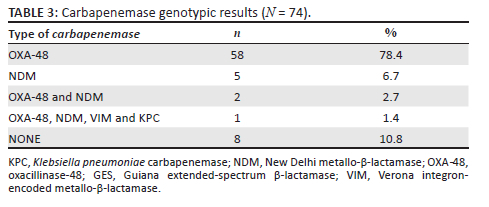
Carbapenemase genetic testing was performed on 78.7% (n = 74/94) of the isolates. Among these, the majority were confirmed to be carbapenemase-producing Enterobacterales (CPE), with carbapenemase genes detected in most isolates. Only 10.8% (n = 8/74) of isolates lacked carbapenemase genes, indicating the presence of alternative resistance mechanisms or less common enzymes not included in the test. Notably, four of these eight isolates were identified as Enterobacter cloacae. Table 3 summarises the enzymes found in our isolates.
Concurrent sites of isolation
In 50% (n = 47/94) of the CRE episodes, an isolated bacteraemia was present. In the remaining episodes, the same CRE organism was isolated from an additional site. The most common additional site was the urine, accounting for 38.3% (n = 18/47) of episodes. This was followed by sputum at 23.4% (n = 11/47) and tracheal aspirates at 12.8% (n = 6/47). Other sites included pus aspirates at 12.8% (n = 6/47), line tip cultures at 10.6% (n = 5/47), peritoneal fluid at 6.4% (n = 3/47) and tissue cultures at 2.1% (n = 1/47).
Antibiotic treatment regimens
Only 91.5% (n = 86/94) of CRE episodes were treated with an antibiotic regimen assumed to be effective. Eight episodes were treated with empirical antibiotics that were considered ineffective for CRE. Carbapenem monotherapy was prescribed in 31.9% (n = 30/94) of episodes, and a carbapenem with colistin was prescribed in 50% (n = 47/94) of episodes. For nine infectious episodes, eight of which had OXA-48 enzyme production confirmed, patients were changed from a carbapenem-containing regimen to ceftazidime-avibactam once the genotypic results became available.
Discussion
This study aims to investigate the epidemiological and clinical characteristics, as well as the outcomes of patients diagnosed with CRE bacteraemia at Universitas Academic Hospital over a 5-year period. The data revealed important insights into the demographics, comorbidities, clinical areas where infections were reported, microbiological characteristics of CRE infections, as well as factors associated with poor outcomes.
The median age of patients in this study was 46 years, with a higher prevalence of female patients (60.2%). This finding contradicts previous studies, which have noted a higher incidence of CRE infections in male patients, as reported by two recent South African studies that found a prevalence of around 54% in male patients across multiple centres.6,1011,12,13
A significant proportion of cases (79.5%) had one or more comorbidities, with hypertension, cardiovascular disease and diabetes being the most common. These findings are in line with previous local and international research, which has shown that CRE infections disproportionately affect patients with multiple comorbid conditions.6,10,11,12,141511,15Klebsiella pneumoniae occurred in the haematology ward, with five cases identified. Only two cases were bacteraemic and thus included in the study. This selection is unlikely to have biased the results. Although most cases with CRE bacteraemia had an underlying malignancy, suggesting that this group was disproportionately affected, it was not found to be statistically associated with an increased risk of mortality.
Sepsis-related acute kidney injury (AKI) is reported to affect 10% - 67% of patients.1617
Immunosuppressive therapy is known to increase the risk of infections with CRE.11,18p = 0.0165), further underscoring the vulnerability of immunocompromised patients to these multidrug-resistant infections.
In our study, the prevalence of HIV infection among patients with a known status was 28.8%, notably higher than the 19.1% reported in the 2022 South African National HIV Prevalence Study for the Free State province.1918619
A previous study done in the United States demonstrated that patients with CRE infections had more than 12 times the odds of prior antibiotic use compared to a control group.20611,20
Microbiological analyses revealed that the majority of CRE bacteraemia episodes were caused by Klebsiella pneumoniae (84%), followed by Enterobacter cloacae (9.6%) and Proteus mirabilis (4.3%). The predominance of Klebsiella pneumoniae is in keeping with global trends seen across various South African, Asian, European and American studies.6,10,12,13,14,21,226,23,246
In half of the episodes (50%), the only documented site of infection was an isolated bacteraemia. This is concerning, as it complicates efforts to target specific sites for infection control and prevention. Potential source identification was particularly limited in patients with an underlying haematological malignancy, as only 35.1% had the same CRE organism isolated from a concurrent site despite strict protocols guiding microbiological sampling in this patient population. This may reflect a higher prevalence of primary bacteraemia in this population, often related to bacterial gut translocation and may have contributed to skewing of our overall data. In episodes where a concurrent site of isolation with the same CRE organism was confirmed, the most common sample type was the urine (38.3%), followed by sputum (23.4%) and tracheal aspirates (12.8%). While this retrospective study lacked the necessary clinical data to confirm these as sources of infection, this distribution underscores the significant role of the urinary tract and respiratory system as potential sources of CRE bacteraemia, which aligns with findings from other studies.11,12
At 56.8%, the in-hospital mortality rate for our patient population with CRE bacteraemia was alarmingly high. Previous reports indicate that CRE infections are associated with high mortality, especially in older patients with underlying comorbidities, prior antibiotic use, surgery during admission, indwelling devices, ICU admission, immunocompromised state and those requiring prolonged hospital stays.6,10,13,14,206,10,12,13,14,226
Although current international guidelines recommend ceftazidime-avibactam as first-line therapy for OXA-48-producing CRE, this agent was only introduced into local practice from April 2023. As a result, a mere 13.8% (n = 8/58) of episodes with a documented OXA-48 enzyme received recommended first-line therapy during the study period. Ceftazidime-avibactam has been shown to be superior to colistin, with significantly lower 30-day mortality rates, emphasising the impact of delayed access to optimal therapy.25,2617n = 8/94) of episodes received no antimicrobial regimen active against CRE pathogens. These findings underscore the urgent need for strengthened sepsis surveillance systems, timely molecular diagnostics and improved access to appropriate empiric and targeted antimicrobial therapies in low-resource settings.
There was a noticeable upward trend in infections starting from 2019 to 2020 onwards in our study. The lower infection rates observed prior to 2021 may be attributed to the enhanced IPC measures implemented during the coronavirus disease 2019 (COVID-19) pandemic, including increased use of personal protective equipment, hand hygiene and patient isolation protocols.
Strengths and limitations
One of the key strengths of this study is its longitudinal design, which spans a 5-year period from 2019 to 2023, allowing for the observation of trends in CRE infections over time. Given the under-representation of the Free State in national studies, these findings are particularly important as they provide critical contextual insights that could inform local healthcare strategies and guide clinicians in managing these infections more effectively. Furthermore, the study employed a comprehensive methodology, ensuring that a wide range of clinical and demographic data were thoroughly documented and analysed, strengthening the overall reliability and validity of the study's findings.
While this study provides valuable insights, there are limitations to consider. The study's retrospective design could lead to gaps or inaccuracies in the information that may affect the overall analysis. The local laboratory employs selective reporting as part of its antimicrobial stewardship strategy; consequently, specific MIC data were not available in our study. As a result, susceptibility to certain antimicrobial agents may be under-reported in this cohort. While this research contributes to regional data, its single-centre design, small sample size and specific tertiary patient population may limit generalisability to other settings. Finally, the lack of follow-up after discharge could also impact the ability to assess long-term outcomes of CRE infections.
Conclusion
This study reveals an alarmingly high in-hospital mortality rate among patients with CRE bacteraemia in our setting, exceeding both national and international averages. Immunosuppressive therapy disproportionately affected individuals, highlighting vulnerable subgroups in urgent need of targeted interventions. These data highlight the need for improved IPC efforts, rapid diagnostics and laboratory support, as well as advocacy for access to more effective antibiotic regimens in our setting. The frequent exposure to prior antibiotics observed in our study further underscores the critical need for robust antimicrobial stewardship to curb the development and spread of resistance. This study contributes valuable insight into a largely understudied population, and these findings can inform local clinical practice, guide public health policy, support advocacy efforts and serve as a foundation for future multicentre studies.
Competing interests
The authors declare that they have no financial or personal relationships that may have inappropriately influenced them in writing this article.
CRediT authorship contribution
Dewald Marais: Conceptualisation, Investigation, Writing -original draft, Writing - review & editing. Samantha Potgieter: Supervision, Data curation. Bonita van der Westhuizen: Supervision, Data curation. Claire L. Barrett: Supervision, Data curation. All authors were involved in the preparation of the final manuscript. They contributed to the article, discussed the results and approved the final version for submission and publication.
Funding information
This research received no specific grant from any funding agency in the public, commercial or not-for-profit sectors.
Data availability
The data from this study are available from the corresponding author, Dewald Marais, upon reasonable request.
Disclaimer
The views and opinions expressed in this article are those of the authors and are the product of professional research. They do not necessarily reflect the official policy or position of any affiliated institution, funder, agency or that of the publisher. The authors are responsible for this article's results, findings and content.
Acknowledgements
The authors would like to acknowledge Riette Nel, Department of Biostatistics, University of the Free State, for her assistance with the analysis. Thank you to Dr Jolly Musoke for her invaluable advice during protocol development. Furthermore, we also thank Johan Botes for his assistance in finalising and submitting this manuscript.
References
-
1.Naghavi M, Vollset SE, Ikuta KS, et al. Global burden of bacterial antimicrobial resistance 1990-2021: A systematic analysis with forecasts to 2050. Lancet. 2024;404(10459):1199-1226. https://doi.org/10.1016/S0140-6736(24)01867-1
» https://doi.org/10.1016/S0140-6736(24)01867-1 -
2.Cai Y, Hoo GSR, Lee W, et al. Estimating the economic cost of carbapenem resistant Enterobacterales healthcare associated infections in Singapore acute-care hospitals. PLoS Glob Public Health. 2022;2(12):e0001311. https://doi.org/10.1371/journal.pgph.0001311
» https://doi.org/10.1371/journal.pgph.0001311 -
3.Murray CJ, Ikuta KS, Sharara F, et al. Global burden of bacterial antimicrobial resistance in 2019: A systematic analysis. Lancet. 2022;399(10325):629-655. https://doi.org/10.1016/S0140-6736(21)02724-0
» https://doi.org/10.1016/S0140-6736(21)02724-0 -
4.Suay-García B, Pérez-Gracia MT. Present and future of carbapenem-resistant Enterobacteriaceae (CRE) infections. Antibiotics (Basel). 2019;8(3):122. https://doi.org/10.3390/antibiotics8030122
» https://doi.org/10.3390/antibiotics8030122 -
5.Tubb CM, Tubb M, Hooijer J, Chomba R, Nel J. Carbapenem-resistant Enterobacterales (CRE) colonisation as a predictor for subsequent CRE infection: A retrospective surveillance study. S Afr J Infect Dis. 2025;40(1):a687. https://doi.org/10.4102/sajid.v40i1.687
» https://doi.org/10.4102/sajid.v40i1.687 -
6.Lowe M, Shuping L, Perovic O. Carbapenem-resistant Enterobacterales in patients with bacteraemia at tertiary academic hospitals in South Africa, 2019-2020: An update. S Afr Med J. 2022;112(8):545-552. https://doi.org/10.7196/SAMJ.2022.v112i8.16351
» https://doi.org/10.7196/SAMJ.2022.v112i8.16351 -
7.Rabaan AA, Eljaaly K, Alhumaid S, et al. An overview on phenotypic and genotypic characterisation of Carbapenem-resistant Enterobacterales. Medicina. 2022;58(11): 1675. https://doi.org/10.3390/medicina58111675
» https://doi.org/10.3390/medicina58111675 -
8.Centers for Disease Control and Prevention. Carbepenem resistant Enterobacterales [homepage on the Internet]. [cited 2024 Feb 06]. Available from: https://www.cdc.gov/hai/organisms/cre/index.html
» https://www.cdc.gov/hai/organisms/cre/index.html -
9.Xu L, Sun X, Ma X. Systematic review and meta-analysis of mortality of patients infected with carbapenem-resistant Klebsiella pneumoniae. Ann Clin Microbiol Antimicrob. 2017;16(1):1-12. https://doi.org/10.1186/s12941-017-0191-3
» https://doi.org/10.1186/s12941-017-0191-3 -
10.Mbele S, Vasaikar S. Risk factors for Carbapenem-resistant Enterobacterales infections: A case-control study. S Afr Fam Pract. 2025;67(1):a6029. https://doi.org/10.4102/safp.v67i1.6029
» https://doi.org/10.4102/safp.v67i1.6029 -
11.Pérez-Galera S, Bravo-Ferrer JM, Paniagua M, et al. Risk factors for infections caused by carbapenem-resistant Enterobacterales: An international matched case-control-control study (EURECA). EClinicalMedicine. 2023;57:101871. https://doi.org/10.1016/j.eclinm.2023.101871
» https://doi.org/10.1016/j.eclinm.2023.101871 -
12.Van Duin D, Arias CA, Komarow L, et al. Molecular and clinical epidemiology of carbapenem-resistant Enterobacterales in the USA (CRACKLE-2): A prospective cohort study. Lancet Infect Dis. 2020;20(6):731-741. https://doi.org/10.1016/S1473-3099(19)30755-8
» https://doi.org/10.1016/S1473-3099(19)30755-8 -
13.Zhou C, Jin L, Wang Q, et al. Bloodstream infections caused by carbapenem-resistant Enterobacterales: Risk factors for mortality, antimicrobial therapy and treatment outcomes from a prospective multicenter study. Infect Drug Resist. 2021;14:731-742. https://doi.org/10.2147/IDR.S294282
» https://doi.org/10.2147/IDR.S294282 -
14.Chen L, Han X, Li Y, Li M. Assessment of mortality-related risk factors and effective antimicrobial regimens for treatment of bloodstream infections caused by carbapenem-resistant Enterobacterales. Antimicrob Agents Chemother. 2021;65(9):e0069821. https://doi.org/10.1128/aac.00698-21
» https://doi.org/10.1128/aac.00698-21 -
15.Chen X, Wen X, Jiang Z, Yan Q. Prevalence and factors associated with carbapenem-resistant Enterobacterales (CRE) infection among hematological malignancies patients with CRE intestinal colonization. Ann Clin Microbiol Antimicrob. 2023;22(1):3. https://doi.org/10.1186/s12941-023-00554-6
» https://doi.org/10.1186/s12941-023-00554-6 -
16.Manrique-Caballero CL, Del Rio-Pertuz G, Gomez H. Sepsis-associated acute kidney injury. Crit Care Clin. 2021;37(2):279-301. https://doi.org/10.1016/j.ccc.2020.11.010
» https://doi.org/10.1016/j.ccc.2020.11.010 -
17.Lasko MJ, Nicolau DP. Carbapenem-resistant Enterobacterales: Considerations for treatment in the era of new antimicrobials and evolving enzymology. Curr Infect Dis Rep. 2020;22(6):1-12. https://doi.org/10.1007/s11908-020-0716-3
» https://doi.org/10.1007/s11908-020-0716-3 -
18.Henderson HI, Ruegsegger L, Alby K, et al. Antimicrobial-resistant Enterobacterales colonization in people with HIV. JAC Antimicrob Resist. 2022;4(4):dlac082. https://doi.org/10.1093/jacamr/dlac082
» https://doi.org/10.1093/jacamr/dlac082 -
19.Human Sciences Research Council. The sixth South African National HIV prevalence, incidence, behaviour and communication survey [homepage on the Internet]. Pretoria: HSRC; 2022 [cited 2024 Feb 06]. Available from: https://www.dsti.gov.za/index.php/media-room/latest-news/3567-6th-south-african-hiv-prevalence-incidence-behaviour-and-communication-survey
» https://www.dsti.gov.za/index.php/media-room/latest-news/3567-6th-south-african-hiv-prevalence-incidence-behaviour-and-communication-survey -
20.Stuever DM, Ferketich AK, Lee J, Stevenson KB, Wittum TE. Case-case-control study of risk factors for carbapenem-resistant Enterobacterales infections among hospitalized patients. Antimicrob Steward Healthc Epidemiol. 2022;2(1):e118. https://doi.org/10.1017/ash.2022.244
» https://doi.org/10.1017/ash.2022.244 -
21.Barros A, Monroy H, Bergo P, Beck E, David L, Rigatto MH. Antimicrobial stewardship programme associated with earlier prescription of in vitro susceptible therapy and lower 14-day mortality in patients with carbapenem-resistant Enterobacterales bacteraemia: A cohort study. J Glob Antimicrob Resist. 2022;28:130-135. https://doi.org/10.1016/j.jgar.2021.12.011
» https://doi.org/10.1016/j.jgar.2021.12.011 -
22.So-Ngern A, Osaithai N, Meesing A, Chumpangern W. Mortality rate and factors associated with mortality of carbapenem-resistant Enterobacteriaceae infection. Drug Target Insights. 2023;17:120-125. https://doi.org/10.33393/dti.2023.2622
» https://doi.org/10.33393/dti.2023.2622 -
23.Boyd SE, Holmes A, Peck R, Livermore DM, Hope W. OXA-48-like β-Lactamases: Global epidemiology, treatment options, and development pipeline. Antimicrob Agents Chemother. 2022;66(8):e00216-22. https://doi.org/10.1128/aac.00216-22
» https://doi.org/10.1128/aac.00216-22 -
24.Karlowsky JA, Bouchillon SK, El Mahdy Kotb R, Mohamed N, Stone GG, Sahm DF. Carbapenem-resistant Enterobacterales and Pseudomonas aeruginosa causing infection in Africa and the Middle East: A surveillance study from the ATLAS programme (2018-20). JAC Antimicrob Resist. 2022;4(3):dlac060. https://doi.org/10.1093/jacamr/dlac060
» https://doi.org/10.1093/jacamr/dlac060 -
25.Chen Y, Huang HB, Peng JM, Weng L, Du B. Efficacy and safety of Ceftazidime-Avibactam for the treatment of Carbapenem-resistant Enterobacterales bloodstream infection: A systematic review and meta-analysis. Microbiol Spectr. 2022;10(2):e02603-21. https://doi.org/10.1128/spectrum.02603-21
» https://doi.org/10.1128/spectrum.02603-21 -
26.Chen J, Hu Q, Zhou P, Deng S. Ceftazidime-avibactam versus polymyxins in treating patients with carbapenem-resistant Enterobacteriaceae infections: A systematic review and meta-analysis. Infection. 2024;52(1):19-28. https://doi.org/10.1007/s15010-023-02108-6
» https://doi.org/10.1007/s15010-023-02108-6

Accepted: 19 Oct. 2025
Published: 09 Jan. 2026