Knowledge about male circumcision and perception of risk for HIV among youth in Harare, Zimbabwe
Abstract
BACKGROUND: Male circumcision will require high uptake among previously non-circumcising countries to realise the impact of circumcising in preventing HIV. Little is known about whether youths are knowledgeable about male circumcision and its relationship with HIV prevention and their perception of risk of HIV infection. OBJECTIVE: This article aimed to ascertain youth's knowledge about male circumcision and perception of risk of HIV infection. METHODS: A quantitative study on 784 youth (men aged 15-35 years) was conducted in Harare, Zimbabwe, after obtaining their consent. Multivariate analysis examined the associations between background characteristics and knowledge about male circumcision and the perception of risk of HIV infection. RESULTS: The results revealed that age was a significant predictor of knowledge about male circumcision among youth in Harare, as was educational attainment and ever having tested for HIV. In addition, youth who had heard of voluntary medical male circumcision were more likely to have high knowledge of male circumcision compared to those who had never heard of it. The results also showed that male circumcision status was associated with higher knowledge about male circumcision compared to those who were not circumcised. The study also found that educational attainment, belonging to the Shona ethnic group, never having tested for HIV and disapproval of voluntary counselling and testing prior to male circumcision were associated with the perception of risk of HIV infection. CONCLUSION: The study provides two recommendations: the need to strengthen perceived susceptibility to HIV among the youth and the need for advocacy on the health benefits of male circumcision
Knowledge about male circumcision; Perception of risk to HIV; Youth; Zimbabwe; Voluntary medical male circumcision; Voluntary HIV counselling
Introduction
The aim of the study was to identify the sociodemographic factors associated with knowledge about male circumcision and the perception of risk of HIV infection among youth in Harare, Zimbabwe. Male circumcision as a subject is at the helm of HIV prevention. The eastern and southern Africa regions are most affected by HIV, with the number of people on treatment more than doubling since 2010, reaching nearly 10.3 million people, resulting in HIV- and AIDS-related deaths in the region decreasing by 36% since 2010.11
Although strides have been made concerning improved sexual behaviour in most countries, some countries in sub-Saharan Africa have detected low condom use and an increase in the number of sexual partners in their surveys.234,5,67,8,9
One of the potential challenges in adopting male circumcision in non-circumcising countries has been a lack of knowledge regarding the benefits in reducing HIV transmission.10,11,12,1310,11,14,1516,17,18,19,20
Little is known about the impact of sociodemographic characteristics on knowledge about male circumcision and perception of risk of HIV infection among youth in Zimbabwe despite the fact that this is a key population in the fight against HIV. This study confines itself to youth aged 15-35 years, which is in line with the African Charter definition.21
Methods
Design, setting and sample
A cross-sectional study with a closed-ended questionnaire was conducted in Harare among male youth. The sample was calculated using Kish's22 sample size determination. This yielded a target population of 853 men aged 15-35 years. A total of 783 youth were interviewed, yielding a response rate of 92%. The study used the 2012 Zimbabwe Census as the sampling frame, and a three-stage sampling design was employed. Firstly, the process involved the selection of primary sampling units, which were the Enumeration Areas (EAs). The second stage involved the selection of households as secondary sampling units (SSUs). The last stage involved the selection of respondents within the households in the selected EAs. An eligible participant was one male household member between the ages of 15 and 35 years. When multiple households existed within a single dwelling unit, a Kish grid was used to randomly select a responding household, and one member of the selected household was eligible to participate. If the selected household had no eligible respondent, the next household within the same dwelling unit was selected. Thus, a Kish grid was used in the selection of a respondent in a multiple-respondent household and multiple-dwelling units.
Measures
Dependent variables
Knowledge about male circumcision was measured by 10 items measured at the nominal level. The responses for each item were coded 0 and 1, with 0 indicating that an individual did not have knowledge about that particular question and 1 indicating that an individual did have knowledge about it. A knowledge score was obtained by summing up the individual knowledge questions. The score ranged from 0 to 10. The knowledge score was dichotomised. Previous studies have also dichotomised knowledge scores in a similar way.2324,25
Perception of risk of HIV infection was created from responses to a direct question: 'Do you think you are at risk of HIV infection'? The responses were as follows: 'Yes, at higher risk' (assigned a value of 3); 'Yes, at low risk' (assigned 2); 'No, not at risk at all' (assigned 1).
Sociodemographic variables
The respondents were asked about their age in completed years, and these were categorised into 5-year age groups: 15-19, 20-24, 25-29 and 30-35 years. Education was categorised as primary, secondary and higher than secondary. Marital status was categorised as never married, married or living together, and never formerly married. Wealth status was measured using a household goods index, which was recoded into low, medium and high wealth status. The measure was derived from the presence of 10 household assets within the respondent's household: generator, solar panel, radio, television, refrigerator, non-mobile telephone, computer, washing machine, car and electricity connected to the dwelling unit. Employment status was classified into unemployed or employed. Religion was categorised into mainline Christian, Pentecostal, apostolic sect, other Christian and no religion, while ethnicity was categorised into Shona or other. Respondents were also asked whether they had ever tested for HIV. The responses were 'yes' or 'no'. Respondents were asked whether they approved of voluntary counselling and testing (VCT) prior to circumcision (yes or no). Lastly, respondents were asked whether they had ever heard of voluntary medical male circumcision (VMMC) (yes or no).
Data analysis
Data management and statistical analyses were performed using SPSS version 22. The chi-square independence test was used to compare the various sociodemographic and dependent variables. A binary logistic regression model was used to identify predictors of knowledge about male circumcision. Multinomial logistic regression was used to predict the net effect of the predictor variables (background characteristics) on perception of risk to HIV infection. In the model, the reference category for the dependent variable was 'No, not at risk at all'.
Ethical consideration
Ethical clearance was granted by the relevant ethics council (Ethics number: North-West University [NWU 00210-14-A9] and Medical Research Council of Zimbabwe [MRCZ/A/1848]). A written informed consent was obtained from all the study participants after describing the objectives of the study to them. In addition, the respondents were assured of confidentially and anonymity.
Results
Demographic characteristics of respondents
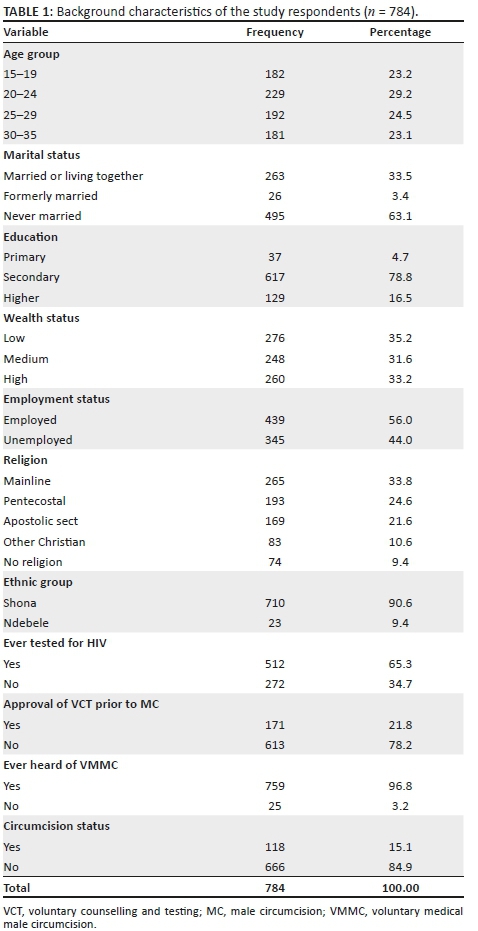
Table 1 presents the frequency distribution of background characteristics of the respondents. Almost equal proportions were distributed in the four age groups. The highest proportion of the respondents had never been married (63%), had achieved secondary education (78.8%), were employed (56%) and had ever been tested for HIV (65.3%); 90.6% of the respondents were of the Shona ethnic group, and most of them were not circumcised (84.9%). In addition, 33.8% of the respondents were mainline Christians, 78.2% did not approve of HIV testing prior to circumcision, and almost all (96.8%) had ever heard VMMC.
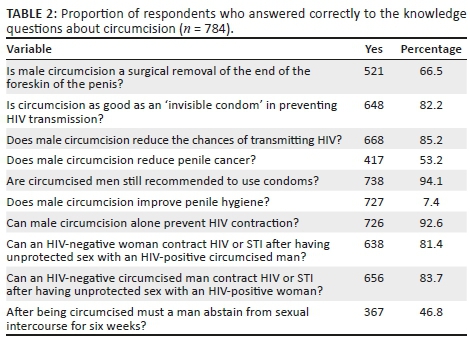
Table 2 presents the frequency distribution of the respondents' knowledge about male circumcision. It is evident from the table that more than 9 in 10 respondents (94.1%) knew that it is recommended that a circumcised man still use a condom. Moreover, 7.4% of the respondents knew that male circumcision should be integrated with other HIV prevention methods. About 8 in 10 (81.4%) of the respondents indicated that an HIV-negative woman can contract HIV after having unprotected sex with an HIV-positive uncircumcised man. Reversing the question, about the same percentage (83.7%) indicated that an HIV-negative circumcised man could contract HIV after having unprotected sex with an HIV-positive woman.
A little more than 8 in 10 (82.2%) of the respondents indicated that male circumcision was not as good as an invisible condom. On the other hand, 82.7% indicated that male circumcision reduces the chances of HIV transmission. With regards to male circumcision reducing penile cancer, 53.2% indicated that male circumcision reduces penile cancer. More than 9 in 10 (92.7%) indicated that male circumcision improves penile hygiene, and about the same proportion (92.6%) indicated that male circumcision alone can prevent HIV infection. Fewer than half (46.8%) of the respondents were aware that it was recommended that circumcised men abstain from sexual intercourse for a minimum period of 6 weeks following circumcision. More than two-thirds (66.5%) of the respondents were able to define male circumcision.
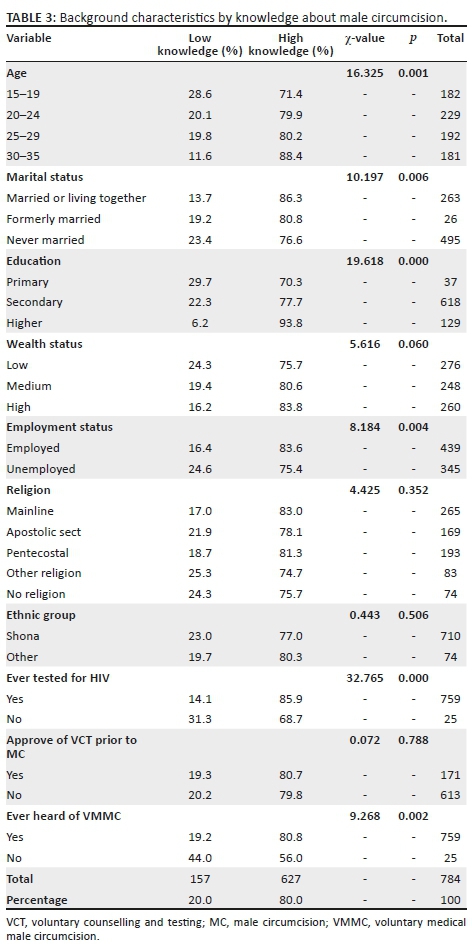
Table 3 shows the bivariate relationship between the background characteristics and knowledge about male circumcision. The results showed that there was a significant association between age and knowledge about male circumcision. Knowledge about male circumcision increased with age. A higher percentage of respondents who were aged 30-35 years had high knowledge about male circumcision (88.4%) compared to those who were aged 25-29, 20-24 and 15-19 (80.2%, 79.9% and 71.4%, respectively; p < 0.001). A higher proportion of respondents who had attained a higher level of education had high knowledge about male circumcision (93.8%) compared to those who had attained primary and secondary education (77.7% and 70.3%, respectively; p < 0.000).
High knowledge about male circumcision was more common in respondents in the high wealth status group (83.8%) compared to those who belonged to medium and low wealth status (80.6% and 75.7%, respectively; p < 0.060). With respect to employment status, 26.6% of respondents who indicated that they were unemployed had low knowledge about male circumcision as compared to 16.4% of respondents who indicated that they were employed.
Eighty-six per cent of the respondents who had ever tested for HIV had high knowledge about male circumcision, compared to 68.8% of those who had never tested for HIV. Finally, 80.8% of the respondents who had heard of VMMC had high knowledge about male circumcision.
Predictors of knowledge about male circumcision
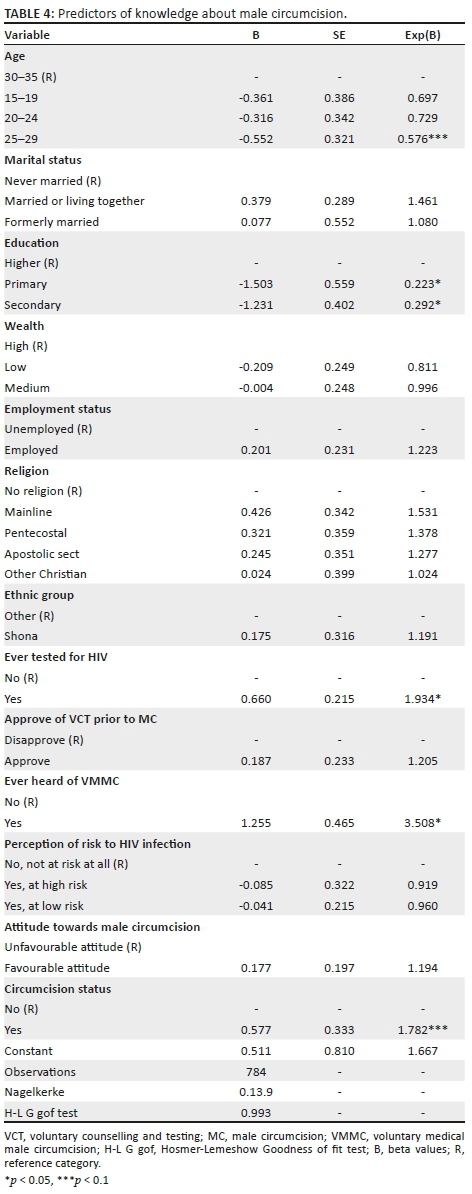
Table 4 shows the results of the binary regression examining the influence of sociodemographic characteristics and knowledge about male circumcision. The results concerning age and knowledge about male circumcision showed that men aged 25-29 years were significantly less likely to have high knowledge about male circumcision compared to those aged 30-35 years. The odds of young men aged 25-29 years having high knowledge about male circumcision were 42% lower (odds ratio [OR] = 0.576, p < 0.1) compared to those aged 30-35 years. Education was significantly related to knowledge about male circumcision. The results showed that the odds of youth with primary education having high knowledge of HIV were 78% lower (OR = 0.223, p < 0.05) compared to those with higher education. In addition, youth who reported having secondary education and having high knowledge about male circumcision were 71% lower (OR = 0.292, p < 0.05) compared to those with higher education and having high knowledge about male circumcision.
Further, the odds of young men who reported ever having tested for HIV having high knowledge about male circumcision were 93% higher (OR = 1.93, p < 0.05) compared to those who had never tested for HIV. With respect to ever having heard of VMMC, the odds of youth who had ever heard about VMMC compared to those who had not having high knowledge about male circumcision were 250% higher (OR = 3.50, p < 0.05). Youth who reported being circumcised were more likely (OR = 1.78, p < 0.1) to have high knowledge about male circumcision compared to those who were uncircumcised, with 78% higher odds.
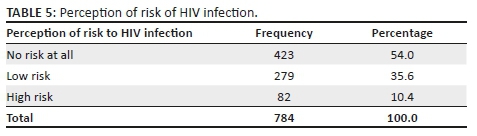
Table 5 presents the frequency distribution for respondents' perception of risk for HIV infection. Fifty-four per cent of the respondents perceived themselves not to be at risk of HIV infection compared to 10.4% who indicated that they were at a higher risk. About a third (35.6%) perceived themselves to be at low risk of HIV infection.
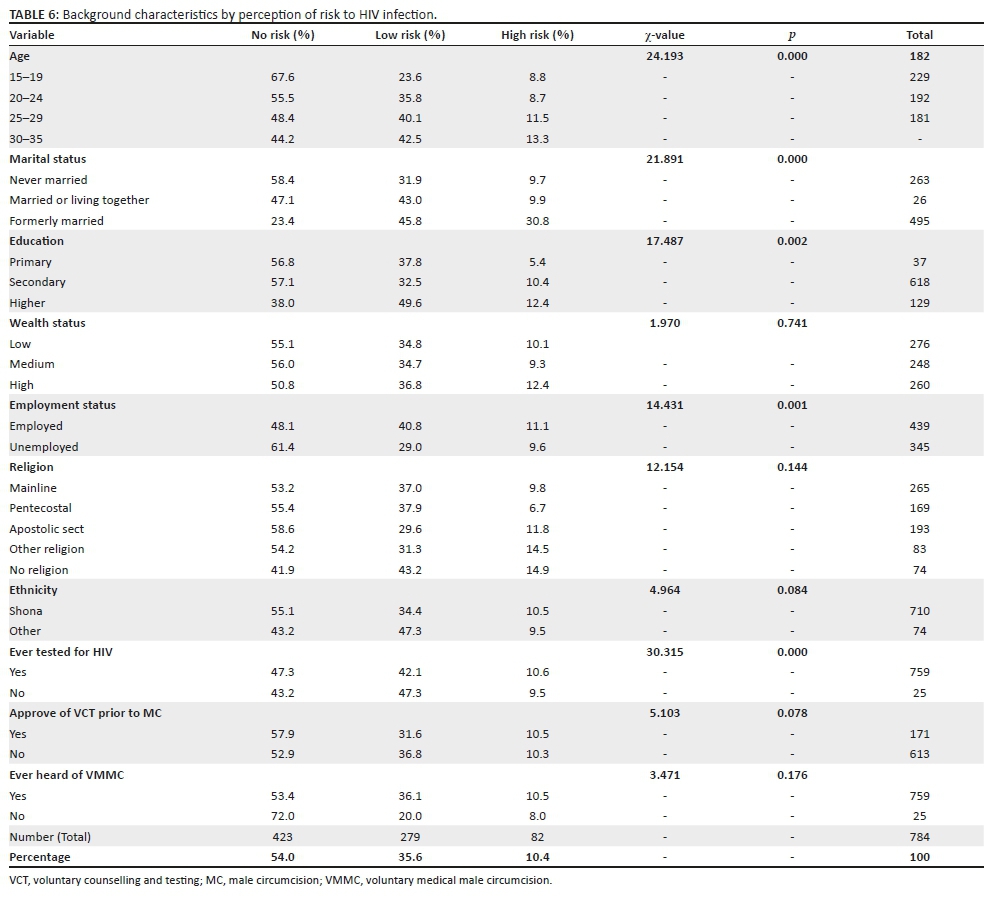
Table 6 shows that there was a significant association between the background characteristics and perception of risk to HIV infection. Perception of low risk and high risk of HIV infection increased with increase in age. For example, 67.6%, 23.6% and 8.8% of young people aged 15-19 years indicated that they were at no risk, low risk and high risk to HIV infection, respectively. On the other hand, 44.2%, 42.5% and 13.3% of those aged 30-35 years indicated that they were at no risk, low risk and high risk for HIV infection, respectively.
With respect to marital status, while about a third (30.8%) of formerly married men indicated that they were at high risk of HIV infection, only 10% of never-married men and the same proportion of men married or living together indicated that they were at high risk of HIV infection. Forty-three per cent of married men indicated that they were at a low risk of HIV infection, while 31.9% of never-married men indicated that they were at low risk of HIV infection.
There is a positive relationship between education and risk perception of HIV infection. Nearly half (49.6%) of the respondents with higher levels of education indicated that they were at low risk of HIV infection compared to about a third (32.5%) of respondents with secondary education and close to two-fifths (37.8%) of those with primary education.
There was a significant relationship between employment status and perception of risk of HIV infection (significant at p < 0.001). Forty-one per cent of employed youth perceived themselves to be at low risk (40.8%), and 11.2% perceived themselves to be at high risk of HIV infection. On the other hand, 29% of the unemployed youth perceived themselves to be at low risk, compared to 9.6% who perceived themselves to be at high risk of HIV infection.
A similar proportion of respondents who had ever tested for HIV (10.6%) and those who had never tested (9.5%) indicated that they were at a high risk of HIV infection. Additionally, 42.1% of those who had ever tested for HIV reported that they were at a low risk. With those who had never tested for HIV, 47.3% and 9.5% indicated that they were at low risk and at high risk of HIV infection, respectively.
Predictors of perception of risk of HIV infection
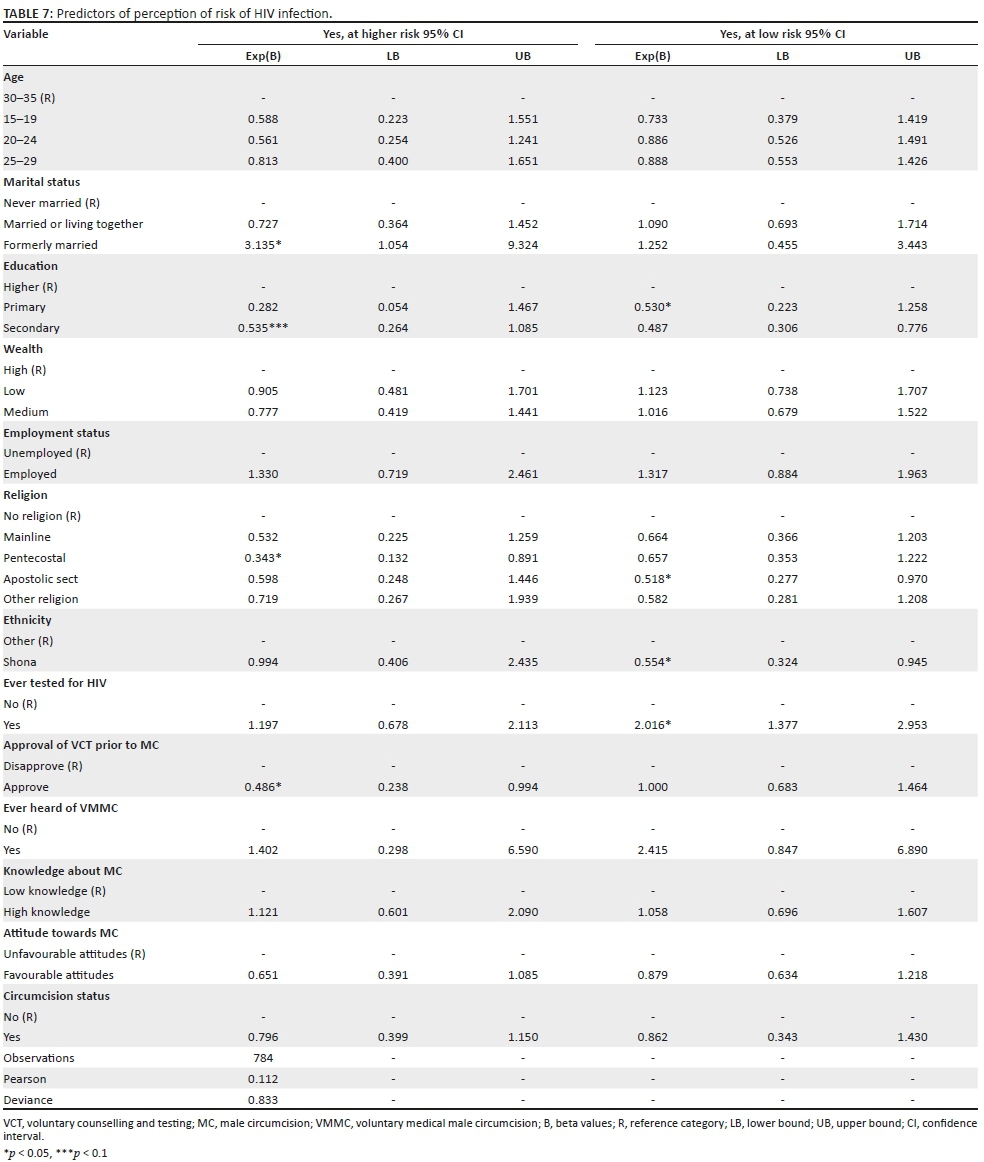
Table 7 shows the results of a multinomial logistic regression model. The results show the relationship between the background characteristics and the perception of risk of HIV infection. In the model, the reference category for the dependent variable is 'No, not at risk at all'. The results showed that holding other variables constant, the odds of a man perceiving himself to be at a higher risk of HIV infection, relative to perceiving himself to be at no risk of HIV, were higher (OR = 3.13, p < 0.05) among formerly married young men than for never-married young men. Youth with secondary education were significantly less likely (OR = 0.535, p < 0.1) to perceive themselves to be at higher risk compared to those with higher education. In addition, youth with primary education were significantly less likely (OR = 0.530, p < 0.05) to perceive themselves to be at low risk compared to those with higher education.
With regard to religion, the odds of a Pentecostal Christian perceiving himself to be at higher risk were 66% (p < 0.05) lower compared to young men who did not profess any religious faith. On the other hand, the odds of apostolic sect youth perceiving themselves to be at low risk of HIV infection were lower by 49% (p < 0.05) compared to young men who did not belong to any religion. The odds of Shona youth perceiving themselves to be at low risk of HIV infection compared to young men who belonged to other ethnic groups were 45% lower (p < 0.05). Further, the odds of young men perceiving themselves to be at low risk of HIV infection relative to perceiving themselves to be at no risk were 102% higher (OR = 2.01, p < 0.05) for those who had ever been tested for HIV than for those who had never been tested for HIV. The odds of youth who approved of VCT prior to male circumcision were less likely (OR = 0.486, p < 0.05) to perceive themselves to be at a higher risk of HIV infection compared to their counterparts who did not approve of it.
Discussion
This study sought to examine youths' knowledge about male circumcision and perception of risk of HIV infection on the one hand, and selected background characteristics, on the other. In the Zimbabwean context, little is known about the impact of background characteristics on social variables related to knowledge of male circumcision and perception of risk of HIV infection among urban men aged 15-35 years, despite the fact that this is a key subpopulation in the fight against HIV. While some studies have looked at these social variables related to male circumcision,26
Knowledge about male circumcision appeared to increase with age. Youth aged 15-19, 20-24 and 25-29 years all were less likely to have high knowledge about male circumcision. However, only youth aged 25-29 years compared to those aged 30-35 years were less likely to have high knowledge about male circumcision. Studies elsewhere show contrary findings. For example, one study in particular27
Furthermore, the findings showed that youth with primary and secondary education were less likely to have knowledge about male circumcision compared to those with a higher level of education. One study observed similar relationships in Zimbabwe among soccer players, with those with higher education levels having more knowledge about male circumcision compared to those with lower levels of education.2829
The findings from this study also showed that previously testing for HIV was associated with knowledge about male circumcision. Respondents who had ever tested for HIV were more likely to be knowledgeable about male circumcision. This could be attributed to counselling sessions that happen before and after testing. In Zimbabwe, VCT centres disseminate information about male circumcision. Male circumcision services have also been an integral part of male sexual and reproductive health programmes.303
In addition, ever having heard of VMMC was found to be statistically significantly associated with knowledge about male circumcision. Youth who had ever heard of VMMC were more likely to have high knowledge of male circumcision compared to those had never heard of it. This could be a result of availability of different mass media advertisement about VMMC. According to a study in Zimbabwe among respondents aged 15-49 years in rural and urban areas, a higher proportion of the respondents had heard of VMMC.26
As expected, youth who were circumcised were knowledgeable about male circumcision in comparison to those who were uncircumcised. The present findings are consistent with other research, which found that males who were circumcised were more likely to have high levels of knowledge about male circumcision.14
The findings suggest marital status had a significant influence on perception of risk of HIV infection. For example, formerly married youths were more likely to perceive themselves to be at higher risk of HIV infection compared to those who had never married. However, previous findings have found that, in general, people tend to underestimate their risk of HIV.31,32
In addition, the present study found that education influences perception of risk of HIV infection. For instance, youth with secondary education were less likely to perceive themselves to be at a higher risk of HIV infection compared to respondents with higher education. However, youth with primary education were less likely to perceive themselves to be at low risk of HIV infection compared to those with both secondary and higher education. As education increases, the young men are more likely to perceive themselves to be at high risk of HIV infection, most likely because they understand the dynamics of HIV infection. However, these results are inconsistent with previous studies; for instance, a study among military personnel in Nigeria found an inverse relationship between educational attainment and HIV risk perception.33
Furthermore, the results showed religious variations in perception of risk of HIV infection. Youth who belonged to Pentecostal churches and apostolic sects were less likely to perceive themselves to be at a higher risk of HIV infection compared to respondents with no religion. However, the findings of the current study do not support previous research, which found that these men perceived themselves to be at no risk for HIV infection.343435
With regard to Pentecostal Christians, the findings of the current study are consistent with those of a previous study,3536
Youth belonging to the Shona ethnic group were less likely to perceive themselves to be at low risk of HIV infection compared to other ethnic groups, which perceived itself to be at no risk of HIV infection. Perhaps the Shona perception of risk of HIV infection is not surprising considering the fact that in Zimbabwe and other sub-Saharan Africa communities they have cultural practices conducive to the spread of HIV such as wife inheritance, which involves relatives of the deceased husband marrying the widow.373839
In addition, those who had ever tested for HIV were more likely to perceive themselves to be at low risk of HIV infection compared to those who had never tested. This relationship could be explained by the fact that HIV is highly stigmatised. Hence, ever taking the test and obtaining negative HIV results makes men aged 15-35 years feel they are not at risk of HIV infection. With respect to approval of VCT prior to male circumcision, respondents who approved of VCT prior to circumcision were less likely to perceive themselves to be at risk of HIV infection compared to those who did not approve of it. Perhaps those who approve of VCT prior to circumcision are youth who regularly check their status and for that reason perceive themselves to be at low risk of HIV infection.
Conclusion
The findings identified a knowledge deficit about male circumcision among youth with primary and secondary education, indicating the probability of low uptake of male circumcision as an HIV intervention measure in Harare. Furthermore, as education increases, youth are more likely to perceive themselves to be at high risk of HIV infection. The study recommends the need to strengthen perceived susceptibility to HIV across all educational levels, and advocacy is needed on health benefits of male circumcision.
Competing interests
The authors declare that they have no financial or personal relationship(s) that may have inappropriately influenced them in writing this article.
Authors' contributions
K.M. made conceptual contributions, data analysis and led the writing process. I.K.-S. contributed substantially to the writing and reviewing of the article.
Acknowledgements
The authors would like to thank the following research assistants: Tapiwa Chirenje, Washington Dune, Kudzai Ndemera, Josphat Jekera and Tapiwa Mangombe.
References
- 1.UNAIDS. UNAIDS global AIDS update. Geneva: World Health Organization; 2016.
- 2.UNAIDS. UNAIDS report on the global AIDS epidemic. Geneva: World Health Organization; 2013.
-
3.Zimbabwe National AIDS Council, Zimbabwe Ministry of Health and Child Welfare, UNAIDS, World Food Programme VAM Food Security Analysis, CDC. Smart investment to end HIV/AIDS in Zimbabwe [homepage on the Internet]. Harare; 2015. Available from: http://www.nac.org.zw/sites/default/file/Hot%20spot%20Mapping%20Report.pdf
» http://www.nac.org.zw/sites/default/file/Hot%20spot%20Mapping%20Report.pdf -
4.Cameron DW, D'Costa L, Maitha G, et al. Female to male transmission of human immunodeficiency virus type 1: Risk factors for seroconversion in men. Lancet. 1989;2(8660):334, 403-407. https://doi.org/10.1016/S0140-6736(89)90589-8
» https://doi.org/10.1016/S0140-6736(89)90589-8 -
5.Easton L, Kalichman SC. Behavioral aspects of male circumcision for the prevention of HIV infection. Curr HIV/AIDS Rep. 2009;6:187-193. https://doi.org/10.1007/s11904-009-0025-9
» https://doi.org/10.1007/s11904-009-0025-9 -
6.Moses S, Bradley JE, Nagelkerke NJD, Ronald AR, Ndinya-Achola JO, Plummer FA. Geographical patterns of male circumcision practices in Africa: Association with HIV seroprevalence. Int J Epidemiol. 1990;19:693-697. https://doi.org/10.1093/ije/19.3.693
» https://doi.org/10.1093/ije/19.3.693 -
7.Auvert B, Taljaard D, Lagarde E, Sobngwi-Tambekou J, Sitta R, Puren A. Randomized, controlled intervention trial of male circumcision for reduction of HIV infection risk: The ANRS 1265 trial. PLoS Med. 2005;2:e298. https://doi.org/10.1371/journal.pmed.0020298
» https://doi.org/10.1371/journal.pmed.0020298 -
8.Bailey R, Moses S, Parker CB, et al. Male circumcision for HIV prevention in young men in Kisumu, Kenya: A randomised controlled trial. Lancet. 2007;369:643-656. https://doi.org/10.1016/S0140-6736(07)60312-
» https://doi.org/10.1016/S0140-6736(07)60312- -
9.Gray R, Kigozi G, Serwadda D, et al. Male circumcision for HIV prevention in men in Rakai, Uganda: A randomised trial. Lancet. 2007;369:657-666. https://doi.org/10.1016/S0140-6736(07)60313-4
» https://doi.org/10.1016/S0140-6736(07)60313-4 -
10.Andersson N, Cockcroft A. Male circumcision, attitudes to HIV prevention and HIV status: A cross-sectional study in Botswana, Namibia and Swaziland. AIDS Care. 2012;24:301-309. https://doi.org/10.1080/09540121.2011.608793
» https://doi.org/10.1080/09540121.2011.608793 -
11.Bridges JFP, Selck FW, Gray GE, McIntyre JA, Martinson NA. Condom avoidance and determinants of demand for male circumcision in Johannesburg, South Africa. Health Pol Plan. 2011;26:298-306. https://doi.org/10.1093/heapol/czq064
» https://doi.org/10.1093/heapol/czq064 -
12.Khumalo-Sakutukwa G, Lane T, van-Rooyen H, et al. Understanding and addressing socio-cultural barriers to medical male circumcision in traditionally non-circumcising rural communities in sub-Saharan Africa. Cult Health Sex. 2013;15. https://doi.org/10.1080/13691058.2013.807519
» https://doi.org/10.1080/13691058.2013.807519 -
13.Mavhu W, Buzdugan R, Langhaug LF, et al. Prevalence and factors associated with knowledge of and willingness for male circumcision in rural Zimbabwe. Trop Med Int Health. 2011;16:589-597. https://doi.org/10.1111/j.1365-3156.2011.02744.x
» https://doi.org/10.1111/j.1365-3156.2011.02744.x - 14.Futures Group. Soka Uncobe: Understanding barriers to uptake of male circumcision services. Swaziland: Futures Group; 2012.
-
15.Naidoo PV, Dawood F, Driver C, Narainsamy M, Ndlovu S, Ndlovu V. Knowledge, attitudes and perceptions of pharmacy and nursing students towards male circumcision and HIV in a KwaZulu-Natal University, South Africa. Afr J Prim Health Care Fam Med. 2012;4:327. https://doi.org/10.4102/phcfm.v4i1.327
» https://doi.org/10.4102/phcfm.v4i1.327 -
16.Keetile M, Rakgoasi S. Male circumcision; Willingness to undergo safe male circumcision and HIV risk behaviours among men in Botswana. Afr Popul Stud. 2014;28:1345-1361. https://doi.org/10.11564/0-0-630
» https://doi.org/10.11564/0-0-630 -
17.Lundsby K, Dræbel T, Meyrowitsch DW. 'It brought joy in my home as in the area of my wife'. How recently circumcised adult men ascribe value to and make sense of male circumcision. Glob Public Health. 2012;7:352-366. https://doi.org/10.1080/17441692.2011.632638
» https://doi.org/10.1080/17441692.2011.632638 -
18.Macintyre K, Andrinopoulos K, Moses, et al. Attitudes, perceptions and potential uptake of male circumcision among older men in Turkana County, Kenya using qualitative methods. PLoS One. 2014;9:e83998. https://doi.org/10.1371/journal.pone.0083998
» https://doi.org/10.1371/journal.pone.0083998 -
19.Tieu HV, Phanuphak N, Ananworanich J, et al. Acceptability of male circumcision for the prevention of HIV among high-risk heterosexual men in Thailand. Sex Transm Dis. 2010;6:352-355. https://doi.org/10.1097/OLQ.0b013e3181c9963a
» https://doi.org/10.1097/OLQ.0b013e3181c9963a -
20.Westercamp M, Agot KE, Ndinya-Achola J, Bailey RC. Circumcision preference among women and uncircumcised men prior to scale-up of male circumcision for HIV prevention in Kisumu, Kenya. AIDS Care. 2012;24:157-166. https://doi.org/10.1080/09540121.2011.597944
» https://doi.org/10.1080/09540121.2011.597944 -
21.Bartlett S, 2010. Editorial: Responding to urban youth's own perspectives. Environ Urban. 2010;22:307-316. https://doi.org/10.1177/0956247810381211
» https://doi.org/10.1177/0956247810381211 - 22.Kish L. Survey sampling. New York: John Wiley & Son, Inc; 1995.
-
23.Hoffman J, Arendse K, Larbi C, Johnson N, Vivian LM. Perceptions and knowledge of voluntary medical male circumcision for HIV prevention in traditionally non-circumcising communities in South Africa. Glob Public Health. 2015;10:692-702. https://doi.org/10.1080/17441692.2015.1014825
» https://doi.org/10.1080/17441692.2015.1014825 -
24.MacCallum RC, Zhang S, Preacher KJ, Rucker DD. On the practice of dichotomization of quantitative variables. Psychol Methods. 2002;7:19-40. https://doi.org/10.1037/1082-989X.7.1.19
» https://doi.org/10.1037/1082-989X.7.1.19 -
25.Streiner DL. Breaking up is hard to do: The heartbreak of dichotomizing continuous data. Can J Psychiatry. 2002;47:262-266. https://doi.org/10.1177/070674370204700307
» https://doi.org/10.1177/070674370204700307 -
26.Hatzold K, Mavhu W, Jasi P, et al. Barriers and motivators to voluntary medical male circumcision uptake among different age groups of men in Zimbabwe: Results from a mixed methods study. PLoS One. 2014;9(5):e85051. https://doi.org/10.1371/journal.pone.0085051
» https://doi.org/10.1371/journal.pone.0085051 -
27.Wilcken A, Miiro-Nakayima F, Hizaamu RN, Keil T, Balaba-Byansi D. Male circumcision for HIV prevention - A cross-sectional study on awareness among young people and adults in rural Uganda. BMC Public Health. 2010;10(1):209. https://doi.org/10.1186/1471-2458-10-209
» https://doi.org/10.1186/1471-2458-10-209 -
28.Kaufman ZA, DeCelles J, Bhauti K, Weiss HA, Chaibva CN, Ross DA. P3.373 Male circumcision prevalence, knowledge, perceptions, and intent among men in Bulawayo, Zimbabwe: A cross-sectional study. Sex Transm Infect. 2013;89(Suppl 1):A2666. https://doi.org/10.1136/sextrans-2013-051184.0826
» https://doi.org/10.1136/sextrans-2013-051184.0826 - 29.McGill N. Education attainment linked to health throughout lifespan: Exploring social determinants of health. Nations Health. 2016;46:1-9.
- 30.MOHCW. Zimbabwe policy guidelines on safe and voluntary male circumcision. Harare: Ministry of Health and Child Welfare; 2009.
-
31.Ijadunola DKT, Abiona TC, Odu OO, Ijadunola MY. College students in Nigeria underestimate their risk of contracting HIV/AIDS infection. Eur J Contracept Reprod Health Care. 2007;12:131-137. https://doi.org/10.1080/13625180601068461
» https://doi.org/10.1080/13625180601068461 -
32.Sychareun V, Thomsen S, Chaleunvong K, Faxelid E. Risk perceptions of STIs/HIV and sexual risk behaviours among sexually experienced adolescents in the northern part of LaoPDR. BMC Public Health. 2013;13:1126. https://doi.org/10.1186/1471-2458-13-1126
» https://doi.org/10.1186/1471-2458-13-1126 -
33.Essien EJ, Ogungbade GO, Ward D, et al. Influence of educational status and other variables on HIV risk perception among military personnel: A large cohort finding. Mil Med. 2007;172:1177-1181. https://doi.org/10.7205/MILMED.172.11.1177
» https://doi.org/10.7205/MILMED.172.11.1177 - 34.Gore OT, Chiweshe MK, Mangundu M, Mangundu A. Acceptability of medical male circumcision within the Apostolic marange sect in Zimbabwe; A qualitative study. Glob Inst Res Educ. 2014;3:128-133.
-
35.Trinitapoli J, Regnerus MD. Religion and HIV risk behaviors among married men: Initial results from a study in rural Sub-Saharan Africa. J Sci Study Relig. 2006;45:505-528. https://doi.org/10.1111/j.1468-5906.2006.00325.x
» https://doi.org/10.1111/j.1468-5906.2006.00325.x -
36.Garner RC. Safe sects? Dynamic religion and AIDS in South Africa. J Mod Afr Stud. 2000;38:41-69. https://doi.org/10.1017/S0022278X99003249
» https://doi.org/10.1017/S0022278X99003249 - 37.Drew DS, Foster G, Chitima J. Cultural practices associated with death in the North Nyanga district of Zimbabwe and their impact on widows and orphans. J Soc Dev Afr. 1996;11:79-86.
-
38.Exavery A, Kanté AM, Jackson E, et al. Role of condom negotiation on condom use among women of reproductive age in three districts in Tanzania. BMC Public Health. 2012;12:1097. https://doi.org/10.1186/1471-2458-12-1097
» https://doi.org/10.1186/1471-2458-12-1097 -
39.Agot KE, Vander Stoep A, Tracy M, et al. Widow inheritance and HIV prevalence in Bondo district, Kenya: Baseline results from a prospective cohort study. PLoS One. 2010;5:e14028. https://doi.org/10.1371/journal.pone.0014028
» https://doi.org/10.1371/journal.pone.0014028

Accepted: 05 Feb. 2019
Published: 30 Apr. 2019