Reasons for failure of prevention of mother-to-child HIV transmission in a rural South African district hospital
Abstract
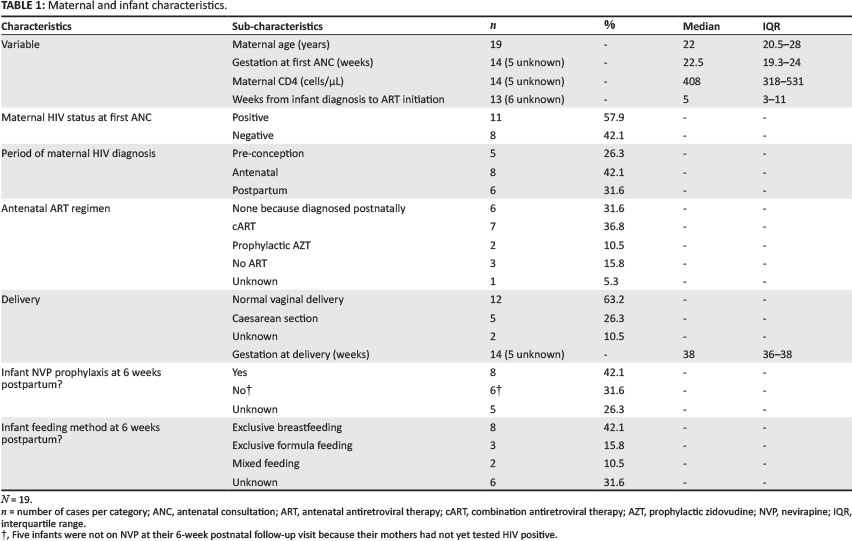
Further reduction of mother-to-child transmission (MTCT) of HIV requires improved understanding of the reasons for MTCT. We reviewed maternal and infant case notes for HIV-positive infants diagnosed by polymerase chain reaction at Bethesda Hospital. Nineteen cases were analysed. Median gestation at first antenatal consultation (ANC) was 22.5 (interquartile range [ IQR] 19.25-24). Eleven (57.9%) mothers were HIV positive at first ANC, whilst eight tested negative and later positive (2 antepartum, 6 postpartum). Median maternal CD4 was 408 cells/μL (IQR 318-531). Six (31.6%) received no antenatal antiretroviral therapy (ART) because they were diagnosed as HIV positive postpartum; 9 (47.3%) received antenatal ART and 3 (15.8%) were never initiated on ART. At 6 weeks postpartum, 5 infants (26.3%) were not on prophylactic nevirapine (NVP) because their mothers had not yet been diagnosed. Maternal seroconversion in pregnancy and breastfeeding, and possibly false-negative HIV tests, were important reasons for prevention of mother-to-child transmission (PMTCT) failure.