COVID-19 severity and in-hospital mortality in an area with high HIV prevalence
Abstract
BACKGROUND: HIV infection causes immune dysregulation affecting T-cell and monocyte function, which may alter coronavirus disease 2019 (COVID-19) pathophysiology. OBJECTIVES: We investigated the associations among clinical phenotypes, laboratory biomarkers, and hospitalisation outcomes in a cohort of people hospitalised with COVID-19 in a high HIV prevalence area. METHOD: We conducted a prospective observational cohort study in Tshwane, South Africa. Respiratory disease severity was quantified using the respiratory oxygenation score. Analysed biomarkers included inflammatory and coagulation biomarkers, CD4 T-cell counts, and HIV-1 viral loads (HIVVL). RESULTS: The analysis included 558 patients, of whom 21.7% died during admission. The mean age was 54 years. A total of 82 participants were HIV-positive. People living with HIV (PLWH) were younger (mean age 46 years) than HIV-negative people; most were on antiretroviral treatment with a suppressed HIVVL (72%) and the median CD4 count was 159 (interquartile range: 66-397) cells/µL. After adjusting for age, HIV was not associated with increased risk of mortality during hospitalisation (age-adjusted hazard ratio = 1.1, 95% confidence interval: 0.6-2.0). Inflammatory biomarker levels were similar in PLWH and HIV-negative patients. Detectable HIVVL was associated with less severe respiratory disease. In PLWH, mortality was associated with higher levels of inflammatory biomarkers. Opportunistic infections, and other risk factors for severe COVID-19, were common in PLWH who died. CONCLUSION: PLWH were not at increased risk of mortality and those with detectable HIVVL had less severe respiratory disease than those with suppressed HIVVL. WHAT THIS STUDY ADDS: This study advances our understanding of severe COVID-19 in PLWH.
HIV; COVID-19; SARS-CoV-2; mortality; biomarker
Introduction
People living with HIV (PLWH) have an increased risk of mortality from infection with respiratory viruses, including influenza and human metapneumovirus.1,23,4,56,78
Current evidence suggests that severe COVID-19 is associated with dysregulation of the monocyte-macrophage response, defective T-cell responses, elevated inflammatory cytokines, and hyperactivated neutrophils which culminate in ongoing, inappropriate systemic inflammation which damages pulmonary and other tissues.9,10,11,12132)/fraction of inspired oxygen (FIO2) ratios.8,13,1415,16,1718
HIV infection has strong effects on cellular immune phenotypes and function, affecting T and B lymphocytes, and monocytes - all of which are implicated in COVID-19 pathophysiology.19,20,2122,232421
The majority of PLWH analysed in larger cohorts or systematic reviews were on ART, with suppressed HIVVL and high CD4 T-cell counts.3,4,25
We investigated whether HIV infection is associated with COVID-19 severity, differences in routinely collected laboratory biomarkers, and in-hospital mortality in a well-characterised clinical cohort of patients admitted with COVID-19, in a setting with a high HIV prevalence.
Methods
Cohort description
We conducted a prospective, single centre, observational cohort study of patients admitted to the Tshwane District Hospital complex (TDH) from April 2020 to November 2020. All patients were admitted with COVID-19 as determined by a positive SARS-CoV-2 PCR test. This period encompasses the first COVID-19 wave in Pretoria and predates the widespread prevalence of the SARS-CoV-2 Beta/B.1.351 variant which occurred during the second wave from December 2020 to February 2021. This hospital complex was the primary referral centre for COVID-19 cases in the greater Tshwane area, encompassing a population of approximately 3 000 000 people, with a HIV prevalence of 10.5% (95% confidence interval [CI]: 7.7% - 14.1%) in 2017.26,27
Data including demographic information, comorbidities, presence of central obesity (classified as 'overweight'), date of admission, symptom onset, date of SARS-CoV-2 PCR test, vital signs, level of care, and admission outcome were captured on standardised case report forms (CRF). The CRFs were completed by treating clinicians during patients' admission. Data from the CRFs were entered by research assistants into a REDCap database hosted by the University of Pretoria and reviewed for accuracy by clinicians involved in the study.28
Admission vital sign data were taken as the worst score within a 48 h window around the date of admission (admission ± 24 h). The ROX score was calculated for participants with admission vital data (Online Appendix 1 Figure 1-A1).14
Laboratory biomarker data were extracted from the South African National Health Laboratory Services (NHLS) online data warehouse. We analysed haematology panels (full blood count; differential white cell counts including absolute neutrophil count [ANC], lymphocyte count [ALC] and neutrophil-to-lymphocyte ratio [NLR]); organ function biomarkers (creatinine, alanine aminotransferase [ALT]); inflammatory biomarkers (C-reactive protein [CRP], ferritin, procalcitonin [PCT]); and D-dimer (DDIM). Laboratory biomarkers were aggregated as median values for admission ± 24 h. We analysed CD4+ T-cell counts taken during admission. CD4+ T-cell counts were stratified into higher (equal to, or above, 200 cells/µL) and lower (below 200 cells/µL) CD4 counts. Plasma HIVVL was assessed from the previous 12 months and during admission, with the most recent value being used for this analysis. HIV-1 viral loads were stratified at 1000 copies/mL into detectable (equal to, or above, 1000 copies/mL) and suppressed (below 1000 copies/mL).
Statistical analysis
Data were analysed in R Studio.29,30,31,32,33T tests, dependent on the variables' distribution. Comparison of proportions was performed using chi-squared tests, or Fisher's exact test (FET). Correlations were analysed by Spearman Rank or Pearson correlation coefficients - depending on the variable's distribution. The sensitivity and specificity of variables' ability to predict higher levels of supportive care were calculated using Area Under the Receiver Operating Characteristic curve (AUROC). An AUROC cut-off of 0.7 was used to decide if a variable had good predictive ability for a specified outcome.
The association between age and comorbidities was analysed by logistic regression models, with age treated as a continuous variable, and results reported as odds ratios (OR). Univariate survival analysis was analysed by Kaplan-Meier survival curves with hypothesis testing via log rank tests. Multivariable survival analysis was done using Cox regression models, with results reported as hazard ratios (HR). Schoenfield residuals were used to test for violation of the proportional hazard's assumption. Markers of disease severity, including ROX scores, and laboratory biomarkers were used to stratify the cohort into mutually exclusive tertiles of comparable size.
Ethical considerations
Ethics approval was granted by the University of Pretoria's Faculty of Health Sciences Research Ethics Committee, and permission obtained from the institutional authorities to collect clinical data from patients admitted to the Tshwane District Hospital complex. Protocol ethics reference number: 637/2020.
Results
Cohort description
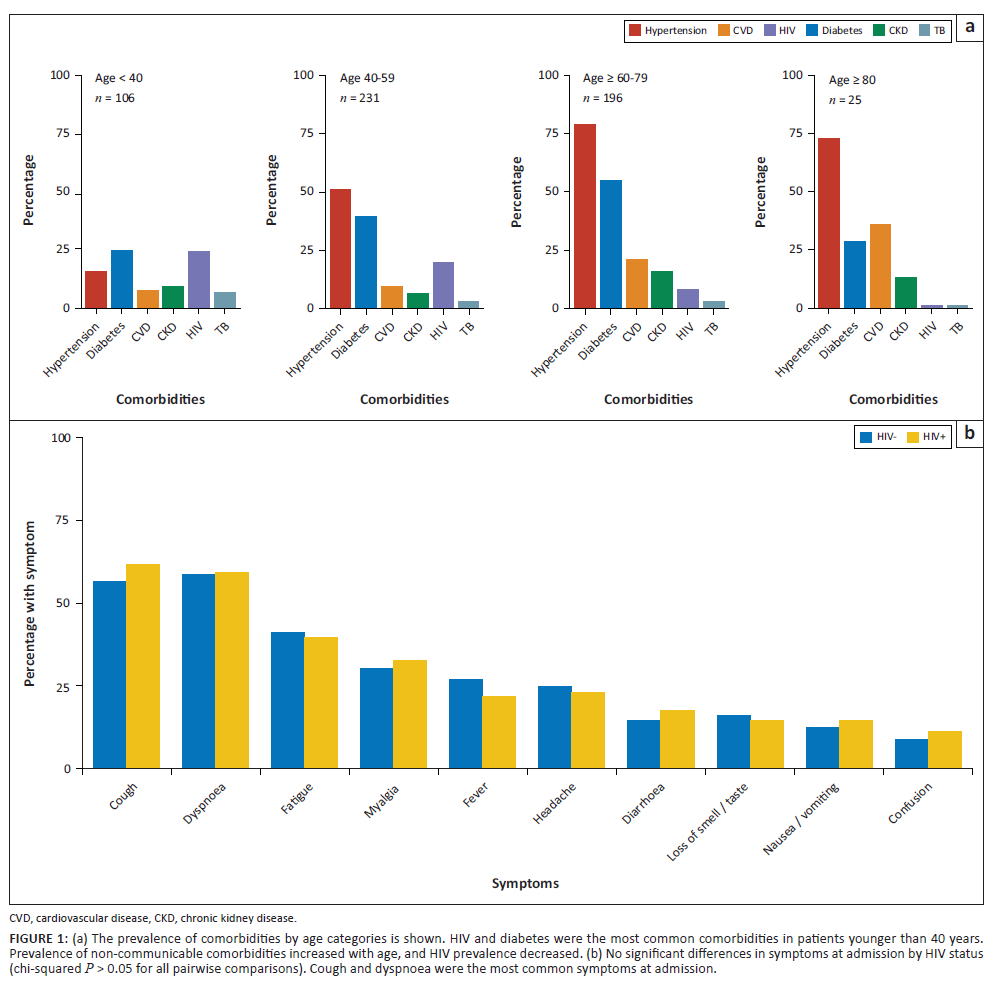
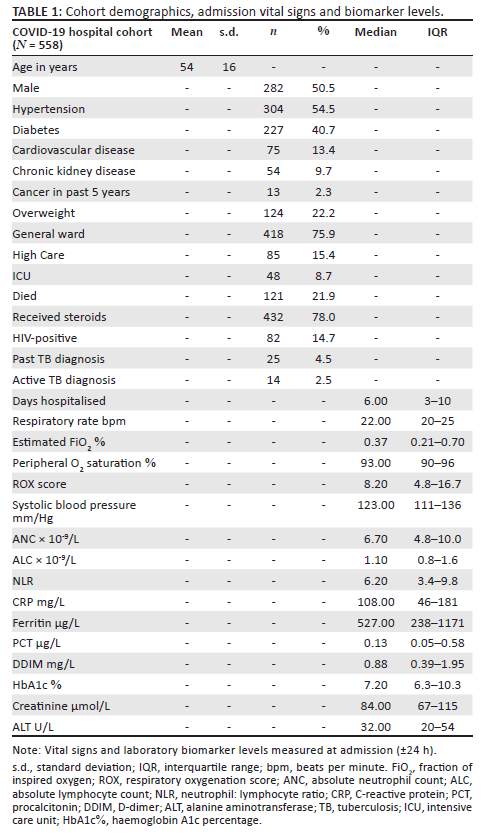
A total of 558 patient records were analysed (Table 1). The mean age of this cohort was 54 (standard deviation [s.d.] ± 16) years with equivalent numbers of male (50.5%) and female (49.5%) patients. Hypertension and diabetes were the most common comorbidities, at 55% and 41%. Younger patients were more likely to be HIV positive at admission (age and HIV: odds ration [OR] = 0.96, 95% confidence interval [CI]: 0.94-0.97, P < 0.001), and older patients were more likely to have non-communicable comorbidities including hypertension (OR = 1.07, 95% CI: 1.06-1.09, P < 0.001), diabetes (OR = 1.03, 95% CI: 1.02-1.04, P < 0.001), cardiovascular disease (OR = 1.04, 95% CI: 1.03-1.06, P < 0.001) and chronic kidney disease (OR = 1.02, 95% CI: 1.0-1.04, P = 0.03) (Figure 1).
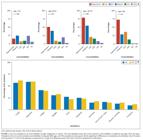
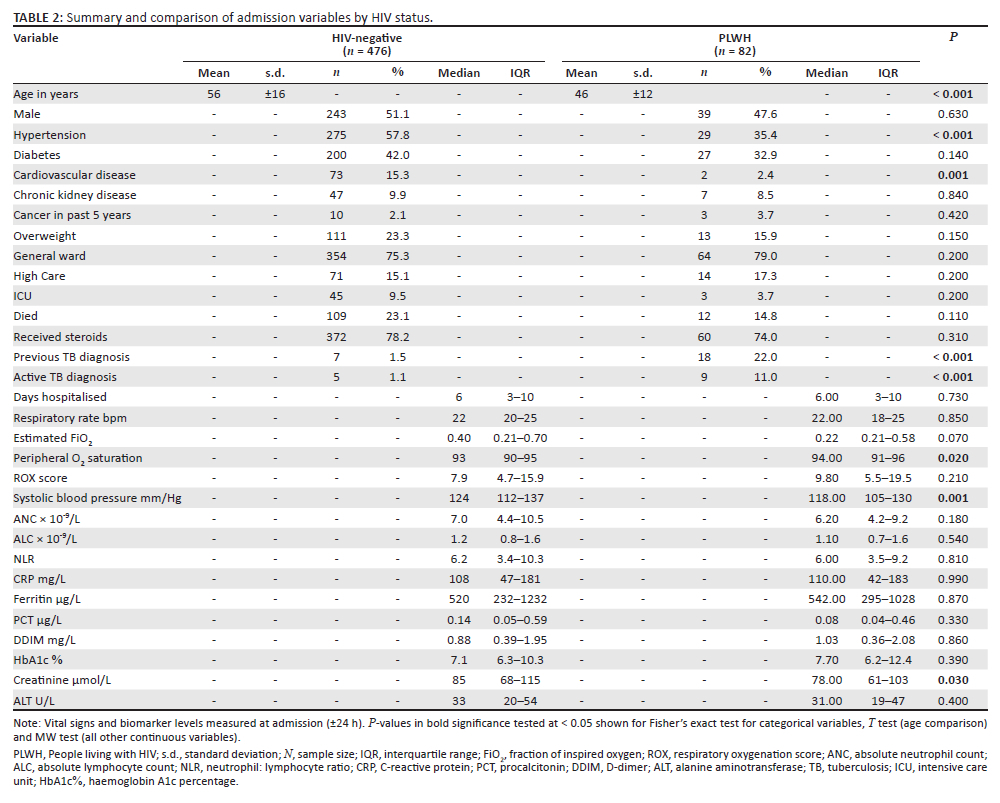
A total of 82 PLWH were admitted during this period (15% of cohort). People living with HIV were younger than HIV-negative patients and were less likely to have hypertension or cardiovascular disease (CVD) (Table 2). People living with HIV were more likely to have a previous, or current, diagnosis of tuberculosis (TB), but the number of patients with active TB was small (n = 14). CD4 counts were available for 56 (68.3%) patients, and the median CD4 count was 159 (IQR: 66-397) cells/µL. A total of 32/56 (61.5%) PLWH had CD4 counts below 200 cells/µL. HIV-1 viral loads were available for 52 (63.4%), and the median HIVVL was 59 789 (IQR: 9417-194 534) copies/mL. HIV-1 viral loads were suppressed in 37/52 (71.2%). The median duration of symptoms before admission was slightly longer in PLWH (8.4 days vs 7.1 days, P = 0.04). There was no difference in the proportion of symptoms reported at admission, with cough and dyspnoea the most common (Figure 2) (chi-squared P > 0.05 for all comparisons).
Respiratory oxygenation scores and laboratory biomarkers are associated with COVID-19 severity and mortality
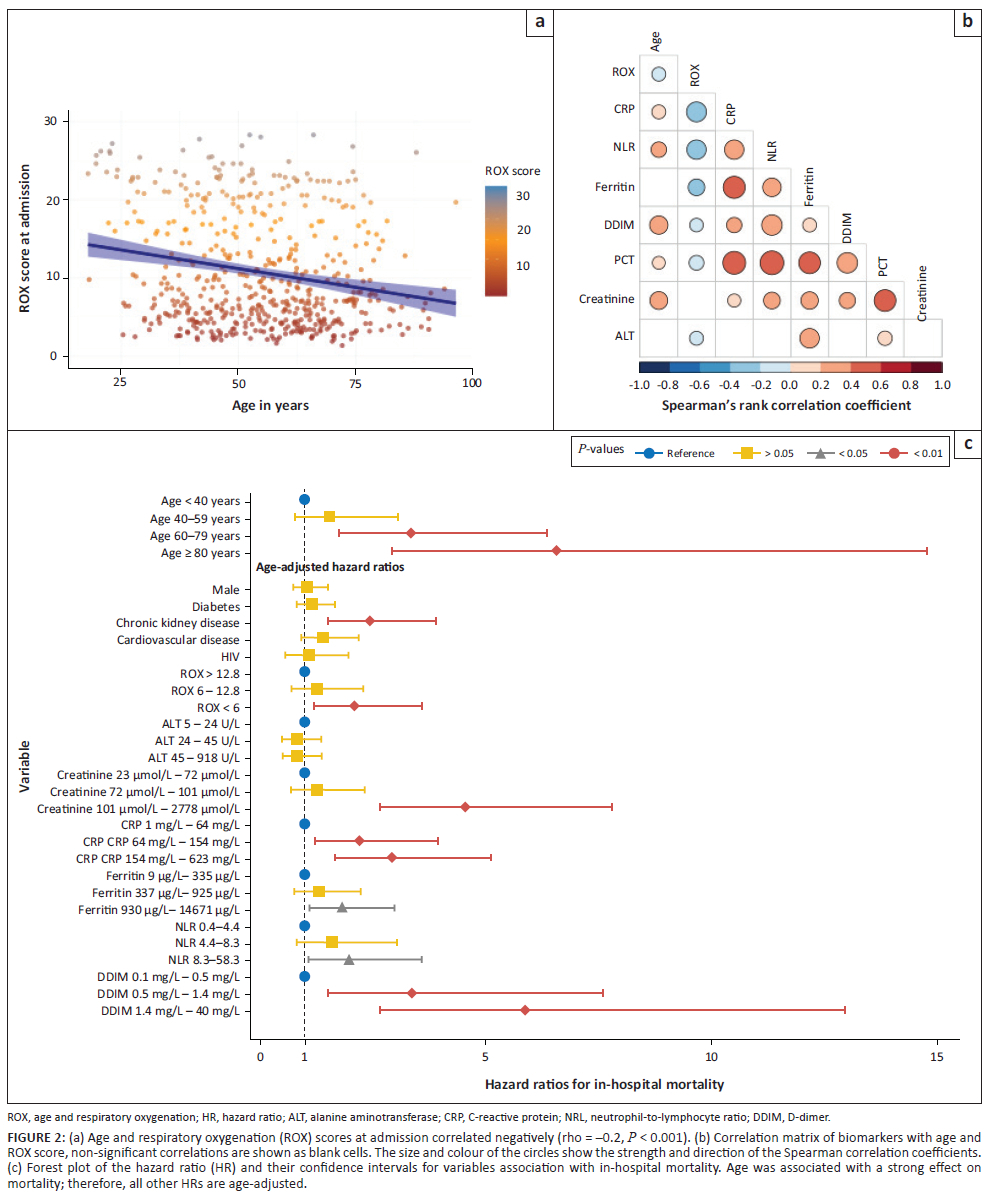
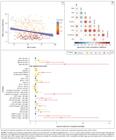
The median ROX score at admission was 8.2 (IQR: 4.8-16.7). Increasing age was associated with lower ROX scores at admission (correlation of age and ROX score: rho = -0.2, P < 0.001), and higher DDIM and inflammatory biomarker levels (Figure 2a and Figure 2b). ROX scores, inflammatory biomarkers and DDIM levels showed significant collinearity with each other (Figure 2b).
A total of 85 patients required HC as their highest level of supportive care and 48 patients were admitted to ICU. Length of hospitalisation was longer for those admitted to ICU than the general wards (median 16 days vs 5 days, P < 0.001). In addition, patients admitted to ICU had more severe disease - ROX scores were lower, ANC, PCT, DDIM and ALT levels were significantly higher when compared to patients admitted to HC or general wards (Online Appendix 1 Table 1-A1). Consequently, higher ROX scores, ANC, NLR and PCT levels predicted admission to ICU with AUROC > 0.7. ROX scores below 4.5 had the highest specificity at 82% (sensitivity 62%), and PCT above 0.13 the highest sensitivity at 94% (specificity 57%). The mortality rate was 57% for patients admitted to ICU, 24% for HC, and 17% for general ward admissions (FET P < 0.001 for ICU vs HC or General wards).
A total of 121 (21.7%) patients died during admission. Increasing age was associated with increased mortality during admission (Figure 2c). A ROX score below six at admission was associated with a twofold increase in mortality compared to higher ROX scores (age-adjusted hazard ratio [aHR] = 2.1, 95% CI: 1.2-3.6, P = 0.01). The tertiles grouping the highest levels of creatinine, CRP, ferritin, NLR and DDIM were also associated with increased mortality (Figure 3c). Gender and diabetes were not associated with increased mortality during hospitalisation, but chronic kidney disease was (aHR = 2.4, 95% CI: 1.5-3.9, P < 0.001). HIV was not associated with significantly increased mortality (aHR = 1.1, 95% CI: 0.6-2.0, P = 0.14) (Figure 2c).
COVID-19 severity in people living with HIV
Respiratory rates were similar between PLWH and HIV-negative patients; however, PLWH needed less oxygen at admission, and had higher peripheral oxygen saturation readings. Respiratory oxygen scores were higher in PLWH, but the difference was not statistically significant (Table 2). There was also no significant difference in NLR, CRP, ferritin, PCT, DDIM, ALT, or haemoglobin A1c (HbA1c) between PLWH and HIV-negative patients. Creatinine levels were slightly lower in PLWH, when compared to HIV-negative patients. These associations were unchanged in linear regression models which adjusted for age differences in HIV-negative patients and PLWH. People living with HIV were as likely as HIV-negative patients to be admitted to ICU - 3.7% of PLWH versus 9.5% HIV-negative patients (FET P = 0.2).
Markers of disease severity in people living with HIV, stratified by CD4 count and HIV-1 viral load
In PLWH, a CD4 count below 200 cells/µL was associated with lower odds of having hypertension, diabetes or being on ART (Online Appendix 1 Table 2-A1). People living with HIV with CD4 counts below 200 cells/µL had higher HIVVLs, NLRs and DDIM levels (Figure 3a) and were more likely to have TB (25% vs 4%, P = 0.06) when compared to PLWH with higher CD4 counts. Respiratory oxygen scores were equivalent between those with higher and lower CD4 counts (Figure 3a). Admission rates to HC or ICU were equivalent between PLWH with CD4 counts above or below 200 cells/µL.
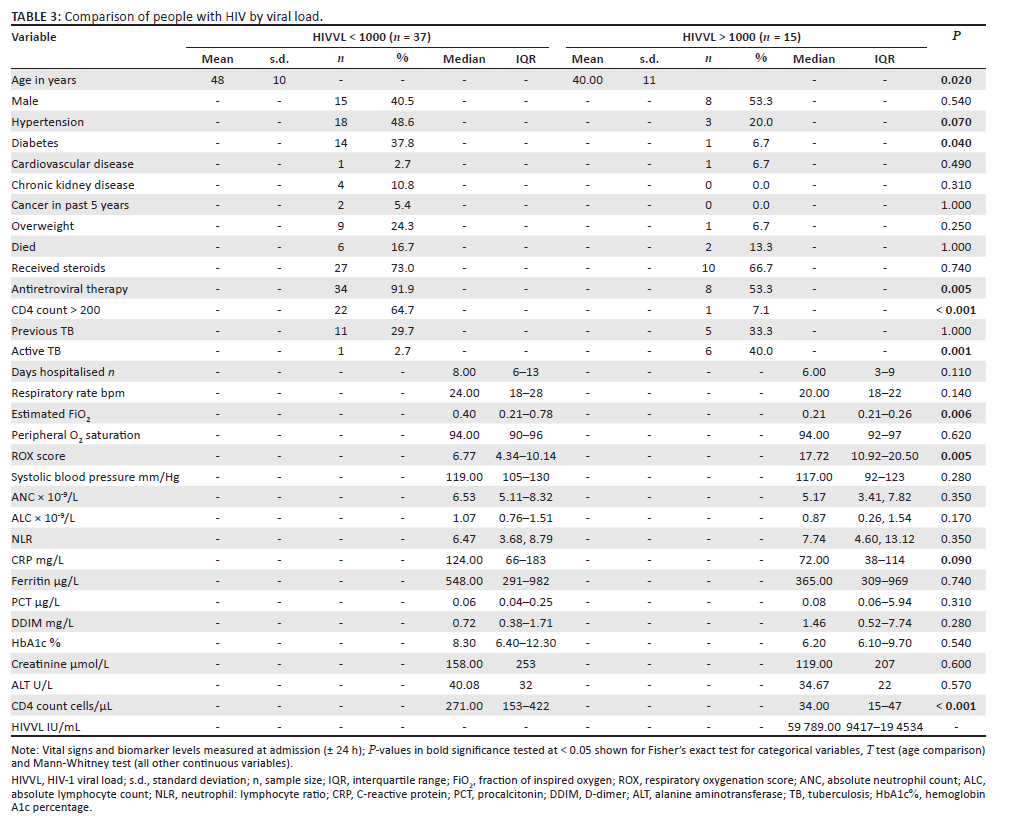
People living with HIV with detectable HIVVLs were less likely to be on ART (OR = 0.11, 95% CI: 0.01-0.59, P = 0.003), and had lower median CD4 counts when compared to those with suppressed HIVVLs (34 [IQR: 16-47] vs 256 [IQR: 134-429], MW P < 0.0001) (Table 3). People living with HIV with detectable HIVVLs were younger than those with suppressed HIVVLs (mean age 40 years vs 48 years, T test P = 0.02) and were less likely to have diabetes (OR = 0.12, 95% CI: 0.003-0.97, P = 0.04). People living with HIV with detectable HIVVLs had significantly higher ROX scores than those with a suppressed HIVVL (17.8 [IQR: 10.9-20.5] vs 6.7 [IQR: 4.3-10.1], MW P = 0.005). Laboratory biomarker levels were not associated with HIVVL (Figure 3c). None of the PLWH with detectable HIVVLs was admitted to HC or ICU.
Variables associated with mortality by HIV status
In total, 109/476 (23.1%) HIV-negative patients died during admission. Among HIV-negative patients, those who died were older (mean age 62 vs 52 years, T test P < 0.001), and more likely to have hypertension (P < 0.001), diabetes (P = 0.06), CVD (P < 0.001), or CKD (P < 0.001). Respiratory disease severity was significantly worse at admission in HIV-negative patients who died versus those who survived (ROX score: 4.8 vs 9.5, MW P < 0.001). Mortality in the HIV-negative patients was also associated with higher levels of laboratory biomarkers, higher ANC, lower ALC and higher creatinine levels (MW P < 0.001).
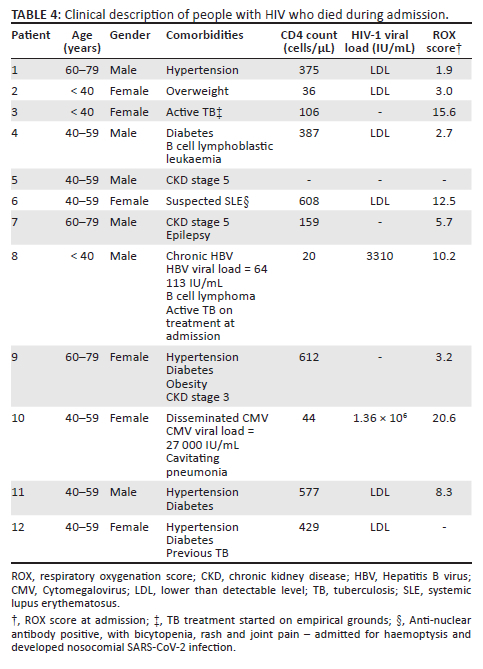
A total of 12/82 (14.8%) PLWH died during admission. People living with HIV who died all had significant HIV-related comorbidities, or other risk factors for COVID-19-related mortality (Table 4). Their hospital stay was shorter than those who survived (median of 3 days vs 7 days), and HIVVL and CD4 counts were not associated with in-hospital mortality in univariate analyses (logrank P > 0.05) (Figure 3b & Figure 3d). Creatinine, CRP, PCT and DDIM levels were higher at admission in PLWH who died compared to those who survived (P < 0.05 for all comparisons). When compared to HIV-negative patients who died, PLWH who died had higher DDIM levels at admission (2.3 [IQR: 1.6-5.9] vs 1.5 [IQR: 0.9-3.4], MW P = 0.05), were younger (mean age 49 vs 64, T test P = 0.001), less likely to be hypertensive (OR = 0.23, P = 0.02) and more likely to have TB (16.7% vs 0.9%, OR = 20.3, P = 0.03).
Discussion
We report a detailed analysis of clinical phenotypes of COVID-19 in hospitalised patients, with and without HIV, and their association with laboratory biomarkers.
People living with HIV had similar levels of COVID-19 severity, whether estimated by levels of supportive care during hospitalisation, ROX scores or laboratory biomarkers when compared to HIV-negative patients. People living with HIV were younger, less likely to be hypertensive, and had lower creatinine levels at admission. People living with HIV with detectable HIVVLs had less severe respiratory disease, with equivalent levels of systemic inflammation as those with suppressed HIVVLs. Similar results have been reported in hospital cohorts from higher-income settings.7,343
Effective ART suppresses viral replication and reverses much of the immunopathology of HIV, but T-cell and monocyte phenotypes, as well as levels of systemic immune activation, remain altered for years afterwards.21,3511921
People living with HIV who died often had significant coexisting comorbidities including active TB infection, lymphoma, disseminated cytomegalovirus, autoimmune disease, or other comorbidities, such as hypertension, diabetes, or CKD. This complicates any discussion of COVID-19 clinical phenotypes in PLWH, who are at risk of opportunistic infections which can cause concomitant respiratory disease and raised inflammatory markers (pulmonary TB or Pneumocystis jirovecii pneumonia [PJP]). Furthermore, without systematic investigation it is difficult to know how much underlying HIV-related disease contributed to in-hospital mortality in this cohort. People living with HIV who died with suppressed viral loads were older, had higher CD4 counts and had additional comorbidities like hypertension, obesity, and diabetes, while those with detectable HIV VLs had significant coinfections or HIV-associated malignancies. The sample size of PLWH who died was small, and it is therefore difficult to draw statistically supported conclusions on these observations. Many of the larger studies which reported that HIV infection is associated with increased risk of severe COVID-19 and related mortality included a higher proportion of men in their analysis than our study.3,36,37,383940
This analysis has several limitations: We analysed records for patients admitted to a single tertiary academic medical centre in an urban area; many patients are sent there by referral which may bias admission towards those with more severe disease. This cohort's prevalence of HIV infection was within the range for other reported estimates and is likely to be broadly representative of similar hospital cohorts in South Africa.6,41,42
This study shows that PLWH who were hospitalised with COVID-19 did not have significantly different in-hospital mortality rates, levels of inflammatory biomarkers or respiratory disease severity. People living with HIV who died often had other risk factors for COVID-19-associated mortality, or AIDS-defining illness.
Competing interests
The authors declare that they have no financial or personal relationships that may have inappropriately influenced them in writing this article.
Authors' contributions
M.T.B., F.A., P.R., V.U. and W.v.H-T designed the study. T.M., G.R., N.S., A.M., N.N., T.R.d.V., Z.d.B., J.M., K.T., R.R., M.H. and D.B. collected, cleaned, and entered raw participant data to the study database. M.T.B. and D.H-B. analysed the data and wrote the first draft manuscript. All authors reviewed and approved the final manuscript.
Funding information
This research received no specific grant from any funding agency in the public, commercial or not-for-profit sectors.
Data availability
Complete individual patient data and the analysis code in R are available to researchers on reasonable request from the corresponding author, M.T.B.
Disclaimer
The views and opinions expressed in this article are those of the authors and do not necessarily reflect those of any affiliated agencies.
Acknowledgements
The authors would like to thank all the staff at the Steve Biko Academic Hospital and Tshwane District Hospitals who made it possible to collect these data. We specifically thank Tshilidzi Maselesele, Universe Masoma, Mantwa Tolo, Katlego Boshielo, Bongani Mashaba and Simon Spoor for assistance with data collection.
References
-
1.Cohen C, Walaza S, Viboud C, et al. Deaths associated with respiratory syncytial and influenza viruses among persons ≥5 years of age in HIV-prevalent area, South Africa, 1998-2009. Emerg Infect Dis J. 2015;21(4):600-608. https://doi.org/10.3201/eid2104.141033
» https://doi.org/10.3201/eid2104.141033 -
2.Cohen C, Moyes J, Tempia S, et al. Mortality amongst patients with influenza-associated severe acute respiratory illness, South Africa, 2009-2013. PLoS One. 2015;10(3):e0118884. https://doi.org/10.1371/journal.pone.0118884
» https://doi.org/10.1371/journal.pone.0118884 -
3.Jassat W, Cohen C, Tempia S, et al. Risk factors for COVID-19-related in-hospital mortality in a high HIV and tuberculosis prevalence setting in South Africa: A cohort study. Lancet HIV. 2021;8(9):E554-E567. https://doi.org/10.1016/S2352-3018(21)00151-X
» https://doi.org/10.1016/S2352-3018(21)00151-X -
4.Boulle A, Davies MA, Hussey H, et al. Risk factors for COVID-19 death in a population cohort study from the Western Cape Province, South Africa. Clin Infect Dis. 2020;73(7):e2005-e2015. https://doi.org/10.1093/cid/ciaa1198
» https://doi.org/10.1093/cid/ciaa1198 -
5.WHO Global Clinical Platform for COVID-19. Clinical features and prognostic factors of COVID-19 in people living with HIV hospitalized with suspected or confirmed SARS-CoV-2 infection [homepage on the Internet]. World Health Organization; 2021 [cited 2021 Sep 12]. Available from: https://apps.who.int/iris/bitstream/handle/10665/342697/WHO-2019-nCoV-Clinical-HIV-2021.1-eng.pdf
» https://apps.who.int/iris/bitstream/handle/10665/342697/WHO-2019-nCoV-Clinical-HIV-2021.1-eng.pdf -
6.Venturas J, Zamparini J, Shaddock E, et al. Comparison of outcomes in HIV-positive and HIV-negative patients with COVID-19. J Infect. 2021;83(2):217-227. https://doi.org/10.1016/j.jinf.2021.05.020
» https://doi.org/10.1016/j.jinf.2021.05.020 -
7.Patel VV, Felsen UR, Fisher M, et al. Clinical outcomes and inflammatory markers by HIV serostatus and viral suppression in a large cohort of patients hospitalized with COVID-19. J Acquir Immune Defic Syndr. 2021;86(2):224-230. https://doi.org/10.1097/QAI.0000000000002578
» https://doi.org/10.1097/QAI.0000000000002578 -
8.Calligaro GL, Lalla U, Audley G, et al. The utility of high-flow nasal oxygen for severe COVID-19 pneumonia in a resource-constrained setting: A multi-centre prospective observational study. EClinicalMedicine. 2020;28:100570. https://doi.org/10.1016/j.eclinm.2020.100570
» https://doi.org/10.1016/j.eclinm.2020.100570 -
9.Consortium Co 19 M omics BAt (COMBAT), Ahern DJ, Ai Z, et al. A blood atlas of COVID-19 defines hallmarks of disease severity and specificity. Cell. 2022;185(5):916-938.e58. https://doi.org/10.1016/j.cell.2022.01.012
» https://doi.org/10.1016/j.cell.2022.01.012 - 10.Thwaites RS, Sanchez Sevilla Uruchurtu A, Siggins MK, et al. Inflammatory profiles across the spectrum of disease reveal a distinct role for GM-CSF in severe COVID-19. Sci Immunol. 2021;6(57):eabg9873.
-
11.Vanderbeke L, Van Mol P, Van Herck Y, et al. Monocyte-driven atypical cytokine storm and aberrant neutrophil activation as key mediators of COVID-19 disease severity. Nat Commun. 2021;12(1):4117. https://doi.org/10.1038/s41467-021-24360-w
» https://doi.org/10.1038/s41467-021-24360-w -
12.Hanna SJ, Codd AS, Gea-Mallorqui E, et al. T cell phenotypes in COVID-19 - A living review. Oxford Open Immunol. 2021;2(1):iqaa007. https://doi.org/10.1093/oxfimm/iqaa007
» https://doi.org/10.1093/oxfimm/iqaa007 -
13.Mueller AA, Tamura T, Crowley CP, et al. Inflammatory biomarker trends predict respiratory decline in COVID-19 patients. Cell Rep Med. 2020;1(8):100144. https://doi.org/10.1016/j.xcrm.2020.100144
» https://doi.org/10.1016/j.xcrm.2020.100144 -
14.Roca O, Messika J, Caralt B, et al. Predicting success of high-flow nasal cannula in pneumonia patients with hypoxemic respiratory failure: The utility of the ROX index. J Crit Care. 2016;35:200-205. https://doi.org/10.1016/j.jcrc.2016.05.022
» https://doi.org/10.1016/j.jcrc.2016.05.022 -
15.Gottlieb RL, Vaca CE, Paredes R, et al. Early remdesivir to prevent progression to severe Covid-19 in outpatients. N Engl J Med. 2022;386(4):305-315. https://doi.org/10.1056/NEJMoa2116846
» https://doi.org/10.1056/NEJMoa2116846 -
16.Hammond J, Leister-Tebbe H, Gardner A, et al. Oral nirmatrelvir for high-risk, nonhospitalized adults with Covid-19. N Engl J Med. 2022;386(15):1397-1408. https://doi.org/10.1056/NEJMoa2118542
» https://doi.org/10.1056/NEJMoa2118542 -
17.WHO Solidarity Trial Consortium. Remdesivir and three other drugs for hospitalised patients with COVID-19: Final results of the WHO solidarity randomised trial and updated meta-analyses. Lancet. 2022;399(10339):1941-1953. https://doi.org/10.1016/S0140-6736(22)00519-0
» https://doi.org/10.1016/S0140-6736(22)00519-0 -
18.Results - Recovery trial [homepage on the Internet]. [cited 2021 Sept 25]. Available from: https://www.recoverytrial.net/results
» https://www.recoverytrial.net/results -
19.Moir S, Fauci AS. B cells in HIV infection and disease. Nat Rev Immunol. 2009;9(4):235-245. https://doi.org/10.1038/nri2524
» https://doi.org/10.1038/nri2524 -
20.Walker B, McMichael A. The T-cell response to HIV. Cold Spring Harb Perspect Med. 2012;2(11):a007054. https://doi.org/10.1101/cshperspect.a007054
» https://doi.org/10.1101/cshperspect.a007054 -
21.McCausland MR, Juchnowski SM, Zidar DA, et al. Altered monocyte phenotype in HIV-1 infection tends to normalize with integrase-inhibitor-based antiretroviral therapy. PLoS One. 2015;10(10):e0139474. https://doi.org/10.1371/journal.pone.0139474
» https://doi.org/10.1371/journal.pone.0139474 -
22.Riou C, Du Bruyn E, Stek C, et al. Profile of SARS-CoV-2-specific CD4 T cell response: Relationship with disease severity and impact of HIV-1 and active Mycobacterium tuberculosis co-infection. Infect Dis (except HIV/AIDS) [serial online]; 2021 [cited 2021 Mar 02]. Available from: http://medrxiv.org/lookup/doi/10.1101/2021.02.16.21251838
» http://medrxiv.org/lookup/doi/10.1101/2021.02.16.21251838 -
23.Karim F, Gazy I, Cele S, et al. HIV status alters disease severity and immune cell responses in β variant SARS-CoV-2 infection wave [homepage on the Internet]. 2021, p. 20236828. [cited 2021 Sept 27]. Available from: https://www.medrxiv.org/content/10.1101/2020.11.23.20236828v2
» https://www.medrxiv.org/content/10.1101/2020.11.23.20236828v2 -
24.Snyman J, Hwa SH, Krause R, et al. Similar antibody responses against SARS-CoV-2 in HIV uninfected and infected individuals on antiretroviral therapy during the first South African infection wave. Clin Infect Dis. 2021;75(1):e249-e256. https://doi.org/10.1093/cid/ciab758
» https://doi.org/10.1093/cid/ciab758 -
25.Barbera LK, Kamis KF, Rowan SE, et al. HIV and COVID-19: Review of clinical course and outcomes. HIV Res Clin Pract. 2021;22(4):102-118. https://doi.org/10.1080/25787489.2021.1975608
» https://doi.org/10.1080/25787489.2021.1975608 -
26.Kim H, Tanser F, Tomita A, Vandormael A, Cuadros DF. Beyond HIV prevalence: Identifying people living with HIV within underserved areas in South Africa. BMJ Glob Health. 2021;6(4):e004089. https://doi.org/10.1136/bmjgh-2020-004089
» https://doi.org/10.1136/bmjgh-2020-004089 -
27.Simbayi L, Zuma K, Zungu N, et al. South African national HIV prevalence, incidence, behaviour and communication survey, 2017: Towards achieving the UNAIDS 90-90-90 targets [homepage on the Internet]. 2019 [cited 2021 Oct 17]. Available from: https://repository.hsrc.ac.za/handle/20.500.11910/15052
» https://repository.hsrc.ac.za/handle/20.500.11910/15052 -
28.Harris PA, Taylor R, Minor BL, et al. The REDCap consortium: Building an international community of software platform partners. J Biomed Inform. 2019;95:103208. https://doi.org/10.1016/j.jbi.2019.103208
» https://doi.org/10.1016/j.jbi.2019.103208 -
29.RStudio Team. RStudio: Integrated Development for R [homepage on the Internet]. Boston, MA: RStudio, PBC; 2020 [cited 2021 Aug 23]. Available from: http://www.rstudio.com
» http://www.rstudio.com -
30.Kassambara A, Kosinski M, Biecek P. survminer: Drawing survival curves using 'ggplot2' [homepage on the Internet]. R package version 048. Available from: https://CRAN.R-project.org/package=survminer
» https://CRAN.R-project.org/package=survminer -
31.Dardis C. survMisc: Miscellaneous Functions for Survival Data [homepage on the Internet]. 2018. Available from: https://CRAN.R-project.org/package=survMisc
» https://CRAN.R-project.org/package=survMisc -
32.Kassambara A. ggpubr: 'ggplot2' Based Publication Ready Plots. R package version 040 [homepage on the Internet]. 2020; Available from: https://CRAN.R-project.org/package=ggpubr
» https://CRAN.R-project.org/package=ggpubr -
33.Yoshida K, Bartel A, Chipman JJ, et al. tableone: Create 'Table 1' to describe baseline characteristics with or without propensity score weights [homepage on the Internet]. 2021 [cited 2021 Dec 09]. Available from: https://CRAN.R-project.org/package=tableone
» https://CRAN.R-project.org/package=tableone - 34.Durstenfeld MS, Sun K, Ma Y, et al. Association of HIV infection with outcomes among adults hospitalized with COVID-19. AIDS. 2022;36:391-398.
-
35.Cao W, Mehraj V, Kaufmann DE, Li T, Routy JP. Elevation and persistence of CD8 T-cells in HIV infection: The Achilles heel in the ART era. J Int AIDS Soc. 2016;19(1):20697. https://doi.org/10.7448/IAS.19.1.20697
» https://doi.org/10.7448/IAS.19.1.20697 -
36.Sun J, Patel RC, Zheng Q, et al. COVID-19 disease severity among people with HIV infection or solid organ transplant in the United States: A nationally-representative, Multicenter, Observational Cohort Study [homepage on the Internet]. 2021, p. 21261028. [cited 2021 Oct 20]. Available from: https://www.medrxiv.org/content/10.1101/2021.07.26.21261028v1
» https://www.medrxiv.org/content/10.1101/2021.07.26.21261028v1 -
37.Tesoriero JM, Swain CAE, Pierce JL, et al. COVID-19 outcomes among persons living with or without diagnosed HIV infection in New York State. JAMA Netw Open. 2021;4(2):e2037069. https://doi.org/10.1001/jamanetworkopen.2020.37069
» https://doi.org/10.1001/jamanetworkopen.2020.37069 -
38.Nomah DK, Reyes-Urueña J, Díaz Y, et al. Sociodemographic, clinical, and immunological factors associated with SARS-CoV-2 diagnosis and severe COVID-19 outcomes in people living with HIV: A retrospective cohort study. Lancet HIV. 2021;8(11):E701-E710. https://doi.org/10.1016/S2352-3018(21)00240-X
» https://doi.org/10.1016/S2352-3018(21)00240-X -
39.Gupta S, Nakabo S, Blanco LP, et al. Sex differences in neutrophil biology modulate response to type I interferons and immunometabolism. Proc Natl Acad Sci U S A. 2020;117(28):16481-16491. https://doi.org/10.1073/pnas.2003603117
» https://doi.org/10.1073/pnas.2003603117 -
40.Cai Y, Kim DJ, Takahashi T, et al. Kynurenic acid may underlie sex-specific immune responses to COVID-19. Sci Signal. 2021;14(690):eabf8483. https://doi.org/10.1126/scisignal.abf8483
» https://doi.org/10.1126/scisignal.abf8483 -
41.Mash RJ, Presence-Vollenhoven M, Adeniji A, et al. Evaluation of patient characteristics, management and outcomes for COVID-19 at district hospitals in the Western Cape, South Africa: Descriptive observational study. BMJ Open. 2021;11(1):e047016. https://doi.org/10.1136/bmjopen-2020-047016
» https://doi.org/10.1136/bmjopen-2020-047016 -
42.Parker A, Boloko L, Moolla MS, et al. Clinical features and outcomes of COVID-19 admissions in a population with a high prevalence of HIV and tuberculosis: A multicentre cohort study. BMC Infect Dis. 2022;22(1):559. https://doi.org/10.1186/s12879-022-07519-8
» https://doi.org/10.1186/s12879-022-07519-8

Accepted: 10 Oct. 2022
Published: 27 Jan. 2023