A rapid review and synthesis of the effectiveness of programmes initiating community-based antiretroviral therapy in sub-Saharan Africa
Abstract
BACKGROUND: Community-based antiretroviral therapy initiation (CB-ARTi) has the potential to reduce attrition by increasing access to care, reducing patient costs, decongesting clinics and ensuring improved uptake of ART. There is a paucity of research that identifies successful implementation of CB-ARTi in sub-Saharan Africa (SSA). OBJECTIVES: The aim of the study was to review and describe the evidence on the effectiveness of CB-ARTi programmes that start ART in communities in comparison with the current standards of care in SSA. METHODS: A rapid review of grey and published peer-reviewed literature between January 2009 and July 2019, by using PubMed, PDQ-Evidence, Google Scholar, clinical trial databases and major HIV (human immunodeficiency virus) conference websites, was conducted. Search terms used included 'community-based', 'home initiation community models', 'antiretroviral therapy', 'clinical outcomes', 'viral suppression', 'retention in care', 'loss to follow-up', 'HIV' and 'sub-Saharan Africa'. RESULTS: The search yielded 90 articles and reports following the removal of duplicates. After initial screening and full-text screening, six articles remained and were included in the qualitative narrative synthesis. This included four randomised control trials and two cohort studies of specific interventions comparing CB-ARTi with the standard of care in SSA. There is evidence that CB-ARTi can increase access to HIV-testing services, linkage to ART, retention in care and viral suppression rates and is possibly not inferior to facility-based healthcare CONCLUSION: CB-ARTi has the potential to increase access to HIV services to people living with HIV in SSA. The results mentioned previously suggest that CB-ARTi models could prove to be equal and possibly not inferior to facility-based ones and warrant further investigation.
community-based ART; HIV; interventions; ART initiation; retention; attrition; viral suppression; sub-Saharan Africa
Introduction
Sustainable human immunodeficiency virus (HIV) epidemic control requires that a large percentage of people living with HIV (PLHIV) must initiate antiretroviral therapy (ART) early, regardless of their CD4 T-cell count or clinical stage, and remain in care, adhere to treatment and achieve viral suppression.11
However, the achievement of the 95-95-95 targets in sub-Saharan Africa (SSA) is challenged by a weak HIV care cascade, with PLHIV being lost at each step as a result of barriers to getting tested, linkage to and staying in care, and starting or adhering to ART.22,3
Successful strategies to address the high rates of patient attrition at every stage of the HIV care cascade include rapid ART initiation and differentiated care models with community ART distribution for stable patients on ART. Community-based HIV programmes that include dispensing ART have contributed significantly to decongesting the traditional healthcare services, and improved adherence and retention in care.2,3,45
Community-based ART initiation has the potential to reduce attrition by increasing access to care, reducing patient costs, decongesting clinics and ensuring improved uptake of ART.3,6,7
Methodology
This rapid review used a streamlined systematic method to capture the evidence from current community-based approaches to the initiation of ART in SSA. There were two research questions. (1) What are the essential elements of evidence-based models of CB-ARTi that inform policy in SSA? (2) How do the reported clinical outcomes, for example, retention in care and viral suppression, amongst patients initiating ART in community-based settings compare with traditional standards of care in SSA?
The rapid review approach streamlines traditional systematic review methods to gain efficiency and accelerate the review process, whilst still aiming to produce valid conclusions.8https://rayyan.qcri.org/welcome).
Search strategy
Studies were identified through bibliographic searches of PubMed and PDQ-Evidence publication databases by using the following terms and variations: 'community based'; 'home initiation'; 'community models'; 'home care services'; 'health facility'; 'clinic'; 'antiretroviral therapy'; 'antiretroviral'; 'clinical outcomes'; 'patient adherence'; 'patient compliance'; 'viral load'; 'viral suppression'; 'retention'; 'retention in care'; 'loss to follow-up'; 'attrition'; and 'HIV'. The search strategy was limited to studies conducted in SSA and published in English from January 2009 through July 2019. The PubMed search strategy is summarised in Box 1.

We also conducted a grey literature search that was limited to abstracts from the following major HIV-related conferences: Conference on Retroviruses and Opportunistic Infections (CROI), the International AIDS Conference, International Conference on AIDS and STDs in Africa (ICASA), Southern African HIV Clinicians' Society Conference and the South African AIDS Conference. In addition, we searched clinical trial databases for planned or ongoing research via the U.S. National Library of Medicine Register of Clinical Trials (clinicaltrials.gov) and the WHO (World Health Organisation) International Clinical Trials Registry Platform (ICTRP). Three technical experts on HIV care and treatment were also contacted by e-mail for comment on the appropriateness of the identified literature and additional articles.
Study inclusion criteria
Studies were included in the review if they: (1) reported on community-based models of ART initiation; (2) measured clinical outcomes (e.g. linkage to care, adherence, reported stigma, retention in care and virologic suppression) of patients initiated on ART in the community compared with patients receiving the current standard of care; and (3) used observational and experimental methods with primary data within randomised controlled trials (RCTs), cross-sectional or cohort (prospective and retrospective) designs. We excluded articles that did not meet all three criteria from the review.
Study selection and data extraction
All references captured by the search engine were uploaded to Rayyan and duplicates were identified and removed. The eligibility of the articles was assessed in two steps, the first entailing all titles and abstracts being assessed by the primary reviewer. In the second step, full texts for all the articles deemed relevant to the research questions were read in full and analysed to confirm their eligibility. The primary reviewer extracted data from all eligible articles by using a standard data collection form to collect information about the publication date, study setting, design and interventions, patient population and outcome measures. The secondary reviewer reviewed all the extractions for accuracy.
Quality evidence assessment and risk of bias
The quality of evidence and risk of bias (RoB) of the studies included in the final review was assessed by one reviewer by using the McMaster University's Quality Assessment Tool (https://merst.ca/ephpp-tools/) from the Effective Public Health Practice Project (EPHPP). The secondary reviewer verified the quality of evidence and the RoB assessment.
Ethical consideration
This article followed all ethical standards for research without direct contact with human or animal subjects.
Results
Study selection and characteristics of included studies
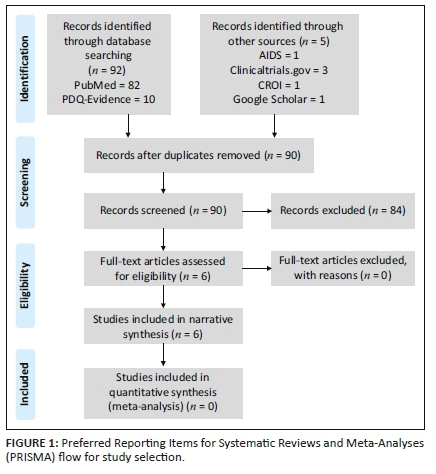
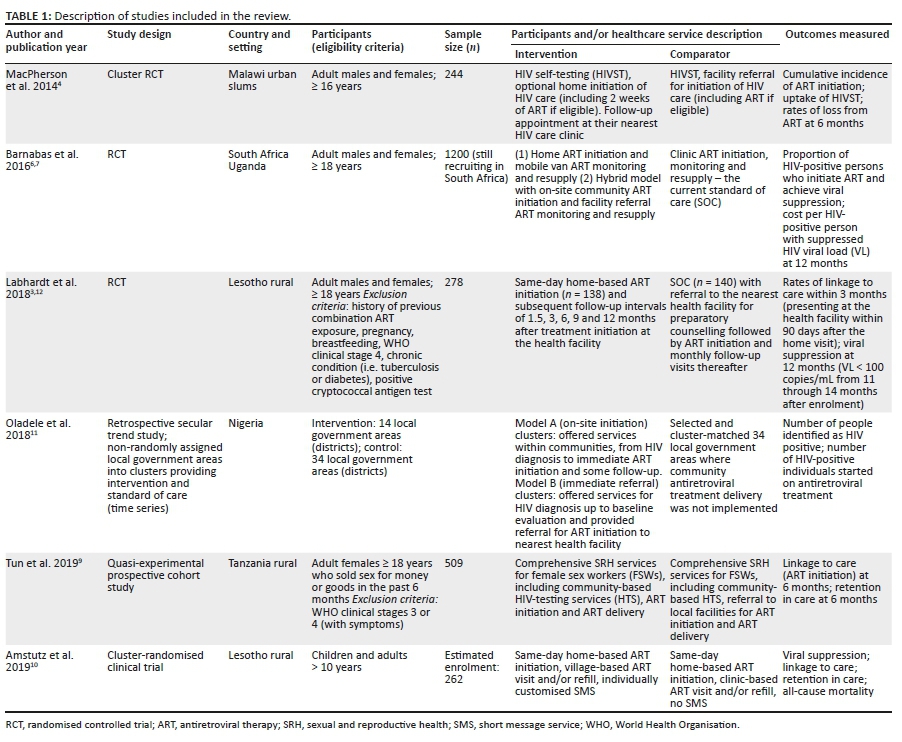
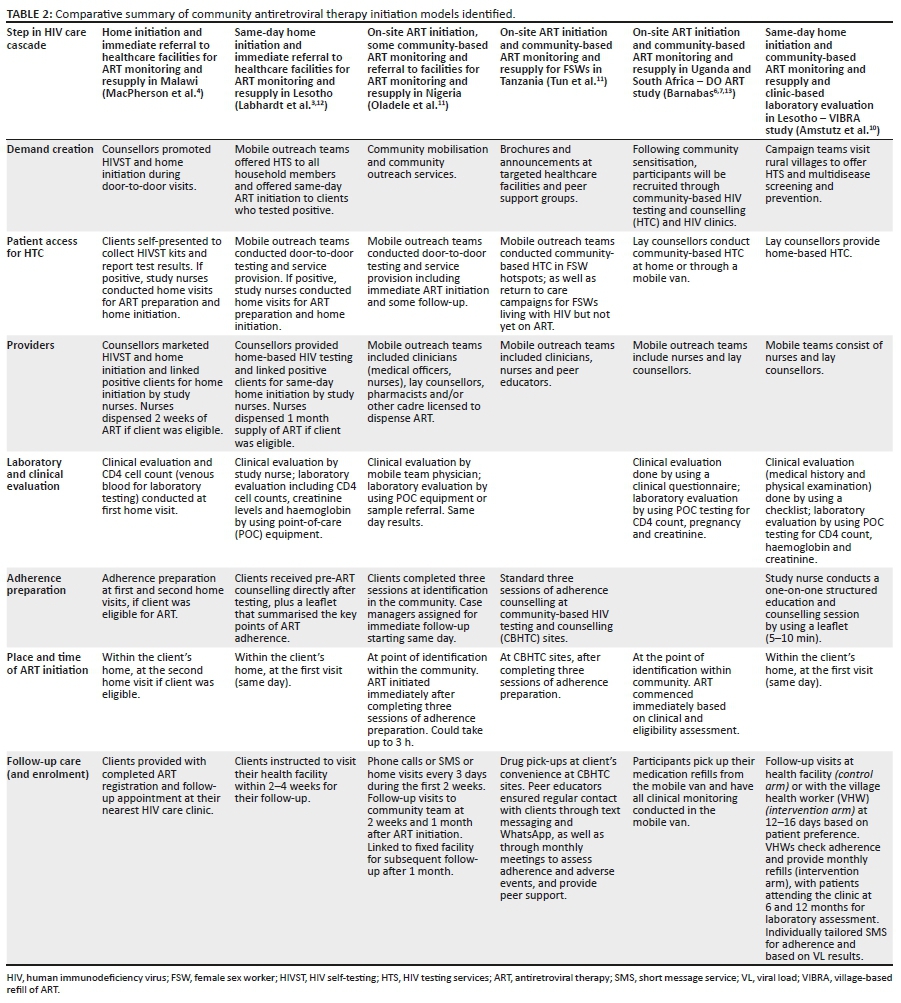
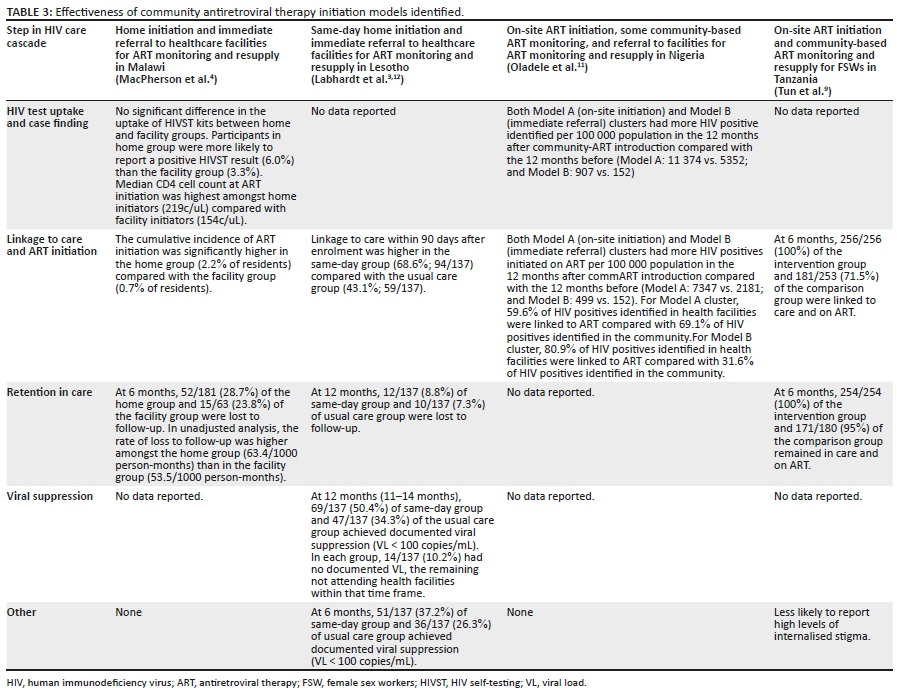
The process of study identification and selection concluded with 90 citations being identified after removing duplicates (Figure 1). After screening the titles and abstracts, six full-text articles were selected for critical review (Table 1). These consisted of four completed studies and two ongoing RCTs (Table 2). Four studies were included for the qualitative synthesis of patient outcomes, which varied between studies, and included case finding (HIV seropositive yield), linkage to ART initiation, ART adherence, retention in care and viral suppression (Table 3).
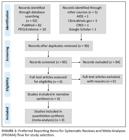
We excluded all studies that did not report on ART initiation in the community (out-of-facility). Interventions were implemented in Lesotho, Malawi, Nigeria, South Africa, Tanzania and Uganda. The four completed studies were assessed by using the McMaster University's Quality Assessment Tool, and individual studies ranged in quality from 1 (strong) to 3 (weak), with the overall average being 2. The two ongoing RCTs included in the model description were not assessed for quality as they had not been completed at the time of reporting.
Models of community-based antiretroviral therapy initiation
Community-based ART initiation modalities include home, mobile and workplace as part of an HIV-testing campaign. The review identified two main models of CB-ARTi, with some variations across countries (Table 2): (1) on-site ART initiation and community-based ART monitoring and resupply7,9,103,4,113,4,9Table 2.
Effects on clinical outcomes
Two completed RCTs,3,4911Table 3).
Human immunodeficiency virus test uptake and case finding
One RCT reported on HIV test uptake, whilst one RCT and one retrospective interrupted time series cohort study reported on HIV case finding as an outcome. In urban slums in Malawi, MacPherson et al.4
Linkage to antiretroviral therapy initiation
Four studies reported on linkage to ART initiation as an outcome. The study by MacPherson et al.4311
Oladele et al.14
Retention in care and loss to follow-up
Three studies reported on retention in care or loss to follow-up as an outcome. MacPherson et al.43p = 0.009). Tun et al.11
Viral suppression
One RCT reported on viral suppression as an outcome. Labhardt et al.3
Effects on behaviour
Two studies measured self-reported medication adherence, whilst one measured self-reported internalised stigma and an ongoing one reported on patient acceptability.
Medication adherence
MacPherson et al.4p = 0.14). Tun et al.9p = 0.008).
Internalised stigma and acceptability
Tun et al.9p = 0.001). This supports the findings by Wyatt et al.693,6,13
Cost analysis
Discussion
Summary of the evidence
A rapid review method was used to quickly capture the current evidence on the essential elements of evidence-based models of community-based (out-of-facility) ART initiation and the reported outcomes amongst patients initiating ART in community-based settings in SSA. We searched two databases, five conference websites and two registers of clinical trials for intervention studies evaluating CB-ARTi models, with four completed and two ongoing studies being included in this review.
The review identified heterogeneity in interventions, study design, location and definition of outcomes measured as a major obstacle to interpreting and synthesising the data on CB-ARTi. For example, some of the authors report on retention in care and loss to follow-up at 6 months4,9339
However, despite the limitations noted above, the existing data suggest that CB-ARTi could be more effective in increasing the uptake of HIV testing and improving case finding at a population level4,113,4,9,11343,93,99
Strengths and benefits of community-based antiretroviral therapy initiation
Community-based HTS are an essential pillar towards reaching HIV epidemic control. However, it is estimated that almost two-thirds of patients are lost in the process from community-based HIV testing to facility ART initiation without specific interventions, with higher loss to follow up (LTFU) rates amongst African cohorts.143,9,10,113,6,11,14
Concerns and barriers related to community-based antiretroviral therapy initiation
There are concerns that CB-ARTi may shift scarce resources and ART initiations from healthcare facilities, which may result in their being unsustainable.4,944,114,11
Concerns have also been expressed about the perceived lack of confidentiality, especially in smaller communities.46,9,13
Knowledge gaps and future directions
The purpose of this rapid review was to synthesise and describe what is currently known on the topic of CB-ARTi. Based on the findings, several considerations for future research and practice in the field of CB-ARTi are evident. Firstly, it is essential to consider the fit of CB-ARTi initiatives within the context of the local epidemic conditions to ensure that they complement existing healthcare systems. This includes addressing existing facility-level barriers, such as long waiting times and poor staff attitudes, to increasing uptake of ART.
Secondly, given the results, which suggest that CB-ARTi models are possibly not inferior to facility-based ones, it is crucial to revisit existing policies on decanting stable virally suppressed patients to community ART distribution models after 12 months. This is especially important for key and other priority populations, such as men, adolescents and young people whose retention in care is often hindered by facility-level barriers.
Thirdly, it is important to consider the needs of the population by developing partnerships with community leaders and community-based organisations to overcome potential barriers related to lack of confidentiality, and widespread stigma and discrimination. In addition, designing CB-ARTi initiatives that are integrated into general health campaigns can also address the potential lack of confidentiality. Community-based ART initiation models should therefore include assessments for non-communicable diseases, screening for sexually transmitted infections and tuberculosis (TB), HIV pre-exposure prophylaxis (PrEP) and other HIV prevention services, family planning services, as well as alcohol and drug rehabilitation services. Finally, further research is needed regarding the impact and estimated costs, as well as the cost-effectiveness of CB-ARTi models.
Limitations
Our results and conclusions might be susceptible to the bias related to the limits of a rapid review. These include restricting the search to literature published in English language and two electronic databases (although we used the PubMed database that contains by far the most significant number of health and medical journals). The search was also complemented by grey literature searches from major HIV-related conferences, clinical trial databases and brief technical expert consultations.
A second limitation is that only one author screened and selected the titles and abstracts from the total set of documents retrieved, extracted data from all eligible articles and assessed the quality of evidence and RoB. However, this author is knowledgeable about the content area. The second author checked all the extractions for accuracy and verified the quality of evidence and RoB assessment.
As a result of the heterogeneity in intervention, study design, location and definition of outcomes measured, we were not able to combine the results to estimate overall intervention effect or draw conclusions on the relative effectiveness of community-based versus facility-based ART initiation. Varying definitions of the outcomes of interest also impacted the comparability of the results. This major obstacle has been highlighted by Rosen et al.15 who have proposed standardised primary and secondary outcomes for research on accelerating ART initiation. Finally, some of the studies assessed are still incomplete, and the final results with higher numbers of participants (higher statistical power) may differ significantly from some of the preliminary findings presented.
Conclusion
This rapid review identified a small but rich set of information on the topic of CB-ARTi. However, after weighing the existing evidence, it appears that there is evidence that CB-ARTi can increase access to HTS, linkage to ART, retention in care and viral suppression rates, and is possibly not inferior to facility-based healthcare. The results reached earlier suggest that CB-ARTi models could prove to be equal and possibly not inferior to facility-based ones and warrant further investigation. The apparent promise and pitfalls of CB-ARTi and the increasing interest of policymakers in its potential as a strategy to increase linkage to care and ART uptake in the era of UTT indicate that careful monitoring of the evidence base is warranted.
Competing interests
The authors have declared that no competing interests exist.
Authors' contributions
R.C. conceptualised the project, the main conceptual ideas, and drafted the first manuscript. Both R.C. and A.R. contributed to the final version of the manuscript. A.R. supervised the project.
Funding information
This research was funded by the University of KwaZulu-Natal through a PhD studentship bursary awarded to R.C. by the College of Health Sciences.
Data availability statement
Data sharing is not applicable to this article as no new data were created or analysed in this study.
Disclaimer
The views and opinions expressed in this article are those of the authors and do not necessarily reflect the official policy or position of any affiliated agency of the authors.
Acknowledgements
References
- 1.Joint United Nations Programme on HIV/AIDS (UNAIDS). Fast-track: Ending the AIDS epidemic by 2030. Geneva: Joint United Nations Programme on HIV/AIDS; 2014.
-
2.Fox MP, Rosen S, Geldsetzer P, Barnighausen T, Negussie E, Beanland R. Interventions to improve the rate or timing of initiation of antiretroviral therapy for HIV in sub-Saharan Africa: Meta-analyses of effectiveness. J Int AIDS Soc. 2016;19(1):20888. https://doi.org/10.7448/IAS.19.1.20888
» https://doi.org/10.7448/IAS.19.1.20888 -
3.Labhardt ND, Ringera I, Lejone TI, et al. Effect of offering same-day ART vs usual health facility referral during home-based HIV testing on linkage to care and viral suppression among adults with HIV in Lesotho: The CASCADE randomized clinical trial. J Am Med Assoc. 2018 Mar;319(11):1103-1112. https://doi.org/10.1001/jama.2018.1818
» https://doi.org/10.1001/jama.2018.1818 -
4.Macpherson P, Lalloo DG, Webb EL, et al. Effect of optional home initiation of HIV care following HIV self-testing on antiretroviral therapy initiation among adults in Malawi: A randomized clinical trial. J Am Med Assoc. 2014 Jul;312(4):372-379. https://doi.org/10.1001/jama.2014.6493
» https://doi.org/10.1001/jama.2014.6493 -
5.Nachega JB, Adetokunboh O, Uthman OA, et al. Community-based interventions to improve and sustain antiretroviral therapy adherence, retention in HIV care and clinical outcomes in low- and middle-income countries for achieving the UNAIDS 90-90-90 targets. Curr HIV/AIDS Rep. 2016;13(5):241-255. https://doi.org/10.1007/s11904-016-0325-9
» https://doi.org/10.1007/s11904-016-0325-9 - 6.Wyatt MA, Pisarski E, Krows B, et al. Community-based ART initiation, delivery and monitoring in rural Southwest Uganda: Participant experiences of a differentiated model of HIV care delivery. 9th IAS Conference on HIV Science, 23-26 July 2017, IAS: Paris, France; 2017 [cited n.d.]. 2929992.
-
7.Barnabas R V. Delivery optimization for antiretroviral therapy (The DO ART Study) [homepage on the Internet]. Washington, DC: Clinicaltrials.gov; 2016 [cited 2018 Feb 27]. p. 1-7. Available from: https://clinicaltrials.gov/ct2/show/NCT02929992
» https://clinicaltrials.gov/ct2/show/NCT02929992 - 8.Tricco AC, Langlois E, Straus SE, World Health Organization. Rapid reviews to strengthen health policy and systems: A practical guide. Geneva: World Health Organization; 2017.
-
9.Tun W, Apicella L, Casalini C, et al. Community-based antiretroviral therapy (ART) delivery for female sex workers in Tanzania: 6-Month ART initiation and adherence. AIDS Behav. 2019;23(Suppl 2):142-152. https://doi.org/10.1007/s10461-019-02549-x
» https://doi.org/10.1007/s10461-019-02549-x -
10.Amstutz A, Lejone TI, Khesa L, et al. VIBRA trial - Effect of village-based refill of ART following home-based same-day ART initiation vs clinic-based ART refill on viral suppression among individuals living with HIV: Protocol of a cluster-randomized clinical trial in rural Lesotho. Trials. 2019;20:522. https://doi.org/10.1186/s13063-019-3510-5
» https://doi.org/10.1186/s13063-019-3510-5 -
11.Oladele EA, Badejo OA, Obanubi C, et al. Bridging the HIV treatment gap in Nigeria: Examining community antiretroviral treatment models. J Int AIDS Soc. 2018;21(4):e25108. https://doi.org/10.1002/jia2.25108
» https://doi.org/10.1002/jia2.25108 -
12.Labhardt ND, Ringera I, Lejone TI, et al. Same day ART initiation versus clinic-based pre-ART assessment and counselling for individuals newly tested HIV-positive during community-based HIV testing in rural Lesotho - A randomized controlled trial (CASCADE trial). BMC Public Health. 2016;16:329. https://doi.org/10.1186/s12889-016-2972-6
» https://doi.org/10.1186/s12889-016-2972-6 -
13.Asiimwe S, Van Rooyen H, Schaafsma TT, et al. Community-based HIV testing and assessment for same-day ART reaches men for HIV care. Oral abstracts of the 22nd International AIDS Conference, 23-27 July 2018, Amsterdam, the Netherlands. J Intern AIDS Soc, 21:78. https://doi.org/10.1002/jia2.25148
» https://doi.org/10.1002/jia2.25148 -
14.Rosen S, Fox MP. Retention in HIV care between testing and treatment in sub-Saharan Africa: A systematic review. PLoS Med. 2011;8(7):e1001056. https://doi.org/10.1371/journal.pmed.1001056
» https://doi.org/10.1371/journal.pmed.1001056 -
15.Rosen S, Fox MP, Larson BA, et al. Accelerating the uptake and timing of antiretroviral therapy initiation in sub-Saharan Africa: An operations research agenda. PLoS Med. 2016;13(8):1-13. https://doi.org/10.1371/journal.pmed.1002106
» https://doi.org/10.1371/journal.pmed.1002106
Accepted: 10 Sept. 2020
Published: 05 Nov. 2020