Reducing medication errors in HIV-positive patients: Influence of a clinical pharmacist
Abstract
BACKGROUND: The roll-out of antiretroviral medicines has improved life expectancy in people living with HIV (PLHIV). This has resulted in more patients being hospitalised for non-communicable diseases, increasing risk for medication errors (MEs). Pharmacists, through medication reconciliation, may identify and reduce MEs in this population. OBJECTIVES: To describe the importance of a pharmacist's involvement in identifying and quantifying types of MEs. METHOD: A quantitative, prospective observational study was conducted over 14 weeks. A pharmacist reviewed HIV-positive, hospitalised patients' files, using a data collection instrument, to determine the prevalence of MEs in PLHIV. The study pharmacist recommended appropriate actions to the prescriber to resolve MEs and documented resolution of the MEs. RESULTS: The study population of n = 180 patient files were reviewed 453 times, identifying 466 MEs. Medication errors included incorrect medication reconciliation from history (19; 4.1%), prescription omission (17; 3.7%), duplication of therapy (10; 2.2%), missed doses (265; 57.1%), incorrect dosing (103; 22.2%), incorrect administration frequency (2; 0.4%), incorrect duration of therapy (15; 3.2%) and drug-drug interactions (18; 3.9%). More than half (58.2%) of the MEs were resolved in less than 24 h, with involvement of the pharmacist. CONCLUSION: This study demonstrates the magnitude of MEs experienced in hospitalised PLHIV and highlights the role clinical pharmacists play in identifying and resolving MEs to improve patient outcomes.
HIV; opportunistic infections; people living with HIV; medication errors; co-morbidities; clinical pharmacist
Introduction
Sub-Saharan Africa bears the largest global burden of the HIV pandemic (20.8 million),1,2,3 and South Africa (SA) is the most heavily affected country with an estimated 7.8m people living with HIV (PLHIV).4,5 In 2022, 37.7m PLHIV were known to have contracted the disease globally, with 74% having access to antiretroviral therapy (ART).226,7,8,9,10 Pharmacists can contribute by identifying MEs, preventing adverse drug reactions (ADEs), optimising ART, identifying potential drug-drug interactions, and managing co-infections.11
Medication errors (MEs) are established safety concerns in all individuals consuming medicines,12failures in the treatment process that have the potential to cause harm to the patient.1312,14 MEs can happen at any stage of the medication use process, including prescribing, documenting, transcribing, dispensing, administration, and monitoring.15 ART related MEs may result in toxicity, failure of therapy, and the development of viral resistance, which must be prevented or corrected swiftly.14,16
MEs are described as the third global patient safety challenge by the World Health Organization (WHO).12,17 Studies conducted in the United States reported a prevalence of 25.8% - 72% MEs amongst hospitalised PLHIV.18
Only five ME studies occurred in SA between 2004 and 2009, none in PLHIV,1916
Pharmacists are experts in pharmacology, pharmacokinetic- and pharmacodynamic principles, understanding standard treatment plans, and identifying drug interactions and potential MEs through prescription evaluation. They can identify challenges in patients with new diseases requiring treatment.1620
Pharmacist-led services to minimise MEs have demonstrated reductions in MEs during hospitalisations. However, the role of the pharmacists in PLHIV is not clearly described in SA. Therefore, the purpose of this study was to evaluate the prevalence and type of MEs occurring in PLHIV admitted to a tertiary hospital in the Western Cape, and to describe pharmacist recommendations from this evaluation.
Research methods and design
Study design
A prospective observational study was conducted over a period of 14 weeks, reviewing patient files to determine the prevalence and type of related MEs occurring in PLHIV at the study site. The study clinical pharmacist identified MEs, recommended appropriate actions to the prescriber, and documented resolution of the MEs.
Setting
This study was conducted at a 945-bed tertiary academic hospital in the Western Cape, SA, where the researcher is employed. It included patients from four general Internal Medicine wards.
Study population and sampling strategy
The study population included all patients who were diagnosed with HIV before, at the time of, and during hospital admission.
Homogeneous purposive sampling, as described by Palinkas et al.,2222
The Raosoft® sample size calculator, an online application developer for web surveys, was used to identify a sample size of n = 180 participants, with a 95% confidence level, a 3% margin of error, a response distribution of 50% and a PLHIV population of 280 in the preselected wards.
Data collection
A data collection instrument (DCI) was designed and adapted from previous studies by Commers et al., Guo et al., and Pittman et al.,7,8,18 to ensure that the required data were collected. Information collected on the DCI included demographic data, including gender, age, weight and duration of admission, the patient's medical history, reasons for the current admission, and prescribed medication. Furthermore, identified MEs were listed, together with recommended actions to resolve errors.
Up-to-date®, EMGuidance™, Essential Medicine List Antiretroviral interaction table, Medscape™ drug interaction checker and the South African Medicines Formulary were used in order to identify and verify MEs and drug interactions. The pharmacist's involvement was determined by quantifying the number of MEs corrected by the pharmacist's interventions or recommendations.
Data analysis
The data were analysed using an Excel™ spreadsheet and the IBM Statistical Package for Social Science version 28 (IBM Corp., Armonk, New York, United States). Descriptive summaries were generated for both demographic and hospital admission data. Admission data were used to summarise clinical information and evaluate study outcomes. MEs identified were quantified using frequencies and percentages, and the time to resolve MEs was determined.
Ethical considerations
The study was approved by the Sefako Makgatho Health Sciences University Research and Ethics committee (SMUREC) (SMUREC/P/92/2021: PG), the Western Cape Department of Health as well as the Chief Operations Officer of the hospital. The data collected are for research purposes exclusively and patients' written informed consent was obtained prior to inclusion. Confidentiality was maintained by using study codes for participants. Study-related documents are stored on a personal computer with password protection for 5 years.
Results
Demographic data
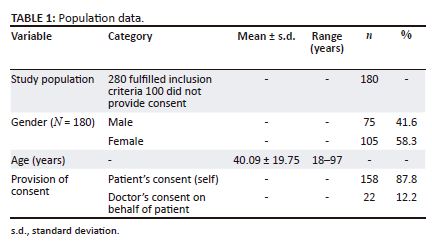
A total of 280 hospitalised patients fulfilled the inclusion criteria for this study. However, n = 180 were recruited, as 100 patients could not be recruited due to their inability to provide consent for various reasons, including their medical condition and unresponsiveness.
Files of the study participants (n = 180) were reviewed for ART regimens and co-morbidities. Most patient files were reviewed more than once, from admission and throughout their admission to the preselected general wards, resulting in N = 453 reviews during the study period. Table 1 provides an overview of the demographic characteristics of the study population.
Co-morbidities
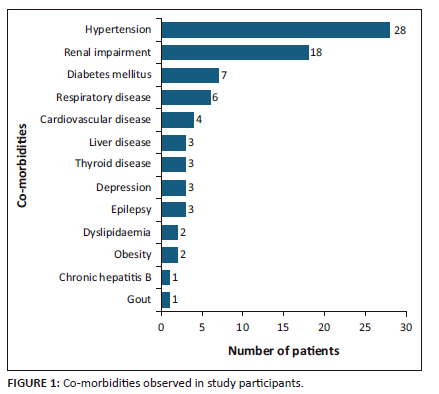
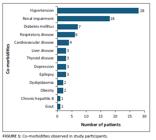
This study included n = 180 hospitalised patients during the data collection period. The patients' medical history included polysubstance abuse for 25 (13.9%) participants, 69 (38.3%) were previously diagnosed with tuberculosis (TB), five (2.8%) had a previous cerebrovascular incident and seven (3.9%) had coronavirus disease 2019 (COVID-19). The study did not quantify the COVID-19 vaccination of participants. Co-morbidities were identified in 45 (25%) participants, with 22 having one co-morbidity, 20 having two or more co-morbidities, and three having four co-morbidities. The most common co-morbidities observed are represented in Figure 1.
Opportunistic infections
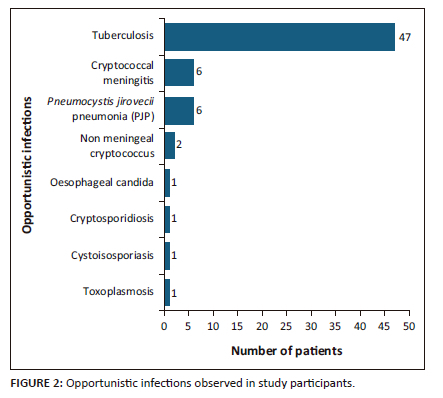
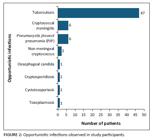
Opportunistic infections (OIs) were identified in 62 (34.4%) participants; three participants experienced two OIs simultaneously. The most common OI observed was TB (26.1%). OIs and frequencies are represented in Figure 2.
Medication errors observed in hospitalised people living with HIV and AIDS
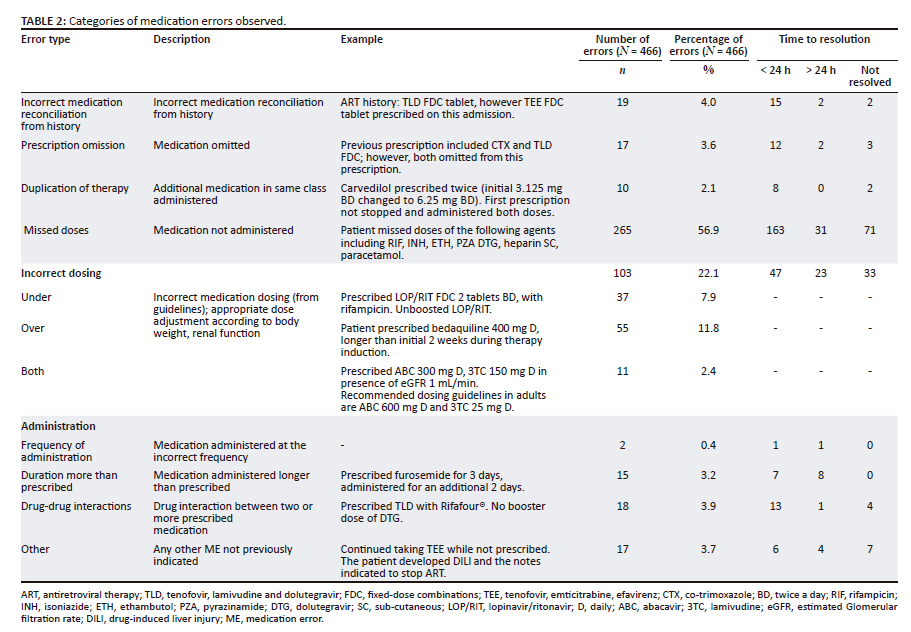
MEs were observed during 316 (69.8%) reviews, and 466 MEs were identified and documented, with an average of 1.03 errors per review (Table 2). Table 2 presents the time taken to resolve MEs after a recommendation to the prescriber.
Missed doses were observed in 265 reviews (N = 453, 56.9%), yielding 406 medicines that had missed doses. The top five medication classes identified with missed doses were analgesics (n = 127; 25%), antiretroviral agents (n = 53; 10.5%), supplements (n = 50; 9.9%), antibiotics (n = 44; 8.7%), and antiemetics (n = 27; 5.3%). Explanations for why medication doses were missed were only documented for 35 (13.2%) cases, for example omitting antithrombotic treatment because of high INR.
The incorrect dosing regimen was observed in 103 reviews (N = 453, 22.7%), identifying 136 inappropriate doses (1.3 dosing errors per review). A single error was observed in 73 reviews and one review had five dosing errors. The top medicine groups involving dosing errors included antimycobacterial agents (n = 42; 30.8%) and antiretroviral agents (n = 26; 19.1%). The most common individual agents dosed incorrectly included Rifafour® (n = 26; 19.1%), enoxaparin (n = 16; 11.8%), lamivudine (n = 15; 11%), fluconazole (n = 10; 7.4%) and co-trimoxazole (n = 6; 4.4%).
Drug-drug interactions (DIs) were the only interaction observed in this study and accounted for 18 MEs (N = 453; 4%). Unboosted tenofovir, lamivudine and dolutegravir (TLD) prescribed simultaneously with rifampicin was observed nine times. Seven of these errors were resolved in less than 24 h. Drug-supplement interactions were attributed to seven interactions, for example Citrosoda® (sodium citrate) and isoniazid (INH), thereby reducing INH absorption. Five of these errors were resolved more than 24 h later. Unboosted lopinavir/ritonavir prescribed with rifampicin was observed twice. One was resolved in less than 24 h and one was resolved more than 24 h later.
Medication errors observed change at the point of care
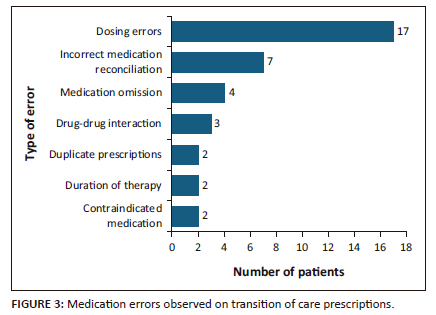
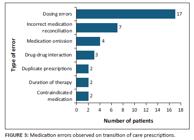
Medication reconciliation was performed for 171 (95%) patients during the transition of care, eight (0.04%) demised and one participant discharged themselves against medical advice. Medication was issued to 143 (79%) patients during the transition of care. Medication errors were observed in 37 of the 143 prescriptions. The types of MEs observed included dosing errors, incorrect medication reconciliation, medication omission, DIs, duplicate prescriptions, duration of therapy and contraindicated medication (Figure 3). Seventeen (n = 17; 46%) MEs were resolved before patients' transition of care.
Discussion
Co-morbidities were identified in a quarter of participants. Godongwana et al.232310 102424252526
The most common OIs observed during this study were TB, Cryptococcal meningitis (CCM) and Pneumocystis jirovecii pneumonia (PJP). SA has one of the highest TB burdens globally.2727
CCM was diagnosed in 3.3% of participants, which was lower than the 6.5% found in a meta-analysis of pooled global prevalence of cryptococcal antigenaemia.282929
PJP was diagnosed in 3.3% of study participants, which is much lower than the 22.4% prevalence in sub-Saharan Africa.30303031
People living with HIV/AIDS are at greater risk for MEs due to complex medication regimens, polypharmacy, DIs, increased hospitalisations for other co-morbid conditions, other infections, and knowledge limitations of healthcare providers.7,8,9 MEs were observed in 69.8% of the reviews in the current study, and 94.4% of participants experienced MEs during their hospital admission. Gou et al.8813
The most common MEs observed in this study include missed doses, incorrect medication dosing and DIs. Similarly, although in a smaller population, inappropriate ARV regimens and dosing errors were the most prevalent MEs observed in a study in the United States.32
Carcelero et al.6633333434,35 Decano et al.3535353636
Even PLHIV during early HIV-1 infection on ART are up to five times more likely to develop active TB, and those with advanced HIV are 20 times more likely to develop active disease.372727
Medication errors attributed to DIs accounted for 3.9%. Unboosted TLD prescribed with rifampicin-based TB therapy accounted for 50% while unboosted lopinavir/ritonavir prescribed with rifampicin-based TB therapy accounted for 11.1% of all DIs. The findings of Van Der Walt et al.,27383988,38,39 However, protease inhibitors were involved in most of the DIs observed in Yehia et al.,3839840
The pharmacist made recommendations to prescribers and nursing sisters at the point of care, which resolved more than 50% of MEs in less than 24 h. This highlights the significant role pharmacists can play in resolving MEs rapidly and ultimately preventing treatment failure, ADEs and improving patient outcomes. Yehia et al.383838
Nonetheless, by addressing MEs during hospital stays, a pharmacist can facilitate a hospitalised patient's smooth transition to a point of care smoothly, limiting MEs.16
Limitations
Data collection was restricted to four preselected general medical wards, limiting the generalisation of the results to the general population, or even all hospitalised patients. Furthermore, the outcomes of interventions were only quantified, and the clinical and cost implications were not studied.
Recommendations
Active participation of pharmacists in patient reviews during hospitalisation will assist with the identification of MEs as well as other problems identified during the hospitalisation or at the transition of care. The significance of these DIs must be communicated to prescribers and nursing staff at large, to ensure patients do not experience treatment failure because of negligence to prescribe booster DTG, or failure to increase doses of lopinavir/ritonavir when TB co-infection is also being treated.
Pharmacists at ward level can assist in the rapid resolution of medication-related errors and queries, with a possible reduction in patient hospitalisation and healthcare costs.
Conclusion
MEs in hospitalised patients are common. The findings of this study provide information regarding the extent of MEs that occur in hospitalised PLHIV. This information and understanding of the extent of the problem in HIV-positive patients can empower healthcare workers to develop targeted systems and interventions to address and to prevent unnecessary MEs or omission in this vulnerable population. The study highlights the value of the clinical pharmacist in reducing the number of MEs significantly. The reduction of MEs throughout a patient's hospitalisation, through intervention and quality improvement projects, improve patient care to protect PLHIV.
Competing interests
The authors declare that they have no financial or personal relationships that may have inappropriately influenced them in writing this article.
Authors' contributions
M.J.-B., E.B. and S.B. contributed to conceptualisation of the project. M.J.-B. collected data, which were analysed by all three authors. M.J.-B., E.B. and S.B. wrote a first draft of the manuscript, which was finalised and refined by E.B.
Funding information
The authors received no financial support for the research, authorship, and/or publication of this article.
Data availability
Data will be available from the corresponding author, E.B., on request.
Disclaimer
The views and opinions expressed in this article are those of the authors and are the product of professional research. It does not necessarily reflect the official policy or position of any affiliated institution, funder, agency, or that of the publisher. The authors are responsible for this article's results, findings, and content.
Acknowledgements
The authors would like to thank the study site in the Western Cape and Sefako Makgatho Health Sciences University for participation in this study. A great word of thanks must go to the statistician for assisting with data analysis.
References
-
1. Mkoko P, Raine RI. HIV-positive patients in the intensive care unit: A retrospective audit. S Afr Med J Suid-Afr Tydskr Vir Geneeskd. 2017;107(10):877-881. https://doi.org/10.7196/SAMJ.2017.v107i10.12298
» https://doi.org/10.7196/SAMJ.2017.v107i10.12298 -
2. South Africa | UNAIDS [homepage on the Internet]. [cited 2024 Mar 25]. Available from: https://www.unaids.org/en/regionscountries/countries/south_africa
» https://www.unaids.org/en/regionscountries/countries/south_africa -
3. Iacob SA, Iacob DG, Jugulete G. Improving the adherence to antiretroviral therapy, a difficult but essential task for a successful HIV treatment-Clinical points of view and practical considerations. Front Pharmacol. 2017;8:831. https://doi.org/10.3389/fphar.2017.00831
» https://doi.org/10.3389/fphar.2017.00831 -
4. New HIV survey highlights progress and ongoing disparities in South Africa's HIV epidemic - HSRC [homepage on the Internet]. 2023 [cited 2024 Mar 25]. Available from: https://hsrc.ac.za/press-releases/hsc/new-hiv-survey-highlights-progress-and-ongoing-disparities-in-south-africas-hiv-epidemic/
» https://hsrc.ac.za/press-releases/hsc/new-hiv-survey-highlights-progress-and-ongoing-disparities-in-south-africas-hiv-epidemic/ -
5. Statistics South Africa. Statistical release: Census 2022 [homepage on the Internet]. Pretoria. [cited 2024 Feb 20]. Report No.: P0301.4. Available from: https://census.statssa.gov.za/assets/documents/2022/P03014_Census_2022_Statistical_Release.pdf
» https://census.statssa.gov.za/assets/documents/2022/P03014_Census_2022_Statistical_Release.pdf -
6. Carcelero E, Tuset M, Martin M, et al. Evaluation of antiretroviral-related errors and interventions by the clinical pharmacist in hospitalized HIV-infected patients. HIV Med. 2011;12(8):494-499. https://doi.org/10.1111/j.1468-1293.2011.00915.x
» https://doi.org/10.1111/j.1468-1293.2011.00915.x -
7. Pittman ES, Li EH, Foisy MM. Addressing medication errors involving HIV-positive inpatients: Development of a clinician's guide to assessing antiretroviral therapy. Can J Hosp Pharm. 2015;68(6):470-473. https://doi.org/10.4212/cjhp.v68i6.1504
» https://doi.org/10.4212/cjhp.v68i6.1504 - 8. Guo Y, Chung P, Weiss C, Veltri K, Minamoto GY. Customized order-entry sets can prevent antiretroviral prescribing errors: A novel opportunity for antimicrobial stewardship. Pharm Ther. 2015;40(5):353-360.
-
9. Billedo JAS, Berkowitz LB, Cha A. Evaluating the impact of a pharmacist-led antiretroviral stewardship program on reducing drug interactions in HIV-infected patients. J Int Assoc Provid AIDS Care. 2016;15(1):84-88. https://doi.org/10.1177/2325957415600700
» https://doi.org/10.1177/2325957415600700 -
10. Lebina L, Malatji T, Nabeemeeah F, et al. The prevalence of multimorbidity in virally suppressed HIV-positive patients in Limpopo. S Afr J HIV Med. 2023;24(1):a1495. https://doi.org/10.4102/sajhivmed.v24i1.1495
» https://doi.org/10.4102/sajhivmed.v24i1.1495 -
11. Weber L, Langebrake C, Picksak G, Schöning T, Schulze I, Jaehde U. Medication errors in cancer therapy: Reports from German hospital pharmacists between 2008 and 2019. J Oncol Pharm Pract. 2023;29(6):1443-1453. https://doi.org/10.1177/10781552221135130
» https://doi.org/10.1177/10781552221135130 -
12. Mulac A, Taxis K, Hagesaether E, Gerd Granas A. Severe and fatal medication errors in hospitals: Findings from the Norwegian Incident Reporting System. Eur J Hosp Pharm Sci Pract. 2021;28(Suppl 2):e56-e61. https://doi.org/10.1136/ejhpharm-2020-002298
» https://doi.org/10.1136/ejhpharm-2020-002298 -
13. Otwombe K, Munsamy M, Dheda M, et al. Tracking adverse drug reactions and medication errors in the Central Chronic Medicine Dispensing and Distribution (CCMDD) programme in South Africa. S Afr J HIV Med. 2022;23(1):1366. https://doi.org/10.4102/sajhivmed.v23i1.1366
» https://doi.org/10.4102/sajhivmed.v23i1.1366 -
14. Koren DE, Scarsi KK, Farmer EK, et al. A call to action: The role of antiretroviral stewardship in inpatient practice, a Joint Policy Paper of the Infectious Diseases Society of America, HIV Medicine Association, and American Academy of HIV Medicine. Clin Infect Dis. 2020;70(11):2241-2246. https://doi.org/10.1093/cid/ciz792
» https://doi.org/10.1093/cid/ciz792 -
15. Kumar SS, Avinash M, Lakshman K. An audit spiral of the medication process in a Tertiary Care Hospital. Indian J Surg. 2024. https://doi.org/10.1007/s12262-023-04004-7
» https://doi.org/10.1007/s12262-023-04004-7 -
16. Liedtke MD, Tomlin CR, Skrepnek GH, Farmer KC, Johnson PN, Rathbun RC. HIV Pharmacist's impact on inpatient antiretroviral errors. HIV Med. 2016;17(10):717-723. https://doi.org/10.1111/hiv.12375
» https://doi.org/10.1111/hiv.12375 -
17. Donaldson LJ, Kelley ET, Dhingra-Kumar N, Kieny MP, Sheikh A. Medication without harm: WHO's third global patient safety challenge. Lancet. 2017;389(10080):1680-1681. https://doi.org/10.1016/S0140-6736(17)31047-4
» https://doi.org/10.1016/S0140-6736(17)31047-4 -
18. Commers T, Swindells S, Sayles H, Gross AE, Devetten M, Sandkovsky U. Antiretroviral medication prescribing errors are common with hospitalization of HIV-infected patients. J Antimicrob Chemother. 2014;69(1):262-267. https://doi.org/10.1093/jac/dkt323
» https://doi.org/10.1093/jac/dkt323 -
19. Mekonnen AB, Alhawassi TM, McLachlan AJ, Brien JE. Adverse drug events and medication errors in African hospitals: A systematic review. Drugs - Real World Outcomes. 2018;5(1):1-24. https://doi.org/10.1007/s40801-017-0125-6
» https://doi.org/10.1007/s40801-017-0125-6 -
20. Naseralallah LM, Hussain TA, Jaam M, Pawluk SA. Impact of pharmacist interventions on medication errors in hospitalized pediatric patients: A systematic review and meta-analysis. Int J Clin Pharm. 2020;42(4):979-994. https://doi.org/10.1007/s11096-020-01034-z
» https://doi.org/10.1007/s11096-020-01034-z -
21. Schellack N. Navigating medication errors - An overview and cautionary tales for Pharmacists - Pharmaciae - SAPC. Pharmaciae. 2020 [cited 2022 Oct 25];17(1). Available from: https://online.pharmaciae.org.za/navigating-medication-errors-an-overview-and-cautionary-tales-for-pharmacists/
» https://online.pharmaciae.org.za/navigating-medication-errors-an-overview-and-cautionary-tales-for-pharmacists/ -
22. Palinkas LA, Horwitz SM, Green CA, Wisdom JP, Duan N, Hoagwood K. Purposeful sampling for qualitative data collection and analysis in mixed method implementation research. Adm Policy Ment Health. 2015;42(5):533-544. https://doi.org/10.1007/s10488-013-0528-y
» https://doi.org/10.1007/s10488-013-0528-y -
23. Godongwana M, De Wet-Billings N, Milovanovic M. The comorbidity of HIV, hypertension and diabetes: A qualitative study exploring the challenges faced by healthcare providers and patients in selected urban and rural health facilities where the ICDM model is implemented in South Africa. BMC Health Serv Res. 2021;21(1):647. https://doi.org/10.1186/s12913-021-06670-3
» https://doi.org/10.1186/s12913-021-06670-3 -
24. Brennan AT, Jamieson L, Crowther NJ, et al. Prevalence, incidence, predictors, treatment, and control of hypertension among HIV-positive adults on antiretroviral treatment in public sector treatment programs in South Africa. PLoS One. 2018;13(10):e0204020. https://doi.org/10.1371/journal.pone.0204020
» https://doi.org/10.1371/journal.pone.0204020 -
25. Vachiat AI, Musenge E, Wadee S, Naicker S. Renal failure in HIV-positive patients-A South African experience. Clin Kidney J. 2013;6(6):584-589. https://doi.org/10.1093/ckj/sft128
» https://doi.org/10.1093/ckj/sft128 -
26. Umar DM, Naidoo P. Prevalence and predictors of diabetes mellitus among persons living with HIV: A retrospective cohort study conducted in 4 public healthcare facilities in KwaZulu-Natal. BMC Public Health. 2021;21(1):288. https://doi.org/10.1186/s12889-021-10318-6
» https://doi.org/10.1186/s12889-021-10318-6 -
27. Van der Walt MMS. The First National TB Prevalence Survey - South Africa 2018 | Department of Health Knowledge Hub [homepage on the Internet]. National Department of Health; 2021 [cited 2024 Mar 26]. Available from: https://knowledgehub.health.gov.za/elibrary/first-national-tb-prevalence-survey-south-africa-2018
» https://knowledgehub.health.gov.za/elibrary/first-national-tb-prevalence-survey-south-africa-2018 -
28. Govender NP, Meintjes G, Mangena P, et al. Southern African HIV Clinicians Society guideline for the prevention, diagnosis and management of cryptococcal disease among HIV-infected persons: 2019 update. S Afr J HIV Med. 2019;20(1):1-16. https://doi.org/10.4102/sajhivmed.v20i1.1030
» https://doi.org/10.4102/sajhivmed.v20i1.1030 -
29. Sonderup M, Spearman W, Ross I, et al. The challenges of maintaining non-COVID medicine services at Groote Schuur Hospital, Cape Town, South Africa, during COVID-19. S Afr Med J. 2020;110(12):1151. https://doi.org/10.7196/SAMJ.2020.v110i12.15392
» https://doi.org/10.7196/SAMJ.2020.v110i12.15392 -
30. Maartens G, Griesel R, Kengne AP, et al. Development of a clinical prediction rule to diagnose Pneumocystis jirovecii pneumonia in the World Health Organization's algorithm for seriously ill HIV-infected patients. S Afr J HIV Med. 2018;19(1):1-6. https://doi.org/10.4102/sajhivmed.v19i1.851
» https://doi.org/10.4102/sajhivmed.v19i1.851 -
31. Melendez Rivera JG, Ciofoaia GA. Pneumocystis jirovecii Prophylaxis [homepage on the Internet]. Treasure Island, FL: StatPearls Publishing; 2024 [cited 2024 Mar 25]. Available from: http://www.ncbi.nlm.nih.gov/books/NBK560530/
» http://www.ncbi.nlm.nih.gov/books/NBK560530/ -
32. Bunn HT, Hester EK, Maldonado RA, Childress D. Evaluation of human immunodeficiency virus medication errors in a community hospital following the implementation of a pharmacist-led antiretroviral stewardship program. JACCP J Am Coll Clin Pharm. 2020;3(3):593-600. https://doi.org/10.1002/jac5.1196
» https://doi.org/10.1002/jac5.1196 -
33. Green C, Du-Pre P, Elahi N, Dunckley P, McIntyre A. Omission after admission: Failure in prescribed medications being given to inpatients. Clin Med. 2009;9(6):515-518. https://doi.org/10.7861/clinmedicine.9-6-515
» https://doi.org/10.7861/clinmedicine.9-6-515 -
34. Azia IN, Mukumbang FC, Van WB. Barriers to adherence to antiretroviral treatment in a regional hospital in Vredenburg, Western Cape, South Africa: Original research. S Afr J HIV Med. 2016;17(1):1-8. https://doi.org/10.4102/sajhivmed.v17i1.476
» https://doi.org/10.4102/sajhivmed.v17i1.476 -
35. Decano A, Dubrovskaya Y, Horowitz H, Mehta D, Scipione MR. Adherence to antiretroviral therapy in hospitalized HIV-positive patients. Open Forum Infect Dis. 2016;3(suppl 1):1495. https://doi.org/10.1093/ofid/ofw172.1197
» https://doi.org/10.1093/ofid/ofw172.1197 -
36. Endashaw Hareru H, Sisay D, Kassaw C, Kassa R. Antibiotics non-adherence and its associated factors among households in southern Ethiopia. SAGE Open Med. 2022;10:20503121221090472. https://doi.org/10.1177/20503121221090472
» https://doi.org/10.1177/20503121221090472 -
37. Pooranagangadevi N, Padmapriyadarsini C. Treatment of tuberculosis and the drug interactions associated with HIV-TB co-infection treatment. Front Trop Dis. 2022;3:834013. https://doi.org/10.3389/fitd.2022.834013
» https://doi.org/10.3389/fitd.2022.834013 -
38. Yehia BR, Mehta JM, Ciuffetelli D, et al. Antiretroviral medication errors remain high but are quickly corrected among hospitalized HIV-infected adults. Clin Infect Dis Off Publ Infect Dis Soc Am. 2012;55(4):593-599. https://doi.org/10.1093/cid/cis491
» https://doi.org/10.1093/cid/cis491 -
39. Chiampas TD, Kim H, Badowski M. Evaluation of the occurrence and type of antiretroviral and opportunistic infection medication errors within the inpatient setting. Pharm Pract. 2015;13(1):512. https://doi.org/10.18549/PharmPract.2015.01.512
» https://doi.org/10.18549/PharmPract.2015.01.512 -
40. South African National Department of Health. Guidelines for the prevention of mother to child transmission of communicable infections. 2021 [cited 2022 Aug 22]. Available from: https://sahivsoc.org/Subheader?slug=ndoh-and-who-guidelines
» https://sahivsoc.org/Subheader?slug=ndoh-and-who-guidelines

Accepted: 15 May 2024
Published: 01 Aug. 2024