Southern African HIV Clinicians Society guideline for the prevention, diagnosis and management of cryptococcal disease among HIV-infected persons: 2019 update
Introduction
Rationale for guideline update
Six years after the Southern African HIV Clinicians Society cryptococcal disease guideline was published in 2013, cryptococcal meningitis (CM) remains an important cause of mortality among antiretroviral treatment (ART)-naïve and ART-experienced HIV-seropositive adults in South Africa.1,2 Several important practice-changing developments led us to update the guideline to diagnose, prevent and manage this common fungal opportunistic infection. The World Health Organization (WHO) published a guideline for advanced HIV disease in 2017 and a guideline relevant to resource-limited settings for HIV-associated CM in 2018.3,4 Cryptococcal antigen (CrAg) screening and pre-emptive treatment reduced all-cause mortality among ambulatory participants in a randomised clinical trial in Zambia and Uganda.56,7 Recently completed clinical trials conducted in resource-limited settings have provided evidence for the best first-line antifungal regimens for CM and the role of corticosteroids in CM.8,9 Finally, international and local advocacy efforts have resulted in increasing, yet still limited, access to flucytosine and a reduced cost of liposomal amphotericin B for the treatment of CM.10
Summary of major changes to the guideline
1. We now recommend CrAg screening for all adults or adolescents with a CD4+ T-lymphocyte (CD4) count < 200 cells/µL who are initiating ART for the first time, switching after ART failure or re-entering into care after prior disengagement.
2. Reflex laboratory CrAg screening is recommended as the preferred approach in South Africa, although alternative approaches may be more suitable for other countries in Southern Africa.
3. To diagnose CM, lumbar puncture (LP) is recommended for all patients with a new positive CrAg screening test result.
4. The recommended induction regimen for CM is 1 week of amphotericin B deoxycholate (1 mg/kg/day) and flucytosine (100 mg/kg/day in four divided doses), followed by 1 week of fluconazole (1200 mg daily for adults; 12 mg/kg/day for children and adolescents up to a maximum of 800 mg daily).
5. We have recommended alternative induction regimens for CM among patients with renal dysfunction, including liposomal amphotericin B-based options.
6. A higher dose of fluconazole is now recommended during the 8-week consolidation phase for CM (800 mg daily for adults; 12 mg/kg/day for children and adolescents up to a maximum of 800 mg daily).
7. Maintenance treatment for CM is recommended to be continued for at least 12 months and until a single CD4 count is > 200 cells/µL and the HIV viral load is suppressed.
8. We have included new recommendations for the prevention, monitoring and management of flucytosine toxicities.
9. Although a manometer is the most accurate way to measure raised intracranial pressure, we have suggested alternative options for assessment of elevated pressure when it is unavailable.
10. Patients with a positive blood CrAg test result in whom CM is ruled out by LP (a negative cerebrospinal fluid [CSF] CrAg test is the most rapid method to establish this) should be given oral fluconazole alone as induction therapy (adults: 1200 mg for 2 weeks). Antiretroviral treatment may be commenced immediately.
11. We recommend immediate referral for LP in all patients with a new positive blood CrAg test who initiated ART within the 4-week period prior to the CrAg test. Among those with a negative CSF CrAg test (i.e. in whom CM is excluded), ART is recommended to be continued and fluconazole pre-emptive therapy should be initiated. Among those with a new diagnosis of CM during the first 4 weeks of ART, the guideline panel thought that there was clinical equipoise in terms of a decision to continue or interrupt ART.
12. Antifungal susceptibility testing is now recommended if a patient has a single relapse episode of CM and other causes have been excluded.
Recommendation 1: Cryptococcal antigen screening and pre-emptive treatment
Background
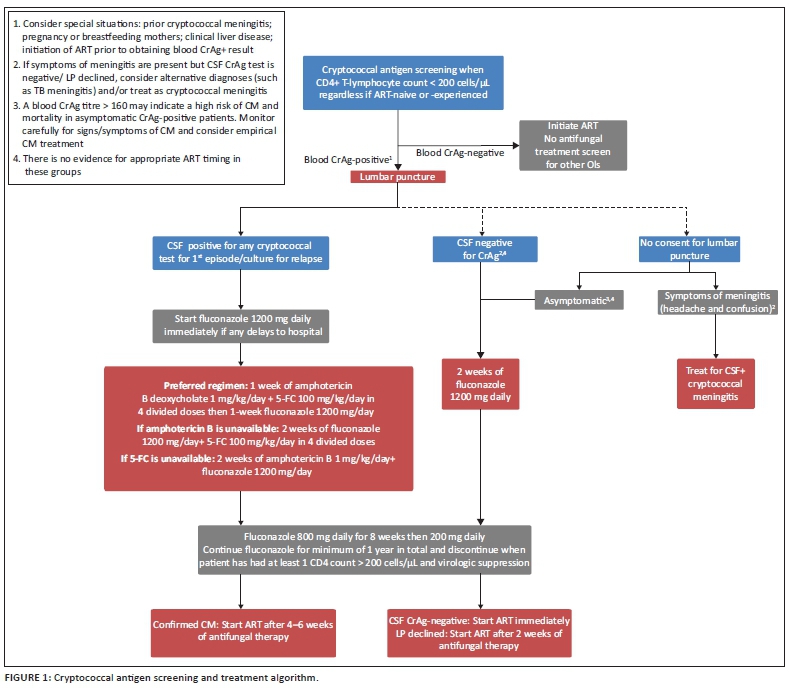
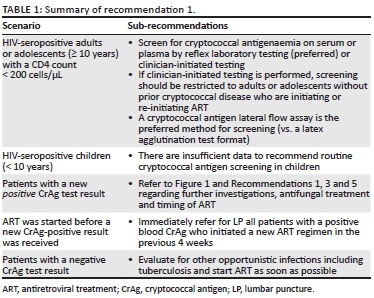
Early diagnosis of HIV infection and early initiation of ART before immunosuppression is the most important strategy to reduce the incidence of CM and CM-associated mortality. In South Africa, patients should initiate ART according to the current national guideline.1,11,12 Screening for subclinical cryptococcal disease has a proven mortality benefit among HIV-seropositive patients with low CD4 counts. In the Reduction of Early Mortality among HIV-infected Subjects sTarting AntiRetroviral Therapy (REMSTART) trial, HIV-seropositive outpatients with a CD4 count < 200 cells/µL, who were randomised to receive CrAg screening and community-based ART adherence support, had a 28% reduced all-cause mortality rate compared to those receiving standard of care (intervention: 134/1001 [13%] vs. standard: 180/998 [18%]).5134Table 1).
Detailed recommendations
Who to screen?
HIV-seropositive adults and adolescents (≥ 10 years) with a CD4 count < 200 cells/µL are recommended to be screened for cryptococcal antigenaemia. If screening is initiated by a clinician (medical practitioner or a nurse trained to initiate ART) and not performed reflexively in the laboratory, the expert panel recommends that screening must be restricted to adults and adolescents initiating ART for the first time, switching after treatment failure or re-initiating ART (after an episode of interruption that was > 3 months) with a CD4 count < 200 cells/µL and no prior CM. Although adults or adolescents with a CD4 count < 200 cells/µL who are virally suppressed on ART may also be at risk of cryptococcal disease,141515
Screening strategies
With reflexive laboratory CrAg screening, remnant blood samples (submitted to the laboratory for CD4 testing) are tested automatically for CrAg below a specified CD4 threshold. This approach is superior to clinician-initiated screening (where clinicians specifically request a blood CrAg test) in terms of screening coverage.167176
Management of cryptococcal antigen-positive patients without previous cryptococcal meningitis
All patients who screen CrAg-positive for the first time should have an LP performed. The absence of symptoms of meningitis does not exclude CM: approximately one in three patients with asymptomatic cryptococcal antigenaemia has concurrent CM.1819
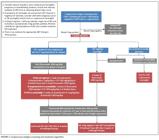
Patients who decline an LP can be stratified according to the presence or absence of meningitis symptoms (Figure 1), although this approach is now recognised to be suboptimal.1820,21 Such patients should be carefully monitored for CM signs/symptoms or considered for empirical CM treatment. Community adherence support is recommended for all patients who screen CrAg-positive and are followed up as outpatients, particularly among those who decline an LP.5
Management of a positive blood cryptococcal antigen result obtained after antiretroviral treatment initiation
Current same-day HIV test-and-treat strategies mean that some patients may start ART before a positive reflex blood CrAg result is received. Given the increased risk of mortality associated with early ART in CM,2223
Prior cryptococcal meningitis
Patients with a history of CM do not need to be routinely screened. Cerebrospinal fluid and blood specimens may remain CrAg-positive for months to years after a CM diagnosis and successful treatment of cryptococcal disease and therefore if these tests are positive in the absence of symptoms and signs, this is not an indication of relapse. However, if a patient with prior CM is screened, found to be CrAg-positive and has new symptoms or signs of meningitis, a full evaluation should be undertaken for relapse disease (refer to Recommendations 2 and 7). If the patient does not have new symptoms or signs of meningitis, the clinician should ensure that the patient receives adequate fluconazole maintenance therapy (refer to Recommendation 3).
Pregnancy or breastfeeding mothers
Cryptococcal antigen-positive patients who are pregnant should be offered an LP before a decision is made regarding management. If the patient has laboratory evidence of CM, she should be treated for CM with standard treatment.24,25 In a pregnant CrAg-positive patient without laboratory-confirmed CM or an asymptomatic woman who declines an LP, the patient should be counselled regarding the risks and benefits of fluconazole treatment. Fluconazole has rarely been associated with human teratogenicity when administered in the first trimester, particularly at higher doses (≥ 400 mg/day). However, patients with a positive blood CrAg test treated with ART and no fluconazole have a substantial risk of progression to meningitis, which has a high mortality. The panel therefore recommends that pregnant women should be counselled that the benefits of fluconazole outweigh the risks in this situation. An option that could be considered in women who are in the first trimester of pregnancy is to treat with fluconazole 200 mg daily until the second trimester. All women exposed to fluconazole in the first trimester should be referred for a high-resolution ultrasound scan before 20 weeks of gestation to detect congenital abnormalities. For mothers who are breastfeeding, consultation with an experienced medical practitioner is also recommended as fluconazole is present at concentrations similar to maternal plasma concentrations in breast milk and can be transmitted in large amounts through breast milk to the infant.26
Clinical liver disease
Patients with a history of liver disease or with evidence of clinical liver disease deserve careful monitoring of serum liver enzyme and bilirubin levels (with specialist referral if there is a rising trend, or if jaundice develops) because fluconazole may cause liver injury.27
Recommendation 2: Laboratory diagnosis and monitoring
Background
Cryptococcus neoformans is the most commonly detected pathogen causing meningitis in South Africa.283293015Table 2).
Detailed recommendations
Diagnosis of a first episode of cryptococcal meningitis
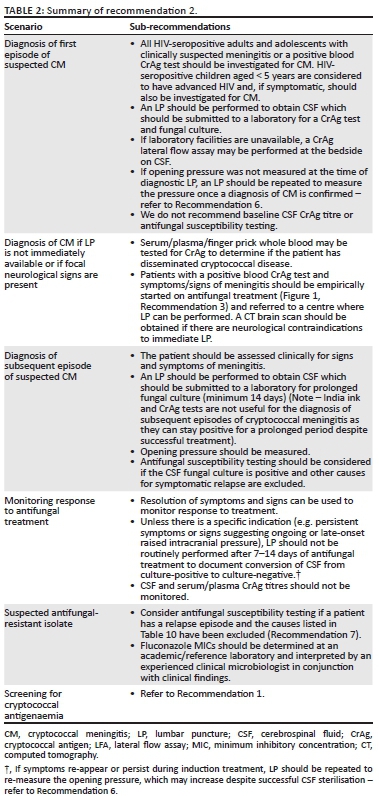
An LP is required to confirm the diagnosis and establish the aetiology of suspected meningitis. Lumbar puncture may also alleviate symptoms that are a direct result of raised intracranial pressure. For a suspected first episode of CM, CSF should be submitted to the laboratory for a CrAg test and fungal culture. India ink test is not recommended as the only rapid test because of its lower sensitivity (78% compared to CSF CrAg test).315,17,32 and the accuracy of other assays is still unclear. Cryptococcus neoformans can be cultured from CSF within 72 h among patients with a first episode of CM. Cryptococcus gattii is occasionally confirmed on culture (2% of all cases in South Africa) and these infections should be managed as for C. neoformans among HIV-seropositive patients.333435
Diagnosis of cryptococcal meningitis if focal neurological signs are present or if lumbar puncture is not immediately available
Focal neurological signs are relatively uncommon in CM, except for a sixth cranial nerve palsy. Where focal neurological signs are present, a computed tomography (CT) brain scan should be performed before LP to exclude the presence of space-occupying lesions. If a CT brain scan cannot be performed immediately in the case of focal neurological signs or if an LP is not immediately available to make a diagnosis of meningitis, serum/plasma/whole blood may be tested for CrAg to determine if the patient has disseminated cryptococcal disease. Patients with a positive blood CrAg test and symptoms and signs of meningitis are very likely to have CM and should be started empirically on antifungal treatment (refer to Recommendation 3). Patients without focal neurological signs should then be referred to a centre where LP can be performed, while patients with focal neurological signs need to have a CT brain scan performed first followed by an LP (if this is not contraindicated by CT brain findings). Although the expert panel is aware that it may be difficult to access a CT brain scan in rural settings, the panel recommends that there should be urgent referral for a CT scan before LP in blood CrAg-positive patients with focal neurologic signs, whenever possible.
Diagnosis of a subsequent episode of cryptococcal meningitis
A careful history should be taken including dates of previous episodes of CM and the patient should be assessed clinically for signs and symptoms of meningitis. An LP is indicated if the patient has signs and symptoms of meningitis. Cerebrospinal fluid should be submitted for fungal culture, with plates incubated for at least 14 days to detect slow fungal growth. Rapid tests are not useful for the diagnosis of subsequent episodes because both CSF India ink and CSF/blood CrAg tests may remain positive for months to years even if treatment has been successful. Antifungal susceptibility testing may be considered for a first relapse episode (see below and refer to Recommendation 7).
Monitoring response to treatment
Resolution of symptoms and signs should be used to monitor the response to treatment. An LP should not be routinely performed after 7 (or 14) days of induction antifungal treatment to document conversion of CSF from culture-positive to culture-negative because the expert panel advises routinely changing from induction to consolidation phase treatment at 14 days. Given that a fungal culture result may take up to 14 days to become available, the culture result will not affect the timing of this change. If symptoms persist or recur during induction or at day 7 or 14, an LP should be repeated to re-measure the opening pressure, which may increase despite successful CSF sterilisation. There is no evidence to support extending the duration of induction treatment. The patient should be investigated for other causes of a poor clinical response, the most common being raised intracranial pressure. Patients with raised intracranial pressure should be managed according to Recommendation 6. Daily therapeutic lumbar puncture, and a CT brain scan if possible, is advised. If the cause of a poor clinical response cannot be found, consider referral to a secondary or tertiary centre for review unless the patient's prognosis is already deemed to be very poor. Cerebrospinal fluid CrAg tests may remain positive for months to years and CrAg titres are not recommended to be routinely measured to monitor the response to treatment. Blood CrAg titres are also not useful to monitor the response to treatment for both CM and asymptomatic antigenaemia.36,37
Suspected antifungal-resistant isolates
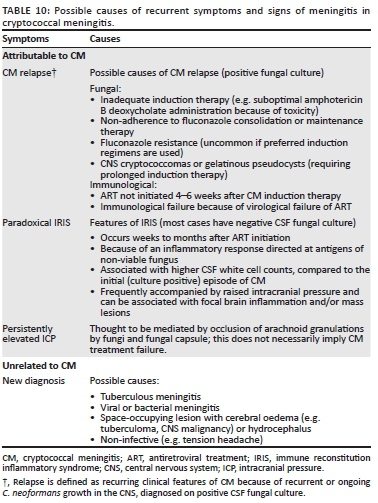
Antifungal susceptibility testing should be considered if the patient has a relapse episode and the causes listed in Table 10 have been excluded. Isolates with elevated fluconazole MICs have been described from relapse episodes - especially where fluconazole monotherapy is initially given - and are unusual if amphotericin B-based induction treatment was administered during the first episode.35,38 Because there are no established clinical breakpoints for C. neoformans and fluconazole, it is useful to test isolates from the initial and subsequent episodes in parallel in an academic or reference laboratory and document a fourfold (double dilution) change in MIC that may suggest resistance.253940
Recommendation 3: Management of a first episode of cryptococcal meningitis
Detailed recommendations
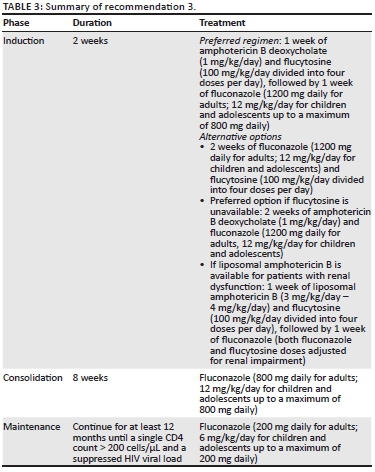
The antifungal treatment of HIV-associated CM is divided into three phases: induction, consolidation and maintenance (Table 3).
Induction phase (2 weeks)
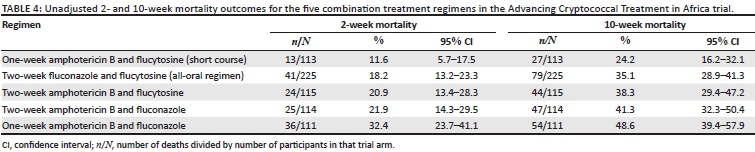
The WHO recommends that the first choice for induction phase treatment is amphotericin B 1 mg/kg/day and flucytosine 100 mg/kg/day divided into four doses per day.410,41 A flucytosine product manufactured in Poland was acquired by Mylan in 2016. Despite previously lapsed registration in South Africa and approval by the WHO Pre-Qualification Program, the South African Health Products Regulatory Authority (SAHPRA) requires a full dossier to be submitted. The panel and the Southern African HIV Clinicians Society support advocacy efforts to provide greater access to flucytosine through fast-track SAHPRA registration and development of additional generic products, particularly in light of the findings of the recently published Advancing Cryptococcal Treatment in Africa (ACTA) trial.8,10,41,42 This trial demonstrated a substantial mortality reduction among participants randomised to flucytosine-based combination therapies (Table 4). Overall, the best-performing treatment arm in the ACTA trial was the 1-week combination of amphotericin B deoxycholate and flucytosine, followed by high-dose oral fluconazole in the second week. This regimen was also associated with fewer adverse effects, specifically a reduction in amphotericin B deoxycholate-related nephrotoxicity and anaemia, and lower costs. This is the preferred regimen recommended by the panel. Both the all-oral fluconazole/flucytosine regimen and 1-week amphotericin B deoxycholate/flucytosine regimen were non-inferior to the previous gold standard (i.e. 2 weeks of amphotericin B and flucytosine) in terms of 2-week mortality. The all-oral regimen is useful in cases where a delay in administration of amphotericin B deoxycholate is expected or its use is contraindicated. The panel now also recommends a higher induction dose of fluconazole (1200 mg daily) based on doses used in the ACTA trial. There is no evidence from fluconazole monotherapy trials to suggest an increased toxicity at this higher dose.43,44 If flucytosine is unavailable, the preferred treatment option is 2 weeks of amphotericin B and fluconazole (not 1 week of amphotericin B and fluconazole) because the 2-week regimen was associated with lower 2- and 10-week mortality rates than 1 week of this drug combination in the ACTA trial (Table 4). In settings with access to liposomal amphotericin B, this antifungal may be used instead of the deoxycholate formulation, especially among patients with renal impairment. Although there is no evidence of improved efficacy compared to amphotericin B deoxycholate, liposomal amphotericin B is associated with fewer adverse effects and may be available at a reduced cost for CM in some countries.45,46 In countries where amphotericin B is unavailable, the panel advises clinicians to follow the WHO guideline with respect to high-dose fluconazole options.4
Consolidation phase (further 8 weeks)
The panel recommends a fluconazole dose of 800 mg daily for 8 weeks. This recommendation is based on expert opinion.
Maintenance phase (secondary prophylaxis)
The panel recommends fluconazole 200 mg daily for at least 10 more months (i.e. to complete a total of 12 months of antifungal treatment). Maintenance fluconazole should only be stopped when the CD4 count is documented to be > 200 cells/µL (on one occasion is sufficient) and the most recent HIV viral load is suppressed.
Adolescents and children
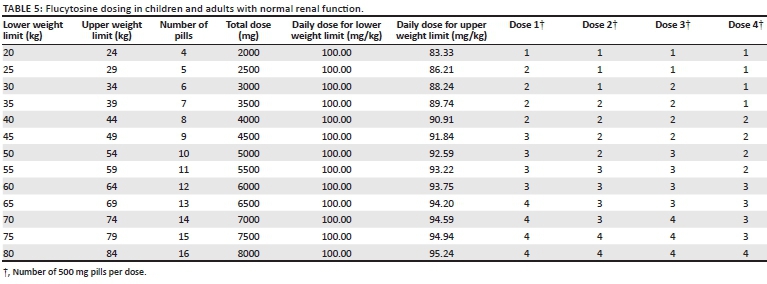
During the induction phase, amphotericin B should be prescribed at a daily dose of 1 mg/kg/day and flucytosine as a (divided) daily dose of 100 mg/kg/day (Table 5). Fluconazole doses should also be calculated by body weight: induction phase: 12 mg/kg/day (up to 800 mg daily); consolidation phase: 6 mg/kg/day - 12 mg/kg/day (up to 800 mg daily); and maintenance phase: 6 mg/kg/day (up to 200 mg daily).
Renal impairment (creatinine clearance < 50 mL/min)
If there is renal impairment at the time of diagnosis of CM with a calculated creatinine clearance of 30 mL/min - 50 mL/min, the recommended induction regimens are the following:
· If liposomal amphotericin B is available, switch to 1 week of liposomal amphotericin B (3 mg/kg/day - 4 mg/kg/day) and flucytosine, followed by 1 week of fluconazole (both fluconazole and flucytosine dose adjusted according to creatinine clearance) (Table 6).
· One week of amphotericin B deoxycholate (1 mg/kg/day) and flucytosine (dose adjusted according to creatinine clearance), followed by 1 week of fluconazole (dose adjusted according to creatinine clearance) (Table 6).
If there is renal impairment at baseline with a creatinine clearance of < 30 mL/min or a deterioration in renal function, the recommended induction regimens are the following:
· If liposomal amphotericin B is available, 1 week of liposomal amphotericin B (3 mg/kg/day - 4 mg/kg/day) and flucytosine, followed by 1 week of fluconazole (both fluconazole and flucytosine dose adjusted according to creatinine clearance).
· Two weeks of fluconazole (dose adjusted according to creatinine clearance) and flucytosine (dose adjusted according to creatinine clearance).
· If neither flucytosine nor liposomal amphotericin B is available, administer a single dose of amphotericin B deoxycholate (0.7 mg/kg) and daily fluconazole (dose adjusted according to creatinine clearance) and monitor creatinine clearance daily. Administer amphotericin B deoxycholate (0.7 mg/kg) on alternate days if the creatinine clearance remains static and give as many doses as possible over the 2-week induction period.
Important practice point
Clinicians should be very clear when prescribing liposomal amphotericin B versus amphotericin B deoxycholate. The daily doses are different.
Intravenous fluids should be administered to all patients. Tenofovir and amphotericin B deoxycholate can be used together provided the patient's renal function is normal and serum creatinine does not double on treatment. Among patients with renal impairment, ART regimens containing tenofovir should be adjusted, switching to an alternative antiretroviral agent such as abacavir. If the patient's initial reason for a reduced creatinine clearance was dehydration and this has been corrected with fluid administration, the patient can be switched back to amphotericin B deoxycholate at normal doses. Flucytosine has a short plasma half-life and is cleared unchanged via the kidneys. Flucytosine requires dose adjustment if there is renal impairment; where patients are dialysed, it should be given after dialysis (Table 6). Fluconazole monotherapy is not recommended except as a last resort. When used as monotherapy during induction, the fluconazole dose is 1200 mg daily with normal renal function. With a creatinine clearance of < 50 mL/min, the induction dose of fluconazole should be reduced by 50% to 600 mg daily.
Management of other forms of disseminated cryptococcosis
Cryptococcal fungaemia (i.e. a positive blood culture) should be managed as per CM. The treatment of cryptococcomas, pulmonary cryptococcosis and other forms of culture-confirmed disseminated cryptococcal disease is beyond the scope of this guideline. Readers are advised to consult the 2010 Infectious Diseases Society of America guideline.25
Patients on tuberculosis treatment
The panel does not recommend a fluconazole dose increase among patients receiving rifampicin because the induction of fluconazole metabolism by rifampicin causes only moderate reductions in fluconazole exposure and because of the high doses of fluconazole that are now being recommended for induction and consolidation treatment.8,47
Adjunctive corticosteroid therapy
The expert panel advises against adjunctive corticosteroid therapy in the initial management of CM.9
Immunological failure on antiretroviral treatment
If patients with priorly treated CM develop immunological failure on ART and their CD4 count drops below 200 cells/µL after secondary prophylaxis has been stopped, the panel advises restarting fluconazole at 200 mg daily. This may be considered for patients with priorly treated cryptococcal antigenaemia too. Refer to the Maintenance phase (secondary prophylaxis) for duration of treatment.
Non-adherence to maintenance treatment
Among patients who stop taking fluconazole maintenance prematurely and then return for care but are asymptomatic, the panel advises simply restarting fluconazole 200 mg daily and monitoring closely for recurrence of meningitis. Symptomatic patients should be fully investigated for CM. Community adherence support for ART and fluconazole should be arranged. Refer to the Maintenance phase (secondary prophylaxis) for duration of treatment.
Analgesia
Therapeutic LPs are the best form of 'analgesia' for headaches associated with raised intracranial pressure. Paracetamol can be used but not non-steroidal anti-inflammatory drugs (NSAIDs) because of the nephrotoxicity concerns with amphotericin B deoxycholate. Morphine may also be appropriate and is not contraindicated in the presence of raised intracranial pressure.
Recommendation 4: Amphotericin B and flucytosine toxicity prevention, monitoring and management
Background
Amphotericin B deoxycholate-related toxicities
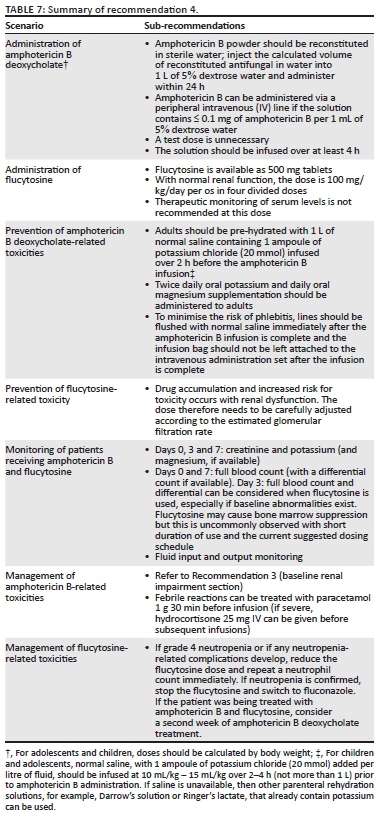
Major adverse effects of amphotericin B deoxycholate include acute kidney injury (AKI) (caused by renal vasoconstriction and acute tubular necrosis) usually in the second week of therapy, hypokalaemia, hypomagnesaemia, anaemia, febrile reactions and chemical phlebitis.4849Table 7).8
Flucytosine-related toxicities
Flucytosine is associated with bone marrow toxicity and resultant anaemia, neutropenia and thrombocytopenia. This was observed particularly in early studies when flucytosine was used at high doses for prolonged periods of time.50,51,52 The reported prevalence of toxicity from recent trials, using lower doses for shorter periods, has been much lower. In the ACTA trial, the preferred regimen of 1-week amphotericin B combined with flucytosine 100 mg/kg/day was not associated with an increase in severe neutropenia compared to flucytosine-free regimens.85354
Detailed recommendations
Administration
Amphotericin B deoxycholate: Amphotericin B deoxycholate powder (50 mg vials) should be refrigerated between 2 °C and 8 °C and protected from light.555555
Flucytosine: Flucytosine (500 mg tablets) should be stored below 25 °C in a cool, dry area. With normal renal function, the total daily dose is 100 mg/kg/day given in four divided doses (i.e. every 6 h) per os (Table 5). Nausea and vomiting may occur and can be attenuated by administering flucytosine tablets individually during a 15-min window or by pre-medication with anti-emetics.
Prevention of toxicities
Amphotericin B deoxycholate
Patients should be pre-hydrated with 1 L of normal saline containing 1 ampoule of potassium chloride (20 mmol K+ per 10 mL ampoule) infused over 2 h before administration of amphotericin B deoxycholate. This reduces renal toxicity and hypokalaemia. Patients should be given 1200 mg potassium chloride orally twice daily (equivalent to 16 mmol of oral potassium, e.g. two Slow-K 600 mg tablets twice daily, 8 mmol K+ per tablet) and up to 1500 mg magnesium chloride orally daily (e.g. two Slow-Mag 535 mg tablets daily, 5.33 mmol Mg2+ per tablet, or two Ultimag tablets daily, 660 mg Mg2+ with zinc oxide 6 mg) for the duration of treatment with amphotericin B deoxycholate.26
Flucytosine
Renal function should be closely monitored especially when flucytosine is combined with amphotericin B deoxycholate. The dose of flucytosine should be adjusted according to the estimated creatinine clearance in order to prevent accumulation and increased toxicity (Table 6).
Laboratory or clinical monitoring
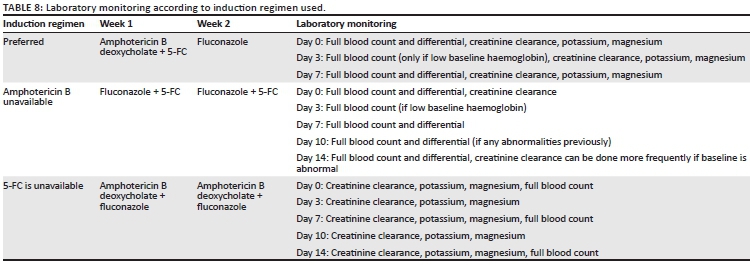
Recommendations depend on the induction regimen (Table 8).
Amphotericin B deoxycholate
At a minimum, baseline and twice weekly monitoring of serum creatinine/potassium and baseline and weekly monitoring of haemoglobin are recommended for the duration of amphotericin B deoxycholate treatment. Renal toxicity is more likely to develop in the second week of treatment in regimens where amphotericin B is used for 2 weeks. Fluid input and output should be carefully monitored. Chemical phlebitis is often complicated by infection at the intravenous line insertion site, which can result in bacteraemia56
Flucytosine
Baseline grade 1 neutropenia (defined as an absolute neutrophil count ≤ 1000 cells/mm357Table 6).
Fluconazole
The panel recommends checking alanine transaminase (ALT) levels if symptoms of hepatitis or jaundice develop while patients are on fluconazole, but routine ALT monitoring is not indicated.
Management of toxicities
Amphotericin B deoxycholate
For significant hypokalaemia (serum K+ <3.3 mmol/L), additional intravenous replacement is required: up to 2 ampoules of potassium chloride (20 mmol K+ per 10 mL ampoule) in 1 L of normal saline 8 hourly. Among those who develop hypokalaemia, serum potassium should be monitored daily until it is resolved. If hypokalaemia remains uncorrected, serum magnesium should be checked (if this test is available) and/or oral magnesium supplementation should be doubled. Intravenous magnesium sulphate may be considered for persistent hypokalaemia and hypomagnesaemia. If serum creatinine doubles from baseline, one dose of amphotericin B deoxycholate may be omitted and/or pre-hydration may be increased to 1 L of normal saline 8 hourly; serum creatinine should then be monitored daily. If serum creatinine improves, amphotericin B may be restarted at a dose of 0.7 mg/kg/day and/or alternate-day treatment could be considered. If creatinine remains elevated or repeatedly rises, liposomal amphotericin B should be substituted if available or amphotericin B deoxycholate should be stopped and an alternative regimen should be used (refer to Recommendation 3). If febrile reactions occur with amphotericin B, paracetamol 1 g may be given 30 min before infusion or, for severe reactions, hydrocortisone 25 mg IV can be administered before subsequent infusions.22
Flucytosine
Bone marrow suppression is uncommon at the recommended induction flucytosine dose for 1 week only, especially if renal function is normal (dose adjustment is important in case of significant renal impairment). Other causes of a low neutrophil count should also be considered. However, if grade 4 neutropenia (< 400 cells/mm3
Recommendation 5: Timing of antiretroviral therapy
Detailed recommendations
Cryptococcal meningitis
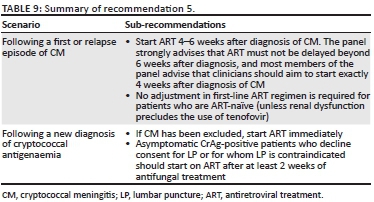
The expert panel recommends commencing ART 4-6 weeks after the diagnosis of CM. The panel strongly advises that ART must not be delayed beyond 6 weeks after diagnosis, and most members of the panel advise that clinicians should aim to start exactly 4 weeks after diagnosis of CM. Although most patients with CM have advanced immunosuppression with very low CD4 counts, two randomised clinical trials conducted in sub-Saharan Africa have shown excess early mortality when ART was commenced while patients were still receiving induction phase treatment for CM.22,58 In the later trial conducted in Uganda and South Africa, patients who started ART 1-2 weeks after diagnosis of CM had a 15% higher mortality than those who deferred ART until 5-6 weeks.596012Table 9).
Cryptococcal antigenaemia
The panel advises starting ART immediately among ART-naïve patients who are blood CrAg-positive on screening and have an LP that excludes CM (with a caveat that there is no evidence for this recommendation). Asymptomatic CrAg-positive patients who decline consent for LP or for whom LP is contraindicated should start ART after at least 2 weeks of antifungal treatment (Figure 1).
Recommendation 6: Management of raised intracranial pressure
Background
Raised intracranial pressure occurs in up to 75% of patients with CM and results from physical obstruction of CSF outflow through the arachnoid villi/granulations resulting in build-up of CSF pressure.61,62 Raised pressure may be present at the diagnosis of CM or develop while the patient is on treatment and may result in severe headaches, vomiting, confusion or depressed level of consciousness, ophthalmoplegia (particularly sixth cranial nerve palsies) and visual disturbance/loss. Clinicians need to consider raised intracranial pressure and manage appropriately if a patient exhibits these symptoms or signs at any stage of the management of CM. To alleviate raised pressure, therapeutic LPs are indicated. New-onset hypertension may be a sign of increased intracranial pressure (i.e. part of Cushing's triad) and should prompt an LP to measure opening pressure instead of anti-hypertensive medications (Box 1).

Detailed recommendations
Measurement of opening pressure
The panel agreed that it is a good practice to measure the CSF opening pressure whenever a diagnostic LP is performed. However, in practice, the opening pressure may not have been measured at the initial diagnostic LP. Thus, once the diagnosis of CM is made, an LP should be repeated to measure CSF opening pressure, particularly if the patient still has a headache (which is usually the case). The pressure should be measured using a manometer with the patient lying down and without excessive spinal flexion. Approximately 15% of patients with initially normal intracranial pressure will develop raised intracranial pressure during treatment; thus, all patients should be monitored daily for headache or signs of raised intracranial pressure that should prompt an LP.
What to do if a manometer is unavailable?
Manometers are not readily available in all centres or settings. In the absence of a manometer, the CSF pressure can be crudely estimated in various ways:
· Drop counting: obtaining ≥ 40 drops of free-flowing CSF in 60 s using a 22-gauge spinal needle suggests a high CSF pressure.63
· An 'eyeball test': a powerful squirt of CSF from the LP needle suggests a high CSF pressure.
· Makeshift manometers from intravenous line sets can be used to estimate opening pressure in cm H2O although these sets consistently under-estimate the opening pressure.64
The panel cautions that the above methods may be prone to under-estimating the actual CSF pressure based on a manometer reading.
Management of raised pressure
If the opening pressure is raised (i.e. a manometer reading > 25 cm H2O), then 10 mL - 30 mL CSF should be drained (to normalise pressure to < 20 cm H2O or decrease the pressure by at least 50% - based on repeat measurement of closing pressure). Then the need for pressure relief should be dictated by recurrence of symptoms of raised intracranial pressure. Patients may require daily LPs. Where a manometer is not available and there are clinical symptoms or signs of raised intracranial pressure, we advise performing an LP and removing 20 mL - 30 mL of CSF. A symptomatic improvement after the therapeutic LP would support the symptoms having been due to raised intracranial pressure (patients with raised intracranial pressure typically experience considerable relief of symptoms following a therapeutic LP). The patient should then be reviewed on subsequent days for ongoing symptoms and signs of raised intracranial pressure, which would indicate the need for further therapeutic LPs.
In rare cases, twice daily LPs are required for controlling raised intracranial pressure in patients with extremely high opening pressures. Patients with persistent pressure symptoms and measured high opening pressures who fail to respond to daily LPs for more than 1 week may require lumbar drain insertion or shunting procedures. In such cases, neurosurgical consultation should be sought.
Recommendation 7: Management of relapse episodes of cryptococcal meningitis
There are several possible reasons for recurrence of symptoms of meningitis among patients treated for CM. In certain cases, recurrence is caused by microbiological relapse (although this is very uncommon with good adherence to maintenance fluconazole). There are situations in which there is a recurrence of symptoms but CSF fungal cultures are negative. The causes are summarised in Table 10.
Initial assessment
When a patient seeks care for a recurrent episode of meningitis, it is not always possible to immediately be sure what the aetiology is. The initial assessment should include:
· An evaluation of the patient's adherence to fluconazole consolidation and maintenance phase treatment (using self-reported and pharmacy refill data).
· An enquiry as to whether the patient has recently started ART to support a possible IRIS diagnosis.
· An LP to measure opening pressure, assess CSF inflammation and for a prolonged fungal culture (request 14 days of incubation in the laboratory) on at least 3 mL - 5 mL of CSF. There is no role for India ink staining or CSF/blood CrAg assays in establishing the cause of recurrence as these tests may remain positive for months to years even in patients after successful treatment - refer to Recommendation 2.
· If the CSF is culture-positive and non-adherence does not appear to be the cause, then fluconazole susceptibility testing should be considered. Susceptibility testing should be performed in an academic/reference laboratory. The panel recommends this when there has been at least one documented relapse despite reported good adherence (Recommendation 2).
If the cause of the recurrence is attributed to non-adherence, then the patient should be treated as for the first episode (Recommendation 3). The reasons for non-adherence should be explored and the patient should receive additional adherence counselling, preferably together with a treatment supporter. If the patient also interrupted ART, this should be re-initiated 4-6 weeks after induction antifungal treatment is re-started. Antiretroviral treatment may need to be adjusted if there is a concern that there has been virological failure.
Paradoxical cryptococcal IRIS occurs among patients treated for cryptococcal disease who start ART and develop a recurrence or worsening of clinical manifestations of cryptococcal disease. Immune reconstitution inflammatory syndrome is thought to be the result of an immunopathological reaction directed at residual fungal antigens at sites of disease.40414240
In all patients with suspected paradoxical CM-IRIS, an LP should be performed to measure pressure and obtain a fungal culture incubated for up to 14 days. It is not possible to make a diagnosis of IRIS with certainty prior to excluding microbiological relapse on CSF fungal culture.
Suspected cryptococcal meningitis-immune reconstitution inflammatory with mild symptoms
If the symptoms are mild, the panel recommends performing therapeutic LPs if there is raised intracranial pressure, providing analgesia and increasing the fluconazole dose to 1200 mg daily with regular review and follow-up of the CSF fungal culture result. If the CSF fungal culture is subsequently confirmed as negative, the dose of fluconazole can be reduced to what it was (800 mg or 200 mg daily depending on the timing of the CM-IRIS event).
Suspected cryptococcal meningitis-immune reconstitution inflammatory syndrome with severe symptoms or clinical deterioration
If patients have severe symptoms or deteriorate with the approach above, the panel recommends treating with amphotericin B deoxycholate 1 mg/kg/day plus either flucytosine (100 mg/kg/day divided into four doses per day) or fluconazole 1200 mg daily until the CSF culture is confirmed as negative. If the CSF culture is still negative after 7 days' incubation, amphotericin B can be stopped. If the fungal culture is positive by 7 days, then amphotericin B should be continued for 14 days if it is given with fluconazole (if it is given with flucytosine, then 7 days is sufficient). Daily therapeutic LPs may be required if opening pressure is raised. A CT brain scan should be considered as mass lesions and cerebral oedema can occur with IRIS. Analgesia should be provided. Among patients with severe IRIS who do not respond to the above treatment, corticosteroids should be considered: prednisone 1 mg/kg/day or an equivalent dose of dexamethasone for up to 2 weeks or until clinical improvement occurs, tapered over 2-6 weeks. Longer treatment may be required depending on the symptom response. The panel recommends that corticosteroids preferably should be used among patients with IRIS who are documented to be CSF fungal culture-negative and when other aetiologies (including tuberculous meningitis [TBM] and neurotropic viral infections) are excluded. However, if there is life-threatening neurological deterioration, corticosteroids should be started immediately.
Among patients with meningitis caused by fluconazole-resistant Cryptococcus, subsequent management should be discussed with a medical practitioner experienced in the treatment of CM. Such patients should receive induction therapy with amphotericin B again. Consolidation and maintenance options will depend on the fluconazole MIC and may include high doses of fluconazole, voriconazole or posaconazole with or without weekly amphotericin B infusions.25
Among patients with multiple relapses, it is important to document conversion of CSF from culture-positive to culture-negative before stopping amphotericin B and such cases should be discussed with a medical practitioner experienced in CM management and fluconazole susceptibility testing should be performed.
Distinguishing CM relapse or IRIS from TBM: Immune-suppressed HIV-seropositive adults are at high risk of disseminated TB, including TBM. Cerebrospinal fluid cell profiles and protein levels in CM are similar to those seen in TBM.6566
Competing interests
The authors declare that they have no financial or personal relationships which may have inappropriately influenced them in writing this article.
Authors' contributions
N.P.G. and G.M. chaired the guideline panel. P.M., J.N., S.P., D.R. and D.W. drafted sections of the document. N.P.G. compiled the guideline document and worked on editing and reviewing with G.M. The rest of the authors listed contributed equally.
Ethical considerations
This article followed all ethical standards for a research without direct contact with human or animal subjects.
Funding information
This research received no specific grant from any funding agency in the public, commercial, or not-for-profit sectors.
Data availability statement
Data sharing is not applicable to this article as no new data were created or analysed in this study.
Disclaimer
The views and opinions expressed in this article are those of the authors and do not necessarily reflect the official policy or position of any affiliated agency of the authors.
Acknowledgements
References
-
1. Southern African HIV Clinicians Society. Guideline for the prevention, diagnosis and management of cryptococcal meningitis among HIV-infected persons: 2013 update. S Afr J HIV Med. 2013;14(2):a82. https://doi.org/10.7196/sajhivmed.930.
» https://doi.org/10.7196/sajhivmed.930 - 2. National Institute for Communicable Diseases. GERMS-SA annual report Johannesburg, South Africa [homepage on the Internet].
- National Institute for Communicable Diseases; 2017 [cited 02 September 2019]. Available from: http://www.nicd.ac.za/publications/archives/.
- 3. World Health Organization. Guidelines for managing advanced HIV disease and rapid initiation of antiretroviral therapy [homepage on the Internet].
-
Geneva, Switzerland; 2017 [cited 02 September 2019]. Available from: https://www.who.int/hiv/pub/guidelines/advanced-HIV-disease/en/.
» https://doi.org/10.7196/SAMJ.2018.v108i7.13094 -
Geneva, Switzerland: World Health Organization; 2018 [cited 02 September 2019]. Available from: https://www.who.int/hiv/pub/guidelines/cryptococcal-disease/en/
» https://doi.org/10.1056/NEJMoa1710922 -
5. Mfinanga S, Chanda D, Kivuyo SL, et al. Cryptococcal meningitis screening and community-based early adherence support in people with advanced HIV infection starting antiretroviral therapy in Tanzania and Zambia: An open-label, randomised controlled trial. Lancet. 2015;385(9983):2173-2182. https://doi.org/10.1016/S0140-6736(15)60164-7
» https://doi.org/10.1016/S0140-6736(15)60164-7 -
7. Larson BA, Rockers PC, Bonawitz R, et al. Screening HIV-infected patients with low CD4 counts for cryptococcal antigenemia prior to initiation of antiretroviral therapy: Cost effectiveness of alternative screening strategies in South Africa. PLoS One. 2016;11(7):e0158986. https://doi.org/10.1371/journal.pone.0158986
» https://doi.org/10.1371/journal.pone.0158986 -
9. Day J, Imran D, Ganiem AR, et al. CryptoDex: A randomised, double-blind, placebo-controlled phase III trial of adjunctive dexamethasone in HIV-infected adults with cryptococcal meningitis: Study protocol for a randomised control trial. Trials. 2014;15:441. https://doi.org/10.1186/1745-6215-15-441
» https://doi.org/10.1186/1745-6215-15-441 -
10. Govender NP, Meintjes G, Banoo S. Access to flucytosine for HIV-infected patients with cryptococcal meningitis - An urgent need. S Afr Med J. 2014;104(9):594-595. https://doi.org/10.7196/SAMJ.8713
» https://doi.org/10.7196/SAMJ.8713 - 11. National Department of Health. National consolidated guidelines for the prevention of mother-to-child transmission of HIV and the management of HIV in children, adolescents and adults [homepage on the Internet].
-
Pretoria, South Africa: National Department of Health; 2015 [cited 02 September 2019]. Available from: http://www.health.gov.za/index.php/2014-03-17-09-09-38/policies-and-guidelines/category/230-2015p.
» https://doi.org/10.1097/QAI.0000000000000976 - 12. National Department of Health. 2019 ART clinical guidelines for the management of HIV in adults, pregnancy, adolescents, children, infants and neonates [homepage on the Internet].
-
Pretoria, South Africa: National Department of Health; 2019 [cited 02 September 2019]. Available from: http://www.health.gov.za/index.php/2014-03-17-09-09-38/policies-and-guidelines/.
» https://doi.org/10.1093/cid/cix872 -
13. Ford N, Shubber Z, Jarvis JN, et al. CD4 cell count threshold for cryptococcal antigen screening of HIV-infected individuals: A systematic review and meta-analysis. Clin Infect Dis. 2018;66(suppl_2):S152-S159. https://doi.org/10.1093/cid/cix1143
» https://doi.org/10.1093/cid/cix1143 -
14. Tugume L, Rhein J, Hullsiek KH, et al. HIV-associated cryptococcal meningitis occurring at relatively higher CD4 counts. J Infect Dis. 2019;219(6):877-883. https://doi.org/10.1093/infdis/jiy602
» https://doi.org/10.1093/infdis/jiy602 -
15. Meiring ST, Quan VC, Cohen C, et al. A comparison of cases of paediatric-onset and adult-onset cryptococcosis detected through population-based surveillance, 2005-2007. AIDS. 2012;26(18):2307-2314. https://doi.org/10.1097/QAD.0b013e3283570567
» https://doi.org/10.1097/QAD.0b013e3283570567 -
17. Jarvis JN, Percival A, Bauman S, et al. Evaluation of a novel point-of-care cryptococcal antigen test on serum, plasma, and urine from patients with HIV-associated cryptococcal meningitis. Clin Infect Dis. 2011;53(10):1019-1023. https://doi.org/10.1093/cid/cir613
» https://doi.org/10.1093/cid/cir613 -
19. Meintjes G, Carmona S, Davies N, et al. Adult antiretroviral therapy guidelines 2017. S Afr J HIV Med. 2017;18(1):a776. https://doi.org/10.4102/sajhivmed.v18i1.776
» https://doi.org/10.4102/sajhivmed.v18i1.776 -
20. Rajasingham R, Wake RM, Beyene T, Katende A, Letang E, Boulware DR. Cryptococcal meningitis diagnostics and screening in the era of point-of-care laboratory testing. J Clin Microbiol. 2019;57(1),pii:e01238-18. https://doi.org/10.1128/JCM.01238-18
» https://doi.org/10.1128/JCM.01238-18 -
21. Wake RM, Govender NP, Omar T, et al. Cryptococcal-related mortality despite fluconazole pre-emptive treatment in a cryptococcal antigen (CrAg) screen-and-treat programme. Clin Infect Dis. 2019;June 8,pii:ciz485. https://doi.org/10.1093/cid/ciz485
» https://doi.org/10.1093/cid/ciz485 -
22. Boulware DR, Meya DB, Muzoora C, et al. Timing of antiretroviral therapy after diagnosis of cryptococcal meningitis. N Engl J Med. 2014;370(26):2487-2498. https://doi.org/10.1056/NEJMoa1312884
» https://doi.org/10.1056/NEJMoa1312884 -
23. Rhein J, Hullsiek KH, Evans EE, et al. Detrimental outcomes of unmasking cryptococcal meningitis with recent ART initiation. Open Forum Infect Dis. 2018;5(8):ofy122. https://doi.org/10.1093/ofid/ofy122
» https://doi.org/10.1093/ofid/ofy122 -
24. Bright PD, Lupiya D, van Oosterhout JJ, Chen A, Harrison TS, Chan AK. The treatment of a pregnant HIV positive patient with cryptococcal meningitis in Malawi. Case report and review of treatment options. Med Mycol Case Rep. 2018;19:9-12. https://doi.org/10.1016/j.mmcr.2017.10.002
» https://doi.org/10.1016/j.mmcr.2017.10.002 -
25. Perfect JR, Dismukes WE, Dromer F, et al. Clinical practice guidelines for the management of cryptococcal disease: 2010 update by the infectious diseases society of america. Clin Infect Dis. 2010;50(3):291-322. https://doi.org/10.1086/649858
» https://doi.org/10.1086/649858 - 26. University of Cape Town. South African Medicines Formulary (12th edn). Health and Medical Publishing Group, Pretoria, 2016.
-
27. Lo Re V, 3rd, Carbonari DM, Lewis JD, et al. Oral Azole antifungal medications and risk of acute liver injury, overall and by chronic liver disease status. Am J Med. 2016;129(3):283-291. https://doi.org/10.1016/j.amjmed.2015.10.029
» https://doi.org/10.1016/j.amjmed.2015.10.029 -
28. Britz E, Perovic O, von Mollendorf C, et al. The epidemiology of meningitis among adults in a South African province with a high HIV prevalence, 2009-2012. PLoS One. 2016;11(9):e0163036. https://doi.org/10.1371/journal.pone.0163036
» https://doi.org/10.1371/journal.pone.0163036 -
29. McCarthy KM, Morgan J, Wannemuehler KA, et al. Population-based surveillance for cryptococcosis in an antiretroviral-naive South African province with a high HIV seroprevalence. AIDS. 2006;20(17):2199-2206. https://doi.org/10.1097/QAD.0b013e3280106d6a
» https://doi.org/10.1097/QAD.0b013e3280106d6a -
30. Jarvis JN, Meintjes G, Williams Z, Rebe K, Harrison TS. Symptomatic relapse of HIV-associated cryptococcal meningitis in South Africa: The role of inadequate secondary prophylaxis. S Afr Med J. 2010;100(6):378-382. https://doi.org/10.7196/SAMJ.3515
» https://doi.org/10.7196/SAMJ.3515 -
31. Kwizera R, Akampurira A, Williams D, Boulware DR, Meya DB, Team A-CS. Acridine orange fluorescent microscopy is more sensitive than India ink light microscopy in the rapid detection of cryptococcosis among CrAg positive HIV patients. PLoS One. 2017;12(7):e0182108. https://doi.org/10.1371/journal.pone.0182108
» https://doi.org/10.1371/journal.pone.0182108 -
32. Meya DB, Kiragga AN, Nalintya E, et al. Reflexive laboratory-based cryptococcal antigen screening and preemptive fluconazole therapy for cryptococcal antigenemia in HIV-infected individuals with CD4 <100 cells/microL: A stepped-wedge, cluster-randomized trial. J Acquir Immune Defic Syndr. 2019;80(2):182-189. https://doi.org/10.1097/QAI.0000000000001894
» https://doi.org/10.1097/QAI.0000000000001894 -
33. Morgan J, McCarthy KM, Gould S, et al. Cryptococcus gattii infection: Characteristics and epidemiology of cases identified in a South African province with high HIV seroprevalence, 2002-2004. Clin Infect Dis. 2006;43(8):1077-1080. https://doi.org/10.1086/507897
» https://doi.org/10.1086/507897 -
34. Williams DA, Kiiza T, Kwizera R, et al. Evaluation of fingerstick cryptococcal antigen lateral flow assay in HIV-infected persons: A diagnostic accuracy study. Clin Infect Dis. 2015;61(3):464-467. https://doi.org/10.1093/cid/civ263
» https://doi.org/10.1093/cid/civ263 -
35. Govender NP, Patel J, van Wyk M, et al. Trends in antifungal drug susceptibility of Cryptococcus neoformans isolates obtained through population-based surveillance in South Africa in 2002-2003 and 2007-2008. Antimicrob Agents Chemother. 2011;55(6):2606-2611. https://doi.org/10.1128/AAC.00048-11
» https://doi.org/10.1128/AAC.00048-11 -
36. Pullen MF, Kakooza F, Nalintya E, et al. Change in plasma CrAg titer is not associated with survival among HIV-infected persons receiving preemptive therapy for asymptomatic cryptococcal antigenemia. Clin Infect Dis. 2019;May 22. pii: ciz418. https://doi.org/10.1093/cid/ciz418
» https://doi.org/10.1093/cid/ciz418 -
37. Powderly WG, Cloud GA, Dismukes WE, Saag MS. Measurement of cryptococcal antigen in serum and cerebrospinal fluid: Value in the management of AIDS-associated cryptococcal meningitis. Clin Infect Dis. 1994;18(5):789-792. https://doi.org/10.1093/clinids/18.5.789
» https://doi.org/10.1093/clinids/18.5.789 -
38. Smith KD, Achan B, Hullsiek KH, et al. Increased antifungal drug resistance in clinical isolates of Cryptococcus neoformans in Uganda. Antimicrob Agents Chemother. 2015;59(12):7197-7204. https://doi.org/10.1128/AAC.01299-15
» https://doi.org/10.1128/AAC.01299-15 -
39. Espinel-Ingroff A, Chowdhary A, Cuenca-Estrella M, et al. Cryptococcus neoformans-Cryptococcus gattii species complex: An international study of wild-type susceptibility endpoint distributions and epidemiological cutoff values for amphotericin B and flucytosine. Antimicrob Agents Chemother. 2012;56(6):3107-3113. https://doi.org/10.1128/AAC.06252-11
» https://doi.org/10.1128/AAC.06252-11 -
40. Hospenthal DR, Bennett JE. Flucytosine monotherapy for cryptococcosis. Clin Infect Dis. 1998;27(2):260-264. https://doi.org/10.1086/514669
» https://doi.org/10.1086/514669 -
41. Loyse A, Dromer F, Day J, Lortholary O, Harrison TS. Flucytosine and cryptococcosis: Time to urgently address the worldwide accessibility of a 50-year-old antifungal. J Antimicrob Chemother. 2013;68(11):2435-2444. https://doi.org/10.1093/jac/dkt221
» https://doi.org/10.1093/jac/dkt221 -
42. Loyse A, Burry J, Cohn J, et al. Leave no one behind: Response to new evidence and guidelines for the management of cryptococcal meningitis in low-income and middle-income countries. Lancet Infect Dis. 2019;19(4):e143-e147. https://doi.org/10.1016/S1473-3099(18)30493-6
» https://doi.org/10.1016/S1473-3099(18)30493-6 -
43. Longley N, Muzoora C, Taseera K, et al. Dose response effect of high-dose fluconazole for HIV-associated cryptococcal meningitis in southwestern Uganda. Clin Infect Dis. 2008;47(12):1556-1561. https://doi.org/10.1086/593194
» https://doi.org/10.1086/593194 -
44. Milefchik E, Leal MA, Haubrich R, et al. Fluconazole alone or combined with flucytosine for the treatment of AIDS-associated cryptococcal meningitis. Med Mycol. 2008;46(4):393-395. https://doi.org/10.1080/13693780701851695
» https://doi.org/10.1080/13693780701851695 -
45. Hamill RJ, Sobel JD, El-Sadr W, et al. Comparison of 2 doses of liposomal amphotericin B and conventional amphotericin B deoxycholate for treatment of AIDS-associated acute cryptococcal meningitis: A randomized, double-blind clinical trial of efficacy and safety. Clin Infect Dis. 2010;51(2):225-232. https://doi.org/10.1086/653606
» https://doi.org/10.1086/653606 - 46. Gilead. Gilead Sciences announces steep discounts for ambisome to treat cryptococcal meningitis in low- and middle-income countries [homepage on the Internet].
-
Gilead; 2018 [updated 07 September 2018; cited]. Available from: https://www.gilead.com/news-and-press/company-statements/discount-for-ambisome.
» https://doi.org/10.1093/jac/46.2.171 -
47. Panomvana Na Ayudhya D, Thanompuangseree N, Tansuphaswadikul S. Effect of rifampicin on the pharmacokinetics of fluconazole in patients with AIDS. Clin Pharmacokinet. 2004;43(11):725-732. https://doi.org/10.2165/00003088-200443110-00003
» https://doi.org/10.2165/00003088-200443110-00003 -
48. Meiring S, Fortuin-de Smidt M, Kularatne R, Dawood H, Govender NP, Germs SA. Prevalence and hospital management of amphotericin B deoxycholate-related toxicities during treatment of HIV-associated cryptococcal meningitis in South Africa. PLoS Negl Trop Dis. 2016;10(7):e0004865. https://doi.org/10.1371/journal.pntd.0004865
» https://doi.org/10.1371/journal.pntd.0004865 -
49. Bicanic T, Bottomley C, Loyse A, et al. Toxicity of amphotericin B deoxycholate-based induction therapy in patients with HIV-associated cryptococcal meningitis. Antimicrob Agents Chemother. 2015;59(12):7224-7231. https://doi.org/10.1128/AAC.01698-15
» https://doi.org/10.1128/AAC.01698-15 -
50. Dismukes WE, Cloud G, Gallis HA, et al. Treatment of cryptococcal meningitis with combination amphotericin B and flucytosine for four as compared with six weeks. N Engl J Med. 1987;317(6):334-341. https://doi.org/10.1056/NEJM198708063170602
» https://doi.org/10.1056/NEJM198708063170602 -
51. Larsen RA, Leal MA, Chan LS. Fluconazole compared with amphotericin B plus flucytosine for cryptococcal meningitis in AIDS. A randomized trial. Ann Intern Med. 1990;113(3):183-187. https://doi.org/10.7326/0003-4819-113-3-183
» https://doi.org/10.7326/0003-4819-113-3-183 -
52. Mayanja-Kizza H, Oishi K, Mitarai S, et al. Combination therapy with fluconazole and flucytosine for cryptococcal meningitis in Ugandan patients with AIDS. Clin Infect Dis. 1998;26(6):1362-1366. https://doi.org/10.1086/516372
» https://doi.org/10.1086/516372 -
53. Brouwer AE, van Kan HJ, Johnson E, et al. Oral versus intravenous flucytosine in patients with human immunodeficiency virus-associated cryptococcal meningitis. Antimicrob Agents Chemother. 2007;51(3):1038-1042. https://doi.org/10.1128/AAC.01188-06
» https://doi.org/10.1128/AAC.01188-06 - 55. Theron E. Development of a tool to ensure correct stock management and accurate administration of intravenous amphotericin B. S Afr Pharmaceut J. 2009:40-42.
-
56. Rajasingham R, Williams D, Meya DB, Meintjes G, Boulware DR, Scriven J. Nosocomial drug-resistant bacteremia in 2 cohorts with cryptococcal meningitis, Africa. Emerg Infect Dis. 2014;20(4):722-724. https://doi.org/10.3201/eid2004.131277
» https://doi.org/10.3201/eid2004.131277 -
57. Musubire AK, Meya DB, Rhein J, et al. Blood neutrophil counts in HIV-infected patients with cryptococcal meningitis: Association with mortality. PLoS One. 2018;13(12):e0209337. https://doi.org/10.1371/journal.pone.0209337
» https://doi.org/10.1371/journal.pone.0209337 -
58. Makadzange AT, Ndhlovu CE, Takarinda K, et al. Early versus delayed initiation of antiretroviral therapy for concurrent HIV infection and cryptococcal meningitis in sub-Saharan Africa. Clin Infect Dis. 2010;50(11):1532-1538. https://doi.org/10.1086/652652
» https://doi.org/10.1086/652652 -
59. Boulware DR, Meya DB. Antiretroviral therapy after cryptococcal meningitis. N Engl J Med. 2014;371(12):1166-1167. https://doi.org/10.1056/NEJMc1409052
» https://doi.org/10.1056/NEJMc1409052 -
60. Bisson GP, Molefi M, Bellamy S, et al. Early versus delayed antiretroviral therapy and cerebrospinal fluid fungal clearance in adults with HIV and cryptococcal meningitis. Clin Infect Dis. 2013;56(8):1165-1173. https://doi.org/10.1093/cid/cit019
» https://doi.org/10.1093/cid/cit019 -
61. Loyse A, Wainwright H, Jarvis JN, et al. Histopathology of the arachnoid granulations and brain in HIV-associated cryptococcal meningitis: Correlation with cerebrospinal fluid pressure. AIDS. 2010;24(3):405-410. https://doi.org/10.1097/QAD.0b013e328333c005
» https://doi.org/10.1097/QAD.0b013e328333c005 -
62. Graybill JR, Sobel J, Saag M, et al. Diagnosis and management of increased intracranial pressure in patients with AIDS and cryptococcal meningitis. The NIAID Mycoses Study Group and AIDS Cooperative Treatment Groups. Clin Infect Dis. 2000;30(1):47-54. https://doi.org/10.1086/313603
» https://doi.org/10.1086/313603 -
63. Boyles TH, Gatley E, Wasserman S, Meintjes G. Brief report: Flow rate of cerebrospinal fluid through a spinal needle can accurately predict intracranial pressure in cryptococcal meningitis. J Acquir Immune Defic Syndr. 2017;74(3):e64-e6. https://doi.org/10.1097/QAI.0000000000001183
» https://doi.org/10.1097/QAI.0000000000001183 -
64. Mogambery TA, Moodley A, Connolly C. Is the intravenous giving set a reliable alternative to the spinal manometer in measuring cerebrospinal fluid opening pressure? S Afr Med J. 2018;108(10):865-869. https://doi.org/10.7196/SAMJ.2018.v108i10.13176
» https://doi.org/10.7196/SAMJ.2018.v108i10.13176 -
65. Vidal JE, Peixoto de Miranda EJ, Gerhardt J, Croda M, Boulware DR. Is it possible to differentiate tuberculous and cryptococcal meningitis in HIV-infected patients using only clinical and basic cerebrospinal fluid characteristics? S Afr Med J. 2017;107(2):156-159. https://doi.org/10.7196/SAMJ.2017.v107i2.11162
» https://doi.org/10.7196/SAMJ.2017.v107i2.11162 -
66. Ellis J, Cresswell FV, Rhein J, Ssebambulidde K, Boulware DR. Cryptococcal meningitis and tuberculous meningitis co-infection in HIV-infected Ugandan adults. Open Forum Infect Dis. 2018;5(8):ofy193. https://doi.org/10.1093/ofid/ofy193
» https://doi.org/10.1093/ofid/ofy193
Accepted: 12 Sept. 2019
Published: 08 Nov. 2019