Self-directed learning approach as a social justice transformative pedagogy for work-integrated learning in higher education
Abstract
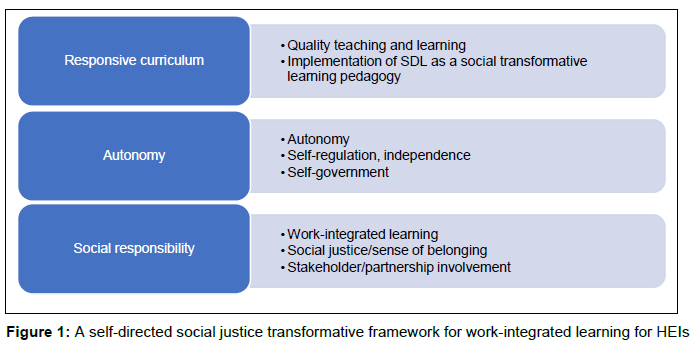
In this study, social justice was used as a lens to understand the role of self-directed learning (SDL) in influencing constructive engagement and challenging policymaking positions. The current education trajectory highlights a lack of clarity on how social justice contributes to social transformation in the education system. This study explored the role of SDL in shaping a social justice transformative agenda in higher education while maintaining autonomy. The researcher suggests that this approach holds considerable potential for SDL to assist student teachers in cultivating impactful educational settings within the school and higher education environments, which may support work-integrated learning. This article reports the qualitative findings from an educational policy study involving policy document analysis to analyse textual data, with a focus on interpretation for understanding and scrutiny. The findings indicate that through the implementation of self-directed social justice transformative strategies, students develop valuable skills that help them to work independently without the assistance of lecturers. In addition, such exposure allows students to connect with workplace settings and apply theory to practice, thereby broadening their opportunities for employability and networking.
Education White Paper 3; higher education institutions; pedagogy; self-directed learning; strategy; social justice; transformative leadership; work-integrated learning
 Thumbnail