Study behaviours contributing to performance in each of the modules of postgraduate accountancy studies
Abstract
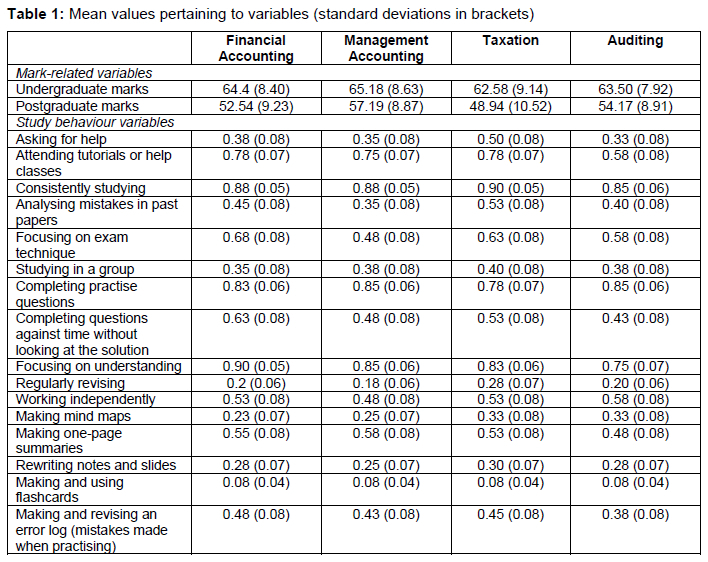
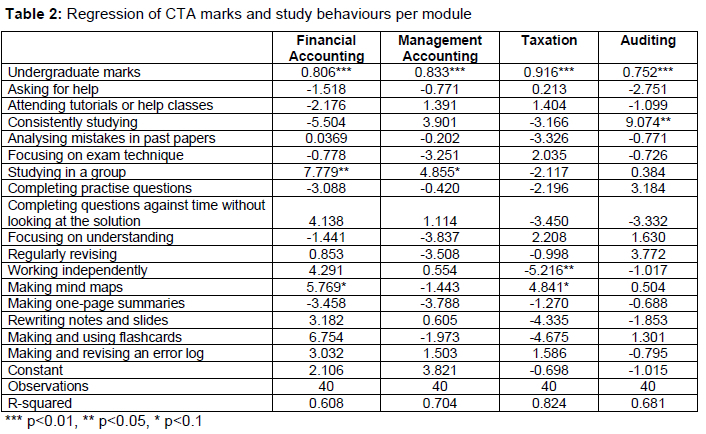
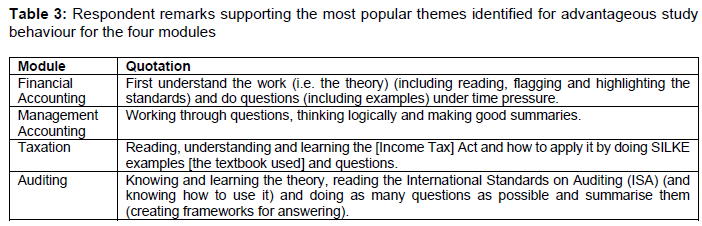
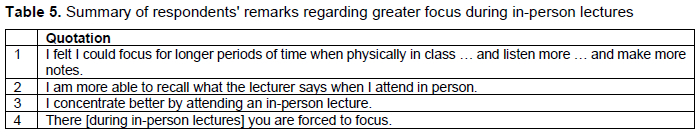
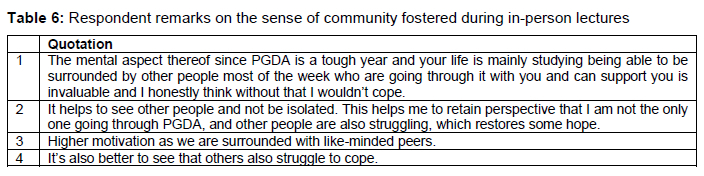
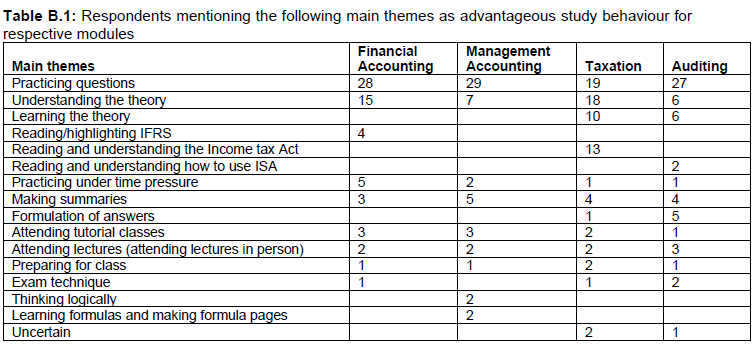
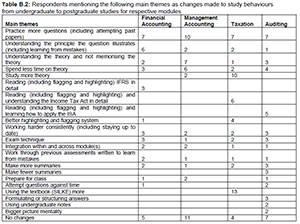
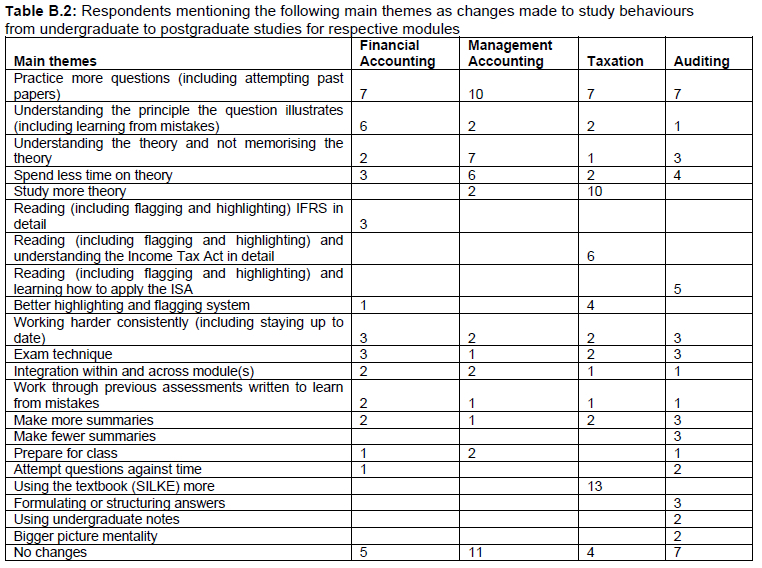
As prior studies only considered the Certificate of Theory in Accounting (CTA) as a whole, it is uncertain whether the study behaviours associated with performance differ for each module in the CTA (Financial Accounting, Management Accounting, Taxation and Auditing). Therefore, this study's primary objective was to identify study behaviours that could be employed in each module in the CTA programme to enhance performance. Secondary objectives included identifying changes in study behaviours from undergraduate to postgraduate and the effect of online (versus in-person) classes. A student questionnaire, including closed-ended and open-ended questions, was employed to gather data on students' study behaviours, marks and perceptions. A regression analysis revealed that consistently studying Auditing and working in a study group for other modules showed a positive association with CTA performance. Moreover, making mind maps for Financial Accounting and Taxation to gain a holistic view of entire topics aided performance. Thematic analysis of qualitative data showed that practising questions was crucial for all modules. For Financial Accounting and Management Accounting, respondents found it beneficial to understand the principles, while learning the theory was recommended for Taxation and Auditing. Changes in study behaviours from undergraduate to postgraduate included better use of open-book materials. Attending classes in-person (compared to online) was viewed as more beneficial for CTA students. This study identified specific study behaviours on a per-module basis, which can be shared with students to help them improve their performance in CTA. Moreover, it showed that the characteristics of student cohorts change over time and that millennials might value working in study groups more than their predecessors.
Study behaviours; student success; accounting; postgraduate studies; student experiences