Critical thinking: the key to success in management accounting and corporate finance
Abstract
This study aimed to determine whether there is a link between students' critical thinking abilities and their performance in a management accounting and financial management (MAFM) course as part of a degree program in accounting sciences. The study used a learning orientation index tool to measure students' critical thinking ability. It also used multiple linear regression to investigate the relationship between students' ability to think critically and their marks for the different components of the course. Other variables were considered in this investigation, including gender, age, ethnicity, first or home language education, and perceived level of course enjoyment. The regression results indicate that students' critical thinking score, age, and level of enjoyment from the course are the most significant variables linked to their performance in MAFM. Many South African students do not have the opportunity to learn in their first or native language, although this variable had no significant impact on their performance in this course. The study's findings indicate that students' capacity to think critically is crucial to their performance in management accounting, corporate finance, and managerial employment after graduation.
Accounting education; critical thinking; corporate financial management; cost and management accounting
INTRODUCTION
Climate change, resource scarcity, globalisation, and technological advancements are all driving rapid changes in the business landscape (Latif et al., 2019; Rossetto and Chapple, 2019; Shavelson et al., 2019; Siburian and Corebima, 2019; Terblanche and De Clercq, 2020). Students must deal with uncertainty and a demanding work environment (Cloete, 2018; Anggraeni et al., 2023).
These changes impact the accounting profession, expanding the traditional role of chartered accountants (Jakobsen et al., 2019). Critical thinking is necessary for reacting to change, making it an essential skill for graduates (Bandyopadhyay and Szostek, 2019; Butler, Church and Spencer, 2019; Latif et al., 2019; Mahanal et al., 2019; Barac, 2017; Shavelson et al., 2019). However, there is insufficient evidence that graduates have adequate critical thinking and problem-solving skills, prompting calls for educational reform (Accounting Education Change Commission, 1990; American Accounting Association, 1986; Bandyopadhyay and Szostek, 2019; Castellano, Lightle and Baker, 2017; Pullen, 2022; United States Department of Education, 2006). The "CA of the Future" (previously the "CA2025") initiative of the South African Institute of Chartered Accountants emphasise the value of critical thinking in the accounting profession (Barac, 2017; SAICA, 2021; Terblanche and De Clercq, 2020).
Critical thinking significantly impacts students' performance. Various studies link critical thinking to academic success across disciplines (D'Alessio et al., 2019; Jenkins, 1998; Kealey, Holland and Watson, 2005; Pullen, 2022; Puteh and Hamid, 2014; Shirrell, 2008; Williams, Oliver and Stockdale, 2004). Thus, assessing the impact of critical thinking on student performance is essential.
Most research focuses on financial accounting students, with limited studies on cost and management accounting and corporate financial management (MAFM)1,2. Drennan and Rohde (2002) and Al-Twaijry (2010) are notable exceptions, examining MAFM performance in Australia and Saudi Arabia, respectively. MAFM requires more unstructured thinking than other accounting courses, so studying its specific demands is crucial (Al-Twaijry, 2010; Drennan and Rohde, 2002).
This study uses multivariate linear regression to explore the relationship between critical thinking and MAFM performance among South African university3 Students. It includes demographic variables that may influence this relationship. The results can help predict students' success in MAFM based on their critical thinking ability, aiding in preparing future financial leaders.
The remainder of this article consists of a literature review that examines various elements of critical thinking, a description of the research technique, an analysis of the data obtained, and a section on the implications that may be derived from the findings.
The chartered accountant in South Africa and MAFM
The South African Institute of Chartered Accountants (SAICA) determines an applicant's qualifications to become a chartered accountant in South Africa, or CA(SA). Currently, a candidate must complete or pass the following:
a formal academic program
a standard-setting examination
a formal professional program
a professional examination
a training contract of at least three years with a registered training office.
Universities offer the required accredited formal academic programs, which consist of an undergraduate degree and a post-graduate program known as the Certificate in the Theory of Accountancy (CTA).
SAICA acknowledges the demanding nature of the CA(SA) designation and states that the "CAs need to integrate all relevant competencies (professional values and attitudes, enabling competencies and technical competencies) to provide quality deliverables ... on a wide range of inputs, activities and outputs that lead to outcomes in an organisation's value creation process. This requires integrated thinking ... to achieve viable solutions whilst considering all alternatives, by obtaining a broader understanding of an issue, creating a design or formulating a plan etc." (SAICA, 2021). The university's selection criteria for acceptance into the BCom in Accounting Sciences program emphasise intellectual ability requirements. The criteria include an admission point score (APS)4 of 34, 60% (Achievement level 5) in English as a Home Language or English as a First Additional Language, and 70 per cent (Achievement level 6) in Mathematics in the South African National Senior Certificate examination. The required APS of 34 is the highest admission requirement in the university's Faculty of Economic and Management Sciences.
Despite the strict admission requirements, students perform poorer in MAFM (48%) than in the other three core subjects in their final year, namely Accounting (62%), Auditing (68%) and Taxation (69%). As only high-level students qualify to study toward becoming chartered accountants, why many of them still find MAFM comparatively challenging remains to be answered.
MAFM is a core subject in training prospective chartered accountants in South Africa. It involves financial decision-making to create value or wealth for a company and its shareholders. In 2012, SAICA recognised the relative importance of MAFM by increasing the weight range for competency areas associated with MAFM in their Initial Test of Competence from 16-24% to 20-30 per cent. Hence, the range for MAFM is now higher than that for any other core subjects.
MAFM teaching and assessment are designed to use real-life scenarios, an inquiry or experiential learning method. This approach, as evidenced by numerous studies (Butler et al., 2019; Shavelson et al., 2019; Anggraeni et al., 2023; Chueh and Kao, 2024), enhances students' problem-solving ability. Students who apply MAFM principles to scenarios perform better than those who rely on rote learning. Experiential learning, particularly in MAFM, is crucial in accounting as it involves active problem-solving. Participation in solving problems enhances learning and workplace performance by developing critical thinking and problem-solving skills (Ballantine and Larres, 2004; Butler et al., 2019; Elo et al., 2024).
In South Africa, chartered accountants play a pivotal role in decision-making, holding many managerial positions and being considered vital business partners (Jakobsen et al., 2019; SAICA, 2024). Their responsibilities include formulating questions, challenging assumptions, and developing problem-solving strategies (Castellano et al., 2017). In 2024, nearly 25 per cent of chartered accountants in South Africa were in managerial roles, where their critical thinking skills were indispensable (SAICA, 2024; Bandyopadhyay and Szostek, 2019).
The Urgent Need for a Renewed Focus on Critical Thinking in Accounting Education
The value of general education is strongly emphasised in American literature, particularly concerning accounting education (Accounting Education Change Commission, 1990; American Accounting Association, 1986; Facione, 1990;). Through a comprehensive education, students can develop the abilities required for success in their chosen careers. Learning objectives should help students learn, think, and be creative. Students must be well educated not only in language, science, and mathematics but also in essential, pervasive skills such as those related to the collection and organisation of information, listening, comprehension, interpretation, communication, methods of scientific enquiry, reason, computation, abstract logical thinking, critical analysis, synthesis, problem-solving, evaluation, the development of interpersonal relationships, and ethics (Accounting Education Change Commission, 1990; American Accounting Association, 1986; Bandyopadhyay and Szostek, 2019; Pullen, 2022; Siburian and Corebima, 2019).
The South African Department of Education (Department of Education, 2002) emphasises the relevance of these thinking skills and "learning to learn" when outlining its twelve critical developmental outcomes. At least three of them explicitly address the previously described types of thinking skills: (1) using critical and creative thinking to identify and solve problems and make decisions, (2) collecting, analysing, organising, and critically evaluating information, and (3) demonstrating an understanding of the world as a set of related systems by recognising that problem-solving contexts do not exist in isolation.
Regarding students' studying toward becoming chartered accountants, the higher education arena also recognises the importance of critical thinking skills. Accounting graduates must have strong analytical, communication, time management, critical thinking, interpersonal, listening, and judgment abilities (Samkin and Stainbank, 2014). SAICA describes critical thinking as actively researching, investigating, analysing, reflecting on, and professionally judging information from several sources and perspectives (SAICA, 2021). It encompasses clarity, accuracy, precision, consistency, relevance, sound evidence, sound reasoning, depth, and breadth. SAICA argues critical thinking to be a key component of a CA's decision-making acumen (SAICA, 2021).
According toBandyopadhyay and Szostek (2019), critical thinkers can assess the correctness of what they read and hear, are open-minded and analytical, and understand and analyse information in any situation. They can also determine the possible consequences of a decision and justify their reasoning. All these skills relate to what is expected of students in MAFM.
The nature of critical thinking
While SAICA emphasises critical thinking as a core competency, its definition is largely focused on technical skills directly applicable to professional practice, such as analysis, synthesis, application and evaluation. This profession-specific approach, though valuable in preparing students, can be limiting when it comes to broader critical thinking capabilities. Critical thinking as understood in educational psychology includes not only cognitive skills but also dispositions such as open-mindedness self-regulation and reflective judgement to allow individuals to navigate complex unstructured problems and adapt to diverse perspectives. It is thus necessary to expand the definition of critical thinking for the purposes of this research.
Critical thinking has no universally accepted definition due to the difficulty of observing and evaluating mental processes (Baril et al., 1998; Facione, 2020; Terblanche and De Clercq, 2020). Psychologists frequently fail to articulate cognitive processes in words that accountants and educators can understand (Baril et al., 1998).
In the 1980s, the American Philosophical Association attempted to develop an agreement on critical thinking through a Delphi study project with 46 experts from various fields. This effort culminated in the Delphi Report, which recognised six basic critical thinking skills: interpretation, analysis, evaluation, inference, explanation, and self-regulation, as well as affective dispositions, albeit their inclusion in critical thinking was debatable (Facione, 1990). Robert Ennis also developed a taxonomy of critical thinking, emphasising elementary clarification, essential support, inference, advanced clarification, strategy, and tactics. He criticised Bloom's taxonomy for being overly broad and missing requirements for practical applicability (Ennis, 1987; 1993). Both Ennis (1993) and Sternberg (1986) defined critical thinking as problem-solving and decision-making, emphasising the importance of these skills in dealing with complex, unstructured environments (Chaffee, 1991; McPeck, 1990; Paul, 2005; Pullen, 2022).
Despite critical thinking's complexity and context-dependent nature, the Delphi panel and Ennis's definitions overlap significantly. According to their findings, "critical thinking encompasses the cognitive skills of interpretation, analysis, evaluation, inference, explanation, and self-regulation, as well as the willingness to apply these skills systematically in problem-solving and decision-making "(Facione, 1990; Ennis, 1987).
Theoretical foundations linking critical thinking to academic performance
Psychology, education, management, and economics theories illustrate the favourable relationship between critical thinking and academic performance.
Bloom's Taxonomy categorises cognitive capacities, highlighting how critical thinking (analysis, synthesis, and evaluation) promotes problem-solving and academic performance (Anderson and Krathwohl, 2001). Constructivist Learning Theory states that knowledge is built via experience and reflection, with critical thinking playing a significant role (Vygotsky and Cole, 1978). According to Self-Regulated Learning Theory, critical thinking aids in goal planning, monitoring, and analysing learning processes, boosting academic performance. According to Cognitive Load Theory, critical thinking reduces cognitive load while improving information processing and performance. Gardner's Multiple Intelligences Theory connects critical thinking to logical-mathematical and intrapersonal intelligence, facilitating problem resolution and success (Gardner, 2011). According to the Expectation-Value Theory, critical thinking increases students' confidence and perceived task value, enhancing motivation and performance (Wigfield and Eccles, 2000).
These theories collectively illustrate why critical thinking is crucial for academic success across disciplines and specifically for the competencies already argued to be relevant for success in MAFM, such as information processing and problem-solving.
Critical thinking ability as a predictor of success in accounting education
According to Apostolou et al. (2013), critical thinking is a fundamental professional skill essential for success in accounting. Accounting educators always seek new methods to improve student learning, as indicated by considerable research on accounting curriculum and assessment, core competencies, instructional approaches, and educational technology. However, Apostolou et al. (2013) discovered minimal research on the management accounting component of accounting education.
In their studies on critical thinking related to accounting education, Jenkins (1998) and Kealey et al. (2005) built on earlier studies to predict success in various accounting courses. Jenkins (1998) was interested in the importance of critical thinking in predicting performance in an auditing course. Jenkins (1998) refers to the definitions of critical thinking by McPeck (1981) and Beyer (1985) and found attributes associated with auditors and controllers, such as being sceptical and analytical, to be commonly and logically linked to critical thinking. In the outcomes of four consecutive auditing examinations in the US, grade point average (GPA) was the most significant individual predictor of performance, confirming the findings of prior research on performance in accounting courses. In addition, the ability to think critically was significantly positively associated with performance in the latter part of the auditing course, influencing performance beyond that of GPA in both the third and the final exam (Jenkins, 1998). Earlier studies relating to performance in accounting principles indicate that academic aptitude is associated with student performance (D'Alessio et al., 2019; Jenkins, 1998; Kealey et al., 2005; Terblanche and De Clercq, 2020). Kealey et al. (2005) were explicitly interested in determining whether critical thinking skills could help explain the cross-sectional variation in students' performance in principles of accounting. They found that critical thinking skills contributed significantly to explaining the variation. The present study is therefore interested in determining whether critical thinking ability could also be a differentiating factor to explain the comparatively lower performance of students in MAFM.
RESEARCH DESIGN AND METHODThis study examined the impact of critical thinking on MAFM performance among final-year BCom Accounting Sciences students. It assumed that the composite MAFM year mark accurately reflected performance. Although the results may not generalise to MAFM students outside this degree, they might apply to final-year students in SAICA-accredited programs at other South African universities.
Following methods by Jenkins (1998) and Shirrell (2008), this study used a computer-based programme in the form of a game to explore critical thinking's role in predicting performance. Demographic data was gathered through surveys, and multiple regression analyses were conducted using university records to determine critical thinking's influence on MAFM performance.
Dependent and independent variables
The dependent variable in the study is MAFM performance, represented by the overall year mark and marks for cost and management accounting and corporate financial management. The year mark comprised class tests, year tests, and homework.
The study aimed to assess the impact of critical thinking on MAFM performance rather than to predict success factors. The primary independent variable was a critical thinking score derived from sub-element scores. Several secondary control variables were included in the analysis. The first control variable was whether students studied in their first language, as learning their first language improves MAFM performance (Drennan and Rohde, 2002). The second control variable, ethnicity and culture, was included because these factors may affect academic performance due to familiarity with social contexts in case studies (Drennan and Rohde, 2002). South Africa's unique diversity makes this second control variable relevant. Another control variable was students' reported enjoyment of MAFM, serving as a proxy for motivation and interest. Gender and age were also included as control variables. Gender is commonly included as a control variable in research because it can significantly influence cognitive abilities, learning preferences, learning outcomes, and academic performance, even though it can be considered somewhat controversial (Halpern, 2000; Kealey et al., 2005; Kheloui et al., 2023; Schleifer and Dull, 2009). Age accounts for potential differences in cognitive function and educational background between younger and older participants (Salthouse, 2009).
Despite the frequent use of GPA in prior research, it was excluded from this study as it is a composite mark reflecting performance across several subjects, influenced by various factors. Including GPA would negatively affect the validity of the results due to its correlation with both critical thinking and MAFM performance (Jenkins, 1998; Kealey et al., 2005; Koh and Koh, 1999; Maksy and Zheng, 2008).
Selection of critical thinking assessment instrument
The literature suggests using different instruments to test the critical thinking construct (D'Alessio et al., 2019; Jenkins, 1998; Kealey et al., 2005; Puteh and Hamid, 2014; Shirrell, 2008; Williams et al., 2004). These instruments differ in terms of underlying theoretical frameworks, questions used, time and resources required to administer and score responses, and levels of specificity required for the study. The main instruments used in comparable prior research are as follows:
Watson-Glaser Critical Thinking Appraisal (WGCTA);
Student writing sample scored holistically using a rubric based on the process used in the Uniform Certified Public Accountant (CPA) and other examinations;
Student writing sample, scored using the Steps for Better Thinking Rubric (SFBTR);
Collegiate Assessment of Academic Proficiency (CAAP) critical thinking test; and
Psychological Critical Thinking instrument (essay format and qualitative scoring).
Despite the role that multiple-choice tests can play in assessing critical thinking, Norris and Ennis (1989) emphasise that multiple-choice questions are inadequate when used alone: they may supply good information on separate abilities but are not suited to assessing the ability to use several skills together while working on a complex problem.
The following must be taken into account when deciding on an instrument to measure students' ability to think critically:
the degree to which the instrument is aligned with the selected definition of critical thinking and the desired contexts discussed above (complex, ill-structured, and unfamiliar environments);
the resources required to administer the instrument (due to the intended sample size and potential psychometric requirements);
the ability of researchers to electronically collect data on students' ability to think critically (due to the large sample size intended);
an assessment of the advantages and disadvantages presented by the format of the test (a multiple-choice rather than an open-ended format, for example);
potential language concerns as it may not be in the respondents' first language;
potential cultural concerns associated with instruments developed outside South Africa; and
the availability and cost of the instrument.
This study used a learning orientation index (LOI) to assess students' ability to think critically. The LOI was developed based on a sound theoretical foundation by a psychology expert organisation, Cognadev (Pty) Ltd in South Africa (Cognadev, 2015a). Only professionally registered and accredited practitioners may use it to interpret and give feedback on its results (Cognadev, 2014, 2015a), primarily for career guidance to school and university leavers. It is an interactive, automated, web-enabled game that takes one to two hours to complete (Cognadev, 2015a, 2015b). It tracks and externalises participants' thinking skills using thousands of measuring points or feedback loops (Cognadev, 2013). In this sense, the technique overlaps with those used at assessment centres and in simulations (Cognadev, 2013). The content is not knowledge-based and is thus largely independent from earlier educational exposure (Cognadev, 2013, 2014), making it particularly relevant to South Africa's diverse context. It is described as follows in the Cognadev manual of frequently asked questions:
"The LOI measures a person's accurate cognitive responses to an unfamiliar environment where the person needs to make sense of, or meaningfully interpret, confusing information according to somewhat discrepant task instructions. The task is not transparent and does not require self-insight, as in the case of questionnaires." (Cognadev, 2013)
The LOI was designed to measure critical thinking ability and proficiency in several information-processing preferences and skills, metacognitive criteria, and learning potential. However, it was deemed appropriate for this study for the following reasons:
It allows the measurement of numerous skill sub-elements aligned with Ennis and the Delphi panel's definition of critical thinking (Facione, 1990).
LOI measures complexity preference and handling of ill-structured information without requiring written assignments or interviews, which need more resources (Norris and Ennis, 1989).
It avoids issues with single-answer assessments by focusing on thinking processes through open-ended scenarios (McPeck, 1981).
Its grade 4 English proficiency requirement reduces variation due to language differences, which is crucial in South Africa.
It is self-administered, electronic, and scored by an expert system, minimising resource needs and scoring biases.
The developer's psychological expertise ensures proper administration and critical thinking assessment.
Sampling
The target population for this study was accounting students who are studying toward the chartered accounting qualification at the university and who are enrolled for MAFM at the third-year level. Students enrolled in this year-long course attend lectures in three groups of approximately 200 students each. There are two formal lectures a week. On average, a lecture is 100 minutes long. The population was heterogeneous in the typical South African sense of diversity, namely in terms of gender, cultural background, socio-economic background, first language, and access to additional financial support provided by the university.
The population was approximately 570 students, based on a total student count of 669 enrolled for MAFM, and adjusted for approximately 15 per cent who were repeat students or had dropped out during the year. The researchers invited students to take part in the survey voluntarily. They encouraged students to participate by confidentially providing feedback on individual scores to students and specialist feedback to the student group on how best to interpret and use the assessment results, including how to improve their ability to think critically. The analyses were based on 132 usable completed tests, which indicated a response rate of approximately 23 per cent of the total population, which the researchers deemed sufficient for representative analyses.
Data collection
The researchers used an initial short electronic questionnaire to gather data on the additional independent variables, the LOI instrument to collect data on critical thinking ability, and the university's database to collect the rest of the student data needed to conduct the study. They told the students about the intended research and requested them to complete informed consent forms. The students played the LOI game during controlled and monitored sessions in a university computer laboratory.
Data analysis
Using custom-made software, the instrument developer captured and processed the data collected using the LOI instrument. They also converted each sub-element score into a standardised score (T-score) to enable analysis. The researchers then matched the data from the LOI instrument and the demographical data questionnaire to the participants' MAFM year marks, which they obtained from departmental records.
The researchers then analysed the collected data using several techniques, including descriptive statistics, correlations, and multiple regression analysis. Jenkins (1998) and Shirrell (2008) both used multiple regression analysis to assess the impact of the ability to think critically on students' performance in MAFM.
RESULTS
The objective of this study was to show the extent to which variables related to critical thinking affect students' MAFM year marks. The marks are divided into three categories: overall year mark, cost and management accounting year mark, and corporate financial management year mark. Three different models were used to test the three categories.
Through the LOI, the following 13 variables, which the authors related to their definition of critical thinking, were selected:
1. Pragmatism
2. Exploration
3. Analytical skill
4. Rule orientation
5. Categorisation
6. Integration
7. Complexity
8. Logical reasoning
9. Verbal abstraction
10. Memory use
11. Memory strategies
12. Judgement
13. Learning
The LOI gives a score of 1 to 7 for each of the 13 variables, where 1 showed low ability and 7 high. In our study, the authors deemed Principal Component Analysis (PCA) appropriate for deriving a single variable from the 13 critical thinking skill variables due to theoretical and empirical considerations. PCA is a robust technique for dimensionality reduction, widely used to summarise information from multiple correlated variables into fewer components without significant loss of information (Jolliffe, 2002). Preliminary checks, including a correlation between the 13 critical thinking variables, the Kaiser-Meyer-Olkin (KMO) measure and Bartlett's Test of Sphericity, confirmed the suitability of the data for PCA, with all variables being highly correlated, a KMO value above 0.6 and a significant Bartlett's test (p < 0.001) (Kaiser, 1974). The single-component extracted explained a substantial portion of the variance, supporting its use as a representative composite variable. This approach simplifies analysis and interpretation and is consistent with practices in the literature (Abdi and Williams, 2010).
The combined critical thinking score derived from PCA ranges from -2.438 to 1.605, where negative values indicate a critical thinking ability below the mean and positive values indicate a critical thinking ability above the mean. These values, therefore, still reflect relative critical thinking abilities, with higher PCA scores indicating stronger abilities compared to the mean and lower scores indicating weaker abilities.
In addition to evaluating students' critical thinking ability, the models considered the effect of gender, ethnicity, language, age, and a Likert-scale enjoyment factor for MAFM (from 1 to 10, where 1 showed dislike and 10 full enjoyment) as control variables. The enjoyment factor measured the enjoyment of MAFM overall, enjoyment of cost and management accounting, and enjoyment of corporate financial management.
The researchers evaluated the variables for multiple regression assumptions before they performed statistical analyses. The assumptions included multicollinearity, outliers, normality, linearity, and homoscedasticity, all of which were acceptable.
Descriptive analyses
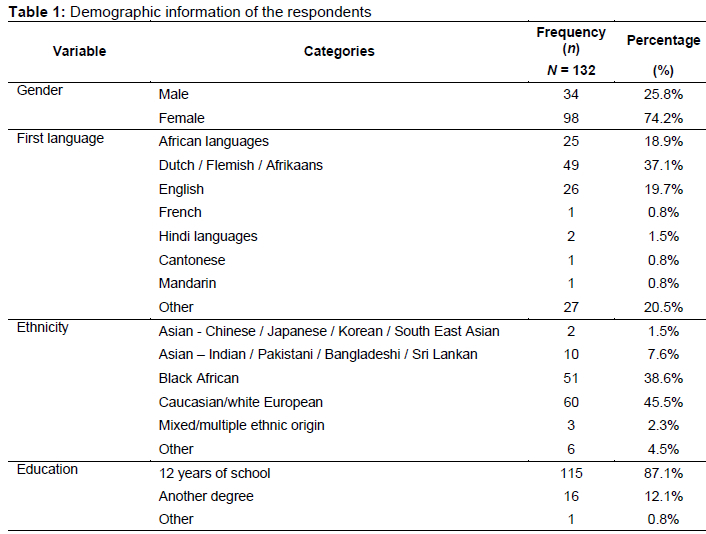
The total sample consisted of 132 responses. Table 1 gives an overview of the sample demographics.
The demographic information indicated the unique diversity of South African student cohorts. Notably, just 20 per cent of the participants spoke English as their native or first language. English is the most widely spoken second language in South Africa, and it is the language of commerce. If students' ability to think critically is more important than home or first language education in ensuring that they perform well in the MAFM section of the exam, then the language of tuition becomes less important, as it will not prevent students from developing their critical thinking skills.
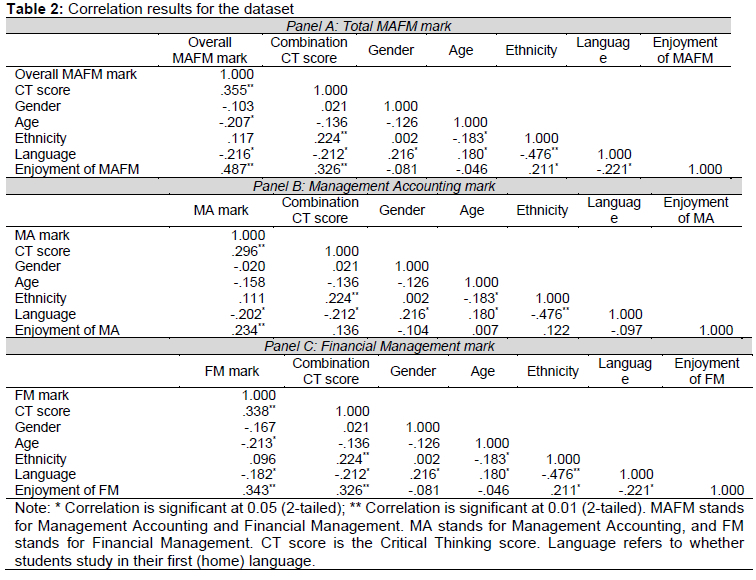
Table 2 presents the correlation results for all variables. The researchers split the analyses into three sub-categories: the overall MAFM mark, cost and management accounting (MA) mark, and corporate financial management (FM) mark.
Students performed better in cost and management accounting (m = 52%) than in corporate financial management (m = 44%). This finding is in line with expectations, as the three-year course in MAFM is structured so that students are introduced to cost and management accounting at the second-year level but fully start with the corporate financial management component only at the third-year level (the level at which this study measured students' performance). Consequently, the concepts of corporate financial management are comparatively new to students.
Preliminary indications from the correlations indicate that the ability to think critically significantly correlates with performance in both cost and management accounting (r = .296) and corporate financial management (r = .338). It thus also correlates significantly with the overall MAFM score (r = .355). As expected, enjoyment of MAFM is also significantly correlated with performance in both components and the overall MAFM score. Interestingly, younger students outperformed their older peers in financial management. The remaining correlation results are insignificant and below the threshold (r > .9) to not cause concerns about the effect of multicollinearity. The variance inflation factor and the tolerance statistics support this finding, showing no unacceptable correlations. The correlation results show that students' ability to think critically and the enjoyment they get from the course and its different components are the most critical variables in determining their success in MAFM.
Multiple regression results
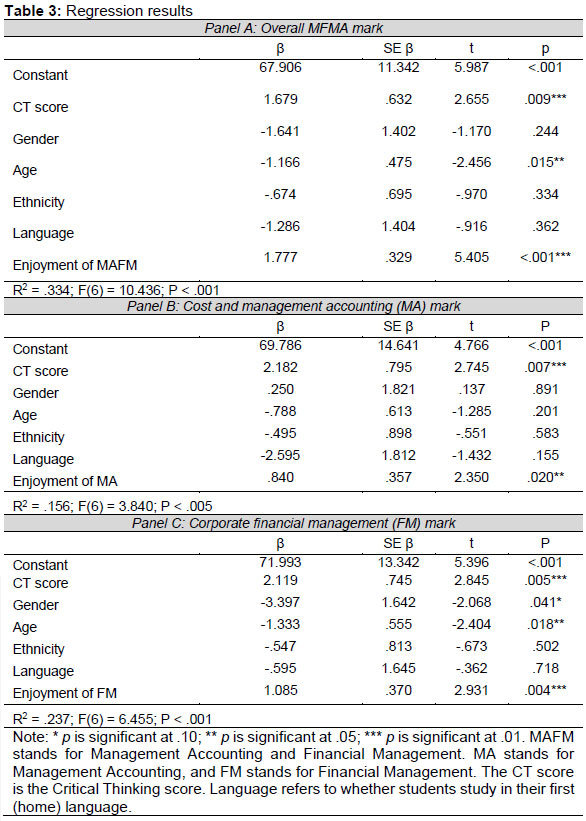
The researchers used multiple linear regression analysis to develop separate models to investigate the relationship between critical thinking and third-year students' overall MAFM mark, cost and management accounting mark, and corporate financial management mark. Regression results for the three models are given in Table 3.
Concerning the overall MAFM mark, the combined model is significant at p < .001, with an R2 of .334 (F (6) = 10.436). Concerning the components, the cost and management accounting (MA) model is the least significant at p < .005, with an R2 of .156 (F (6) = 3.840) and the corporate financial management (FM) model at p < 0.001, with an R2 of .237 (F (6) = 6.455). While the significance for all three models is high, the R2 effect size shows that variables not contained in the models also affect students' performance in MAFM and its different components. Nonetheless, the models supplied valuable information. The sections that follow provide an interpretation and discussion of the results.
The multiple regression analysis confirms the preliminary findings of the correlation analysis. Critical thinking ability (p = .009), age (p = .015), and enjoyment of the course (p < .001) are significantly associated with MAFM performance. Only critical thinking ability (p = .007) and enjoyment of MA (p = .020) show significance for MA performance. For performance in FM, significance was found for critical thinking ability (p = .005), gender (p = .041), age (p = .018) and enjoyment of FM (p = .004).
Motivation and interest in MAFM may influence students' performance, and the significance of the enjoyment of all the components of MAFM confirms this assertion. As the variable related to the enjoyment of MAFM serves as a control variable, the question of whether motivation and interest positively influence MAFM performance or whether good MAFM performance leads to higher motivation and interest in the course falls outside the scope of the present study.
The significance and relative importance of age to MAFM performance, particularly concerning corporate financial management, is interesting. Younger students perform better in corporate financial management than older ones. As a result, their overall MAFM marks are also better. However, this difference cannot be attributed to repeating students performing worse in MAFM, as repeat students were purposefully excluded from the sample. There are several possible reasons, including cognitive agility, recent education, technological proficiency, effective study habits, higher motivation, and fewer life responsibilities than older students. However, the difference caused by age should be a topic for future research.
Of primary interest is the significance of the relationship between the ability to think critically and MAFM performance overall and in its different parts. Based on the unstandardised beta, the ability to think critically is slightly more important for performance in cost and management accounting (b = 2.182, p < .007) than in corporate financial management (b = 2.119, p < .005). Nonetheless, critical thinking is essential to overall MAFM performance, stemming from its importance to both parts. Thus, the present study confirms a significant link between students' ability to think critically and their doing well in MAFM. Consequently, the present study's findings confirm the arguments by Al-Twaijry (2010), Drennan and Rohde (2002), and Anggraeni et al. (2023) that MAFM-type subjects require high critical thinking. The present study does not allow for inferences about the level of critical thinking necessary for other accounting-related courses, such as accounting and auditing, even though critical thinking is also crucial in auditing and accounting performance (Jenkins, 1998; Kealey et al., 2005).
In all three multivariate regression models, students studying in their first language did not perform significantly better than those who did not, contrary to Drennan and Rohde's (2002) findings in Australia. This result suggests that the tertiary education environment in South Africa may be more supportive of students who cannot study in their first language, possibly due to awareness among lecturers and the availability of language support courses, such as the university's academic literacy program for economic and management sciences.
CONCLUSIONS AND RECOMMENDATIONS
Critical thinking has been studied in various contexts. However, although its impact on accounting education has been considered, it has not been investigated extensively regarding MAFM-type courses. The purpose of the present article was to examine the effect of students' ability to think critically, along with several demographic factors, on their academic performance in MAFM.
As indicated by Pullen (2022), a shift is needed in accounting education towards a holistic competency model, which includes critical thinking, problem-solving, and adaptability. Pullen (2022) believes this is essential for preparing students for roles beyond traditional accounting functions, potentially as strategic leaders or business partners. These findings are in line with those of earlier researchers. The results from this study show a significant positive relationship between critical thinking skills and performance in MAFM. D'Alessio et al. (2019), Jenkins (1998), Kealey et al. (2005), and Mahanal et al. (2019) found critical thinking to be significant in explaining or predicting academic performance, albeit in other subjects. The theoretical foundations also collectively explain the positive relationship between critical thinking abilities and MAFM performance.
Critical thinking skills are essential for academic success and graduates' work and personal lives. As Bandyopadhyay and Szostek (2019) recommended, early assessment of these skills can benefit students. Critical thinking can be taught and developed (Mahanal et al., 2019; Terblanche and De Clercq, 2020), which could enhance students' success in MAFM studies. Integrating critical thinking training in academic programs is crucial, as students must learn how to think rather than what to think. Mahanal et al. (2019) propose a learning model that includes reading, problem-solving, and reviewing solutions. Terblanche and De Clercq (2020) suggest teaching critical thinking across all courses, which aligns with findings from this study and previous research, highlighting the importance of critical thinking in accounting and auditing (Jenkins, 1998; Kealey et al., 2005). However, Ennis (1987) and the Delphi Panel (Facione, 1990) note that critical thinking includes generic and topic-specific elements. Therefore, incorporating these skills into MAFM teaching methods could enhance students' abilities.
The findings of this study offer valuable insights into how pedagogy in MAFM can be adapted to enhance students' critical thinking abilities and academic performance. By demonstrating the positive relationship between critical thinking and success in MAFM, the results suggest that embedding critical thinking training within the curriculum could benefit students significantly. Pedagogical approaches that focus on problem-based learning, case studies, and real-life scenarios encourage students to engage deeply with the material, fostering analytical skills and adaptability. Additionally, integrating reflective and self-assessment practices can help students develop the metacognitive awareness necessary for critical thinking. For educators, these strategies support a more active learning environment where students are not merely learning content but are also developing the cognitive skills required for complex problem-solving in the professional accounting landscape. This approach aligns with SAICA's evolving focus on competencies beyond technical knowledge, underscoring the need for teaching methods that equip students with critical thinking skills that are crucial in today's dynamic and challenging business environments.
This study is limited to focusing on a single group of students in one academic year. Future studies might examine the same problem over time and compare other chartered accounting courses, such as accounting, auditing, and taxes. Future studies should also look at practical approaches to teaching critical thinking abilities, as this topic has not been thoroughly investigated (Terblanche and De Clercq, 2020). Future studies should investigate integrating problem-based learning and agile approaches to improve critical thinking and professional competencies, ensuring that graduates meet the profession's changing expectations (Chueh and Kao, 2024).
REFERENCES
LITERATURE REVIEW
- Abdi, H., and L. J. Williams. 2010 Principal component analysis. Wiley interdisciplinary reviews: computational statistics, 2(4), 433-459.
- Accounting Education Change Commission. 1990. "Position statement number one: Objectives of education for accountants". Issues Account. Educ., 5, 307-312.
-
Al-Twaijry, A. A. 2010. "Student academic performance in undergraduate managerial accounting courses". J. Educ. Bus., 85(6), 311-322. https://doi.org/10.1080/08832320903449584.
» https://doi.org/10.1080/08832320903449584 - American Accounting Association. 1986. "Future accounting education: Preparing for the expanding profession". Issues Account. Educ., 1(1), 168-195.
- Anderson, L. W., and D. R. Krathwohl. 2001. A taxonomy for learning, teaching, and assessing: A revision of Bloom's taxonomy of educational objectives: complete edition. Addison Wesley Longman, Inc.
-
» https://www.bbrief.co.za/2017/09/19/critical-thinking-a-prized-commodity/ - Anggraeni, D. M., B. K. Prahani, B, N. Suprapto, N. Shofiyah, and B. Jatmiko. 2023. "Systematic review of problem based learning research in fostering critical thinking skills". Thinking Skills and Creativity, 49, 101334.
-
Apostolou, B., J. W. Dorminey, J. M. Hassell, and S. F. Watson. 2013. "Accounting education literature review" 2010-2012. J. Account. Educ., 31(2), 107-161. https://doi.org/10.1016/j.jaccedu.2013.03.001.
» https://doi.org/10.1016/j.jaccedu.2013.03.001 -
Ballantine, J. A., and P. M. Larres. 2004. "A critical analysis of students' perceptions of the usefulness of the case study method in an advanced management accounting module: The impact of relevant work experience." Account. Educ., 13(2), 171-189. https://doi.org/10.1080/09639280410001676885.
» https://doi.org/10.1080/09639280410001676885 -
Bandyopadhyay, S., and J. Szostek. 2019. "Thinking critically about critical thinking: Assessing critical thinking of business students using multiple measures." J. Educ. Bus., 94(4), 259-270. https://doi.org/10.1080/08832323.2018.1524355.
» https://doi.org/10.1080/08832323.2018.1524355 -
Baril, C. P., B. M. Cunningham, D. R. Fordham, R. L. Gardner, and S. K. Wolcott. 1998. "Critical thinking in the public accounting profession: Aptitudes and attitudes." J. Account. Educ., 16(3-4), 381-406. https://doi.org/10.1016/S0748-5751(98)00023-2.
» https://doi.org/10.1016/S0748-5751(98)00023-2 - Beyer, B. K. 1985. "Critical thinking: What is it?" Soc. Educ., 49(4), 270-276.
-
Butler, M. G., K. S. Church, and A. W. Spencer. 2019. "Do, reflect, think, apply: Experiential education in accounting". J. Account. Educ., 48, 12-21. https://doi.org/10.1016/j.jaccedu.2019.05.001.
» https://doi.org/10.1016/j.jaccedu.2019.05.001 - Castellano, J., S. Lightle, and B. Baker. 2017. "A strategy for teaching critical thinking: The Sellmore case". Manag. Account. Q., 18(3), 1.
- Chaffee, J. 1991. Thinking critically (3rd ed.). Boston: Houghton Mifflin.
- Chueh, H. E., and C. Y. Kao. 2024. "Exploring the impact of integrating problem based learning and agile in the classroom on enhancing professional competence". Heliyon, 10(3).
-
Cloete, M. 2018. "The impact of an integrated assessment on the critical thinking skills of first-year university students." Account. Educ., 27(5), 479-494. https://doi.org/10.1080/09639284.2018.1501717.
» https://doi.org/10.1080/09639284.2018.1501717 -
Cognadev. 2013. FAQ Manual: Cognitive assessment using the CPP and LOI. Retrieved from http://www.cognadev.com/publications/FAQ%20CPP%20and%20LOI.pdf. Accessed 9 November 2020.
» http://www.cognadev.com/publications/FAQ%20CPP%20and%20LOI.pdf -
Cognadev. 2014. Learning Orientation Index: A Cognadev product. Retrieved from http://www.cognadev.com/publications/brochures/Learning_Orientation_Index.pdf. Accessed 9 November 2020.
» http://www.cognadev.com/publications/brochures/Learning_Orientation_Index.pdf -
Cognadev. 2015a. Innovative assessments. Retrieved from http://www.cognadev.com/assessments/. Accessed 9 November 2020.
» http://www.cognadev.com/assessments/ - Cognadev. 2015b. Learning Orientation Index: Sample report. Johannesburg, South Africa: Cognadev UK.
-
D'Alessio, F. A., B. E. Avolio, and V. Charles. 2019. "Studying the impact of critical thinking on the academic performance of executive MBA students". Think. Skills Creat., 31, 275-283. https://doi.org/10.1016/j.tsc.2019.02.002.
» https://doi.org/10.1016/j.tsc.2019.02.002 -
Department of Education. 2002. Revised national curriculum statement grades R-9 (schools): Overview. Retrieved from https://www.gov.za/sites/default/files/gcis_document/201409/natcur0.pdf. Accessed 9 November 2020.
» https://www.gov.za/sites/default/files/gcis_document/201409/natcur0.pdf -
Drennan, L. G., and F. H. Rohde. 2002. "Determinants of performance in advanced undergraduate management accounting: An empirical investigation." Account. Finance, 42(1), 27-40. https://doi.org/10.1111/1467-629X.00065.
» https://doi.org/10.1111/1467-629X.00065 - Elo, T., S. Pätäri, H. Sjögrén, and M. Mättö. 2024. " Transformation of skills in the accounting field: the expectation-performance gap perceived by accounting students". Accounting Education, 33(3), 237-273.
- Ennis, R. H. 1987. "A taxonomy of critical thinking dispositions and abilities". In J. B. Baron and R. J. Sternberg (Eds.), Teaching thinking skills: Theory and practice. New York, NY: W. H. Freeman.
-
Ennis, R. H. 1993. "Critical Thinking Assessment." Theory into Practice, 32, 179-186. https://doi.org/10.1080/00405849309543594
» https://doi.org/10.1080/00405849309543594 -
Facione, P. A. 1990. Critical thinking: A statement of expert consensus for purposes of educational assessment and instruction. Research findings and recommendations. Retrieved from http://files.eric.ed.gov/fulltext/ED315423.pdf. Accessed 9 November 2020.
» http://files.eric.ed.gov/fulltext/ED315423.pdf -
Facione, P. A. 2020. Critical thinking: What it is and why it counts. Retrieved from https://www.student.uwa.edu.au/__data/assets/pdf_file/0003/1922502/Critical-Thinking-What-it-is-and-why-it-counts.pdf. Accessed 9 November 2020.
» https://www.student.uwa.edu.au/__data/assets/pdf_file/0003/1922502/Critical-Thinking-What-it-is-and-why-it-counts.pdf - Gardner, H. E. 2011. Frames of mind: The theory of multiple intelligences. Basic books.
- Halpern, D. F. 2000. Sex differences in cognitive abilities. Psychology Press.
-
Jakobsen, M., F. Mitchell, H. Nørreklit, and M. Trenca. 2019. "Educating management accountants as business partners: Pragmatic constructivism as an alternative pedagogical paradigm for teaching management accounting at master's level." Qual. Res. Account. Manag., 16(4), 517-541. https://doi.org/10.1108/QRAM-10-2017-0099.
» https://doi.org/10.1108/QRAM-10-2017-0099 -
Jenkins, E. K. 1998. "The significant role of critical thinking in predicting auditing students' performance." J. Educ. Bus., 73(5), 274-279. https://doi.org/10.1080/08832329809601644.
» https://doi.org/10.1080/08832329809601644 - Jolliffe, I. T. 2002. Principal component analysis for special types of data (pp. 338-372). Springer, New York.
- Kaiser, H. F. 1974. "An index of factorial simplicity". psychometrika, 39(1), 31-36.
-
Kealey, B. T., J. Holland, and M. Watson. 2005. "Preliminary evidence on the association between critical thinking and performance in principles of accounting". Issues Account. Educ., 20(1), 33-49. https://doi.org/10.2308/iace.2005.20.1.33.
» https://doi.org/10.2308/iace.2005.20.1.33 - Kheloui, S., S. Jacmin-Park, O. Larocque, P. Kerr, M. Rossi, L. Cartier, and R. P. Juster. 2023. Sex/gender differences in cognitive abilities. Neuroscience & Biobehavioral Reviews, 105333.
-
Koh, M. Y., and H. C. Koh. 1999. "The determinants of performance in an accountancy degree programme". Account. Educ., 8(1), 13-29. https://doi.org/10.1080/096392899331017.
» https://doi.org/10.1080/096392899331017 -
Latif, N. E. A., F. M. Yusuf, N. M. Tarmezi, S. Z. Rosly, and Z. N. Zainuddin. 2019. "The application of critical thinking in accounting education: A literature review". Int. J. High. Educ., 8(3), 57-62. https://doi.org/10.5430/ijhe.v8n3p57.
» https://doi.org/10.5430/ijhe.v8n3p57 -
Mahanal, S., S. Zubaidah, I. D. Sumiati, T. M. Sari, and N. Ismirawati. 2019. "RICOSRE: A learning model to develop critical thinking skills for students with different academic abilities". Int. J. Instr., 12(2), 417-434. https://doi.org/10.29333/iji.2019.12227a.
» https://doi.org/10.29333/iji.2019.12227a -
Maksy, M. M., and L. Zheng. 2008. "Factors associated with student performance in advanced accounting and auditing: An empirical study in a public university". Account. Res. J., 21(1), 16-32. https://doi.org/10.1108/10309610810891328.
» https://doi.org/10.1108/10309610810891328 - McPeck, J. E. 1981. Critical thinking and education. Oxford: Martin Robertson.
- McPeck, J. E. 1990. Teaching critical thinking: Dialogue and dialectic. New York, NY: Routledge.
- Norris, S. P., and R. H. Ennis. 1989. Evaluating critical thinking. Pacific Grove, CA: Critical Thinking Press and Software.
-
Paul, R. 2005. "The state of critical thinking today". New Directions for Community Colleges, 2005(130), 27-38. https://doi.org/10.1002/cc.193.
» https://doi.org/10.1002/cc.193 - Pullen, E. 2024. "An analysis of critical thinking skills and its link to democratic citizenship education within the South African chartered accountancy higher educational landscape: A reflection on my doctoral encounter". In Philosophical Adventures in African Higher Education (pp. 65-78). Routledge.
-
Puteh, M. S., and F. A. Hamid. 2014. "A test on critical thinking level of graduating Bachelor of Accounting students: Malaysian evidence". Procedia Soc. Behav. Sci., 116, 2794-2798. https://doi.org/10.1016/j.sbspro.2014.01.658.
» https://doi.org/10.1016/j.sbspro.2014.01.658 -
Rossetto, C., and S. Chapple. 2019. "Creative accounting? The critical and creative voice of students." Assess. Eval. High. Educ., 44(2), 216-232. https://doi.org/10.1080/02602938.2018.1492700.
» https://doi.org/10.1080/02602938.2018.1492700 - SAICA. 2021. CA(SA) Competency framework. 2021. Guidance on the content, development and assessment of competencies in the academic programme. Johannesburg: SAICA.
-
SAICA. 2024. Membership statistics. Retrieved from https://www.saica.org.za/members/member-info/membership-statistics. Accessed 6 August 2024.
» https://www.saica.org.za/members/member-info/membership-statistics - Salthouse, T. A. 2009. "When does age-related cognitive decline begin?" Neurobiology of ageing, 30(4), 507-514.
- Samkin, G. and L. Stainbank. 2016. "Teaching and learning: Current and future challenges facing accounting academics, academics, and the development of an agenda for future research". Meditari Accountancy Research, 24(3), 294-317.
-
Schleifer, L. L. F., and R. B. Dull. 2009. "Metacognition and performance in the accounting classroom". Issues Account. Educ., 24(3), 339-367. https://doi.org/10.2308/iace.2009.24.3.339.
» https://doi.org/10.2308/iace.2009.24.3.339 -
Shavelson, R. J., O. Zlatkin-Troitschanskaia, K. Beck, S. Schmidt, and J. P. Marino. 2019. "Assessment of university students' critical thinking: Next generation performance assessment." Int. J. Test., 19(4), 337-362. https://doi.org/10.1080/15305058.2018.1543309.
» https://doi.org/10.1080/15305058.2018.1543309 -
Shirrell, D. 2008. "Critical thinking as a predictor of success in an associate degree nursing program". Teach. Learn. Nurs., 3(4), 131-136. https://doi.org/10.1016/j.teln.2008.05.001.
» https://doi.org/10.1016/j.teln.2008.05.001 -
Siburian, J., and A. D. Corebima. 2019. "The correlation between critical and creative thinking skills on cognitive learning results". Eurasian J. Educ. Res., 81, 99-114. https://doi.org/10.14689/ejer.2019.81.6.
» https://doi.org/10.14689/ejer.2019.81.6 -
Sternberg, R. J. 1986. Critical thinking: Its nature, measurement, and improvement. Retrieved from http://eric.ed.gov/PDFS/ED272882.pdf. Accessed 9 November 2020.
» http://eric.ed.gov/PDFS/ED272882.pdf -
Terblanche, E. A. J., and B. De Clercq. 2020) "Factors to consider for effective critical thinking development in auditing students". SA J. Account. Res., 34(2), 96-114. https://doi.org/10.1080/10291954.2019.1669293.
» https://doi.org/10.1080/10291954.2019.1669293 - Vygotsky, L. S., and M. Cole. 1978. Mind in society: Development of higher psychological processes. Harvard University Press.
- Wigfield, A., and J. S. Eccles. 2000. "Expectancy-value theory of achievement motivation". Contemporary educational psychology, 25(1), 68-81.
-
Williams, R. L., R. Oliver, and S. L. Stockdale.. 2004." Psychological versus generic critical thinking as predictors and outcome measures in a large undergraduate human development course". J. Gen. Educ., 53(1), 37-58. https://doi.org/10.1353/jge.2004.0022.
» https://doi.org/10.1353/jge.2004.0022
2 Many such studies may exist, but differences in the names of finance-related courses, especially outside South Africa, make it difficult to find similar research. Studies aimed at preparing students for careers in accounting (professional or otherwise) are vocational, which means their purpose is to ensure that students learn the skills they need to do their job well. In research on students enrolled in such programs, students are often broadly referred to as "accounting students", while the research is focused on financial accounting, auditing, or taxation.
3 The researchers have not indicated the institution's name to ensure that the review process stays anonymous. They can add the university's name once the paper has been accepted for publication.
4 The calculation of an admission point score (APS) is based on a candidate's achievement in any six recognized National Senior Certificate (NSC) 20-credit subjects on a 7-point rating scale, covering achievement levels between 0 and 100%.