Cultural and linguistic diversity in a selected south african higher education institution: international postgraduate students' experiences
Abstract
This study explored the intricate dynamic of culture and language diversity within a selected South African higher education institution (HEI), focusing mainly on the experiences of international postgraduate students. The study was framed under the invitational education theory of practice to investigate how the selected HEI creates a safe, inviting, and enabling learning environment for its international postgraduate students. The study was qualitative and interpretivist in nature and employed in-depth semi-structured interviews and storytelling to generate data. Furthermore, thematic data analysis was employed. The paper is distilled from the experiences of 10 international postgraduate students, two each from Cameroon, Lesotho, Nigeria, Tanzania, and Zimbabwe, who were selected through the snowball sampling method. The findings indicate that many international postgraduate students experience psychological challenges and struggle with adjustment in the line of cultural and linguistic diversity existing in HEIs in South Africa. The study insists that South African HEIs should employ the traditional integrative learning technique with their international students since it is a useful pathway to help them achieve their academic goals.
internationalization; international postgraduate students; higher education institutions; cultural and linguistic diversity; intercultural and multilingual competence
INTRODUCTION
South African higher education institutions (HEIs) have strategically been increasing enrollment of students from the Southern African Development Community (SADC) as well as from outside the region and African continent (Heleta and Chasi 2023; van Schalkwyk, van Lill and Cloete 2021). According to research, South Africa has marketed itself with educational services and become an educational hub for other African countries (Kanyopa et al., 2024; Nwokedi and Khanare 2020). As the educational hub for postgraduate students across the African continent, South Africa's education system is increasingly impacted by the internationalization of its HEIs. The term internationalization is explained by Bulut-Sahin et al. (2023) as the movement of people, knowledge, projects, services, and ideas across national boundaries. Amutuhaire (2024) mentions that the internationalization of HEIs is crucial in the world today as universities are viewed as key drivers toward globalization. Currently, every country uses its universities to attract the best students from across the world for studies and research. The report of the World Trade Organization (WTO) and General Agreement of Trade in Services (GATS) of 2016 revealed that South African universities had reached the fourth mode, which is the highest mode, in the exportation of higher education services around the world.
This is also supported by Ge (2022) and Tight (2021), that internationalization is an inevitable aspect in modern education, particularly at tertiary or university level. However, research has shown that internationalization in South African HEIs is confronted with cultural and linguistic diversity that seems to affect international students' well-being during their adjustment phase (Moshtari and Safarpour 2023; Yamutuale 2024). The purpose of the study was thus to explore the experiences of international postgraduate students regarding cultural and linguistic diversity in a selected South African HEI.
BACKGROUND
Globally, internationalization has become a new strategy to manage the global trends in the education sector (Bradley, Emerson and Silva 2019; George Mwangi, Changamire and Mosselson 2019). South African HEIs as knowledge-creating institutions are also influenced by these global networks by considering diverse ideas in technology, values, and perspectives to go parallel with globalization (Ge 2022; Mlambo 2020). As Heleta (2023, 24) mentions, "South African government corresponds to the impact of globalization by implementing a critical policy of the internationalization of its HEIs." Literature has shown that HEIs not only serve as the foundation of societal progress but also mold the minds of academics and professionals. Thus, disregarding their cultural and linguistic backgrounds can limit their engagement and academic performance (Amutuhaire 2024; Arafat et al. 2022).
It is also mentioned in Li (2019) and Franz and Paetsch (2023) that international postgraduate students tend to engage more actively when their host institution recognizes their unique backgrounds, values, and beliefs. Research has also comprehended that in such inclusive and integrative learning environments, sense of belonging elevates and psychological well-being enhances, leading to improved academic performance (de Bruyn and van Eekert 2023; Hibbert 2023). The Rainbow Nation, with its 12 official languages, turns its HEIs into spaces rich in cultures and languages. This diversity has provided a platform for trans-language and intercultural practices and "draws on the richness of the existing diversity to transform the country into a new South Africa" (Heleta and Chasi 2023, 268). This implies that the cultural and linguistic diversity in South African HEIs is crucial and viewed as a set of practices or conceptual tools that allow students to think critically about their complex social, cultural, and political aspects.
Therefore, it is advised that South African HEIs conceive a comprehensive strategy promoting the widespread and relevant adaptation of cultural and linguistic diversity aspects in their teaching and learning processes (Khanyile 2020; Tight 2021; van Schalkwyk et al. 2021). This implies that to promote internationalization, South African HEIs should accept and support international students by infusing integral aspects of internationalization policies around the world to enrich the quality and relevance of their education (George Mwangi et al. 2019; Kanyopa and Chibaya, 2025).
As stated earlier, the selected HEI has already developed an internationalization strategy that encountered practical difficulties in its implementation process, particularly with the cultural and linguistic diversity aspect. To remind the reader, this study explores the cultural and linguistic diversity lived experiences of international postgraduate students in a selected HEI. The study also elucidates various dimensions that foster multicultural, multinational, and globalization awareness in the selected HEI. Thus, the study aimed to meet the following objectives:
• To understand cultural and linguistic diversity through international postgraduate students' perspectives in a selected HEI.
• To examine existing dynamics for fostering an intercultural and multilingual learning environment in a selected HEI.
• To identify strategies and interventions that can enhance the academic and social integration of international postgraduate students in a selected HEI.
• To explore the cultural and linguistic diversity lived experiences of international postgraduate students in a selected HEI.
Defining Internationalization
Internationalization emerged as a specific concept in Europe and America in the 1980s (Halpern, Halpern and Aydin 2022). It is a managerial strategic planning tool that emerged at the beginning of the 21st century as a key factor for HEI processes (Mlambo 2020; Singh 2022). Previously, terms such as global studies, international studies, and multicultural or peace education were used to describe the concept of international dimension in educational institutions (de Bruyn and van Eekert 2023). In essence, internationalization is the process of integrating global dimensions into teaching, research, learning, and all other functioning processes of educational institutions (Bulut-Sahin et al. 2023; Yamutuale 2024). It is also viewed as a process of integrating cultural, social, and linguistic dimensions into teaching and learning, purposely, to influence the adoption of a cooperative learning approach in HEIs (Moshtari and Safarpour 2023). This study defines internationalization as the processes involved in receiving foreign students or in the student exchange programs, which intentionally focus on enhancing international mobility and developing international projects between HEIs around the world.
Overview of the Global Trends in Internationalization and the Role of South African Higher Education Institutions in this Context
Primarily, internationalization in HEIs around the world is disposed to respond to the globalization trends and challenges in education systems (Ge 2022; Kanyopa, 2025). One of the best responses by the South African higher education sector is the development of internationalized campuses in all of its universities across the nine provinces of the country (Heleta and Chasi 2023). It has been affirmed that internationalization is now a high priority in most HEIs around the world as it has a profound impact on global educational trends that respond to the critical challenges of globalization (Arafat et al. 2022; Tight 2021). Recently, the call for internationalization of South African HEIs has been intensified and deepened (Heleta 2023; Yamutuale 2024). Research has shown that the "number of international conferences that are organised around this theme escalated between the years 2015 and 2023 from 4 conferences to 10 conferences per year" (Heleta 2023, 824).
Furthermore, it has been reported that just like other educational systems around the world, the South African higher education sector is also subject to what is happening globally. South African scholars such as Nwokedi and Khanare (2020) and van Schalkwyk et al. (2021) convey that with the birth of the new democratic government in 1994, the country manifested an influx of international students from SADC countries and other regions of the African continent. This resulted in an increase in international cooperation and services to support students' mobility and other international activities. Mlambo (2020) reveals that South Africa is viewed as an educational hub for SADC and other African countries because the country utilizes the internationalization policy that emphasizes movement and openness. He goes further to mention that "the policy has clear patterns for exchange programs that align with global affirmation of higher education structures, new global initiatives on education and flexibility of educational programs" (Mlambo 2020, 61).
Khanyile (2020) and Tight (2021) also reveal that internationalization in South African HEIs is inevitable, as the government is extremely ambitious in seeking transformation of the higher education sector to be more inclusive and integrative. This implies that the South African government is eager to build a higher education sector that unifies its people regardless of their historical background and to promote progress in building a mixed-race higher education system. Literature has also shown that the increasing number of international students in South African HEIs each year signifies that the prosperity of the South African higher education sector is internationally recognized. It also signifies that the country is among those that provide the most qualified experts and high-skilled labor in both developing and developed countries (Amutuhaire 2024; Ge 2022).
Consequently, with an increased demand for service provision that has grown rapidly in recent years in the country, this paper investigates the complex landscape of cultural and linguistic diversity within a selected HEI. Specifically, the paper studies the unique experiences of international postgraduate students at the selected HEI.
Impacts of Cultural and Linguistic Diversity in Educational Contexts
Cultural and linguistic diversity is a crucial part of students' lives in their learning environment. It is reported that cultural and linguistic diversity is a key factor in teaching and learning that impacts students in all spheres of life (Halpern et al. 2022). Research by Baker et al. (2022) alludes to the notion that cultural and linguistic diversity affects international students' achievements in the same way that it does for minority and vulnerable communities. This implies that international students and disadvantaged groups are at high risk of being victimized, especially in educational contexts where cultural and linguistic diversity is not well constituted. In some cases, cultural and linguistic diversity leads to poor academic performance only because the learning institution favors and focuses on certain dominant ethnic groups and segregates the minority (Buchs and Maradan 2021; Murray 2016).
However, research on international students' experience depicts positive impacts of cultural and linguistic diversity, such as increasing diverse perspectives and knowledge. Bradley et al. (2019) and Robinson-Jones and Duarte (2023) portray that cultural and linguistic diversity enhances a variety of perspectives for international students. This indicates that learning institutions that are diverse in cultures and languages tend to expose students to diverse ways and experiences of problem-solving. Kanyopa et al. (2024) articulate that cultural and linguistic diversity in an educational context fosters a more comprehensive understanding of various topics and promotes the critical thinking skills of students.
Amutuhaire (2024) and Franz and Paetsch (2023) support the idea that institutions that are rich with cultural and linguistic diversity are likely to create more inclusive learning environments for their students. Acknowledgement of and respect for each culture and language existing within the learning context provide students with an equal opportunity regardless of their cultural and linguistic backgrounds. Hibbert (2023, 126) cites that cultural and linguistic diversity is an important aspect in HEIs because "it encourages flexible perspectives, practices and the ground for diverse solutions". Essentially, exposing international students to a diverse range of thoughts, perspectives, opinions, and cultural backgrounds encourages them to be more open-minded in their studies and later in their lives (Bradley et al. 2019; Halpern et al. 2022). This will make them more open to the new world, with new ideas, and enable them to engage themselves in diverse global discussions. As mentioned in Lakhal et al. (2020), participation of international students in discussion on trending global topics helps them to attain great comprehension and different points of view on the topics.
To strengthen this discussion, it is crucial to consider the broader institutional and national policies on internationalization, as these significantly shape the experiences of international students. The Policy Framework for Internationalization of Higher Education in South Africa as outlined in the Department of Higher Education and Training (DHET) and other strategic documents, emphasizes the role of HEIs in fostering diversity and inclusion. However, gaps in implementation, particularly at the institutional level, may hinder the realization of these goals (Heleta and Chasi 2023; Kanyopa, 2025). For example, while national strategies promote inclusivity, their effectiveness depends on how well individual institutions adapt these guidelines to address specific cultural and linguistic challenges. Furthermore, institutional policies at the selected HEI, such as language support services, international student orientation programs, and initiatives aimed at fostering cross-cultural communication, play a critical role in shaping students' experiences. The extent to which these policies are aligned with national strategies directly impacts the institution's ability to create an environment that supports the academic and social integration of international students. An analysis of these policies can reveal both strengths and areas for improvement, offering a more comprehensive understanding of how institutional practices influence the challenges identified in this study. It is stated that cultural and linguistic diversity helps to sensitize international students in recognizing cultural biases and different cultural practices and perspectives (Moshtari and Safarpour 2023; Singh 2022). This study also upholds that awareness of cultural and linguistic diversity results in building up more loving and empathic communities where people are able to communicate positively and effectively across diverse landscapes.
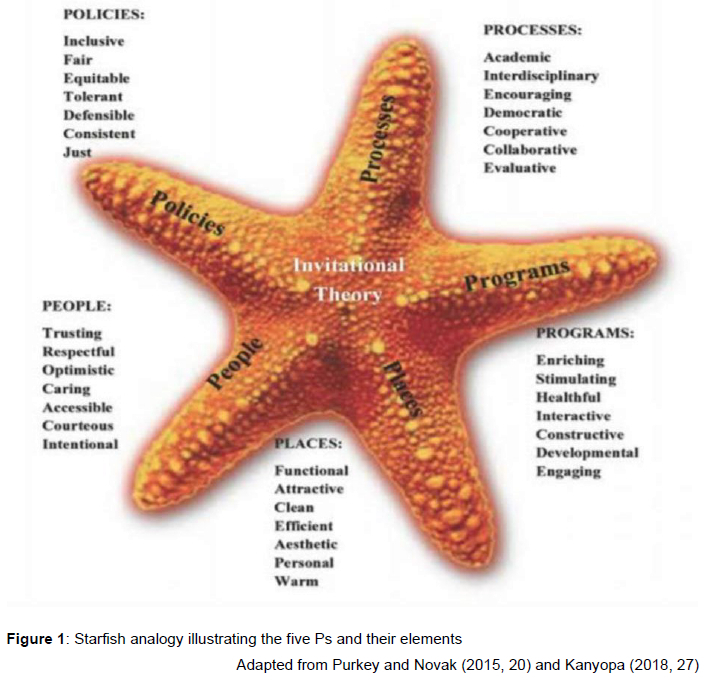
THEORETICAL FRAMEWORKThe study is framed through invitational education theory of practice that was introduced by two American psychologists known as William Purkey and Betty Siegel in the late 1970s. Purkey and Siegel (2003, 23) maintain that the term invitational was chosen because it means to "offer something beneficial for consideration". In the mid-1990s, the theory became popular around the world for its intentionality in creating a safe and inviting learning environment that summons diverse students to realize their full potential (Kanyopa 2018; Kanyopa and Hlalele 2021; Purkey and Siegel 2003). Essentially, Purkey, Novak and Fretz (2020) describe the theory as an educational framework of teaching and learning that intentionally focuses on human values, capabilities, and responsibility of the learning environment to ensure all of the above. Drawing from learning contexts, invitational education theory is observed within a social context whereby the students have to be invited by the social aspects, such as relationships with their teachers and other school staff members, to develop their sense of belonging (Purkey and Novak 2015; Venketsamy 2023). The theory outlines five domains that are believed to facilitate inviting learning and are known as the five Ps (people, places, programs, policies, and processes) (Dacey 2022; Purkey and Siegel 2003). According to Purkey et al. (2020), the five Ps represent environmental factors that influence students' success or failure in the educational context.
In this study, the theory is viewed as a means to create an inviting learning environment for international postgraduate students in a selected HEI. We found the theory as suitable and advocate that international students should be provided with a learning environment that is optimally inviting to attain their full potential. In essence, the theory helped us to elicit inconsistent and challenging practices regarding cultural and linguistic diversity aspects and to look for alternative arrangements and remodels to help international students cope with their learning environment. Figure 1 depicts the five domains (five Ps) and their elements.
The theory uses the starfish analogy to illustrate the power of the five Ps in creating an inviting and enabling learning environment in any educational institution. When each of the Ps is applied with steady and persistent pressure, it will be easier for an institution to overcome the biggest challenges in its environment (Nabaggala 2023; Purkey and Novak 2015). Similarly, the starfish gently and continuously uses each of its arms to keep steady and put pressure on an oyster shell until it eventually opens. By paying close attention to these five Ps, HEIs will eventually meet the cultural and linguistic diversity challenges facing international students (Dacey 2022; Purkey and Novak 2015). Ideally, by incorporating all the elements of the five Ps, we suggest that the selected institution should intentionally invite its international postgraduate students by creating a learning environment where each of these students is cordially summoned to develop emotionally, physically, and intellectually (Venketsamy 2023). We believe that it is ideal and crucial for the selected HEI to embrace the theory because "no aspect of education is more important than students to develop a sense of belonging and feeling of being invited in their learning context" (Purkey et al. 2020, 22).
METHODOLOGY
Research methodology is explained as the specific procedures used to identify the research problem, select the participants and research context, generate the data, and eventually analyze and present the data for the research issue (Flick 2022; Leavy 2022). The current study is grounded in the interpretive research paradigm, with a qualitative research method used as a research approach to explore the experiences of international postgraduate students in the line of cultural and linguistic diversity in a selected HEI. Bryda and Costa (2023) mention that qualitative interpretivist studies are mainly concerned with explaining a social phenomenon as it occurs naturally in the research context. The worldview and approach helped us to describe the feelings, behavior, perspectives, and lived experiences of the participants within the research context. The study embraced the case study as its design, which in essence is useful in describing the issue in a particular context (Nasri 2023; Priya 2021). The design helped us to identify the key issues of the case researched in the selected institution and to gain in-depth data on the participants' experiences. Nasri (2023, 99) affirms that "in a case study, nearly every aspect of the researched issue is connected to lived experiences and historical backgrounds of the participants to seek patterns and causes of the problem".
Research Context and Sampling
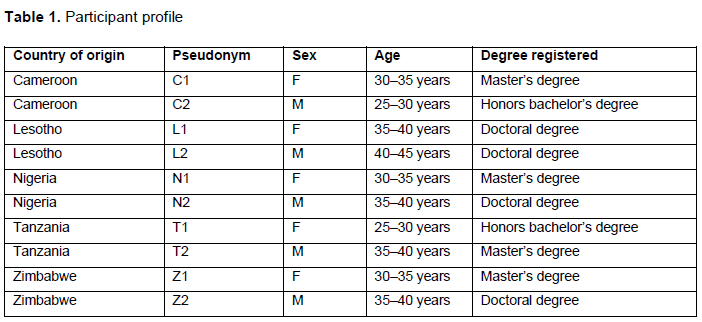
Flick (2022) and Gill (2020) explain that the participants and research site are important components in the research process as they represent the best sources of the data to answer the research questions. The study was conducted in one South African HEI located in the Free State province of South Africa. This context was selected by using the convenience sampling method. We selected this institution because it was convenient and accessible, and in proximity to us. Furthermore, the study employed snowball sampling to select its 10 participants. According to Leavy (2020), snowball sampling is when the consenting participants are asked to recommend other participants whom they know fit the research criteria and who might be willing to participate in the research process (Parker, Scott and Geddes 2019). Snowball sampling is also known as referral sampling because the participants are asked to assist the researcher by referring them to other potential participants (Hennink, Kaiser and Weber 2019; Leavy 2020). The participants in this study were paired according to country. Table 1 presents the profile of the participants of the study.
All participants were selected based on their willingness as well as knowledge and experiences of cultural and linguistic diversity in the learning institution. Consequently, the selected participants were beneficial to the study as they were able to share their perspectives and experiences of the research phenomenon. As a result, the study managed to draw its findings from the participants' stories of their experience in the line of the issue of cultural and linguistic diversity in the selected institution.
Data Generation Process
Data generation in a research study relates to how the data were obtained and compiled from diverse sources (Flick 2022; Leavy 2022). The study employed two methods of data generation, namely semi-structured interviews and storytelling, to generate data to answer the following research questions:
• What are international postgraduate students' perspectives on the understanding of cultural and linguistic diversity in a selected HEI?
• What are the dynamics for fostering an intercultural and multilingual learning environment in a selected HEI?
• Which strategies and interventions can enhance the academic and social integration of international postgraduate students in a selected HEI?
• What are the cultural and linguistic diversity lived experiences of international postgraduate students in a selected HEI?
Semi-structured interviews
The semi-structured interview is a qualitative method that combines a pre-determined set of open-ended questions, which allows participants to speak freely on the researched issue (Ruslin et al. 2022). It is the most common method of data generation in qualitative studies. Karatsareas (2022) affirms that semi-structured interviews are a type of interview in which the contribution and perspectives are not only recorded but also achieved. In addition, semi-structured interviews are in-depth interviews where the participants have to answer a set of open-ended questions (Magaldi and Berler 2020). In this study, semi-structured interviews were conducted in one-on-one sessions, with a single session lasting approximately 20 minutes. The interviews took place over five days, from 8 January 2024 to 12 January 2024. The interviews were guided by a schematic representation of questions on the topic researched, which helped us to gather more comprehensive information. The interview sessions were audio-recorded with participants' consent, which helped us to pay our full attention and to focus on the interview content and verbal prompts with the participants. This enabled us to generate verbatim transcripts of the semi-structured interviews for analysis.
Storytelling
Storytelling is a data generation method that is influenced by the social activity of sharing stories on a certain aspect. According to Borges, Correa and Silveira (2022, 80), "storytelling is a method for interpreting experiences". It is a data generation tool that focuses on participants' stories. Storytelling is considered a vital data generation method in which participants make sense of their lives (Mdlalose-Dyantyi and Happiness, 2019). Recently, Lotfi et al. (2023) proposed that storytelling on people's experiences is well facilitated through dialogue and social talks. Dialogue may in turn be productive for "understanding what stories can and cannot contribute in terms of knowledge production" (Lotfi et al. 2023, 135). Consequently, we viewed the experiences of the participants as an intrinsic human form of meaning-making. The dialogues conducted during the storytelling sessions were thus a means to increase the amount of data produced through participants' narration of their experiences. In this study, storytelling sessions took place over two days, and each session took one hour to complete. Through the dialogical storytelling, we managed to generate a meaningful connection between the data from the interviews and storytelling.
Data Analysis
Qualitative data analysis is the process of organizing and explaining the information obtained about the researched issue. In short, data analysis is the process of making sense of data generated from participants' perspectives, defining solutions, and interpreting the research problem (Flick 2022). This study employed thematic data analysis to analyze data generated from the interviews and storytelling sessions. Thematic analysis tends to identify patterns, categories, and regularities from the data obtained from the research participants (Braun, Clarke and Hayfield 2023). The data analysis began with interpretation of the raw data generated verbally, after which verbatim transcripts were made for each participant's responses and codes were identified. In this study, the thematic analysis followed a systematic approach to ensure that the data interpretation was rigorous and credible. Initially, data were gathered through the interviews, and storytelling sessions were transcribed and carefully reviewed multiple times for coding the similar contents. The process of coding and theme derivation was guided by an inductive approach in which authors employed peer review, member checking and reflexive strategies to validate the findings. These strategies helped us to reduce personal bias and enhance the accuracy of the themes developed. With such extensive analysis and evaluation of the data generated, we managed to develop three themes. The themes that emerged are crucial as they constitute the accuracy of participants' contributions.
Trustworthiness of the Study
Diverse measures were taken to ensure the trustworthiness of the study. Credibility was ensured by employing member-checking on the instruments and research questions for the data generation process. This provided us with informative feedback and suggestions from the reviewers. Furthermore, triangulation of data sources helped us to enhance the trustworthiness of the study findings. Dependability was also ensured by providing a clear description on the data generation process, analysis of the data, and formation of the codes and themes that emerged from the findings. To ensure transferability, rich information on the study context and participants of the study is provided to allow the reader and future researchers to assess and apply the findings to other similar populations or contexts. Transparency and openness during the research process ensure the confirmability of the study. In this regard, we managed to maintain two-way communication throughout the study process. The study also embraced flexibility by acknowledging and documenting participants' contributions, where the transcripts were given to the participants to review and verify the drafted documents of the interpretation of the findings.
FINDINGS
This section presents the findings of the study through the participants' perspectives and experiences on the three themes that emerged.
Theme One: Participants' Perspectives on Cultural and Linguistic Diversity
This theme emerged from participants' responses on the first research question, which sought the participants' perspectives on the understanding of cultural and linguistic diversity in their host HEI. Literature has revealed that culture and language are two key concepts that determine social interaction between people of different backgrounds in one context (Buchs and Maradan 2021; Lakhal et al. 2020). In essence, understanding of the concept culture is influenced by aspects such as attitudes, norms, ethics, morals, values, and traditions (Bradley et al. 2019; Robinson-Jones and Duarte 2023), while the concept language simply implies a tool for facilitating communication between people of different backgrounds and cultures (Hibbert 2023; Murray 2016). Thus, the understanding of cultural and linguistic diversity in the selected HEI encompasses respecting, recognizing, and valuing the wide range of cultural backgrounds, identities, and languages that present in its international and local students. To express their perspectives on the understanding of cultural and linguistic diversity, participants of the study commented as follows:
T1 posited that:
"Cultural and linguistic diversity is a social component that speaks about diverse people with diverse norms, customs, and spoken or written language."
C1 also stated that:
"Cultural and linguistic diversity is the philosophical concept that creates sensitivity and awareness of the needs of students who are culturally and linguistically diverse."
L2 mentioned that:
"It is a concept that describes our beliefs, values, behaviors, backgrounds, and our daily interaction with others."
N1 commented that:
"Cultural and linguistic diversity is a social component that provides a cooperative group learning environment in an educational institution."
Z1 stated that:
"It is a philosophical concept that involves acknowledging the existence of various cultures, traditions, beliefs, and languages within our learning institution."
C2 added that:
"With our context, the concept recognizes that students have different ways of life which is influenced by our unique historical, social, and geographical contexts."
Z2 mentioned that:
"It is a concept that creates awareness of diversity in educational contexts and guide people to act accordingly with such diversity."
Lastly, T2 specified that:
It is a social learning aspect that provides congruent interaction and builds relationship between diverse students."
Participants' comments above stipulate that cultural and linguistic diversity is a collective responsive practice that enables cooperative learning and support for students who are culturally and linguistically diverse. The findings from the first theme correspond to the research by Halpern et al. (2022) and Kanyopa et al. (2024), who reveal that cultural and linguistic diversity awareness creates not only responsive teaching and learning approaches but also a supportive environment that helps students obtain their full potential in the learning process. Interestingly, the findings also reflect and support the intention of invitational education theory, that insists that institutional policies should be inclusive and just so as to create cultural and linguistic diversity awareness of students' learning needs. This is supported by Arafat et al. (2022), Franz and Paetsch (2023), and Nwokedi and Khanare (2020), who indicate that possessing knowledge about diverse cultures and languages helps teachers as experts to instruct their students to be more positive toward the differences existing between them.
Results from this theme show that the participants' understanding of cultural and linguistic diversity emphasizes the importance of respecting differences. The interview excerpts above specify the concept as a primary tool for facilitating positive and responsive communication between students from different backgrounds. The study suggests that cultural and linguistic diversity is a crucial key social component that involves acceptance of multiculturalism and multilingualism as valuable aspects of students' experiences. Therefore, for the selected institution to enhance optimistic perspectives on this concept, it should contextualize its learning environment by tying it up with international students' social community and legitimizing international students' real-life experiences throughout their study years. This will help them build positive relationships with other students and their lecturers. In addition, the findings of this theme assert that the selected institution should create an atmosphere that encourages more possibilities and potentials for successful cultural and linguistic diversity practices.
Theme Two: Key Determinants for Fostering an Intercultural and Multilingual Learning Environment
Research has shown that the intercultural and multilingual goes beyond the creation of culture and language awareness in a learning environment. In actual fact, it is a critical tool for promoting inclusivity in education systems by acknowledging and valuing cultural diversity and "enhancing mutual communication among students, parents and communities from diverse linguistic backgrounds" (Buchs and Maradan 2021, 409). Findings for this theme reveal that in order to foster an intercultural and multilingual learning environment, the selected HEI should pay attention to various key determinants to ensure inclusivity, effective communication, and respect for all the diverse aspects among its students. Scholars such as Mlambo (2020) and Arafat et al. (2022) affirm that internationalization of higher education without diversity results in cultural and linguistic repression and hegemony. This implies that internationalization of higher education should embrace diversity that comes with ethnic groups, languages, cultures, and traditions so as to abolish separatism and disregard for students' backgrounds. Participants of the study contributed as follows.
Z2 said that:
"I think cultivation of awareness and sensitivity towards our differences that come through our cultures, values, beliefs, and languages will foster an inclusive learning environment in our host institution."
L1 also commented that:
"To me... I think intercultural practices and programs will help to develop the wide knowledge, positive attitudes, and the skills needed to maintain an effective intercultural and multilingual learning community."
C2 affirmed that:
"I feel like our institution needs to go through some reforms, restructures, and reorganization in its managerial structure, processes, and whole system so as to foster an intercultural and multilingual learning environment."
He continued:
"Reformation of these aspects will definitely bring equality in the education system regardless of our racial diverse, ethnic, or social class groups."
T1 also said:
"Mmmh... for me, I think diverse representation and activities that promote effective intercultural and multilingual will be beneficial for fostering a learning environment that everyone will develop a sense of belonging."
N2 pointed out that:
"For me, I think cultural exchange programs will offer us some opportunities to engage directly with our colleagues from different culture and language backgrounds."
In response to the third research question, through the storytelling sessions, participants discussed some of the strategies and interventions that can help to enhance their academic and social integration at their host institution. To inform the reader, in this study, academic integration is the result of students having positive perceptions and positive learning experiences in academic settings. Furthermore, social integration happens because of the involvement of students in extracurricular activities and the presence of positive relationships with other students from different backgrounds. This study also affirms that the enhancement of academic and social integration of international postgraduate students is essential as it has positive impacts on their emotional and mental well-being. Participants mentioned the following strategies and interventions as being crucial for addressing the cultural and linguistic diversity challenges facing international postgraduate students at HEIs.
T2 posited that:
"Mmm ... I think cultural and linguistic orientation programs is one of the best strategies as it helps us to be familiar with our academic policies, social opportunities, and our social diversity."
C1 also added that:
"For me ... often, cultural events and diverse tradition celebration is the best strategy to enhance our academic and social integration."
L1 agreed that:
"That's true... cultural events, festivals, and celebration on our diversity will provide us the opportunity to experience cross-cultural and linguistic exchange."
N1 mentioned that:
"Cooperative teaching and learning principle like positive interdependence and individual responsibility is essential for our social integration and academic achievements."
Z1 also added that:
"I think it is important to have an institutional culture that involves diverse norms, beliefs, rituals, cumulative experiences, and higher expectation of all students regardless of their differences."
Findings from the second theme stipulate that although the learning of international students in HEIs depends upon their cognitive capacity, that alone cannot sufficiently explain their success or failure. Lakhal et al. (2020, 12) affirm that for international students to be able to learn, "they must possess cognitive, cultural and linguistic skills". Indeed, powerful academic and social integration are crucial factors that foster intercultural and multilingual teaching and learning in HEIs, because students need a learning environment that will make them more receptive to instruction (Heleta 2023; Moshtari and Safarpour 2023). This study upholds the invitational education theory of practice's perspectives by maintaining that by implementing the key determinants, strategies, and interventions shared under this theme, the selected institution can create a supportive, inclusive, and integrative environment that promotes both academic excellence and social connectedness among its students.
Theme Three: Multifaceted Cultural and Linguistic Lived Experiences of Participants
Regarding the cultural and linguistic lived experiences of the participating international postgraduate students at the selected HEI, participants' responses reveal that the internationalization of higher education goes hand in hand with the promotion of cultural and multilingual competence to international students. Data obtained from the fourth research question indicate that the participants experienced both negative and positive lived experiences due to the existing cultural and linguistic diversity in their host country. The following excerpts portray the negative lived experiences shared by the participants.
T1 stated that:
"Most of us faced and are still facing language barriers, isolation, and loneliness."
L1 also pointed out that:
"As an international student, I experienced feeling of isolation when I was struggling to establish social integration with other students of different cultures and languages."
N1 also specified that:
"Mmmh... most of the time, international students we are experiencing discrimination and prejudice based on our nationalities, ethnicity, and even our historical backgrounds."
C1 indicated that:
"Some postgraduate programs can be academically demanding... thus, as international students, we are facing additional challenges that are related to unfamiliar teaching styles, assessment methods, and even academic norms of the host institution."
Z1 posed that:
"Finance is a significant source of stress to us... we often experience high tuition fees, limited opportunities for financial support compared to domestic students."
T2 also added that:
"Adjustment to a new cultural [environment] is always difficult" sometimes we are experiencing culture shocks, feeling of disorientation and homesickness as we are navigating to unfamiliar norms, customs, and traditions of our host country."
Moreover, studies that reported negative experiences and challenges facing international students around the world revealed other issues, for example mental health struggles. These studies explain that international students are experiencing anxiety, depression, and other mental issues, which result in difficulties for them to practice and access cultural and linguistic sensitivity (Moshtari and Safarpour 2023; Yamutuale 2024). This study maintains that to address the negative experiences of international postgraduate students, the selected institution must develop a holistic approach that prioritizes the functioning of the 5Ps as suggested by the invitational education theory, so as to promote the well-being and success of its international students. In addition, it should develop cultural and linguistic programs that provide adequate support services and foster an inclusive and integrative learning environment, while promoting cultural and linguistic diversity awareness and sensitivity to its international students.
Despite the negative experiences discussed above, findings from this theme also reveal some positive cultural and linguistic diversity lived experiences of the participants at the selected HEI. In essence, findings from this theme show that the lived experiences of the participants are rich and multifaceted, as evidenced in the following quotations.
Z2 cited that:
"Our learning process is influenced by diverse perspectives, lived experiences, and knowledge from our home countries."
C2 added that:
"Our unique cultural backgrounds enrich our learning environment with a broader range of perspectives and ideas."
L2 also declared that:
"Cross-cultural and linguistic collaboration with our fellows from different backgrounds provides us with opportunities to develop teamwork skills and the ability to engage ourselves in mutual negotiations and conversations on cultural differences... we are learning more from each other's perspectives."
All in all, the lived experiences related to cultural and linguistic diversity of international students in HEIs seem to enhance their growth, development, as well as intercultural and multilingual competences (Robinson-Jones and Duarte 2023; Tight 2021). This finding is supported by George Mwangi et al. (2019) and Nwokedi and Khanare (2020), that studying abroad can offer profoundly enriching learning experiences, while exposing students to a new ground of perspectives, ideas, and ways of life. It is also mentioned by Li (2019) and Singh (2022) that studying abroad helps students to have a deeper understanding of trending global issues, which helps them to maintain their eligibility while remaining in their host countries.
Nevertheless, research by Amutuhaire (2024), Ge (2022), and Khanyile (2020) indicates that cultural and linguistic diversity awareness is a predictor for academic success in any multicultural learning environment. Literature has also revealed that cultural and linguistic diversity is an important determinant that encourages flexible perceptions, practices, programs, and solutions toward the challenges facing international students around the world (Baker et al. 2022; Singh and Jack 2022). This study maintains that understanding of cultural and linguistic diversity emphasizes the importance of respecting, celebrating, acknowledging, and embracing the multitude ways in which international students will be free to express their identities and navigate diversity challenges in their host institution. The study also views cultural and linguistic diversity as a crucial component to promote inclusivity visions of the HEI communities, while enhancing equity and mutual respect among the students.
DISCUSSION
The results of the study contend with scholars such as van Schalkwyk et al. (2021) and Singh (2022), who affirm that cultural and linguistic diversity shapes the educational experiences, overall well-being, and social interactions of international students in their host countries. The synthesis of the findings of this study aligns with the fact that cultural and linguistic awareness often helps international students to confidently face challenges when adopting and adjusting to a new cultural environment (Franz and Paetsch 2023; Hibbert 2023). The findings of the current study correspond to the findings of Arafat et al. (2022) and Murray (2016), who mention that the understanding of cultural and linguistic diversity encompasses acknowledging, respecting, recognizing, and valuing the wide range of identities, perspectives, and diverse points of view within a given community.
In addition, the study found that cultural and linguistic diversity enhances recognition of differences, which involves conceding the existence of diverse traditions, practices, beliefs, and languages within a selected institution. This is supported by Bradley et al. (2019) and Halpern et al. (2022), who assert that cultural and linguistic diversity guides international students to tolerate and celebrate diversity and to see it as an "asset that contributes to the richness of their communities" (Bradley et al. 2019, 289). The study also found that cultural and linguistic diversity promotes awareness of power dynamics that shape mutual relationships between the domestic and international students in their host institution. It is also mentioned in Baker et al. (2022) and de Bruyn and van Eekert (2023) that awareness of the diversity eradicates injustices, discriminations, and inequalities among the students in their learning environment.
On the other hand, findings of the study show that cultural and linguistic diversity if not well delineated may cause psychological challenges for international students, as was revealed by the participants of the study, who experienced negative impacts on their overall well-being and academic performance. The issue of mental challenges is cited in George Mwangi et al. (2019) and Moshtari and Safarpour (2023). These authors explain that despite the benefits and crucial learning experiences that international students acquire, cultural and linguistic diversity can lead to feelings of isolation, depression, anxiety, and other psychological issues that result due to their uncertainty and poor functioning. Thus, this study maintains that the lived experiences of international students abroad are indeed multifaceted. They vary greatly depending on the historical background of the host country, the culture of the educational institution they are attending, the field of their studies, as well as their personal backgrounds. This study emphasizes that it is important for internationalized HEIs to create a learning environment that supports and encourages the growth and development of international students. This is because most challenges that result due to cultural and linguistic diversity can have some long-term consequences on their future careers and their overall well-being.
CONCLUSION
The concerns expressed in Bulut-Sahin et al. (2023), Li (2019), and Singh and Jack (2022) for international students and their lived experiences abroad make it all the more necessary and a potential agenda for internationalized institutions to employ intercultural and multilingual approaches in their management tasks. While there is a variety of determinants, strategies, and interventions that can help international students to develop a sense of belonging while studying abroad, this study insists that HEIs should develop frameworks that intentionally focus on enhancing international mobility and holistic growth among international students.
LIMITATION OF THE STUDYThis study has two main limitations. First, it was limited to only 10 international postgraduate students who had been studying at the selected university for more than two years. These students were enrolled in Honours, Master's, and Doctoral programs across various faculties at the university. However, the study did not include the entire population of international students at the university due to the qualitative nature of the research and the time constraints of these students, as they are often occupied with their studies and research. Another limitation is that the study was conducted on only one campus of the selected university, not across all campuses. This choice was made due to the proximity and convenience of this particular campus for us as researchers.
RECOMMENDATIONSThe study presents the cultural and linguistic diversity lived experiences of international postgraduate students from five African countries (Cameroon, Lesotho, Nigeria, Tanzania, and Zimbabwe). The study offers a glimpse of how international students' diverse cultural and linguistic backgrounds can be utilized to achieve successful academic and social integration in a South African academic context. In order to enhance the welcoming and inclusive environment for international postgraduate students, this study recommends that;
• Universities should introduce comprehensive training programs for academic and administrative staff. These programs should mainly focus on enhancing their cultural competences, and equip them with knowledge and skills to support international students. Significantly, these programs will help university staff to develop cross-cultural communication skills that will assist them to create inviting learning spaces for students from diverse backgrounds. Also, will help them with language sensitivity that will ensuring inclusivity, and lastly, training staff will address unconscious bias that might affect their interactions with international students.
• Universities should adjust international student's orientation processes. These adjustments may include the following aspects; first, extension of orientation periods, this study recommends that the orientations should go beyond the first few weeks to give more time international students to acclimatize to their new environment and culture. Second, university should incorporate sessions that specifically address the cultural and linguistic challenges international students might face, and offering them practical advice on navigating them.
• Our recommendation for future studies is that, future research could employ a mixed methods research approach and longitudinal studies to monitor the learning experiences of international students from other continents and report on their learning transformations and the influence of South African educational pedagogy on their academic and social integration.
• We are also recommending on the comparative studies on the experiences of international students in South Africa, with those in other African countries to provide a regional perspective on best internationalization of HEIs practices and common challenges.
Ethical Consideration and Permission Statement
This research obtained ethical clearance from the university's Social Sciences and Humanities Ethics Committee (REF: UFS-HSD2023/1990). The selected HEI provided gatekeeper permission for conducting the research and using institutional information. All participants provided written informed consent for their voluntary participation. Pseudonyms were assigned to participants to ensure anonymity.
Data Availability Statement
The data presented in the study are available on request from the corresponding author. The data collected for this study are not publicly available due to privacy and confidentiality restrictions.
Conflict of Interest
Both authors declare no conflict of interest.
REFERENCES
LITERATURE REVIEW
-
Amutuhaire, Tibelius. 2024. "Regionalization and Higher Education Student Mobility in East Africa: Examination of Opportunities and Challenges from the Ugandan Context." Journal of International Students 14, no 1: 1-20. https://doi.org/10.32674/jis.vl4i4.5976
» https://doi.org/10.32674/jis.vl4i4.5976 -
Arafat, Mohd Yasir, Ahmed Musa Khan, Mohd Shamim Ansari, and Imran Saleem. 2022. "What Drives Internationalization of New Ventures? Evidence from India." Journal of Innovation and Entrepreneurship 11, no. 1: Article 25. https://link.springer.com/article/10.1186/s13731-022-00225-4
» https://link.springer.com/article/10.1186/s13731-022-00225-4 -
Baker, Sally, Joel Anderson, Rachel Burke, Teresa de Fazio, Clemence Due, Lisa Hartley, Tebeje Molla et al. 2022. "Equitable Teaching for Cultural and Linguistic Diversity: Exploring the Possibilities for Engaged Pedagogy in Post-COVID-19 Higher Education." Educational Review 74, no. 3: 444-59. https://doi.org/10.1080/00131911.2021.2015293
» https://doi.org/10.1080/00131911.2021.2015293 -
Borges, Mariana, Claiton Marques Correa, and Milene Selbach Silveira. 2022. "Fundamental Elements and Characteristics for Telling Stories Using Data." Journal on Interactive Systems 13, no. 1: 77-86. https://doi.org/10.5753/jis.2022.2330
» https://doi.org/10.5753/jis.2022.2330 -
Bradley, Barbara A., Andrea Miller Emerson, and Arsenio F. Silva. 2019. "Enhancing Cultural and Linguistic Awareness through an International Teaching Experience." In Handbook of Research on Field-Based Teacher Education, edited by Thomas E. Hodges, and Angela C. Baum, IGI Global, 280-99. https://doi.org/10.4018/978-1-5225-6249-8.ch012
» https://doi.org/10.4018/978-1-5225-6249-8.ch012 - Braun, Virginia, Victoria Clarke, and Nikki Hayfield. 2023. Thematic Analysis: A Reflexive Approach. New York: Sage.
-
Bryda, Grzegorz, and António Pedro Costa. 2023. "Qualitative Research in Digital Era: Innovations, Methodologies and Collaborations." Social Sciences 12, no. 10: Article 570. https://doi.org/10.3390/socsci12100570
» https://doi.org/10.3390/socsci12100570 -
Buchs, Céline, and Mathilde Maradan. 2021. "Fostering Equity in a Multicultural and Multilingual Classroom Through Cooperative Learning." Intercultural Education 32, no. 4: 401-416. https://doi.org/10.1080/14675986.2021.1889985
» https://doi.org/10.1080/14675986.2021.1889985 -
Bulut-Sahin, Betul, Serap Emil, Seda Okur, and Fatma Nevra Seggie. 2023. "Strategic Management of Internationalization in Higher Education Institutions: The Lens of International Office Professionals." Tertiary Education and Management 1, no. 1: 1-17. https://doi.org/10.1007/s11233-023-09121-2
» https://doi.org/10.1007/s11233-023-09121-2 - Dacey, Charity. 2022. "Examining Ethical Tensions and the Pursuit of Care Through an Invitational Lens." Journal of Invitational Theory and Practice 28, no. 1: 5-30.
-
de Bruyn, Sara, and Nina van Eekert. 2023. "Understanding the Academic and Social Integration Process of Students Entering Higher Education: Lessons Learned from the COVID-19 Pandemic." Social Sciences 12, no. 2: Article 67. https://doi.org/10.3390/socsci12020067
» https://doi.org/10.3390/socsci12020067 -
Flick, Uwe. 2022. The SAGE Handbook of Qualitative Research Design. New York: Sage. https://books.google.co.za/books?hl=en&lr=&id=6dJjEAAAQBAJ&oi=fnd&pg=PR1&dq=flick+2022
» https://books.google.co.za/books?hl=en&lr=&id=6dJjEAAAQBAJ&oi=fnd&pg=PR1&dq=flick+2022 -
Franz, Sebastian, and Jennifer Paetsch. 2023. "Academic and Social Integration and Their Relation to Dropping Out of Teacher Education: A Comparison to Other Study Programs." Frontiers in Education, 8: Article 1179264. https://doi.org/10.3389/feduc.2023.1179264
» https://doi.org/10.3389/feduc.2023.1179264 -
Ge, Yun. 2022. "Internationalisation of Higher Education: New Players in a Changing Scene." Educational Research and Evaluation 27, no. 34: 229-238. https://doi.org/10.1080/13803611.2022.2041850
» https://doi.org/10.1080/13803611.2022.2041850 -
George Mwangi, Chrystal A., Nyaradzai Changamire, and Jacqueline Mosselson. 2019. "An Intersectional Understanding of African International Graduate Students' Experiences in US Higher Education." Journal of Diversity in Higher Education 12, no. 1: 52-64. https://psycnet.apa.org/doi/10.1037/dhe0000076
» https://psycnet.apa.org/doi/10.1037/dhe0000076 -
Gill, Sara L. 2020. "Qualitative sampling methods." Journal of Human Lactation 36, no. 4: 579-581. https://doi.org/10.1177/0890334420949218
» https://doi.org/10.1177/0890334420949218 -
Halpern, Clarisse, Bruno Halpern, and Hasan Aydin. 2022. "International Students' Lived Experiences with Intercultural Competence in a Southwest Florida University." International Journal of Multicultural Education 24, no. 1: 47-67. https://doi.org/10.18251/ijme.v24i1.3013
» https://doi.org/10.18251/ijme.v24i1.3013 -
Heleta, Savo. 2023. "Critical Review of the Policy Framework for Internationalisation of Higher Education in South Africa." Journal of Studies in International Education 27, no. 5: 817-833. https://doi.org/10.1177/10283153221121395
» https://doi.org/10.1177/10283153221121395 -
Heleta, Savo, and Samia Chasi. 2023. "Rethinking and Redefining Internationalisation of Higher Education in South Africa Using a Decolonial Lens." Journal of Higher Education Policy and Management 45, no. 3: 261-275. https://doi.org/10.1080/1360080X.2022.2146566
» https://doi.org/10.1080/1360080X.2022.2146566 -
Hennink, Monique M., Bonnie N. Kaiser, and Mary Beth Weber. 2019. "What Influences Saturation? Estimating Sample Sizes in Focus Group Research." Qualitative Health Research 29, no. 10: 1483-1496. https://doi.org/10.1177/1049732318821692
» https://doi.org/10.1177/1049732318821692 - Hibbert, Liesel, ed. 2023. English as a Language of Learning, Teaching and Inclusivity: Examining South Africa's Higher Education Crisis. Taylor & Francis.
-
Kanyopa, Theresia Joakim. 2018. "Learners Transitioning from Township to Ex-Model C Schools: An Invitational Educational Perspective." MED thesis, University of KwaZulu-Natal, Durban, South Africa. https://researchspace.ukzn.ac.za/server/api/core/bitstreams/cca2bd97-c0a6-4a56-85a9-135bf0a2fd27/content
» https://researchspace.ukzn.ac.za/server/api/core/bitstreams/cca2bd97-c0a6-4a56-85a9-135bf0a2fd27/content -
Kanyopa, Theresia Joakim. 2025. "Unconditional Love and Support for Humanity: Nurturing Gender Identity Equity and Inclusivity in Higher Education Institutions in Southern Africa". In K. Tarisayi, P. (Eds.). Internationalization of Higher Education for Sustainable Development: A Southern African Perspective, (22), 72-85. Netherlands, Brill. https://doig.org/10.1163/9789004736610_006
» https://doig.org/10.1163/9789004736610_006 -
Kanyopa, Theresia Joakim, and Dipane Joseph Hlalele. 2021. "The Learning Experiences of Learners Transitioning from Rural and Township Schools to Ex-Model C Schools." The Independent Journal of Teaching and Learning 16, no. 1: 96-114. https://hdl.handle.net/10520/ejc-jitl1-v16-n1-a9
» https://hdl.handle.net/10520/ejc-jitl1-v16-n1-a9 -
Kanyopa, Theresia Joakim, Mokhele-Makgalwa, Matseliso, and Mufanechiya, Albert. 2024. " Sociocultural experiences of first-year students: A case study of a selected University in South Africa." Edelweiss Applied Science and Technology. 8(6), 6671-6680. https://doi.org/10.55214/25768484.v8i6.3418
» https://doi.org/10.55214/25768484.v8i6.3418 - Kanyopa, Theresia Joakim, and Chibaya, Solomon. 2025. "Managing Equity, Diversity, and Inclusion in South African Universities". Conference Proceedings Publishing, Transforming and Managing Higher Education in Africa for Global Competitiveness, 129-140
-
Karatsareas, Petros. 2022. "Semi-Structured Interviews." Research Methods in Language Attitudes 1, no. 1: 99-113. https://d1wqtxts1xzle7.cloudfront.net/95302809/Karatsareas_2022
» https://d1wqtxts1xzle7.cloudfront.net/95302809/Karatsareas_2022 -
Khanyile, Zanele Yvone. 2020. "Exploring Lived Experiences of International Postgraduate Students Studying at a South African University." PhD thesis, University of KwaZulu-Natal, Durban, South Africa. https://researchspace.ukzn.ac.za/server/api/core/bitstreams/2cba7edf-fa6b-49f9-b46c-f8a1a2b2d7c7/content
» https://researchspace.ukzn.ac.za/server/api/core/bitstreams/2cba7edf-fa6b-49f9-b46c-f8a1a2b2d7c7/content -
Lakhal, Sawsen, Joséphine Mukamurera, Marie-Eve Bédard, Géraldine Heilporn, and Mélodie Chauret. 2020. "Features Fostering Academic and Social Integration in Blended Synchronous Courses in Graduate Programs." International Journal of Educational Technology in Higher Education 17, no. 1: 1-22. https://link.springer.com/article/10.1186/s41239-020-0180-z
» https://link.springer.com/article/10.1186/s41239-020-0180-z -
Leavy, Patricia. 2020. "Introduction to the Oxford Handbook of Qualitative Research." In The Oxford Handbook of Qualitative Research, edited by Patrica Leavy, 1-20. Oxford University Press. https://books.google.co.za/books?hl=en&lr=&id=n771DwAAQBAJ&oi=fnd&pg=PA1&dq=Leavy,+P.+(2020)
» https://books.google.co.za/books?hl=en&lr=&id=n771DwAAQBAJ&oi=fnd&pg=PA1&dq=Leavy,+P.+(2020) -
Leavy, Patricia. 2022. Research Design: Quantitative, Qualitative, Mixed Methods, Arts-Based, and Community-Based Participatory Research Approaches. Guilford Publications. https://books.google.co.za/books?hl=en&lr=&id=qUiKEAAAQBAJ&oi=fnd&pg=PP1&dq=Leavy,+P.+(2022)
» https://books.google.co.za/books?hl=en&lr=&id=qUiKEAAAQBAJ&oi=fnd&pg=PP1&dq=Leavy,+P.+(2022) -
Li, Hanwei. 2019. "Academic Integration of Chinese Students in Finland and Germany: A Comparative Perspective." Frontiers of Education in China. 14, no. 2: 234-256. https://doi.org/10.1007/s11516-019-0012-x
» https://doi.org/10.1007/s11516-019-0012-x -
Lotfi, Fariba, Amin Beheshti, Helia Farhood, Matineh Pooshideh, Mansour Jamzad, and Hamid Beigy. 2023. "Storytelling with Image Data: A Systematic Review and Comparative Analysis of Methods and Tools." Algorithms 16, no. 3: Article 135. https://doi.org/10.3390/a16030135
» https://doi.org/10.3390/a16030135 -
Magaldi, Danielle, and Matthew Berler. 2020. "Semi-Structured Interviews." Encyclopedia of Personality and Individual Differences 1, no. 1: 4825-4830. https://link.springer.com/referenceworkentry/10.1007/978-3-319-24612-3_857
» https://link.springer.com/referenceworkentry/10.1007/978-3-319-24612-3_857 -
Mdlalose-Dyantyi, and Nomusa Happiness. 2019. "Transformation in South African Storytelling Tradition: Stylisation and New Genre in Storytelling NGOs." PhD thesis, University of the Witwatersrand, Johannesburg, South Africa. https://wiredspace.wits.ac.za/server/api/core/bitstreams/5dbe62b3-88ec-4f2a-acbc-7d05dd562b31/content
» https://wiredspace.wits.ac.za/server/api/core/bitstreams/5dbe62b3-88ec-4f2a-acbc-7d05dd562b31/content -
Mlambo, Daniel N. 2020. "Student Mobility, Brain Drain and the Internationalisation of Higher Education in Southern Africa." African Journal of Development Studies (formerly AFFRIKA Journal of Politics, Economics and Society) 10, no. 2: 59-82. https://doi.org/10.31920/2634-3649/2020/10n2a3
» https://doi.org/10.31920/2634-3649/2020/10n2a3 -
Moshtari, Mohammad, and Alireza Safarpour. 2023. "Challenges and Strategies for the Internationalization of Higher Education in Low-Income East African Countries." Higher Education 1, no. 2: 1-21. https://link.springer.com/article/10.1007/s10734-023-00994-1
» https://link.springer.com/article/10.1007/s10734-023-00994-1 -
Murray, Neil. 2016. "Dealing with Diversity in Higher Education: Awareness-Raising and a Linguistic Perspective on Teachers' Intercultural Competence." International Journal for Academic Development 21, no. 3: 166-177. https://doi.org/10.1080/1360144X.2015.1094660
» https://doi.org/10.1080/1360144X.2015.1094660 - Nabaggala, Olivia. 2023. "Blending Invitational Theory and Education Production Function Theory to Analyze Academic Performance of Secondary Schools in Northern and Eastern Uganda." PhD thesis, Makerere University, Kampala, Uganda.
-
Nasri, Ulyan. 2023. "Exploring Qualitative Research: A Comprehensive Guide to Case Study Methodology." Al-Hikmah: Jurnal Studi Islam 4, no. 3: 72-85. https://scholar.google.com/scholar?hl=en&as_sdt=0%252C5&q=Nasri%252C+U.+(2023)
» https://scholar.google.com/scholar?hl=en&as_sdt=0%252C5&q=Nasri%252C+U.+(2023) -
Nwokedi, Peace Ginika, and Fumane Portia M.K. Khanare. 2020. "Thriving in the Face of Adversity: Mapping Experiences of International Students in a South African Higher Education Institution." Journal of Comparative & International Higher Education 12, no. 1: 49-66. https://doi.org/10.32674/jcihe.v12iSpring.1400
» https://doi.org/10.32674/jcihe.v12iSpring.1400 -
Parker, Charlie, Sam Scott, and Alistair Geddes. 2019. Snowball Sampling: Research Methods Foundations. Sage. http://methods.sagepub.com/foundations/snowball-sampling
» http://methods.sagepub.com/foundations/snowball-sampling -
Priya, Arya. 2021. "Case Study Methodology of Qualitative Research: Key Attributes and Navigating the Conundrums in its Application." Sociological Bulletin 70, no. 1: 94-110. https://doi.org/10.1177/0038022920970318
» https://doi.org/10.1177/0038022920970318 -
Purkey, William W., John M. Novak, and Joan R. Fretz. 2020. Developing Inviting Schools: A Beneficial Framework for Teaching and Leading. Teachers College Press. https://books.google .co.za/books?hl=en&lr=&id=ChwMEAAAQBAJ&oi=fnd&pg=PP1&dq=Purkey,+W.+W.,+Novak,+J.+M,
» https://books.google .co.za/books?hl=en&lr=&id=ChwMEAAAQBAJ&oi=fnd&pg=PP1&dq=Purkey,+W.+W.,+Novak,+J.+M, - Purkey, William Watson, and John Michael Novak. 2015. "An introduction to invitational theory." International Alliance for Invitational Education.
-
Purkey, William, and Betty L. Siegel. 2003. Becoming an Invitational Leader: A New Approach to Professional and Personal Success. Humanix Books. https://books.google.co.za/books?hl=en&lr=&id=hL-c807VNBoC&oi=fnd&pg=PA1&dq=Purkey,+W.W.+%2526+Siegel,+B.+(2003)
» https://books.google.co.za/books?hl=en&lr=&id=hL-c807VNBoC&oi=fnd&pg=PA1&dq=Purkey,+W.W.+%2526+Siegel,+B.+(2003) -
Robinson-Jones, Charlie, and Joana Duarte. 2023. "Teachers' Views and Practices on the Role of Linguistic and Cultural Diversity in Assessment." Journal of Educational Studies 2023, no. 1: 175-197. https://doi.org/10.59915/jes.2023.special.1.10
» https://doi.org/10.59915/jes.2023.special.1.10 -
Ruslin, Ruslin, Saepudin Mashuri, Muhammad Sarib Abdul Rasak, Firdiansyah Alhabsyi, and Hijrah Syam. 2022. "Semi-Structured Interview: A Methodological Reflection on the Development of a Qualitative Research Instrument in Educational Studies." IOSR Journal of Research & Method in Education (IOSR-JRME) 12, no. 1: 22-29. https://doi.org/10.9790/7388-1201052229
» https://doi.org/10.9790/7388-1201052229 -
Singh, Jasvir Kaur Nachatar. 2022. "International Students in Chinese Elite Universities and Employability Capital: A Qualitative Study." Globalisation, Societies and Education 1, no. 1: 1-16. https://doi.org/10.1080/14767724.2022.2144809
» https://doi.org/10.1080/14767724.2022.2144809 -
Singh, Jasvir Kaur Nachatar, and Gavin Jack. 2022. "The Role of Language and Culture in Postgraduate International Students' Academic Adjustment and Academic Success: Qualitative Insights from Malaysia." Journal of International Students 12, n. 2. https://doi.org/10.32674/jis.v12i2.2351
» https://doi.org/10.32674/jis.v12i2.2351 -
Tight, Malcolm. 2021 "Globalization and Internationalization as Frameworks for Higher Education Research." Research Papers in Education 36, no. 1: 52-74. https://doi.org/10.1080/02671522.2019.1633560
» https://doi.org/10.1080/02671522.2019.1633560 -
van Schalkwyk, François B., Milandré H. van LIll, and Nico Cloete. 2021. "Brain Circuity: The Case of South Africa as a Hub for Doctoral Education." South African Journal of Science, 117, no. 910: 1-9. http://dx.doi.org/10.17159/sajs.2021/10674
» http://dx.doi.org/10.17159/sajs.2021/10674 -
Venketsamy, Roy. 2023. "Exploring the Teacher-Learner Ratio and Its Effect on Invitational Teaching and Learning: A South African Study." Journal for the Education of Gifted Young Scientists 11, 1: 33-43. https://doi.org/10.17478/jegys.1237615
» https://doi.org/10.17478/jegys.1237615 -
Yamutuale, Desire. 2024. "African Higher Education in the Age of Internationalization: The Case for International Double and Joint Degree Programs as an Impetus for Student Mobility." Journal of Students 14, no. 2: 119-135. https://doi.org/10.32674/jis.v14i2.6381
» https://doi.org/10.32674/jis.v14i2.6381