Perceived wellness of health sciences students
Abstract
In South Africa, the wellness of university students, particularly in health sciences, is influenced by unique socioeconomic, cultural and systemic factors. Although the importance of wellness within higher education has been well documented there seems to still be a dilemma in terms of student wellness during their time at university, especially post-COVID. This study aimed to understand the current wellness landscape by comparing the perceived wellness scores of students from three departments situated within a health sciences faculty of a South African university. To achieve this quantitative comparative methodology was followed. Health sciences students (clinical and non-clinical) completed the self-administered Perceived Wellness Survey (PWS; n=158). This study highlights the disparities in emotional wellness and its implications for holistic development and professional readiness. Overall, female students showed the biggest decline in their PWS and emotional wellness scored the lowest across all factors. Higher Educational Institutions needs to navigate a new wellness landscape post- COVID. Special attention should be given to female and final-year students. As Higher Educational Institutions are implementing wellness initiatives, they need to address the misalignment of emotional wellness seen in this study by adding interventions for each wellness factor, especially emotional wellness.
Perceived Wellness; Student wellness; student well-being; Health Sciences; Health Professions Education
INTRODUCTION
Attending university is often seen as a euphoric period in any young adult's journey towards being a healthcare professional. Although wellness and well-being have been hot topics for decades, the literature clearly states that students globally still face a variety of wellness-related challenges during their time at Higher Educational Institutions (HEIs; Henrico, 2022; Phan, Mills & Fleming., 2021), particularly students in health sciences. Within the South African higher education landscape, the student experience is significantly shaped by a set of unique challenges that extend beyond the typical academic demands, making wellness initiatives even more complex. Despite the growing emphasis on wellness and well-being globally, students in South Africa face profound wellness-related issues, exacerbated by structural inequalities, resource constraints, and socio-economic disparities that define the national higher education environment.
The benefits of implementing wellness initiatives at HEIs and beyond are well documented, particularly in improving academic performance, personal growth, and professional readiness (Brooker and Woodyatt, 2019). South African HEIs, especially those training health professionals, have made efforts to implement wellness programs. However, challenges such as historical underfunding, inadequate mental health services, and the lingering effects of socioeconomic inequality continue to hinder comprehensive wellness support (Iqbal Khan, and Shahid Iqbal., 2020; Karaman et al., 2019; Morris-Paxton, Van Lingen, and Elkonin, 2017; Sabir, Majid and Masood, 2022). Moreover, studies show that students encounter mental health challenges, academic pressures, and the stress of adapting to university life, which disproportionately affect underprivileged students (Henrico, 2022; Phan et al., 2021).
The terms wellness and well-being are often used interchangeably in the literature. Although wellness does not yet have a universally accepted definition, it is generally viewed as a comprehensive and multidimensional concept that encompasses the complete health of the individual in their quest to achieve their full potential (Robbins et al., 2021; Zaidi, 2020). Wellness has several dimensions., for the purpose of this study we consider psychological, emotional, social, physical, spiritual and intellectual wellness, as discussed by Adams, Bezner, and Steinhardt (1997) as best suited to the wellness of HEI students. These facets are integral to the development of health sciences students, as they directly influence their academic outcomes and professional readiness.
Psychological wellness is described as a broad belief that certain life events and circumstances will have positive outcomes (Robbins et al., 2021). This is often referred to as optimism and has a positive effect on the general quality of life and well-being of individuals (Adams et al., 1997). Emotional and social wellness has also been linked to mental health and well-being (Brooker and Woodyatt, 2019; Scott and Takarangi, 2019). In the South African context, psychological wellness is particularly critical, as many students experience heightened levels of anxiety and depression stemming from systemic inequalities, the burden of student debt, and a competitive academic environment (Scott and Takarangi, 2019).
The capacity to express and experience the complete range of human emotions in a healthy manner as well as the knowledge, management, and comprehension of one's feelings and behaviours form the basis of emotional wellness (Robbins et al., 2021). A positive identity of the self and self-regard is a major component of emotional wellness and could be one of the strongest predictors of general well-being (Adams et al., 1997). Emotional wellness is especially important to healthcare professionals as it impacts compassion fatigue, satisfaction in various areas of their careers and lives, as well as occupational burnout (Tshering, 2022).
Having support from family or friends in times of need and the perception of being a valued support provider are included in social wellness (Adams et al., 1997). Social support has been the dominant theme in social wellness research as it relates to the quality of our relationships, satisfaction in our social roles, a sense of belonging, and sentiments of love and acceptance (Robbins et al., 2021). Having successful interactions, communication and relationships will lead to feelings of appreciation and belonging (Zaidi, 2020). Emotional and social wellness are equally significant, especially in light of the lack of adequate peer and familial support, with many students being first-generation university attendees in South Africa.
Physical wellness on the other hand involves a variety of behaviors and practices that are deemed healthy (Zaidi, 2020). Healthy nutritional behaviors, satisfactory exercise, and refraining from harmful habits lead to a sense of being physically well (Robbins et al., 2021). Adhering to these practices and behaviors will guarantee an individual a healthy and better quality of life (Zaidi, 2020). South African HEIs face additional hurdles in promoting physical wellness among students. Limited access to nutritious food, safe recreational facilities, and opportunities for physical activity are persistent challenges, particularly for students from marginalized communities. Likewise, the spiritual and intellectual dimensions of wellness are often undermined by the high-pressure academic culture and the marginalization of diverse cultural and spiritual practices within university settings.
The spiritual dimension of wellness captures one's attitudes and views regarding nature as well as personal contemplation and recognition of what has ultimate significance to a specific individual and making sense of it (Robbins et al., 2021). Spiritual wellness is concerned with having a set of guiding beliefs that helps to guide and direct one's life by means of an unwavering faith and commitment to one's belief (Adams et al., 1997). Spiritual wellness is closely linked to a sense of meaning and purpose in life (Zaidi, 2020). Intellectual wellness is demonstrated by a person's capacity to actively pursue challenges, learn, and develop knowledge and creativity and share it with others (Robbins et al., 2021). When an individual is intellectually well, they seem to use available resources to improve their own knowledge base and skill set (Zaidi, 2020).
All of these dimensions of wellness have been researched extensively and the literature contains various suggestions on how to improve each of these important aspects of achieving optimal wellness. However, the literature also clearly identifies a misalignment in wellness dimensions for students studying health sciences at HEIs (Iqbal et al., 2020). One thing that is clear in the current literature is a strong link between student success and their perceived level of wellness (Duffy, 2021; Elias et al., 2020; Morris-Paxton et al., 2017; Mueller and Perreault, 2020).
When students enrol at an HEI, they encounter many new factors that could influence their perceived wellness. Studies have reported that sleep imbalances, nutrition, reduced physical activity, academic duties and no parental or guardian assistance often negatively impact the wellness of HEI students (Budzynski-Seymour et al., 2020). Juggling academic classes and coursework, managing social life, and frequently part-time employment is a challenging task for many students (Robbins et al., 2021). Additionally, dealing with increased peer pressure, and having to manage their time might have a detrimental impact on students' long-term health and wellness as well as their health and wellness during their time at university (Henrico, 2022).
Various health sciences disciplines experience their own dilemmas that negatively influence the perceived wellness of their students. It is well-established in the literature that university students' new lifestyles and added responsibilities will have a substantial impact on their personal health and well-being (Pipas et al., 2020). When aiming to improve health and wellness, all six domains should be focused on and not only one or two of these domains, in order to align with the holism that underpins wellness (Henrico, 2022). Raising student awareness of, actively promoting, and supporting holistic health and wellness should be a top concern for all HEIs (Henrico, 2022; Scott and Takarangi, 2019)
The wellbeing of students during their time at university could ultimately affect their professional lives and the service they deliver to their patients and clients once they have graduated (Zaidi, 2020). The COVID-19 pandemic has exacerbated wellness challenges and amplified the existing disparities, calling for a re-evaluation of wellness strategies within HEIs while we try to adjust to the new normal. To successfully address the various wellness dilemmas cited in the literature, it is important to understand how current health sciences students perceive their own wellness.
Addressing these issues requires an integrated approach that considers all six dimensions of wellness, tailored to the diverse needs of South African students. Promoting holistic wellness is not only essential for student success but also for ensuring that future healthcare professionals are equipped to deliver empathetic and effective care. This study, therefore, seeks to understand how health sciences students at a South African university perceive their own wellness, aiming to provide a basis for tailored interventions that align with the unique challenges of the South African higher education system. By doing so, it hopes to contribute to a more inclusive and effective wellness strategy within HEIs.
METHODS
Study overview
This study compared the perceived wellness of health sciences students at a multi-cultural health sciences faculty, situated within a South African University. To determine the perceived wellness of these students, online surveys were distributed to identify areas where interventions should be put in place to facilitate holistic wellness for students.
Ethical considerations
Ethical approval was granted by the Research Ethics Committee (REC) of the University of Johannesburg (REC-2528-2022). Strict ethical considerations were adhered to during all phases of this study. All participants were given an information letter regarding the purpose of the study and gave consent to participate. Only after they gave their consent, could they gain access to the online survey. No identifying information was collected during the data collection phase and all surveys were completed anonymously. Additionally, permission was granted by the institution and each Head of Department (HoD) of the included departments.
Participants
The university's health sciences faculty consists of ten different health sciences departments and no medical school. To eliminate bias and obtain an overall view of the perceived wellness of health sciences students, the researchers opted to randomly choose departments to include, that consist of both clinical and non-clinical domains. The names of all departments were thrown into a hat and the research team drew three departments at random. The selected departments were Emergency Medical Care (EMC), Medical Imaging and Radiation Sciences (MIRS) and Sport and Movement Studies (SMS). A randomised sampling technique was used and all registered 1st and final-year students, who were older than 18 years, were asked to complete the online survey. Only 1st and final-year students were chosen as current literature states that a student's time at university can negatively influence their well-being (Henrico, 2022; Zaidi, 2020). The study did not include 2nd and 3rd-year students and students who did not give consent to the online survey. Surveys that were not fully completed were excluded from the study. The total population of the three health sciences departments that were included in this study, were 624 (N=624). A total sample of 25 per cent was reached as the sample consisted of one hundred and fifty-eight students (n=158).
Data collection
The study used a quantitative comparative study and followed an online survey design, during June - July 2022. The survey was distributed to students by means of a survey link with an information letter and consent form. This was distributed to the class representatives of each department's first and final-year students. Students interested in participating were instructed to keep their responses confidential so as not to influence other students' responses.
Once students gave online consent, they were able to access the survey. The online survey consisted of three sections. Section A contained some biographical data, Section B consisted of the Perceived Wellness Survey (PWS; Ware and Sherbourne, 1992). The PWS includes 36 Likert-scale statements, that provide information about the student's wellness perceptions, where participant's answers could range from "Very Strongly Disagree" to "Very Strongly Agree". The PWS is available for public use and includes the 6 dimensions of wellness namely psychological, emotional, social, physical, spiritual and intellectual (Adams et al., 1997). Section C contained additional Likert-style questions that were added to the survey to gain some insight into traumatic event exposure, the effect of their studies on their wellness and the guilt they may experience when wanting to socialise and look for support. These events often reduce the perceived wellness of students (Budzynski-Seymour et al., 2020) and formed part of the personal experience of the research team (one being a current student in the chosen faculty). According to Adams et al. (1997) the perceived wellness survey has a good internal consistency, with a Cronbach alpha coefficient of 0.91. In the current study, the Cronbach alpha coefficient was 0.877 for the overall perceived wellness score. An online pilot study was conducted with 10 students from a different department within the faculty, to ensure that the online data collection process was appropriate and without faults. No errors or areas of improvement were discovered during the pilot study's data collection, hence the procedure for gathering the data remained unchanged.
Data analysis
Once all the surveys were collected from the participants, data was captured into Microsoft Excel®30 (version 16, Microsoft Office, Microsoft Corporation, Redmond, WA) and analysed as indicated by the authors of the PWS, with some additional descriptive statistics for section A and C, by using the statistical package SPSS. The overall PWS score was used as the main comparison level. The PWS developers state that the data analysis instructions need to be followed as they describe, as these are based on the similarity of the 'wellness philosophy" (Adam et al., 1997). Analysed data are displayed in appropriate graphs and tables in the next section.
RESULTS
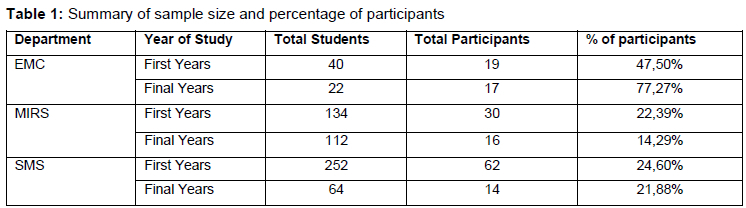
From the 158 participants who completed the survey 48 per cent (n=76) were from the Department of SMS, 29 per cent (n=46) were from the Department of MIRS and 23 per cent (n=36) from the Department of EMC. Table 1 gives an overview of the sample for each department broken into the year of study.
A total of 63,3 per cent of participants that completed the survey identified as female (Female=100), of which 70 were in their first year of study and 30 were in their final year of study. Followed by 35,4 per cent that identified as male (Male=56), of which 39 were in their first year of study and 19 were in their final year of study. One participant identified as transgender and another person preferred not to respond, this accounted for less than 1 per cent each of the total.
Perceived wellness of health sciences students
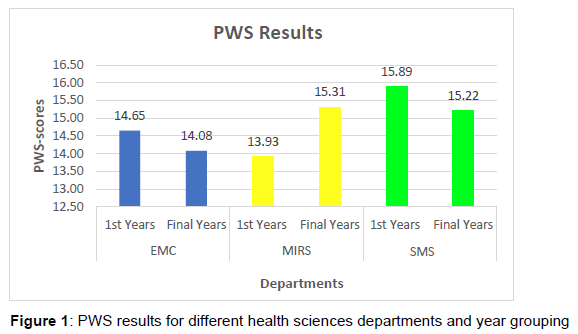
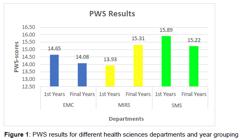
The Perceived Wellness Survey (PWS) is a salutogenically oriented, multidimensional measure of perceived wellness that spans over six wellness dimensions. Figure 1 shows the average results of the PWS-scores per department for each first and final-year group. The overall PWS-scores for the whole sample (n=158) is 14,83. First-year students from the SMS department showed the highest PWS-scores (15,89), whereas first-year MIRS students recorded the lowest PWS-scores (13,93). MIRS students showed the biggest improvement of PWS-scores when comparing first and final year students, with the score increasing by 1,38. This was the only department to exhibit an increase in PWS-scores in the study, compared to the EMC department that saw a decline in PWS-scores of 0,57 and the SMS department that had the biggest decline in PWS-scores of 0,67. When calculating the combined average scores of first and final-year students, for each individual department, the SMS department had a significantly higher average in PWS- score (15,56), compared to the MIRS department (14,62) and EMC department (14,37), which could be expected.
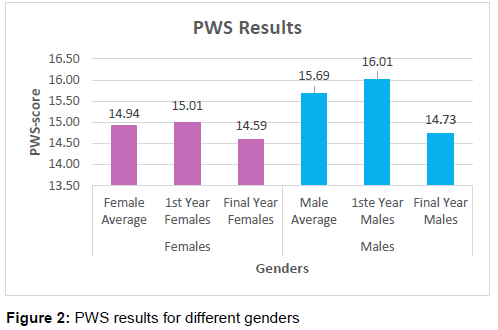
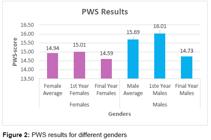
When comparing the average scores of males and females, males had a higher overall PWS score (15,69) compared to females PWS-scores (14,94), this is shown in Figure 2. The PWS scores were lower in the final year of study compared to the 1st year of study across both males and females.
Six equally important dimensions of wellness are taken into consideration when attempting to measure a student's perceived wellness. These dimensions include psychological, emotional, social, physical, spiritual and intellectual wellness. From the 36 PWS statements, each dimension has six statements targeted specifically towards a wellness dimension.
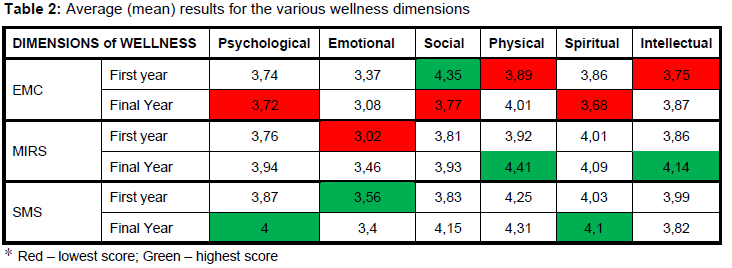
Table 2 summarizes the average results of the various wellness dimensions for the different departments and year groups. For each dimension of wellness, the lowest score is highlighted in red and the highest score is highlighted in green. Final-year EMC students scored the lowest in the psychological wellness domain, followed closely by first year EMC students. In emotional wellness first year MIRS students scored the lowest average, followed by final year EMC students. Final year EMC students again scored the lowest in social and spiritual wellness dimensions. With first year EMC students scoring the lowest in both physical and intellectual wellness dimensions, when compared to the other departmental groups.
Final-year students within the SMS department scored the highest in both psychological and spiritual wellness dimensions. Although the first-year SMS department students scored the highest in the emotional wellness domain, this domain scored the lowest for all students. In contrast to final-year EMC students the first-year EMC students scored the highest in the social wellness domain. For physical and intellectual wellness dimensions, final-year MIRS students had the highest scores for both.
The MIRS department was the only department that showed an improvement in all dimensions of wellness when comparing first and final-year students. Students from the SMS department showed improvement in four wellness dimensions, namely psychological, social, physical, and spiritual wellness. Whereas EMC students only showed an improvement in physical and intellectual wellness dimensions.
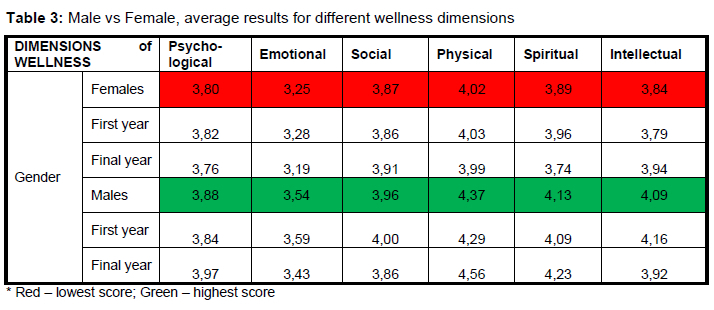
When comparing the average results of the various wellness dimensions between genders, it was noted that females scored lower in all six dimensions compared to males. This is illustrated in red in Table 3. The largest gap between the genders was noticed in the physical wellness domain, whereas the smallest gap was noted in the psychological wellness domain. Emotional wellness also scored the lowest across the genders with physical the highest.
Additional wellness questions
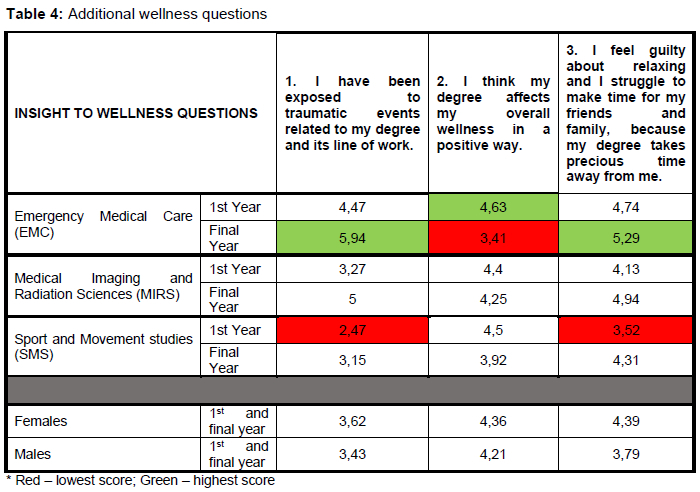
Additional questions were posed by the researcher to gain more insight into how the respective degrees influence the students' perceived wellness. The combined average results are illustrated in Table 4. Three statements were presented, and participants had to select the one response option with which they agreed most. Their options ranged from 1 (very strongly disagree) to 6 (very strongly agree). For each statement, the lowest score was highlighted in red and the highest score was highlighted in green.
When asked if participants have been exposed to traumatic events related to their degree and its line of work, final year EMC students had the highest scores (5,94), this indicated that the majority of them agreed very strongly with the statement, this was expected. The first-year students of the SMS department recorded the lowest average score (2,47), indicating that the majority of the students disagreed with this statement. All three departments had an increase in exposure to traumatic events from first to final year, with the MIRS department recording the biggest change (1,73) followed by EMC (1,47) and the SMS department (0,68). Worth noting here is that MRS and EMC are seen as clinical domains and SMS a non-clinical domain.
The second statement determined how students from various departments view the effects their degree has on their overall wellness. First year EMC students had the highest average score (4,63), this indicated that first year EMC students had a stronger believe that their studies had a more positive impact on their overall wellness. The opposite is true for final year EMC students that scored the lowest (3,41). All three departments had a decrease in scores for the second statement when comparing first and final year students. The EMC department recorded the most significant reduction (1,22), followed by SMS (0,58) and MIRS (0,15).
Final year EMC students again scored the highest (5,29) when asked if participants feel guilty about relaxing and struggling to make time for friends and family, because of the precious time their studies take away from them. The majority of final year EMC students agreed very strongly to this statement. The first year SMS department students scored the lowest (3,52), indicating lower levels of guilt and more time for social interaction with friends and family compared to other departments and year groups. Again, all three departments scored higher in their final year of study, indicating a rise in guilt and less time for social interaction from first to final year. MIRS students recorded the biggest change (0,81), followed by SMS (0,79) and then EMC (0,55). When comparing males and females, females scored higher on all three questions. The biggest discrepancy in scores between the two genders was noted in question three which focussed on feelings of guilt.
DISCUSSION
The perceived wellness survey focuses on a salutogenic approach to wellness (Adams et al., 1997). This term is often applied in health sciences and refers to an approach to wellness that focuses on health and not on disease (pathogenic) (Bhattacharya et al., 2020). Students who attend HEIs need to build, uphold, and retain academic motivation and performance, which may cause them to lose focus on their wellness (Robbins et al., 2021). The perception a student has toward living a healthy lifestyle is crucial since it will have an immediate impact on their overall wellness and their future career (Tshering, 2022). Understanding the overall perceived wellness of students could be valuable in addressing the misalignment between wellness dimensions currently mentioned in the literature.
For this cohort of students, it was noteworthy that although they all scored lower than the expected score of between 16.49 and 16.51 for HEI students (Adams et al., 1997), first-year students from SMS scored the highest and first-year students from MIRS scored the lowest. Both of these student cohorts would have received the wellness interventions the University offers to its first-year students. Focussing wellness efforts toward first-year students are well documented and implemented at HEI (Boni et al., 2018; Cabras and Mondo, 2018; Tshering, 2022). Transitioning into university is a difficult period for most students. Many South African students come from historically disadvantaged backgrounds, with limited access to financial resources and adequate healthcare. These systemic inequalities exacerbate wellness disparities, particularly in physical and social dimensions. Structural barriers, such as inadequate infrastructure and underfunded mental health services, further constrain HEIs' ability to implement comprehensive wellness initiatives. South Africa's cultural diversity adds another layer of complexity to wellness interventions. For instance, communal values and traditional healing practices may play a significant role in students' perceptions of wellness. HEIs should incorporate these cultural nuances into their wellness programs to ensure inclusivity and resonance with students' lived experiences. Partnering with government and private sectors may help to ensure sustainable support for students.
It was expected that female students would score lower than male students (Ikatova, Barynkina, and Amelina., 2021). Enhancing female students' wellness has been a priority in literature (Maziya and Mafumbate, 2019). Both male and female students showed a drop from first year to the fourth year.
Although there was variety within each group's scores for each dimension of wellness, all students (both male and female) for all year groupings showed the lowest perceived wellness score in the emotional domain. The American College Health Association advised that one of the best places for students to enhance their emotional and physical wellness is on university campuses (Robbins et al., 2021). Yet this does not seem to be the case in our study. Even though measures have been put in place to support students' health, previous research has also shown a significant decline in the students' emotional wellness (Kaur and Singh, 2022). The consistent decline in emotional wellness scores, particularly among female and final-year students, underscores systemic and cultural barriers in South African HEIs. Emotional wellness is deeply influenced by factors such as access to mental health resources, cultural stigmas surrounding mental health, and the additional caregiving responsibilities often borne by female students.
Emotional wellness is often linked with other dimensions of wellness and a lower score here, might heavily influence the overall score as seen in this study. Emotional wellness has been linked to social wellness, as it involves a state where feelings are managed constructively, positive relationships are maintained, and personal strengths are utilized (Main, 2020). Lower emotional wellness of healthcare workers increases the instances of compassion fatigue, occupational burnout and reduced overall job satisfaction (Tshering, 2022). Reduced emotional wellness seems to be on the increase in the youth and is associated with identifying attributes such as positive emotions, self-esteem, and resilience, as well as antecedents like nurturing relationships and social connectedness (Courtwright, Flynn Makic, and Jones., 2019). With depression and anxiety on the increase in the youth, it is concerning that interventions promoting emotional wellbeing, are not yet well understood (Courtwright et al., 2019). The decrease seen in emotional wellness could be attributed to the changing wellness landscape post-COVID (Phan et al., 2021). Implementing wellness initiatives that focus on all dimensions of wellness is currently very necessary. These disparities highlight the need for culturally sensitive and gender-specific interventions within HEIs, such as peer-support programs and accessible counselling services tailored to students' lived realities.
All three cohorts showed an increase in exposure to traumatic events from 1st to final year. Final year EMC students had the highest scores. A more diverse clinical platform gives students the opportunity to improve their optimism about their own talents and abilities, thus improving their perceived wellness (McKerrow et al., 2020), which might be the case for MIRS students. EMC students on the other hand are often exposed to an uncontrolled and unpredictable clinical environment within the first few months of starting the degree (Mountfort and Wilson, 2018). Depending on the nature of clinical shifts attended by health sciences students, depersonalization, emotional weariness, disengagement and the likelihood of developing psychiatric disorders such as Post Traumatic Stress Disorder (PTSD) during their university years is higher when compared to students who do not participate in clinical learning (Mountfort and Wilson, 2018). This might also be true if students are exposed to overly traumatic clinical cases without being prebriefed and debriefed after the event.
Participants in this study felt that their studies negatively influenced their perceived wellness. This could be related to the difficulty in managing an increase in workload and responsibilities, as well as more frequent clinical shifts that students must attend in subsequent years (McKerrow et al., 2020). High levels of euphoria can be experienced by first years first introduced into the clinical learning environment. However, as students progress through the years they can become more overwhelmed, anxious, unhappy, have difficulty separating work from personal life, and experience burnout, which negatively influences their wellness (Spurr et al., 2021). This could explain the decrease seen in PWS-scores of EMC and SMS students.
University students (who participated in this study) felt guilty about relaxing and indicated that they struggled to make time for friends and family. This indicates a rise in guilt and less time for social interaction from the first to the final year. Worth noting is social and emotional wellness are closely linked to each other (Kaur and Singh, 2022). The results support previous research that reported a decline in multiple wellness dimensions as students progress through the years at university (Henrico, 2022; Ikatova et al., 2021).
It seems that female students felt more guilt than their male counterparts. The pressure to perform well at a higher educational institute, financial concerns, trouble sleeping, relationships, body image, self-esteem, and academic achievement were the most often cited causes of stress (Maziya and Mafumbate, 2019; Robbins et al., 2021; Salanam Maty and Hage, 2020). This could explain the overall lower score in emotional wellness as it relates to social wellness and support. Wellness disparities have far-reaching implications for the professional readiness of health sciences students. Graduates with unresolved emotional and psychological stress may struggle with compassion fatigue, burnout, and compromised patient care. Addressing these disparities is critical not only for student success but also for producing competent and empathetic healthcare professionals who can meet the needs of South Africa's diverse population.
This study recommends that HEI's develop wellness initiatives that consider South Africa's socio-cultural diversity, including traditional support systems and communal values. These wellness initiatives should prioritize programs addressing the unique challenges faced by female students, such as mentorship programs and stress management workshops, in particular. These wellness initiatives should be embedded into the academic curriculum as wellness education and support, spanning all years of study to maintain a holistic focus on students' development. Lastly, wellness initiatives should be monitored through the implementation of regular wellness assessments of wellness initiatives to adapt strategies based on evolving student needs and contextual challenges.
STUDY LIMITATIONSThis study was limited to one health sciences faculty in a HEI in Gauteng, and this study did not include all students registered in this faculty. Hence, the findings of this study cannot be generalised. It is also worth noting that this study does not address the practical implementation of wellness initiatives, as this should be customizable for each health sciences department.
CONCLUSION
With depression and anxiety on the increase in the youth, it is vital for HEI to effectively navigate a new wellness and well-being landscape post-COVID. Feelings of guilt is related to the time spent on wellness initiatives and may reduce the overall perceived wellness of individuals even more. This study also shows that the score in perceived emotional wellness is an area of great concern. As mentioned, emotional wellness is especially important to healthcare domains due to its impacts on compassion fatigue and occupational burnout.
All wellness dimensions are interlinked, and equally important. HEIS must initiate wellness interventions that include aspects of emotional wellness for students. Additional wellness might be needed for female students. These wellness initiatives should also be repeated throughout the academic years and not merely seen as a once-off for first-year students. Extra support should be given to students who are enrolled in clinical domains that might be unpredictable. It is also advisable for HEIs to schedule regular check-ins with their students even if they are in a non-clinical domain. To fully support students in achieving a sense of heightened holistic wellbeing, further research is needed to understand the impact of guilt on perceived wellness and determine activities that influence and support emotional wellness.
This study highlights the critical need for South African HEIs to address wellness disparities, particularly in emotional wellness, within the context of systemic barriers and cultural influences. By adopting a holistic, inclusive, and sustainable approach to wellness, HEIs can better support the development of future healthcare professionals who are not only academically competent but also resilient and empathetic.
REFERENCES
-
Adams, T., J. Bezner, and M. Steinhardt. 1997. "The Conceptualization and Measurement of Perceived Wellness: Integrating Balance across and within Dimensions". American Journal of Health Promotion, 11(3), 208-218. https://doi.org/10.4278/0890-1171-11.3.208.
» https://doi.org/10.4278/0890-1171-11.3.208 -
Boni, R. A. dos S., C. E. Paiva, M. A. de Oliveira, G. Lucchetti, J. H. T. G. Fregnani, and B. S. R. Paiva. 2018. "Burnout among medical students during the first years of undergraduate school: Prevalence and associated factors". PLoS One, 13(3), e0191746. https://doi.org/10.1371/journal.pone.0191746
» https://doi.org/10.1371/journal.pone.0191746 -
Bhattacharya, S., K. Pradhan, M. Bashar, S. Tripathi, A. Thiyagarajan, A. Srivastava, and A. Singh. 2020. "Salutogenesis: A bona fide guide towards health preservation". Journal of Family Medicine and Primary Care, 9(1), 16. https://doi.org/10.4103/jfmpc.jfmpc_260_19
» https://doi.org/10.4103/jfmpc.jfmpc_260_19 -
Brooker, A., and L. Woodyatt. 2019. "2019 Special Issue: Psychological Wellbeing and Distress in Higher Education". Student Success, 10(3), i-vi. https://doi.org/10.5204/ssj.v10i3.1419
» https://doi.org/10.5204/ssj.v10i3.1419 -
Budzynski-Seymour, E., R. Conway, M. Wade, A. Lucas, M. Jones, S. Mann, and J. Steele. 2020. "Physical Activity, Mental and Personal Well-Being, Social Isolation, and Perceptions of Academic Attainment and Employability in University Students: The Scottish and British Active Students Surveys". Journal of Physical Activity and Health, 17(6), 610-620. https://doi.org/10.1123/jpah.2019-0431
» https://doi.org/10.1123/jpah.2019-0431 -
Cabras, C., and M. Mondo. 2017. "Coping strategies, optimism, and life satisfaction among first-year university students in Italy: gender and age differences". Higher Education, 75(4), 643-654. https://doi.org/10.1007/s10734-017-0161-x
» https://doi.org/10.1007/s10734-017-0161-x -
Courtwright, S. E., M. B. Flynn Makic, and J. Jones. 2019. "Emotional wellbeing in youth: A concept analysis". Nursing Forum, 55(2), 106-117. https://doi.org/10.1111/nuf.12404
» https://doi.org/10.1111/nuf.12404 -
Duffy, M. 2021. "Student Wellness and Academic Libraries: Case Studies and Activities for Promoting Health and Success". Sara Holder and Amber Lannon, eds. Chicago, IL: Association of College and Research Libraries, 2020. 292p. Paper, $86.00 (ISBN 978-0838948644). College & Research Libraries, 82(5), 776. https://doi.org/10.5860/crl.82.5.776
» https://doi.org/10.5860/crl.82.5.776 - Elias, M. E., A. H. S. Bakar, N. Mahidin, J. F. Kim, and A. S. Z. Bakar. 2020. "The relationship of undergraduate students' lifestyle and the impact to students' health". Journal of critical reviews, 7(8), 1729-1733.
-
Henrico, K. 2022. "Sustaining student wellness in higher educational institutions: Possible design principles and implementations strategies". The Journal for Transdisciplinary Research in Southern Africa, 18(1). https://doi.org/10.4102/td.v18i1.1114
» https://doi.org/10.4102/td.v18i1.1114 -
Ikatova, I. I., I. V. Barynkina, and L. V. Amelina. 2021. "Ensuring students' wellness: resources and demands in higher education". E3S Web of Conferences, 284, 1-11. https://doi.org/10.1051/e3sconf/202128409012
» https://doi.org/10.1051/e3sconf/202128409012 -
Iqbal, M. Z., S. U. D. Khan, and M. Shahid Iqbal. 2020. "Predictors of Perception of Mental Health Challenges among Healthcare Students in a Medical University". Journal of Young Pharmacists, 12(4), 379-382. https://doi.org/10.5530/jyp.2020.12.96
» https://doi.org/10.5530/jyp.2020.12.96 -
Karaman, M. A., E. Lerma, J. C. Vela, and J. C. Watson. 2019. "Predictors of Academic Stress Among College Students". Journal of College Counseling, 22(1), 41-55. https://doi.org/10.1002/jocc.12113
» https://doi.org/10.1002/jocc.12113 -
Kaur, H., and T. Singh. 2022. "Emotion, Well-Being, and Resilience-Theoretical Perspectives and Practical Applications". Psychological Studies, 67(1), 123-126. https://doi.org/10.1007/s12646-022-00646-x
» https://doi.org/10.1007/s12646-022-00646-x -
Main, K. 2020. Social and emotional wellbeing. Teaching Primary Years, 83-97. Routledge. https://doi.org/10.4324/9781003117797-5
» https://doi.org/10.4324/9781003117797-5 -
Maziya, T. F., and R. Mafumbate. 2019. "Enhancing A Holistic Wellness Among Female Students at a University in Eswatini Through Relevant Intervention Strategies for Support". Research on Humanities and Social Sciences, 9(18), 86-95. https://doi.org/10.7176/rhss/9-18-11
» https://doi.org/10.7176/rhss/9-18-11 -
McKerrow, I., P. A. Carney, H. Caretta-Weyer, M. Furnari, and A. Miller Juve. 2020. "Trends in medical students' stress, physical, and emotional health throughout training". Medical Education Online, 25(1). https://doi.org/10.1080/10872981.2019.1709278
» https://doi.org/10.1080/10872981.2019.1709278 -
Morris-Paxton, A. A., J. M. Van Lingen, and D. Elkonin. 2016. "Wellness and academic outcomes among disadvantaged students in South Africa: An exploratory study". Health Education Journal, 76(1), 66-76. https://doi.org/10.1177/0017896916650707
» https://doi.org/10.1177/0017896916650707 - Mountfort, S., and J. Wilson. 2018. "EMS Provider Health and Wellness". StatPearls, 1-7.
-
Phan, H., A. R. Mills, and J. Fleming. 2021. "Perceived wellness among pharmacy residents during COVID-19". Journal of the American Pharmacists Association, 61(6), e52-e59. https://doi.org/10.1016/j.japh.2021.07.014
» https://doi.org/10.1016/j.japh.2021.07.014 -
Pipas, C. F., J. A. Damianos, L. Montalbano, A. L. Matous, J. Hua, and G. H. Shoop. 2020. "A Curriculum to Promote a Culture of Wellness Among Medical Students and Faculty". PRiMER, 4. https://doi.org/10.22454/primer.2020.930805
» https://doi.org/10.22454/primer.2020.930805 -
Sabir, R. I., M. B. Majid, and K. Masood. 2022. "Impact of Student Wellness on Academic Performance with Mediating Role of Learning Environment". Academic Journal of Social Sciences (AJSS), 5(4), 419-435. https://doi.org/10.54692/ajss.2021.05041666
» https://doi.org/10.54692/ajss.2021.05041666 -
Robbins, J. E., C. T. Stanley, A. Spence, and B. McLamb. 2021. "Wellness, Life Satisfaction, and Stress Among University Students and Faculty: Campus-Based Results and Program Recommendations". Journal of Physical Education, Recreation & Dance, 92(1), 42-50. https://doi.org/10.1080/07303084.2020.1838363
» https://doi.org/10.1080/07303084.2020.1838363 -
Salana, K., S. Maty, and R. Hage. 2020. "Alive and Well: Encouraging Long Term Health Habits Through Implementation of Student Driven Wellness Programs in Medical Schools". Global Advances in Health and Medicine, 9, 1-6. https://doi.org/10.1177/2164956120973622
» https://doi.org/10.1177/2164956120973622 -
Scott, H., and M. K. T. Takarangi. 2019. "Measuring PhD Student's Psychological Well-being: Are we seeing the whole picture?" Student Success, 10(3), 14-24. https://doi.org/10.5204/ssj.v10i3.1294
» https://doi.org/10.5204/ssj.v10i3.1294 -
Spurr, S., K. Walker, V. Squires, and N. Redl. 2021. "Examining nursing students' wellness and resilience: An exploratory study". Nurse Education in Practice, 51, 102978. https://doi.org/10.1016/j.nepr.2021.102978
» https://doi.org/10.1016/j.nepr.2021.102978 - Mueller, T., and G. Perreault. 2019. "The psychology of student wellness: Relationships, detractors and exam anxiety". American Association of University Administrators, 34(1), 1-11.
-
Tshering, K. 2022. "Emotional Wellbeing and The Healthcare Workforce: A Review". Journal of Mental Health & Clinical Psychology, 6(2), 1-5. https://doi.org/10.29245/2578-2959/2022/2.1206
» https://doi.org/10.29245/2578-2959/2022/2.1206 -
Ware, J. E., and C. D. Sherbourne. 1992. "The MOS 36-ltem Short-Form Health Survey (SF-36)". Medical Care, 30(6), 473-483. https://doi.org/10.1097/00005650-199206000-00002
» https://doi.org/10.1097/00005650-199206000-00002 -
Zaidi, U. 2020. "Health and Rehabilitation Science specialities, physical activity and dimensions of wellness among the students of PNU". Heliyon, 6(1), e03204. https://doi.org/10.1016/j.heliyon.2020.e03204
» https://doi.org/10.1016/j.heliyon.2020.e03204