The role of quality management systems in enhancing online education: A case study of a business school in KwaZulu-Natal
Abstract
The shift to online education created opportunities for innovation while raising questions about the effectiveness of existing quality assurance (QA) systems. This study evaluated the Quality Management System (QMS) of an online learning programme at a Business School in KwaZulu-Natal (KZN). A mixed-methods approach was used, combining surveys of students and interviews with academic experts in quality management and higher education. Ninety-six students participated in the survey and eleven academics participated in the interviews. Findings from the survey revealed key challenges such as limited internet access, high data costs, and cybersecurity risks, which negatively affected student engagement and equitable access to learning. Despite these challenges, the students reported overall satisfaction with the programme, particularly with lecturer support. The interview data highlighted the need for structured QA frameworks to maintain academic standards in online education. A gap analysis at the business school showed institutional strengths such as a clear mission and commitment to continuous improvement, but also weaknesses, notably the absence of a dedicated QMS framework tailored to online education. The study proposes a QMS framework based on the ISO 21001:2018 standard and supported by Total Quality Management (TQM) principles. The framework incorporates continuous improvement mechanisms, regular assessments, and feedback systems to strengthen quality assurance and support the sustainability of online programmes.
Online education; quality management systems; higher education; technology; infrastructure
INTRODUCTION
The sudden shift to online education during the Covid-19 pandemic revealed several weaknesses within educational institutions, including limitations in existing systems, disparities in access to digital technologies, insufficient infrastructure, and limited institutional readiness to support effective online teaching and learning (Dube 2020, 138; Ndung'u and Signe 2020, 73). In many cases, the shift to digital platforms was executed without adequate evaluation mechanisms, leaving educational institutions uncertain about the effectiveness and sustainability of their online programmes (Adnan and Anwar 2020, 46; Mukhtar et al. 2020, 1). Stakeholders, including students and faculty, faced numerous obstacles, ranging from limited internet access and cybersecurity risks to high data costs, all of which hindered the overall learning experience (Mailizar, Maulina, and Bruce 2020, 1).
The traditional Quality Management Systems (QMS) and Quality Assurance (QA) frameworks were predominantly designed with traditional, in-person education in mind, leaving education institutions not fully prepared for the operational and technological demands of digital educational environments (Seke 2020, 71). These frameworks, though effective in conventional settings, failed to account for the complexities and unique needs posed by online education (Silaeva and Semenov, 2018, 71; Naveed Bin Rais et al. 2021, 5). As a result, many educational institutions faced significant barriers in maintaining educational standards and operational efficiency during this transition.
Seyfried and Pohlenz (2018, 261) highlight that robust QA mechanisms are essential for effectively managing educational programmes, particularly during periods of rapid change. ISO 21001:2018 is a standard that provides educational institutions with a structured quality management framework that emphasises process-based management and risk considerations to support the improvement of teaching and learning (Silaeva and Semenov 2018, 72; Zuhairi, Raymundo, and Mir 2020, 297). This standard provides flexibility to accommodate the unique requirements of diverse learning environments while ensuring educational institutions uphold high-quality standards and engage in continuous improvement. However, achieving a dynamic quality culture in online education also necessitates integrating Total Quality Management (TQM), which complements ISO 21001 by fostering continuous improvement and stakeholder engagement (Maimuna et al 2024, 416). TQM treats educational institutions as service-oriented entities, prioritising the needs of students, faculty, and external stakeholders (Jasti, Venkateswaran, and Kota 2022, 1250). Together, TQM and ISO 21001 enable education institutions to adapt to technological advancements, align processes with best practices, and build a responsive, student-centred learning ecosystem (Aniskina and Terekhova 2019, 219).
This study aimed to evaluate the QMS of a selected University of Technology Business School's online learning programme in accordance with ISO 21001:2018. The business school is located on the East Coast of South Africa, KwaZulu-Natal. The South African higher education system currently operates under the Council on Higher Education (CHE), which is responsible for quality assurance and programme accreditation. It adopts Harvey and Green's (1993) fitness-for-purpose approach in its quality accreditation and review processes to assess whether educational programmes align with institutional objectives and national development priorities (CHE 2021). The research questions that have been crafted to guide the study are as follows:
What gaps exists within the current QA practices of the selected business schools' online learning programme?
How effective is the current online learning programme at the selected business school?
What are academic perspectives on QMS's and online learning?
What improvements can be made to the selected business schools online learning programme through the application of ISO 21001:2018 and TQM principles?
METHODS
The study adopted a convergent mixed methodology approach. The mixed-methods approach was selected because it allows qualitative and quantitative methods to complement one another, while also addressing some of the limitations associated with using either approach independently (Asenahabi 2019, 77). The quantitative component used a survey questionnaire to assess the effectiveness of the online learning programme at the selected business school. The qualitative component used focus group interviews to obtain detailed insights into stakeholders' experiences and views regarding QMS's and online education. The data were collected concurrently and integrated during the interpretation phase to perform methodological triangulation (Leavy 2017, 153).
Study instrument design
The development of the measuring instruments was guided by the ISO 9001 and ISO 21001 QMS standards, together with relevant principles and concepts of TQM (Jasti, Venkateswaran, and Kota 2022, 1250). The survey questionnaire consisted of section A, which sought the biographical information from the respondents, and section B, which investigated the current state of online education at the selected business school in terms of technological challenges and resources, learning environment and support, emotional and social impacts, and programme organisation and transition. It incorporated closed-ended items with a five-point Likert scale to assess respondents' attitudes and the strength of their views. Braun et al. (2021, 645) explain that the scale enables respondents to indicate their degree of agreement, from strong agreement to strong disagreement.
The interview guide comprised ten questions requiring open-ended responses designed to obtain detailed perspectives and experiences regarding QMS's and online education. This is supported by Langley and Meziani (2020, 371), who noted that interviews are beneficial and appropriate when researchers seek in-depth insights, capture personal experiences, and explore complex issues that may not be fully addressed through surveys.
Sampling strategy
The survey population consisted of 145 learners that were enrolled in the online learning programme of the selected business school. The required sample size was calculated as 106 participants using Yamane's formula, with a 5 percent margin of error and a 95 per cent confidence level (Adam 2020, 94). The learners who met the predetermined criteria were then purposively selected to participate in the survey. The questionnaires were distributed to the selected participants, of whom 96 completed it, resulting in a response rate of 90.6 percent.
For the qualitative component of the study, eleven academics with expertise in quality management and higher education participated in the interviews. These participants were selected based on their knowledge and experience in these areas. The sample size was considered appropriate for the focus group, as Lohr (2021, 4) indicates that four or more participants can be sufficient for a focus group. The eleven participants provided sufficient information to achieve data saturation, which supported the suitability of the sample for the qualitative component of the study.
Fieldwork / Data collection
The existing QA procedures of the selected business school were explored through a gap analysis interview with the head of department of the business school. ISO 21001:2018 was used as the reference framework for guiding the interview process and examining the existing QA practices in relation to the standard (Syahrullah et al. 2022, 67). The gap analysis interview focused on obtaining information about the current QA practices and their relevance to the implementation of the standard.
The survey questionnaires were emailed to the respective participants, and they were given two months to complete them. After the first month, a courtesy email was sent to those participants who did not complete the questionnaire, informing them that the survey would remain open until the end of the second month. The programme administrator of the selected business school provided the contact details of the survey participants. The participants for the interviews were contacted through telephone and email. The interviews were conducted online through the MS Teams platform.
Data analysis
The Statistical Package for the Social Sciences (SPSS) version 27 was used to analyse the quantitative data. The percentage frequency distributions were used to assess the participants' levels of agreement or disagreement with the various constructs related to the online learning programme. This approach facilitated an initial understanding of patterns and trends within the dataset, particularly regarding the prevalence of specific perceptions and attitudes among participants.
The qualitative interview data were analysed using the NVivo software. Content and thematic analysis were applied to the interview transcripts to examine recurring words, themes and concepts within the responses. Crowe et al. (2017, 644) reported that this type of approach is considered appropriate when analysing interview data. The NVivo word frequency function was also used to determine which words occurred more often across the transcripts. The frequency results were then considered alongside the qualitative analysis to identify the main themes and concepts emerging from the data.
Reliability and validity
The Cronbach's alpha coefficient was used to assess the reliability of the survey questionnaire and determine the internal consistency of the questionnaire items. According to Hajjar (2018, 52), a Cronbach's alpha coefficient value between 0.6 and 0.8 is considered an acceptable level of reliability. The reliability analysis of the four constructs in this study yielded a Cronbach's alpha value of 0.632, indicating an acceptable level of internal consistency for the questionnaire.
Construct validity was considered during the development of the indicators and measurement items, which were informed by relevant literature and established TQM concepts (Taber 2018, 1280). The measures were developed to ensure that the items reflected the concepts being investigated and were consistent with the theoretical perspectives identified in the literature. Sürücü and Maslakci (2020, 2695) describe validity as the extent to which a measuring instrument accurately measures what it is intended to measure.
The reliability of the interviews was assessed using the concept of qualitative trustworthiness, which includes the elements of credibility, transferability, dependability, and confirmability, as recommended by Elo et al. (2014, 1). Credibility was ensured through member checking, which allowed participants to review the interview transcripts to confirm that the transcriptions were accurate and that their views were captured correctly. The transferability was addressed by providing detailed descriptions of the study settings and the participants. Dependability was achieved by maintaining a clear record of the study's procedures. Lastly, the confirmability was maintained by ensuring that the results reflected the participants' voices rather than personal opinions.
RESULTS AND DISCUSSIONS
GAP analysis
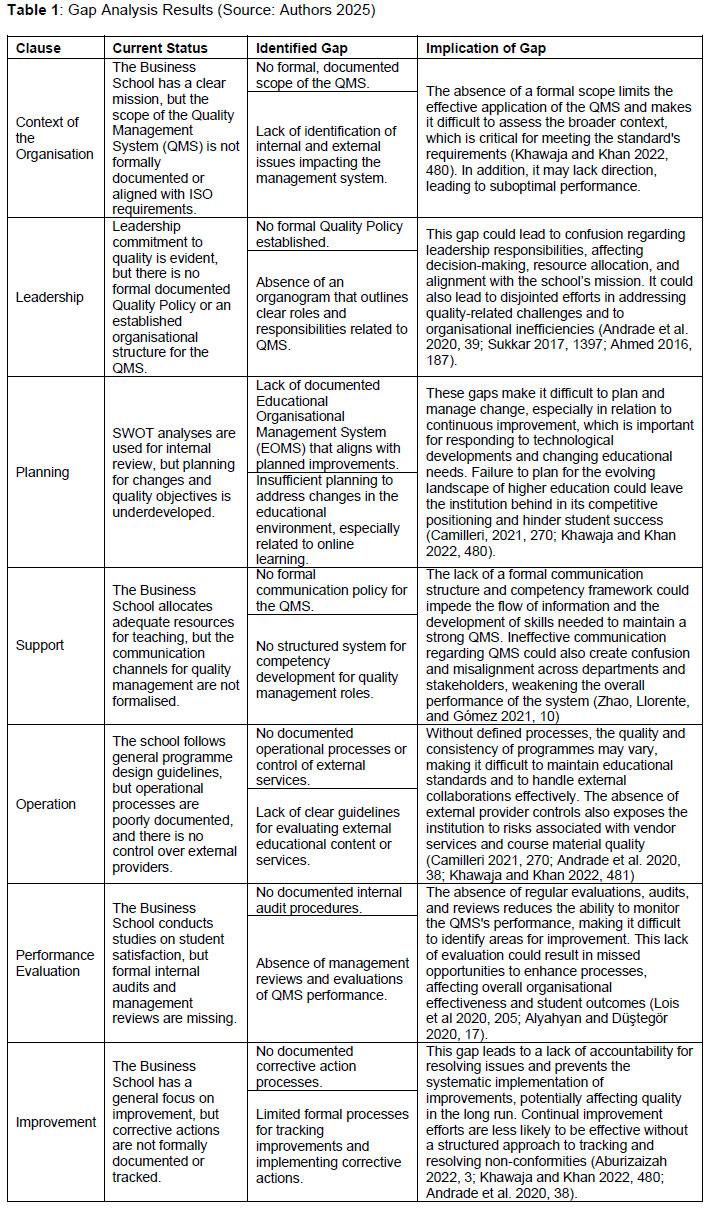
Table 1 presents the findings from the gap analysis interview undertaken at the selected business school. It outlines the QMS focus areas, the business school's current status, the identified gaps, and their corresponding implications.
As shown in Table 1, the selected Business School has many elements of the ISO 21001:2018 framework in place. Still, it lacks formal documentation and structured processes in key areas, such as scope, communication, change planning, and corrective actions. Although leadership demonstrates commitment to quality, formal structures such as a Quality Policy and clearly defined roles remain absent, which could affect overall quality outcomes and organisational cohesion. There is also insufficient planning for continuous improvement, particularly regarding external collaborations and technology-driven educational methods. Insufficient documentation of operational processes and the absence of external provider controls limit the school's ability to maintain consistent educational standards and manage external collaborations effectively. A lack of formal internal audits, management reviews, and corrective action processes limits the business school's ability to monitor and improve its QMS, potentially undermining overall quality assurance efforts.
QUANTITATIVE ANALYSISSection A ‒ Demographics
The demographic analysis revealed that the majority (64%) of respondents spoke IsiZulu as their home language, while 62 per cent were working on a full-time or self-employed basis. A large proportion of respondents were Black Africans (77%), with 56 per cent female and 49 per cent single. In addition, 39.6 per cent of the participants reported that a diploma was their highest educational qualification. These demographic characteristics are valuable for understanding the context in which students engage with online learning. As Baker et al. (2023, 37) suggest, demographic data provides predictive insights into students' behaviours and cultural influences, which can inform the design of educational programmes. The flexibility of the online learning programmes is therefore particularly relevant to the respondents who are employed full-time, as it allows them to manage their studies alongside their work responsibilities more effectively.
Section B - Online education
Technological challenges and resources
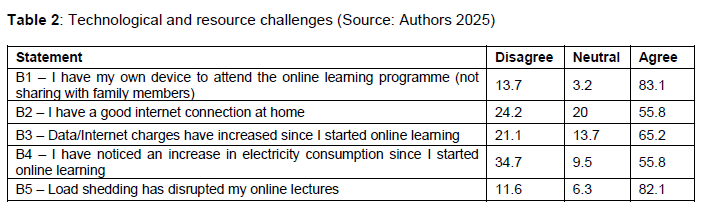
The results about technological challenges and resources are presented in Table 2.
Table 2 indicates that 83.1 per cent of the students used their own devices for online learning (B1), which is a critical factor in shaping educational experiences. However, internet connectivity posed challenges: 55.8 per cent reported good connections, 20 per cent remained neutral, and 24.2 per cent disagreed (B2). These findings are consistent with Ferri, Grifoni, and Guzzo (2020, 7), who identified ongoing global bandwidth issues, particularly in rural areas. Additionally, high internet data usage (B3, 65.2%) and electricity costs (B4, 55.8%) were significant concerns highlighted by the respondents. The increased expenses associated with online learning technologies were similar to the findings of Landa, Zhou, and Marongwe (2021, 168), which highlighted financial burdens, such as high internet usage and the energy demands of video-conferencing platforms. Load shedding exacerbated these challenges, with 82.1% of students reporting disruptions to online lectures (B5). This finding is supported by Kgarose, Makhubela, and Setaise (2023, 448), who noted the negative effects of recurring electricity disruptions on the South African education sector.
Learning environment and support
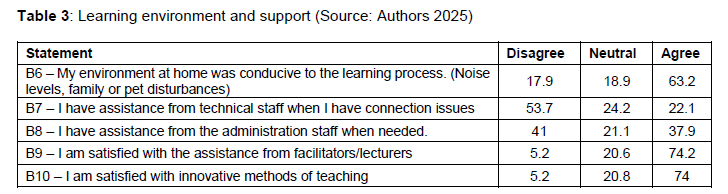
The results about the learning environment and support are presented in Table 3.
As shown in Table 3, 63.2 per cent of students agreed that their home environment was conducive to learning (B6), indicating that a peaceful, comfortable atmosphere plays a key role in supporting their academic activities. This is consistent with Ayadat et al. (2021, 357) who affirm that such environments can positively influence students' engagement in online learning. However, limited technical support (B7, 53.7%) and administrative support (B8, 41%) were identified as key barriers to the online learning experience. Alqahtani and Rajkhan (2020, 3) emphasise the need for ongoing support services to address connectivity issues, complex software interfaces, and other technical challenges to improve the overall standard of online learning. The lecturer's support was positively reflected in student satisfaction, with 74.2 per cent reporting that they were satisfied with the assistance provided by the lecturers (B9). Tan et al. (2024, 401) reported a similar finding, indicating that interaction between lecturers and students significantly improves the online learning experience. In addition, the majority of students (74%) appreciated the innovative teaching methods (B10) employed in the online environment. Castro and Tumibay (2021, 1371) emphasise the importance of adopting innovative pedagogies in online education, especially in response to rapid technological developments.
Emotional and social Impacts
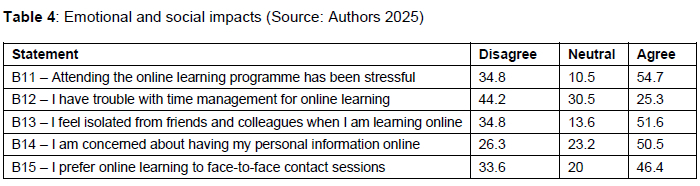
The results about emotional and social impacts are presented in Table 4.
As indicated in Table 4, over half of the respondents (54.7%) found the online learning programme stressful (B11), which is consistent with Harjule, Rahman, and Agarwal (2021, 411), who observed an increase in mental health issues as teaching moved to an online format. Most students either disagreed or remained neutral regarding time management challenges in online education (B12), suggesting that time management was not a significant concern. This finding is consistent with the demands of online learning, where students need to manage assignment and examination deadlines alongside their employment and family commitments (Heo, Bonk, and Doo 2021, 1640). A sense of isolation was reported by 51.6 per cent of students (B13) during online learning, which corroborates the concerns raised by Chametzky (2021, 1190) and Stoytcheva (2021, 2), who linked loneliness in online learning to heightened stress and reduced engagement. Furthermore, cybersecurity concerns were also prominent, with 50.5 per cent of the students' expressing apprehensions about data security (B14). This aligns with Alexei and Alexei (2021, 130), who highlighted the vulnerabilities of online platforms to breaches and malware attacks, posing significant risks to data security and user trust. Preferences for learning modes were mixed, with 46.4 per cent of students preferring online learning, while 33.6 per cent disagreed with online learning (B15). These findings mirror the global studies conducted by Adnan and Anwar (2020, 45) and Mali and Lim (2021, 3), which indicate that students generally prefer traditional classroom-based learning. At the same time, online learning provides greater flexibility, which can be particularly beneficial for employed students.
Programme organisation and transition
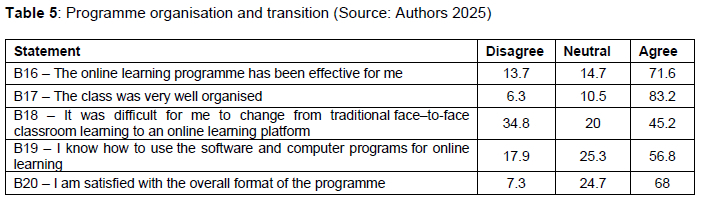
The results for the programme organisation and transition are presented in Table 5.
As shown in Table 5, majority (71.6%) of the students agreed that the online learning programme was effective (B16), aligning with Bahasoan et al. (2020, 102), who found that well-structured online learning can improve learning outcomes. Similarly, 83.2 per cent of students reported that classes were well-organised (B17), which supports Valantinaitė and Sederevičiūtė-Paciauskienė's (2020, 5) view that effective organisation contributes to the quality of online education. However, 45.2 per cent of the students reported difficulties with the transition from face-to-face to online learning (B18). Richardson and North (2020, 10) argue that migration to online platforms can be a disruptive process that usually requires substantial adaptation from both students and educators. The students' technological proficiency was a notable strength, with 56.8 per cent indicating confidence in using software tools for online learning (B19). This aligns with Enwereji et al. (2024, 381), who emphasise the need for ongoing training that further develops students' digital competencies and support effective online learning. The online learning programme format received a high satisfaction rate, with 68 per cent of students approving of it (B20). This positive perception may be linked to the design of the online learning programme. Giday and Perumal (2024, 9) note that how online programmes are structured can significantly influence student engagement and communication with lecturers, ultimately improving learning outcomes.
QUALITATIVE ANALYSISOnline learning
The participants expressed positive perceptions of online learning by emphasising its potential to improve access and encourage innovation in the higher education sector. Some of the illustrative responses included:
"Online learning allows students to learn at their own pace; they have access to the recordings and can watch them again"
"It promotes innovation and greater access to students who may be employed or reside far from the University"
However, the participants also highlighted significant challenges, including:
Load Shedding: The most frequently reported challenge was the impact of power outages, which disrupted teaching, access to online resources, and student attendance. This finding aligns with Kgarose, Makhubela, and Setaise (2023, 449), who highlighted the mental health impacts of load shedding, and with Malik et al. (2022, 1165), who reported its adverse effects on academic punctuality and performance.
Data Costs: The rising costs of data were noted as a barrier to participation, thereby reducing student engagement. These findings are consistent with Sarosa (2022, 478), who observed that financial pressures may unintentionally limit students' opportunities to participate in online learning.
Transition to Online Learning: The participants described increased stress and burnout as the major difficulties in adjusting to online teaching and learning, which was consistent with the similar challenges reported by Maatuk et al. (2022, 29).
Assessment Integrity: This challenge included concerns about maintaining academic integrity during online assessments and the privacy implications of online proctoring, as corroborated by Vazquez, Chiang, and Sarmiento-Barbieri (2021, 1)
Time-Intensive Marking: Grading in an online context was described as time-consuming, especially for large classes.
Quality in higher education
The participants supported the application of QA frameworks within higher education institutions, emphasising their role in maintaining academic standards and ensuring global credibility. Some of the excerpts from the participants were as follows:
"It is necessary to maintain standards and ensure qualifications are relevant"
"A relevant QMS is essential to uphold quality and integrity"
Despite the general agreement on the importance of QA, the participants highlighted the following common challenges that hinder its effective implementation:
Bureaucratic processes: It was noted that lengthy administrative procedures were described as a significant impediment, which often slows down decision-making and reduces the efficiency of QA activities, aligning with Asiyai (2022, 844).
Organisational resistance: The resistance to change within institutional cultures emerged as a recurrent theme. Naveed Bin Rais et al. (2021, 10) similarly found that cultural inertia in organisations can significantly reduce the effectiveness of quality improvement initiatives.
Resource constraints: The limitations due to financial, human and training resources were identified as barriers to implementing QA measures effectively. Greere (2023, 166) explained that without adequate funding and skilled personnel, institutions struggle to maintain consistent quality standards.
Communication gaps: Poor communication strategies, such as unclear guidelines and inadequate feedback mechanisms, were seen as common factors that hinder staff understanding and engagement with QA processes. This issue resonates with Aburizaizah (2022, 3), who highlights that communication gaps can significantly compromise the adoption and effectiveness of QA systems.
Perceptions of QMS
The participants emphasised the importance of adopting a QMS tailored to the needs of educational institutions. ISO 21001:2018 was identified as particularly relevant due to its focus on addressing the distinct needs of the education sector. The participants also highlighted the importance of integrating the Quality Assurance Framework (QAF) developed by the Council on Higher Education in South Africa, which was introduced to strengthen national QA mechanisms (Lalendle, Tsephe, and Naidoo 2022, 5816).
SUMMARY OF MAIN FINDINGS
The gap analysis interview showed that the selected business school had a vision, mission statement and processes for assessing student needs, but did not have a documented scope or a dedicated QMS. The analysis also found no formal quality policy, organogram or communication policy, and no established procedures for process control and internal audits. However, processes for addressing non-conformities and supporting continuous improvement were in place.
The survey results indicated that the students generally regarded the online learning programme as effective, although they experienced considerable pressure from balancing responsibilities, connectivity issues, and increased costs for data, electricity, and load shedding. Despite these challenges, students value the convenience offered by the online learning programme and are generally positive about the support provided by lecturers. However, technical and administrative support is lacking.
The qualitative data highlighted the flexibility and accessibility of online learning, while also identifying challenges associated with load shedding and the importance of introducing innovative approaches to teaching. The participants supported QA in higher education but noted barriers, including bureaucracy and resource constraints. They further recognised the value of ISO 21001:2018 and national Quality Assurance Frameworks in strengthening QA practices.
The triangulation of findings from both sets of data confirmed that load shedding and connectivity issues were among the main challenges identified in the study. Both sets of findings also highlighted the difficulties experienced when moving from face-to-face to online learning. The students and lecturers also identified the higher costs of equipment, data and electricity as additional challenges, which is consistent with Enwereji et al. (2024, 380).
RECOMMENDATIONSTo address the identified gaps, it is recommended that the Business School align with ISO 21001:2018, starting with the development of a clear quality policy that will serve as a guiding document to ensure consistency in quality management practices across the institution. Alongside this, formal communication procedures and internal audit processes should be established to improve transparency and a structured approach to quality management, as indicated by Vhumbunu (2021, 4). Furthermore, key supporting policies should be developed to strengthen the Business School's quality framework. This requires the EOMS scope to be formally documented, organisational responsibilities to be clearly established, and procedures for managing change and controlling processes to be put in place to support operational efficiency and compliance (Greaves 2024, 69).
To address the challenges posed by load shedding, the Business School should implement flexible timetables that allow rescheduling of classes during power outages and designate study areas equipped with backup power sources to alleviate connectivity issues faced by students and staff. Ongoing training should also be provided to the staff and students to strengthen their ability to use digital platforms and adapt to emerging technologies. Additional technological and administrative support should also be provided to ensure that students can access help when needed. At the same time, efforts should be made to keep online learning accessible to all students, as Almahasees, Mohsen, and Amin (2021, 2) indicate. To address the financial barriers, the business school should consider providing some form of subsidy to help students reduce the financial burden of internet data and offer guidance and support for applications to government funding, bursaries, and grants. Lastly, improvements in online pedagogy should be strengthened through better course planning and delivery, with greater use of class discussions, group projects and practical examples to promote student participation and confidence in online learning.
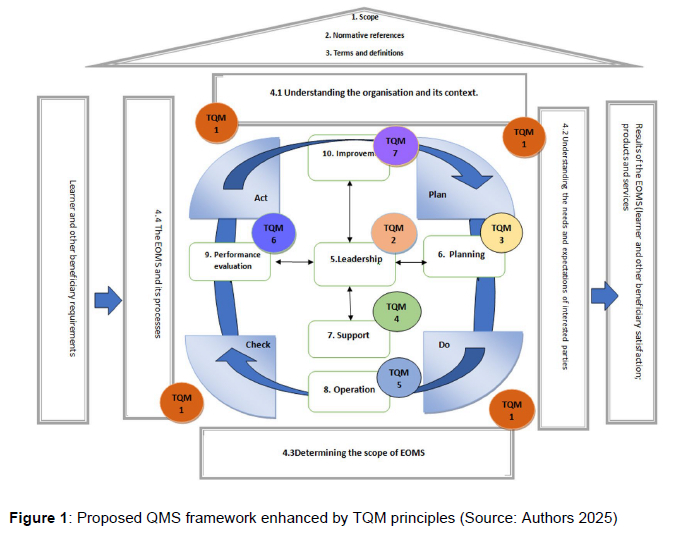
PROPOSED QMS FRAMEWORKThe study proposes the integrated QMS framework shown in Figure 1. The framework combines the requirements of ISO 21001:2018 with the Plan-Do-Check-Act (PDCA) cycle and incorporates TQM principles to support quality management within educational institutions. Its purpose is to support the delivery of quality education, student satisfaction and ongoing improvement, while linking educational processes to the institutions vision and strategic objectives. As noted by Hamadi and El-Den (2024, 6), an integrated framework can support the consistent implementation of new systems across institutions and contribute to greater reliability.
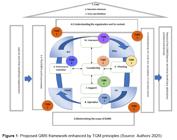
As shown in Figure 1, integrating TQM principles at key points within the framework is intended to improve quality management processes, increase institutional efficiency, and enhance the overall quality of education. This approach takes into account the changing nature of the educational environment, particularly as technological developments and shifts in socio-economic conditions continue to influence the sector (Jasti, Venkateswaran, and Kota 2022, 1250). Therefore, each TQM principle contributes uniquely to this process. For instance, TQM 1 (Relationship Management) underlines the value of strong partnerships within and beyond the institution. The establishment of cross-functional teams can help break silos, promote transparency, and ensure decisions are balanced across stakeholder interests. Building on this, TQM 2 (Visionary Leadership) provides direction by linking institutional strategies to technological trends. The Hoshin Kanri strategic planning tool supports this by cascading policies into actionable goals across departments, ensuring that innovation is not just encouraged but also systematically implemented (Ahmed 2016, 185). In terms of TQM 3, which promotes Evidence-Based Decision-Making, it strengthens institutional improvement cycles by grounding decisions in reliable data. The adoption of Statistical Process Control (SPC) will enable institutions to monitor performance, detect variations, and act proactively before problems escalate. Complementing this is TQM 4 on the Engagement of People, which emphasises collaboration and shared ownership of challenges. Platforms such as Quality Circles would ensure that staff and students jointly discuss problems, propose solutions, and take meaningful responsibility for improvements.
The Process Approach (TQM 5) emphasises the need to understand how different institutional processes connect with one another. Process mapping helps visualise these linkages, identify bottlenecks, and redesign workflows to utilise digital systems better. Similarly, TQM 6, which deals with Learners and Beneficiaries, ensures that curricula and programmes are aligned with the evolving needs of students and employers. Tools such as Quality Function Deployment (QFD) are useful here, as they translate student and employer expectations into concrete programme outcomes, thereby ensuring relevance and responsiveness to what is needed. Finally, TQM 7 (Continuous Improvement) is supported by Kaizen, which encourages small, regular adjustments rather than waiting for large reforms. This creates a culture of gradual but sustainable improvement. For example, since data security and protection are vital in digitalised educational environments, a cause-and-effect diagram could be used to anticipate vulnerabilities, design safeguards, and ensure sensitive information remains secure.
These targeted TQM tools create a robust framework for addressing the challenges and opportunities in modern education. However, when implementing this framework, it is recommended that the selected business school take into account South Africa's cultural diversity by making key documents and training materials available in the most widely spoken languages. In addition, the proposed framework also requires alignment with South African education policies and regulations. To support implementation, awareness activities should be used to explain the benefits of the framework to stakeholders and promote their involvement and commitment. Overall, the framework provides a basis for aligning institutional quality practices with internationally recognised benchmarks while supporting ongoing improvement, accountability and adaptability.
LIMITATIONSThe following limitations emanated from the study:
Although the study included students, lecturers, and quality management experts, it did not fully explore the perspectives of all relevant stakeholders, such as administrative staff and government policymakers, who play a role in online education and quality assurance.
Since the study was conducted solely at a selected business school, the findings may not be applicable to other institutions or regions. The perspectives and challenges identified may therefore differ from those experienced by students and staff in different academic settings.
The implementation of the proposed QMS framework and policies requires significant resources, including financial and human capital. Hence, the study did not assess the feasibility of implementing these recommendations within the Business School's current budget and resource constraints.
CONCLUSION
The study demonstrates the value of a strong QMS in supporting the effectiveness and sustainability of online education at a selected business school. The rapid transition to online learning revealed shortcomings to accessing technology, reliable internet, and a structured quality assurance framework. While the business school demonstrated commitment to continuous improvement, the absence of a dedicated QMS for online education was a notable weakness.
The proposed QMS framework brings together the requirements of ISO 21001:2018 and TQM principles to provide a systematic means of addressing the identified gaps. By introducing key policies, ensuring support for students and staff, and mitigating technological and operational challenges associated with load shedding and the high costs of data, this framework provides a roadmap for strengthening the effectiveness of online education. The study's findings and recommendations seek to improve students' learning experiences, promote fair access to resources, and uphold high educational standards, thereby supporting the business school in delivering effective online education.
REFERENCES
- Aburizaizah, Saeed Jameel. 2022. "The Role of Quality Assurance in Saudi Higher Education Institutions." International Journal of Educational Research Open 3: 1-8.
- Adam, Anokye M. 2020. "Sample Size Determination in Survey Research." Journal of Scientific Research and Reports 26 (5): 90-97.
- Adnan, Muhammad, and Kainat Anwar. 2020. "Online Learning amid the COVID-19 Pandemic: Students' Perspectives." Journal of Pedagogical Sociology and Psychology 2 (1): 45-51.
- Ahmed, Hanaa Ouda Khadri. 2016. "A Proposed Systematic Framework for Applying Hoshin Kanri Strategic Planning Methodology in Educational Institutions." European Scientific Journal 12 (16): 158-194.
- Alexei, Lachi Arina, and Anatolie Alexei. 2021. "Cyber Security Threat Analysis in Higher Education Institutions as a Result of Distance Learning." International Journal of Scientific and Technology Research 3: 128-133.
- Almahasees, Zakaryia, Khaled Mohsen, and Mohammad Omar Amin. 2021. "Faculty's and Students' Perceptions of Online Learning during COVID-19." Frontiers in Education 6: 1-10.
- Alqahtani, Ammar Y., and Albraa A. Rajkhan. 2020. "E-Learning Critical Success Factors during the COVID-19 Pandemic: A Comprehensive Analysis of E-Learning Managerial Perspectives." Education Sciences 10 (9): 1-16.
- Alyahyan, Eyman, and Dilek Düştegör. 2020. "Predicting Academic Success in Higher Education: Literature Review and Best Practices." International Journal of Educational Technology in Higher Education 17 (3): 1-21.
- Andrade, Maureen Snow, Ronald Mellado Miller, Michelle B. Kunz, and Janet M. Ratliff. 2020. "Online Learning in Schools of Business: The Impact of Quality Assurance Measures." Journal of Education for Business 95 (1): 37-44.
- Aniskina, Nina, and Ekaterina Terekhova. 2019. "Innovative Methods for Quality Management in Educational Organizations." International Journal of Quality & Reliability Management 36 (2): 217-231.
- Asenahabi, Bostley Muyembe. 2019. "Basics of Research Design: A Guide to Selecting Appropriate Research Design." International Journal of Contemporary Applied Researches 6 (5): 76-89.
- Asiyai, Romina Ifeoma. 2022. "Best Practices for Quality Assurance in Higher Education: Implications for Educational Administration." International Journal of Leadership in Education 25 (5): 843-854.
- Ayadat, Tahar, Mohammad Ali Khasawneh, Saidur Rahman Chowdhury, Mohammed Nayeemuddin, Danish Ahmed, and Andi Asiz. 2021. "Effects of Students' Home Environment, Tools, and Technology Used on Online Learning Experience in a Civil Engineering Program." International Journal of Information and Education Technology 11 (8): 356-367.
- Bahasoan, Awal Nopriyanto, Wulan Ayuandiani, Muhammad Mukhram, and Aswar Rahmat. 2020. "Effectiveness of Online Learning in Pandemic COVID-19." International Journal of Science, Technology & Management 1 (2): 100-106.
- Baker, Ryan S., Lief Esbenshade, Jonathan Vitale, and Shamya Karumbaiah. 2023. "Using Demographic Data as Predictor Variables: A Questionable Choice." Journal of Educational Data Mining 15 (2): 22-52.
- Braun, Virginia, Victoria Clarke, Elicia Boulton, Louise Davey, and Charlotte McEvoy. 2021. "The Online Survey as a Qualitative Research Tool." International Journal of Social Research Methodology 24 (6): 641-654.
- Camilleri, Mark Anthony. 2021. "Evaluating Service Quality and Performance of Higher Education Institutions: A Systematic Review and a Post-COVID-19 Outlook." International Journal of Quality and Service Sciences 13 (2): 268-281.
- Castro, Mayleen Dorcas B., and Gilbert M. Tumibay. 2021. "A Literature Review: Efficacy of Online Learning Courses for Higher Education Institution Using Meta-Analysis." Education and Information Technologies 26: 1367-1385.
- Chametzky, Barry. 2021. "Communication in Online Learning: Being Meaningful and Reducing Isolation." In Research Anthology on Developing Effective Online Learning Courses, 1184-1205. IGI Global.
- Council on Higher Education (CHE). 2021. "A Quality Assurance Framework (QAF) for Higher Education in South Africa." Accessed December 12, 2024. Council on Higher Education.
- Crowe, Sonya, Katherine Brown, Jenifer Tregay, Jo Wray, Rachel Knowles, Deborah A. Ridout, Catherine Bull, and Martin Utley. 2017. "Combining Qualitative and Quantitative Operational Research Methods to Inform Quality Improvement in Pathways That Span Multiple Settings." BMJ Quality & Safety 26 (8): 641-652.
- Dube, Bekithemba. 2020. "Rural Online Learning in the Context of COVID-19 in South Africa: Evoking an Inclusive Education Approach." REMIE: Multidisciplinary Journal of Educational Research 10 (2): 135-157.
- Elo, Satu, Maria Kääriäinen, Outi Kanste, Tarja Pölkki, Kati Utriainen, and Helvi Kyngäs. 2014. "Qualitative Content Analysis: A Focus on Trustworthiness." SAGE Open 4 (1): 1-10.
- Enwereji, Prince Chukwuneme, Annelien Adriana van Rooyen, Raphael Nhlanhla Ngcobo, and Faith Sedzani Musundwa. 2024. "Empowering E-Tutors for Effective Online Teaching and Learning: E-Tutors' Challenges and Perceptions." International Journal of Learning, Teaching and Educational Research 23 (1): 374-399.
- Ferri, Fernando, Patrizia Grifoni, and Tiziana Guzzo. 2020. "Online Learning and Emergency Remote Teaching: Opportunities and Challenges in Emergency Situations." Societies 10 (4): 1-18.
- Giday, Dagnew Gebrehiwot, and Elantheraiyan Perumal. 2024. "Students' Perception of Attending Online Learning Sessions Post-Pandemic." Social Sciences & Humanities Open 9: 1-12.
- Greaves, Denise. 2024. "Perception of Young Adults in Higher Education: A Case Study of Caribbean Students in the Online Learning Environment." Open Learning: The Journal of Open, Distance and e-Learning 39 (1): 68-84.
- Greere, Anca. 2023. "Training for Quality Assurance in Higher Education: Practical Insights for Effective Design and Successful Delivery." Quality in Higher Education 29 (2): 165-191.
- Hajjar, Said Taan El. 2018. "Statistical Analysis: Internal-Consistency Reliability and Construct Validity." International Journal of Quantitative and Qualitative Research Methods 6 (1): 46-57.
- Hamadi, Mostafa, and Jamal El-Den. 2024. "A Conceptual Research Framework for Sustainable Digital Learning in Higher Education." Research and Practice in Technology Enhanced Learning 19: 1-25.
- Harjule, Priyanka, Azizur Rahman, and Basant Agarwal. 2021. "A Cross-Sectional Study of Anxiety, Stress, Perception and Mental Health towards Online Learning of School Children in India during COVID-19." Journal of Interdisciplinary Mathematics 24 (2): 411-424.
- Harvey, Lee, and Diana Green. 1993. "Defining Quality." Assessment & Evaluation in Higher Education 18 (1): 9-34.
- Heo, Heeok, Curtis J. Bonk, and Min Young Doo. 2021. "Enhancing Learning Engagement during COVID-19 Pandemic: Self-Efficacy in Time Management, Technology Use, and Online Learning Environments." Journal of Computer Assisted Learning 37 (6): 1640-1652.
- International Organization for Standardization (ISO). 2018. "ISO 21001:2018 Educational Organisations-Management Systems for Educational Organisations-Requirements with Guidance for Use." Geneva: ISO.
- Jasti, Naga Vamsi Krishna, V. Venkateswaran, and Srinivas Kota. 2022. "Total Quality Management in Higher Education: A Literature Review on Barriers, Customers and Accreditation." The TQM Journal 34 (5): 1250-1272.
- Kgarose, Mathibedi Frank, Daphney Katlego Makhubela, and Lebo Caroline Setaise. 2023. "Is Load Shedding Another Pandemic, Post COVID-19 at Institutions of Higher Learning in South Africa?" Perspectives of Law and Public Administration 12 (3): 447-456.
- Khawaja, Umair Ashraf, and Shahzada Alamgir Khan. 2022. "7QC Tools' Scope, Limitations, and Implications for Organizational Quality." International Journal of Social Science & Entrepreneurship 2 (2): 477-493.
- Lalendle, Luvuyo Lumkile, Refiloe Tsephe, and Inderasan Naidoo. 2022. "Evaluating a Quality Assurance Instrument in the Advent of Remote Teaching, Learning and Working Environments." ICERI2022 Proceedings, 5816-5823.
- Landa, Nhlanhla, Sindiso Zhou, and Newlin Marongwe. 2021. "Education in Emergencies: Lessons from COVID-19 in South Africa." International Review of Education 67 (1): 167-183.
- Langley, Ann, and Nora Meziani. 2020. "Making Interviews Meaningful." The Journal of Applied Behavioral Science 56 (3): 370-391.
- Leavy, Patricia. 2017. Research Design: Quantitative, Qualitative, Mixed Methods, Arts-Based, and Community-Based Participatory Research Approaches. Guilford Publications.
- Lohr, Sharon L. 2021. Sampling: Design and Analysis. Chapman and Hall/CRC.
- Lois, Petros, George Drogalas, Alkiviadis Karagiorgos, and Kostantinos Tsikalakis. 2020. "Internal Audits in the Digital Era: Opportunities, Risks, and Challenges." EuroMed Journal of Business 15 (2): 205-217.
- Maatuk, Abdelsalam M., Ebitisam K. Elberkawi, Shadi Aljawarneh, Hasan Rashaideh, and Hadeel Alharbi. 2022. "The COVID-19 Pandemic and E-Learning: Challenges and Opportunities from the Perspective of Students and Instructors." Journal of Computing in Higher Education 34 (1): 21-38.
- Maimuna, Ida, Akmal Mundiri, Chusnul Muali, Muhammad Munif, and Abu Khaer. 2024. "Forming a Competitive Advantage TQM Strategy for Improving the Quality of Educational Institutions." Proceeding of International Conference on Education, Society and Humanity 2 (1): 414-423.
- Mailizar, Almanthari Abdulsalam, Suci Maulina, and Sandra Bruce. 2020. "Secondary School Mathematics Teachers' Views on E-Learning Implementation Barriers during the COVID-19 Pandemic: The Case of Indonesia." Eurasia Journal of Mathematics, Science and Technology Education 16 (7): 1-9.
- Mali, Dafydd, and Hyoungjoo Lim. 2021. "How Do Students Perceive Face-to-Face/Blended Learning as a Result of the COVID-19 Pandemic?" The International Journal of Management Education 19 (3): 1-17.
- Malik, Anwar Ali, Parveen Akhter Memon, Hasnain Ali, Manthar Ali Mallah, Khuda Bux, and Mansoor Ul Haq. 2022. "Impacts of Coping Strategies for Electricity Load Shedding among University Students." Pakistan Journal of Medical & Health Sciences 16 (5): 1165-1167.
- Mukhtar, Khadijah, Kainat Javed, Mahwish Arooj, and Ahsan Sethi. 2020. "Advantages, Limitations and Recommendations for Online Learning during the COVID-19 Pandemic Era." Pakistan Journal of Medical Sciences 36: 1-5.
- Naveed Bin Rais Rao, Muhammad Rashid, Muaaz Zakria, Sajjad Hussain, Junaid Qadir, and Muhammad A. Imran. 2021. "Employing Industrial Quality Management Systems for Quality Assurance in Outcome-Based Engineering Education: A Review." Education Sciences 11 (2): 1-24.
- Ndung'u, Njuguna S., and Landry Signe. 2020. "The Fourth Industrial Revolution and Digitization Will Transform Africa into a Global Powerhouse." In Capturing the Fourth Industrial Revolution: A Regional and National Agenda, 61-73. Accessed November 21, 2024. Brookings Institution PDF.
- Richardson, Ronny, and Max North. 2020. "Transition and Migration to Online Learning Environment." International Management Review 16 (2): 5-28.
- Sarosa, Samiaji. 2022. "The Effect of Perceived Risks and Perceived Cost on Using Online Learning by High School Students." Procedia Computer Science 197: 477-483.
- Seke, Mboungo Mouyabi. 2020. "Would We Be Able to Absorb the New Normal Brought by COVID-19 as Another Educational Revolution?" International Journal of Advanced Corporate Learning 13 (4): 68-87.
- Seyfried, Markus, and Philipp Pohlenz. 2018. "Assessing Quality Assurance in Higher Education: Quality Managers' Perceptions of Effectiveness." European Journal of Higher Education 8 (3): 258-271.
- Silaeva, Vera V., and Viktor P. Semenov. 2018. "Internal Education Quality Assurance through Standardisation of Educational Organisation Management System." 2018 IEEE International Conference Quality Management, Transport and Information Security, Information Technologies (IT&QM&IS), 70-73.
- Stoytcheva, Maria. 2021. "Developing a Sense of Belonging in a Collaborative Distance Learning Course: Breaking Isolation in Online Learning." AIP Conference Proceedings 2333 (1): 1-9.
- Sukkar, M. Y. 2017. "Quality Management in Higher Education Institutions (HEI)." Khartoum Medical Journal 10 (3): 1395-1401.
- Sürücü, Lufti, and Ahmet Maslakci. 2020. "Validity and Reliability in Quantitative Research." Business & Management Studies: An International Journal 8 (3): 2694-2726.
- Syahrullah, Yudi, April Yanti, Tigar Putri Adhiana, and Rani Aulia Imran. 2022. "GAP Analysis of Higher Education Quality Assurance System Implementation against Educational Organization Management Standards ISO 21001:2018." Operations Excellence: Journal of Applied Industrial Engineering 14 (1): 67-77.
- Taber, Keith S. 2018. "The Use of Cronbach's Alpha When Developing and Reporting Research Instruments in Science Education." Research in Science Education 48 (6): 1273-1296.
- Tan, Saw Fen, Li Hsien Ooi, Lee Yen Melissa Ng, and Tze Ying Sim. 2024. "Undergraduates' Perception, Engagement and Learning Experience in Online Learning amid COVID-19 Pandemic." International Journal of Instruction 17 (2): 401-418.
- Valantinaitė, Ilona, and Živilė Sederevičiūtė-Pačiauskienė. 2020. "The Change in Students' Attitude towards Favourable and Unfavourable Factors of Online Learning Environments." Sustainability 12 (19): 1-14.
- Vazquez, Jose J., Eric P. Chiang, and Ignacio Sarmiento-Barbieri. 2021. "Can We Stay One Step Ahead of Cheaters? A Field Experiment in Proctoring Online Open-Book Exams." Journal of Behavioral and Experimental Economics 90: 1-9.
- Vhumbunu, Clayton Hazvinei. 2021. "The July 2021 Protests and Socio-Political Unrest in South Africa: Reflecting on the Causes, Consequences and Future Lessons." Conflict Trends 2021 (3): 3-13.
- Zhao, Yu, Ana María Pinto Llorente, and María Cruz Sánchez Gómez. 2021. "Digital Competence in Higher Education Research: A Systematic Literature Review." Computers & Education 168: 1-14.
- Zuhairi, Aminudin, Maria Rowena Del Rosario Raymundo, and Kamran Mir. 2020. "Implementing Quality Assurance System for Open and Distance Learning in Three Asian Open Universities: Philippines, Indonesia and Pakistan." Asian Association of Open Universities Journal 15 (3): 297-320.