Selection for professional training in psychology: The predictive value of the 16 Personality Factor Questionnaire
Abstract
Although personality factors play a role in therapeutic efficacy, limited research has been conducted on the association between personality factors and the selection for professional training in psychology within South Africa. This study aimed to determine the extent to which personality factors, as measured by the 5th edition of the 16 Personality Factor Questionnaire (16PF5), predicted participants' performance in the selection process for professional training in psychology. A quantitative non-experimental ex post facto survey design was used, which entailed the secondary use of data (16PF5 data, scores in specific selection activities, and the overall selection outcome). The data were collected for non-research purposes during the selection processes for professional training in psychology at a specific institution and included 288 participants over a period of 6 years. Descriptive, correlational, and multiple linear regression analyses were performed, along with the development of Naïve Bayes models. Various 16PF5 personality factors were found to have predictive value in most selection activities' outcomes. In turn, each of these selection activities and their associated personality factors, along with Dominance (factor E) and Perfectionism (factor Q3), were found to be strong predictors of the final selection outcome. These results illustrate the potentially significant role that personality factors can play in selecting the best possible candidates for professional training in psychology.
16 Personality Factor Questionnaire; personality factors; professional training; psychology; selection
INTRODUCTION
Psychologists play an essential role in society by promoting well-being and alleviating distress (Oluwatoyin 2016, 268). Therefore, selecting the best possible students for professional training programmes in psychology is vital (Oluwatoyin 2016, 272). Various factors, including personality, have been found to contribute towards the therapeutic efficacy of practising psychologists and psychologists-in-training (Holden 2020, 183; Oluwatoyin 2016, 271-274). Within this study, personality was conceptualized as the underlying traits that describe a person's characteristics and predict their behaviours across various situations (Cattell and Mead 2010, 148; JVR Academy, n.d., 7-8).
A variety of personality assessments have been used internationally and within South Africa to develop personality profiles for various careers, as well as predict the academic success of students, and the selection of personnel or university candidates (Cattell and Mead 2010, 145-152; Foxcroft and Roodt 2018, 239-246; 1; Mammadov 2021, 222). Within psychology as an occupational grouping, research has predominantly focused on the association between personality and the therapeutic effectiveness of practising psychologists and psychologists-in-training (Delgadillo et al. 2020, 858; Heinonen and Nissen-Lie 2020, 418; Jennings and Skovholt 1999, 3; Oluwatoyin 2016, 272-273; Wheeler 2000, 66). Practising psychologists have been shown to display characteristics such as trustworthiness, respect, optimism, self-awareness, maturity, kindness, creativity, self-insight, patience, responsibility, reflexivity, self-control, non-defensiveness, curiosity, being organised, understanding, and caring, as well as having a balance between humility and confidence, and between warmth and toughness (Anestis et al. 2021, 417-424; Delgadillo et al. 2020, 865-866; Genç and Yüksel-Sahin 2020, 795-796; Heinonen and Nissen-Lie 2020, 421-427; Holden 2020, 183; Jennings and Skovholt 1999, 3-8; Oluwatoyin 2016, 272-275; Orlinsky et al. 2020, 470-471; Welmers-van de Poll et al. 2021, 308-315; Wheeler 2000, 66-73). Furthermore, personality traits such as warmth, intuition, flexibility, compassion, sensitivity, emotional stability, spontaneity, sincerity, empathy, acceptance, openness to change and feedback, fairness, personal development, genuineness, good listening and interpersonal skills, perceptiveness, and commitment were found to be common among both practising psychologists and psychologists-in-training (Aragón Borja 2011, 68-72; Jennings and Skovholt 1999, 3-8; Kutsko et al. 2021, 1-14; Oluwatoyin 2016, 272-274; Pope and Kline 1999, 1339-1340; Welmers-van de Poll et al. 2021, 308-315; Wheeler 2000, 66-73). These characteristics therefore provide a broad and non-specific description of personality traits found among psychologists. Of interest to this study is that Delgadillo et al. (2020, 858) and Heinonen and Nissen-Lie (2020, 417-418) indicate that objective characteristics such as gender, age, profession, years of experience, and even the preferred treatment modality of psychologists have less of an impact on therapeutic outcomes than subjective professional and personal characteristics, such as personality traits.
Since certain personality traits have been found to increase the effectiveness of practising psychologists and psychologists-in-training, a prominent need arises to understand the personality factors that contribute to the selection of prospective student psychologists. Oluwatoyin (2016, 275-276), therefore, recommended including personality assessments as screening devices during these selection processes. Very limited research has, however, been done within South Africa on the association between personality and the successful selection into professional training in psychology. This limited research may be associated with the disadvantageous historical use of psychometric assessments, such as personality tests, in personnel selection to reinforce discriminatory practices in South Africa (Damianova et al. 2016, 291-292). Since then, the Health Professions Council of South Africa (HPCSA) and Employment Equity Act (55 of 1998) have set out to regulate the use of psychometric assessments in the selection of personnel (Damianova et al. 2016, 291-292). Damianova et al. (2016, 291-292), however, state that, although there are limitations to the use of these assessments, they may add value in the selection of personnel if they are valid, reliable and unbiased towards the diverse population and cultures being assessed.
The only study that could be found within South Africa using a personality assessment in the selection of student psychologists, was conducted in 1985. De Raay's (1985, 63-64) use of the third edition of the 16PF - an earlier version of the current 16 Personality Factor Questionnaire - fifth edition (16PF5) - as a screening device for the selection of Clinical Psychology students found that selected candidates displayed warmth, maturity, trustworthiness, insight, emotional sensitivity, self-reliance, shrewdness, responsibility, ego strength, discipline, and group conformity. Based on these results, De Raay (1985, 76) recommends including the 16PF in the selection processes to become a qualified psychologist in South Africa. Since De Raay's (1985) study, the nature of selection processes and the activities that form part thereof, as well as the 16PF questionnaire, have all undergone significant changes. The 16PF has been updated through the renaming of personality factors, improvement of its psychometric properties within the South African context, updated norms, as well as a shift in focus towards the assessment of relatively well-adjusted personality, instead of the identification of personality pathology (Cattell and Mead 2010, 135; Foxcroft and Roodt 2018, 225; JVR Academy, n.d. 5; Pietrzak et al. 2015, 1). The 16PF5, which is the most recent version of this questionnaire, consists of 16 primary factors, namely "Warmth (A), Reasoning (B), Emotional stability (C), Dominance (E), Liveliness (F), Rule-consciousness (G), Social boldness (H), Sensitivity (I), Vigilance (L), Abstractedness (M), Privateness (N), Apprehension (O), Openness to change (Q1), Self-reliance (Q2), Perfectionism (Q3) and Tension (Q4)" (JVR Academy, n.d., 13). These primary factors underlie five global factors of personality, including "Extraversion (EX), Anxiety (AX), Tough-mindedness (TM), Independence (IN) and Self-control (SC)" (JVR Academy, n.d., 13).
South African universities use a variety of different criteria, and therefore also different selection activities, in their selection of candidates to become registered psychologists. Despite these differences, all students undergo rigorous selection processes which are regulated by the HPCSA, to become qualified psychologists. Within the culturally diverse South African context, the selection processes applied at various training institutions face the challenge of balancing the need for an objective and standardised evaluation of students with maintaining cultural and contextual sensitivity. This research study focuses on the selection process used at a specific university within South Africa. The selection activities involved include individual interviews, metaphor activities, case conceptualisations, research and problem-solving activities, a final interview with a selection panel, as well as the 16PF5. In a recent study at a South African university, Derwin, Spies, and Coetzee (2023, 81) found that certain selection activities play a significant role in the academic success of students in modules that form part of the Clinical and Counselling Psychology Master's training programme. Their study, however, did not address the role that personality factors play in the selection for professional training in psychology. No research that addresses this issue within the South African context has been done since the De Raay (1985) study.
Given the need for more recent research, this study uses the updated version of the 16PF with a larger sample of participants within South Africa to answer the primary research question, namely "What is the predictive value of personality factors, as measured by the 16PF5, in the outcome of selection processes that lead to professional training to become a registered psychologist at a South African university?" Two objectives were formulated to guide the current study. The researchers set out to determine the extent to which individual/a combination of personality factors, as measured by the 16PF5, predict participants' performance in i) each of the selection activities that form part of the selection processes, and ii) the overall outcome of the selection processes at a specific South African university. The researchers hypothesised that individual/a combination of personality factors, as measured by the 16PF5, would significantly predict both participants' performance in each of the selection activities that form part of the selection processes, as well as the overall outcome of the selection processes.
METHOD
Participants
This study entailed the secondary use of data collected for non-research purposes. Data were included for all applicants who were invited from 2016 to 2020, as well as 2022, to attend the week-long selection process for the Clinical and Counselling Psychology Master's programme at a specific university within South Africa. The candidates from the 2021 selection process were excluded from the sample to avoid a possible conflict of interest. Candidates from other professional registration categories (such as Research, Industrial and Educational Psychology), were excluded as they have distinct selection processes and work in different contexts, which could therefore require slightly different outcomes in terms of personality factors. Other universities in South Africa were also excluded to achieve homogeneity, as each university has a different selection process and not all universities include the 16PF5 in their selection process. Therefore, a total of 288 students' data formed part of the sample.
Instruments
The fifth edition of the 16 Personality Factor Questionnaire (16PF5) was used in this study. The 16PF5 has been standardised and validated by Jopie van Rooyen and Partners SA (Pty) Ltd to be used with clients who are 16 years or older, from various language, ethnic, and cultural groups in South Africa (Damianova et al. 2016, 274-276; Foxcroft and Roodt 2018, 226-246; JVR Academy, n.d., 17). This research study focused mainly on the 16 primary factors of the 16PF5, which are measured on a continuum Standard Ten (STEN) scale (Cattell and Mead 2010, 144).
The 16PF5, which is the version completed by all candidates in this selection process, has displayed improved psychometric qualities in South Africa, including increased validity and reliability of all factors (Pietrzak et al. 2015, 1). Cattell and Mead (2010, 147) cite various exploratory and confirmatory factor analytic studies that have been conducted within South Africa on the structure of the primary and global factors in the 16PF5, across diverse samples and genders. The 16PF5 also has correlations with other scales measuring normal personality in adults, illustrating its concurrent or construct validity, as well as its predictive validity in many occupational profiles and personnel selection (Cattell and Mead 2010, 147-148). Pietrzak et al. (2015, 3) state that stability coefficients for the 16PF5 personality and validity scales range between r = 0.69 to r = 0.89, and the internal consistency displayed coefficients of r = 0.66 to r = 0.87. The primary factor scales have test-retest reliabilities of an average of 0.8 and 0.7, and internal consistency coefficients of 0.66 to 0.86 (Cattell and Mead 2010, 145). In the current study, statistically significant correlations were also observed between the various primary factors that underlie the respective global factors, which further contribute towards confirming the validity and reliability of the 16PF5. In summary, the 16PF5 is equivalent across cultural groups in South Africa (Foxcroft and Roodt 2018, 226), and has been adapted, with improved psychometric qualities and updated norms for the South African population (JVR Academy, n.d., 21). Extensive research has also been done that indicates its use in the selection and placement of various careers (JVR Academy, n.d., 89-92).
Procedure
As this study involved the secondary use of data collected for non-research purposes, the researcher did not collect any data directly from the participants themselves. The study used the 16PF5 data, scores in the specific selection activities (such as individual interviews, case study activities, metaphor activities and research and problem-solving activities) and overall selection outcome. It also used demographic data (age, gender, and ethnicity) that was already collected during the selection processes at a specific South African university, for the Clinical and Counselling Psychology Master's programme.
Candidates applying for this programme undergo a first round of paper selection, focused on academic results, as well as prior qualifications and experience. Candidates who successfully pass through the paper selection are invited to attend a week-long selection process, during which they complete the 16PF5. In line with the recognition of the limitations inherent in psychometric assessments, as well as the need to evaluate a candidate holistically, the results from the 16PF5 do not contribute directly towards the selection outcome. These results are instead used to inform the questions that are asked in the final interview. The selection process entails individual interviews with a small panel to gather additional information about the candidate, such as their experiences, interpersonal relationships, strengths, and weaknesses, amongst other aspects (Derwin et al 2023, 82). Candidates' reasoning and critical thinking abilities are evaluated using a case conceptualisation activity (Derwin et al 2023, 83). The problem-solving and research activity requires candidates to make decisions and work under pressure to solve a problem within a group, as well as demonstrate their research and academic writing skills (Derwin et al 2023, 83). Lastly, the metaphor activity requires candidates to display creativity and self-insight in projecting their attributes and experiences onto an object, as well as managing different group dynamics (Derwin et al 2023, 83). These selection activities each contribute to a weighted score that is used to determine whether candidates are invited to participate in a final interview. This is further used to determine whether a candidate is suitable for the programme (Derwin et al 2023, 82). A final, combined score is calculated and determines the final group to be selected. While scoring these activities, panel members are required to provide an objective evaluation of candidates' abilities; however, potential subjectivity in these evaluations may still occur.
Ethical Considerations
The proposed study was approved by the relevant scientific and ethics committees, as well as management structures at the university in question. This included the programme coordinators of the respective courses who, as gatekeepers, were involved in overseeing the selection process of Clinical and Counselling Psychology Master's students. An independent researcher captured the data electronically and coded the data with anonymous numbers to ensure that no participant identifiers were present before the researchers had access to any of the data. Furthermore, the name of the university has been omitted to ensure the anonymity and confidentiality of participants' data. As the study involves secondary use of data collected for non-research purposes, data were anonymised to ensure it did not pose a risk of harm to participants, as required by the Department of Health (2015, 44).
Data Analysis
Firstly, descriptive analysis was used to determine the composition of the participant group in terms of demographics (age, gender, and ethnicity), as well as participants' scores in the 16PF5, specific selection activities and the overall selection outcome. Demographic variables did not play a part in any of the further analyses. Correlational analysis was used to determine interrelationships between the participants' personality factors and their performance in specific selection activities. Multiple linear regression analysis was further used to determine whether any of the 16 personality factors predicted the outcomes in each of the selection activities. Lastly, a Naïve Bayes classification model was developed to determine whether any of the 16 personality factors predicted the outcomes in the overall selection outcome.
RESULTS
Descriptive Statistics
Descriptive statistics provided an overall summary of all 288 participants who attended the selection processes from 2016 to 2020, and in 2022. Participants' ages ranged from 20 to 58 years, with a mean age of 27.9 years. The majority (86.3 per cent, n = 246) of the participants were female. 28.1 per cent (n = 81) of participants who attended the selection process across the years under study were selected for the programme, with 44 of the participants selected for the Clinical Psychology Master's programme, and 37 participants selected for the Counselling Psychology Master's programme. The ages of participants who were selected ranged from 21 to 47 years, with a mean age of 26.85. Interestingly, 82.3 per cent of these participants were below 30 years of age. Furthermore, the majority (80.2%, n = 65) of participants who were selected were female (n = 65), and only 17.7 per cent (n = 14) were male.
Correlational Analysis
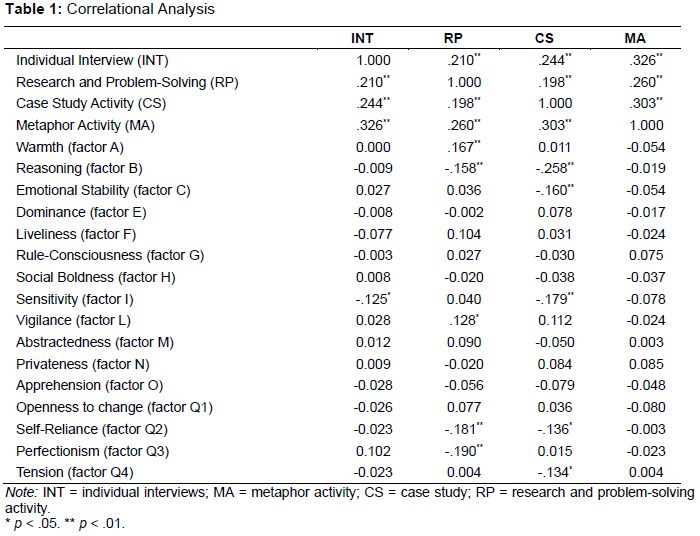
Spearman's rank correlation was used to determine relationships between participants' scores on the different selection activities and the measured personality factors. Table 1 below illustrates that there were several statistically significant relationships.
Firstly, Table 1 reveals small but statistically significant positive correlations between all the individual selection activities, as well as between each of these activities and various 16PF5 factors. It is important to note that scoring of all selection activities was done in such a way that lower scores in each selection activity indicated better performance and an improved possibility of being selected for the programme. Negative values in Table 1 should, therefore, be interpreted as candidates displaying higher scores in both variables, and thus represent a positive correlation.
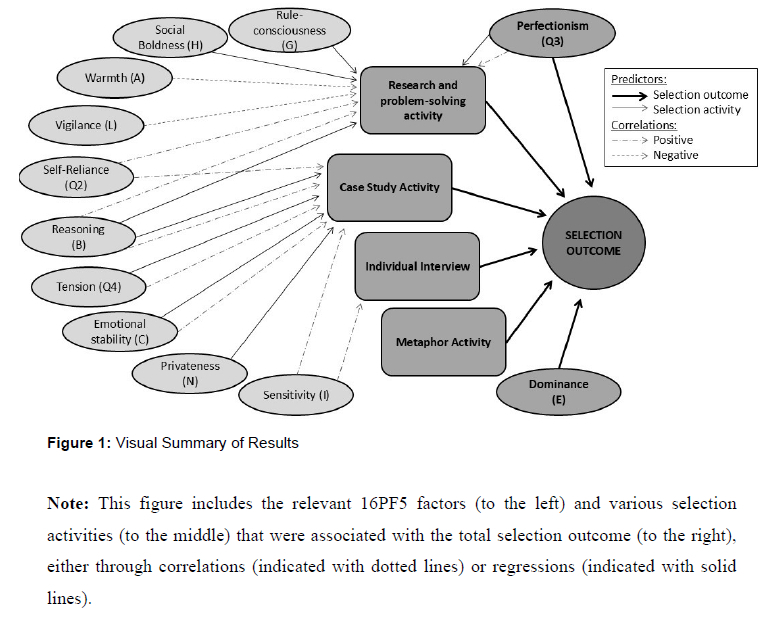
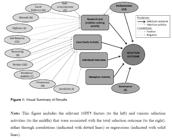
The individual interviews displayed a small but statistically significant (p<0.05) positive correlation with the Sensitivity (I) factor. Therefore, participants within this group who scored higher in Sensitivity (factor I) also displayed improved performances in the individual interviews. Higher performance in the research and problem-solving activity was associated with higher scores in Reasoning (factor B), Self-reliance (factor Q2), and Perfectionism (factor Q3). In contrast, performance in the research and problem-solving activity was associated with lower scores in Warmth (factor A) and Vigilance (factor L). In the case study activity, increased performance was associated with higher scores in Reasoning (factor B), Emotional stability (factor C), Sensitivity (factor I), Self-reliance (factor Q2), and Tension (factor Q4). Interestingly, there were no significant correlations between the metaphor activity and any of the 16PF5 factors.
Multiple Linear Regression
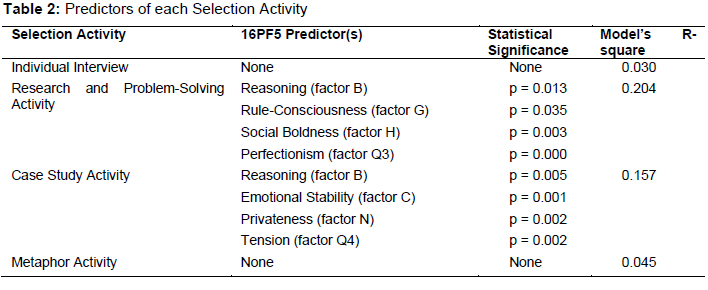
Multiple linear regression analysis was used to determine whether any of the 16PF5 factors had a statistically significant effect in predicting the outcomes in each of the selection activities. The residuals for all selection activities were found to be normally distributed, except for the research and problem-solving activity (p = 0.003). The multiple linear regression analysis was exploratory but revealed several interesting associations between personality factors and participants' performance on the various selection activities, as seen in Table 2.
Firstly, as far as the individual interviews are concerned, none of the 16PF5 factors emerged as significant predictors of the scores obtained by participants. Only 3 per cent (R square = 0.030) of the overall variance in participants' performance in the interviews was explained by all the 16PF5 predictors. The multiple linear regression analysis developed for the research and problem-solving activity was exploratory, as the residuals were found not to be normally distributed. As can be seen in Table 2, a total of 20.4 per cent (R square = 0.204) of the overall variance in participants' performance in the research and problem-solving activity was explained by a combination of 16PF5 factors. These included Reasoning (factor B; p = 0.013), Rule-consciousness (factor G; p = 0.035), Social boldness (factor H; p = 0.003), and Perfectionism (factor Q3; p = 0.000); which were all found to have a statistically significant effect in predicting the outcomes in the research and problem-solving activities. In the case study activity, 15.7 per cent (R square = 0.157) of the variance in the data was explained by several statistically significant predictors including Reasoning (factor B; p = 0.005), Emotional stability (factor C; p = 0.001), Privateness (factor N; p = 0.002), and Tension (factor Q4; p = 0.002). The regression model for the metaphor activity revealed no statistically significant 16PF5 predictors. This is in line with the fact that only 4.5 per cent (R square = 0.045) of the overall variance in participants' performance on this activity was explained by their 16PF5 scores.
Naïve Bayes Classification Model
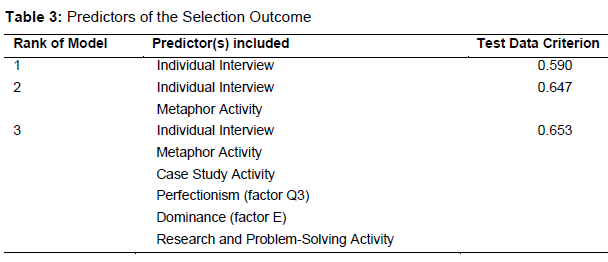
A Naïve Bayes classification model was developed to determine whether any of the 16PF5 factors and/or selection activities, predicted the overall selection outcome. These results are illustrated in Table 3.
The individual interviews, with the smallest test data criterion (0.590) demonstrated the best-ranked prediction model of the overall selection outcome. A training-and-test-validation set determined that this model (the individual interviews, which showed the best fit), had a 76 per cent accuracy in predicting the selection outcome. The second-best ranked prediction model of the overall selection outcome, with a test data criterion of 0.647, included individual interviews and the metaphor activity. The model ranked third best was also included in Table 3 and had a test data criterion of 0.653. All the selection activities were included in this model, along with two 16PF5 factors that emerged as significant predictors, namely Perfectionism (factor Q3) and Dominance (factor E).
Summary of Results
Figure 1 provides a visual illustration as a summary of the results discussed above.
DISCUSSION
Researchers have noted the important role that personal characteristics play in the selection processes for professional training in psychology (Booysen and Naidoo 2016, 26; De Raay 1985, 63-76; Oluwatoyin 2016, 275). Despite this, it has received limited coverage in the academic world. This study, therefore, aimed to determine the predictive value of personality factors, as measured with the 16PF5, in the outcome of selection processes leading to professional training in psychology, at a specific university in South Africa.
Padmanabhanunni et al. (2022, 363) report that out of hundreds of students who apply for Clinical or Counselling Psychology programmes across South Africa, only between five and 15 are accepted per university, annually. This is in line with this study's results, which indicated that between 12 and 16 (25.5% to 30.8%) of applicants were selected for the programme each year. The demographic representation of this group was also similar to a study done by Skinner and Louw (2009, 81), which demonstrates female psychologists dominating the field. Chippindall and Watts (1999, 113) found that candidates who are over the age of 25 seem to have developed the necessary insight and maturity to cope with the programme mean age of 26.85 years. The demographic composition of the participant group for this research study, therefore, closely resembled what has recently been reported in South African literature.
Due to the competitive nature of selection for this degree, the selection processes at different universities usually entail rigorous activities aimed at observing not only the participants' academic skills but also their personal attributes (Padmanabhanunni et al. 2022, 363). At the institution under study, the selection activities included individual interviews, metaphor activities, case study activities, as well as research and problem-solving activities. Participants' performances on each of these tasks showed strong correlations. This may suggest the presence of factor(s) within a candidate that influences their performance in diverse activities and may relate to how candidates present themselves throughout all the activities. The first research question guiding this study focused on understanding the relationships between participants' 16PF5 factors, and the degree to which these were associated with their performance in each of the selection activities.
Individual Interviews
Individual interviews were used to gather information about the candidate and screen for personal characteristics (Booysen and Naidoo 2016, 26; Derwin et al 2023, 82). Higher levels of Sensitivity (factor I+) were associated with higher scores in the individual interview, reflecting personal characteristics such as intuition, emotional reflexivity, and empathy (Booysen and Naidoo 2016, 26; JVR Academy, n.d., 58). Various researchers indeed identified Sensitivity (factor I) as one of the desirable characteristics needed in psychologists (Aragón Borja 2011, 68; Delgadillo et al. 2020, 865; John and Segal 2015, 1; Kutsko et al. 2021, 2-14; Pope and Kline 1999, 1340; Welmers-van de Poll et al. 2021, 308; Wheeler 2000, 66-68). Within the South African context specifically, Sensitivity (factor I) aligns with the relational concept of Ubuntu, where humaneness and empathy are given prominence (Damianova et al. 2016, 42). This affirms the important role that individuals' context may play in shaping their personal characteristics.
Case Study Activity
Performance in the case study activity showed significant positive correlations with personality factors such as Reasoning (factor B+), Sensitivity (factor I+), Emotional stability (factor C+) and Self-reliance (factor Q2+). Case conceptualisations often entail the objective formulation of a case based on facts and critical thinking, which is seen in higher levels of Reasoning (factor B+) (Derwin et al 2023, 83; John and Segal 2015, 1). In addition to this, candidates with higher levels of Sensitivity (factor I+) may have had the ability to display empathy, and incorporate emotional aspects within a case, and not just objective facts. Emotional stability (factor C+) and Self-reliance (factor Q2+) were also strongly associated with participants' performance in the case study activity, possibly due to their ability to cope maturely, calmly, and autonomously with the challenges associated with the selection process (JVR Academy, n.d., 53-64). The association between higher levels of Tension (factor Q4+) and performance in the case study activity was surprising, as the literature generally indicates that tension is seen as a less desirable trait in psychologists (Welmers-van de Poll et al. 2021, 308). However, tension may be associated with having higher energy and drive, and a more goal-focused orientation (JVR Academy, n.d., 64), which may conceivably have assisted participants in focusing better on the case study activity, even when under immense pressure associated with the selection process.
Multiple linear regression analyses confirmed the predictive relationships of most of these factors, namely, Reasoning (factor B), Emotional stability (factor C), and Tension (factor Q4), in the case study activity performance. However, it is interesting that Privateness (factor N), which did not feature as a correlate, did emerge as a predictor. While Privateness (factor N) is often associated with the tendency to keep personal information private, JVR Academy (n.d., 61) also describes a person with higher scores in this factor as more polished, socially aware, and emotionally detached. Higher levels of Privateness (factor N) may, therefore, not only be related to an awareness of the important role that confidentiality plays in a therapeutic relationship (Donner et al. 2008, 370), but also an understanding of the level of emotional detachment required in this cognitive-based activity. Candidates may have therefore approached this activity in a more composed, thoughtful and professional manner, with discernment in the amount and type of information shared within this social context.
Research and Problem-Solving Activity
Warmth (factor A-), Reasoning (factor B+), Vigilance (factor L-), Self-reliance (factor Q2+), and Perfectionism (factor Q3+) were significantly associated with the research and problem-solving activity, which evaluated two important skills. Firstly, the research portion of the activity required candidates to demonstrate their critical thinking, research and academic writing skills in an organised, goal-oriented, and detail-oriented manner. This aligns well with higher levels of Reasoning (factor B+) and Perfectionism (factor Q3+) (Derwin et al 2023, 83; JVR Academy, n.d., 52-65). The predictive relationships of Reasoning (factor B) and Perfectionism (factor Q3) were further confirmed by multiple linear regression analyses. Furthermore, participants with higher scores in Self-reliance (factor Q2+) may have also displayed the ability to work individually to demonstrate their research abilities. In line with this, individuals who scored lower in Warmth (factor A-) may be described as more reserved and prefer to work alone on intellectual interests (JVR Academy, n.d., 50). Although not associated with being a successful psychologist (Aragón Borja, 2011, 72; Oluwatoyin 2016, 272-273; Welmers-van de Poll et al. 2021, 308; Wheeler 2000, 66), these preferences may have been advantageous in this relatively cognitive-based selection activity.
Secondly, the problem-solving portion of the activity evaluated candidates' ability to make decisions and work under pressure within a group (Derwin et al 2023, 83). Participants with lower scores for Vigilance (factor L-) may have therefore been easier to get along with and more tolerant of others in a group setting (JVR Academy, n.d., 59), which is in line with the description of psychologists as being generally more trusting and accepting of others (Oluwatoyin 2016, 272-274; Pope and Kline 1999, 1340). Interestingly, although Social boldness (factor H) and Rule-consciousness (factor G) showed no significant correlations, they did show predictive value in the performance of the research and problem-solving activity. Within a group setting, participants may have therefore experienced a level of ease in social situations, as suggested by their Social boldness (factor H) score, as well as the ability to follow group rules, represented by Rule-consciousness (factor G) (JVR Academy, n.d., 56-57).
Metaphor Activity
Lastly, the metaphor activity is intended to display a candidate's creativity and insight into the self, which are characteristics often described as desirable for psychologists (De Raay 1985, 64; Derwin et al 2023, 83; Oluwatoyin 2016, 272). Surprisingly, none of the 16PF factors showed a statistically significant association with this activity. One may hypothesise that this activity may rely on context-specific or culturally embedded expressions of the self, which may not fully be captured using standardised personality measures. This highlights the need for future research to understand how culture and context may influence the expression of creativity and self-insight in personality measures.
The Overall Selection Outcome
The discussion thus far has focused predominantly on the relationships and value of personality factors in predicting the outcome of each of the selection activities. In addressing the second research objective, the Naïve Bayes model indicated that a combination of factors also played a role in predicting the overall selection outcome (in other words, whether a participant was successful or not in being selected for the programme). In line with Booysen and Naidoo's (2016, 26) assertion that individual interviews are one of the most important activities in the selection process, this model identified these interviews as the strongest predictor of the overall selection outcome. Although this was the best-ranked prediction model, the first three ranks are discussed, as the test data criterion did not demonstrate a large difference between them. The third best-ranked model was included in the discussion as it demonstrated a diverse range of activities and personality factors with predictive values in the selection outcome. This model included each of the selection activities as significant predictors of the selection outcome, and therefore further illustrated the personality factors underlying these activities, as demonstrated in the previous discussion. This was expected, as the scores obtained in each of the selection activities were used to determine which candidates proceeded to a final round of individual interviews, thereby affirming the importance of each activity in the overall selection process.
Although Dominance (factor E), and Perfectionism (factor Q3) did not feature strongly in the preceding results, they were found to directly predict the overall selection outcome in the third-ranked model. One may hypothesise that these two personality factors may have played a larger role in the final interview, where 16PF5 results - though not contributing directly towards the selection outcome - are used to inform the interview questions. Candidates who obtained higher scores in Dominance (factor E) may have presented with more confidence during the final interview and may have consequently instilled confidence in the selection panel based on their apparent self-assurance. Factors such as conscientiousness and self-discipline, as seen in Perfectionism (factor Q3) (JVR Academy, n.d., 65), could also have been viewed as more favourable in the final interviews by the selection panel, who are aware of the demands of the programme.
The hypotheses that individual personality factors/a combination of personality factors significantly predict participants' performance in i) each of the selection activities and ii) the overall outcome of the selection processes, are therefore confirmed. Although only two personality factors were found to have direct predictive value in the selection outcome, the underlying combination of personality factors observed in the various selection activities suggests that several personality factors may play an important role in these activities, and therefore also in the outcome of the selection processes. Future selection processes may therefore consider including the 16PF5 as part of a comprehensive selection process. This can serve as a means to balance the need for an objective evaluation of candidates' personality characteristics, while considering contextual, individual and systemic factors involved in the selection process.
LIMITATIONS AND RECOMMENDATIONSThis research study contributed towards a greater understanding of the role that personality factors may play in the selection of professional training at a specific institution within South Africa. Despite this, several potential limitations to the current study can be identified. Firstly, it should be considered that different universities use different criteria and selection activities when selecting candidates to become registered psychologists, and the results therefore cannot be assumed to apply to all other universities.
Secondly, it is possible that the small number of participants that were selected for the programme, along with the large number of variables, may have influenced the fit of the multiple linear regression analysis models. Further influencing the fit of the models is the simultaneous use of categorical independent variables (16PF5 factors), and continuous dependent variables (scores in the selection activities). The choice to use exploratory analyses compensated for this potential limitation to some degree. It can be recommended, though, that this research be repeated across universities in South Africa which will not only result in a larger sample size but would also provide a more representative set of selection activities. This could provide a greater understanding of the role that personality factors play in selection processes in general.
A third potential limitation involves the fact that some datasets were incomplete. Fortunately, most of the missing data consisted of demographic variables, which did not play any role in our data analysis. Furthermore, the results of the final interview may be used in future research to better understand the role that Dominance (factor E) and Perfectionism (factor Q3) may have played in this interview. This research study focused mainly on primary factors of the 16PF5 as they provided more specific descriptions of personality (Cattell and Mead 2010, 137-139), and future studies could benefit from including global factors.
While some personality factors align with collectivistic orientations (such as Sensitivity, factor I), others (such as Self-Reliance, factor Q2) reflect more individualistic and Western orientations. As African psychology continues to transform, future research can explore the values of Ubuntu and collectivism in personality assessments. Comparative research across other African countries may also be beneficial in understanding and incorporating African paradigms into the selection processes within the diverse population in South Africa.
Notwithstanding these limitations, certain personality factors were found to have predictive value in the selection outcome for professional training in psychology at this specific institution. Additionally, the individual interviews, which were the strongest predictor, may highlight the role that the composition of the selection panel plays in the selection process. The questions asked in this interview may be guided by panel members' perceptions of what constitutes the "desirable" personality traits of a psychologist, which are shaped by their own personality traits, experiences, or group dynamics. This gives rise to various avenues for exploration in future research, as factors other than the candidates' personality traits may contribute towards the selection for professional training in psychology, which may further inform the development of proposed best practices in the selection processes. In this respect, the 16PF5 could be considered a more objective means of evaluating the candidate's characteristics within the selection activities, and may guide the questions asked in the individual interviews.
In spite of the apparent utility of the 16PF in selecting prospective psychologists, its inclusion in selection processes should be approached with caution. An overemphasis on the use of personality assessment during selection may not fully consider the contextual and relational aspects involved in the selection of candidates. Given the diverse population within South Africa, the practical importance of considering the limitations of psychometric assessments and upholding the ethical obligations set out by the HPCSA cannot be overstated. Future studies should consider the various factors within candidates, panel members, and institutions that play a role in selection. However, if personality assessments are used ethically and equitably to complement other selection activities, they may add significant value to the selection process.
CONCLUSION
This study highlights the complexity of selection for professional training in psychology in South Africa. Results from this study clearly underscore the potential value of using personality measurements to complement existing selection processes. Our results further illustrate the necessity of refining the use of personality measures to create more objective means of selecting the best possible candidates for professional training to become registered psychologists in South Africa, while ensuring the diverse population is not disadvantaged. Paradigm shifts on the individual, collective, institutional and regulatory levels are required to develop a more objective and standardised process, while considering all the possible factors involved in selecting candidates for professional training in psychology in South Africa. This, in turn, may impact the training of selected candidates and contribute towards the development of the professionally competent, community-responsive and resilient psychologists - professionals that are essential to South Africa.
CONFLICT OF INTERESTThe researchers were involved in similar selection processes to the one discussed and may, therefore, have had preconceived ideas about the process and its outcomes. These were, as far as possible, bracketed during result interpretations, with the assistance of an objective statistician, to ensure that no conflict of interest was present.
REFERENCES
-
Anestis, Joye C., Taylor R. Rodriguez, Olivia C. Preston, Tiffany M. Harrop, Randolph C. Arnau, and Jacob A. Finn. 2021. "Personality Assessment and Psychotherapy Preferences: Congruence between Client Personality and Therapist Personality Preferences." Journal of Personality Assessment 103 (3): 416-426. https://doi.org/10.1080/00223891.2020.1757459.
» https://doi.org/10.1080/00223891.2020.1757459 -
Aragón Borja, Laura Edna. 2011. "Personality Profile of University Undergraduate Students in Psychology: The Case of the Facultad de Estudios Superiores Iztacala in Mexico." Perfiles Educativos 33 (133): 68-87. http://www.scielo.org.mx/scielo.php?script=sci_arttext&pid=S0185-26982011000300005.
» http://www.scielo.org.mx/scielo.php?script=sci_arttext&pid=S0185-26982011000300005 -
Booysen, Duane D., and Anthony V. Naidoo. 2016. "On Becoming a Clinical Psychologist: The Experiences of Initially Unsuccessful Applicants." New Voices in Psychology 12 (1): 23-39. https://doi.org/10.25159/1812-6371/1625.
» https://doi.org/10.25159/1812-6371/1625 -
Cattell, Heather E. P., and Alan D. Mead. 2010. "The Sixteen Personality Factor Questionnaire (16PF)." In The SAGE Handbook of Personality Theory and Assessment: Volume 2-Personality Measurement and Testing, edited by Gregory J. Boyle, Gerald Matthews, and Donald H. Saklofske, 135-159. Los Angeles: SAGE Publications. https://doi.org/10.4135/9781849200479.
» https://doi.org/10.4135/9781849200479 -
Chippindall, Richard-John, and Jacki Watts. 1999. "An Investigation of the Pre-eminent Assumptions of Selectors Underlying the Admission of Candidates to the MA (Clin. Psych.) Programme at the University of the Witwatersrand." South African Journal of Psychology 29 (3): 109-116. https://doi.org/10.1177/008124639902900302.
» https://doi.org/10.1177/008124639902900302 - Damianova, Maria, Elmari Deacon, Cheryl Foxcroft, and Lionel J. Nicholas. 2016. Personality Psychology. Cape Town: Oxford University Press Southern Africa.
-
De Raay, Lorraine Barbara. 1985. "The 16PF as a Screening Device for Clinical Psychology Candidates." Master's diss., University of Johannesburg. http://hdl.handle.net/10210/9632.
» http://hdl.handle.net/10210/9632 -
Delgadillo, Jaime, Amanda Branson, Stephen Kellett, Pamela Myles-Hooton, Gillian E. Hardy, and Roz Shafran. 2020. "Therapist Personality Traits as Predictors of Psychological Treatment Outcomes." Psychotherapy Research 30 (7): 857-870. https://doi.org/10.1080/10503307.2020.1731927.
» https://doi.org/10.1080/10503307.2020.1731927 -
Department of Health. 2015. Ethics in Health Research: Principles, Processes and Structures. 2nd ed. Pretoria: Department of Health. https://www.samrc.ac.za/sites/default/files/attachments/2022-12/DoH%202015%20Ethics%20in%20Health%20Research%20-%20Principles%20Processes%20and%20Structures%202nd%20Ed%202015.pdf.
» https://www.samrc.ac.za/sites/default/files/attachments/2022-12/DoH%202015%20Ethics%20in%20Health%20Research%20-%20Principles%20Processes%20and%20Structures%202nd%20Ed%202015.pdf -
Derwin, R., R. Spies, and H. Coetzee. 2023. "Behind the Scenes-Rigour of a Master's Clinical and Counselling Psychology Degree Selection Process." South African Journal of Higher Education 38 (2): 81-98. https://doi.org/10.20853/38-2-5266.
» https://doi.org/10.20853/38-2-5266 -
Donner, Michael B., Leon VandeCreek, John C. Gonsiorek, and Celia B. Fisher. 2008. "Balancing Confidentiality: Protecting Privacy and Protecting the Public." Professional Psychology: Research and Practice 39 (3): 369-376. http://dx.doi.org/10.1037/0735-7028.39.3.369.
» http://dx.doi.org/10.1037/0735-7028.39.3.369 - Foxcroft, Cheryl, and Gert Roodt. 2018. Introduction to Psychological Assessment in the South African Context. Cape Town: Oxford University Press Southern Africa.
-
Genç, Arzu Buyruk, and Fulya Yüksel-Sahin. 2020. "Examining Cognitive Flexibility of Counselors According to Effective Counselor Characteristics, Counselor Self-Efficacy, and Some Variables." Cukurova University Faculty of Education Journal 49 (2): 794-825. https://doi.org/10.14812/cufej.742070.
» https://doi.org/10.14812/cufej.742070 -
Heinonen, Erkki, and Helene A. Nissen-Lie. 2020. "The Professional and Personal Characteristics of Effective Psychotherapists: A Systematic Review." Psychotherapy Research 30 (4): 417-432. https://doi.org/10.1080/10503307.2019.1620366.
» https://doi.org/10.1080/10503307.2019.1620366 -
Holden, Chelsey L. 2020. "The 'Perfect' Counsellor: Personality Factors and Multidimensional Perfectionism." British Journal of Guidance & Counselling 48 (2): 183-194. https://doi.org/10.1080/03069885.2019.1682122.
» https://doi.org/10.1080/03069885.2019.1682122 -
Jennings, Len, and Thomas M. Skovholt. 1999. "The Cognitive, Emotional, and Relational Characteristics of Master Therapists." Journal of Counseling Psychology 46 (1): 3-11. https://doi.org/10.1037/0022-0167.46.1.3.
» https://doi.org/10.1037/0022-0167.46.1.3 -
John, Samantha E., and Daniel L. Segal. 2015. "Case Conceptualization." In The Encyclopedia of Clinical Psychology, edited by Robin L. Cautin and Scott O. Lilienfeld, 1-4. New Jersey: John Wiley & Sons. https://doi.org/10.1002/9781118625392.wbecp106.
» https://doi.org/10.1002/9781118625392.wbecp106 - JVR Academy. n.d. "16PF Fifth Edition Training Manual.
- "
-
Kutsko, Kathleen, Roxanne Duviver, Gina R. Oswald, and Adrianne L. Johnson. 2021. "An Exploration of Empathy and Personality in Preservice Counselors." Journal of Counselor Practice 12 (2): 1-27. https://doi.org/10.22229/aee1222021.
» https://doi.org/10.22229/aee1222021 -
Mammadov, Sakhavat. 2021. "Big Five Personality Traits and Academic Performance: A Meta-Analysis." Journal of Personality 90 (4): 222-255. https://doi.org/10.1111/jopy.12663.
» https://doi.org/10.1111/jopy.12663 -
Oluwatoyin, Bakare Aveez. 2016. "Evolving Expectations for Personality Traits in Counselling Psychologists in Training." IFE PsychologIA: An International Journal 24 (2): 267-278. https://psycnet.apa.org/record/2017-08407-028.
» https://psycnet.apa.org/record/2017-08407-028 -
Orlinsky, David E., Michael Helge Rønnestad, Armin Hartmann, Erkki Heinonen, and Ulrike Willutzk. 2020. "The Personal Self of Psychotherapists: Dimensions, Correlates, and Relations with Clients." Journal of Clinical Psychology 76 (3): 461-475. https://doi.org/10.1002/jclp.22876.
» https://doi.org/10.1002/jclp.22876 -
Padmanabhanunni, Anita, Kyle Jackson, Zorina Noordien, Tyrone B. Pretorius, and Jean-Pierre Bouchard. 2022. "Characterizing the Nature of Professional Training and Practice of Psychologists in South Africa." Annales Médico-Psychologiques, Revue Psychiatrique 180 (4): 360-365. https://doi.org/10.1016/j.amp.2022.02.012.
» https://doi.org/10.1016/j.amp.2022.02.012 -
Pietrzak, Dale, Betsy Page, James S. Korcuska, and Amber Bach Gorman. 2015. "An Examination of the Relationship of the 16PF Fifth Edition to a Multidimensional Model of Self-Esteem." SAGE Open 5 (4): 1-9. https://doi.org/10.1177/2158244015611453.
» https://doi.org/10.1177/2158244015611453 -
Pope, Verl T., and William B. Kline. 1999. "The Personal Characteristics of Effective Counselors: What 10 Experts Think." Psychological Reports 84: 1339-1344. https://doi.org/10.2466/pr0.1999.84.3c.1339.
» https://doi.org/10.2466/pr0.1999.84.3c.1339 -
Skinner, Kerry, and Johann Louw. 2009. "The Feminization of Psychology: Data from South Africa." International Journal of Psychology 44 (2): 81-92. https://doi.org/10.1080/00207590701436736.
» https://doi.org/10.1080/00207590701436736 -
Welmers-van de Poll, M. J., G. J. J. M. Stams, A. L. van den Akker, and G. Overbeek. 2021. "Therapists' Contributions to the Alliance in Home-Based Family Treatment: The Role of Alliance-Building Behaviors, Personality, and Clinical Experience." Contemporary Family Therapy 43 (4): 306-319. https://doi.org/10.1007/s10591-021-09597-3.
» https://doi.org/10.1007/s10591-021-09597-3 -
Wheeler, Sue. 2000. "What Makes a Good Counsellor? An Analysis of Ways in Which Counsellor Trainers Construe Good and Bad Counselling Trainees." Counselling Psychology Quarterly 13 (1): 65-83. https://doi.org/10.1080/09515070050011079.
» https://doi.org/10.1080/09515070050011079