Potential impact of scarce skills shortages, identification of engineering work regulations and recruitment criteria on the quality and sustainability of academic programmes in South Africa
Abstract
South Africa is experiencing a shortage of engineering practitioners, with a typical engineer to population ratio of ±1: 3 000. Similarly, a shortage of engineering academics is also evident at higher education institutions (HEIs), where the situation is further aggravated by the minimum academic recruitment criteria required. The Identification of Engineering Work (IDoEW) regulations also require engineering academics to be professionally registered in accordance with the Engineering Profession Act (46/2000). This article investigates the potential impact of scarce skills shortages, the IDoEW regulations, and professional registration and academic recruitment criteria on the quality and sustainability of engineering programmes offered at HEIs in South Africa. A qualitative research design was adopted by focussing on the critical review of relevant policies and a benchmark comparison of employment and professional registration statistics at 13 HEIs. It was evident that the non-implementation of scarce skills policy procedures and unrealistic academic recruitment criteria are directly linked to the high level of vacancies and/or long turnaround time to fill vacancies. The high percentage of non-registered engineering academics is regarded as a potential risk, both in terms of academic programme sustainability and quality of offering. Therefore, by implementing the recommended scarce skills allowances and academic recruitment criteria, the professional registration and IDoEW requirements will automatically be included to contribute towards safeguarding the future international accreditation statuses of engineering programmes offered at HEIs in South Africa.
Academic recruitment criteria; exit level; identification of engineering work; professional registration; scarce skills
INTRODUCTION
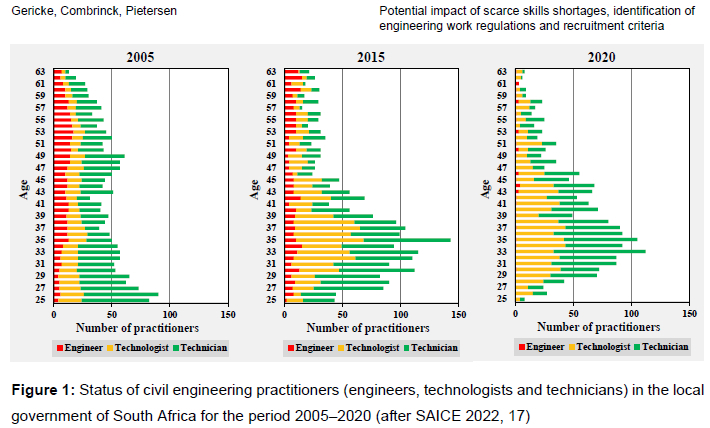
The Education and Training Development Practices Sector Education and Training Authority (ETDP SETA) and Local Government SETA (LG SETA) consider skills in Science, Technology, Engineering, and Mathematics (STEM) as scarce and/or critical in South Africa (ETDP SETA 2020; LG SETA 2020). Especially in engineering, an on-going shortage of engineering capacity, i.e., engineers, technologists, and technicians is regularly reported by the Engineering Council of South Africa (ECSA) (Lawless 2005, 4-8; Du Toit and Roodt 2008, 1, 4-5; Lawless 2008, 26-28; 2017, 15-16). Typically, South Africa has an engineer to population ratio of 1: 3 166 compared to developed countries, e.g., Germany (1: 200) and Japan, Great Britain, and the United States of America (1: 310), and other developing countries, e.g., Brazil (1: 227) and Malaysia (1: 543) (Lawless 2005, 4-8). This implies that the local engineering requirement needs to increase with a factor of between five and 15 to compete with international economies. On a more positive note, the South African Institution of Civil Engineering (SAICE) has reported a dramatic increase in the number of black female civil engineering practitioners in local government between 2005 and 2015, after which a slight decline became evident again (SAICE 2022, 16-17). In contrast, as shown in Figure 1, SAICE (2022, 17) also noted that for the same period under consideration, a rapid decline in the number of civil engineers took place, subsequently resulting in the disruption of the skill set profile required for effective service delivery and mentoring of junior engineering practitioners.
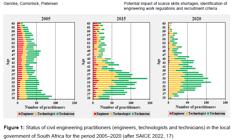
The trends shown in Figure 1 could mainly be ascribed to the number of retiring engineering practitioners exceeding the number of new entrants, while many of the remaining professionals have emigrated for more lucrative remuneration packages and working environments to countries such as the United Kingdom, Australia, and New Zealand where the civil engineering profession has also been identified as an occupational shortage (Du Toit and Roodt 2008, 3, 30-31). Subsequently, this exacerbates the local shortage of engineering practitioners, while engineering work is often being carried out by engineering and non-engineering practitioners who are not competent nor allowed to undertake such work.
The Identification of Engineering Work (IDoEW) regulations in the Engineering Profession Act (EPA), Act 46 of 2000, prohibit the performance of identified work by persons who are not professionally registered. Subsequently, the IDoEW regulations could be regarded as occupational closure in the sense that only professionally registered persons with the necessary competencies are allowed to perform professional functions in a manner consistent with government policy to protect public and environmental interests (ECSA 2021). In addition, the IDoEW regulations also promote credential inflation, i.e., increasing qualification, professional registration, and competency requirements, despite the fact that most of the actual competencies required for a particular role might have remained unchanged in a labour market already characterised by a systemic under-capacity.
As statutory body established in terms of the EPA (46/2000), ECSA is responsible for the implementation of the IDoEW regulations by performing and endorsing the registration of engineering practitioners and the accreditation of academic engineering programmes. Typically, the ECSA accreditation system is committed to international benchmarking of its standards and accreditation processes against the Graduate Attributes (GAs) of the International Engineering Alliance (IEA) and associated Dublin, Sydney, and/or Washington Accords (ECSA 2020, 14). South Africa is currently the only African country which is a full signatory of the latter IEA accords, while Nigeria, through the Council for the Regulation of Engineering in Nigeria (COREN), was granted provisional signatory status to the IEA Washington Accord in 2023. Explicit regulations such as the IDoEW regulations are uncommon in other African countries; although, emphasis on the accreditation of academic programmes and professional registration in some countries, e.g., Ghana, Kenya, Nigeria, and Tanzania suggests an indirect influence on the standard of engineering programmes and academics at higher education institutions (HEIs) (ECG 2011; Engineers Act 2012; ERB 2023).
Traditionally, academic labour markets within HEIs are influenced by factors such as funding, institutional priorities, global trends in education, and human resource and skills shortages. In South Africa, a shortage of engineering academics is typically evident at HEIs, while at some HEIs the shortage is even worse than in industry (Du Toit and Roodt 2008, 82-83; McKune 2024). This shortage of engineering academics is mainly ascribed to the increased human resource capacity required to meet the increasing STEM enrolment targets contained in the National Skills Development Plan (DHET 2019, 6). In addition, the shortage of engineering academics is further aggravated by the minimum required and/or recommended academic recruitment criteria imposed on them, while the IDoEW regulations (ECSA 2021) further also stipulate and require that engineering academics overseeing an accredited engineering programme should be professionally registered in accordance with the EPA (46/2000). Hence, given the strategic role of engineering education in meeting the STEM enrolment targets, it is crucial that engineering education is strengthened through talent management, retention, and proper alignment with the IDoEW regulations. Otherwise, engineering academics will soon become the single most limiting factor impacting on academic projects within all HEIs offering engineering programmes (Du Toit and Roodt 2008, 82).
Subsequently, this article investigates the potential impact of scarce skills shortages, the IDoEW regulations, and professional registration and academic recruitment criteria on the quality and sustainability of engineering programmes offered at universities and universities of technology (UoTs) in South Africa. The specific objectives are: (i) to review critically the ETDP/LG SETAs scarce skills criteria, official statutory bodies and registration categories, IDoEW regulations, and academic recruitment criteria at HEIs, and (ii) to conduct a benchmark comparison of employment and professional registration statistics at 13 HEIs in South Africa.
A description of the methodology is included in the next section. This is followed by the results and discussion, recommendations, and conclusions.
METHODOLOGY
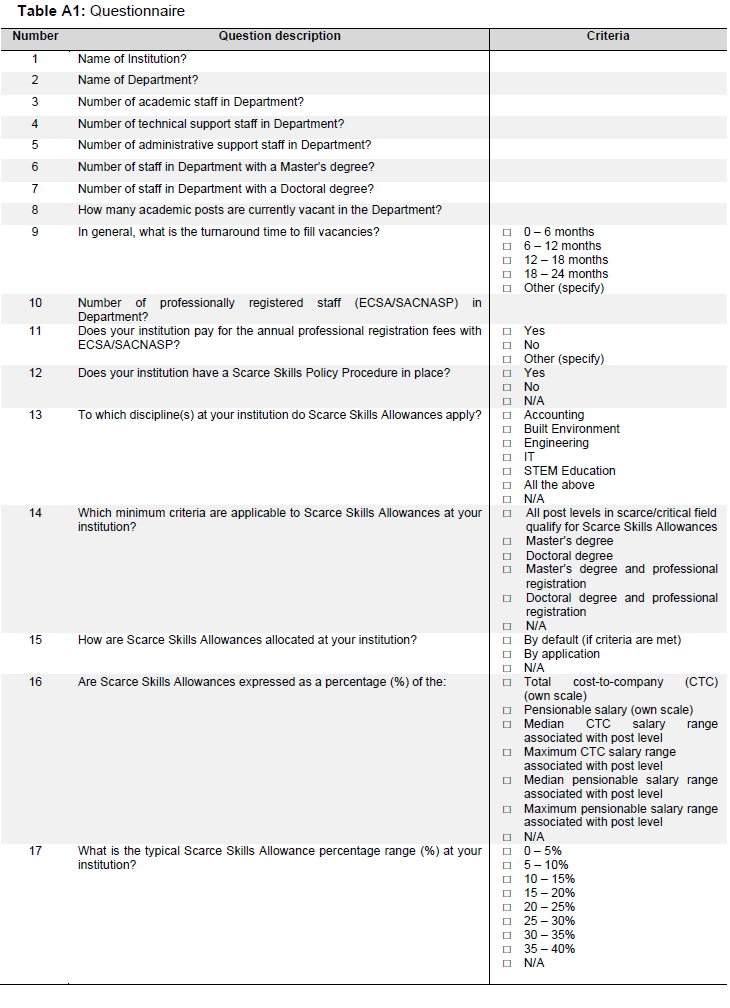
A qualitative research design was adopted by focussing on the critical review of the relevant policies and a benchmark comparison of employment and professional registration statistics at HEIs in South Africa. Engineering and service departments offering STEM education in the Faculty of Engineering, Built Environment, and Information Technology (FEBIT) at the Central University of Technology, Free State (CUT), South Africa were used as a pilot case study to highlight the employment and professional registration status quo at departmental and institutional levels. A quantitative questionnaire (Table A1, Appendix A) was circulated to three departments (Civil, Electrical/Electronic and Mechanical/Mechatronic) at 13 HEIs; hence, a potential sample size (N) of 39 respondents. In terms of privacy, confidentiality, and data processing, the following applied to the survey conducted:
Participation was anonymous and voluntary.
All responses were treated in a confidential manner.
All information gathered was processed and used for general comparisons to establish the status quo of vacancies, professional registration statuses of academics, scarce skills policy procedures, and academic recruitment criteria at HEIs.
RESULTS AND DISCUSSION
The critical review of the literature provided the relevant background information, whereas the benchmark comparison of employment and professional registration statistics obtained during the survey reflected the status quo at departmental, institutional, and national levels. In total, a 49 per cent response rate (19 of 39) was achieved.
Review of ETDP/LG SETAs Scarce Skills Criteria
According to the LG SETA (2020, 32-37), scarce skills shortage indicators are driven by demand, skill, and non-skill related drivers of scarcity as outlined below:
Demand-based: Scarcity is associated with occupational shortages (vacancy proves difficult to fill), turnover (employers leaving employment owing to resignations, retirements, and other non-voluntary terminations), and imminent retirement (if a large percentage of employees are in the 55+ age category, there will be a significant cohort with experienced skills leaving the sector in the next 5-10 years).
Skills-based: Scarcity is a function of skills supply and demand and includes unsuitable candidates (not having the required skills set), relevant experience (lack of), equity (not finding a suitable candidate from designated groups), relevant qualification (linkage between occupation and qualification is required), and location (not being attractive to prospective candidates).
Non-Skills based: Scarcity is a function of the operational procedures within an organisation/company and includes budget constraints (lack of funding and/or vacancy not being budgeted for), poor remuneration (insufficient salary range), recruitment process (slow/delayed), and political interferences (disruptions by unions, staff, and/or students).
In considering the Organising Framework of Occupation (OFO) list contained in the ETDP SETA (2020, 37-39, 67), university lecturers (OFO 231101) are also regarded as a scarce skills occupation. Subsequently, STEM academics at HEIs are currently included in the list of occupations qualifying for possible scarce skills allowances (SSAs) based on the difficulty of recruiting and retaining these skills.
Case study: Departmental level (Civil Engineering at UoTs)
At the SAICE UoT Head of Department (HOD) Forum Meeting held in October 2024, it was confirmed that there are 42 academic and 12 technical support vacancies in civil engineering at 10 UoTs country-wide, which approximates a vacancy rate of 20 per cent (McKune 2024). Very often, the latter vacancies are also filled by recruiting engineering academics employed at other HEIs; hence, the total number of vacancies tend to remain constant given that the filling thereof is limited to staff exchange between HEIs.
For example, in the Department of Civil Engineering at the CUT, the above-mentioned scarce skills shortages and vacancies are typically ascribed to the lack/absence of suitable retention strategies to retain engineering academics and/or to attract suitable candidates from industry to join the academic field, i.e., the non-implementation of the Scarce Skills Policy Procedure (SSPP) since January 2021. In general, the filling of vacancies, especially at Senior Lecturer/Associate Professor/Professor levels, is normally a more challenging task associated with a much longer turnaround time to be filled. Typically, by considering the overall profiles, current positions, and remuneration packages of suitable candidates that have been shortlisted in the past, it became evident that it would be difficult for the CUT (or any other HEI for that matter) to attract such high-profile candidates at a Senior Lecturer or higher level.
Case study: Institutional level (FEBIT at CUT)
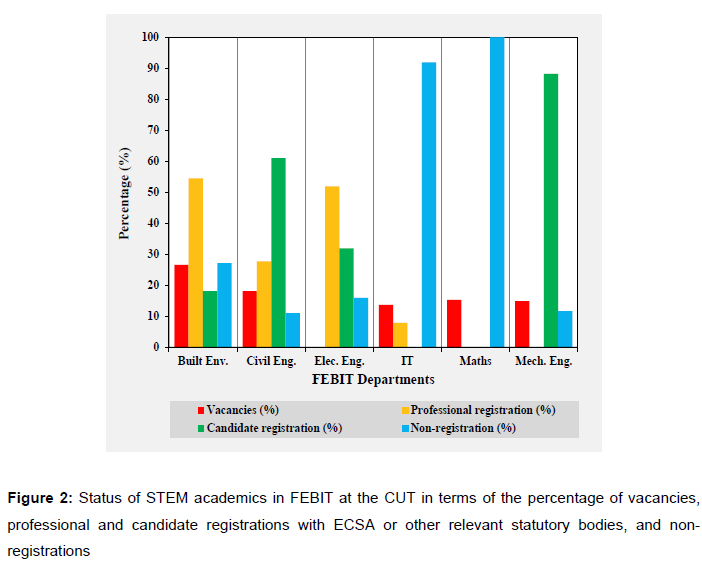
It has been demonstrated over recent years that some engineering academics resigned from FEBIT at the CUT for a better salary or working environment. As shown in Figure 2, the current percentages of vacancies in FEBIT range from 14-16 per cent (Information Technology [IT], Mechanical Engineering, and Mathematics), 18 per cent (Civil Engineering), and 27 per cent (Built Environment). As in the case of Civil Engineering at other UoTs, the majority of these academic vacancies in FEBIT are also at senior levels. As a result, the general inability to attract senior candidates holding doctoral degrees will eventually also have an impact on the sustainability of any department/faculty in terms of funding secured by means of accredited research outputs and the successful graduation of postgraduate students.
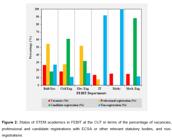
The current percentages of staff not professionally registered are significantly higher, e.g., 45-48 per cent (Built Env. and Elec. Eng.), 72 per cent (Civil Eng.), 92 per cent (IT), and 100 per cent (Mech. Eng. and Mathematics). The latter non-registration of engineering academics in a relevant professional category is regarded as problematic, especially in the engineering programmes subjected to the IDoEW professional registration deadline which was already officially due by 31 March 2025. Ultimately, failure to fill the vacancies as shown in Figure 2, and the continued possible resignation of existing academics, will also impact on the quality and sustainability of the engineering programmes to subsequently potentially jeopardise the ECSA accreditation status of these programmes.
Case study: National level (All universities and UoTs)
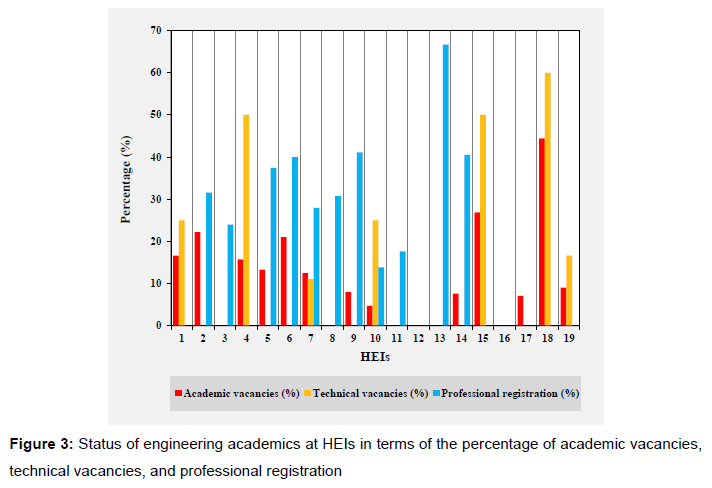
In considering the survey feedback received from the 19 respondents at the 13 HEIs, it was evident that similar trends prevail at a national level. As shown in Figure 3, the percentages of vacancies at the HEIs in South Africa range from 5 per cent-45 per cent (academic staff) and 17 per cent-60 per cent (technical support staff), respectively. In terms of professional registration, the percentages range from zero to 67 per cent, with the national average at 24 per cent.
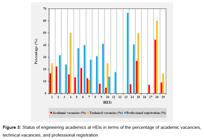
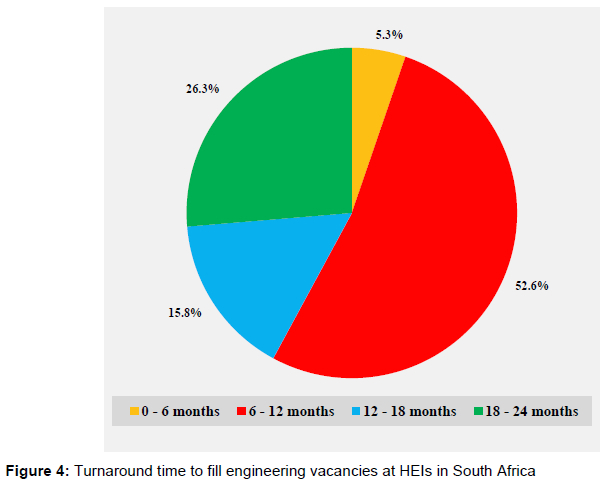
Apart from the high level of vacancies reflected in Figure 3, the long turnaround time to fill vacancies is also evident from Figure 4.
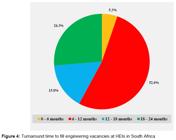
On average, it takes about 6-12 months to fill a vacancy, while 42.1 per cent of the respondents indicated that it takes between 12-24 months to fill vacancies. Hence, it is evident that HEIs either need to consider SSAs and/or alternative academic recruitment criteria to alleviate this situation.
Unfortunately, it was also evident from the survey conducted that only 58 per cent of HEIs have a SSPP in place, while the policy procedures and associated SSAs are only implemented at 47 per cent of the HEIs under consideration. Almost one-third (32%) of the HEIs having a SSPP in place, indicated that the following disciplines/fields of expertise are qualifying for SSAs: (i) Accounting, (ii) Engineering, (iii) Built Environment, and (iv) IT.
In considering the CUT SSPP (CUT 2023, 3-4), the inclusion of the above fields of expertise is justified and currently based on evidence of a shortage of the:
Particular skills/qualifications in the local and/or national market as a result of rapid expansion within a specific industry at remuneration levels in excess of the maximum relevant salary scale.
Skill sets required (but not available) as a result of a strategic decision taken by HEIs.
Supply of people in that field, and the fact that multiple recruitment strategies were used to recruit without any success.
The largest percentage (26%) of HEIs having a SSPP in place indicated that SSAs apply to all post levels in the above-listed disciplines/fields of expertise, while 16 per cent regarded a master's degree and professional registration as the minimum criteria, followed by 5 per cent in favour of a doctoral degree and professional registration. In addition, 26 per cent of the HEIs having a SSPP in place, indicated that SSAs are allocated by default, while 21 per cent confirmed that a lengthy application process applies. Typically, 26 per cent of the HEIs having a SSPP in place, indicated that SSAs are expressed as percentage (%) of the incumbent's cost-to-company (CTC) package, while 21 per cent indicated that it is expressed as a percentage of their pensionable salary scale.
In an African context, it should be noted that South Africa is also one of the few African countries which make provision for SSAs at HEIs. Currently, most African countries, e.g., Ghana, Kenya, Namibia, and Nigeria, do not have explicit national SSPPs in place for academics; however, internal incentives are offered to attract and retain specialised staff. In other African countries, e.g., Botswana, the government turned down a request from the University of Botswana to extend their SSAs given that it was argued that these allowances should rather be earmarked for government employees (Sunday Standard 2008), while in Nigeria, no documented evidence after the initiation of a SSPP in 2019 could be found (PNN 2019).
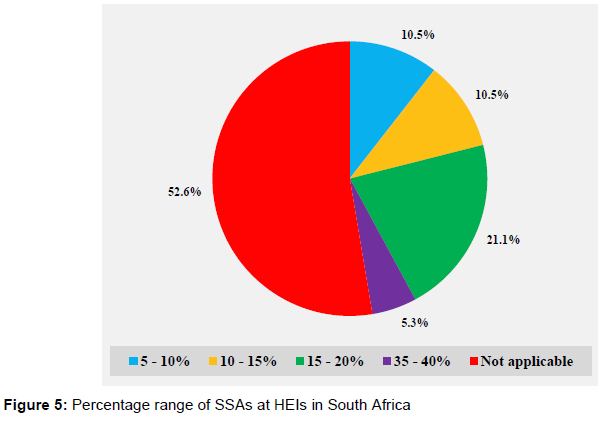
In summary, Figure 5 provides an overview of the typical SSA percentage ranges at HEIs in South Africa.
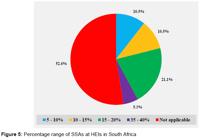
In considering the percentage range of SSAs (5%-40%) in Figure 5, along with the certainty of having budget constraints at HEIs, SSAs between 20 per cent and 30 per cent are recommended.
Review of Statutory Bodies and Registration Categories
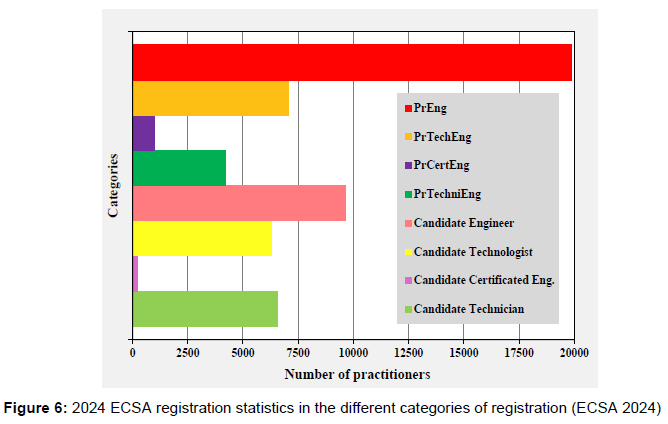
As stipulated in the EPA (46/2000, Section 18), the following categories of registration are available, while the 2024 ECSA registration statistics in these different categories are shown in Figure 6:
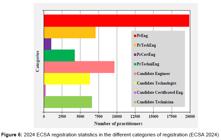
Professional category: Professional Engineer (PrEng), Professional Engineering Technologist (PrTechEng), Professional Certificated Engineer (PrCertEng), or Professional Engineering Technician (PrTechniEng).
Candidate category: Candidate Engineer, Candidate Engineering Technologist, Candidate Certificated Engineer, or Candidate Engineering Technician.
Specified categories: This category provides for the registration of persons who cannot register in the professional category, but who perform critically important work of an engineering nature which has a direct impact on public safety and health, e.g., Lift Inspectors.
Given that engineering is inclusive of multi-disciplinary fields, e.g., Built Environment, IT, and Sciences, other statutory bodies and registration categories applicable to the fields of expertise should also be considered at HEIs:
Built Environment: In terms of the Council for the Built Environment (CBE) Act, Act 43 of 2000, the approved categories of professional registration acknowledged by the South African Councils for Project and Construction Management Professions (SACPCMP) and Quantity Surveying Profession (SACQSP), typically apply.
Information Technology: The Institute of Information Technology Professionals South Africa (IITPSA), previously known as the Computer Society South Africa (CSSA) acknowledges professional registration as a Professional Member of IITPSA (PMIITPSA).
Science (General): The South African Council for Natural Scientific Professions (SACNASP) is mandated by the Natural Scientific Professions Act (NSPA), Act 27 of 2003, to enable the registration of practising natural scientists as a Professional Natural Scientist (PrNatSci) in the field of practice/expertise, e.g., atmospheric, environmental, mathematical, physical, statistical, and/or water resources sciences.
Apart from the above-mentioned professional registration requirements to ensure the delivery of quality teaching and service to engineering students, professionally registered academics will also provide HEIs with a competitive advantage in this regard. For example, HEIs will be assured of the professionality of their staff, complaints of improper conduct will be dealt with by ECSA to provide recourse in relation to professional conduct, the marketability of the institution will be promoted, i.e., public/potential clients respond well to the fact that a HEI employs professional people, and compliance with statutory requirements will be ensured. Similarly, individual engineering academics will also benefit from being professionally registered, e.g., peer recognition, public confidence, corporate membership of voluntary associations (VAs) such as SAICE, international recognition (e.g., Dublin/Sydney/Washington Accords), marketability, and statutory empowerment, e.g., IDoEW.
In considering the above-mentioned benefits of professional registration for HEIs and engineering academics alike, it was also evident from the survey that 100 per cent of the HEIs pay for staff's annual ECSA or other professional registration fees, whether it is by means of a subvention or research funding. Nevertheless, only 24 per cent of engineering academics are professionally registered at the 13 HEIs under consideration. Hence, there is no link between the payment of annual registration fees and the number of staff professionally registered. As highlighted in the Introduction (cf. Figure 1), the rate of losing experienced professional engineering practitioners each year is far greater than those gained; hence, for example, the incoming cadre of bright and eager engineering academics at HEIs is very often left without the mentorship essential to develop their engineering judgement in the relevant competency indicator areas. Subsequently, these engineering academics are typically trapped in the candidate category of registration for too long. Therefore, to keep the engineering industry healthy and thriving, an effective and innovative solution to support, enable, and empower professional candidacy mentoring and support is essential.
As a result, SAICE in strategic partnership with ECSA, Knowledge Mentoring Global Limited, and Mentoring 4 Success introduced the Maselulekane Candidacy Mentoring and Support Programme (https://www.mentoring4success.co.za/maselulekane) which provides an affordable and enriched experiential learning and support environment for young South African engineering graduates and candidates who have possibly been disadvantaged by a lack of access or exposure to effective mentorship, professional guidance, and appropriate work experience. Apart from this programme, the SAICE Connect platform (https://saice.org.za/saice-connect/) has also proved over the years to be useful in enabling potential employment, mentorship, and/or internships.
Review of IDoEW Regulations
ECSA recommended the type of work to be identified for exclusive performance by engineering practitioners to the CBE. Subsequently, after extensive consultations and engagements with the Competition Commission, the CBE gazetted the Identification of Work for the Built Environment (CBE Act 43/2000, Section 20 [1][b]), after which, ECSA (2021) also gazetted the IDoEW. Apart from the latter IDoEW Gazette (ECSA 2021), the IDoEW is also regulated by the code of conduct for registered persons and the overarching code of practice for the performance of engineering work as contained in the EPA (46/2000), whereby Sections 18 (2) to (4) clearly prohibit any person who is not registered in any category from practising identified engineering work.
Essentially, the IDoEW regulations include and define the: (i) core services performed by a registered person in any registration category and/or particular engineering discipline, (ii) practice areas of a particular engineering discipline, and (iii) scope of services for specific engineering work. The IDoEW regulations apply to all engineering practitioners, i.e., industry consultants, public servants, and academics, who need to demonstrate the core competencies in the competency areas as stipulated in the EPA (46/2000, Section 18 [1][a]) to perform such core services as a PrEng, PrTechEng, PrCertEng, PrTechniEng, and/or specified category practitioner. Typically, Subsection 17 (2) of the IDoEW regulations apply to any person who is employed by an organ of state (public servant) and who is responsible for managing the delivery and maintenance of engineering work. Similarly, work done by engineering academics who oversee the planning, design, and delivery of education and training programmes, is also deemed identified work as stipulated in Subsection 17 (1) of the IDoEW regulations:
"Any person who oversees the planning, design, and delivery of education and training programmes accredited by ECSA and assessment of students at the engineering exit-level at a higher education institution that is established, deemed to be established, or declared as a public or private higher education institution under the Higher Education Act (101/1997), or at a public college as defined in the Further Education and Training Colleges Act (16/2006), is deemed to be a person who performs identified work contemplated in Item 2 of the gazette."
In considering Subsection 17 (1) of the IDoEW regulations, the conceptual implication of the following keywords should be noted:
Oversees versus actual delivery (lecturing/assessment): Only Faculty Deans, HODs, or Programme Coordinators at HEIs oversee (manage/control) the planning, design, and delivery of education/training programmes. At HEIs, the HOD is also normally regarded as the programme owner accountable for all academic engineering programmes offered by the relevant department. Other engineering academics, e.g., Lecturers, do not oversee anything, but they rather deliver a service, i.e., lecturing, assessment, and moderation.
Education/training programme versus individual modules: Engineering academics (Lecturers) are only responsible for certain individual modules, not the whole education/training programme.
Assessment of students at the engineering exit-level: In Subsection 17 (1), the emphasis is on 'oversees the assessment of...', and not on the actual assessment process. Thus, the same argument as in the first point applies.
The general (current) understanding of engineering academics (and ECSA) is that all engineering academics at exit level should be professionally registered with ECSA by 31 March 2025. However, by considering the exact wording in Subsection 17 (1), along with the observations listed above, it is obvious that this is not the case. Furthermore, given the current status quo, many HEIs will not necessarily meet the extended deadline of 31 March 2025.
Hence, the 31 March 2025 deadline needs to be extended again and in such a case, IDoEW Subsection 17 (1) should also be rephrased as follows to prevent any confusion:
"Any person who is responsible for the planning, design, teaching, assessment and/or moderation of engineering modules and/or programmes accredited by ECSA at a HEI that is established, deemed to be established, or declared as a public or private HEI under the Higher Education Act (101/1997), or at a public college as defined in the Further Education and Training Colleges Act (16/2006), is deemed to be a person who performs identified work and needs to be professionally registered in the relevant/required category."
It should be noted that the suggested changes above apply to all engineering modules and not only to the engineering modules offered at an exit level. Subsequently, it actually implies that all academic and technical support staff in engineering departments/faculties need to be professionally registered in a relevant/required category. The latter change will ensure that academic and operational plans at HEIs are flexible to accommodate any changes, or limitations associated with the human resource component in a particular department, especially given that academic plans very often change from semester to semester owing to vacancies, sabbaticals, and/or maternity leave. Hence, all engineering academics need to be equipped to offer an exit-level module at any given point in time.
The "deemed to be a person who performs identified work and needs to be professionally registered in the relevant/required category" further implies, for example, that a PrTechniEng can only offer diploma (well-defined) modules, a PrTechEng can offer both diploma (well-defined) and degree (broadly-defined) modules, and a PrEng can offer all modules up to honours and/or a structured/professional master's (complex) level. On the other hand, it could also be argued that the changes suggested above could have a detrimental impact on the sustainability, i.e., ongoing offering of some engineering programmes at certain HEIs owing to affecting the academic recruitment criteria in an already understaffed environment. Given that the IDoEW regulations and associated requirement of professional registration ultimately aim to protect public and environmental interests, it could also be argued that such requirements are non-negotiable and will actually improve the long-term sustainability, quality control, and international comparability of these academic programmes endorsed and accredited by ECSA.
Alluded to the above, and by example, the Departments of Civil and Mechanical/Mechatronic Engineering at the CUT, have already experienced challenges in terms of the offering of their B Eng Tech (Hons) programme at a complex level. Given that some of their current engineering academics are limited to a historical Technikon background, it is/might be impossible to develop these master's degree holders emanating from the traditional NATED 151 National Diploma (N Dip) and Baccalaureus Technologiae (B Tech) programmes, with limited or no experience, and their competency indicators limited to solving only broadly-defined problems, to the point/level where they are able to solve complex engineering problems. Hence, not all master's degree holders are necessarily equipped with the required fundamental knowledge areas of mathematics, basic science fundamentals, engineering sciences, and engineering design and synthesis to solve complex engineering problems.
In contrast, many professional engineers and/or technologists without a master's or doctoral degree, are involved in complex engineering projects and regularly deal with specialised and complex technology at a level which academics with only academic and limited industry exposure, will never deal with, despite having a master's or doctoral degree. It is also impossible to prepare students properly for industry if HEIs only rely on academics who mainly have academic experience.
Subsequently, the current academic recruitment criteria at HEIs are reviewed in the next section to provide possible solutions in this regard.
Review of Academic Recruitment Criteria
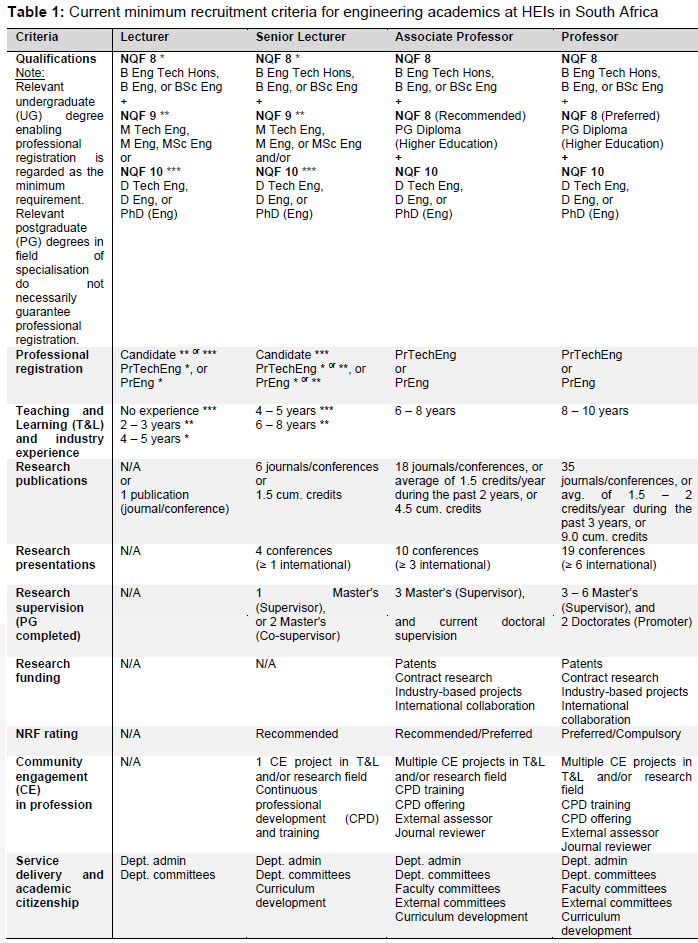
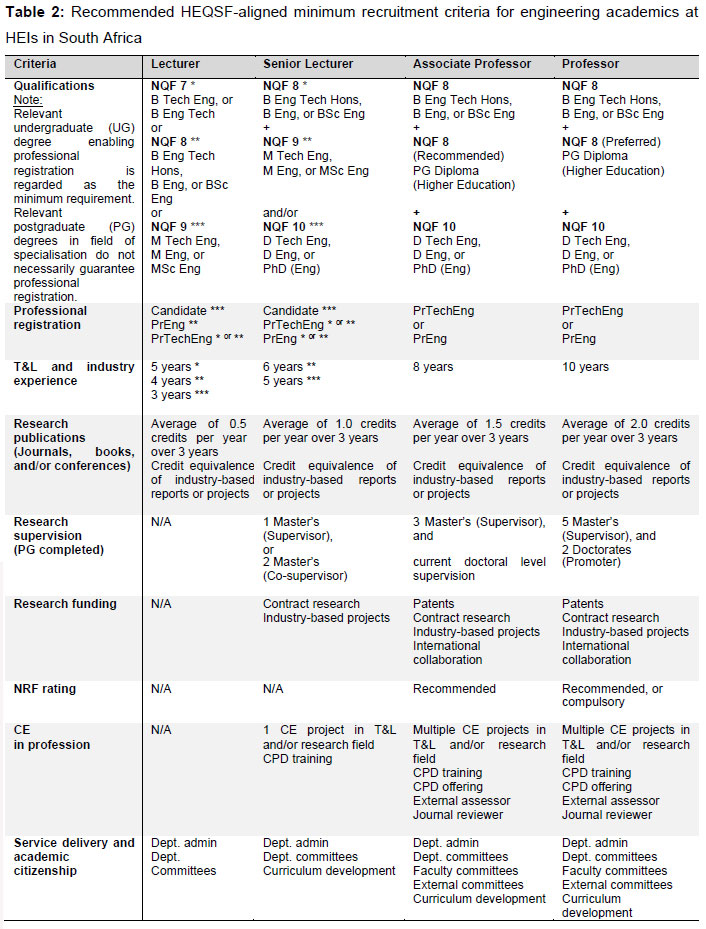
In observing the required protocol related to institutional confidentiality at HEIs, only a limited number (n = 3) of the relevant policy procedures, guidelines, and criteria related to academic recruitment could be publicly accessed and reviewed accordingly. Hence, typical recruitment advertisements for engineering academics at HEIs were also monitored and reviewed over a period of approximately six months. Subsequently, the consolidated results associated with the minimum recruitment criteria for engineering academics are summarised in Table 1.
It was evident during the review that the minimum recruitment criteria for engineering academics at HEIs (cf. Table 1) vary and are in general based on either a "tick-box" or a "holistic" approach. Typically, with the tick-box approach, mainly quantitative criteria are considered, and if a particular criterion is not met, then any other qualitative criteria are also somehow ignored. In contrast, the holistic approach considers both quantitative and qualitative criteria, as well as their impact on the overall profile of the incumbent.
Apart from these different approaches, it is also evident from Table 1 that the qualification and T&L/industry experience criteria differ, especially at Lecturer and Senior Lecturer levels. Given the high level of vacancies and/or long turnaround time to fill vacancies as revealed by the survey conducted (cf. Figure 4), it is no surprise that some HEIs have started to consider alternative criteria. Traditionally, and prior to the IDoEW regulations, Lecturers were only appointed if they have at least an NQF Level 9 qualification (M Tech Eng, M Eng, or MSc Eng). Similarly, Senior Lecturers should have had at least an NQF Level 10 qualification (D Tech Eng, D Eng, or PhD Eng).
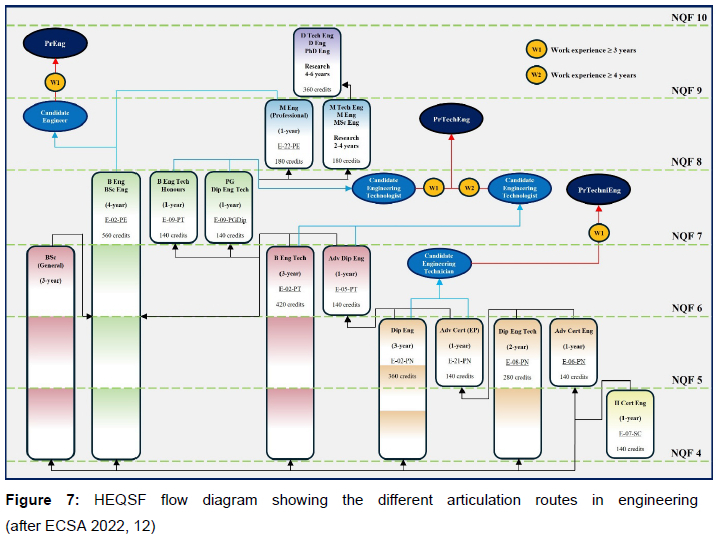
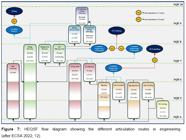
In acknowledging the rationale behind the IDoEW regulations and professional registration requirements, a logical option would thus be to consider a lower qualification supplemented by more years of relevant experience and professional registration. In considering the current Higher Education Qualification Sub-Framework (HEQSF) (ECSA 2022, 12) as shown in Figure 7, it is also evident that an NQF Level 7/8 qualification combined with relevant experience (minimum of 3-4 years) and the appropriate professional registration (PrTechEng/PrEng), could be regarded as equivalent to a master's degree at NQF Level 9. Similarly, a master's degree plus extensive (relevant) experience and professional registration could be regarded as equivalent to a doctoral degree at NQF Level 10.
Furthermore, it is also common knowledge that master's and doctoral degrees are not readily awarded in engineering owing to the nature of the discipline, while in the engineering industry, the focus is more towards professional registration. Hence, the number of candidates interested in PG studies in engineering at HEIs is limited in comparison to the number of UG students and/or to PG studies in other disciplines. Subsequently, there is a limited number of such graduates available in the market and few of them are interested in academia. The latter situation is also further exacerbated by the market-related salaries industry offers engineering graduates, which motivates them to attain their professional registration in a more lucrative working environment. Ultimately, any promotion in industry is primarily linked to professional registration, while any PG qualification is only regarded as being supplementary to the candidate's profile (Du Toit and Roodt 2008, 48-49).
Based on the above, minimum recruitment criteria for engineering academics are recommended in the next section.
RECOMMENDATIONSThe following implementation strategies are recommended to ensure the consistent, transparent, and fair implementation of SSAs, IDoEW regulations and professional registration, and academic recruitment criteria at HEIs in South Africa.
Scarce Skills Allowances (SSAs)
SSAs should be:
limited to STEM academics who are appointed on a full-time/permanent basis;
only applicable from Senior Lecturer levels, i.e., academics with a relevant doctoral qualification plus professional registration with an appropriate and recognised statutory body, e.g., ECSA, CBE, SACNASP, etc. In engineering disciplines where doctoral qualifications are not readily awarded because of the nature of the discipline, the appointment at/promotion to Senior Lecturer level in the absence of a doctoral qualification should be aligned to the recommended minimum academic recruitment criteria as listed in Table 2;
implemented by default for all qualifying staff members and not necessarily be subjected to various levels of approval, with automatic renewals after a 3-year cycle. If the EDTP/LG SETAs still classify the relevant discipline/field of expertise as scarce at the stage of renewal, no other qualitative measures (performance management criteria) should apply given that scarce skills and professionalism do not lapse;
implemented using top-down (from Professor to Senior Lecturer levels) and discipline specific (academic programmes with inherent accreditation requirements) approaches which are gradually phased-in over a 3-year period to alleviate any budget limitations; and
based on differentiated allowances associated with a specific discipline/field of expertise, academic level, and category of registration expressed as a percentage (%) of the incumbent's CTC package. Typically, SSAs between 20 per cent and 30 per cent are recommended.
IDoEW Regulations and Professional Registration
HEIs should budget and pay for the application and/or annual registration fees of engineering academics with an appropriate and recognised statutory body.
HEIs should assist engineering academics registered as candidates to fast-track their road to registration by supporting candidacy and mentoring programmes driven by VAs.
The rephrased version of IDoEW Subsection 17 (1) regulations as proposed in the Results and Discussion: Review of IDoEW Regulations section should be gazetted and adopted in practice.
The 31 March 2025 IDoEW deadline for professional registration needs to be extended by another three years until January 2028. Subsequently:
All academic and technical support staff should be registered at least in the relevant ECSA candidate category by 31 March 2025.
HEIs, in collaboration with ECSA, should have an approved 3-year Implementation Plan in place to ensure the registration of all engineering academics by/before 2028.
Academic Recruitment Criteria
The recommended minimum qualification and T&L/industry experience criteria for engineering academics as listed in Table 2 should be adopted at HEIs in South Africa.
Given that a relevant 3-year NQF Level 7 qualification plus a minimum of four (4) years appropriate experience after graduation are required for PrTechEng registration, the minimum recommended years of experience equal five (5) years. This +1-year approach is recommended given that very few candidates achieve professional registration within the minimum number of years required. The same approach is also recommended for a 4-year NQF Level 8 qualification; hence, 3 + 1 years (4 years) are required after graduation.
By accepting the lower NQF Level 7/8 qualifications recommended at Lecturer and/or Senior Lecturer levels, the progress and attainment of either a master's degree (Lecturer) or doctoral degree (Senior Lecturer) should be within a maximum part-time residency period of five years, with non-compliance subjected to a non-renewable fix-term contract of five years.
In cases where candidate registration in combination with a qualification higher than the required qualification for a particular post level is accepted, proof of the application and submission for PrTechEng/PrEng registration with ECSA need to be provided, along with ECSA's official confirmation that the application is currently under review.
CONCLUSIONS
The aim of this study was to investigate the potential impact of scarce skills shortages, the IDoEW regulations, and professional registration and academic recruitment criteria on the quality and sustainability of engineering programmes offered at HEIs in South Africa. Hypothetically speaking, it is envisaged that the proposed recommendations will enable improved institutional strategy and policy direction over the next few years across all HEIs in South Africa, with specific reference to the following:
Scarce skills shortages: Applying a uniform SSPP and the recommended minimum entry requirement (e.g., doctoral qualification and professional registration) for SSAs of 20 per cent-30 per cent at all HEIs, will not only motivate current engineering academics to achieve the minimum requirements for SSAs, but will also enhance overall academic excellence in terms of exclusivity, performance, and progress to higher academic levels. Although a phase-in approach subjected to budget constraints was recommended for the implementation of SSAs, such an extended period of implementation will not necessarily address the IDoEW requirements, while the continued absence of SSAs will also further impact on the successful attraction (new) and retention (existing) of professionally registered engineering academics.
IDoEW and professional registration requirements: The participation in VA-based candidacy mentoring and supporting programmes will contribute towards increasing the number of engineering academics achieving professional registration. Ultimately, compulsory professional registration associated with the IDoEW regulations will result in the upskilling of employees, while ensuring verified competency beyond academic qualifications. This will not only safeguard the quality and sustainability of academic programmes, but will also offer improved employment prospects, enhanced public safety, and consumer protection, resulting in an engineering profession which is aligned to the IEA standards. On the downside, the professional registration and IEA requirements could lead to skewed credential inflation within the higher education sector resulting in fewer pan-African mobility opportunities for those engineering academics with non-IEA registration credentials. In addition, less-resourced HEIs may struggle to match the salaries offered by more established institutions; hence, this might further aggravate staff exchange between HEIs.
Academic recruitment criteria: The recruitment and/or retention of highly skilled and professionally registered engineering academics will be enhanced by implementing the uniform academic recruitment criteria as recommended in Table 2. Typically, the recommended minimum qualification criteria and +1-year approach at Lecturer and Senior Lecturer levels will attract more suitably qualified and professionally registered candidates with extensive industry experience, subsequently contributing towards improved curriculum delivery, mentorship, and student outcomes.
In conclusion, the high percentage of non-registered engineering academics is regarded as a potential risk, both in terms of academic programme sustainability and quality of offering in the short to medium term, especially if the IDoEW professional registration deadline is not extended until January 2028. Therefore, it is of utmost importance that HEIs act now to ensure that the current engineering academics are retained and vacancies are filled given that the engineering practice needs professionals taught by professionals.
REFERENCES
- Council for the Built Environment (CBE). 2020. Council for the Built Environment Act (43/2000). Government Gazette 426: 21818. Pretoria, South Africa: CBE.
- Central University of Technology, Free State (CUT). 2023. Procedure for the Retention of Employees with Scarce and/or Critical Skills. Institutional Regulatory Code 1/R/2/K/23/10/24/03. Bloemfontein, South Africa: CUT.
- Department of Higher Education (DHET). 1997. Higher Education Act (101/1997). Government Gazette 390: 18515. Pretoria, South Africa: DHET.
- Department of Higher Education (DHET). 2006. Further Education and Training Colleges Act (16/2006). Government Gazette 497: 29469. Pretoria, South Africa: DHET.
- Department of Higher Education (DHET). 2019. Skills Development Act (97/1998): Promulgation of the NSDP. Government Gazette 42290. Pretoria, South Africa: DHET.
- Du Toit, Rènette, and Joan Roodt. 2008. Engineering Professionals: Crucial Key to Development and Growth in South Africa. Education, Science and Skills Development Report. Pretoria, South Africa: Department of Labour.
- Engineers Act. 2012. Laws of Kenya Act (43/2012). Republic of Kenya: National Council for Law Reporting.
- Engineering Council of Ghana (ECG). 2011. Engineering Council Act (819). Ghana: ECG.
- Engineering Council of South Africa (ECSA). 2000. Engineering Profession Act (46/2000). Government Gazette 426: 21821. Pretoria, South Africa: ECSA.
- Engineering Council of South Africa (ECSA). 2020. Policy on Accreditation of Engineering Programmes E-01-POL. Revision 0, August 20, 2020. Johannesburg, South Africa: ECSA.
- Engineering Council of South Africa (ECSA). 2021. Identification of Engineering Work Regulations. Government Gazette 669: 44333, Board Notice 21. Pretoria, South Africa: ECSA.
- Engineering Council of South Africa (ECSA). 2022. Engineering Qualifications in the Higher Education Qualifications Sub-framework E-23-P. Revision 2, July 13, 2022. Johannesburg, South Africa: ECSA.
- Engineering Council of South Africa (ECSA). 2024. Registration Statistics. Johannesburg, South Africa: ECSA.
-
Engineers Registration Board (ERB). 2023. Engineers Registration Board of Tanzania. Accessed May 19, 2025. https://erb.go.tz.
» https://erb.go.tz - Education and Training Development Practices Sector Education and Training Authority (ETDP SETA). 2020. Education, Training and Sector Skills Plan: 2021-2022. Johannesburg, South Africa: ETDP SETA.
- Lawless, Allison. 2005. Numbers and Needs: Addressing Imbalances in the Civil Engineering Profession. Midrand, South Africa: SAICE.
- Lawless, Allison. 2008. "Civil Engineering: The Critical Profession for Service Delivery." Civil Engineering Magazine, January 2008: 26-29.
- Lawless, Allison. 2017. "Numbers and Needs in Local Government: Where Are We Now?" Civil Engineering Magazine, January/February 2017: 15-26.
- Local Government Sector Education and Training Authority (LG SETA). 2020. Sector Skills Plan: 2020/21-2024/25. Johannesburg, South Africa: LG SETA.
- McKune, Tom. 2024. Personal communication. SAICE UoT HOD Forum Meeting, October 22-23, 2024, University of Johannesburg, South Africa.
-
Punch Nigerian News (PNN). 2019. "Brain Drain: Federal Government Mulls Introduction of Scarce Skills Allowance." Accessed May 19, 2025. https://punchng.com/brain-drain-fg-mulls-introduction-of-scarce-skills-allowance/.
» https://punchng.com/brain-drain-fg-mulls-introduction-of-scarce-skills-allowance/ - South African Council for Natural Scientific Professions (SACNASP). 2003. Natural Scientific Professions Act (27/2003). Government Gazette 461: 25774. Pretoria, South Africa: SACNASP.
- South African Institution of Civil Engineering (SAICE). 2022. SAICE 2022 Infrastructure Report Card for South Africa. Midrand, South Africa: SAICE.
-
Sunday Standard. 2008. "University of Botswana Employees Denied Scarce Skills Allowances." Accessed May 19, 2025. https://www.sundaystandard.info/university-of-botswana-employees-denied-scarce-skills-allowance/.
» https://www.sundaystandard.info/university-of-botswana-employees-denied-scarce-skills-allowance/