Generative artificial intelligence tools to augment teaching scientific research in postgraduate studies
Abstract
Scientific research is the cornerstone of postgraduate studies. However, various challenges hinder the progression and success of postgraduate students, which also affects throughput, students experiencing challenges in formulating their proposals due to limited knowledge of problematising their research.Too much time goes into the proposal phase, either prolonging the study period or abandoning the research project. Modern generative artificial intelligence (AI) tools can now support the research process. This article aims to present a research tool supporting facilitators in the African context to integrate various AI tools in postgraduate research teaching and learning. A systematic literature review was used to analyse research articles and grey literature; thus, identifying the review steps and tools which developed the ResearchBuddie artefact, supporting the research activities. Generative AI tools such as ChatGPT, Elicit, and Research Rabbit assist research activities. However, these tools must be made more cohesive and easier to use for all students. Therefore, increasing awareness and accessibility must be facilitated such that these tools can be leveraged to support the research process. A tool, such as the ResearchBuddie artefact, may accelerate the writing process and enhance the quality of the proposal. The ResearchBuddie may also assist postgraduate students in other research processes as they conduct their studies, primarily the literature review section. Additionally, the supervisors may use the ResearchBuddie artefact to augment their supervision; more so, this could be a valuable tool for educators who teach postgraduate research programmes.
Generative artificial intelligence (AI); postgraduate research; systematic literature review; teaching and learning tools; research process
INTRODUCTION
Generative artificial intelligence (AI) has become prominent in everyday use, particularly in higher education. This technology presents various opportunities for educators and students. Generative AI is a unique category of AI that uses deep-learning models to generate humanlike content when presented with diverse prompts (Aydin and Karaarslan 2023, 121) including generating digital images, words, or other content types. According to (Lim et al. 2023, 2) generative AI differs from other types of AI, such as conversational AI, having the unique ability to generate the content as response. Generative AI can create new responses beyond its explicit programming; whereas conversational AI typically relies on predefined responses. Generative AIs such as ChatGPT combine both generative and conversational AI to simulate conversation, providing efficient and relevant knowledge acquisition (Balas and Ing 2023, 3).
Such generative AI features make these tools attractive for research in supporting the research process (Burger and Fourie 2019, 235), some students finding the research process overly demanding, often leading to dropouts. Africa is cited as having high drop-out rates (Macha and Kadakia 2017, 7), affecting throughput of higher education. Postgraduate students should produce sound academic work. However, students are often challenged by lack of research materials, time constraints, poor communication with or negative attitudes from supervisors (Acheampong 2021, 19; Krish, Salehuddin, and Razak 2017, 249). Supervisors' time constraints affect the quality of feedback, often leading to delays in completing research projects (Al Qunayeer 2020, 957; Chidi and Sylvia 2020, 81).
Other challenges experienced by students include language and content presentation. Literature indicates that when formulating the proposal students struggle to use correct academic language and vocabulary, citing references incorrectly, and succumbing to plagiarism (Krish, Salehuddin, and Razak 2017, 250). Students are also challenged by reviewing and criticising literature; and by finding evidence to support the research problem (Acheampong 2021, 21). Al Qunayeer (2020, 962) reported that students found the formulating of research problems a major hurdle. Students can be empowered per generative AI to conduct research, accessing relevant materials, and gaining support on how to write using the correct academic register (Dai et al. 2023, 79).
Some of the benefits of generative AI in supporting research include helping students identify patterns in their research, increasing speed, and formulating and refining research hypotheses (Chubb, Cowling, and Reed 2022, 1443). According to Alharbi (2023, 4), the supportive functions for research available in some generative AIs include corrective feedback, automated reviews, translation services, and generating of text. Such functions are important in supporting the writing process due to their linguistic capabilities of composing intelligible content.
Various tools can support students in higher education (HE). Marshall and Brereton (2013, 297-298), and Stefanovic et al. (2021, 3,8) identified the tools used for systematic literature review in research supporting the literature component. Others have published on tools that support the methodology section (Islam 2020, 10; Woods et al. 2016, 599); however, authors have not found a consolidation of several tools which would support the research process. Bandara et al. (2015, 155) suggested consolidating systematic literature steps thus avoiding the fragmentations that exist in this methodology. The authors concur with this approach, especially for the research process. Furthermore, the tools that can support the research process, including SLR, have been explored. However, these tools are fragmented, making it a tedious task to access them while conducting research which necessitates a unified tool holistically supporting the research process. In response to this gap, Segooa, Motjolopane, and Modiba (2023, 185) have consolidated the literature steps and proposed such a tool. Nevertheless, to the researchers' knowledge, the research process tools' consolidation has not yet been addressed. This article is proposing a research support tool that utilises generative AI tools embedded in one platform to support the research process for postgraduate studies. Therefore, this article aims to present a research tool that unifies various generative AI tools that would assist in postgraduate teaching and learning of the research process in South Africa. To achieve this goal the following research questions are posed:
• What are the challenges faced by postgraduate students in their research process?
• How can generative AI tools support the postgraduate research process?
THEORETICAL BACKGROUNDThis section provides the literature review and the study's theoretical framework.
Generative AI in higher education
The use of artificial intelligence (AI) has evolved over decades - we have moved from utilising computers and the worldwide web to having options with generative AI (Chen, Chen, and Lin 2020, 75264). Use of generative AI has gained traction in most industries, including higher education. Generative AI is used to support most administrative functions such as student admissions and enrolment, financial aid and scholarship management, and student success and retention (Wang et al. 2023, 2). Higher education institutions deal with a large dataset that could be analysed using these generative tools to inform their decision-making processes (Burger and Fourie 2019, 234; Serban et al. 2013, 16).
Some examples of generative AI tools already being used in education include Bard, Bing, ChatGPT, and DALL-E (Burger and Fourie 2019, 237). Lim et al. (2023, 9) highlight the transformative impact of generative AI tools on learning, communication, and collaboration. It is therefore imperative for researchers to reassess their current practices, adapting to the evolving landscape for future relevance. Additionally, generative AI provides an efficient and effective process in being able to achieve speedy results when prompted (Burger and Fourie 2019, 239). Such tools can only be effective when the prompts are complete and specific, thus enabling correct feedback rather than false information (Lim et al. 2023, 4). Generative AI tools are also cited as accurate, reliable, and offering limited errors, synonymous with humans (Burger and Fourie 2019, 239; Chan and Hu 2023, 13). However, Open AI (2023, 1) acknowledges that their prompt feedback is subject to some errors.
According to Lim et al. (2023, 9) generative AI technologies have limitations thus requiring educational institutions to spread awareness on such issues through provision of guidelines. Despite potential benefits of using generative AI in higher education to improve students' writing skills, providing personalized feedback, and assisting with research (Reza et al. 2023, 3-4); certain governments and schools have banned ChatGPT amid fears of AI-assisted cheating; academic publishing has followed suit (Aydin and Karaarslan 2023, 123; Zohny 2023, 97).Moreover, concerns prevail about plagiarism and academic dishonesty, as well as accuracy and reliability of information provided by ChatGPT and other generative AI tools (Chan and Hu 2023, 3; Dwivedi et al. 2023, 6). Nevertheless, it is argued that, instead of banning these tools, the education sector should embrace them, educating users on ethical and responsible use of generative AI (Eke 2023, 2).
As with autonomous systems, generative AI comes with societal challenges such as managing relationships between these systems and humans (Lindley et al. 2023, 1). For example, ChatGPT has been cited as disempowering students by undermining their critical and analytical skills (Walczak and Cellary 2023, 72). This issue is cited as relational: if students use these tools to support formulating their research, users will be empowered to work with these technologies, rather than using technology to work for them. However, generative AI tools have their shortcomings in the scope of what they have learned (Lim et al. 2023, 9), thus requiring users to play an active role of co-creating with the tools, rather than relying on the technology (Fui-Hoon Nah et al. 2023, 295).
Challenges encountered by students
Research indicates that students require extensive support with the research process, especially in areas of conceptualising the research, identifying research problems and research questions (Krish, Salehuddin, and Razak 2017, 248 & 250; Mariano and Potane 2022, 6857). Sengane and Havenga (2018, 6) highlighted various research-related challenges: lack of finances to conduct the research, inadequate capacity for retrieving research articles, and late allocation of supervisors. Researchers cite the relationship with supervisors, supervision feedback, and delay in approval of research processes as research process hurdles. South African studies suggest that postgraduate students still experience challenges in translating social problems into scientific problems: this research component is considered the first research process stage (Feussi, Edoun, and Kok 2020, 57).
Student views on generative AI
In Chan and Hu's (2023, 13) study on students' perception of generative AI, researchers found that students preferred to use generative AI for supporting their learning, with reservations about its negative implications. This study reported that generative AI supported students with personalised and immediate learning, brainstorming, writing, and analysis of their research. Some of the concerns cited included accuracy of generated content. The issue of accuracy was linked to human oversight. Therefore, these technologies should not be expected to carry out tasks; rather, to support users in their tasks. However, other studies have reported scepticism in some students about the generative AI assessing their examinations, thus highlighting several trust issues with these technologies (Walczak and Cellary 2023, 86).
Generative AI drawbacks
While generative AI promises more opportunities for learners and educators, the use of these tools should be regulated for responsible use to augment academic activities such as research processes (Dwivedi et al. 2023, 30). According to Winkler et al. (2023, 585), generative AI can potentially promote a deterioration in students' learning skills, particularly their creative, critical thinking, and writing skills. The tool's ability to generate content that seems original, while it might not be real, is what threatens the legitimacy of these tools (Walczak and Cellary 2023, 93). This is evident in occurrences in which fake citations were generated (Sharun et al. 2023, 5276). It was also reported that some tools do not always adhere to academic writing principles (Dwivedi et al. 2023, 32). Therefore, educators must consider the skills, resources, and capabilities needed to handle generative AI in their disciplinary context.
Generative AI in research
Generative AI has become a valuable tool in research. According to Jost (2021, 193), by using generative models, researchers can leverage Al's capabilities to create new educational content, such as learning scenarios and instructions. This content is created per generative AI models that can use various data types, such as text, images, audio, and video files, to produce corresponding outputs (Winkler et al. 2023, 580). These Al-generated resources can enhance the learning experience by providing visually realistic and interactive content on mobile applications or online platforms. Generative AI can create personalised research materials tailored to individual student's needs and learning styles (Chan and Hu 2023, 8-9). This customization can help establish a more engaging and effective learning environment (Wang et al. 2023, 11). Furthermore, generative AI can automate feedback processes, which can save teachers significant time and resources, allowing them to focus more on instructional strategies and individualised student support (Dwivedi et al. 2023, 25).
According to Jost (2021, 188 & 194), generative adversarial networks (GANs) can also be used to create pedagogical assistants in postgraduate research that can support research by providing a controlled environment for conducting experiments and collecting data. Translation tools can also help non-English speakers better to understand researched content (Wang et al. 2023, 9). However, Johri et al. (2023, 574) argue that the use of generative AI among seasoned researchers is of concern in imparting implicit knowledge of research methodologies to newcomers. The implications of this trend are still not fully comprehended; and it is uncertain how beginners can acquire the requisite abilities and knowledge to conduct research efficiently.
Ethics and generative AI in research
The application of generative AI in postgraduate research raises ethical concerns, particularly regarding authorship and plagiarism (Zohny 2023, 96). Students generally hold positive views of the technology, while expressing concerns about privacy and ethical issues (Chan and Hu 2023, 11). According to (Johri et al. 2023, 574), ethical challenges arise when using generative AI in research, such as data privacy, sharing, and participant anonymity, generating complex and hard-to-comprehend results, making decision-reaching difficult to discern. A gap in inadequate policies of AI ethics must be addressed to encourage ethical use of generative AI (Chan and Hu 2023, 13). Therefore, measures must be in place when generative AI is harnessed by postgraduate students.
Task-technology fit theoretical framework
Undertaking postgraduate studies involves a series of research activities including an introduction, literature review, aims and objectives, research design and methods, ethical considerations, budget, references, and appendix (Sudheesh, Duggappa, and Nethra 2016, 632). Different universities use differing structures, as Strauss (2018, 6) reports; proposal activities are listed differently. Some universities select students based on their master's research mark and research proposal for a doctorate (Feussi, Edoun, and Kok 2020, 57). Therefore, a good research proposal is essential for postgraduate students' admission for master's and doctoral studies.
Activities for the research proposal can be tedious and time-consuming; consequently leading to the delay of postgraduate students' completion of their work (Chidi and Sylvia 2020, 81). Thus, the study focuses on ways in which generative AI tools support these research activities. To understand the gaps and issues in available generative AI technologies, a task-technology fit (TTF) theory is used.
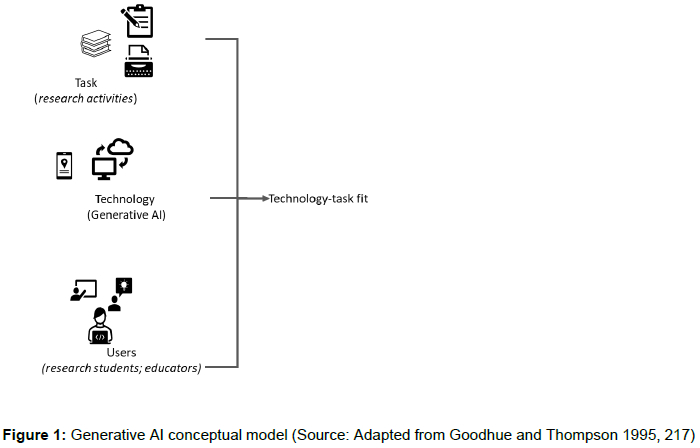
The TTF theory is a popular information systems theory based on the user, task, and technology performance (Goodhue and Thompson 1995, 217). This theory was selected for this study, because it is able to merge the technology with the given task. In this study this includes all research processes to be completed within a specific period; such may be demanding, thus requiring computational support (Morris 2023, 18). Technology implies tools postgraduate researchers would use to complete their research tasks. Individuals are users of the technology in facilitating their tasks such as research activities. Figure 1 indicates that researchers -students and educators - may use technological tools to support research tasks (Pack and Maloney 2023, 1572).
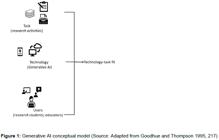
Technologies such as generative AI tools can support the research activities (task) (Burger and Fourie 2019, 235). Therefore, technology fit leads to users' increased performance in their tasks; whereas an under-fit will result in tasks not being completed (Junglas 2008, 1047). The authors argue that with the correct technologies, students will not need to abandon their research projects, especially not because of time constraints. Scholars such as Al-Rahmi, Shamsuddin, and Alismaiel (2020, 6839) have used TTF to investigate factors affecting students' academic performance in higher education. Their study suggests that user social characteristics and technology influence the learning environment towards completing task fit; when technology is well fitted to the task, this reflects positively on academic performance.
RESEARCH METHODOLOGYA three-step approach was used to show ways in which generative AI tools support research processes. The DESMET evaluation methodology, which accommodates both qualitative and quantitative approaches was used for this semi-systematic review (Kitchenham, Linkman, and Law 1996, 3). The qualitative approach of DESMET was used in this study.
The first step involved reviewing data generated from peer-reviewed journal and conference proceedings of the literature study in understanding how digital tools support the research process. Research questions assisted in identifying relevant articles for the review. The research questions were used to develop search strings to guide the review; these were "SLR", and "tools ", and "SLR.", and "design science ".
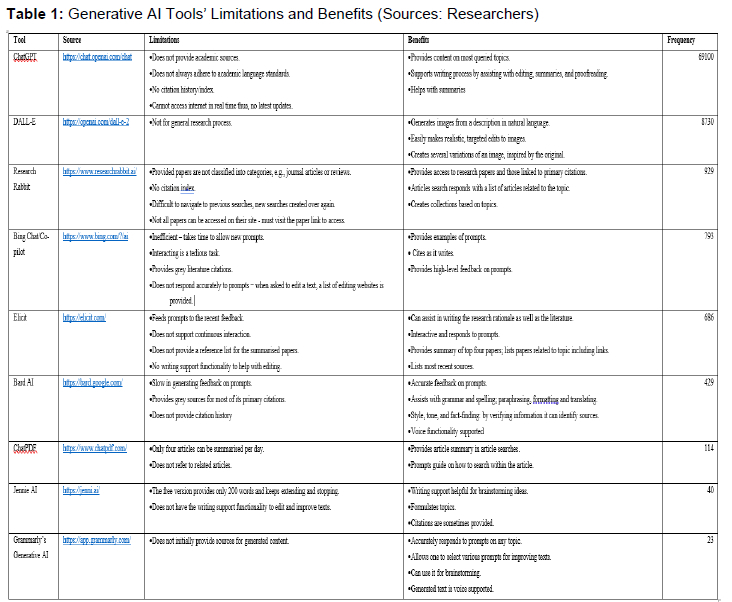
The second step involved identifying and evaluating generated AI tools gathered using scientific articles and grey literature. Grey literature is useful in providing information unavailable in traditional scholarly journals and books (Mahood, Van Eerd, and Irvin 2014, 222; Paez 2017, 237). The tools were evaluated on publicly available websites, with some identified from research articles generated from the Google database. Platforms such as Linked In were also used to identify some thirty-six tools; after applying inclusion criteria, only nine tools were evaluated. Excluded tools did not have a generative capability, were not AI-powered, and did not have active websites. Search strings used to search for the tools including the name of the tool and its functionality. The results presented the scientific articles related to those tools; and provided the frequency (refer to Table 1) of the tool appearing in the Google Scholar search, thus accessing wider educational databases (Elisha 2019, 406).
Lastly, the tools were assessed per DESMET, based on both benefits and limitations inherent in the tools. Similar studies that used this method evaluated features of the tools based on their economics, suitability for purpose, limitations, and advantages (Stefanovic et al. 2021, 2).
RESULTS AND DISCUSSION
This section discusses the results applying to the TTF and DESMET feature analysis.
Evaluating the technology on the research tasks, a broad outline of benefits and limitations were captured, illustrated in Table 1.
Generative AIs task fit
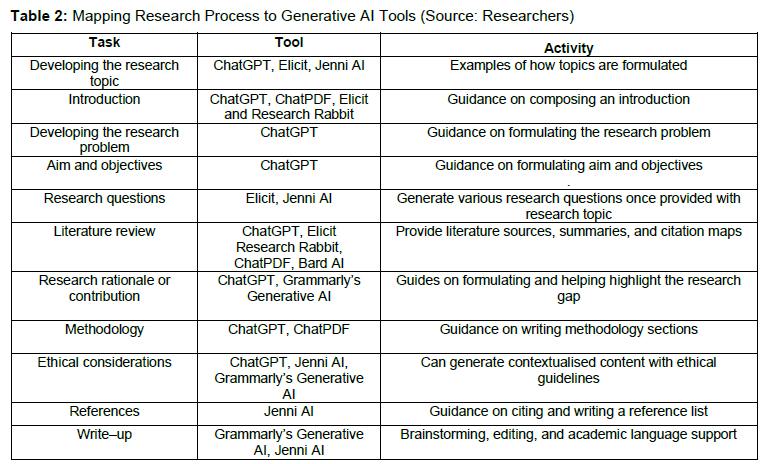
The findings revealed a wide coverage of technologies supporting certain research process stages. In supporting the proposal development, the study identified support tools for tasks listed under Table 2. The study illustrates the use of tools such as Elicit to write an introduction based on the topic provided, gather literature review material, and summarise the literature. Tools such as ChatGPT supported students with information on most stages of the research process barring citations and references. Drawbacks on the use of AI in education include academic dishonesty and discouraging of learning by providing an end product (Eke 2023, 3; Chan and Hu 2023, 13). This tool can be used for brainstorming and to gain a literature summary; simplifying the content as well as preparing the proposal presentation. Furthermore, it can support students on cited challenges of formulating research topics and research questions (Krish et al. 2017, 245, 248).
Findings reveal that these tools have attracted attention in scholarship: these tools have had more hits in the frequency analysis, indicating their encounters on Google Scholar. The results highlight that ChatGPT is leading, with the frequency of 69100 hits, while the tool with lower frequency is Grammarly's Generative AI, displaying 40 hits. These results imply that ChatGPT has gained popularity; and researchers may be interested to understand its contribution in influencing future work and the future of education. Grammarly's Generative AI's low hits may be attributed to lack of awareness of the tool's generative capability in supporting research.
Grammarly's Generative AI emerged from Grammarly, a tool supporting the writing process, focusing on language issues. Grammarly later introduced Al-powered Grammarly, which in addition to focusing on grammar issues can generate content based on prompts either given or which the user can query. The literature cites the tool as able to enhance writing, using AI suggestions (Reza, 3-4).
Grammarly's Generative AI can also support brainstorming, editing, and improving of academic language. Literature suggests that these functions are important in supporting the writing process through their linguistic capabilities of composing intelligible content (Alharbi 2023, 4).
DALL - E generates images and can therefore support the research process in which students need to use visuals; and for presentation purposes, especially when defending their proposals. DALL - E can also assist in developing graphic conceptual frameworks required in certain disciplines. The visual capability of this tool is supported in the literature, having been cited as helpful in visual presentations (Winkler, 580).
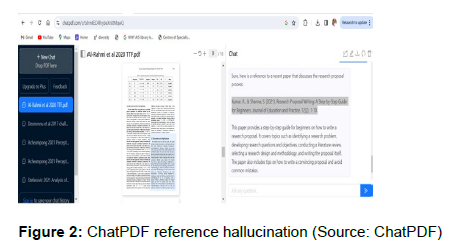
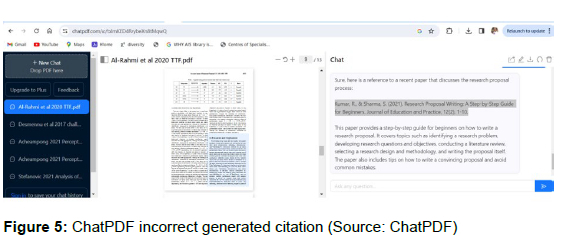
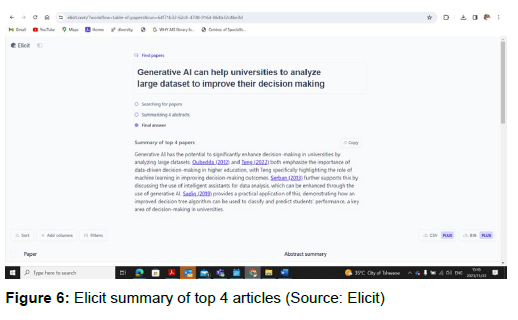
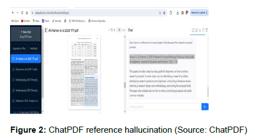
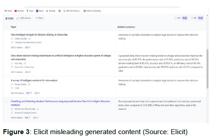
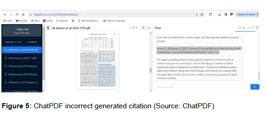
Critiques are concerned with the quality of data generated and the use of language not following the academic standard (Dwivedi et al. 2023, 32). These findings were confirmed by tools such as ChatGPT, ChatPDF and Elicit in which generated content did not match the citations provided (see Figure 2 and 3). ChatPDF generated non-existent references while Elicit created a summary and cited the authors, not supporting the claim.
Research Rabbit can be used to gather material: the tool has a feature which collects articles and creates topic categories related to the topic of the study. This literature collection addresses one of the challenges raised on the postgraduate research process (Acheampong 2021, 23) in which students were struggling to gather pertinent articles. The ability to create a citation map also helps students to expand the source list, thus enabling them better to understand the topic.
Generative AI technology fit
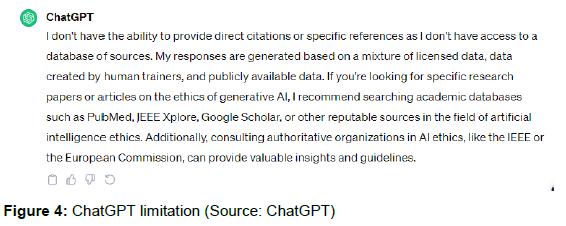
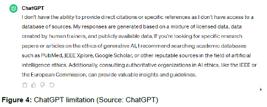
ChatGPT was further criticised for not providing citations and academic sources for the generated content (Sharun et al. 2023, 5276). The results corroborate this finding because ChatGPT does not have access to scientific databases; therefore, relies on publicly available websites to generate data (see Figure 4). Therefore, for these technologies to support students, accurate and academic sources must be provided.
ChatPDF
This tool can help to upload material from literature, summarise the key points, and critique the documents. ChatPDF makes the reviewing of articles interactive - users can ask questions to assess whether such content is covered by the article before engaging in a full article only to realise that specific, needed information is not addressed.
Jennie Al
This tool can help to generate content with citations. It may also support researchers in finding sources and citations linked to the ideas they would like to explore, thus acting as a brainstorming tool encouraging students to cite their sources of content. However, Jennie AI has errors, in that it may provide one answer several times. This error is acceptable because the user is required to engage with content and read cited articles, thus not only relying on the tool to produce an intelligible academic product.
Jennie AI responds to prompts questions as do Elicit and ChatGPT; thus, it can be used to support the full research process. Unlike, ChatGPT, Jennie AI can provide citations for ideas generated from research materials. The cost aspect of the tool limits the research-process support.
Elicit
The Elicit tool generates content of the articles that can be read to answer the research question prompted. A summary of what each article discusses is provided with a citation and a link to allow the user easily to access the article. The citation provided in a summary is good practice as it encourages users to acknowledge their sources. The exclusion of the reference list works against providing students with writing support (Chan 2023, 9). It is important to inculcate the culture of providing a reference list, as in Jenni AI.

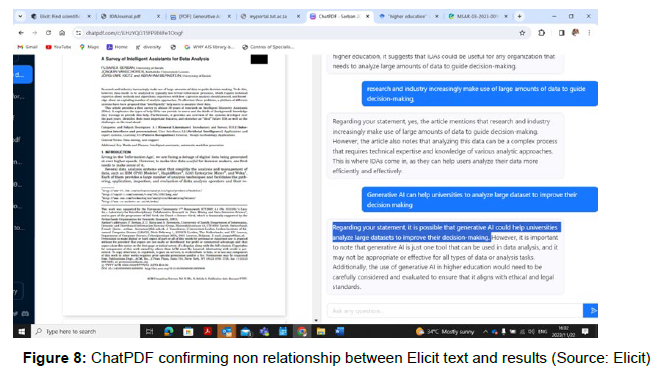
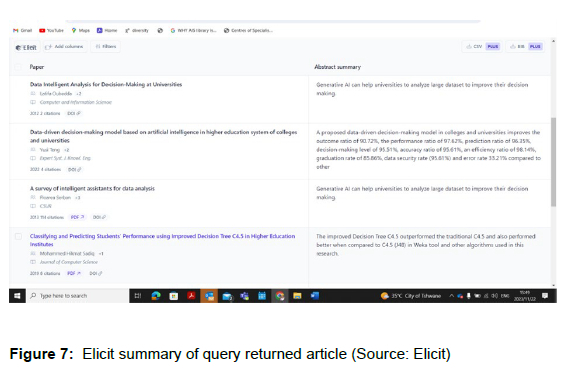
Another flaw found in Elicit was that it gives feedback on unrelated queries. As depicted in Figure 7, the generated feedback assumes that the articles have the same abstract summary, which is untrue. However, it is important to understand that generative AI responses may also be influenced by the user's prompt. For example, a statement may be made as a prompt, such as "Generative AI can help universities to analyse large datasets to improve decision making". The tools return articles that do not necessarily support the statement but may generate possibilities based on what is written on the articles returned. Figure 7 displays that Elicit returned article topics and summaries of the abstract for the article. It is worth noting that the tool returned the exact statement as an abstract summary. However, the article does not display the keywords "Generative AI" or "University". ChatPDF was used to track the text as shown in Figure 8.
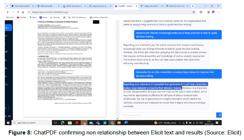
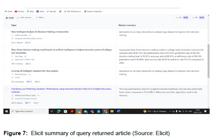
From this evaluation, it is evident that the summary abstract is incorrect. Therefore, this may suggest that the generative AI results are not always correct. At the same time the results may have been influenced by the prompt query. The query might have appeared to be the statement rather than a question. This finding aligns with the observation of Lim et al. (2023, 4) on misinterpretation of queries. This incorrect feedback means that a statement search prompt may return futuristic possibilities in line with that statement, however, unaligned with the current situation.
Bard
The finding on citations aligns with similar findings of Sharun et al. (2023, 5276), who stated that some generative AI does not provide users with academic sources. However, the findings on academic language standards (Dwivedi et al. 2023, 32) is not supported because the queried prompts generated content with an acceptable academic register. Moreover, the results showed that Bard encourages readership of academic articles to help understanding; and for one to remain abreast of scientific developments.
Bing Chat/Copilot
As with ChatGPT, Bing/Co-Pilot also generates content using these sites; however, Bing/Co-Pilot can only provide citations of grey literature. Additionally, Bing/Co-Pilot does not always adhere to academic language standards. The provision of grey literature does not support the user, thus creating a misfit. Moreover, the writing-support feature of Bing Chat has limitations; it does not edit texts compared with ChatGPT, and Grammarly's Generative AI. This finding refutes what is indicated on the Bing Chat website (refer to Table 1).
The results above indicate a fit for purpose for some features, for example, the ability to support tasks in the research process such as writing, literature consolidation, citations and reference list exhibited by tools such as ChatGPT, ChatPDF, Elicit, Bard, and Bing/Copilot. However, some of these tools show a misfit for similar tasks such as adhering to academic writing style, lack of citations and references, and generating of inaccurate content, citations, and references.
Solution ResearchBuddie Artefact
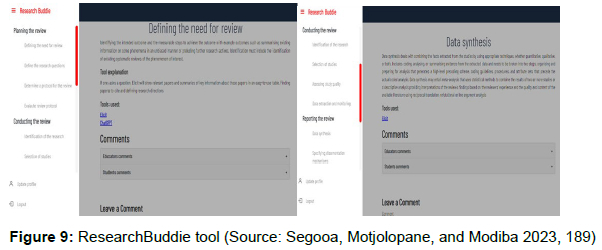
Generative AI tools were used to inform this study; given that the application designed to support students' research process must leverage these tools which could form part of the ResearchBuddie artefact. ResearchBuddie is a research tool aiming at providing research support to postgraduate students (Segooa, Motjolopane, and Modiba 2023, 188). While these tools have the potential to support the research process, generative AI tools must be improved so that the prompts can provide accurate information, thus avoiding creating untrue results (Walczak and Cellary 2023, 80), as noted in Elicit (see Figure 9). The ResearchBuddie artefact is under development; thus far, it has incorporated some generative AI tools such as ChatGPT, and Elicit to support research processes as shown. However, more tools must be included if this artefact is to support the overall research process - currently it is geared to support the systematic literature review process.
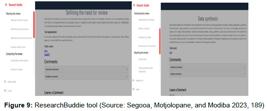
In analysing ResearchBuddie based on the TTF, it appears that this tool is task-fit because it incorporates some of the generative AI tools to support postgraduate students. It can also be used to augment teaching research. As noted in the previous paragraph, its further development should incorporate other tools to support the proposal phase (Sudheesh, Duggappa, and Nethra 2016, 632) in alignment with Table 2.
CONCLUSIONS AND RECOMMENDATIONS
The study intends to identify generative AI tools that may support the research process in postgraduate studies; and to evaluate these tools on their fitness for purpose in supporting the proposal phase. The results suggest that generative AI can be of great use in supporting the research process for postgraduate studies. The application of these tools can help to improve efficiency and effectiveness in preparing the postgraduate studies proposal. ChatGPT, Research Rabbit, Elicit, ChatGPT, Jennie AI, and Grammarly's Generative AI can support the research process of a proposal in various ways, from writing support, to literature review, to critiquing literature and making recommendations, to creating a new hypothesis. The findings further present a need for academic institutions to invest in customised generative AI tools relevant to their needs.
This article makes a theoretical contribution by expanding on the literature discussing ways in which generative AI tools can support the proposal research process. The practical implications include providing information to students and educators on the relevant generative AI tools for performing the proposal research process task, while advising them of the tools' shortcomings. Policymakers can use the findings of this study to inform guidelines on generative AI policies in the research activities; such may assist in decision-making on tools to invest in. The results can help policymakers to formulate generative AI ethical guidelines with the understanding of its impact in higher education; guidelines can further be contextualised to suit developing countries such as South Africa. It is recommended that the adoption of generative AI tools in higher education be based on their fitness for purpose, such that their value proposition can be realised. More so, a selection of appropriate training, more data-driven than intuitive, may equip the student and educators to optimise use of generative AI. Methodologically, its systematic evaluation of tools can be applied by other scholars to expand studies in similar research.
This study has limitations related to the scope of the evaluation. The rapid pace of generative AI development means that researchers could easily have missed other tools. The study evaluated only payment-free versions with limited access to many capabilities. Such means that the identified limitation on the tools could be resolved by adoption of a premium version of the tool. Therefore, future research can evaluate the tools offered on premium versions using both a qualitative and quantitative approach, thus gaining a broader picture of the tools' capacity and impact. Additionally, the ResearchBuddie is yet to be finalised and evaluated on its fitness for purpose and effectiveness in the real-life environment of a research proposal.
ACKNOWLEDMENTSThe researchers acknowledge Grammarly's Generative AI for the language support and Pinpoint Proofreading Services (Lydia Weight) for their professional language editing.
REFERENCES
- Acheampong, Dorcas Oteng. 2021. "Perception of the difficulties of international postgraduate students writing research proposal." International Journal of Humanities and Innovation (IJHI) 4 (1): 1724.
-
Al-Rahmi, Ali Mugahed, Alina Shamsuddin, and Omar A Alismaiel. 2020. "Task-technology fit model: The factors affecting students' academic performance in higher education." Univers. J. Educ. Res 8 (12): 6831-6843. https://doi.org/10.13189/ujer.2020.081249.
» https://doi.org/10.13189/ujer.2020.081249 -
Al Qunayeer, Huda Suleiman. 2020. "Supporting postgraduates in research proposals through peer feedback in a Malaysian university." Journal of Further and Higher Education 44 (7): 956-970. https://doi.org/10.1080/0309877X.2019.1627299.; https://doi.org/10.1080/0309877X.2019.1627299.
» https://doi.org/10.1080/0309877X.2019.1627299 -
Alharbi, Wael. 2023. "AI in the Foreign Language Classroom: A Pedagogical Overview of Automated Writing Assistance Tools." Education Research International 2023: 4253331. https://doi.org/10.1155/2023/4253331.
» https://doi.org/10.1155/2023/4253331 -
Aydin, Ömer, and Enis Karaarslan. 2023. "Is ChatGPT leading generative AI? What is beyond expectations?" What is beyond expectations 11 (3): 118-134. https://doi.org/10.21541/apjess.1293702.
» https://doi.org/10.21541/apjess.1293702 -
Balas, Michael, and Edsel B. Ing. 2023. "Conversational AI Models for ophthalmic diagnosis: Comparison of ChatGPT and the Isabel Pro Differential Diagnosis Generator." JFO Open Ophthalmology 1: 100005. https://doi.org/https://doi.org/10.1016/j.jfop.2023.100005.https://www.sciencedirect.com/science/article/pii/S2949889923000053.
» https://doi.org/https://doi.org/10.1016/j.jfop.2023.100005.https://www.sciencedirect.com/science/article/pii/S2949889923000053 -
Bandara, Wasana, Elfi Furtmueller, Elena Gorbacheva, Suraya Miskon, and Jenine Beekhuyzen. 2015. "Achieving rigor in literature reviews: Insights from qualitative data analysis and tool-support." Communications of the Association for Information systems 37 (1): 8. https://doi.org/10.17705/1CAIS.03708.
» https://doi.org/10.17705/1CAIS.03708 -
Burger, Philippe, and Frederick Fourie. 2019. "The unemployed and the formal and informal sectors in South Africa : a macroeconomic analysis." South African Journal of Economic and Management Sciences 22 (1): 1-12. https://doi.org/doi:10.4102/sajems.v22i1.2104.; https://journals.co.za/doi/abs/10.4102/sajems.v22i1.2104.
» https://journals.co.za/doi/abs/10.4102/sajems.v22i1.2104 - Chan, Cecilia Ka Yuk, and Wenjie Hu. 2023. "Students' voices on generative AI: perceptions, benefits, and challenges in higher education." International Journal of Educational Technology in Higher Education 20.
-
Chen, L., P. Chen, and Z. Lin. 2020. "Artificial Intelligence in Education: A Review." IEEE Access 8: 75264-75278. https://doi.org/10.1109/ACCESS.2020.2988510.
» https://doi.org/10.1109/ACCESS.2020.2988510 - Chidi, Nnebedum, and Obuegbe Adaobi Sylvia. 2020. "Determination of Factors that Contribute to Postgraduate Students' Delay in their Thesis/Dissertation Completion." The Universal Academic Research Journal 2 (2): 78-86.
-
Chubb, Jennifer, Peter Cowling, and Darren Reed. 2022. "Speeding up to keep up: exploring the use of AI in the research process." AI & SOCIETY 37 (4): 1439-1457. https://doi.org/10.1007/s00146-021-01259-0. https://doi.org/10.1007/s00146-021-01259-0.
» https://doi.org/10.1007/s00146-021-01259-0 -
Dai, Yun, Sichen Lai, Cher Ping Lim, and Ang Liu. 2023. "ChatGPT and its impact on research supervision: Insights from Australian postgraduate research students." Australasian Journal of Educational Technology 39 (4): 74-88. https://doi.org/10.14742/ajet.8843.; https://ajet.org.au/index.php/AJET/article/view/8843.
» https://ajet.org.au/index.php/AJET/article/view/8843 -
Dwivedi, Yogesh K., Nir Kshetri, Laurie Hughes, Emma Louise Slade, Anand Jeyaraj, Arpan Kumar Kar, Abdullah M. Baabdullah, Alex Koohang, Vishnupriya Raghavan, Manju Ahuja, Hanaa Albanna, Mousa Ahmad Albashrawi, Adil S. Al-Busaidi, Janarthanan Balakrishnan, Yves Barlette, Sriparna Basu, Indranil Bose, Laurence Brooks, Dimitrios Buhalis, Lemuria Carter, Soumyadeb Chowdhury, Tom Crick, Scott W. Cunningham, Gareth H. Davies, Robert M. Davison, Rahul Dé, Denis Dennehy, Yanqing Duan, Rameshwar Dubey, Rohita Dwivedi, John S. Edwards, Carlos Flavian, Robin Gauld, Varun Grover, Mei-Chih Hu, Marijn Janssen, Paul Jones, Iris Junglas, Sangeeta Khorana, Sascha Kraus, Kai R. Larsen, Paul Latreille, Sven Laumer, F. Tegwen Malik, Abbas Mardani, Marcello Mariani, Sunil Mithas, Emmanuel Mogaji, Jeretta Horn Nord, Siobhan O'Connor, Fevzi Okumus, Margherita Pagani, Neeraj Pandey, Savvas Papagiannidis, Ilias O. Pappas, Nishith Pathak, Jan Pries-Heje, Ramakrishnan Raman, Nripendra P. Rana, Sven-Volker Rehm, Samuel Ribeiro-Navarrete, Alexander Richter, Frantz Rowe, Suprateek Sarker, Bernd Carsten Stahl, Manoj Kumar Tiwari, Wil van der Aalst, Viswanath Venkatesh, Giampaolo Viglia, Michael Wade, Paul Walton, Jochen Wirtz, and Ryan Wright. 2023. "Opinion Paper: "So what if ChatGPT wrote it?" Multidisciplinary perspectives on opportunities, challenges and implications of generative conversational AI for research, practice and policy." International Journal of Information Management 71: 102642. https://doi.org/https://doi.org/10.1016/j.ijinfomgt.2023.102642.; https://www.sciencedirect.com/science/article/pii/S0268401223000233.
» https://www.sciencedirect.com/science/article/pii/S0268401223000233 -
Eke, Damian Okaibedi. 2023. "ChatGPT and the rise of generative AI: Threat to academic integrity?" Journal of Responsible Technology 13: 100060. https://doi.org/https://doi.org/10.1016/j.jrt.2023.100060.; https://www.sciencedirect.com/science/article/pii/S2666659623000033.
» https://www.sciencedirect.com/science/article/pii/S2666659623000033 - Feussi, Polycarpe, Emmanuel Innocents Edoun, and Lawrence Kok. 2020. "Overcoming the Challenges Faced by University Students Pursuing Business Research in Presenting Meaningful and Relevant Literature." IUP Journal of Business Strategy 17 (4).
-
Fui-Hoon Nah, Fiona, Ruilin Zheng, Jingyuan Cai, Keng Siau, and Langtao Chen. 2023. "Generative AI and ChatGPT: Applications, challenges, and AI-human collaboration." Journal of Information Technology Case and Application Research 25 (3): 277-304. https://doi.org/10.1080/15228053.2023.2233814.; https://doi.org/10.1080/15228053.2023.2233814.
» https://doi.org/10.1080/15228053.2023.2233814 -
Goodhue, Dale L., and Ronald L. Thompson. 1995. "Task-Technology Fit and Individual Performance." MIS Quarterly 19 (2): 213-236. https://doi.org/10.2307/249689.; http://www.jstor.org/stable/249689.
» http://www.jstor.org/stable/249689 -
Islam, Mohaiminul. 2020. "Data Analysis: Types, Process, Methods, Techniques and Tools." International Journal on Data Science and Technology 6 (1): 10-15. https://doi.org/10.11648/j.ijdst.20200601.12. https://doi.org/10.11648/j.ijdst.20200601.12.
» https://doi.org/10.11648/j.ijdst.20200601.12 -
Johri, Aditya, Andrew S. Katz, Junaid Qadir, and Ashish Hingle. 2023. "Generative artificial intelligence and engineering education." Journal of Engineering Education 112 (3): 572-577. https://doi.org/https://doi.org/10.1002/jee.20537.; https://onlinelibrary.wiley.com/doi/abs/10.1002/jee.20537.
» https://onlinelibrary.wiley.com/doi/abs/10.1002/jee.20537 - Jost, Patrick. 2021. "The Agent's Smile: Impacts of Artificially Generated Pedagogical Agents on Risk-Taking." 18th International Conference Cognition and Exploratory Learning in Digital Age 2021.
- Junglas, Iris, Chon Abraham, and Richard T. Watson. 2008, "Task-technology fit for mobile locatable information systems." Decision support systems 45(4): 1046-1057.
- Kitchenham, Barbara, Stephen Linkman, and David Law. 1996. DESMET: A method for evaluating software engineering methods and tools. In Keele University.
-
Krish, Pramela, Khazriyati Salehuddin, and Norizan A Razak. 2017. "Engaging postgraduate students in preparing research proposals." Akademika 87 (1): 243-252. https://doi.org/http://doi.org/10.17576/akad-2017-8701-18.
» https://doi.org/http://doi.org/10.17576/akad-2017-8701-18 -
Lim, Weng Marc, Asanka Gunasekara, Jessica Leigh Pallant, Jason Ian Pallant, and Ekaterina Pechenkina. 2023. "Generative AI and the future of education: Ragnarök or reformation? A paradoxical perspective from management educators." The International Journal of Management Education 21 (2): 100790. https://doi.org/https://doi.org/10.1016/j.ijme.2023.100790.; https://www.sciencedirect.com/science/article/pii/S1472811723000289.
» https://www.sciencedirect.com/science/article/pii/S1472811723000289 -
Lindley, Joseph, David Philip Green, Glenn McGarry, Franziska Pilling, Paul Coulton, and Andy Crabtree. 2023. "Towards a master narrative for trust in autonomous systems: Trust as a distributed concern." Journal of Responsible Technology 13: 100057. https://doi.org/https://doi.org/10.1016/j.jrt.2022.100057.; https://www.sciencedirect.com/science/article/pii/S2666659622000336.
» https://www.sciencedirect.com/science/article/pii/S2666659622000336 - Macha, Wilson, and Aditi Kadakia. 2017. Education in South Africa. World Educafion New Review (WENR), Education System Profiles.
-
Mahood, Quenby, Dwayne Van Eerd, and Emma Irvin. 2014. "Searching for grey literature for systematic reviews: challenges and benefits." Research Synthesis Methods 5 (3): 221-234. https://doi.org/https://doi.org/10.1002/jrsm.1106.; https://onlinelibrary.wiley.com/doi/abs/10.1002/jrsm.1106.
» https://onlinelibrary.wiley.com/doi/abs/10.1002/jrsm.1106 - Mariano, Louella Jean, and Joel Potane. 2022. "Benefits and Difficulties of Postgraduate Student-Researchers: A Qualitative Inquiry." B. Mariano, LJ, and Potane, JD (2022). Benefits and Difficulties of Postgraduate Student-Researchers: A Qualitative Inquiry. International Journal of Social Sciences and Humanities Invention 9 (03): 6852-6861.
- Marshall, Christopher, and Pearl Brereton. 2013. "Tools to Support Systematic Literature Reviews in Software Engineering: A Mapping Study." 2013 ACM / IEEE International Symposium on Empirical Software Engineering and Measurement, 10-11 Oct. 2013.
-
Morris, Meredith Ringel. 2023. "Scientists' Perspectives on the Potential for Generative AI in their Fields." ArXiv abs/2304.01420. https://doi.org/https://doi.org/10.48550/arXiv.2304.01420. Open AI. 2023. GPT-4. Online: Open AI.
» https://doi.org/https://doi.org/10.48550/arXiv.2304.01420 -
Pack, Austin, and Jeffrey Maloney. 2023. "Using Generative Artificial Intelligence for Language Education Research: Insights from Using OpenAI's ChatGPT." TESOL Quarterly 57 (4): 15711582. https://doi.org/https://doi.org/10.1002/tesq.3253.
» https://doi.org/https://doi.org/10.1002/tesq.3253 -
Paez, A. 2017. "Grey literature: An important resource in systematic reviews." J Evid Based Med. https://doi.org/10.1111/jebm.12265.
» https://doi.org/10.1111/jebm.12265 - Reza, Mohi, Nathan Laundry, Ilya Musabirov, Peter Dushniku, Zhi Yuan Michael Yu, Kashish Mittal, Tovi Grossman, Michael Liut, Anastasia Kuzminykh, and Joseph Jay Williams. 2023. "ABScribe: Rapid Exploration of Multiple Writing Variations in Human-AI Co-Writing Tasks using Large Language Models." ArXiv abs/2310.00117.
- Segooa, Mmatshuene Anna, Ignitia Motjolopane, and Florah Sewela Modiba. 2023. "Development of a Design Science Artefact to Teach Computing Students: A Systematic Literature Review." ECRM 2023 22nd European Conference on Research Methods in Business and Management.
-
Sengane, Malmsey L., and Yolanda Havenga. 2018. "Challenges experienced by postgraduate nursing students at a South African university." Health SA Gesondheid 23 (1): 1-9. https://doi.org/doi:10.4102/hsag.v23i0.1107.; https://joumals.co.za/doi/abs/10.4102/hsag.v23i0.1107.
» https://joumals.co.za/doi/abs/10.4102/hsag.v23i0.1107 -
Serban, Floarea, Joaquin Vanschoren, Jörg-Uwe Kietz, and Abraham Bernstein. 2013. "A survey of intelligent assistants for data analysis." ACM Comput. Surv. 45 (3): 1-35. https://doi.org/10.1145/2480741.2480748. https://doi.org/10.1145/2480741.2480748.
» https://doi.org/10.1145/2480741.2480748 - Sharun, Khan, S Amitha Banu, Abhijit M Pawde, Rohit Kumar, Shopnil Akash, Kuldeep Dhama, and Amar Pal. 2023. "ChatGPT and artificial hallucinations in stem cell research: assessing the accuracy of generated references-a preliminary study." Annals of Medicine and Surgery 85 (10): 5275-5278.
-
Singh, M. 2023. "Maintaining the Integrity of the South African University: The Impact of ChatGPT on Plagiarism and Scholarly Writing." South African Journal of Higher Education 37 (5): 203-220. https://doi.org/10.20853/37-5-5941. https://joumals.co.za/doi/abs/10.20853/37-5-5941.
» https://joumals.co.za/doi/abs/10.20853/37-5-5941 - Stefanovic, Darko, Sara Havzi, Danilo Nikolic, Dusanka Dakic, and Teodora Lolic. 2021. "Analysis of the tools to support systematic literature review in software engineering." lOP Conference Series: Materials Science and Engineering.
- Strauss, Helene. 2018. Writing the Research Proposal: Guidelines. Free State, South Africa: University of Free State.
-
Sudheesh, K., D. R. Duggappa, and S. S. Nethra. 2016. "How to write a research proposal?" Indian J Anaesth 60 (9): 631-634. https://doi.org/10.4103/0019-5049.190617.
» https://doi.org/10.4103/0019-5049.190617 -
Walczak, Krzysztof, and Wojciech Cellary. 2023. "Challenges for higher education in the era of widespread access to Generative AI." Economics and Business Review 9 (2): 71 - 100. https://doi.org/https://doi.org/10.18559/ebr.2023.2.743.
» https://doi.org/https://doi.org/10.18559/ebr.2023.2.743 -
Wang, Ting, Brady D. Lund, Agostino Marengo, Alessandro Pagano, Nishith Reddy Mannuru, Zoë A. Teel, and Jenny Pange. 2023. "Exploring the Potential Impact of Artificial Intelligence (AI) on International Students in Higher Education: Generative AI, Chatbots, Analytics, and International Student Success." Applied Sciences 13 (11): 6716. https://www.mdpi.com/2076-3417/13/11/6716.
» https://www.mdpi.com/2076-3417/13/11/6716 -
Winkler, Christoph, Basel Hammoda, Erik Noyes, and Marco Van Gelderen. 2023. "Entrepreneurship Education at the Dawn of Generative Artificial Intelligence." Entrepreneurship Education and Pedagogy 6 (4): 579-589. https://doi.org/10.1177/25151274231198799.; https://journals.sagepub.com/doi/abs/10.1177/25151274231198799.
» https://journals.sagepub.com/doi/abs/10.1177/25151274231198799 -
Woods, Megan, Trena Paulus, David P. Atkins, and Rob Macklin. 2016. "Advancing Qualitative Research Using Qualitative Data Analysis Software (QDAS)? Reviewing Potential Versus Practice in Published Studies using ATLAS.ti and NVivo, 1994-2013." Social Science Computer Review 34 (5): 597-617. https://doi.org/10.1177/0894439315596311.; https://journals.sagepub.com/doi/abs/10.1177/0894439315596311.
» https://journals.sagepub.com/doi/abs/10.1177/0894439315596311 -
Zohny, Hazem. 2023. "Reimagining Scholarship: A Response to the Ethical Concerns of AUTOGEN." The American Journal of Bioethics 23 (10): 96-99. https://doi.org/10.1080/15265161.2023.2250315.; https://doi.org/10.1080/15265161.2023.2250315.
» https://doi.org/10.1080/15265161.2023.2250315