Re-imagining academic induction through Ubuntu and transformative learning: A critical realist study of agency, epistemic justice and contextual responsiveness in a rural South African university
Abstract
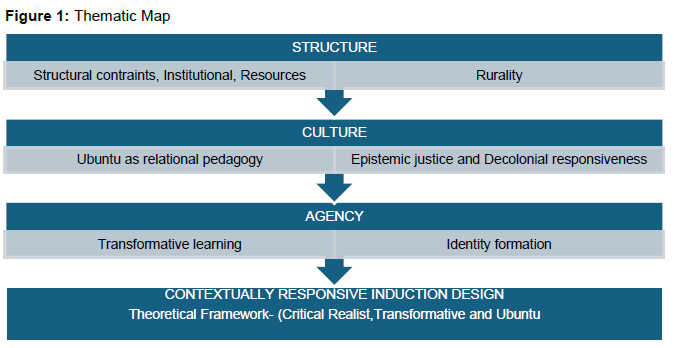
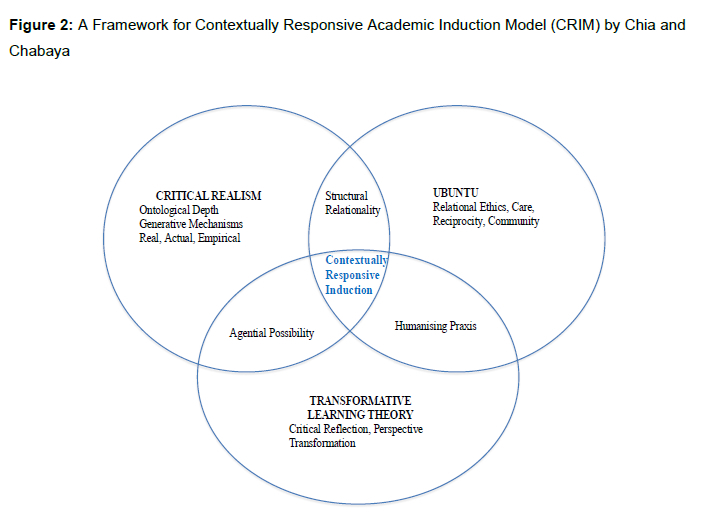
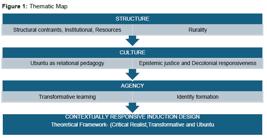
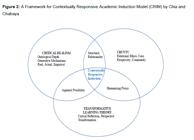
Academic induction is a universal feature of higher education, but its enactment in rural and historically marginalised South African universities bears little resemblance to dominant international models. These institutions face compounding pressures: geographic isolation, infrastructure deficits, student poverty, digital exclusion, and complex community expectations that profoundly shape early-career academics' (ECAs) experiences of professional learning. This study re-imagines academic induction at a historically disadvantaged institution (HDI) by bringing Ubuntu philosophy, Transformative Learning Theory (TLT), and Critical Realism (CR) into explicit theoretical conversation. Through a Critical Realist ethnographic case study conducted at a rural university over a twenty-month period, the research explores the generative mechanisms that enable or constrain meaningful induction. A morphogenetic analytical framework surfaced the dynamic interplay between structural realities, cultural logics, and agential possibilities. Findings reveal that: rurality operates as both structural constraint and generative force; Ubuntu provides a relational ethical grammar for professional support and epistemic recognition; and transformative learning emerges through disorienting encounters, peer dialogue, and critical reflection. The article proposes the Contextually Responsive Induction Model (CRIM), integrating Ubuntu's relational ethic, TLT's reflective praxis, and CR's explanatory depth, and argues that induction in South Africa must move beyond generic templates toward approaches that foreground people, place, and possibility.
Academic induction; Ubuntu; transformative learning; critical realism; rural universities; epistemic justice; historically disadvantaged institutions; global south; decoloniality; rural higher education; academic development; contextual responsiveness
 Thumbnail
 Thumbnail