Investigating expansion of doctoral education in South African universities: Balancing numbers with quality
Abstract
Global trends suggest an unprecedented drive to double the number of doctoral graduates to meet increasing labour-market demands in the knowledge-driven, competitive economy, alongside the rise of commodification. This enthusiasm has unfolded alongside shrinking markets and declining government funding for tertiary education. Issues and questions that foreground the article's discussion include: first, what internal and external quality assurance policies and practices are, or should be, in place to safeguard the quality of the expanded doctoral programme in South Africa? Second, how are current internal and external quality assurance policies and practices of doctoral programmes implemented in the context of institutional autonomy and academic freedom at institutional levels? Third, what national strategies should be in place to mediate between increased funding to expand doctoral programmes and institutional capacity in a differentiated system? This article examines internal and external quality assurance policies and practices in the expanded doctoral studies in South Africa in the third decade of higher education transformation. It argues that, contrary to the common belief about the struggle between internal and external quality assurance mechanisms, these policies and practices need to co-exist at the institutional level.
funding-driven pressures; doctoral studies; quality; quantity; commodification
INTRODUCTION
The current global campaign to double the number of doctoral students is unfolding across intersecting political, ideological, social, and economic spaces at different times (Halse and Mowbray 2011, cited by Sarrico 2022, 130). This campaign is advanced within the broader changes comprising shifts away from an industrial or resource-based economy to a new knowledge economy, and the intrusion of market values and ethos unfolding through the marketisation and managerialism of the New Right neoliberal ideology (Hood 1991, 5).
In South Africa, the knowledge economy unfolds alongside the geopolitical changes following the democratic dispensation and the readmission of the country to the global community. Following the readmission in 1994, the South African higher education sector also became part of the world "higher education community in both senses of the global economic market and of cultural internationalism" (CHE 2008, 13). The influence of the knowledge economy is evident in the widely accepted perception that doctoral education has a greater potential to promote economic growth and development. This perception is reinforced by the assertion that prosperous countries in the competitive knowledge economy are those that have invested not only in education but also in the production of PhD or doctoral degrees (Academy of Science of South Africa (ASSAf) 2010; Nerad and Heggelund 2011).
The expansion of doctoral studies is a response to the demands of the knowledge economy, the incursion of market ethos and values in higher education, and transformation imperatives, which have revitalised conversations on quality, quality policies and practices, and how quality and quality safeguards interconnect with academic freedom and institutional autonomy globally and in the post-apartheid setting.
In addition, the post-apartheid higher education sector has the obligation of advancing the transformation agenda involving widening access to the sector, including doctoral degrees, and the promotion of equity and social justice, all of which are to be realised within the context of the incursion of market philosophy and ideals.
This article employs the human capital theory of global neoliberal ideology, and the transformational discourse to redress historical inequalities and inequities of the past, to examine quality and quality assurance policies and practices in the expansion of doctoral studies from the third decade of higher education transformation to the present in South Africa. It focuses on quality and quality safeguards discourses on doctoral studies in relation to academic freedom, institutional autonomy, and accountability in higher education in the post-apartheid setting.
Issues foregrounding the discussion are: how internal and external quality assurance policies and practices interconnect nationally and at institutions; how quality and quality assurance of doctoral programmes manifest themselves, unfold, and interact with institutional autonomy, academic freedom, and accountability in practice; and how supervisors and students enrolled in doctoral programmes conceptualise quality and quality safeguards.
BACKGROUND AND CONTEXT
The global hype to prepare doctoral students for the new knowledge economy has its roots in the human capital theory (HCT) and the global neoliberal ideology, which assume that investing in human beings contributes to economic growth and development (Becker 1981; Tilak 2003; Edeji 2024). HCT and neoliberal ideology have resulted in the increasing intrusion of market ethos and values, marketisation, and managerialism in higher education (Hood 1991, 5; Simmonds and du Preez 2014, 1608; Shepherd 2018). These two phenomena have motivated a rethink of the internal and external quality safeguards of doctoral studies and their links with academic freedom and institutional autonomy across different contexts and epochs (Nerad 2014, 3).
Since 1994, the idea of a knowledge economy has not only permeated the post-apartheid society and economy, where knowledge production is considered the driver of economic growth and development, but also the "relationship between levels of education and economic and social development has become a new orthodoxy" (CHE 2016, 25). In addition, the knowledge economy and encroaching new managerialism in post-apartheid South African higher education have coexisted, and continue to exist alongside, the transformation agenda aiming to redress past systemic inequalities caused by decades of colonialism and apartheid. These factors have reshaped the discourses of quality and quality safeguards, as well as the issues of which bodies are, or should be, responsible for policing quality assurance, especially in the context of the expansion of doctoral education in South Africa (CHE 2016, 196).
The discussions on the expansion of doctoral studies, quality, and quality assurance policies and practices unfold within the broader issue of the purposes of this qualification. For example, some authors argue that the purposes of a doctorate are to produce conceptual disciplinary knowledge and to serve the interests of interests outside academia (Probst and Lepori 2008). Others argue that the purpose of doctoral studies is to serve the expectations of industry and the production of graduates who are able to solve problems in different contexts (Probst and Lepori 2008, 477). Yet others propose a "multi-purpose" for a doctorate, including training graduates for employment and careers, where "knowledge is generated in the context of multi-stakeholder teams that transcend the boundaries of traditional disciplines" (Gray, Iles, and Watson 2013, 250). The CHE proposes a much broader purpose of a doctorate that transcends the utilitarian and instrumental intentions, towards the production of knowledge "beyond the academy, and on graduates who are employable beyond, with the capacity for resolving problems in various contexts, both known and novel" (CHE 2018, 14).
Furthermore, the expansion of doctoral studies is intensifying alongside diminishing natural resources, including mining and agriculture, that are no longer sources of economic growth globally or in South Africa. The waning of these natural resources has prompted governments to turn their focus to knowledge, science, technology, and innovation as key drivers of economic growth (Yusuf and Nabeshima 2007). The expansion has further fuelled conversations about the benefits and effects of the doctorate for individuals, organisations, and society in the new competitive knowledge economy (Sarrico 2022, 130).
Quality refers to an acceptable standard and can relate to several matters, including outcomes, graduate competence, research outputs, the quality of programme offerings, teaching and learning, and assessment practices. Quality means, inter alia, being outstanding, achieving excellence, being fit for purpose, providing value for money, and being transformative, perfect, efficient, and cost-effective, as well as transforming learners (Harvey and Green 1993). The critique of the above is its seeming use of industry language, including the higher education sector's efficiency and fitness for purpose, and the equation of institutions with factories and students with customers. Quality assurance (QA), on the other hand, refers to mechanisms that safeguard, uphold, and enhance the quality of academic programmes, encompassing programme offerings, teaching, learning, and assessment, credible management, and the quality of resources (Harvey and Green 1993; Campbell and Rozsnyai 2002).
Since its origins, higher education institutions (HEIs) have expressed interest in quality, trying to evaluate their substantive functions. The medieval university already had its own models and approaches to quality control, demonstrating its ability to adapt to changing environments (Kerr 1982). Two broad ideal types of quality and quality assurance in a classical university comprised the practice of giving academic activities, including quality control, to external authorities, as was the case in France and Italy with the University of Bologna (Cobban 1988). The other, symbolising the UK academic culture, was typified by institutional autonomy, which gave academic communities overall control of quality assurance through peer review. The latter resonates with the quality assurance model in a classical university, which deemed universities as autonomous and free from external political and ideological interference, and held them responsible for assuring the quality of teaching and research (Mavil 2013, 8).
In democratic states, Quality Assurance (QA) typically operates at two levels: internal quality safeguards (IQS) and external quality safeguards (EQS). IQS functions as a form of institutional self-evaluation, involving the development of transparent policies, processes, and procedures that demonstrate internal accountability. It also includes the roles and practices of Academic Committees in maintaining and enhancing quality standards. It also encompasses the recruitment and selection of PhD or doctoral candidates, supervision models, regulations and mechanisms for tracking candidates' progress, the qualifications and roles of supervisory staff, as well as measures to safeguard high standards in the doctoral examination processes and the final doctoral thesis (Bitusikova 2010, 20). EQS, on the other hand, refers to cases where external bodies, including governments, develop national policies and frameworks within which IQS processes and mechanisms are interpreted. This ensures that public money allocated to institutions is accounted for (Lee 2013). It also prevents institutions from abusing their institutional autonomy and academic freedom and from denigrating the government's agenda, values, and priorities.
Assumptions about the economic value of doctoral studies and economic growth embedded in HCT, and the adoption of market ethos and values through managerialism, have reshaped the discourses of quality and quality safeguard practices in higher education globally and in South Africa as follows: First, recent trends suggest some tensions between increasing the number of doctoral graduates who can function in highly advanced knowledge, innovation, and the new knowledge economy, while also advancing the transformational agenda of deliberate widening of access to previously marginalised groups while ensuring the quality of the qualification in the post-apartheid setting (DoE 1997; CHE 2018, 8; CHE 2004, 38). Second, it is asserted that countries with a high percentage of PhD graduates are better positioned to compete globally and to promote investment and collaboration (National Planning Commission 2012). The expansion, however, affects quality and quality assurance practices. Third, there are arguments that quality and quality safeguards in doctoral studies are moulded by the overpowering intrusion of industry and market culture and principles into higher education (DoE 1997; CHE 2004, 38).
The ambition to invest in doctoral studies in South Africa is evident in the increasing enrolment in doctoral programmes over the past decades. Enrolments increased from 5,152 in 1996 to 13,965 in 2012, with an annual growth rate of 6.4 per cent, and rose more modestly from 5,152 in 1996 to 6,354 in 2000 (Mouton and Cloete 2015, 40). However, these growth patterns appear misaligned with the government's target of producing 5,000 new PhD graduates per year by 2030, as proposed in the National Development Plan (National Planning Commission 2012). The expansion of doctoral studies, coupled with market pressures and South Africa's unique historical context, carries significant implications for the quality and quality assurance of doctoral programmes.
Some concerns have been raised about the quality of the envisaged expanded doctoral studies in South Africa. First, the seeming unrestricted recruitment of doctoral students by all higher education institutions, and government incentives to produce doctoral students. Second, the recruitment of doctoral students, even in cases of inadequate structural and human resources, leading to supervision overloads, supervision outside one's field, and the use of inexperienced supervisors. Third, the apparent absence of, or inadequate, institutional safeguards and, in some instances, the lack of oversight structures to ensure the quality of doctoral studies at some institutions. These apprehensions have triggered calls to develop robust quality assurance measures to enhance the quality of doctoral degrees across universities and to avert the reckless expansion of doctoral programmes (CHE 2002, 85; ASSAf 2010, 6).
In addition, quality and quality assurance in higher education in South Africa intersect with the concepts of academic freedom, institutional autonomy, and accountability in the third decade of higher education transformation. A brief discussion on policies and practices of quality and quality safeguards of preceding decades is, however, necessary. First, a policy for quality and quality safeguards across the entire higher education sector never existed prior to the democratic dispensation. Rather, state intervention in universities regarding quality assurance was also largely haphazard (CHE 2004, 143; DoE 1997: Section 1.23). During this period, quality safeguards for all programmes, including doctoral programmes offered by universities, were ostensibly the prerogative of individual institutions. Second, quality assurance at the system level was characterised by the beginning of discourses driven by the National Education Policy Investigation (NEPI) from 1990 to 1992. The NEPI cautioned against directly linking equity to the equalisation of resources, as this "could impair the overall quality of the system and so retard economic development" (CHE 2004, 143). Third, there was the quality assurance at the sectoral level prior to 1994, when quality safeguards for universities and the Technikon sector were differentiated, with universities considered QA bodies in accordance with the institutional autonomy achieved during the apartheid years (CHE 2004, 144). Fourth, there was quality assurance at the institutional level, where universities were responsible for assuring the quality standards of their offerings, teaching and learning, assessment, and the conferring of degrees. Universities were also responsible for institutional self-evaluation and some form of external review at the departmental level, but not necessarily across institutions. Fifth was the development of QA from 1994 to 2001 and the creation of the Higher Education Quality Committee (HEQC) (CHE 2002). Last, there is the system level, typified by the operational development of QA mechanisms "for a single, coordinated higher education system with effective planning and monitoring capacity across institutions and programmes" (CHE 2004, 145). Reconceptualising quality and quality assurance became increasingly necessary following the observation that, despite the good intentions of cooperative governance, where institutions were expected to voluntarily develop, implement, and safeguard quality standards, this did not materialise in some institutions (Department of Education 2001, 71, cited in CHE 2003, 11).
CURRENT QUALITY AND QUALITY ASSURANCE IN THE EXPANDED DOCTORAL STUDIES IN SOUTH AFRICAThe period from 2004 to the present has been characterised by the consolidation of quality assurance at both national (external) and institutional (internal) levels. During this period, distinct roles were established for external quality control bodies and institutional self-assessment or peer review processes (Human Sciences Research Council 1996, 171). External government bodies, such as the HEQC of the Council on Higher Education (CHE 2002), developed policies and frameworks to safeguard the quality of higher education offerings and to monitor compliance and governance. The HEQC has since become more active in formulating policies to guide the quality assurance of doctoral programmes, programme accreditation, institutional audits, and national reviews (CHE 2013). Furthermore, the expansion of the higher education sector has necessitated greater accountability to the state regarding the quality of academic programmes, including doctoral offerings, as well as the quality of teaching and student support provided by institutions (CHE 2004, 2).
The quality assurance model currently in place is institutional, or internal quality safeguards by peers, while recognising the importance of the government's role in quality safeguards. This model emphasises the importance of external bodies, such as government departments and their associated agencies, which are responsible for developing quality control policies and mechanisms while promoting peer review processes at the institutional level. Institutions and universities are required to design, implement, and monitor their own quality assurance mechanisms for doctoral programmes, ensuring alignment with national frameworks and standards under the cooperative governance framework (CHE 2009, 5). These institutional mechanisms, developed for internal self-assessment, are implemented through various university structures (CHE 2008, 17, 27). This layer of quality assurance ensures that institutional autonomy in the offering of doctoral programmes is enhanced, rather than limited, by academic freedom and institutional accountability (CHE 2008).
Until recently, quality in higher education has been shaped by policy borrowings from the concepts of fitness of purpose and fitness for purpose (Harvey and Green 1993). In the context of transformation goals in South Africa in the early decades of transformation, quality was defined in terms of fitness of purpose, denoting whether higher education is advancing national goals, including equity, access, effectiveness, and efficiency (responsiveness). The fitness of purpose adopted by the HEQC described a specified institutional mission within a national framework that encompasses differentiation and diversity (CHE 2004, 147; 2008, 58). Fitness for purpose, on the other hand, refers to external quality assurance through the HEQC to maintain a balance between development and accountability, align quality assurance with strategic planning and resource allocation, and realise quality and equity concurrently (CHE 2008, 58).
Quality and quality safeguards in doctoral studies in South Africa have recently been significantly remodelled by the publication of the Qualification Standard for Doctoral Degrees (The Standard) (CHE 2018) and the National Review of South African Doctoral Qualifications (CHE 2022). The former provides a framework for determining the quality and quality safeguards of expanding doctoral studies. It also establishes benchmarks to ensure quality, develop sectoral capacity, and encourage higher education institutions to implement their own internal quality safeguards (CHE 2018, 4). These measures further uphold the standing of institutional doctoral programmes and graduates while guiding institutions in developing their procedures and quality assurance practices (CHE 2018, 8). The key aspect that must be demonstrated before a doctoral qualification can be awarded is an original contribution to the field of study, as part of the expected graduate attributes (CHE 2018, 13).
The National Review, on the other hand, focused first on supporting institutions in evaluating the quality of their quality assurance arrangements for the delivery of doctoral studies against the national benchmark standard. Second, it aimed to produce a national state-of-offering evaluation report for South Africa (CHE 2022, VI). Although the review did not focus directly on institutions themselves, institutional contexts became an important consideration in determining an environment conducive to high-quality doctoral studies (CHE 2022, VI). The purpose of the review was to establish the extent to which doctoral qualifications offered by different types of institutions meet the minimum threshold defined by the standard (CHE 2022, 2). The standard can be described as a threshold statement that determines the minimum benchmarks for awarding a doctoral qualification irrespective of the variant (CHE 2022, 4).
Standards or thresholds assumed to be in place to safeguard the quality of doctoral programmes at the institutional level cover the pre-doctoral stages, registration, the research study itself, and the final assessment through the conferment of the qualification (CHE 2008, 2). Some notable quality-imperative issues identified in the self-evaluation reports (SER) completed by different institutions include, among others, the existence of internal quality safeguards for doctoral studies, institutional conditions conducive to offering high-quality doctoral programmes, qualified and experienced supervisors with relevant credentials, and oversight committees, or the lack thereof (CHE 2002, 12).
METHODOLOGY
The article was underpinned by an interpretive logic. Purposive sampling was employed to collect qualitative data on participants' perspectives, experiences, and reflections regarding the supervision of doctoral studies across different institutional types, as well as doctoral graduates' reflections on their supervisory journeys.
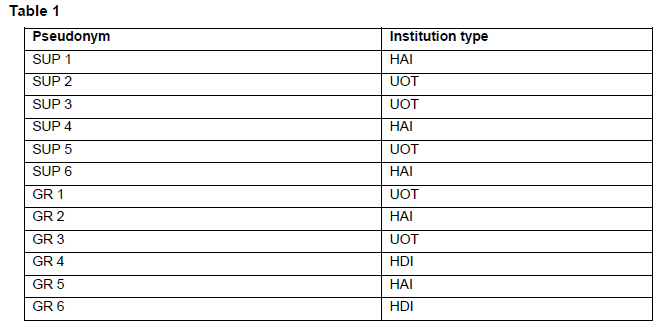
The participants comprised six supervisors and six doctoral graduates. Three supervisors and two doctoral graduates were sampled from historically advantaged institutions (HAIs). The latter were selected for their research culture and history, as well as for their output of doctoral graduates. Three supervisors and two doctoral graduates were selected from universities of technology (UoTs). The rationale for choosing these institutional types is that they are generally new to research, including the production of doctoral degrees. Two doctoral graduates were selected from historically disadvantaged institutions (HDIs). The institutions were chosen based on their historically low research culture. The institutions were purposefully selected to explore the extent to which threshold standards across various aspects of quality and quality assurance were met. Participants were selected to assess their awareness of internal quality safeguards for doctoral programmes in their institutions, including whether policies and systems were in place to maintain programme quality. Triangulation of data was achieved by comparing and cross-verifying the perspectives of supervisors and graduates within each institution and across different institutional types. This approach enabled the identification of converging and diverging views, ensuring a more comprehensive and credible understanding of how internal quality safeguards and supervisory practices operate in varied contexts. Table 1 shows the participants and the institutional types at which they work or completed their doctoral studies.
Data were collected through self-administered interviews. Founding policy documents, reports, and relevant literature on quality and quality assurance in higher education and doctoral studies were reviewed beforehand to guide the development of interview themes and questions. Focus group discussions with four participants were conducted before the main interviews to refine and validate these themes. Ultimately, the article's themes and issues emerged from participants' responses, informed by insights drawn from the reviewed documents and literature. Since the participants were already working and participated in their individual capacity, applying for ethical clearance from institutions was not required. In order to observe the necessary ethical requirements, the participants were provided with an informed consent form and were requested to participate in the completion of a self-administered interview schedule, as well as in interviews through the Microsoft Teams platform. In order to safeguard anonymity, the personal details of the participants and the institutions they are affiliated with, or studied at, remained anonymous.
FINDINGS AND DISCUSSION
The findings below have been organised into themes and issues derived from participants' reflections and experiences as supervisors and students who have completed their doctoral studies regarding quality and quality assurance of doctoral studies.
Purposes of the doctoral qualification
Most of the participants described the doctorate as serving multiple, sometimes competing, purposes, ranging from advancing knowledge creation and responding to national development goals to enhancing personal and professional trajectories. Supervisor (SUP) 6 from a HAI defined the doctorate as a space for "original, rigorous research that contributes to knowledge production in educational contexts, often grounded in local challenges but with global relevance." This view positions doctoral research as simultaneously intellectual and contextual, capable of addressing pressing social issues while maintaining scholarly rigour. Supervisor 4 stressed the developmental and transformative imperatives underpinning the qualification, stating that its purpose was "to enhance students' research skills, enabling them to be critical thinkers and improve the country's economic competitiveness." Supervisor 3 explained that the PhD's value lies in preparing individuals for careers in academia and that it is also increasingly valued in industry, signalling expertise, persistence, and analytical acumen (SUP 3: UoT). This comment underscores the PhD's repositioning as a credential of transferable skills rather than one confined to academic advancement. GR 2 argued that doctoral studies should produce graduates with a strong research and innovation system to drive economic growth, especially by promoting research with commercial and practical applications, and ensuring that PhD graduates contribute to economic development (GR 2: HAI).
We concur with the findings (SUP 6; SUP 3: UoT; GR 2: HAI) and some authors (CHE 2018, 14; Gray et al 2013, 250; Probst and Lepori 2008) that a doctorate has multiple purposes and that these purposes are often construed as the basis of the quality of this programme. We, however, note that the common linking of the purposes of the doctorate with quality portrayed in the findings stems from the instrumentalist perspective of this offering.
Expansion pressures and market permeation
Convergence in the findings, policies and practices, and prior studies (DoE 1997; CHE 2004; Nerad and Heggelund 2011) on the urgency of expanding the pool of doctoral graduates to function in the new knowledge economy in South Africa and globally was observed in the study. All participants acknowledged the growing national and institutional pressure to increase doctoral throughput, often driven by performance-based funding mechanisms. Supervisors were particularly critical of this trend, cautioning that the quest for quantity could undermine quality. Supervisor 5 said:
"Most doctoral programmes tend to focus on just churning out the numbers… We are largely engaging in what I call bean-counting. All we want are the numbers, but we are not also very serious… about ensuring that the quality of the doctoral programme is up to scratch."
We support this finding raised in various sources (Academy of Science of South Africa ASSAf) 2010; Nerad and Heggelund 2011; DoE 1997; CHE 2004, 38) that the expansion of doctoral studies in South Africa pressurises institutions to be competitive in the production of doctoral degrees for the knowledge economy. It is further argued that this expansion symbolises the increasing influence of the market, which turns universities into factories for producing large numbers of doctoral graduates and earning lucrative government subsidies. It is further argued, in support of some authors (Becker 1981; Tilak 2003; Edeji 2024), that this expansion is reminiscent of the HCT of the neoliberal ideology, arguing that this often privileges quantity at the expense of quality. We further share the concerns raised in the findings and by (CHE 2002; ASSAf 2010, 6), that the burgeoning trend to expand doctoral offerings by all institutions, even in cases where some institutions do not have the needed human capacity, is untenable.
Supervisor 5's observation points to a systemic tension between bureaucratic accountability and intellectual rigour. Supervisor 6 underlined this concern, warning that "expansion, if not carefully planned, risks undermining supervision quality and student preparedness." Similarly, SUP 3 exposed the financial incentives driving this expansion, thus: "Time that should also have been committed to research is then transferred to supervising doctoral students, largely because we get a lot of money from DHET… around R300,000 per doctoral student." (SUP 3: UoT). We endorse this finding and corroborate the views of some sources (CHE 2002; ASSAf 2010; Nerad 2014) that the continuing expansion of doctoral offerings, as institutions chase government subsidies, even in cases of a lack of human capacity and insufficient infrastructure, is likely to compromise the quality of doctoral outcomes.
Measurement of quality of doctoral studies
The findings (GR 6: HDI and GR 1: UoT) suggest that graduates' and academics' understanding of the quality of a doctorate varied, including being grounded in personal motivations, career ambitions and increasing their employability chances, fostering deep and independent research capacity, and contributing to African knowledge systems in translation studies. Supervisors 2, 3, and 5 pointed out that a doctorate is of an acceptable quality if it prepares graduates to solve problems in everyday situations, innovate, and identify significant problems or gaps within a particular field and conduct original research that contributes new insights or solutions. Graduate 3 endorsed the supervisors' sentiments, noting that the quality of his doctoral studies was reflected in the institution's mission and mandate. He emphasised the focus on applied research, community engagement, and addressing real-world problems, which closely aligned with his research goals (GR 3: UoT).
We observe from the findings under this heading that the quality of the doctorate is measured in terms of the purpose of this qualification. We maintain that this interpretation resonates with the views of some authors (Harvey and Green 1993; CHE 2004, 147; 2008, 58). In terms of this perspective, the quality of doctoral offerings is determined in terms of how this qualification fulfils the missions, mandates, and visions of institutions, and its fitness of purpose. The participants from UoTs argued that the quality of their doctoral studies should be judged by how they advance usable applied knowledge. The findings endorse the views of CHE that one of the mandates of HAIs is the generation of deep disciplinary knowledge and critical thinking as graduate attributes that serve as measures of quality (CHE 2018, 13; 2022, 24-26). In contrast, the findings suggest that quality in the UoT context is gauged in terms of its contribution at the level of practice, including the development of new techniques and innovation. It is further argued in support of the findings in the doctoral review (CHE 2022, 26) that the quality of a doctorate could be determined in terms of how this qualification contributes to methodology, theory application, and theoretical attributes across all institutional types.
Although not expressly stated, the two perspectives in the findings on how quality can be determined in UoTs and HAIs above are particularly insightful in the current context of a differentiated higher education system, where the different institutional types have specific mandates in terms of the type of knowledge to be produced. We argue that this finding sheds light on the understanding of how the originality graduate attribute can be construed in doctoral studies. We further challenge the fitness-for-purpose criterion described by Harvey and Green (1993), through which the quality of a doctorate is measured in terms of value for money. Also, an account of measuring the quality of a doctorate in terms of how it promotes social justice, contemplated in CHE (2004, 147; 2008, 58), has not been raised in the findings.
Institutional quality assurance mechanisms
The finding that some forms of institutional quality assurance mechanisms exist but vary significantly from one institution to another and from one institutional type to another, as argued by CHE (2009, 5), is significant. Supervisors described internal quality assurance at their institutions in formal terms, while graduates spoke about their lived realities within these systems. Quality assurance processes at one HAI appeared more systematic. SUP 6 explained: "Quality is assured through the Faculty Higher Degrees Committee, peer review of proposals, and external examinations." (SUP 6: HAI). These processes ensured scholarly oversight and accountability. Supervisor 1 confirmed that oversight structures are in place at the institution, enforcing compliance at the departmental level (SUP 1: HAI). Graduate 3 indicated that oversight structures exist throughout the entire doctoral journey, arguing that the most direct form of oversight came from the supervisory relationship (GR 3: UoT). In contrast, Supervisor 4 revealed systemic shortcomings as follows:
"Orientations are provided to our PhD students after registration… but there is no pre-doctoral preparedness programme." (SUP 4: HAI).
Supervisor 3 pointed out that "Doctoral workshops are organised, assisting students with topics such as proposal writing, literature review writing, data collection, and analysis." (SUP 3: UoT).
Referring to workshops for doctoral students, Supervisor 1 expanded on this, saying: "Workshops are compulsory, but normally most students cannot attend them because they are organised during office hours when they are at work… they therefore become voluntary." (SUP 1: HAI). Supervisor 2 highlighted his institution's proactive approach: "We organise workshops and winter schools for PhD students. The Research Office organises workshops for PhD students." (SUP 2: UoT).
Graduates' experiences mirrored institutional contrasts. Graduate 5 praised the support structures available: "The Postgraduate Affairs Office and the Writing Centre offered ongoing writing and research workshops… instrumental in refining my argumentation." (GR 5: HAI). Conversely, GR 6 noted constraints: "There was the Writing Centre and the Postgraduate Unit… but many [workshops] were cancelled due to funding constraints. I think the institution is not big on workshops." (GR 6: HDI). GRs 1 and 2 observed minimal formal systems, claiming that their institutions lacked systems in place, including a structured writing support programme and structured mentorship to help doctoral students, unless the supervisors themselves put them in place (GR 1: UoT and GR 2: UoT). Supervisor 5 argued that academic freedom plays a significant role in enhancing quality "because while the government provides a broad policy framework from which academic freedom must be understood, institutions have a particular role at the practice level" (SUP 5: UoT).
We observe that the findings summarise institutional conditions necessary to enhance the quality of doctoral studies, including the importance of oversight structures, processes, and mechanisms to ensure compliance, as advised by CHE (2002; 2022). Although this cannot be generalised across faculties and institutions, the findings suggest the existence of internal institutional quality assurance, including the Faculty Higher Degrees Committee, peer review of proposals, external examinations, and oversight structures in the selected HAIs. Similarly, the awareness and existence of internal quality safeguards for doctoral studies in UoTs varied, with the findings showing that quality assurance structures and oversight are almost exclusively in place in faculties and departments, and that less streamlined structures are found at the institutional level. We concur with CHE (2002, 12) that oversight structures to ensure that institutional quality safeguards are implemented and monitored cannot be overemphasised.
While recognising efforts by institutions to put in place institutional quality safeguards for doctoral studies, it appears that these processes exist as compliance with the National Quality Framework driven by CHE (2002). We conversely argue, in support of the existing Quality Assurance Framework (CHE 2008), that the links between institutional and national quality safeguards should rather be seen as an opportunity for institutions to exercise academic freedom and institutional autonomy regarding their doctoral offerings, while ensuring accountability to the state for the money it allocates to institutions. We further agree with Lee (2013) that the relationship between institutional autonomy, academic freedom, and accountability is critical to ensure that institutions do not abuse academic freedom and institutional autonomy to undermine national imperatives in the South African context.
Supervisory capacity and expertise
We concur with the findings and CHE (2022, 40-43) that while the expansion of doctoral offerings is encouraged, this should be undertaken provided there is supervision capacity and expertise, and careful allocation of supervisors to produce quality doctorates. The findings show that the graduates experienced the consequences of this expansion first-hand. GR 3 shared his frustrations: "Meeting the supervisor was always a problem. Feedback has always been through phone calls but not very detailed… something would come up [at the last minute]." (GR 3: UoT). His experience reflects overstretched supervisory systems struggling to accommodate growing cohorts. Similarly, GR 4 described the institution's loose approach to student development: "There is no compliance enforcement [for workshops] … it was just the student's decision to attend… sometimes with motivation by the supervisor." (GR 4: HDI).
We concur with the findings that supervisory quality and capacity are the cornerstones of doctoral success but also constitute a recurring challenge, particularly in under-resourced institutions. Supervisors from HAIs reported strong experience and manageable supervision loads. Supervisor 6 noted, "I have successfully graduated 5 PhDs and 12 master's students since 2016/2017." (SUP 6: HAI). Similarly, Supervisor 4 showcased her extensive experience, stating, "I am currently co-supervising 15 doctoral students with novice researchers… I supervised 20 PhD and 4 master's students to successful completion." (SUP 4: HAI). Supervisor 5 highlighted the relevance of institutional co-supervision models: "As a novice supervisor, the institution requires that an experienced supervisor guide one. Sometimes the topic can be between two areas of specialisation… and this requires two specialists." (SUP 5: UoT).
Co-supervision, collaboration, and ethical tensions
Co-supervision emerged as both a developmental and contested practice within doctoral supervision. Supervisor 4 illustrated a model of collaborative engagement thus:
"We discuss what their roles will be at the very beginning… They need to read and comment on the submitted chapters first… we arrange a TEAMS meeting to discuss our comments, and this enables us to have an integrated report…." (SUP 4: HAI).
To enhance the quality of doctoral studies, Supervisor 5 indicated co-supervision and cohort supervision, whereby proposals pass through different committees at lower levels before they are deemed suitable for the final committee (SUP 5: UoT).
However, Supervisor 5 warned against allocating supervision for motives other than those serving students' interests. "Co-supervisors are sometimes appointed primarily for promotion purposes… they do not always contribute meaningfully… the main supervisor carries the full supervisory load." (SUP 5: UoT). This observation exposes a recurring ethical tension between mentorship intentions and institutional performance metrics. Furthermore, graduates' reflections illustrated the range of co-supervision experiences. Graduate 6 reported a positive collaborative dynamic: "I had a co-supervisor from another university who specialised in terminology development. She was instrumental in shaping the linguistic aspect of my analysis." (GR 6: HDI). In contrast, Graduate 1 noted ambiguity: "We had a gentleman's agreement… roles were not clearly specified in the form of a MoA… feedback often took months." (GR 1: UoT). Graduate 4, who now co-supervises others, observed: "My responsibility as a co-supervisor is not that much different… however, I am also gaining strengths on how to supervise alone in the future." (GR 4: HDI). Graduate 3 argued that autonomy was a central part of his doctoral journey: "I was encouraged to develop intellectual independence. . . research problem, engaging critically with literature. . . and theoretical and methodological framework (GR 9: UoT).
Despite this experience, graduates described uneven supervision. Graduate 1 lamented, "His expertise in my field was a problem… our journey became bumpy… he was not approachable and not willing to give feedback." (GR 1: UoT). Graduate 6 also reported supervision delays, saying "she was experienced but overstretched and that at times, feedback took months, which affected my momentum". Graduate 3 described inconsistent communication, claiming non-response from the supervisor and not getting written feedback (GR 3: UoT). By contrast, Graduate 5 commended his supervisor's approach: "He was exceptional… intellectually sharp and emotionally supportive… gave detailed feedback monthly." (GR 5: HAI). In contrast, the latter emerged as a real problem in some HDIs and UoTs where inexperienced staff members or staff with no expertise in the field are used. These patterns demonstrate that supervisory expertise alone does not guarantee quality, and that institutional workloads, experience distribution, and interpersonal dynamics profoundly affect doctoral supervision outcomes. The researchers, in light of the findings, support the call for robust quality assurance mechanisms to be in place (CHE 2002; ASSAf 2010). Regarding reflection, independence, and autonomy as graduate attributes that signal doctrateness (CHE 2022), the investigators found an instance in which a graduate from a UoT highlighted the importance of these attributes, particularly intellectual independence and critical engagement with literature.
We corroborate the findings that while co-supervision and cohort supervision are intended to benefit students, these supervision types often expose underlying ethical tensions and power struggles between the main supervisor and co-supervisors in the team. It is observed from the findings that co-supervision and cohort supervision are often used primarily to serve academics whose promotion depends on the successful supervision of doctoral graduates. In other cases, these supervision types are used as part of institutional performance systems.
Student support and personal challenges
The findings revealed that doctoral journeys were shaped not only by academic challenges but also by significant personal, emotional, and financial struggles. Supervisors were acutely aware of these pressures. Supervisor 4 remarked: "PhD students tend to experience several challenges, including burnout, financial constraints; family relationships challenges. These issues tend to delay students from completing their studies." (SUP 4: HAI). Supervisor 1 added: "Some experience financial problems… others suffer from personal trauma like the death of children or grandchildren, or a spouse, or serious health conditions such as cancer." (SUP 1: HAI).
Other personal challenges are structural, such as internet connectivity and the lack thereof. According to GR 6 (HDI), Graduate 3 described logistical hardship: "Due to working more than 400km away from campus… even when driving all the way, after accepting a consultation, there would still be excuses for meeting." (GR 3: UoT). Graduate 5 highlighted the mental health dimension: "I experienced severe anxiety during the writing phase… personal loss during COVID-19 made it difficult." (GR 5: HAI). Similarly, Graduate 4 admitted: "Balancing family and work responsibilities meant that there were periods when I could not dedicate consistent time to writing." (GR 4: HDI).
We share the concerns raised in the findings above and in the National Doctoral Review (CHE 2022, 28) that quality in doctoral studies is often compromised by factors such as personal, emotional, family, accommodation, poor internet connectivity, isolation, access to campus, financial struggles, student support, and personal challenges. We also agree with the National Doctoral Review (CHE 2022, 48) and the findings that, even though emotional, counselling, financial, and social support are critical to enhancing the quality of doctoral studies, these are often neglected or inadequately provided in many institutions in South Africa.
Together, these challenges suggest the intersectionality of personal circumstances, institutional support, and academic pressure, revealing how non-academic factors substantially influence doctoral persistence and completion.
CONCLUSION
Our article examined shifts in policies and practices regarding quality and quality safeguards in higher education, and the expansion of doctoral programmes in the globalised new knowledge economy, during the third decade of higher education transformation in the post-apartheid setting. It exposed challenges posed by the seemingly uncontrolled expansion of doctoral studies, encouraged by government incentives, even in cases where the minimum requirements, including infrastructure, supervisory capacity, and oversight structures to ensure the quality of this qualification, are not in place at some institutions.
Four conclusions are drawn. First, while expanding the number of doctorates for the globalised new knowledge economy, as part of widening access and enhancing equity in the current decade of higher education transformation in the post-apartheid setting, is welcomed, these initiatives raise new issues regarding the quality and quality safeguards of doctoral offerings and therefore must be cautiously approached. Second, quality safeguards can be enhanced through strong, coordinated oversight structures to monitor implementation for the benefit of institutions and students rather than as a compliance exercise. Third, the current model, comprising externally provided quality assurance of doctoral studies and institutionally developed quality safeguards, is not in competition with itself. Therefore, the role of CHE in developing an external quality assurance framework from which institutions can develop their internal peer-review quality safeguards for doctoral programmes, as part of institutional autonomy and academic freedom, is sound and needs to be sustained.
Our article offers insights into the discourses on quality and quality safeguards in doctoral studies, particularly in the third decade of higher education transformation in the post-apartheid setting. It contributes to knowledge about how government incentives to expand doctoral offerings in South Africa have enticed institutions to recruit and expand their doctoral enrolments regardless of their capacity, readiness, or supervisory expertise. It also sheds light on the institutional quality safeguards of doctoral studies in relation to institutional autonomy, academic freedom, and accountability across different institutional types.
REFERENCES
- Academy of Science of South Africa (ASSAf). 2010. The PhD Study: An Evidence-Based Study on How to Meet the Demands for High-Level Skills in an Emerging Economy. Pretoria: ASSAf.
- Becker, Gary S. 1981. Human Capital: A Theoretical and Empirical Analysis. Chicago: University of Chicago Press.
-
Bitusikova, Anna. 2010. "Master and Doctoral Education in Europe: Key Challenges for Quality Assurance." In Quality Assurance in Postgraduate Education, edited by Michel Costes and Michaela Stalter, 18-20. Helsinki: European Association for Quality Assurance in Higher Education (ENQA). http://www.enqa.eu/pubs.lasso.
» http://www.enqa.eu/pubs.lasso - Campbell, Carolyn, and Christina Rozsnyai. 2002. Quality Assurance and the Development of Course Programmes. Papers on Higher Education, Regional University Network on Governance and Management of Higher Education in South East Europe. Bucharest: UNESCO.
- Cobban, Alan. 1988. The Medieval English Universities. Berkeley: University of California Press.
- Council on Higher Education (CHE). 2002. Council on Higher Education Annual Report, 2001-2002. Pretoria: CHE.
- Council on Higher Education (CHE). 2003. Good Governance in Higher Education: Reflections on Co-operative Governance in South African Higher Education. Higher Education Discussion Series, Issue 2. Pretoria: CHE.
- Council on Higher Education (CHE). 2004. South African Higher Education in the First Decade of Democracy. Pretoria: CHE.
- Council on Higher Education (CHE). 2008. A Good Practice Guide and Self-Evaluation Instruments for Managing the Quality of Service-Learning. Pretoria: CHE.
- Council on Higher Education (CHE). 2009. External Evaluation Report of the Higher Education Quality Committee (HEQC) of the Council on Higher Education, South Africa, February 2009. Pretoria: CHE.
- Council on Higher Education (CHE). 2013. The Higher Education Qualifications Sub-framework. Pretoria: CHE.
- Council on Higher Education (CHE). 2016. South African Higher Education Reviewed: Two Decades of Democracy. Pretoria: CHE.
- Council on Higher Education (CHE). 2018. Qualification Standard for Doctoral Degrees. Pretoria: CHE.
- Council on Higher Education (CHE). 2022. Doctoral Degrees National Report. Pretoria: CHE.
- Department of Education. 1997. Education White Paper 3: A Programme for the Transformation of Higher Education. Pretoria: Government Printers.
-
Edeji, Obinna Christian. 2024. "Neo-Liberalism, Human Capital Theory and the Right to Education: Economic Interpretation of the Purpose of Education." Social Sciences & Humanities Open 9: 100734. https://doi.org/10.1016/j.ssaho.2024.100734.
» https://doi.org/10.1016/j.ssaho.2024.100734 - Gray, David, Paul Iles, and Sandra Watson. 2011. "Spanning the HRD Academic-Practitioner Divide: Bridging the Gap through Mode 2 Research." Journal of European Industrial Training 35 (3): 247-63.
-
Halse, Christine, and Susan Mowbray. 2011. "The Impact of the Doctorate." Studies in Higher Education 36 (5): 513-25. https://doi.org/10.1080/03075079.2011.594590.
» https://doi.org/10.1080/03075079.2011.594590 -
Harvey, Lee, and Diana Green. 1993. "Defining Quality." Assessment and Evaluation in Higher Education 18 (1): 9-34. https://doi.org/10.1080/0260293930180102.
» https://doi.org/10.1080/0260293930180102 - Hood, Christopher. 1991. "A Public Management for All Seasons?" Public Administration 69 (1): 3-19.
- Human Sciences Research Council (HSRC). 1996. National Commission on Higher Education. Pretoria: HSRC.
- Kerr, Clark. 1982. The Uses of the University. Cambridge, MA: Harvard University Press.
- Lee, Lung-Sheng. 2013. Achieving Quality Assurance and Moving to a World-Class University in the 21st Century. Paper presented at the American Institute in Taiwan (AIT) and Blackboard Education Executive Symposium, Taipei, Taiwan, June 4, 2013. Higher Education Evaluation and Accreditation Council of Taiwan (HEEACT).
- Mavil, Marco Antonio Flores. 2013. The Internal Quality Assurance as an Instrument for the Integration and Improving of Higher Education: Analysis of Best Practices in the European Union and Latin America. PhD diss., Universitat Autònoma de Barcelona, Barcelona, Spain.
-
Mouton, Johann, and Nico Cloete. 2015. "Improve the Quality of Doctoral Education." In Knowledge Production and Contradictory Functions in African Higher Education, edited by Nico Cloete, Johann Mouton, and Charles Sheppard. Cape Town: African Minds. https://muse.jhu.edu/book/44476.
» https://muse.jhu.edu/book/44476 -
National Planning Commission. 2012. National Development Plan 2030: Our Future - Make It Work. Pretoria: National Planning Commission. http://www.nationalplanningcommission.org.za/Pages/Downloads.asp.
» http://www.nationalplanningcommission.org.za/Pages/Downloads.asp - Nerad, Maresi. 2011. "What We Know about the Dramatic Increase in PhD Degrees and the Reform of Doctoral Education Worldwide: Implications for South Africa." Perspectives in Education 29 (1): 1-12.
- Nerad, Maresi. 2014. "Introduction: Converging Practices in PhD Education." In Globalisation and Its Impact on the Quality of PhD Education, 1-5. Rotterdam: Sense Publishers.
- Nerad, Maresi, and Mimi Heggelund, eds. 2011. Toward a Global PhD? Forces and Forms in Doctoral Education Worldwide. Seattle: University of Washington Press.
- Probst, Christian, and Benedetto Lepori. 2008. "What Is a Doctorate? Changing Meanings and Practices in Communication Sciences in Switzerland." European Journal of Education 43 (4): 477-94.
-
Sarrico, Cláudia. 2022. "The Expansion of Doctoral Education and the Changing Nature and Purpose of the Doctorate." Higher Education 84: 1299-1315. https://doi.org/10.1007/s10734-021-00786-z.
» https://doi.org/10.1007/s10734-021-00786-z - Shepherd, Sherley. 2018. "Managerialism: An Ideal Type." Studies in Higher Education 43 (9): 1668-78.
- Simmonds, Shan, and Petro du Preez. 2014. "The Centrality of the Research Question for Locating PhD Studies in the Global Knowledge Society." South African Journal of Higher Education 28 (5): 1607-24.
- Tilak, Jandhyala B. G. 2003. "Higher Education and Development." In International Handbook of Educational Research in the Asia-Pacific Region: Part One, 809-26. Dordrecht: Springer Netherlands.
- Yusuf, Shahid, and Kaoru Nabeshima. 2007. How Universities Promote Economic Growth. Washington, DC: World Bank.