Barriers preventing best practice of work integrated learning in south african colleges
Abstract
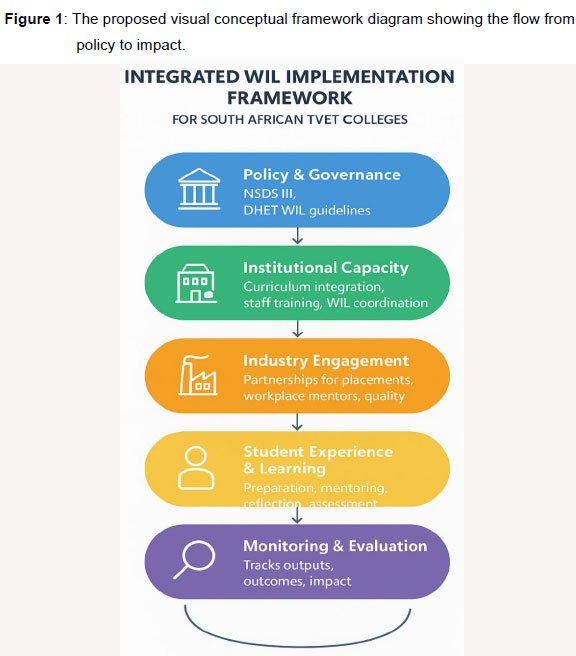
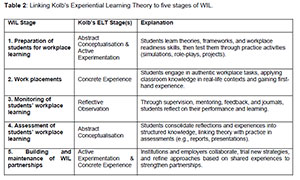
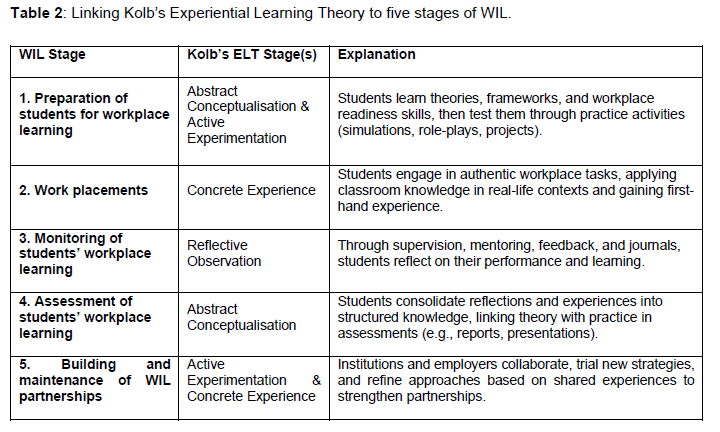
Globally, work integrated learning (WIL) is viewed as a pedagogy and cornerstone of the higher education curriculum. However, the South African Technical and Vocational Education and Training (TVET) colleges produce unemployable graduates, although they include WIL in institutional strategic directions. This article presents the barriers of the TVET sector to best practice in five stages of WIL: 1) preparation of students for workplace learning. 2) placement of students, 3) monitoring of students' workplace learning, 4) assessment of students' workplace learning, and 5) building and maintenance of WIL partnerships. Qualitative research approaches were used to collect data during group meetings and workshops, using reflections and discussions with the college staff. The findings reveal that the implementation of best WIL practices in South Africa is significantly hindered by challenges related to institutional leadership, funding, and policy coherence. The article suggests an integrated WIL implementation framework for TVET colleges, employers, and educators.
Barriers; best practice; work integrated learning; South African colleges
 Thumbnail