Factors impacting occupational therapy student learning during the COVID-19 pandemic: Lessons from a university in South Africa
Abstract
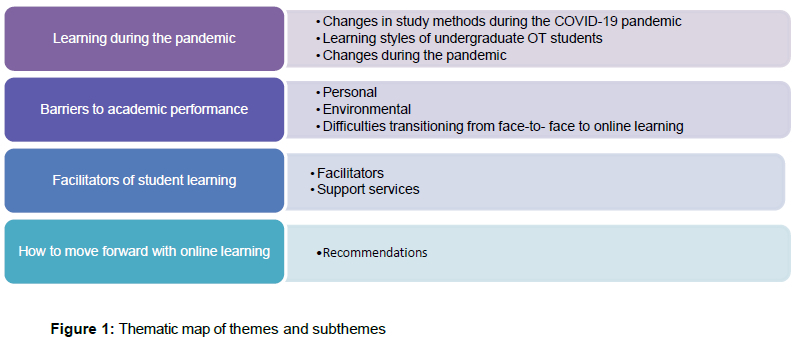
The COVID-19 pandemic disrupted higher education worldwide, requiring many universities to transition rapidly from face-to-face teaching to emergency remote learning. Although this shift enabled academic programmes to continue, it changed students' learning experiences and highlighted existing inequalities in access to educational resources. This study explored the impact of the COVID-19 pandemic on the learning experiences of undergraduate occupational therapy students at a South African university. A qualitative descriptive design was used, with purposive sampling to recruit second-, third- and fourth-year occupational therapy students. Data was collected through semi-structured focus groups and analysed using thematic analysis. Four interconnected themes were identified: learning during the pandemic, barriers to academic performance, facilitators of student learning, and recommendations for future online learning. Students adjusted their learning strategies by relying on peer collaboration, recorded lectures, online videos, WhatsApp groups and other multimodal approaches. However, their academic engagement was affected by factors such as load-shedding, unreliable internet access, household responsibilities, caregiving demands and home environments that were often unsuitable for studying. Participants described peer support, practical demonstration videos, tutorials and interactive online discussions as valuable learning supports, while institutional support services were used less frequently despite being available. The findings suggest that successful online learning depends not only on individual learning strategies but also on the social, technological and environmental conditions in which students' study. These findings provide insight into the experiences of occupational therapy students during emergency remote learning and support the development of student-centred blended learning approaches that promote equitable access to technology and strengthen academic and psychosocial support within higher education.
Occupational therapy; COVID-19; South Africa; online learning; higher education
 Thumbnail