Factors impacting occupational therapy student learning during the COVID-19 pandemic: Lessons from a university in South Africa
Abstract
The COVID-19 pandemic disrupted higher education worldwide, requiring many universities to transition rapidly from face-to-face teaching to emergency remote learning. Although this shift enabled academic programmes to continue, it changed students' learning experiences and highlighted existing inequalities in access to educational resources. This study explored the impact of the COVID-19 pandemic on the learning experiences of undergraduate occupational therapy students at a South African university. A qualitative descriptive design was used, with purposive sampling to recruit second-, third- and fourth-year occupational therapy students. Data was collected through semi-structured focus groups and analysed using thematic analysis. Four interconnected themes were identified: learning during the pandemic, barriers to academic performance, facilitators of student learning, and recommendations for future online learning. Students adjusted their learning strategies by relying on peer collaboration, recorded lectures, online videos, WhatsApp groups and other multimodal approaches. However, their academic engagement was affected by factors such as load-shedding, unreliable internet access, household responsibilities, caregiving demands and home environments that were often unsuitable for studying. Participants described peer support, practical demonstration videos, tutorials and interactive online discussions as valuable learning supports, while institutional support services were used less frequently despite being available. The findings suggest that successful online learning depends not only on individual learning strategies but also on the social, technological and environmental conditions in which students' study. These findings provide insight into the experiences of occupational therapy students during emergency remote learning and support the development of student-centred blended learning approaches that promote equitable access to technology and strengthen academic and psychosocial support within higher education.
Occupational therapy; COVID-19; South Africa; online learning; higher education
INTRODUCTION
The coronavirus pandemic of 2020 had a significant impact on the educational experiences of university students due to an unexpected shift in the teaching methods, which moved from contact to online learning (Al-Yateem et al. 2021). This shift introduced new barriers to learning, necessitating some students to adapt their study methods and learning styles to accommodate the new online demands. Study methods refer to the measures students use to acquire the required knowledge. Learning styles encompass the ways in which students choose to understand and retain information, based on their learning preferences. In this study, researchers espoused to shed light on how learning was impacted by a shift to online learning, what barriers were encountered, and how students negotiated the new learning environment.
Around 9.8 million African university students were affected by the closure of Higher Education Institutions (HEI's) in 2020 during the COVID-19 pandemic, and only 29 per cent of African HEI's transitioned efficiently to online learning (Du Plessis et al. 2022, 564). Moreover, it was difficult to secure venues for the service learning of practical skills (Brown et al. 2022), which negatively impacted the accrual of the 1000 fieldwork hours, regulated by the Health Professions Council of South Africa for health science students to graduate (Health Professional Council of South Africa [HPCSA] 2019). The COVID-19 pandemic impacted students' academic performance negatively as their learning styles changed, and low academic achievement was noted both in the tests and year-end examinations (Pokhrel and Chhetri 2021, 136). Moreover, the students had minimal contact learning and a lack of consultation with lecturers. When students experienced challenges, they resorted to self-studying and using videos and other online platforms for their learning (Pokhrel and Chhetri 2021, 136). A study at the University of the Free State with students across health science and other faculties explored the transition of first year students during the pandemic (Herkulaas and Oosthuizen 2020, 38). It was found that face to face interactions and having easy, sustained access to online course content facilitated an easier transition to university, as opposed to students who could not interact face to face, or who had poor internet connections (Herkulaas and Oosthuizen 2020, 38). Students who experienced these difficulties lived further away from campuses, or were in lower income areas with poor networks. Due to these reasons HEI's needed to adapt to the online learning platforms, and course requirements needed to be accessible and equitable to all students and their contexts (Landa, Zhou and Marongwe 2021, 180).
A study by Öztürk et al. (2022) in Turkey, found half the students struggled with adapting to online learning, due to difficulties with time-management, feeling stressed, and low self-efficacy. Many students had problems with the lack of face-to-face interaction, changes in study environments, and had limited technological skills. Moreover, students lived in resource constrained contexts and struggled to access the online learning platforms. This posed risks to student motivation and subsequently may have resulted in poor academic achievement or failure. At Maastricht University in the Netherlands, a study was carried out on students from all faculties to determine their abilities to adapt to remote learning (Biwer et al. 2021). Thirty four percent of the students reported no significant changes in their time management, leading to consistent academic performance. However, 47 per cent of the students had trouble adapting to the online platform, as less time was invested in self-studies, resulting in decreased academic performance. Only nineteen percent of the students were able to adapt and showed improvements in managing their time (Biwer et al. 2021).
Bahasoan et al. (2020) explored the effectiveness of online learning during the pandemic with students from the Faculty of Economics, at the University of West Sulawesi, Indonesia. The students experienced increased stress with online learning as many assignments were due simultaneously and learning materials for online lectures lacked detailed explanations. Access to online learning materials was difficult for some students, and despite WhatsApp being the cheapest option, data and internet connection costs were still incurred (Bahasoan et al. 2020, 105), which served as barriers to online learning, similar to studies done in South Africa.
Occupational therapy students may use different study methods and learning styles, such as auditory, kinesthetic, read and write or a visual approach according to their preferences (Du Plessis et al. 2022, 564). However, the pandemic influenced a more urgent shift to cope with the new academic demands in terms of the transition to online learning (Landa et al. 2021, 180). This ensured that academic demands and requirements such as lectures, assignments and tests were conducted virtually.
One study conducted in 2021 explored the learning styles and self-directed learning readiness amongst Omani nursing students, which provided insights into the implications for online learning (Ballad et al. 2022, 92-102). Changes to online learning for staff included having to adapt to the Zoom platform, record lectures for later use, and upload learning materials. 62 per cent of the students showed adequate self-directed learning readiness and were able to cope with online learning. The researchers attributed this readiness to the pre-pandemic blended curriculum design, which consisted of Moodle, face-to-face learning, diverse teaching and learning methods, the availability of learning resources, academic support, and conducive spaces for learning (Ballad et al. 2022, 92-102). Another study was conducted in Oman and Western Asia on the self-directed learning readiness and learning styles for nurses (King and Fisher 2010). They utilized the Self-Directed Learning Readiness Scale (Long and Agyekum 1983) for nursing education to gain insights into the students' online experiences. The study confirmed that students who were self-disciplined, wanted to and enjoyed learning new information, and who reported being responsible for their own actions, scored best in terms of self-directed learning readiness (King and Fisher 2010).
Another study conducted at three universities in Australia with undergraduate occupational therapy students revealed that students who transitioned to online learning had higher levels of motivation and interaction than those who used a blended learning approach, which incorporated contact and online learning (Brown et al. 2022). Another study with first year occupational therapy students from a South African university used the Felder-Soloman Index of Learning Styles instrument (Felder and Solomon 2018) to determine the most commonly used learning styles of students pre-COVID (Rudman, de Beer and Olorundju 2015, 24-26). The findings revealed that students mostly used sensing, visual and active learning styles. This indicated that most students reported learning best with concrete information and experiences, pictures and diagrams, or discussions and practical applications in order to explicate information (Rudman et al. 2015, 24-26).
The university in this study mitigated similar challenges during the pandemic by providing computers to students without a device, and all students and staff with cellular data. Moreover, the university adapted by using the Zoom platform for lectures. Online strategies to teach assessment and intervention included using paper cases, Simucase (Simucase.com 2022), and conducting case presentations on the online platform. All the aforementioned factors highlighted the need for research to determine the impact of the COVID-19 pandemic on the study methods and learning styles of occupational therapy students at universities in South Africa. The findings may be used to improve online teaching and learning at this institution, and other universities nationally and globally, to ensure student-centered programs which address the challenges of learning in a blended, or online context.
METHODOLOGY
A qualitative approach was used to explore the study methods and learning styles used by undergraduate occupational therapy students at a university in South Africa during the COVID-19 pandemic. This approach was used as it focused on the subjective experiences of the participants and allowed for an emic stance (Bradshaw, Atkinson and Doody 2017). In this way the researchers were insiders in the research process, talking directly to other occupational therapy students to gain knowledge regarding their learning experiences during the COVID-19 pandemic. The student researchers were in their final year of study at the time of data collection. All researchers were South African citizens and lived on the university campus or in close proximity to the university. All student researchers were familiar with one another, as well as the supervisor, who also functions as a lecturer and academic supervisor for fieldwork blocks in the occupational therapy program.
Aim of the study
The aim of the study was to explore the impact of the COVID-19 pandemic on the learning of undergraduate occupational therapy students at a university in South Africa.
Objectives
The objectives of the study were to explore and describe the study methods and learning styles used by undergraduate occupational therapy students, as well as the barriers and facilitators to learning during the COVID 19 pandemic.
Study context
The study was conducted at a university in South Africa.
Participants
The population of the study included 2nd to 4th year undergraduate occupational therapy students registered at the University for the 2022 academic year. This sample comprised a total of 20 students.
Recruitment process
Non-probability purposive sampling was used. This involved obtaining information from a sample of the population related to the phenomenon of common interest (Palinkas et al. 2015), according to specific inclusion criteria. Second to fourth year students were purposively selected as they were identified as being enrolled in the occupational therapy programme through online and face to face education, allowing them to draw comparisons in their learning experiences.
Inclusion Criteria
Eligible participants included registered undergraduate occupational therapy students in their second, third and fourth years of study, in the year 2022, at the designated university.
RESEARCH PROCESSThe research proposal was submitted to the Biomedical Research Ethics Committee (BREC) committee for ethical clearance at the designated university. The ethical clearance number was BREC/00004103/2022. Gatekeeper permission was obtained from the registrar and academic leader from occupational therapy. These students were contacted via WhatsApp and their student email addresses to complete the demographic survey via Google forms. Information sheets and invitations were sent out to the class representatives of the 2nd to 4th year occupational therapy cohorts via WhatsApp to provide information about the study. Thereafter informed consent sheets were emailed to students who agreed to participate. Four focus groups and one consolidation group were conducted according to the convenient times of the participants. These focus groups were audio-recorded via Zoom, with the consent of the participants. Audio recordings were then transcribed and analyzed using thematic analysis. The findings were written up as an article.
Demographic Questionnaire
After gaining consent, questionnaires were emailed to students using Google Forms. This was done before conducting the focus groups. The demographic questionnaire elicited information about the age, gender, race, home environments and languages spoken to understand the participants' home contexts and resources. This information was considered relevant to the participants' learning styles, study methods and ability to utilize the technologies needed for online learning during the pandemic.
Data Collection using focus groups
Focus groups were used to collect data from the participants. According to Stewart and Shamdasani (2014) a focus group is an intensive, in-depth interview conducted to gather subjective information from a group of people who have shared similar experiences related to the research being conducted. Three focus groups were conducted, according to the year of study, and were scheduled at convenient times for the participants. This was usually after 5pm once students had concluded fieldwork and lectures for the day. Groups were conducted with 6-8 participants. One final focus group with two data-rich students from each year, was conducted at the end of the study for member checking. These participants were determined by their willingness to share their rich experiences of learning during the COVID-19 pandemic during the initial focus groups and were subsequently invited to the second focus group. The final focus group was conducted with data-rich participants where the questions asked in the main interviews and summarized responses were repeated. The Zoom platform was used for the focus groups as students were familiar with this technology, as it was used for online lectures. It was available and accessible to students on campus. Students off campus were sent data bundles by the university, therefore, no extra costs were incurred by participants.
Questions for the focus groups were open ended and included prompts to facilitate discussion. For example, "What study methods did you find to be effective in preparation for online learning and assessments during the COVID-19 pandemic?" For each group, one researcher was responsible for asking questions, while the others recorded, observed participants' nonverbal behavior, and provided prompting. These groups were audio recorded, allowing researchers to transcribe the data after the focus groups.
DATA ANALYSISThe demographic questionnaire results were reviewed and analyzed by two researchers. This was done using Microsoft Excel to find the number of students within each demographic category to describe the population (Micro B Life 2023). Focus groups were transcribed from audio recordings and analyzed for patterns separately using thematic analysis and deductive reasoning (Caulfield 2019). Two members of the research team reviewed and analyzed the data by looking for codes and categories. This was then sent to the research supervisor to check before generating themes and subthemes (Braun and Clarke 2006, 77-101). Themes were then reviewed and compared to the data sets to determine whether appropriate, and if not, were changed to reflect the data as authentically as possible (Braun and Clarke 2006). Member checking was also conducted in the final focus group, where data interpretation was reflected to participants to obtain consensus (Universal Teacher 2019). Final themes were named and organized hierarchically by the researchers before the study was written up as a journal article.
ETHICSBeneficence was achieved through identifying possible risks and benefits in the study and offering to refer the participants to Student Support Services if necessary. However, the study was low risk, and the participants weren't expected to sustain any harm from participating in the study. The principles contained in the Declaration of Helsinki (World Medical Association 2022) and Protection of Personal Information Act (POPIA 2023) were observed during the research process. Any information provided by the participants was protected by using pseudonyms in presentations and publications to ensure confidentiality. The researchers guaranteed justice by ensuring that participants who were eligible for the study were able to participate, were informed about the process, and provided with the same information. All participants signed informed consent forms before the study and participated voluntarily, and were free to withdraw at any time, without any repercussions.
THEORETICAL FRAMEWORKA useful theoretical lens which can be used to conceptualize this study is the Bioecological Systems Theory (Bronfenbrenner 2001, 2005). The student is located at the center of nested concentric circles, representing interconnected systems. For the university student, there may be two or three microsystems, such as home, university and the social environment. Härkönen 2007, p. 9 states that "all environments in which the developing person is an active participant, are his or her microenvironments" and is constituted by his or her roles, responsibilities, interactions, and daily activities. The students' personal characteristics, including their learning styles, cognitive ability, health, and career aspirations may be considered as the determinants of their educational outcomes in higher education (Mulisa, 2019). The next layer or mesosystem reflects the bi-directional relationship of the systems on the person, as well as the effect of the individual on the systems. It comprises the linkages and communication that occurs between two or more settings in which the student interacts. The exosystem determines factors such as social class, the quality of basic education and access to community resources. It incorporates the policies relating to entrance requirements at university, who qualifies for student funding, the quota systems, and policies relating to redress, which influences the students' probabilities in securing entrance to the programme and university of their choice. The macrosystem refers to the society in which the student is located, and the cultural values, norms and beliefs held by those individuals. The macrosystem is the outermost layer of influence for the student, the societal masterplan whose influence permeates all the other levels, and which holds within its precincts all the cultural values, traditions, and laws of the particular society (Berk, 2000).
FINDINGS
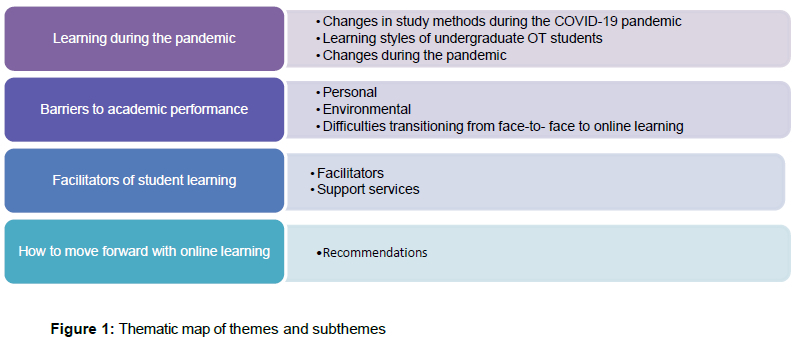
The findings of the study are presented according to the following themes, and is illustrated in Figure 1. There were four main themes, named as follows:
Theme 1: Learning during the pandemic
Theme 2: Barriers to academic performance
Theme 3: Facilitators of student learning
Theme 4: How to move forward with online learning?
The demographic information of the participants of the study was collected through a questionnaire, which showed that 83 per cent of the participants were females, 16 per cent were males, and 1 per cent were transgendered. 91 per cent of the participants were between 19-24 years, and 9 per cent were between 25-29 years. There were 50 per cent second year students, 20 per cent third year students, and 30 per cent fourth year students who participated in the study. 70 per cent of the participants live in KwaZulu-Natal, while 30 per cent lived outside of KwaZulu-Natal. Eighty four percent of the participants lived in urban areas, and 16 per cent of the participants lived in rural areas. All the participants had access to electricity. Moreover, 87 per cent of the participants had access to the internet, whilst 13 per cent of the participants did not have access. The majority of the participants reported that they owned a laptop (96 per cent), but 4 per cent stated they did not own a laptop. Most participants (75%) reported that they had access to a quiet space to study at home, whilst 25 per cent reported that they did not have a quiet space to study. Moreover 84 per cent of participants reported that they had responsibilities at home, whereas 16 per cent reported they did not have chores at home. Thirty three percent of the participants went to private and Model C schools, 30 per cent went to public schools, and 4 per cent of participants attended no fee schools. 24 per cent of participants obtained an Admission Point Score (APS) between 30-35, 44 per cent obtained scores between 36-40, and 22 per cent obtained scores between 41-48, while 8 per cent of participants reported they had forgotten their Admission Point Scores. 70 per cent of participants reported that their English proficiency was Good, and 30 per cent reported it to be Average. Moreover, 39 per cent of the participants reported significant events during the pandemic whilst 61 per cent of participants did not experience significant events.
The thematic map showing themes with their subthemes is presented in Figure 1.
Figure to be read from left to write, top to bottom.
Theme 1: Learning during the pandemic
This theme focused on the impact the pandemic had on student learning in terms of their study methods and learning styles, and changes from contact to online learning. There were three subthemes, namely changes in study methods during the COVID-19 pandemic, learning styles of undergraduate OT students and changes during the pandemic.
Subtheme 1: Changes in study methods during the COVID-19 pandemic
During the pandemic students faced the challenge of transitioning to online learning which necessitated a change in their study methods. This was evident in their increased use of virtual study groups and peer learning through voice notes to enhance in person demonstrations and discussions. "Some people study better and understand things better, if like, say you have a study group or have someone to bounce ideas off" (Amy, 2nd year).
The shift resulted in students utilizing online resources, such as websites, for example, Khan Academy, listening to Zoom recordings, and watching YouTube and International Clinical Educators' (ICE) videos (International Clinical Educators 2022). This assisted with integrating theoretical knowledge into practice. Students found tutorials on fieldwork helpful. Some students continued to use their existing study methods despite the technical shift, such as printing out and studying off hard copies of notes, summarizing notes, making flashcards, reviewing past examination, and reading out aloud. "I found out that actually printing out the slides and looking at the pictures makes more sense than using a laptop" (Kate, 2nd year)
Many students verbalized a difficulty with learning from Zoom if the lecturer or tutor did not have their camera on. This sort of impersonal environment led many students to supplement with Youtube videos to explain the content, as they could visually see the person presenting.
"I think it would be very helpful if lectures would actually turn on the cameras, because I find it very difficult to interact with like a blank screen with just their name on it because I'm not getting the concepts. I'm not usually looking at their faces, or sort of reading the room by looking at the expressions to understand their body language, or what they actually mean." (Abigail, 3rd year).
"It's just like now, because when, like in person, I learn better, cause it's more interactive. ...And like the environment kind of forces me to take in the knowledge, whereas online it, it wasn't really." (Dominic, 3rd year).
In addition to the sense of impersonal learning, students reported that having lecturers read off the content slides was not helpful to their learning, as they felt this was already being done during self-study times. "Reading the same lecture slide, that really doesn't help with understanding" (Yolanda, 4th year).
Furthermore, students stated that viewing videos would facilitate online learning deepen their understanding of lecture content. "If they give us like more video-based content because we all agree that we learn better in lectures, because you know, it's face to face" (Taylor, 4th year).
Subtheme 2: Learning styles of undergraduate OT students
The three prevalent learning preferences that emerged were the visual, auditory, and kinesthetic styles "....my learning style is between like auditory and a bit of kinesthetic learning" (Imi, 4th year)
Utilizing a kinesthetic learning style helped students particularly with fieldwork modules, whereby practicing the skills on others or doing demonstrations helped to concretize the information. Pre-COVID, fieldwork modules included practical sessions to demonstrate and practice physical handling skills needed.
"...like I learned through demonstrations and stuff like that... practicing with family members like the handling techniques..." "They would have given us the information but then, we would have done it, in like a practical way so there would have been a practical example to link this information to, whereas during Covid, we didn't get that." (Casey [White], 4th year). "...also learn much better in terms of preparing for the test if I rewrite the notes" (Todd, 2nd year).
Learning through writing when preparing for formal assessments during online learning was also reported to have been a common study method among students as it assisted with consolidating and remembering lecture content. "So, for me, I'm visual" (Mandy, 3rd Year)
Visual learning assisted students particularly in modules such as anatomy, whereby understanding how body systems worked relied heavily on understanding where structures are in relation to each other. "...for anatomy and physiology, I found out that actually printing out the slides and looking at the pictures makes more sense" (Kate, 2nd year). "...whereas for anatomy, for example, I would be, I would, be more visual because I have to actually see, like the specimen, and then see, how does it work visually" (Nandi, 2nd year).
Visual learning worked for some as it assisted with recall from memory during tests and exams "...and I'm more like visual as well I have to write down things, have a little table and mind map, to remind me so I can recall it in a test" (Tria, 4th year).
Some students utilized a mixed approach, as seen in Kate's (2nd year), Abigail's (3rd year) and Shannon's (3rd year) narratives. "Combining different learning styles into one learning style". (Kate, 2nd year). "...so mine is still a combination of auditory just listening to lecture recordings and paying attention and then trying to make summaries." (Shannon, 3rd year). "I just read it, and then I repeated it out loud to myself, like continuously to like get it, and I like to play music in the background." (Abigail, 3rd year).
Auditory learning seemed to help some students to concentrate in their busy home environments, while other students used auditory learning as a means of repetition to retain the new information learnt, or clarify the information with others. "or else I feel like I cannot pay attention, so I need like some music or anything in the background." (Abigail, 3rd year). "I would just go over and listen to the recordings over and over again". (Shannon, 3rd year)."...say the things out loud you play videos and try to recite what the video is saying" (Kate, 2nd year).
A variety of statements emerged as to why students used the methods they did to study; some of which included the adaptations or changes they made in response to the online learning process. "...I definitely used my supervisors... it's so much easier to retain the information when you're actually seeing someone do it." (Taylor, 4th year). This indicated how Taylor used the supervisors' practical demonstrations to facilitate visual learning during fieldwork.
Another factor that facilitated students' learning was the use of tutorials, which improved their understanding, as can be seen in Nandi's quote. "there's tutors actually do help quite a bit and because you can also ask them questions without having a fear". (Nandi, 2nd year)
While the majority of students noted changes, other students reported no changes in their learning styles during the pandemic. They stated that their existing learning preferences remained effective, as seen by Imi's narrative: "I would say that my learning style stayed the same" (Imi, 4th year).
Subtheme 3: Changes during the pandemic
There were mixed responses of the students to the changes that occurred during the pandemic. Some of the positive changes included students taking more initiative in terms of their organizational and planning skills, through the use of diaries, which facilitated improved time management. Abigail, a 3rd year student, reported making use of a diary to manage her time and tasks more efficiently: "I started to like get a diary and plan more". (Abigail, 3rd year).
However, there were negative events, such as noisy home environments that were not conducive for studying, as seen in Kate's narrative: "There were many of us in the house and you couldn't even find a quiet space" (Kate, 2nd year). In addition to the negative changes that occurred during the pandemic, it emerged that some students had completely forgotten how to study correctly for their final exams as seen in Tria's narrative: "...such a hard time having to study at the end of the year, because I completely forgot how I actually need to study properly". (Tria, 4th year)
Theme 2: Barriers to academic performance
This theme related to the personal and environmental barriers students faced during the pandemic, along with the challenges due to the transition from high school to university. The subthemes were named as personal barriers, environmental barriers and difficulties transitioning from face-to-face to online learning.
Subtheme 1: Personal barriers
The students faced personal barriers to learning during the pandemic. The most prevalent personal barrier was procrastination. Poor self-discipline and time management underpinned procrastination. "Procrastination will be the death of me, I'm losing the battle" (Levi, 2nd year) "My other point about not prioritizing my schoolwork, but since we were at home, I would kind of just do my own thing during the time that we were supposed to be doing lectures and stuff" (Taylor, 4th year).
Moreover, students reported feeling very isolated from their peers, resulting in decreased social interaction. This lack of social interaction led to low levels of motivation and ultimately procrastination. "It was very lonely, so sometimes you also wonder, am I the only one struggling?" (Nandi, 2nd year). "I didn't pay attention as much as I would have if it was in person, and I didn't really take notes, and I would often zone out" (Casey, 4th year).
Many students also faced bouts of mental and physical ill health, or were caregivers to sick family members, who were unwell or who had contracted the virus. Caregiving and household chores resulted in students having to prioritize other aspects of their lives, instead of their academic work, which added to their stress. "...comes with personal issues, family issues, deaths and this was continuous, like just never ending" (Taylor, 4th year). "I was procrastinating, I guess, because, like I had bigger things to worry about, so I never really prioritized my schooling" (Nonna, 4th year).
Subtheme 2: Environmental barriers
The national lockdown and high COVID-19 infection rates led to the development of the online learning program, where students were required to work remotely from their homes. This led to a change in their roles, due to the chores they were required to perform. "It was just the sort of change in roles around the house, and expectations from you, because you are at home" (Max, 3rd year).
Students who previously lived at the university residences faced increased environmental barriers of not having a conducive study area at home. Students also reported that the home environment made it difficult to concentrate and study, due to the constant disruptions and distractions. Taylor, 4th year, reported "having everyone in the house is very distracting".
Personal losses, increased home responsibilities and chores placed student learning further down the priority lists. A major environmental barrier faced by most, if not all students, was the load-shedding and network issues, which made it difficult for students to complete assessment tasks and attend zoom meetings and lectures. "Next thing you don't have electricity, you don't have network!" (Kayla, 4th year)
Subtheme 3: Difficulties transitioning from face to face to online learning
This subtheme related to issues faced mostly by the second year students and was less applicable to the students in third and fourth year. "It was a big jump coming to university and then having to adapt to online learning" (Amy, 2nd year)
Students reported not being able to cope with the intense workload and the transition from high school to university. Moreover, they found it difficult to transition to online learning and university in general, as not all students were computer literate. Participants verbalized that they had difficulty understanding the occupational therapy timetable, as well as the constant changes. The change to the online academic program made it difficult for some students to cope, as they were accustomed to learning in person, and studying using books and concrete learning materials.
The requirements and expectations of lecturers and supervisors in fieldwork made it difficult to integrate theory and practical aspects as they often made use of different approaches. This was noted by (Kate, 2nd year) who stated: "...other lecturer(s) say something different about this topic and the other lecturers say something different about that topic and it just becomes so confusing"
Moreover, students reported having more support through physical resources such as past papers and textbooks in high school, as compared to university, where past papers were not easily available and textbooks were e-books "...you currently don't have access to past papers..." (Nandi, 2nd year)
The occupational therapy jargon used by lecturers and supervisors in lectures and fieldwork made it difficult to understand the learning content. Moreover, students reported having more support in high school from teachers and support systems, and less support at university. They mentioned that they did not always receive the promised support from the Student Support Services at the university. "She just wouldn't get back to your e-mail... so you're preparing for tests and assignments and sometimes you just can't get a hold of her" (Amy, 2nd year)
Theme 3: Facilitators of student learning
This theme related to additional resources that students were able to access to supplement their personal and academic needs. The subthemes were named as facilitators and support services.
Subtheme 1: Facilitators
Some students listed their families as facilitators to their online learning, as they were supportive. "I would say my family was very supportive, as they understood, and I was given space and time to work... and sort of excused from certain chores... and had my own time and space to work" (Kim, 3rd year)
They also made use of peer learning and relied on each other for academic and emotional support. Students stated that the residence accommodation was more conducive for their studying needs than the home environment. Tria, 4th year reported: "I feel like res is more conducive."
Students also utilized practical demonstration videos, such as the ICE videos (International Clinical Educators 2022), and regarded that as one of the most effective ways of learning during the pandemic. Breakout rooms and groupwork were also listed as facilitating factors for learning, as students could engage in peer discussions on the Zoom platform to consolidate learning new information.
Subtheme 2: Support Services
Students regarded their clinical and academic supervisors as a support system which they utilized. They maximized online tutorials and consultations with designated tutors as well. "It helped with understanding the ways of structuring a case study" (Amy, 2nd year). "Tutors actually do help quite a bit, because you can also ask her questions without having a fear of like 'is this lecturer going to think I'm not doing the work?" (Nandi, 2nd year)
Students were allocated consultation times, where they were able to ask questions about the content covered, with the added comfort of having the meetings via zoom, as opposed to face to face, which reduced the fear of being judged by lecturers. Some students accessed Student Support Services, where they were equipped with coping skills and counselled on personal matters, including their own losses experienced during the pandemic. Some students reported not accessing Student Support Services as they were unaware of the different types of support offered by the occupational therapy department and College of Health Sciences. Despite being a student in a health science degree, there was still a stigma associated with accessing psychological support services. Although there was decreased social interaction available during this time, alongside increased pressure for some students to complete course work, many students still viewed campus psychology services as not being a possible avenue of receiving support. Some students reported not accessing student support even when they experienced difficulties, and were aware of the services, as they viewed the services as a last resort. Students showed a preference for leaning on friends for support rather than Student Support Services, even when this support was readily available. "...for me. I didn't feel comfortable going to anyone else." (Abigail, 3rd year). "I know we have the ADO, if you have problems with studying, but it's like it's not really something I would do... I just figure it out myself" (Taylor, 4th year).
Theme 4: How to move forward with online learning
This theme explicated recommendations made by students to improve their learning in the future. There was only one subtheme, named as recommendations.
Subtheme 1: Recommendations
This theme focused on the recommendations of the students from second to fourth year to the lecturers of the OT department. It was suggested that the lecturers review the self-study and lecture time ratio, as students reported they did not have enough time to review the learning materials. Moreover, it was suggested that lecturers should have their cameras on during zoom lectures, as this would promote more interaction. When cameras were off, students felt as if they were interacting with a screen. Lecturers should refrain from reading off the slides and integrate a more practical approach, by having case-based discussions based on the lecture content. Students also suggested there should be an orientation to technology, and specifically how to use online resources in the first year of occupational therapy, which would assist disadvantaged students, and those who had not used online resources previously. Students reiterated that their requests to the Academic Development Officer (ADO) should receive an acknowledgement and be addressed timeously. Not receiving a response from her made them feel as if their problems were being ignored. "You write an e-mail, and she wouldn't say anything about it for weeks" (Amy, 2nd year)
Lastly, students expressed that lecturers should be cognizant of the personal and environmental barriers experienced by students and temper their expectations of students' knowledge. "Because when we come onto zoom, the lecturers expect us to know everything... like we ready to write a test!" (Salma, 3rd year)
In terms of the occupational therapy program, students suggested the idea of having WhatsApp groups with their lecturers for a specific module, as that would be a more direct and efficient means of communication. Students also recommended a "buddy system" whereby they could be assigned students from a year above them to assist with answering questions, giving advice, or offering peer support.
Students and staff were largely unprepared for this sudden change in coursework delivery, consumption and structure, given the circumstances present at the time. However, if such changes to the curriculum or learning modules were to be implemented in the future, such as an online or blended learning approach, a clarification of what is to be expected regarding workload and responsibilities for both parties could assist in their transition and expectations.
DISCUSSION
There is a diversity of students in the occupational therapy cohort, with more than half of students from quintile 1 and 2 schools, including first generation students. It is this subset of students who experienced problems adjusting to the online platform, which necessitated knowledge of how to navigate Moodle and technological systems. There was great inequality among students, especially with regards to their learning contexts, and access to resources. However, the university mitigated this as far as possible by providing Wi-Fi to all students and staff, and devices to under-resourced students. With regards to the different teaching styles of the lecturers, this is an ongoing issue. Lecturers are made aware of students' feedback in the student evaluations. If they are made aware of any difficulties in their teaching methods, they can address this.
This study found that the COVID-19 pandemic and the shift to online learning significantly impacted how students learned and interacted with their course materials. Students adapted their study methods and learning styles depending on the module content. They used visual, kinesthetic, and auditory styles for practical aspects, such as watching YouTube videos. For theory modules, they favored reading and writing, summarizing, and note-taking. Additionally, students engaged in peer learning for both practical and theoretical subjects, which resonated with a nursing study that utilized social media for peer interactions during social distancing (de Tantillo and Christopher 2020). These adaptations reflected the changing dynamics of higher education during the pandemic.
In a previous study conducted with occupational therapy and physiotherapy students at the University of the Witwatersrand (WITS), it was found that occupational therapy students preferred using a collaborative approach to learning, and using study methods such as studying with peers and participating in discussion groups for their modules (Olivier et al. 2021, 41-46). Moreover, the students in the WITS study displayed a high degree of self-regulation, which was characterized by a preference for self-directed studying (Olivier et al. 2021, 41-46). These findings contrast with the students of this study who reported struggling with self-directed learning during the pandemic, identifying it as a barrier to their learning. The cumulative effects of the emotional, financial, and technological difficulties experienced during emergency remote learning may have also negatively affected the students' ability to self-regulate and cope with the changes. This would have been compounded by the students' resistance to accessing psychological support services available.
Self-directed learning occurs when a learner takes on responsibility for their own learning, and does not infer that all learning takes place in isolation from others. It can be conceptualized as existing along on a continuum, and exists to a different extent in each student. Self-directed students are able to transfer knowledge and learning from one situation to another. Self-directed learning may comprise various activities, including reading, participating in study groups, reflective writing and online activities. The role of teachers in this process is to secure resources for learning, engage in dialogue with students and facilitate critical thinking, and evaluate outcomes of self-directed learning. Educational institutions are exploring ways to support self-directed learning, such as individualized study offerings, open learning and other innovative programmes (Hiemstra 1994).
Many students reported they previously had used only one study method, but this changed during the pandemic where multiple modes of studying were adopted. The abrupt shift to online learning during the pandemic necessitated the change in learning styles. This occurred as the students' regular learning styles were not fit for purpose for online learning. These results are mirrored in a study by Cameron and Rideout (2022) which showed that first year university students tailored their learning styles and study methods according to what was effective. A South African study conducted with first year occupational therapy students pre-pandemic found that most students used a "sensing" or "visual" learning style for all modules (Rudman et al. 2015, 24-26). The sensing style consisted of learning via hands-on concrete sensory experiences rather than through theories and models based on insight or memory, indicating that students preferred discussions, peer learning and a concrete physical practice of concepts for learning (Rudman et al. 2015, 24-26). Moreover, the visual style included a preference for diagrams, watching videos and demonstrations. Other students preferred using combined study methods, although their strategies were not module specific.
Occupational therapy students were accustomed to contact learning pre-pandemic, but were forced to adjust to online learning during the pandemic, and blended learning methods post pandemic. Moreover, the OT students were used to peer learning, and many assessments used group marks, and peer rating scores. During the pandemic students were forced to use their own resources to cope with online learning. While good students coped well with the transition, weak students struggled, which was reflected in poor academic achievement. However, an anecdotal finding revealed that some students achieved high marks during the pandemic, which was not sustained when they returned to contact learning. A possible explanation was that students had access to their books and other online materials during their tests, or may have been assisted by other students. At this time, the university did not have sufficient proctoring software.
Students experienced many barriers to online learning such as the load-shedding, which continued to occur throughout the pandemic, as well as the lack of data or internet connections to access course content. Students also experienced difficulties adapting to the use of technology, as not all were familiar with how to use Zoom. These difficulties have been mirrored across contexts, with access and knowledge of how to use technology being significant barriers to online learning. A study with Iranian medical students who were having an online theory syllabus trial run in 2015 showed that the biggest barriers to online learning were access to and knowledge of how to use computers, the lack of communication with instructors, the lack of infrastructure to support online learning and a lack of support from others due to reduced interactions (Lakbala 2016, 83). These findings were very similar to the experiences shared by the students in this study.
During the COVID-19 pandemic, university students faced numerous challenges as they transitioned to online learning and returned home due to the closure of universities. Distractions and noise in home environments, coupled with household responsibilities like chores and caregiving for sick family members, disrupted their study routines. Additionally, the pandemic led to losses of family members and illnesses among students, causing a shift in their priorities away from academics. Visser and Law van Wyk's study (2021) with South African university students highlighted similar negative impacts on emotional, psychological, and physical well-being during this time, along with increased procrastination behaviors. An Indian study by Khattar, Jain, and Quadri (2020) also underscored the challenges of online learning, including home responsibilities, limited access to technology and networks, insufficient mobile data, loadshedding, and declining mental and physical health. Another study involving nursing and medical students emphasized the impact of COVID-19 on learning (Li et al. 2019). These students faced difficulties in practicing hands-on skills essential for their medical and health science courses. They also experienced anxiety about the uncertainty of when universities would reopen and the financial hardships brought on by the pandemic. While the Li et al. study had an international scope, its findings aligned with this study, highlighting the various barriers that students encountered.
Another finding which emerged in this study was that of first year students transitioning to university during the pandemic. These students faced unique difficulties in trying to adapt not only to online learning, but unfamiliar lecturers, university course demands, multiple assessments and negotiating the timetable system. Many of these students mentioned loneliness as a significant barrier to their studying, as they were not afforded the opportunity to meet their peers or staff members and socially integrate into their new space before the pandemic began. Similar results were found at the University of Western Cape with first year students, especially from lower socioeconomic backgrounds (Mntuyedwa and Letseka 2022). These students had great difficulty in their transition from high school to university, as they were expected to be computer literate to participate in their courses. Many of the students had little or no previous access to computers and were not familiar with how to utilize the different programs. This difficulty emerged pre-COVID and predicted that the students would have immense difficulty with a shift to an online curriculum during the pandemic, where uncertainty, as well as social, emotional and psychological factors were prominent (Mntuyedwa and Letseka 2022).
The research supervisor employed a power centered or facilitation centered supervisory style. This use of power is positive if it promotes an atmosphere of safety during learning, and if supervisors collaborate with students and consciously empower them. As consumers of knowledge, students also have power which can be strengthened through peer solidarity (Murphy and Wright 2005:283).
There are advantages and disadvantages in moving to an online or blended curriculum for health science students. The advantages appear to be related to the economical use of staff in relation to burgeoning student numbers, where one or two staff members can run a course to a large cohort of students. There are also benefits in teaching theory modules as an online option, which is more cost effective for students, and allows them to attend to other life roles they may have. However, it must be acknowledged that not all students are technologically savvy, and would need online support and training in this regard. Moreover, not all students' homes are conducive to online learning, and may be noisy or have numerous distractions. They may also lack the infrastructure or internet connections that is essential for online learning. Most students complained about the social isolation and disconnectedness during online learning, which could be mitigated by using video technology, WhatsApp groups, and breakout rooms on Zoom. A positive finding to emerge was that students took ownership of their own learning by engaging in self-study, or using peer learning strategies, such as creating WhatsApp groups, study groups, self-study, and viewing ICE and Simucase videos.
Using Simucase and ICE videos had not been used previously to teach practical components. The university had to procure this programme so the fieldwork components could be taught online when fieldwork visits were not possible during COVID. This was innovative for the discipline during COVID. In the post covid era, videos are used in teaching, but less so, as fieldwork has been re-instated, and teaching happens with real clients in fieldwork settings, such as hospitals and clinics.
Students were required to use simulated based learning, as fieldwork visits were banned during COVID. This was done by using technological aids, such as the ICE videos and Simucase. Ice videos are a collection of powerful short therapist and patient videos available for in-class or online teaching. Simucase combines the power of simulation-based learning with a comprehensive patient video library in multiple professions. With this technology, users can observe, assess, report findings, make recommendations, and provide intervention for virtual patients. This was how practical training was implemented and fieldwork hours accrued. Students have to complete a mandatory 1000 hours of fieldwork before they can qualify as occupational therapists. All health science disciplines are governed by the Health Professions Council of South Africa (HPCSA), which stipulates the mandatory clinical hours. However, these methods did not relieve lecturers of their teaching duties, but were used as a teaching tool by the lecturers. Students were required to view the videos and then answer questions. Class discussions via zoom were held to explicate the learning points of the simulated case videos.
Students reported that to progress through their COVID era online learning, many of them needed to access emotional and academic support. Findings indicated that most students accessed peers and supervisors for help. This support was pivotal in their learning experiences, and allowed their continued learning, despite adversity. However, other university resources such as the Academic Development Officer (ADO), academic mentors and university psychologists were largely under-utilized due to the lack of knowledge of these resources, or the perception that they were only for students who were failing. These results differed from a previous integrative review conducted with health science students at a university in South Africa. Those findings showed that most students reported using a problem-based approach to cope with stress, and would actively identify what they were experiencing, and how they could remediate this, including accessing Student Support Services (Henderson, Chetty and Gurayah 2021, 35-36). This study did however mimic the maladaptive patterns of the coping of students, identified by the findings of procrastination and avoidance of accessing support (Henderson et al., 2021, 35-36).
LIMITATIONS OF STUDYThis study excluded other health science students, students from other universities and postgraduate occupational therapy students.
CONCLUSION
The COVID-19 pandemic brought significant disruptions and changes to the study methods and learning styles of occupational therapy students. Students encountered various unforeseen personal and environmental obstacles that impacted their online learning experiences. Common barriers were identified across all years of study, including poor network connectivity, load-shedding, the absence of a designated study area at home, increased domestic responsibilities, personal losses, and pandemic-induced grief. Moreover, the students reported the alienating experiences of learning through a screen. During this study, it was observed that many students did not have home environments conducive to their learning needs, and would have preferred remaining in the student residences. To support students in this aspect, the university should have considered leaving the student residences accessible to those who were faced with environmental barriers in their home environments, thereby ensuring consistent academic performance. Environmental barriers included the poor internet connections or no access to Wi-fi, loud or disruptive homes, no available study areas, and home duties and responsibilities would have been mitigated in this way. Facilitators of online learning, were found to be family support and students utilizing websites and videos to enhance theoretical knowledge.
The reduced social interaction on the online platforms negatively impacted students' internal motivation and heightened procrastination tendencies. Students struggled to establish routines and balance educational and daily living activities. The transition from high school to university was made even more challenging by limited access to academic resources, such as past tests and examination papers. The frequent changes and restructuring of the occupational therapy timetable further disrupted daily routines. Uptake of support services varied among students, with only a few students reporting an awareness of the services. Moreover, stigma inhibited students from against accessing psychological support.
Understanding the diverse teaching methods and predominant learning styles across different modules can help lecturers tailor course content to cater to students' learning preferences, improving student engagement and understanding. Content delivery should encompass various formats, including auditory, visual, and kinesthetic approaches, particularly for practical assessment and intervention techniques. This would address the diverse learning preferences of students. Students can experiment with different study methods based on their preferences, and lecturers may conduct needs analyses to determine the prevalent learning styles and study strategies among students, enabling more targeted teaching approaches.
This study explicated how occupational therapy students had to adapt from face-to-face contact learning to blended learning and teaching methodologies. This disadvantaged students who were not familiar with technology and online teaching methods. Post covid, the blended learning and teaching methodologies appear to be the new normal and part of the post covid era. The authors believe that this does not only apply to OT students but university students worldwide. A recommendation from this study would be to introduce a computer literacy module that teaches students on how to access platforms for online learning and provide them with the basic technological skills needed for university, and beyond that for the world of work. A recommendation would also be for campus support and psychology services to be advertised and more commonly discussed with students throughout the years of study in an attempt to familiarize students with the services and staff available, to increase access. Students may also benefit from their role in learning being discussed, in order to manage expectations through an online or blended learning approach.
REFERENCES
LITERATURE REVIEW
-
Al-Yateem, N., J. M. Dias, M. A. Subu, M. S. Abraham, F. Abd El-Baky, A. Almarzouqi, S. A. Rahman, A. R. Saifan, M. G. Mohammad, I. Alrimawi, and M. Faris. 2021. "Reflections on the Transition to Online Teaching for Health Science Education during the COVID-19 Pandemic." International Journal of Medical Education 12: 154-164. https://pubmed.ncbi.nlm.nih.gov/34449437/.
» https://pubmed.ncbi.nlm.nih.gov/34449437/ -
Bahasoan, A. N., W. Ayuandiani, M. Mukhram, and A. Rahmat. 2020. "Effectiveness of Online Learning in Pandemic COVID-19." International Journal of Science, Technology & Management 1 (2): 100-106. https://doi.org/10.46729/ijstm.v1i2.30.
» https://doi.org/10.46729/ijstm.v1i2.30 -
Ballad, C. A., L. J. Labrague, A. R. Cayaban, O. M. Turingan, and S. M. Al Balushi. 2022. "Self-Directed Learning Readiness and Learning Styles among Omani Nursing Students: Implications for Online Learning during the COVID-19 Pandemic." Nursing Forum 57 (1): 94-103. https://doi.org/10.1111/nuf.12664.
» https://doi.org/10.1111/nuf.12664 -
Berk, Laura E. 2000. Child Development. 5th ed. Boston: Allyn & Bacon. https://books.google.com/books?id=Bx--QgAACAAJ
» https://books.google.com/books?id=Bx--QgAACAAJ -
Biwer, Femke, W. Wiradhany, M. oude Egbrink, H. Hospers, S. Wasenitz, W. Jansen, and A. de Bruin. 2021. "Changes and Adaptations: How University Students Self-Regulate Their Online Learning during the COVID-19 Pandemic." Frontiers in Psychology 12: 642593. https://doi.org/10.3389/fpsyg.2021.642593.p
» https://doi.org/10.3389/fpsyg.2021.642593.p -
Bradshaw, Catherine, Sheila Atkinson, and Owen Doody. 2017. "Employing a Qualitative Description Approach in Health Care Research." Global Qualitative Nursing Research 4: 1-8. https://doi.org/10.1177/2333393617742282.
» https://doi.org/10.1177/2333393617742282 -
Braun, Virginia, and Victoria Clarke. 2006. "Using Thematic Analysis in Psychology." Qualitative Research in Psychology 3 (2): 77-101. https://doi.org/10.1191/1478088706qp063oa.
» https://doi.org/10.1191/1478088706qp063oa - Bronfenbrenner, Urie. 2001. "The Bioecological Theory of Human Development." In International Encyclopedia of the Social and Behavioral Sciences, edited by Neil J. Smelser and Paul B. Baltes, 6963-6970. Oxford: Elsevier.
- Bronfenbrenner, Urie. 2005. Making Human Beings Human: Bioecological Perspectives on Human Development. Thousand Oaks, CA: Sage Publications.
-
Brown, T., L. Robinson, K. Gledhill, M. L. Yu, S. Isbel, C. Greber, D. Parsons, and J. Etherington. 2022. "Learning in and out of Lockdown: A Comparison of Two Groups of Undergraduate Occupational Therapy Students' Engagement in Online-Only and Blended Education Approaches during the COVID-19 Pandemic." Australian Occupational Therapy Journal 69 (3): 301-315. https://doi.org/10.1111/1440-1630.12793.
» https://doi.org/10.1111/1440-1630.12793 -
Cameron, R. B., and C. A. Rideout. 2022. "It's Been a Challenge Finding New Ways to Learn: First-Year Students' Perceptions of Adapting to Learning in a University Environment." Studies in Higher Education 47 (3): 668-682. https://doi.org/10.1080/03075079.2020.1783525.
» https://doi.org/10.1080/03075079.2020.1783525 -
Caulfield, Jack. 2019. "How to Do Thematic Analysis." Scribbr. https://www.scribbr.com/methodology/thematic-analysis/.
» https://www.scribbr.com/methodology/thematic-analysis/ -
de Tantillo, L., and R. Christopher. 2020. "Transforming Graduate Nursing Education during an Era of Social Distancing: Tools from the Field." Nurse Education Today 92: 104472. https://doi.org/10.1016/j.nedt.2020.104472.
» https://doi.org/10.1016/j.nedt.2020.104472 -
Du Plessis, M., C. D. Jansen van Vuuren, A. Simons, J. Frantz, N. Roman, and M. Andipatin. 2022. "South African Higher Education Institutions at the Beginning of the COVID-19 Pandemic: Sense-Making and Lessons Learnt." Frontiers in Education 7: 740016. https://doi.org/10.3389/feduc.2021.740016.
» https://doi.org/10.3389/feduc.2021.740016 -
Felder, Richard M., and Barbara A. Solomon. 2018. Index of Learning Styles Questionnaire. North Carolina State University. Accessed September 16, 2023. https://www.webtools.ncsu.edu/learningstyles/.
» https://www.webtools.ncsu.edu/learningstyles/ - Harkönen, Ulla. 2007. "The Bronfenbrenner Ecological Systems Theory of Human Development." In Scientific Articles of V International Conference Person. Color. Nature. Music. Daugavpils: Daugavpils University.
- Health Professions Council of South Africa. 2019. The Minimum Standards for the Education of Occupational Therapists 2019. Pretoria: Health Professions Council of South Africa.
-
Henderson, R. M., O. Chetty, and T. Gurayah. 2021. "Coping Styles and Sources of Stress of Undergraduate Health Science Students: An Integrative Review." South African Journal of Occupational Therapy 51 (2): 29-38. https://doi.org/10.17159/2310-3833/2021/vol51n2a5.
» https://doi.org/10.17159/2310-3833/2021/vol51n2a5 -
Herkulaas, M., and L. L. Oosthuizen. 2020. "First-Year Student Transition at the University of the Free State during COVID-19: Challenges and Insights." Journal of Student Affairs in Africa 8 (2): 31-44. https://doi.org/10.24085/jsaa.v8i2.4446.
» https://doi.org/10.24085/jsaa.v8i2.4446 -
Hiemstra, Roger. 1994. "Self-Directed Learning." IACE Hall of Fame Repository. https://trace.tennessee.edu/utk_IACE-browseall/503/.
» https://trace.tennessee.edu/utk_IACE-browseall/503/ -
International Clinical Educators. 2022. ICE Learning Center. Accessed September 16, 2023. https://www.icelearningcenter.com/.
» https://www.icelearningcenter.com/ -
Khattar, A., P. R. Jain, and S. M. Quadri. 2020. "Effects of the Disastrous COVID-19 Pandemic on Learning Styles, Activities and Mental Health of Young Indian Students: A Machine Learning Approach." In 2020 4th International Conference on Intelligent Computing and Control Systems (ICICCS), 1190-95. Piscataway, NJ: IEEE. https://doi.org/10.1109/ICICCS48265.2020.9120955.
» https://doi.org/10.1109/ICICCS48265.2020.9120955 -
King, Judy, and Mary Fisher. 2010. "The Self-Directed Learning Readiness Scale for Nursing Education Revisited: A Confirmatory Factor Analysis." Nurse Education Today 30 (1): 44-48. https://doi.org/10.1016/j.nedt.2009.05.020.
» https://doi.org/10.1016/j.nedt.2009.05.020 -
Lakbala, Parvin. 2016. "Barriers in Implementing E-Learning in Hormozgan University of Medical Sciences." Global Journal of Health Science 8 (7): 83-92. https://doi.org/10.5539/gjhs.v8n7p83.
» https://doi.org/10.5539/gjhs.v8n7p83 -
Landa, N., S. Zhou, and N. Marongwe. 2021. "Education in Emergencies: Lessons from COVID-19 in South Africa." International Review of Education 67 (1-2): 167-183. https://doi.org/10.1007/s11159-021-09903-z.
» https://doi.org/10.1007/s11159-021-09903-z -
Li, W., R. Gillies, M. He, C. Wu, S. Liu, Z. Gong, and H. Sun. 2021. "Barriers and Facilitators to Online Medical and Nursing Education during the COVID-19 Pandemic: Perspectives from International Students from Low- and Middle-Income Countries and Their Teaching Staff." Human Resources for Health 19 (64). https://doi.org/10.1186/s12960-021-00609-9.
» https://doi.org/10.1186/s12960-021-00609-9 -
Long, H. B., and S. K. Agyekum. 1983. "Guglielmino's Self-Directed Learning Readiness Scale: A Validation Study." Higher Education 12 (1): 77-87. https://doi.org/10.1007/BF00140273.
» https://doi.org/10.1007/BF00140273 -
Micro B Life. 2023. "How to Write Demographics in a Research Paper." Accessed September 16, 2023. https://www.microblife.in/how-to-write-demographics-in-a-research-paper/.
» https://www.microblife.in/how-to-write-demographics-in-a-research-paper/ -
Mntuyedwa, D., and P. M. Letseka. 2022. "Online Learning as a Pre-Pandemic Barrier: A Case Study of First-Year Students at a South African University." UnisaRxiv. https://doi.org/10.25159/UnisaRxiv/000038.v1.
» https://doi.org/10.25159/UnisaRxiv/000038.v1 -
Mulisa, F. 2019. "Application of Bioecological Systems Theory to Higher Education: Best Evidence Review." Journal of Pedagogical Sociology and Psychology 1 (2): 104-115. https://www.j-psp.com/article/application-of-bioecological-systems-theory-to-higher-education-best-evidence-review-6425.
» https://www.j-psp.com/article/application-of-bioecological-systems-theory-to-higher-education-best-evidence-review-6425 -
Murphy, M. J., and D. W. Wright. 2005. "Supervisees' Perspectives of Power Use in Supervision." Journal of Marital and Family Therapy 31 (3): 283-295. https://doi.org/10.1111/j.1752-0606.2005.tb01569.x.
» https://doi.org/10.1111/j.1752-0606.2005.tb01569.x -
Olivier, B., L. Jacobs, V. Naidoo, N. Pautz, R. Smith, P. Barnard-Ashton, A. T. Ajidahun, and H. Myezwa. 2021. "Learning Styles in Physiotherapy and Occupational Therapy Students: An Exploratory Study." South African Journal of Occupational Therapy 51 (2): 39-48. https://doi.org/10.17159/2310-3833/2021/vol51n2a6.
» https://doi.org/10.17159/2310-3833/2021/vol51n2a6 -
Öztürk, B., R. Akarsu, H. Kayıhan, Y. Çelik, and S. E. Kayhan. 2022. "Investigation of the Factors Affecting the E-Learning Process in Occupational Therapy Education during the Pandemic with Principal Component Analysis." British Journal of Occupational Therapy 85 (4): 248-257. https://doi.org/10.1177/03080226211070472.
» https://doi.org/10.1177/03080226211070472 -
Palinkas, Lawrence A., Sarah M. Horwitz, Carla A. Green, Jennifer P. Wisdom, Naihua Duan, and Kimberly Hoagwood. 2015. "Purposeful Sampling for Qualitative Data Collection and Analysis in Mixed Method Implementation Research." Administration and Policy in Mental Health and Mental Health Services Research 42 (5): 533-544. https://doi.org/10.1007/s10488-013-0528-y.
» https://doi.org/10.1007/s10488-013-0528-y -
Pokhrel, Sumitra, and Roshan Chhetri. 2021. "A Literature Review on the Impact of COVID-19 Pandemic on Teaching and Learning." Higher Education for the Future 8 (1): 133-141. https://doi.org/10.1177/2347631120983481.
» https://doi.org/10.1177/2347631120983481 -
POPIA. 2023. "Protection of Personal Information Act (POPI Act)." Accessed September 16, 2023. https://popia.co.za/.
» https://popia.co.za/ -
Rudman, E., M. de Beer, and S. Olorundju. 2015. "Learning Styles of First-Year Occupational Therapy Students Studying at a University in South Africa." South African Journal of Occupational Therapy 45 (3): 23-27. https://doi.org/10.17159/2310-3833/2015/v45n3a5.
» https://doi.org/10.17159/2310-3833/2015/v45n3a5 -
Simucase. 2022. "Occupational Therapy Videos." Accessed September 16, 2023. https://videos.simucase.com/search.
» https://videos.simucase.com/search - Stewart, David W., and Prem N. Shamdasani. 2014. Focus Groups: Theory and Practice. 3rd ed. Thousand Oaks, CA: Sage Publications.
-
Universal Teacher. 2019. "Dependability in Qualitative Research." Accessed September 16, 2023. https://universalteacher.com/1/dependability-in-qualitative-research/.
» https://universalteacher.com/1/dependability-in-qualitative-research/ -
Visser, Maretha, and Elmarie Law van Wyk. 2021. "University Students' Mental Health and Emotional Wellbeing during the COVID-19 Pandemic and Ensuing Lockdown." South African Journal of Psychology 51 (2): 229-243. https://doi.org/10.17159/00812463211012219.
» https://doi.org/10.17159/00812463211012219 -
World Medical Association. 2022. "Declaration of Helsinki: Ethical Principles for Medical Research Involving Human Subjects." Accessed September 16, 2023. https://www.wma.net/policies-post/wma-declaration-of-helsinki-ethical-principles-for-medical-research-involving-human-subjects/.
» https://www.wma.net/policies-post/wma-declaration-of-helsinki-ethical-principles-for-medical-research-involving-human-subjects/