Revenue strategies that encourage graduates' work placement in South African universities
Abstract
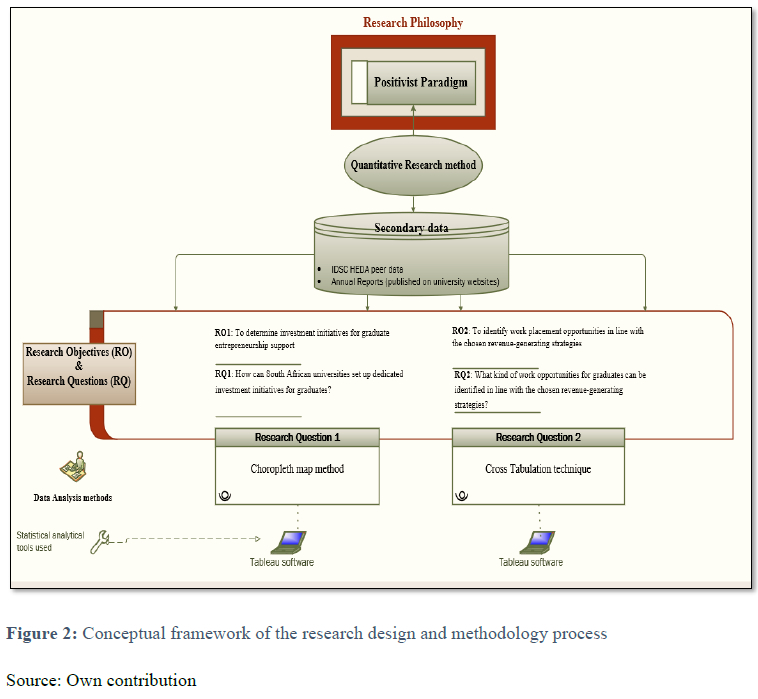
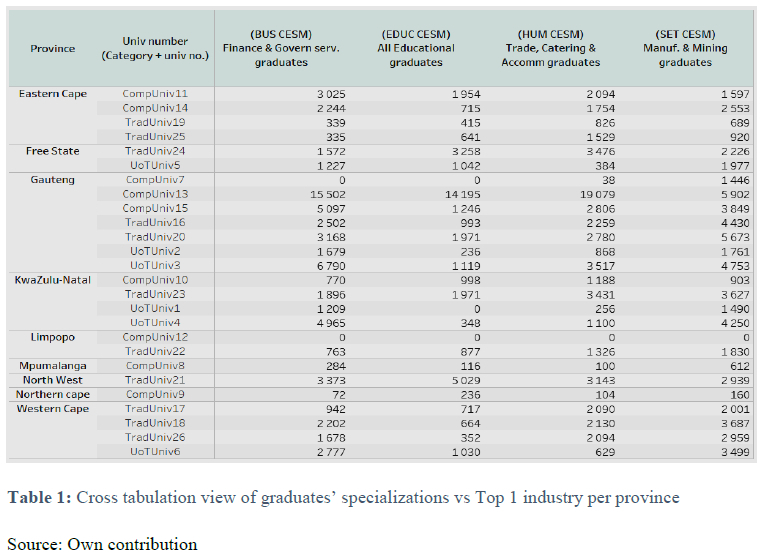
Government institutions in South Africa, including universities, are diversifying revenue sources to maintain operations in response to financial pressures exacerbated by COVID-19. This study focuses on sustaining university finances amidst rising youth unemployment by investigating strategies that emphasize placing graduates in university-driven job opportunities. It addresses how universities support graduate employment aiming to integrate these initiatives into revenue strategies. By leveraging these strategies, the study seeks to combat South Africa's significant youth unemployment problem while benefiting university finances. Conducted across all twenty-six South African public universities, the study employed a positivist epistemology and quantitative methodology. The first of two research questions were addressed by demonstrating a visual representation reflecting a comparison of the university graduate population to the top business industry in each province. This was intended to explore how the top industries relate to the profile of the total graduates produced in each province. The outcome would be to inform decision-making prioritizing industry relations as an important factor to graduates' work placement. The study underscores the potential for universities to develop self-sustaining revenue streams through strategic investment in graduate work placement initiatives. The research not only offers crucial insights for universities to enhance financial sustainability but also addresses youth unemployment, a pressing challenge in the South African economy. By aligning revenue generation with graduate job placements, universities can enhance their financial health while contributing to broader societal goals.
Higher education; strategies; student funding; universities; entrepreneurship
 Thumbnail
 Thumbnail
 Thumbnail