Academic hardiness and its relationship to test anxiety among postgraduate students at Saudi universities
Abstract
This study aimed to identify academic hardiness and its relationship to test anxiety among postgraduate students at Saudi universities. The descriptive correlation method was used to reveal the objective of the study. The study sample consisted of 541 male and female postgraduate students at Saudi universities, including 166 male and 375 female students, who were chosen using the random method. The Academic Hardiness Scale and the Test Anxiety Scale were administered after verifying the apparent and constructive validity of the two scales. The results showed that the level of academic hardiness was average with an arithmetic mean of 2.76. Test anxiety overall was averaged with an arithmetic mean of 2.39, and the values of the arithmetic mean for the dimensions ranged between 2.44-2.29, all of which were at the intermediate level. This indicated that there were no statistically significant differences at the significance level (α = 0.05) between the arithmetic means of all sub-dimensions. For academic hardiness due to the gender variable, there were statistically significant differences between the arithmetic means of the dimensions of test anxiety in favour of females. There were positive direct correlations with statistical significance between the dimensions of academic hardiness. Test anxiety values ranged between 0.177-0.586, and academic hardiness was associated with test anxiety with a positive (direct) relationship with statistical significance with a value of 0.430. The researchers recommend conducting studies related to test anxiety for undergraduate students and linking these to the variable of specialisation to see if there is a difference between science and humanity disciplines regarding test anxiety.
Academic hardiness; Test anxiety; Postgraduate students; Higher Education
INTRODUCTION
Higher education plays an increasingly pivotal role in advancing sustainable economic and social development, establishing itself as a central conduit for knowledge and its application. It significantly contributes to economic growth and human development by nurturing innovation, research, and the enhancement of advanced skills. Consequently, higher education is often seen as instrumental in improving various aspects of life (Mohammed, 2008).
However, achieving these ambitious goals presents significant challenges, with student academic success being a critical component. To address this, educational institutions focus on the holistic development of students, placing particular importance on psychological factors. Experts in educational psychology aim to shape learners' personalities, explore their internal dynamics, and investigate the traits that influence them. Among these traits, academic hardiness and test anxiety emerge as particularly impactful on students' academic performance.
Academic hardiness, a crucial area of interest in psychology, has attracted considerable attention from researchers. This concept, introduced by Kobasa (1979), aids individuals in coping with changes and psychological stressors. It provides resilience, encourages perseverance, and motivates students to transform challenges and stress into pathways for growth and development.
Lopez and Benishek (2001) identified three cognitive processes that can attenuate the adverse effects of negative academic attitudes: commitment, control, and challenge. Commitment involves a student's determination to engage with and overcome challenging tasks, viewing them as opportunities for personal and academic growth. Students with high commitment levels are more inclined to harness their potential and resources effectively to surmount obstacles (Melhem, Jarrah, and Sharida, 2020). Control refers to a student's confidence in their ability to predict and manage the situations they encounter. By mastering emotions and counteracting negative thoughts, individuals with strong control are better equipped to adapt positively (Maddi, 2002). Those who exhibit a high sense of challenge view change as an integral part of life and a catalyst for personal development. They perceive anxiety-inducing situations as enjoyable challenges rather than threats (Benishek et al., 2005).
Numerous studies have explored the influence of academic hardiness on student performance. (Abdel, Mohamed, and Fathy, 2020) found a positive correlation between academic hardiness and academic achievement, indicating that higher levels of hardiness lead to improved academic results. Gerwing et al. (2015) noted that anxiety is prevalent among university students, with 38.5 per cent experiencing test anxiety; this affects 30.0 per cent of male students and 43.3 per cent of female students. Further research indicates that about 25 per cent of college students suffer from test anxiety, which negatively impacts their academic performance (Thomas, Cassady, and Finch, 2018). Cassady (2010) highlighted that exams are major sources of anxiety and psychological pressure for students, adversely affecting their behaviors and beliefs in test-taking scenarios, ultimately resulting in decreased academic performance.
RESEARCH PROBLEMStudents vary in personality traits and characteristics, as well as in their abilities to confront difficulties and pressures in social and academic life and deal with rapid changes. According to Fajriani and Bakar (2020), academic hardiness is one of the abilities that students should possess in the face of globalization, matched with competence and competition. Kamtsios and Karagiannopoulou (2012) discussed the possible dimensions of academic hardiness and its components, revealing that students differ in how they face academic failure and that various factors are associated with students' academic hardiness. The study recommended further research on academic hardiness across different age stages and cultural contexts. This led us to question the relationship between academic hardiness and test anxiety as a variable contributing to low performance.
A study by Patterson and Arnetz (2001) also determined that testing is one of the most stressful challenges faced by students, with poor educational performance reported as a significant outcome. Additionally, a study by Al-Ansari (2004) found that postgraduate students face stressful psychological challenges and difficulties, exposing them to anxiety, burnout, stress, tension, a sense of helplessness, and the formation of negative attitudes.
This study seeks to examine the impact of academic hardiness and its connection to test anxiety among postgraduate students in Saudi universities. Drawing from the researchers' experience in teaching and conducting research at the postgraduate level, alongside their interactions with these students, they noted significant tension and anxiety, particularly during examinations. They also observed how academic hardiness helped students manage their emotions by being well-prepared for tests, leading to the formulation of the following research questions:
What is the level of academic hardiness of postgraduate students in Saudi universities?
What is the level of test anxiety among postgraduate students in Saudi universities?
Are there statistically significant differences in the level of academic hardiness attributed to the gender variable?
Are there statistically significant differences in the level of test anxiety attributable to the gender variable?
Is there a relationship between the level of academic hardiness and test anxiety among postgraduate students in Saudi universities?
This study explores two important concepts, with the first being academic hardiness. This concept serves as a bridge between health and stress and was originally introduced by Kobasa (1979). It was later highlighted by (Mahasneh, Al-Azmat, and Ghazou, 2021) as a crucial personality trait that can ignite interest and contribute to life success. Academic hardiness is defined as the ability of students to withstand academic challenges and setbacks, viewing them as opportunities for acquiring new skills and enhancing personal development (Lopez and Benishek, 2001). It is also recognized as a personality trait in students who show resilience and strength when faced with stressful situations at school (Kamtsios and Karagiannopoulou, 2013). Some studies describe academic hardiness as the adaptability of students when facing academic failure, which allows them to be prepared for difficult academic challenges, stay committed to their academic activities, and remain aware of their control over academic outcomes (Maddi, 2002).
Lopez and Benishek (2001) expanded upon Kobasa's original idea to develop the concept of academic hardiness. Leggetts and Dweck conducted research on academic motivation, emphasizing its importance in explaining why some students persist in the face of academic pressures and challenges while others do not. This research contributed to the creation of the first measure of academic hardiness, aimed at understanding why certain students engage in challenging academic tasks more readily than others. These students understand that they can control and influence events and experiences, even when encountering the unexpected, to achieve their academic goals. They leverage their efforts and emotional regulation (control), consistently engage in activities without easily giving up (commitment) and seek meaning and purpose in tackling difficult tasks (challenge). They view this as vital for achieving cognitive growth. Consequently, academic hardiness is defined as a student's ability to integrate three key components control, commitment, and challenge to attain academic excellence (Benish et al., 2005).
The study also explores the concept of anxiety, particularly its connection to interpersonal dynamics. Black (2005) describes test anxiety as a stress-induced feeling that hampers a student's performance during exams. (Al-Jubouri and Latif, 2006) characterizes it as a state experienced by students due to fear and stress related to testing, which disrupts psychological, cognitive, physiological, and social dimensions. Similarly, Abu Azab (2008) defines test anxiety as a form of anxiety observed in individuals lacking test-taking skills, perceiving the test environment as threatening, leading to feelings of fear, tension, and confusion during exams. Test anxiety exacerbates discomfort and emotional unrest, presenting as a distressed emotional state before and during tests, and inducing significant fear and tension (Zahran, 2000).
Historically, many contemporary concepts of anxiety trace back to seventeenth-century philosophical and theological ideas, particularly those of Pascal, who emphasized the inherent anxiety in human existence as beings aware of their mortality (Spielberger and Vagg, 1995). In a procedural sense, test anxiety can be defined as the tension and unease that students experience before and during exams, characterized by feelings of hesitation and fear, often accompanied by physical symptoms.
Numerous studies have explored the dynamics of test anxiety. For instance, Rezazadeh (2009) examined the relationship between test anxiety, gender, academic achievement, and years of study at the University of Isfahan in Iran. The study utilized a descriptive analytical approach with a sample of 110 university students. The results revealed that female students exhibited higher levels of test anxiety compared to their male counterparts, while no significant relationship was found between test anxiety and years of study.
(Mansour and Naima, 2014) aimed to uncover potential links between test anxiety and achievement motivation, examining differences based on gender and specialization among 120 third-year secondary school students in Algeria. The findings indicated no correlation between test anxiety and achievement motivation. Additionally, there were no statistically significant differences in the levels of test anxiety based on gender or specialization.
Al-Otaibi (2018) examined the relationship between test anxiety, academic achievement, and various demographic variables among a sample of 216 students from the Faculty of Education at Shaqra University. Using a descriptive analytical approach, the study found statistically significant differences in all dimensions of the anxiety scale based on gender, with females exhibiting higher levels of test anxiety than males. Empirical evidence indicates a significant positive relationship between psychological hardiness and the home environment. Students in supportive home settings tend to demonstrate higher levels of commitment, control, and challenge orientation (Narad, 2018).
A study by Cotner et al. (2020) investigated gender gaps among biology students in Norway, involving a sample of 400 male and female students. This research revealed that female students reported higher levels of test anxiety, which negatively affected their academic performance. In contrast, male students demonstrated greater confidence in their abilities. (Ahmadi, Zainalipour, and Rahmani, 2013) investigated the role of academic hardiness in student achievement at Islamic Azad University. Their study included a sample of 325 male and female students and found a statistically significant relationship between academic hardiness and academic achievement.
Similarly, (Khalatbari, Ghorbanshirodi, and Akhshabi, 2013) examined the relationship between hardiness and test anxiety, focusing on high school students. Their sample comprised 100 students, and the results revealed a significant negative relationship between the components of hardiness-commitment, challenge, control, and overall hardiness-and test anxiety. This suggests that increasing students' hardiness can reduce their test anxiety, ultimately indicating a positive relationship between hardiness and academic achievement.
The research conducted by Kamtsiosk and Karagiannopoulou (2015) further corroborated these findings. Their study aimed to discover the relationships among academic hardiness, academic pressures, and achievement among university students, utilizing a sample of 845 participants. The results indicated that university students face numerous academic pressures, including limited free time, extensive academic workload, fear of failure, academic overload, and competition among peers.
Fajriani and Bakar (2020) explored the general academic hardiness of students using a sample of 70 students. The findings showed that more than half of the participants exhibited average levels of hardiness, leading the authors to recommend enhanced guidance and counseling services focused on developing academic hardiness.
Abdollahi et al. (2020) analyzed the relationship between academic stress and students' sense of school belonging, investigating the mediating role of academic hardiness. The sample consisted of 405 high school students in Tehran. The results indicated that academic hardiness served as a mediator between students' sense of belonging to school and academic stress; a decreased sense of belonging was linked to increased academic stress.
In another study, Aprodita (2021) explored the relationship between quality of university life and academic hardiness among students. The population consisted of 105 psychology students at a private university in Jakarta, with a sample size of 89 students. Using Pearson's correlation coefficient, the study demonstrated that the quality of life is related to the academic hardiness of students.
METHODOLOGY
This study employed a descriptive approach to examine the levels of academic hardiness and its relationship to test anxiety among graduate students at universities in the Kingdom of Saudi Arabia. Data were collected via an electronic questionnaire consisting of closed-ended questions. A simple random sampling method was utilized to select the study sample, which included 541 male and female students.
The questionnaire began with a consent form that explained the purpose of the study and assured participants that their responses would remain anonymous. Additionally, participants were informed that their participation was entirely voluntary and that they had the option to withdraw from the study at any time.
Analysis and results
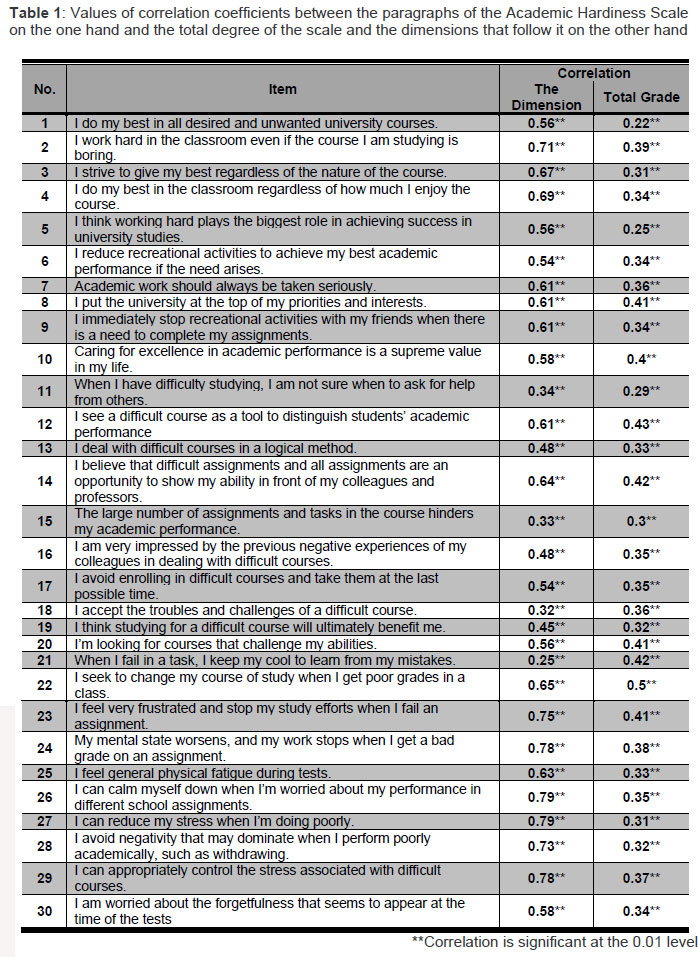
It is apparent from Table 1 that the values of the correlation coefficients of the paragraphs of the scale have ranged between 0.25-0.79 with their dimensions, and between 0.22-0.50 with the total degree of the scale, and all these values were statistically significant at the level of significance (α = 0.01), The correlation of all paragraphs with their dimensions and with the total degree of the scale was higher than 0.20, and these values are acceptable to keep the paragraphs within the scale as indicated by Odeh (2010). Thus, all paragraphs of the scale and the scale in its final form were accepted. It consists of 30 paragraphs, divided into four dimensions.
RELIABILITY OF THE ACADEMIC HARDINESS SCALE
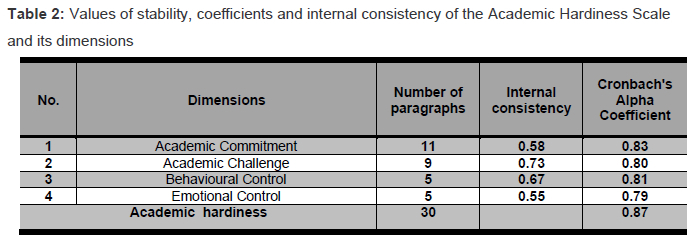
To estimate the stability of the internal consistency of the Academic Hardiness Scale and its dimensions, Cronbach's alpha was used on the data for the first application of the survey sample. The sample consisted of 30 students from the study population and from outside the sample. The stability of the repetition of the scale was verified by reapplying the scale to the previous survey sample with a time difference of two weeks between the first and second applications. Next, the Pearson correlation coefficient was calculated between the first and second applications on the survey sample, as shown in Table 2.
Table 2 shows that the value of the Cronbach alpha coefficient ranges from 79 per cent to 83 per cent, that is, it is high for each dimension of the scale, and the value of the alpha coefficient for all paragraphs of the scale (87%) is very high. This means that the reliability coefficient is high, enabling us to confidently use the questionnaire.
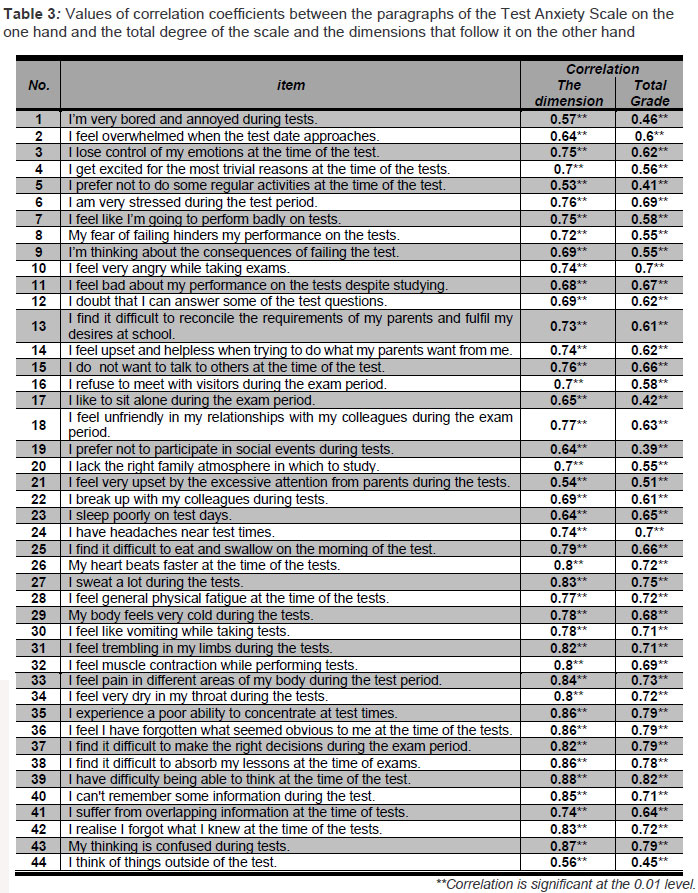
Table 3 shows that the values of the correlation coefficients of the paragraphs ranged from 0.53 to 0.88 for their dimensions, and between 0.39-0.82 for the overall scale. All values were statistically significant at α=0.05. The correlation of all paragraphs with their dimensions and with the total degree of the scale was higher than 0.20, and these values are acceptable to keep the paragraphs within the scale as indicated by Odeh (2010). Thus, all paragraphs of the scale were accepted, and the scale was used in its final form. It consists of 44 paragraphs, distributed among four dimensions.
Gender Variable:
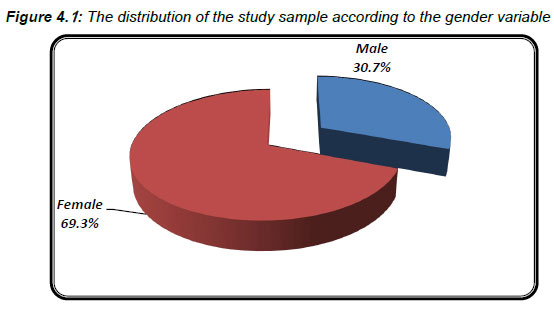
The gender variable was analysed by calculating the frequency and percentage of each appropriate category. A graph was used to illustrate the frequencies. Table 4.1 and Figure 4.1 indicate the results.
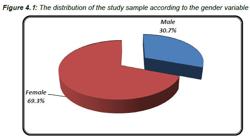
The above table declares that about two-thirds (69.3%) of the respondents were females, (n=375). A total of 166 respondents (30.7%) were male.
Specialisation variable
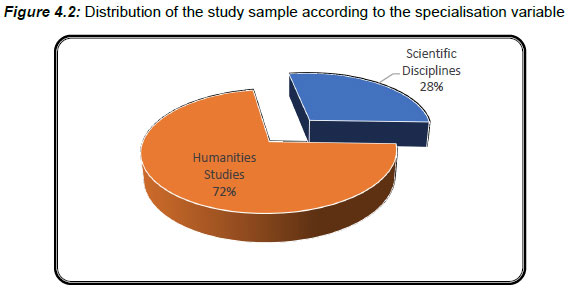
The specialisation variable was analysed by calculating the frequency and percentage of each specialisation variable category. A graph was used to illustrate the frequencies. Table 4.2 and Figure 4.2 indicate the results.
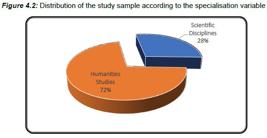
The above table indicates that one-third of the respondents (n=388) were studying humanities male and female students, while only 153 individuals were majoring in scientific disciplines (28.3%).
Educational level variable
The Educational level variable was analysed by calculating the frequency and percentage of each educational level category. A graph was used to illustrate the frequencies. Table 4.3 and Figure 4.3 indicate the results.
The above table indicates that most male and female students were pursuing a master's degree (n=438), representing 81.0 per cent of the study sample. There were 103 students pursuing doctoral degrees, representing 19 per cent.
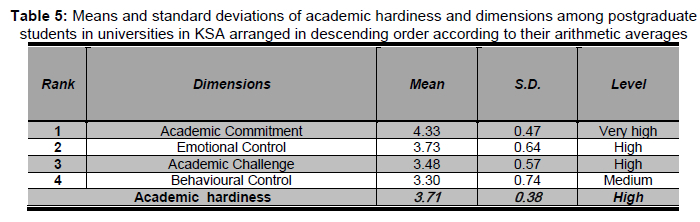
The first research question asked, "What is the level of academic hardiness among postgraduate students in universities in KSA?" To answer this question, the arithmetic averages and standard deviations of academic hardiness and their dimensions were calculated among the sample members, as shown in Table 5.
Table 5 shows that the overall level of academic hardiness among postgraduate students in KSA universities was average with an arithmetic average of 3.71. The values of the arithmetic averages of the dimensions ranged between 3.30-4.33 in the following order: Academic commitment ranked first, followed by emotional control in second place. The third place was academic challenge followed by behavioural control in fourth and last place. This result is because the confidence of students at the postgraduate level, their commitment, control over their emotions and behaviours, and competition among themselves for high grades may be more than in other academic stages. It may also be attributed to the fact that the age of postgraduate students makes them more aware and responsible individuals, as this stage may open more prospects for professional and scientific life. This study is like the findings of (Abdel et al., 2020) who showed that master's students have high hardiness. This differs from the results of the Fajriani and Bakar (2020) which showed that more than half of the sample had medium hardiness.
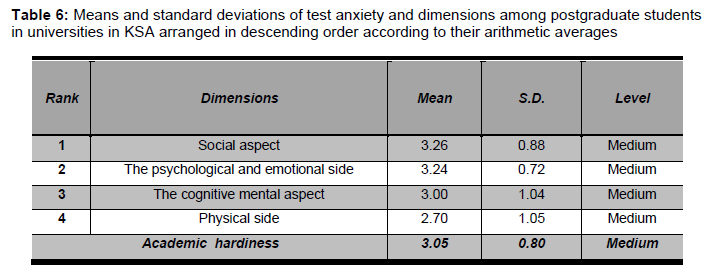
The second research question asked, "What is the level of test anxiety among postgraduate students in universities in KSA?" To answer this question, the arithmetic averages and standard deviations of test anxiety and its dimensions were calculated among the sample members, as shown in Table 6.
Table 6 indicates that the overall level of test anxiety among postgraduate students in universities in KSA was average with an arithmetic average of 3.05, and the values of the arithmetic averages of the dimensions ranged between 2.70-3.26, all of which came at the average level. The dimensions were in the following order: The social aspect ranked first, followed by the psychological and emotional aspect in second place. These were followed by the cognitive mental side in third place, followed by the physical aspect in the fourth and last place.
These results may be attributed to the fact that mental disorders, such as stress, fear, malaise and uneasiness can affect the test sessions, and this, in turn, may work on severe mood swings for students, making it difficult to deal with the requirements of the test. Test anxiety may also affect the health status of students through increased heartbeat, sweating or feeling short of breath, and this may lead to test anxiety and prevent students from performing their best on the test. This may be attributed to students' poor preparation for tests, lack of knowledge of their abilities or lack of self-confidence, which may lead to test anxiety. Expectations for obtaining high scores on the test may be the reason for test anxiety, and it may also be attributed to the fact that competition may be a factor. This differs from the results found in Abu Hassouna's (2015) study in which two experimental groups with high anxiety and a control group that did not undergo any training to reduce anxiety, showed the level of test anxiety in favour of the control group.
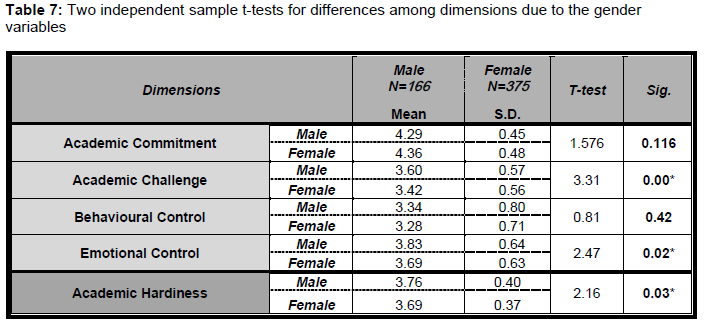
The following results relate to the third research question, which asks, Are there statistically significant differences at the level of significance (0.05 = α) between the arithmetic averages of academic hardiness among postgraduate students in universities in KSA due to the variables of gender, specialisation and educational level? To answer this question, the arithmetic averages and deviations of academic hardiness and their dimensions among the study sample were calculated according to the gender variables as shown in Tables 7, 8, and 9.
Table 7 indicates statistically significant differences at 0.05 between the arithmetic averages of the dimension of academic challenge and emotional control among postgraduate students in universities in KSA due to the gender variable. In general, there were statistically significant differences between the arithmetic averages of overall academic hardiness among postgraduate students in universities in KSA due to the gender variable.
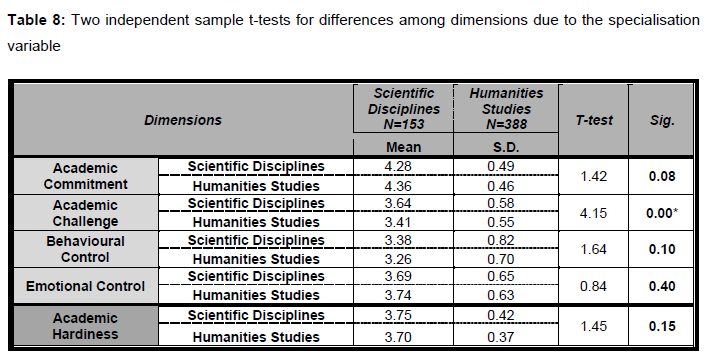
Table 8 shows no statistically significant differences between the arithmetic averages, except for the academic challenge among postgraduate students in the universities of KSA due to the specialisation variable, where the significance level was less than 0.05. In general, there were no statistically significant differences at the significance level (α=0.05) between the arithmetic averages of academic hardiness (as a whole) among postgraduate students in universities in KSA due to the specialisation variable.
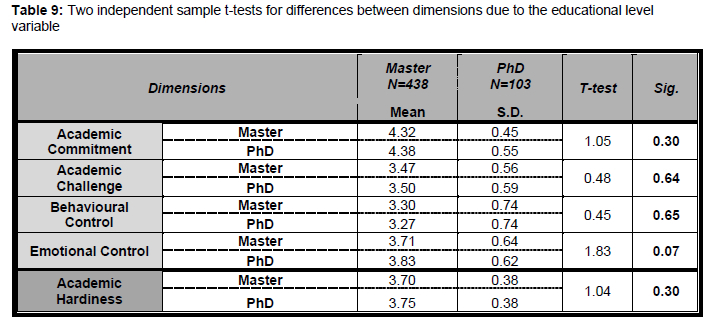
Table 9 shows no statistically significant differences at (α = 0.05) between the arithmetic averages of the dimensions of academic hardiness and the level of education variable, where the significance level was less than 0.05.
In general, there were no statistically significant differences between the arithmetic averages of academic hardiness (as a whole) among postgraduate students in universities in KSA due to the educational level variable.
The fourth research question asked, "Are there statistically significant differences at the level of significance (0.05 = α) between the arithmetic averages of the Test Anxiety Scale among postgraduate students in universities in KSA attributed to the variables of gender, specialisation and educational level? To answer this question, the arithmetic averages and deviations of test anxiety and their dimensions were calculated for the study sample according to the gender variable as shown in Tables 7, 8, and 9.
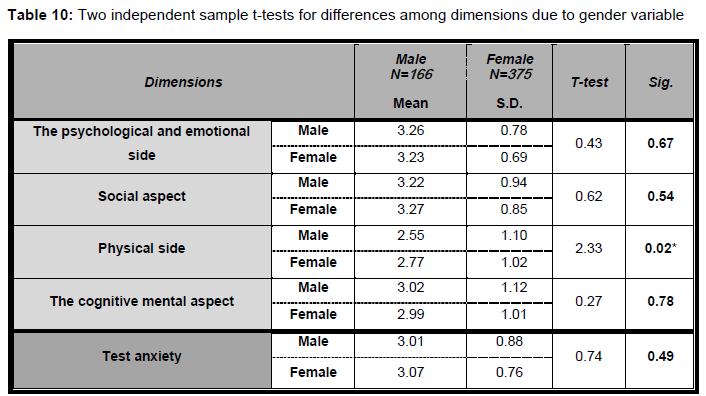
Table 10 indicates no statistically significant differences between the arithmetic averages except for the physical side among postgraduate students in universities in KSA due to the gender variable.
In general, there were statistically significant differences at the significance level (α=0.05) between the overall arithmetic averages of test anxiety.
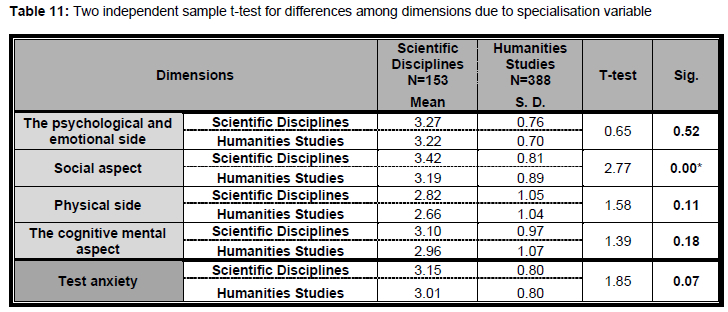
Table 11 shows no statistically significant differences between the arithmetic averages except for the social aspect among postgraduate students in universities in KSA due to the gender variable.
In general, there were no statistically significant differences at the significance level (α=0.05) between the arithmetic averages of test anxiety (as a whole) among postgraduate students in universities in KSA due to the specialisation variable.
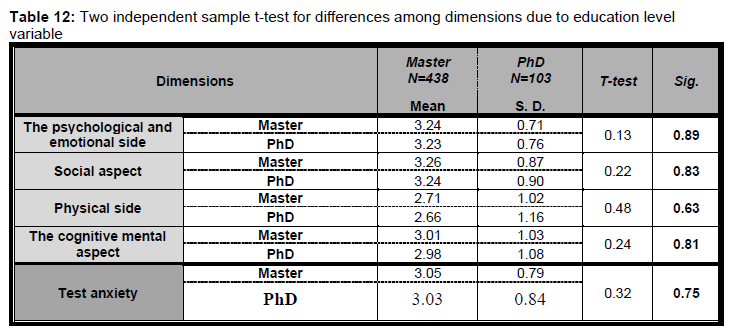
Table 12 shows no statistically significant differences between the arithmetic averages of the dimensions of test anxiety among postgraduate students in universities in KSA due to the level of education variable.
In general, there were no statistically significant differences at the significance level (α=0.05) between the arithmetic averages of test anxiety (as a whole) among postgraduate students in universities in KSA due to the education level variable.
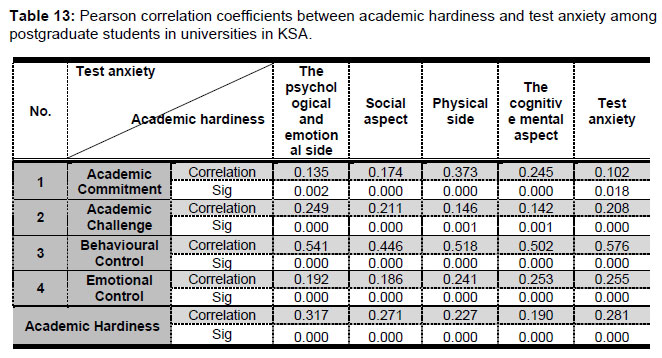
The fifth research question asks, "Is there a statistically significant correlation at the significance level (α=0.05) between academic hardiness and test anxiety among postgraduate students in universities in KSA?" To answer this question, the values of Pearson Correlation coefficients between academic hardiness and test anxiety among the study sample members were calculated, as shown in Table 13.
It is clear from Table 13 that there are positive correlations of statistical significance between the Academic Hardiness Scale and the Test Anxiety Scale whose values ranged between 0.102 - 0.576. The overall academic hardiness was associated with test anxiety) with a statistically significant positive relationship at the significance level (α = 0.05) with a value of 0.281. This result may explain that anxiety may not be a negative phenomenon, and moderate anxiety levels in students can contribute positively to successful performance on the test. Results may also be attributed to the pressures that students undergo to obtain high scores in tests, Overcoming the consequences of failure has a role in academic hardiness, in other words, academic hardiness may be associated with moderate anxiety, which in turn pushes the student to obtain satisfactory grades.
The current study disagrees with some of the results of (Abdollahi, Carlbring, Khanbani, and Ghahfarokhi, 2016), who found that students with high levels of personal perfectionism and high levels of academic hardiness were less likely to experience test anxiety. Furthermore, the current study disagrees with the findings of (Khalatbari, Ghorbanshirodi, and Akhshabi, 2013) whose results showed that there is a negative and significant relationship between the components of hardiness (commitment-challenge-control-general hardiness) and test anxiety This indicates that increasing the hardiness of students reduces their anxiety on the test.
Considering the above, it is apparent that:
The level of academic hardiness of postgraduate students in universities in KSA was high.
The level of test anxiety among postgraduate students in universities in KSA was medium.
There is no difference in academic hardiness among postgraduate students in universities in KSA for the variables of specialisation and academic qualifications except for gender.
There is no difference in test anxiety among postgraduate students in universities in KSA due to the variable of gender, specialisation or academic qualification.
DISCUSSION
This study explores in depth how students' ability to meet academic challenges-called academic hardiness-interacts with their experience of test anxiety and ultimately affects their overall academic success. Students display a wide range of personality traits and coping mechanisms that influence their academic outcomes. According to Fajriani and Bakar (2020), academic hardiness is an essential trait for students to develop, especially in today's competitive global landscape. This concept prompts a closer examination of how students respond differently to academic failure and stress, as highlighted by Kamtsios and Karagiannopoulou (2012).
Findings from this study reveal that postgraduate students at Saudi universities demonstrate a high level of academic hardiness. This resilience enables them to manage academic pressures effectively, even when faced with challenges. Conversely, their levels of test anxiety were found to be moderate. This balance suggests that while students are generally capable of managing the stressors inherent in academia, their performance may fluctuate under the pressures of examinations, reflecting a nuanced interplay between resilience and anxiety.
On the other hand, the study identified no significant differences in levels of academic hardiness or test anxiety based on specialization or educational level among postgraduate students, aside from gender-related differences. This indicates that the effects of hardiness and anxiety might be primarily influenced by personal and socio-cultural factors rather than academic disciplines. Recognizing these nuances can assist educators in developing more personalized strategies to support students, especially in high-stress environments.
Moreover, the study highlights a positive, statistically significant correlation between academic hardiness and test anxiety. This finding suggests that moderate anxiety-often perceived negatively-can actually serve as a motivator, driving students to prepare more diligently and strive for success. Thus, anxiety may play a dual role; when managed effectively, it can catalyze improved academic performance.
From an educational perspective, these findings emphasize the importance of fostering academic hardiness among students. Institutions should consider implementing programs that help students build resilience, such as stress management workshops and courses focused on emotional intelligence and adaptive coping strategies. Additionally, teaching students to recognize and harness moderate levels of anxiety as a tool for maximizing performance could transform their educational experiences.
CONCLUSION
In conclusion, this research enhances our understanding of the complex dynamics between academic hardiness and test anxiety, providing valuable insights into how these factors interact to influence student performance. By drawing on these insights, educators and policymakers can develop more effective interventions that foster educational resilience and transform potential stressors into opportunities for growth and achievement. This understanding paves the way for nurturing well-rounded individuals who can thrive in today's increasingly competitive and stress-filled educational environments.
RECOMMENDATIONSGiven the study's focuse on the interaction between academic hardiness and test anxiety among postgraduate students, it is recommended that Saudi universities implement an Academic Resilience and Anxiety Awareness Program. There is an aurgent need to activate counseling services for students concerned about tests and to educate them on strategies to alleviate these symptoms.
To effectively reduce test anxiety, students should be trained in coping techniques. This can be achieved by providing opportunities to face unexpected situations and allowing them to experience practice tests more frequently. Universities should offer training workshops that incorporate simulated test scenarios, helping students acclimate to exam pressures. These workshops should include exercises that allow students to practice managing unforeseen challenges, thus improving their ability to maintain composure and confidence during actual exam situations.
REFERENCES
LITERATURE REVIEW
- Abdel, M., A. A. F. Mohamed, and A. R. M. Fathy. 2020. "The factorial structure of academic rigidity and its relative contribution to predicting academic achievement among master's students at the University of Bisha". Fayoum University Journal for Educational and Psychological Sciences, 14(10), 1-62
- Abdollahi, A., P. Carlbring, M. Khanbani, and S. Ghahfarokhi,.2016. "Emotional intelligence moderates perceived stress and suicidal ideation among depressed adolescent inpatients", Personality and Individual Differences, (102)223-228.
- Abdollahi, A., S. Panahipour, T. M. Akhavan and, K. A. Allen. 2020. "Academic hardiness as a mediator for the relationship between school belonging and academic stress". Psychology in the Schools, 57(5), 823-832
- Abu Azab, N.I. 2008. The effectiveness of a proposed counseling program to reduce test anxiety among secondary school students in Gaza. Governorate, Islamic University, Department of Psychology, p. 59 .
- Abu Hassouna, N.M. 2015. "The effect of a training program (cognitive-behavioral) on reducing the level of test anxiety among students of Irbid National University". Journal of the Islamic University for Educational and Psychological Study, 23(1), 158-182 .
- Ahmadi, A., H. Zainalipour, and M. Rahmani. 2013. "Studying the role of academic hardiness in academic achievement of students of Islamic Azad University, Bandar Abbas Branch". Journal of Life Science and Biomedicine.3(6): 418-423.
- Al-Jubouri, S., H. Latif. 2006. Exam anxiety and its relationship to postcognitive skills among distinguished high school students, Unpublished doctoral thesis, Al-Mustansiriya University.
- Al-Otaibi, M. 2018. "Test anxiety and academic achievement in relation to some demographic variables among a sample of students of the Faculty of Education in Afif at Shaqra University". Educational Journal, (53).
- Ansari, B. (2004): Individual differences between male and female students of Kuwait University in anxiety and depression, Ain Shams University - Psychological Counseling Center, Cairo .
- Aprodita, N.B. 2021. "The relationship between quality of college life and academic hardiness among college students", Jurnal Psikologi Pendidikan & Konseling. 7 (1), 1-9.
-
Benishek, L. A., J. M. Feldman, R. W. Shipon, S. D. Mecham, and F. G. Lopez, 2005. "Development and evaluation of the Revised Academic Hardiness Scale". Journal of Career Assessment, 13(1), 59-76. https://doi.org/10.1177/1069072704270274
» https://doi.org/10.1177/1069072704270274 - Black, S. 2005. "Test anxiety". American School Board Journal, 192 (6),42-44
- Cassady, C. 2010. Test anxiety: Contemporary theories and implications for learning. Publisher: Peter Land.
- Cotner, S., L. Jeno, J. Walker, C. Jorgensen, and V. Vandvik. 2020. "Gender gaps in the performance of Norwegian biology students: The roles of test anxiety and science confidence". International Journal of STEM Education, 7(55),2-10.
- Fajriani, A., M. Bakar. 2020. "The profile of students' academic hardiness: A descriptive study". Advances in Social Science, Education and Humanities Research, (576), 495-499.
- Gerwing, T.G., J. A. Rash, G. Allen G., B. Bramble, and J. Landine. 2015. "Perceptions and incidence of test anxiety". The Canadian Journal for the Scholarship of Teaching and Learning, 6 (3).
- Isabel, M., M. Pellicionic, R. Bonoa. 2016. "Gender differences in test anxiety and their impact on higher education students' academic achievement". Procedia - Social and Behavioral Sciences 228, 154 - 160.
- Kamtsios, S. and E. Karagiannopoulou. 2012. Conceptualizing students' academic hardiness dimensions: A qualitative study.
- Kamtsios, S., and E. Karagiannopoulou. 2013. Exploring academic hardiness in Greek students: Links with achievement and year of study. 6, 249-266.
- Kamtsiosk, S, and E. Karagiannopoulo. 2015. "Exploring relationships between academic hardiness, academic stressors and achievement in university undergraduates". Jaepr, 1(1), 53-73.
- Khalatbari, J., S. Ghorbanshirodi, M. Akhshabi. 2013. "The relationship between hardiness and exam anxiety in students". Life Science Journal, 10(2), 185-188.
- Lopez, G. and A. Benishek. 2001. "Development and initial validation of a measure of academic hardiness". Journal of Career Assessment, 9(4), 333-352.
- Maddi, S.R. 2002. "The story of hardiness: Twenty years of theorising, research, and practice". Consulting Psychology Journal, 54, 175-185.
- Mahasneh, A.M.M., O. A. A. Al-Azmat, and A. M. A. Ghazou. 2021. "Academic rigidity and its relationship to academic stress and academic achievement among Hashemite University students". Journal of Al-Quds Open University for Educational and Psychological Research and Studies, (12)35, 43-60.
- Mansour, I.Z., G. Naima. 2014. "A field study among students of the baccalaureate stage of secondary education in the city of Ouargla". Journal of the Researcher in the Humanities and Social Sciences, 16, 399-407.
- Melhem, M., A. N. Jarrah, M. Sharida. 2020. "The predictive ability of academic rigidity with cognitive test anxiety among students at Irbid University College". Journal of the Faculty of Education, Jordanian Journal of Educational Sciences, 18(2)287-301.
- Muhammad, A. 2008. "The role of higher education in facing the challenges of establishing a knowledge society in Egypt". Journal of the Faculty of Education in Mansoura, Mansoura University, Faculty of Education .
- Narad, A. 2018. "Psychological hardiness among senior secondary school students: Influence of home environment", Man in India, 97 (23),441-453.
- Odeh, A. 2010. Measurement and evaluation in the teaching process. Irbid: Jordan, Dar Al-Amal.
- Patterson, T., and D. Arnetz. 2001. "Factor analysis and predictors of student stressors". Psychotherapy and Psychosomatics, 70(3), 39-49
- Rezazadeh, M. 2009. "Investigating the relationship among test anxiety, gender, academic achievement and years of study: A case of Iranian EFL University students", English Language Teaching, (2)4, 68-74.
- Spielberger, C.D., and P. R. Vagg. (Eds.). 1995. Test anxiety: Theory, assessment, and treatment. Taylor & Francis.
- Thomas, L., C. Cassady, and H. Finch. 2018. "Identifying severity standards on the cognitive Test Anxiety Scale: Cut score determination using latent class and cluster analysis". Journal of Psychoeducational Assessment, 36, 492-508.
- Zahran, Muhammad H. 2000. Mini psychological counseling to deal with academic problems. World of Books