The effect of the Higher Education Qualifications Sub-Framework Act on the academic organisational structure of a university of technology
Abstract
Phasing out existing qualifications and phasing in new ones on a large scale is a costly exercise in any institution of higher education. This research aimed to determine how the implementation of the Higher Education Qualification Sub-Framework (HEQSF) Act would affect the academic organisational structure at a university of technology and to develop an instrument to manage the phasing in and phasing out of qualifications on a large scale in a sustainable way. The pragmatic paradigm underpinned this mixed method study and the National Implementation Research Network Framework (NIRN) and Complexity Theory framed this research. The primary aim of this study was to develop a framework that predicts how the phasing in/phasing out of programmes of a faculty will affect the workload of academic staff and subsequently the academic organisational structure of the institution. Such a tool will enable each faculty at the selected university to accurately predict the quantity of additional human resources needed during this process of phasing in and phasing out of new and old programmes while ensuring financial sustainability at the institution. This will enable the university to determine human resource requirements and student enrolments and to align them with the university's targeted budget allocation.
Universities of Technology; Higher Education; Higher Education Qualification Sub-Framework; higher education funding; Human Resource Management in Higher Education; academic structure
INTRODUCTION
The Higher Education (HE) landscape in South Africa has been profoundly shaped by historical racial separation (Bezuidenhout, de Jager and Naidoo 2013, 1182). Before the end of apartheid in 1994, the government enacted policy changes, including the establishment of the National Commission on Higher Education (NCHE) and the subsequent enactment of the Higher Education Act in 1997, aiming to revolutionise the HE sector and rectify inequalities from the segregated pre-1994 education system (Nzimande 2009, 1). Post-apartheid, the HE system endured significant institutional and regulatory changes (Davis 2013, 168). However, persistent issues including access inequalities, low completion rates, funding shortages, inability to meet growing demand, variable teaching quality, complex qualification structures, program misalignment, dynamic market needs, research deficits, and staff shortages continue to plague the South African HE environment (CHE 2004, 2-9).
In response, the Council on Higher Education (CHE) and the Department of Higher Education and Training (DHET) mandated the adoption of the Higher Education Qualifications Sub-Framework (HEQSF) by 2020. Despite the framework's intent to streamline qualifications and enhance articulation, unresolved issues surrounding qualification types, coherence, credit values, articulation pathways, and international comparability have arisen, impacting national policy goals and the quality of education (CHE 2013, 42-43).
The development of an Academic Organisational Funding Framework (AOFF) represents a significant advancement in how policy-induced changes can be managed in higher education institutions. This is because it offers a systematic approach to managing funding channels within institutions. Its conceptualisation and implementation can improve transparency, accountability, and strategic planning in higher education institutions. Moreover, the flexibility of the AOFF makes it a valuable tool to drive positive changes across diverse higher education settings, enhancing financial transparency, resource allocation strategies, decision-making processes, and ultimately, improved research and teaching and learning activities.
BACKGROUND
To understand the potential impact of the HEQSF on the organisational structure and funding of a South African (UoT) the process of allocating funds to universities and the manner in which universities generate income in South Africa requires clarification. By elucidating this process, an understanding can be obtained, of the financial contribution that each qualification generates for a university, which in turn, allows for an assessment of the cost of offering a qualification. This cost encompasses aspects such as the ratio of academic administrative staff to academic teaching staff, and the maintenance of facilities and laboratories.
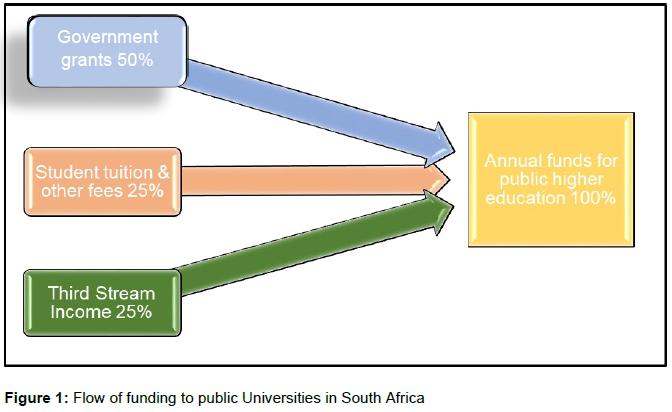
A graphical representation (Figure 1) provides an overview of the flow of funds to public universities in South Africa. These proportions can vary significantly among institutions. For example, while some institutions may receive only 50 per cent of their income from grants provided by DHET, others can generate substantial funds through student tuition,-other fees (25 per cent), and third-stream income (25 per cent).
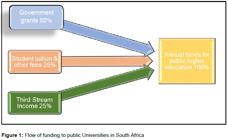
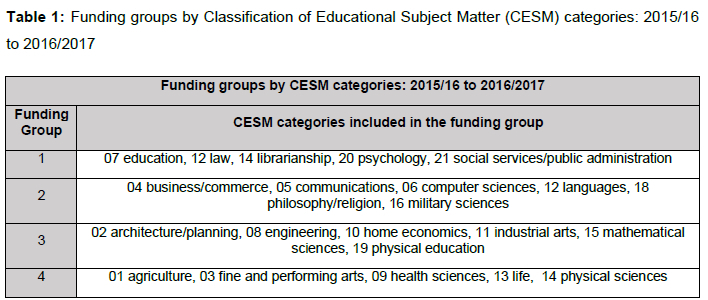
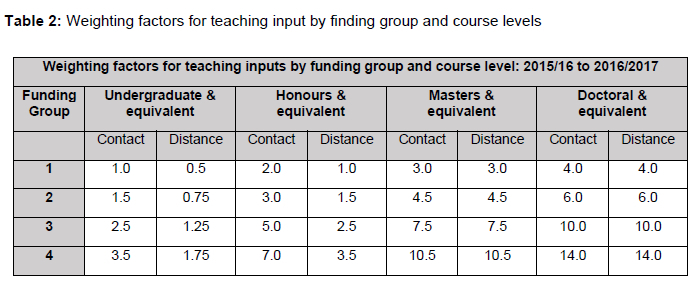
The calculation of teaching input grants involves determining full-time equivalent (FTE) students based on course weighting, with FTEs then proceeding through a funding grid approved by the Minister of Higher Education and Training, which assigns weights according to course material, level, and delivery mode as seen in Tables 1 and 2 respectively (CHE 2004, 2-9).
Furthermore, universities receive teaching output grants for every student who completes an undergraduate qualification, and a research output grant for successful master's and doctorate degrees. These grants contribute to a university's income. This complex interplay of funding sources and allocation mechanisms underscores the intricate funding landscape of South African universities and serves as a foundation for understanding potential changes brought about by the HEQSF (CHE 2015, 2-22).
PROBLEM STATEMENTThe level of instruction on the HEQSF differs from the previous National Accredited Technical Education Diploma (NATED 151) programmes, impacting on funding and human resource requirements. The transition to the HEQSF has several implications, including changes to instruction levels of previous NATED 151 programs and the revision of funding mechanisms for new programs. Existing funding models and student tuition fees are rooted in NATED 151 courses and credit costs, resulting in service-oriented subject departments with lower credit courses receiving more funding than guardian departments overseeing higher credit courses. This dynamic demands that academic staff has qualifications and additional years of education and training to teach specific modules at certain levels, influencing the required number of academic staff for different programmes. As such, the purpose of the study was to devise a resource allocation organisational framework to anticipate the impact of the HEQSF on the organisational structure a UoT.
Managing a university's finances in a sustainable way is crucial because the average salary expenditure at South African universities ranges from 55 per cent to 62.5 per cent of total income (HESA Nov 2014). However, a survey conducted at a UoT revealed that its salary expenditure comprised of 78 per cent of the total budget, necessitating alignment with the national average to ensure sustainable resource management (TUT 2017, 16-18).
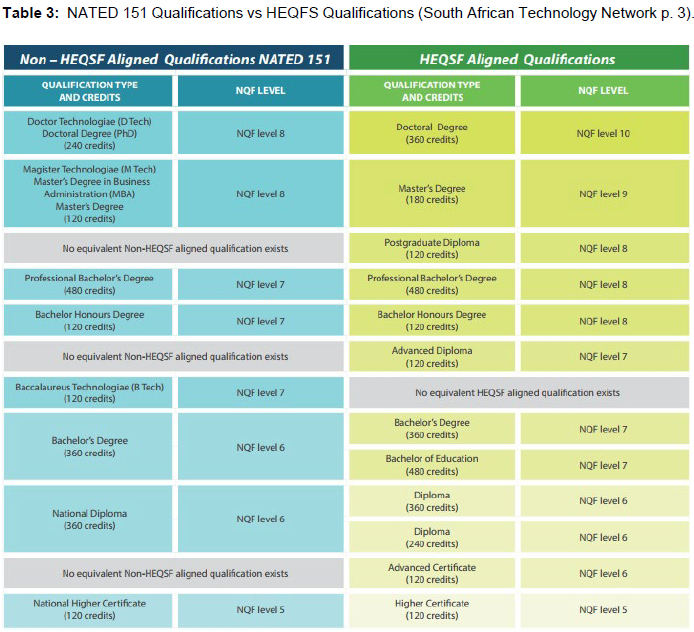
The table above depicts the correlation between the NATED 151 qualifications and the HEQSF aligned qualifications.
Considering these factors, a comprehensive study was required to examine the effect of the HEQSF on the academic organisational structure of a UoT. This assessment will aid in effectively managing the implementation of the HEQSF and adapting the current academic structure of the selected UoT to accommodate the HEQSF requirements.
Pertinent questions to be answered are: To what extent does the HEQSF influence the academic organisational structure of a University of Technology?
What additional academic human resources will be required when NATED151 is being phased out and HEQSF phased in?
What changes are required to the academic organisational structure of a UoT to meet the needs brought about by the HEQSF? How should the student enrolment plan of a UoT be linked to the academic staff profile to ensure financial viability?
THEORETICAL AND POLICY FRAMEWORKThis study draws upon the National Implementation Research Network (NIRN) Framework and Complexity Theory as its overarching theoretical framework. The adoption of this framework was particularly suitable for this research study as it establishes a robust basis for exploring, purposefully selecting, clarifying, enhancing, and systematically implementing a program's practice model, as indicated by Fixen et al. (2005, 2-3). The framework for intervention encompasses the following components:
• Formulation of elements and activities aimed at enhancing outcomes within the target field of interest;
• Examination of the HEQSF in terms of its alignment with the CHE policy implementation plan;
• Utilisation of existing data obtained from official documents and the Higher Education Information Management System (HEMIS) data. This data is instrumental in supporting financial planning, the implementation process, stakeholder involvement in strategic planning, and the formulation of enrolment plans; and
• The development and testing of alternative models that could be implemented with minimal disruption to the university's operations.
Complexity Theory, as described by Turner and Baker (2019), refers to the pattern of behaviour emerging from the interaction between elements being investigated. These elements are characterised by the development of relationships and new links being formed within a network where reiterative feedback is evident. Small changes in non-linear characteristics can lead to significant effects, commonly known as the butterfly effect. In understanding a network, it is essential to view it as a whole entity rather than merely the sum of its parts, as single elements alone cannot fully depict the system's dynamics. Therefore, decisions made by stakeholders should consider the system's past interactions and their potential impact on present elements, as highlighted by Kernick (2006).
Method
The study adopted a pragmatic paradigm to investigate the anticipated impact of the on the academic organisational structure within the selected UoT. The primary objective was to derive actionable insights from data extracted from the HEMIS to facilitate a deeper comprehension of the interconnections between experiential knowledge and practical application (Muijs 2013, 49-52). This approach entailed employing existing HEMIS data for analysis and framework generation, culminating in the ability to predict faculty and departmental staffing requirements essential for the effective implementation of qualifications aligned with the Program Qualification Mixture (PQM) structure of the University of Technology. The research approach maintained an objective stance by adhering to reliable analysis methods, aiming to address the research questions directly while prioritising problem-solving rather than an over-reliance on literature (Muijs 2013, 49-52).
While the investigation was centered on addressing the problem within the context of a specific institution (University of Technology), its implication could be potentially extended to other similar organisations (universities) (Worren, Moore and Elliot 2002, 1228-1229). Knowledge was recognised as a conceptual tool, in line with its application within an organisational framework, highlighting the data's utility in design rather than merely being used as information, to create a model for effective human resource management within organisations.
The study incorporated both quantitative and qualitative methodologies within a mixed methods approach to effectively address the research inquiries. This approach was selected to enhance the validity of the findings by utilising two distinct data sources that could be correlated to yield a more comprehensive understanding of the phenomenon under examination. The utilisation of mixed methods not only facilitated a deeper and wider comprehension of the subject matter, but also introduced an integrative element that instills confidence in the research outcomes.
To initiate the research project, an analysis of legal and policy documents concerning the NATED 151 and the HEQSF was undertaken. Subsequently, quantitative data from HEMIS was obtained from the registrar of the, UoT and presented in spreadsheet format. Predictive analytics was then employed to gain deeper insights from this quantitative data and develop an Academic Organisational Funding Framework (AOFF) tailored to the needs of the UoT.
In the qualitative data analysis phase, policy analysis was employed to address the incongruence between intended and actual fee structures within the university. This process was guided by a set of questions that helped shape the study's direction, focusing on identifying problems, anticipated outcomes, policy choices, observed policy outcomes, and the contribution of perceived policy outcomes. This analysis was essential in revising and updating institutional policies, particularly those affected by the HEQSF and NATED qualification guidelines. The study leveraged various policy documents, including The Funding Framework and the HEQSF policy, to inform the development of an AOFF that addressed income generation, qualifications alignment, and organisational structure.
Concurrently, the quantitative data analysis phase employed datasets from HEMIS specific to the UoT. These datasets, represented as numerical values, encompassed variables like student-to-lecturer ratios, student graduation rates, full-time equivalent numbers, and program headcounts. numerical data was processed to develop the AOFF, enabling meaningful interpretation and justification of the mixed methods research approach. The quantitative phase included trend description, statistical analysis, and data comparison to uncover patterns and relationships.
The integration of qualitative and quantitative data resulted in a comprehensive understanding of the research problem and facilitated the development of an effective AOFF that considered both policy and numerical insights. This approach enabled a more robust analysis and interpretation of the UoT's academic structure, policies, and funding models, enhancing the overall validity and applicability of the study outcomes.
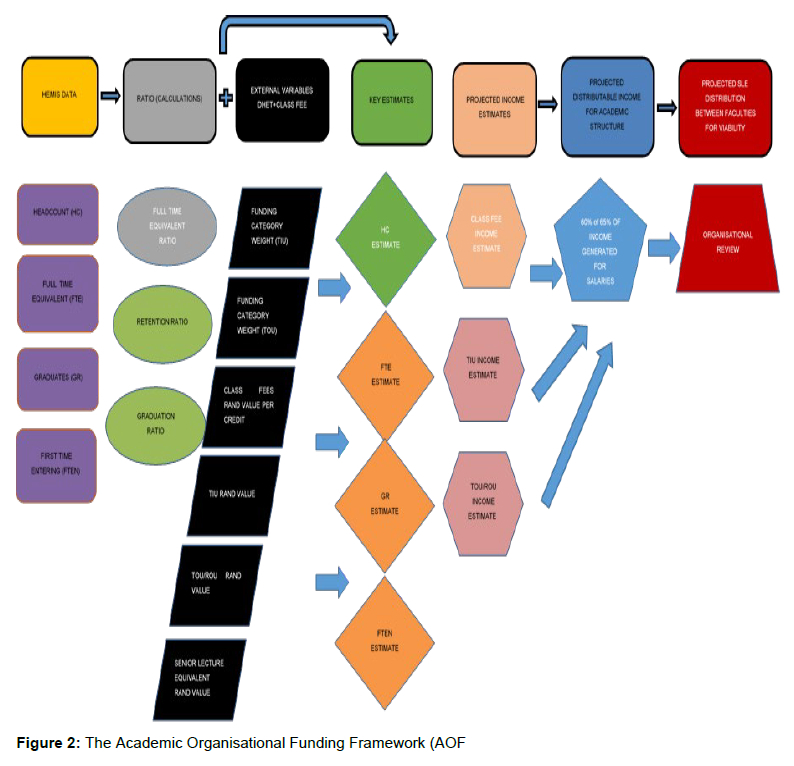
The AOFF was developed as a predictive tool to calculate and forecast the impact of the HEQSF transition on income generation and the academic organisational structure of the UoT.
This framework utilises historical and current ratios to anticipate the university's future needs. Its forward-looking approach aids in preparing the institution to effectively serve its stakeholders by making informed resource allocation decisions.
The AOFF's core purpose is to predict future values based on the historical data of the university, thus assisting the institution in proactively addressing shifts in human resource requirements across faculties. Subsets of the HEMIS data underpin this predictive model, enabling calculations and estimations for key metrics such as headcount, FTE, graduation, class fees, teaching input income, teaching output income, distributable income, and income for academic salaries. The AOFF structure links these estimates to generate a holistic view of potential streams of income and expenditure.
Interpretation of the AOFF results revolves around three essential estimates: headcount, FTE, and graduation figures. These estimates play a pivotal role in a faculty's financial streams, including tuition fees, teaching input income (TlUs), and teaching output income (TOUs). Graduation estimates further influence Teaching Output Units (TOUs) or Research Output Units (ROUs), affecting the funding allocation based on the completion of qualifications. Distributable income is then estimated for each faculty, with a defined portion designated for academic salaries.
The quality assurance measures applied in the study encompasses both the qualitative and quantitative phases. Trustworthiness and credibility were upheld in the qualitative phase through ethical conduct, transparency, and member checking. Member checking involved sharing findings with participants, including each faculty at the UoT, to validate and refine the accuracy of the research conducted. In the quantitative phase, reliability and validity were crucial. Reliability was achieved through consistent, audited historical HEMIS data, while validity was ensured by employing suitable statistical methods, maintaining transparency, and aligning findings with external data sources and expert opinions.
Regular updates, transparency, and ongoing refinement were emphasised in developing the AOFF. By consistently comparing predictions to actual data and seeking validation from stakeholders, the framework's reliability and validity were continually tested and enhanced. This rigorous process ensured that the AOFF's predictions accurately represented the UoT's funding allocation needs.
Top management of the university expressed high satisfaction with the AOFF, appreciating its transparent, data-driven approach to funding allocation that aligned with the institution's strategic goals. Feedback from stakeholders, including faculty members and Heads of Department, highlighted the framework's fairness, objectivity, and impact on collaboration across departments. However, it is important to note that policy updates and revisions require careful consideration and collaboration with various stakeholders within the university. While the findings and recommendations were positively received, the implementation of policy changes is a deliberate process that aligns with the institution's values and operational framework.
The university's commitment to responsible decision-making and thorough review processes may lead to a time lag between the presentation of findings and the actual implementation of policy adjustments aligned with the findings. This reflects the institution's dedication to ensuring that any changes implemented, are aligned with its overarching vision and goals. While there might be a temporary delay in implementation, it underscores the university's conscientious approach to implementing recommendations effectively.
In summary, the AOFF (Figure 1) represents a significant advancement in predictive resource allocation, demonstrating its potential to drive proactive decision-making and enhance financial planning within the UoT. Through its iterative development process and rigorous validation measures, the framework has garnered positive feedback from key stakeholders and holds the promise of significantly impacting the institution's resource management practices.
THE ACADEMIC ORGANISATIONAL FUNDING FRAMEWORK
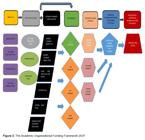
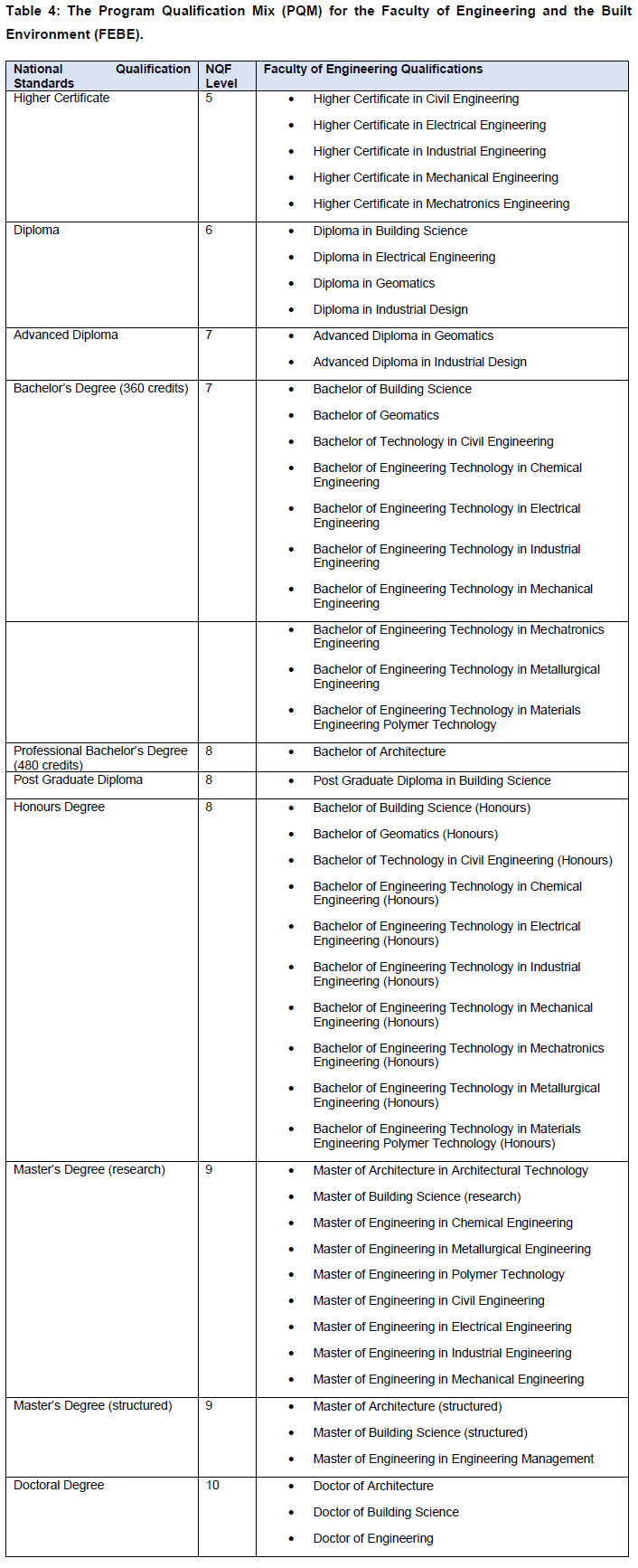
The UoT was analysed across its seven faculties. The Universities PQM was created using data from the HEMIS data. The qualifications were organised according to the National Qualification Framework (NQF) standards and levels. These included various qualifications such as Higher Certificates (HC) at NQF level 5, Diplomas (Dip) at NQF level 6, Advanced Diplomas (Adv. Dip) at NQF level 7, 360-credit Bachelor Degrees (B Tech) at NQF level 7, 480-credit Professional Bachelor Degrees at NQF level 8, Post Graduate Diplomas (PG Dip) at NQF level 8, Honours Degrees (Hons) at NQF level 8, research-based Master's Degrees (M Research) at NQF level 9, structured (course-based) Master's Degrees (M Struct) at NQF level 9, and Doctoral Programs at NQF level 10. As an example, Table 4 illustrates the PQM for the Faculty of Engineering and the Built Environment (FEBE).
The AOFF assessed various factors related to qualifications and funding within a university context. Qualifications from different faculties are grouped by NQF levels. The process involves categorising qualifications based on type and origin using Classification of Educational Subject Matter (CESM) categories. The section also examines New Intake (NI) or First Time Entering (FTEN) students, representing the initial enrolment in a specific qualification. The study calculates averages over three years to determine the efficiency of the intake process.
The concept of FTE is explored, involving assigning weights to courses and multiplying them by course headcounts. This is used to allocate resources and assess a qualification's average FTE generation for the university. The number of graduates completing qualifications is analysed to gauge internal efficiency.
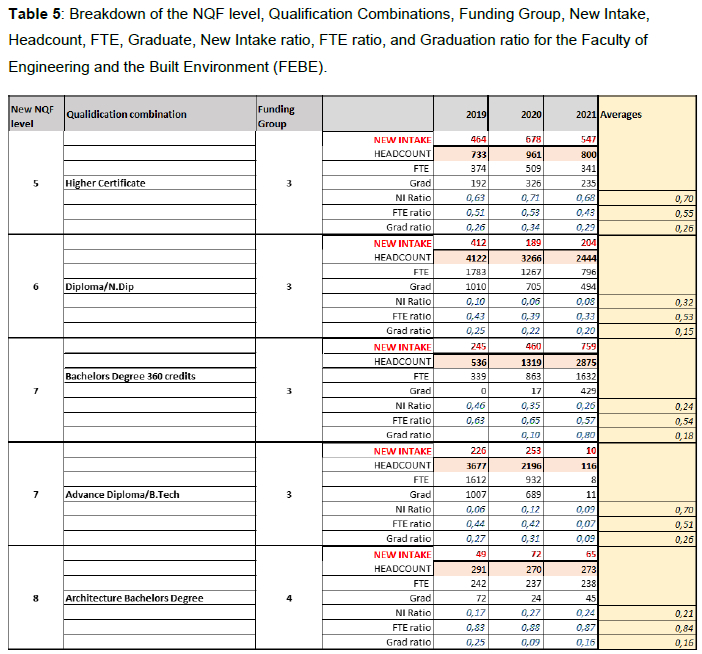
The section then delves into three important ratios derived from historical data: The New Intake Ratio, which measures the proportion of newly enrolled students; the FTE Ratio, indicating students' successful enrolment in all modules; and the Graduation Ratio, which assesses the efficiency of qualification completion. These ratios provide insights into future resource needs illustrated in Table 5 below.
The Teaching Input Unit (TIU) is explained as a way to calculate income based on educational subject matter categories, funding groups, and course levels. Predicted FTEs are used to estimate TIU income, contributing to the financial analysis of the university's qualifications.
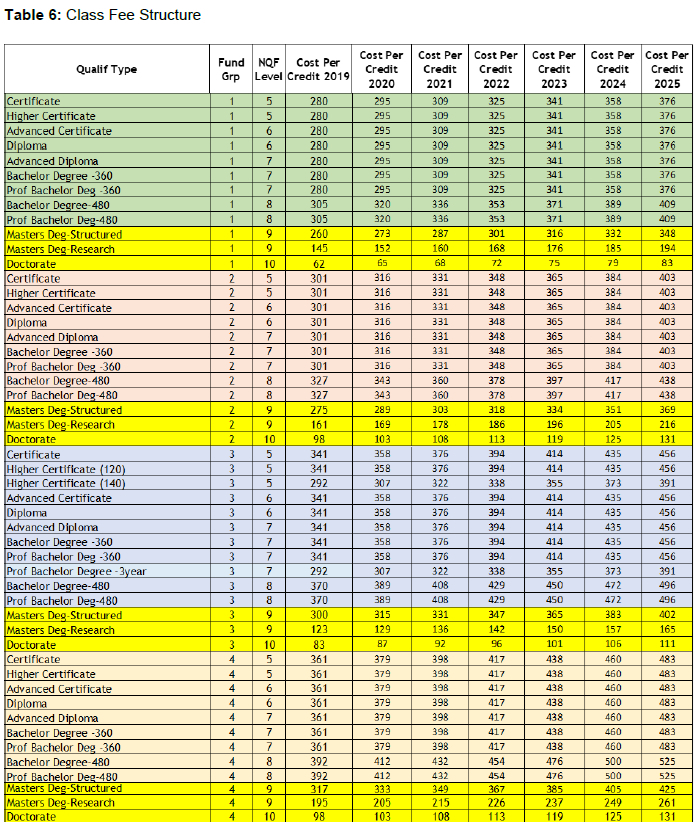
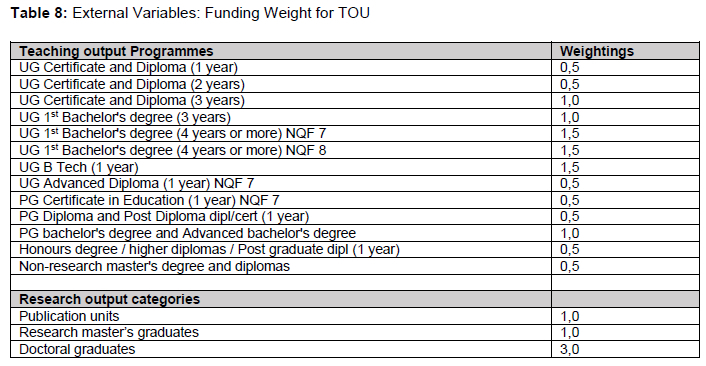
The Teaching Output Unit (TOU) is a grant received upon the completion of a student's qualification, based on non-research graduates. The TOU is calculated for each qualification level to determine income from the Department of Higher Education. Similarly, the Research Output Unit (ROU) is a grant received for publications, research master's graduates, and doctoral graduates. ROUs are calculated based on specific weights and values for each type. The Class Fee (CF) is the amount paid by students for facility and class usage. The goal is to predict income generated by qualifications through class fees. A norm is established for the cost per credit to provide clarity on income potential based on credit allocation.
Formulas and methods are provided for each calculation, allowing for accurate predictions and financial planning based on these different income sources. These calculations are illustrated in Table 6.
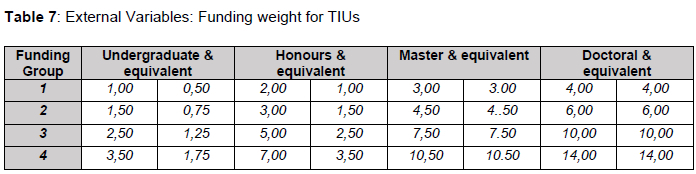
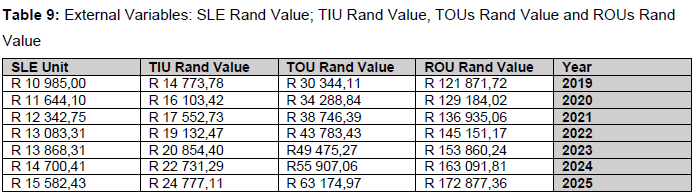
Various external variables and their impact on financial calculations are also considered. These external variables include funding groups, funding category weights, senior lecturer equivalent (SLE) values, teaching input, teaching output, and research output values. These factors are crucial in predicting and estimating financial outcomes and are illustrated in Tables 7, 8, 9 and 10.
The funding category weight is determined by the funding group of qualification and instruction-delivery mode. The SLE value is used as a unit of currency for estimating staff needs. Teaching input, teaching output, and research output values are used to calculate income received from the Department of Higher Education based on different outputs.
A series of predictions and estimates related to financial factors for the university can then be calculated. These include headcount estimates, graduation estimates, full-time equivalent estimates, class fee estimates, teaching input estimates, teaching output and research output estimates, and distributable income estimates. Each estimation involves specific calculations and formulas to determine the predicted income and resources generated by qualifications.
The estimations are then used to calculate the estimated income for academic environment salaries, which covers salary and administration budgets for qualifications. Additionally, the senior lecturer equivalent (SLE) estimate is used to gauge the number of academic, technical, and administrative staff required to present specific qualifications.
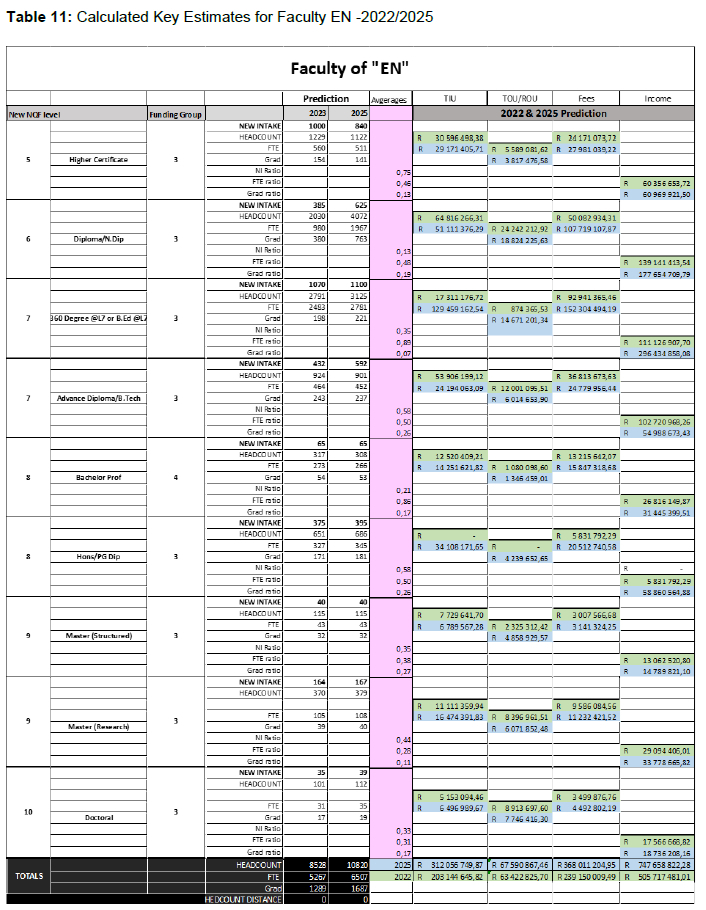
This comprehensive approach to estimating and predicting financial outcomes contributes to informed decision-making and resource allocation within the university's academic environment. Examples of these calculations and estimates are illustrated in Table 11 for Faculty EN.
FINDINGS
The transition from NATED-151 to HEQSF-compliant qualifications has significant consequences for the university's academic organisational structure. Some of the challenges include overlapping of qualifications, increased administrative and teaching workloads, and the need for additional personnel during the transition period. However, various faculties experience effects differently due to their funding categories.
In Faculty A, the impact of the transition to the HEQSF on the academic structure is substantial. FTEs exhibit a consistent increase from 1356 in 2019 to 1810 in 2022 and is projected to demonstrate a further increase to 1972 by 2025. Aligned to higher TlUs-and class fees, there is a clear indication of heightened financial revenue. Graduation rates also rose from 334 in 2019 to 644 in 2022 and are projected to rise to 790 by 2025, positively influencing TOUs and ROUs. Despite negative SLE values in 2022 and 2025, the faculty displays growth potential within the study period. However, the faculty relies on cross-subsidisation until it reaches its budgetary allocation and must reconsider its student enrolment plan to avoid cross-subsidisation once all HEQSF qualifications are integrated.
In Faculty H, the profound influence of HEQSF on the academic structure is evident. FTEs declined from 8432 in 2019 to 6583 in 2022 and is predicted to be at 6907 by 2025, linked to TIUs and class fees, indicating unfavourable financial implications. Graduation counts decreased from 2784 in 2019 to 2169 in 2022, with a marginal rise to 2296 predicted by 2025, negatively impacting TOUs and ROUs. Despite a decline in FTEs and graduation numbers the faculty still shows a positive SLE value, which results in financial viability and enables cross-subsidisation with other faculties until achieve self-sufficiency is achieved, contributing to financial balance. A comprehensive student enrolment review is necessary for sustained viability and to minimise the need for cross-subsidisation post-full HEQSF integration. Faculty E experienced a substantial impact related to HEQSF on the academic structure. FTEs rose from 3317 in 2019 to 5377 in 2022 and it is projected that will further increase to 5404 by 2025, correlating with TlUs and class fees, driving financial inflow. Graduation rates increased from 1214 in 2019 to 2121 in 2022 and is predicted to be at 2159 by 2025, positively affecting TOUs and ROUs. Faculty E displays a positive financial trajectory, allowing cross-subsidisation with other faculties, and and the ability to support them until self-sustenance is achieved. However, a thorough student enrolment strategy review is imperative for future viability and to prevent cross-subsidisation post-full HEQSF integration.
In Faculty MS, HEQSF has a far-reaching influence on the academic structure. FTEs declined from 6721 in 2019 to 5642 in 2022, but an increase to 6169 is projected by 2025, reflecting TIUs and class fees, linked to phased qualification transition. Graduation numbers rose from 2082 in 2019 to 2407 in 2022 and is predicted to reach 2928 by 2025, positively impacting TOUs and ROUs. Despite negative SLE values, a growth trend emerges within the wider 2019-2025 period, highlighting the potential for advancement. Faculty MS requires cross-subsidisation until the allocated budget is reached, showcasing financial resilience. In summary, these cases underscore the HEQSF's transformative impact on the academic structure, taking into consideration FTE dynamics, financial inflow, graduation trends, each faculty having to navigate unique challenges and growth potential.
Faculty I experiences fluctuating FTEs due to the phased transition from NATED 151 to HEQSF-aligned qualifications. The rise and subsequent decline in FTEs (from 4059 in 2019 to 4904 in 2022 and then a prediction of 4493 by 2025) closely relates to TlUs-and class fees. The graduation rate increase (from 721 in 2019 to 1877 in 2022 and then a prediction of 1749 by 2025), affects TOUs-and ROUs. Despite negative SLE values in 2022 and 2025, Faculty I demonstrates growth potential within a wider timeframe, although reliance pertaining to cross-subsidisation from other faculties persists.
Faculty EN displayed a similar pattern with increasing FTEs (from 3018 in 2019 to 4868 in 2022 and a predicted 6507 by 2025) linked to TIUs and class fees, driven by the shift to HEQSF-aligned qualifications. Graduation numbers increase (from 1065 in 2019 to 1318 in 2022 and a predicted 1687 by 2025), impacting TOUs and ROUs. Despite negative SLE values, a growth trajectory emerges from 2019 to 2025, enabling the faculty to offer cross-subsidisation due to financial stability.
Faculty S depicted rising FTEs (from 5885 in 2019 to 5903 in 2022 and a predicted 7803 by 2025), associated with TIUs and class fees in the transition to HEQSF-aligned qualifications. Graduation rates portray minor fluctuations (from 2507 in 2019 to 2486 in 2022 and a predicted 3475 by 2025), affecting TOUs and ROUs. Positive SLE values denote the faculty's financial viability and capacity for cross-subsidisation with financially challenged faculties within the UoT.
When considering the UoT in its entirety, an analysis of each faculty reveals a decline of a total of 1222 SLE units university wide in 2022. However, recovery is anticipated, with the university expecting to have a surplus of 6704 SLE units by 2025. This recovery is attributed to the enrolment of students in the newly introduced HEQSF-aligned qualifications and the graduation of the first cohort of students from these programs.
DISCUSSION
The transition from NATED-151 to HEQSF-compliant qualifications in South African Universities of Technology in particular illustrates the transformative impact of policy changes on higher education and training. Such reforms have an effect on the academic organisational structure of universities, leading to challenges such as overlapping qualifications, increased workloads, and the need for additional personnel during the transition period. Individual faculties within universities experience the effects of the introduction of the HEQSF differently due to their funding categories of their programmes. This highlights the interplay between policy changes, staff provisioning and the resultant financial implications. The NIRN Framework and Complexity Theory provides insights into how these complexities can be navigated by illuminating the importance of collaborative dialogue between government and higher education institutions so that both the intended and unintended consequences of policy reforms are better understood. Such dialogue must include discussions on the effect of policy reforms on the funding and financial implications to higher education institutions, the quality of research and teaching, and student enrolment.
In this regard, the development of the Academic Organisational Funding Framework (AOFF) can constitute a notable progression in the higher education environment. This framework was designed to effectively navigate the intricate web of funding channels within higher education institutions, presenting a methodical approach to the management of financial and human resources to ensure the optimal realisation of the academic project at South African higher education institutions. The conceptualisation and implementation of the AOFF contributes to strategic planning and advances transparency and accountability of higher education institutions.
The significance of an AOFF extends to its potential to being useful and applicable beyond the confines of its originating institution. Its adaptability and flexibility render it a valuable instrument to enable a broader spectrum of institutions to initiate and manage positive transformations. Being a versatile tool, the AOFF could be poised to assist universities in various contexts in enhancing their financial transparency, refining resource allocation strategies, thereby fortifying their decision-making processes. In this way this study's impact could transcend its limitations and resonate beyond the selected University of Technology at which this study was conducted.
LIMITATIONS OF THE STUDYWhile the creation of the Academic Organisational Funding Framework (AOFF) represents a commendable effort to address the complexity of funding sources within higher education institutions, it is essential to critically assess its limitations and broader implications. Firstly, the AOFF may struggle to fully capture the intricate and diverse nature of funding sources and structures inherent in higher education institutions. By focusing primarily on financial management and oversight, the framework risks oversimplifying complex financial support mechanisms such as third-stream income or donations. This oversimplification could lead to inadequate representation of the true financial landscape of the institution, potentially hindering effective decision-making.
Furthermore, the AOFF's rigid categorisation and annual updates may limit its adaptability to evolving funding scenarios or emerging interdisciplinary fields. As funding sources and priorities evolve over time, the framework's inability to flexibly accommodate these changes may undermine its effectiveness in providing accurate and relevant financial oversight. Additionally, by primarily emphasising financial considerations, the AOFF may inadvertently prioritise certain resources while overlooking others that are crucial to institutional success. Non-financial factors such as faculty expertise, collaborative networks and research facility access play a vital role in shaping institutional excellence and may not be adequately addressed within the framework's scope.
In terms of broader implications, while the AOFF may catalyse positive change within an university setting by enhancing financial management practices and facilitating productive discussions on resource allocation, the unique funding structures and institutional contexts of different national higher education landscapes may require tailored approaches to financial management that cannot be fully addressed by a one-size-fits-all framework like the AOFF. In summary, while the creation of the AOFF represents a significant achievement in addressing financial management challenges within higher education institutions, it is crucial to acknowledge its limitations in fully capturing the complexity of funding sources and structures, as well as its potential to overlook non-financial factors crucial to institutional success. Moving forward, there is a need for ongoing critical evaluation and refinement of the framework to ensure its relevance and effectiveness in addressing the evolving financial landscape of higher education.
SUGGESTIONS FOR FURTHER RESEARCHThe study employed a comprehensive approach, combining both top-down and bottom-up methods. It considered all qualifications within the UoT, linking them to individual faculty-student enrolment plans, and cross-referencing historical data of similar qualifications. The framework incorporated funding from the DHET and external variables. However, there is room for refinement in future research, particularly in exploring the viability of the AOFF using the CESM categories specified by the DHET.
CESM is a system used to categorise subjects within education, providing a structured framework for curriculum organisation, teaching material development, and educational data analysis. This classification could offer insights into income generation based on subject levels rather than qualifications. The CESM hierarchical structure aids in categorising subjects, supporting effective communication among educators and stakeholders, and enhancing teaching and learning practices across different educational levels.
CONCLUSION
The findings of this research study carry wider implications for the field of higher education, shedding light on significant flaws in funding allocation systems within universities. By highlighting the critical importance of carefully managing student enrolment plans, especially during transitions like the phased introduction of HEQSF qualifications, the study emphasizes the need for strategic foresight and proactive measures to ensure a sustainable source of income for universities.
Neglecting to manage student enrolment effectively could result in severe consequences, including inadequate funding generation, mismatched staffing requirements, and overall institutional instability during transitions between different qualification frameworks. This not only affects the specific university under examination but also has broader implications for the financial viability and sustainability of the higher education sector as a whole.
This study underscores the interconnectedness of various elements within higher education institutions, demonstrating how mismanagement in one area, such as student enrolment planning, can have cascading effects on human resources, financial stability, and the overall functioning of universities. As universities navigate transitions in qualification frameworks and funding models, it becomes increasingly crucial to implement robust strategies for managing student enrolment to mitigate potential risks and ensure the long-term sustainability of higher education institutions.
Moreover, the study serves as a call to action for policymakers, administrators, and stakeholders within the higher education sector to prioritize effective management practices and strategic planning, particularly concerning student enrolment and funding allocation. By addressing the identified flaws in funding allocation systems and implementing measures to manage student enrolment more effectively, universities can enhance their financial resilience and contribute to the overall stability and success of the higher education sector.
REFERENCES
- Bezuidenhout, G, J.W. de Jager, and V. Naidoo. 2013. "Factors that influence the choice of private higher education institutions by students." South African Journal of Higher Education 11811196.
- CHE. 2004. A new Funding Framework: How Goverment Grants are Allocated to Public Higher Education. Ministry of Education, Pretoria: Council on Higher Education.
- CHE. 2004. Criteria for Programme Accreditattion. Council on Higher Education.
- CHE. 2013. Goverment Gazette No: 36721 Vol: 578. Government Gazette, Pretoria: Council of Higher Education.
- CHE. 2015. Vital Stats Public Higher Education 2013. Public of Higher Education, Pretoria: Council on Higher Education.
-
Davis, A. 2013. "Exploring the strategizing practices of middle managers - a case study at a South African university." Unisa. February 2. Accessed June 18, 2023. https://uir.unisa.ac.za/handle/10500/10454.
» https://uir.unisa.ac.za/handle/10500/10454 - DoE. 05 October 2012. National Gazette No: 30353 Vol 508. Department of Education.
- Fixen, Dean L., Sandra F. Naoom, Karen A. Blase, Robert M. Friedman, and Frances Wallace. 2005. Implemtation Research: A Synthesis of Literature. Florida: Louis de la Parte Florida Mental Health Institution.
- HESA. Nov 2014. Remuneration of Academuc staff at South African Universities: Asummary report of the HESA Statistical Study of Academic Remuneration. Higher Education South Africa.
- Johnson, R.B., and A.J. Onwuegbuzie. 2004. "Mixed Methods Research: A Research Paradigm Whose Time Has Come." Educational Researcher 22.
- Maree, Kobus, and Jacques Pietersen. 2014. "The quantitative research approach." In First Steps in Research, by Kobus Maree, 144-148. Pretoria: Van Schaik.
- Muijs, Daniel. 2013. Introduction to Quantitative Research. London: SAGE Publications Ltd.
- Nieuwenhuis, Jan. 2016. "Qualitative research designs and data gathering techniques." In First Steps in Research, edited by Kobus Maree, 70-93. Pretoria: Van Schaik.
- Nzimande, B. 2009. "Challenges facing the South African higher education system." 250th Seminar of the University of Johannesburg's Faculty of Humanities. Johannesburg: PoliticsWeb. 1.
- TUT. 2017. Council Meeting Minutes. Minutes, Pretoria: Tshwane University of Technology.
- Waller, Matthew A, and Stanley E Fawcett. 2013. "Data Science, Predictive Analytics, and Big Data: A Revolution That Will Transform Supply Chain Design and Management." Journal od Business Logistics 34 (2): 77-84.
- Worren, Nicolay, Karl Moore, and Richard Elliot. 2002. "When theories become Tools: Toward a Framework for Pragmatic Validity." HUmn Relations 1227-1250.