Examining the impact of interventions on students' academic success in two quantitative high-priority modules
Abstract
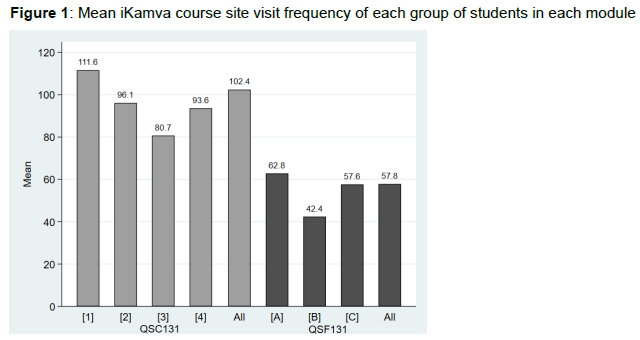
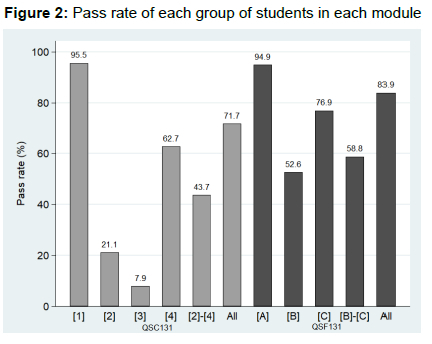
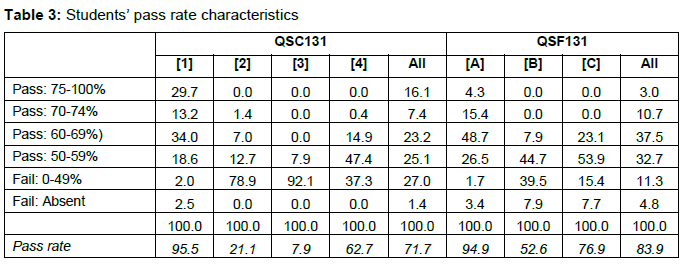
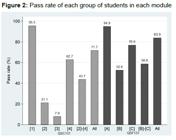
The South African universities have come under increasing pressure to cope with high student failure, high dropout rates and longer completion time. In particular, some at-risk students who are in the early years of their undergraduate studies experience greater jeopardy of being unsuccessful academically due to a wide range of academic and non-academic reasons. To address the former reasons, early academic interventions are needed, yet there are hardly South African studies that comprehensively examine the impact of these interventions. To fill the existing research gaps, this study investigated the effect of special academic interventions in two quantitative high-priority modules at the commerce faculty of a South African historically advantaged university. The empirical findings showed that whilst the students who were not identified as the at-risk ones enjoyed greater likelihood of passing the two modules under study, the academic interventions were successful to some extent that certain groups of at-risk students experienced a relatively high pass rate while other groups of at-risk students still suffered lower pass rate. These latter groups of students were primarily Africans who enrolled in the 4-year extended curriculum program with Mathematical Literacy in Grade 12. These students were also associated with a lower frequency of visiting the e-teaching course sites.
Intervention; student academic success; high-priority modules; quantitative modules; higher education; at-risk students; student attrition; student retention; academic dimensions; social dimensions
 Thumbnail
 Thumbnail