Examining the impact of interventions on students' academic success in two quantitative high-priority modules
Abstract
The South African universities have come under increasing pressure to cope with high student failure, high dropout rates and longer completion time. In particular, some at-risk students who are in the early years of their undergraduate studies experience greater jeopardy of being unsuccessful academically due to a wide range of academic and non-academic reasons. To address the former reasons, early academic interventions are needed, yet there are hardly South African studies that comprehensively examine the impact of these interventions. To fill the existing research gaps, this study investigated the effect of special academic interventions in two quantitative high-priority modules at the commerce faculty of a South African historically advantaged university. The empirical findings showed that whilst the students who were not identified as the at-risk ones enjoyed greater likelihood of passing the two modules under study, the academic interventions were successful to some extent that certain groups of at-risk students experienced a relatively high pass rate while other groups of at-risk students still suffered lower pass rate. These latter groups of students were primarily Africans who enrolled in the 4-year extended curriculum program with Mathematical Literacy in Grade 12. These students were also associated with a lower frequency of visiting the e-teaching course sites.
Intervention; student academic success; high-priority modules; quantitative modules; higher education; at-risk students; student attrition; student retention; academic dimensions; social dimensions
INTRODUCTION
The South African higher education system has been experiencing rapid growth in recent years, as evidenced by the fact that the number of registered students more than doubled in size from 495 000 at the advent of democracy in 1994 to over one million in 2019 (Van Zyl, Dampier and Ngwenya, 2020). In particular, black students' share of total registered students grew from 55 per cent in 1994 to 81 per cent in 2011 (Lewin and Mawoyo, 2014), before increasing further to 85 per cent in 2017 (Essop, 2020).
However, only about 30 per cent and 50 per cent undergraduate three-year and four-year program students, respectively, completed their studies within the minimum prescribed period. Moreover, about half of the students enrolling at tertiary institutions eventually completed their studies, while a high proportion of 58 per cent of students pursuing studies at contact-based institutions spent an additional two years to finish their studies (Lewin and Mawoyo, 2014; Murray, 2014; Essop, 2020). Hence, South African universities have come under increasing pressure to cope with high student failure, high dropout rates and longer completion time.
The fact that students passed their Grade 12 (Matric) exams and later were accepted for tertiary-level studies does not necessarily mean they are all academically competent for success at university, because university studies require a different set of learning skills (Mayet, 2016). In fact, students enter universities with contrasting levels of academic preparedness from high schools; this level of preparedness along with a wide range of factors determine their academic success, retention and throughput, especially in their first-year of enrolment. These factors include, amongst others, academic and social adjustment, motivation and feedback, socio-economic backgrounds, medium of instruction, poor time management skills, struggle to cope with university learning and assessment workloads (Mngomezulu, 2014; Zulu, 2008). Thus, students who are under-prepared for university studies are more likely to drop out without completing their qualifications.
At-risk students stand for those who are in jeopardy of being unsuccessful academically and in danger of not completing their degrees in the required time (Mngomezulu, 2014). These at-risk students are quite different from self-regulated learners who approach their academic work with confidence and diligence, and are behaviourally and motivationally active participants in their own learning (Porter and Parkinson, 2010). In addition, students who failed, barely passed or performed worse than expected in assessments early in the semester. They are also the ones who are more likely to suffer a loss of confidence. Thus, early identification of and intervention on these at-risk students are crucial to ensure better future academic outcomes.
It is even argued that some higher education institutions themselves are also under-prepared to cope with the enrolled students, because of the growing diversity of students being admitted into university (Mayet, 2016: 2). Given the importance to close the gap between racially and socio-economically disadvantaged and advantaged learners, as well as reduce dropout and failure rates, it is imperative that universities need to design intervention strategies by identifying at-risk students on time, designing and implementing appropriate intervention programmes, as well as evaluating the impact of these interventions (Van Zyl et al., 2020).
Focusing on the Faculty of Economic and Management Sciences (EMS) at the University of the Western Cape (UWC) which is a historically disadvantaged institution (HDI), during the 2017 academic year, using the students' academic performance data available on the Marks Administration System (MAS) and Student Administration System Integration (SASI) portal, a total of six at-risk or high-priority modules (HPMs) were identified. Based on data for On Time Completion (OTC) of the 2019 student cohort, the EMS faculty was amongst the faculties where students took longer to complete. Just under 50 per cent completed on time, compared to one of the other faculties with a 74.4 per cent completion rate. An analysis of the data per module puts the faculty amongst the faculties with the highest number of HPMs, according to data for the 2023 academic year (UWC Business Intelligence Unit, 2023). Given this background, the faculty introduced additional academic support mechanisms (to be discussed later) as special intervention for at-risk students, with the primary aim of identifying them and providing extra academic support early in the semester to help improve their academic success.
At the time of writing, it has been five years since these interventions have been taking place, (the first intervention was introduced in 2019). Therefore, it is important to investigate the effects of the intervention and whether it improved students' academic performance. Thus, the research question of this study is: What has been happening to the academic success of students who enrolled in the HPMs (in this study, we would focus on two highly quantitative modules, to be explained in greater detail later) that involved the provision of additional academic support or special interventions? The specific research objectives are as follows:
Distinguish the students who took part in the special intervention academic support activities (i.e. at-risk students) from those who did not.
Compare the characteristics of these two groups of students.
Investigate, with the aid of descriptive and econometric analysis, whether the at-risk students achieved academic success in the modules under study.
Theoretical Framework
Numerous theories are relevant to this research study. First, the Tinto (1975) student integration model argues that students' social integration improves their institutional commitment which subsequently helps reduce dropout rates. According to this theory, students' pre-entry attributes (e.g. family background, prior schooling before post-secondary education), experiences with the tertiary institution with regard to both the academic system (interaction with staff, academic results) and social system (peer group interaction and extra-curricular activities), as well as how academic and social integration takes place all play a role to determine whether the students would remain or depart.
Louw (2005) built on the Tinto model by identifying eight indicators in the academic dimension and four indicators in the social dimensions which potentially influence student departure from tertiary-level studies. The academic indicators include, amongst others, unclear study goals, low levels of motivation, inability to adjust academically (due to the difference between expectations at schooling and higher education levels), language difficulties, incorrect programme and subject choices, as well as difficult and complex learning materials. On the other hand, the social-dimension indicators include students' involvement in unhealthy social activities (e.g. partying); ineffective and inefficient time management; inadequate financial provision, facilities and accommodation; insufficient institutional information to students.
The Wenger (1998) social theory of learning is based on four interconnected and mutually defining components: learning as belonging, learning as becoming, learning as experience and learning as doing. The theory also asserts the importance of the concept 'community of practice', which is a way of talking about how learning changes who people are, as well as creating personal histories of becoming in the context of their communities.
Lastly, the education production function measures outcomes (e.g. student's final mark in a course) based on various inputs that can be distinguished into the following categories (Siegfried and Fels, 1979): student characteristics (e.g. demographic and geographic characteristics, students' motivation and ability), home characteristics (e.g. socio-economic status, parents' education, parenting style, household income), school characteristics (e.g. school infrastructure and resources, per-student expenditure, teachers' experience and quality) and student effort (e.g. class attendance). If the university offers interventions to the at-risk students and these students attended the additional classes and wrote the additional assessments, the intervention mechanisms would fall under both the school characteristics and student effort categories.
Review of Past Empirical Studies
South African Studies
Zulu (2008) interviewed 100 lecturers and 500 first-year students at a historically black university to find out factors influencing students' academic success at the end of their first-year studies. The results showed that both internal and external factors explained student failure. The former factors related to the students themselves, such as not attending classes, late submission of assignments and even missing assessments, laziness and failure to study, inadequate preparation for assessments, not consulting lecturers, as well as struggles to balance academic commitments and social life. External factors accounting for students' academic struggles included heavy academic workload, poor teaching, lecturer absenteeism, not getting timely and sufficient feedback from lecturers, as well as a congested examination timetable.
McGhie (2012) also investigated key drivers influencing academic success of first-year students at another historically black university, with the aid of the case studies approach. A total of 40 students were interviewed; half of them failed at least one coursework module and the other half passed all modules. Focusing on the former group of students, the author identified numerous personal, academic, social and institutional factors that accounted for their lack of academic success. Personal factors included accommodation, finance and family support, while academic factors related to struggles to transition from high school to university, poor time management laziness, low class attendance, heavy workload, language medium of instruction was not the same as their home language, as well as part-time work. Social factors were related to making the wrong new friends and suffering negative peer pressure, whereas institutional factors were in connection with large class size as well as insufficient resources such as computers and library books on campus.
Murray (2014) investigated factors that affected undergraduate graduation and dropout rates at the University of KwaZulu-Natal. The findings showed that African male students were more likely to eventually drop out of studies, whereas female white students had a greater graduation incidence rate. It was also found that receipt of financial aid helped students graduate quicker in terms of getting the number of required credit points that they had to repeat, but also helped others who would eventually be academically excluded to linger longer in the system.
Lewin and Mawoyo (2014) conducted interviews with 32 people, who were heads of academic units, institutional planners or higher education experts, to understand the required academic interventions to improve student success. Numerous factors were identified as important, such as learning and teaching (e.g. tutoring, supplemental instruction, support for writing, literacy and numeracy, extended curriculum programmes), social support (psychosocial support and mentoring on students), as well as transition, admission and first-year experience. In a similar study, Mthimunye and Daniels (2019) interviewed seven education experts to identify areas for intervention and improvement of undergraduate nursing students at a historically black university; these areas included finance, English language support, class attendance, university residence, as well as selection of quality prospective students.
Five local studies specifically focused on the at-risk students. First, Mngomezulu (2014) conducted focus group and interviews on at-risk students who took part in the academic support programs which included academic counselling, peer-to-peer mentoring and referral systems. The results showed that numerous academic and non-academic factors caused the students' at-risk status. These factors ranged from poverty and poor living conditions, incorrect selection of modules, poor time management skills and struggle to adapt to English teaching medium. Nonetheless, the student participants perceived the intervention support as beneficial. Next, Mayet (2016) used personal interviews and evaluation forms to investigate the impact of support mechanisms offered by a university's Learning Development Unit on the at-risk students. The study found that these mechanisms significantly improved students' learning and study skills as well as coping mechanisms. In particular, the students indicated the workshops and trainings on note-taking skills, study skills and time management were most useful.
Cassells (2018) investigated the impact of the early warning system in a module with a high failure rate at the University of Pretoria. After analysing student academic success data over three years, the results showed that students who were at the highest risk of failing the module benefited most from the early warning system and corresponding tutorial classes. In fact, the at-risk students who attended these additional classes attained a summative grade on average eight percentage points higher, compared with the other students who did not take part in this system and tutorial classes.
Lastly, Van Zyl et al. (2020) examined the effectiveness of the Integrated Student Success Initiative (ISSI) on at-risk students at the University of Johannesburg. The author found that the academic performance of first- and second-semester modules that were exposed to the ISSI improved by 3.1 per cent and 3.4 per cent on average, respectively. In addition, all but two modules that participated in the ISSI attained a pass rate of at least 60 per cent. In particular, most of the second-semester modules attained a pass rate of over 90 per cent after being exposed to the ISSI interventions.
International Studies
Ozga and Sukhnandan (1998) interviewed 200 students to find out the reasons for their non-completion of undergraduate studies at a UK university. The key reasons included, amongst others, lack of preparedness for university studies, use of inaccurate and outdated information to inform choices about institutions and programmes, acceptance of paid work opportunities, and both institutional (e.g. geographical location of the university) and course incompatibility (e.g. course content did not live up to students' expectations). Next, Beck and Davidson (2001) interviewed 550 first-year Psychology students at a USA university to capture information on six indicators relating to their study habits and relationship with the lecturers. Two indicators - academic efficacy (students' personal doubt about whether they are university materials) and academic apathy (students merely worked just hard enough to get the required grade) - stood out to identify students who were at great risk of getting poor grades in the course.
Wilson and Lizzio (2008) examined the impact of first-assessment first-feedback (FAFF) intervention on at-risk first-year students who either failed or marginally passed their first piece of assessment at an Australian university. The FAFF intervention involved completion of a reflective workbook to help students better identify improvement goals and strategies, as well as an intensive discussion between students and tutors which concluded with action planning. The findings showed that the intervention was a success, as 60 per cent of students who participated passed the course compared to only 24 per cent in the non-intervention comparison group. The tutors also indicated that the FAFF process consolidated their relationship with struggling students and established effective self-regulation and help-seeking norms with them.
In a similar study, Porter and Parkinson (2010) examined at-risk first-year students who failed or barely passed an early piece of formative assessment at another Australian university. The at-risk students were asked to complete a reflective workbook and engaged in an intensive academic planning discussion with their tutors. The results indicated that 81 per cent of students who took part in the intervention passed their examination, compared with only 51 per cent amongst students who did not participate in the intervention activities.
Tower et al (2015), focusing on an Australian case, used numerous indicators to identify at-risk students for early intervention, and found that attendance at orientation, access to the blended learning site by the second week of the semester, attendance of face-to-face tutorials in the first two weeks, as well as submitting and passing the first assessment were associated with greater likelihood of passing the subject overall. Next, Zhang et al. (2014) investigated an early intervention program which involved counselling and advising to at-risk students at a USA university, with these students being distinguished as those with failing mid-term grades (below C symbol). The authors found that at-risk students who received additional advising were significantly more likely to pass the course. However, students' prior Grade Point Average still played a significant role on their academic performance.
In the study done by Bevitt, Bladwin and Calvert (2010) on the School of Biomedical Sciences at a UK university, at-risk students were identified as those who failed the mid-semester test or those who missed more than 20 per cent of high-stake classes. Both groups of at-risk students were subsequently referred to the support mechanisms, ranging from counselling for mental health support and financial advice offered by the student finance centre, to additional classes at the language centre and meetings with general practitioners to discuss health-related problems. The empirical findings showed that early intervention strategy was associated with increased class attendance and subsequently better academic performance of the at-risk students. In particular, those with 100 per cent class attendance rate attained an average final mark of 71 per cent, compared with only 51 per cent average final mark for students with below 70 per cent attendance rate.
Espinoza and Genna (2021) tested the effectiveness of learning analytics early performance feedback system at a USA university. The at-risk students, identified as those who did not perform well early in the semester, received a message from the lecturer expressing concern about their initial academic performance. The lecturers subsequently sent specific messages to the students by providing timely feedback to them about the results of their assessments. The empirical findings indicated the at-risk students who were exposed to the intervention were more likely to pass but less likely to withdraw from the course, compared to students who were not exposed to the intervention. One notable finding is that the probability of the intervention group getting an A-symbol final mark increased by 9 per cent.
Jayaprakash et al.'s (2014) study yielded similar results to that of Espinoza and Genna (2021). They found that most of the at-risk students who responded to the early warning message and received guidance on what they could do to improve academic success improved their academic performance. In addition, these students received another message that encouraged them to participate in the institution's Online Support Environment course in which they were given access to additional learning materials. The empirical findings showed that at-risk students who participated in the intervention activities attained six percentage points higher in the course under investigation, compared with those who did not take part. Also, almost all students improved their academic performance in the course after only one intervention, whereas the remaining few students who did not improve academically after the first intervention eventually showed improvement after the second or third intervention.
Finally, a study conducted by Macakova and Wood (2022) based on the participation of 203 students from various universities in the UK, highlighted the influences into academic achievement of university students. Based on implicit theories of ability the study found that academic achievement could be explained through self-efficacy and basic psychological needs satisfaction (BPNS) (2022: 264-266). Self-efficacy refers to an individual's belief in their own abilities. In the context of the study therefore, self-efficacy referred to students who believed in their ability to succeed and considered themselves "able individuals." The findings found that students with this mindset were successful. This is contrary to individuals who considered themselves to have less ability, and therefore were not able to influence their academic outcomes. BPNS refers to needs of competency, relatedness and autonomy. Competence, with its focus on ability to perform; relatedness referring to connections to others; and autonomy representing the need to control one's own life; are considered key aspects that drive self-efficacy. Given the study findings, interventions introduced earlier rather than later in the academic year can assist students to overcome beliefs of inability and facilitate the achievement of academic outcomes (Macakova and Wood, 2022).
METHODS AND DATA
Interventions at UWC's EMS Faculty
The University of the Western Cape (UWC) was established in 1960. It is regarded as a historically Black and disadvantaged university. UWC is one of the 12 universities in the country being classified as a traditional university that offers theoretically-oriented diplomas and degrees, with an aim to be a research-led university in-line with the institutional operating goals. There are seven faculties at the institution, and the modules under study are offered by the Faculty of EMS. In this faculty, numerous three-year mainstream programmes as well as the four-year extended curriculum programmes (ECPs) are offered at the undergraduate level. The faculty also hosts Postgraduate Diplomas, Honours, Masters and Doctoral programmes.
In 2017, the Learning and Teaching Specialist of the Faculty conducted an assessment of four first-year ECP high-priority modules (HPMs). The findings revealed high failure and attrition rates in all four modules. An interesting observation was that the high failure and attrition rates were not isolated to the quantitative modules, but included a qualitative module, namely Academic Literacy for Business (ALB). This contradicted the assumption that students registered for the B.Com qualification (either the three-year or four-year track) primarily struggle with quantitative modules. However, since most of the HPMs identified were quantitative in nature, the study will examine the interventions introduced for these modules only.
The report was later shared with the Dean and Faculty Manager and it was agreed that it was necessary to introduce some form of intervention in response to the findings of the assessment. During these discussions, the Faculty Manager suggested including two modules from the B.Com (three-year track), given the high failure and attrition rates in these modules. The intervention was dependent on the early identification of students at risk of failing the module or prematurely terminating the module. Lecturers responsible for these modules were requested to develop an intervention that would focus on content that the students at risk struggled with. The intervention would be facilitated by the lecturer and would be additional to tutorials. The idea of involving the lecturers in facilitating the intervention was influenced by the success of the Thuthuka Programme funded by the South African Institute for Chartered Accountants (SAICA). Lecturers are involved in facilitating the tutorials to students. This programme has yielded positive outcomes in terms of student success in the B.Com (Accounting) programme.
As far as the intervention mechanisms are concerned, following numerous meetings amongst the various stakeholders in the faculty (e.g. module coordinators, lecturers, Learning and Teaching Specialist), it was decided to provide additional academic support to the students (with specific focus on the prescribed topics that the at-risk students struggled), and they included, amongst others, additional lectures, special revision classes, more in-class exercises, and increased consultation hours to the struggling students.
The introduction of the intervention did not come without some challenges, as various structural and logistical constraints impacted its implementation. First, the intervention required additional time from the academics. Staff had to be consulted on the rationale for introducing the intervention, in addition to the tutorials already facilitated by senior students. Consequently, faculty engagement had to be carefully managed to ensure that the intervention was perceived as a valuable addition. Second, the intervention's effectiveness depended on the timeous uploading of continuous assessment marks. Since the intervention aimed to support students based on their academic progress, any delays in mark submissions created difficulties identifying and assisting at-risk students In some instances, follow-up requests were necessary to ensure that marks were uploaded on time, adding an additional layer of administrative responsibility to the process, particularly when multiple academic and administrative staff were involved in the mark administration process.
Third, there were no additional human resources or financial support. The intervention did not come with dedicated funding or staffing, which meant that the workload associated with the implementation had to be absorbed by existing faculty staff. The faculty leadership remained steadfast in its commitment to the intervention initiative and exploring alternative solutions to address the resource constraints. Overall, the role of faculty leadership was crucial to the intervention implementation and its ability to overcome structural challenges. Through proactive engagement and communication, the faculty leadership facilitated a smoother adoption of intervention initiative and ensured that the academic staff involved remained committed despite the constraints.
In the 2023 academic year, there was a total of six high-priority modules, namely ALC131 Academic Literacy for Commerce, QSC131 Quantitative Skills for Commerce, ALB131 Academic Literacy for Business, QSF131 Quantitative Skills Foundation, IEB133 Introduction to the Economy and Business, as well as QLC141 Quantitative Literacy for Commerce. The last four modules are only offered to the four-year ECP students, while all six modules are offered to both three-year and four-year program students. However, the ECP students are required to pass some prerequisite modules before they could proceed to enrol ALC131 and QSC131. In this study, we focus on two modules, namely QSC131 and QSF131 (to be explained in greater detail below).
Methods and Data
The earlier discussed 1979 Siegfried and Fels education production function approach is employed in this study. This function measures outcomes based on various inputs. Outcomes vary from measurement of learning, student attitudes, impact of understanding on behaviour and distribution of benefits, whereas learning inputs are distinguished into numerous categories: student input, faculty input, college/university environment and student effort.
We adapt these categories as follows in this study: the two outcome variables are the final mark (MARKS, a continuous variable) and pass status (PASS, a binary variable which is equal to one if the student passed the module but zero otherwise) of each module. We include various groups of explanatory variables; first, person-level characteristics (P), such as age, gender and ethnicity. Secondly, school-level characteristics (S) are included, such as Matric subjects and entry points. For detailed explanation of these entry points, refer to UWC (2023: 42). University-level characteristics (U) represent the third group of characteristics, such whether the students stayed at campus residence and the programs they enrolled.
Moving on to other explanatory variables, the fourth group of characteristics relate to class attendance (L). In this study, we will use the students' iKamva (the university's online learning management system) course site frequency as proxy of class attendance. Lastly, a 'control' variable (C) is included. It is a categorical variable that distinguishes various groups of students (to be explained below), depending on whether they are identified as at-risk students. In equations, means: students' academic performance = f(P, S, U, L, C).
In this study, we focused on the 2023 students from the two highly quantitative modules, namely QSC131 and QSF131. QSC 131 is part of the module offerings of the B.Com (three-year) mainstream programme. QSF 131 is part of the module offerings of the B.Com (ECP). Quantitative Skills Foundation has to be completed by students enrolled in the ECP before they are able to enrol for the Quantitative Skills for Commerce. Therefore, it made sense that we focus on these two modules given the articulation pathways from one to the other. Moreover, students generally struggle with highly quantitative modules. We based our study on the 2023 cohort since this was the year that the university returned to "normal," with far more in-person lectures than during the lockdown years.
With regard to QSC131, there were 816 students total in 2023. It is a continuous assessment-only module (i.e. students were not required to write the final examination). The module consisted of two term tests and five tutorial tests. On the contrary, there were 168 students in total enrolled for the QSF131 module in 2023. During the semester before the final examination, the module consisted of two term tests, two class tests and three assignments.
In QSC131, students were distinguished into four groups:
Group [1]: Those who were not identified as at-risk students at all.
Group [2]: At-risk students who failed both the first and second tutorial early in the semester.
Group [3]: At-risk students who failed the first term test midway through the semester.
Group [4]: At-risk students who failed the second term test towards the end of the semester.
The QSF131 students were distinguished into three groups:
Group [A]: Those who were not identified as at-risk students at all.
Group [B]: At-risk students who failed the first class test and/or first assignment.
Group [C]: At-risk students who failed the second term test and/or third assignment.
For students from the two modules under study, two types of regressions will be conducted. First, the Ordinary Least Squares (OLS) regression on the final mark (MARKS). The explanatory variables are as follows (reference category is shown in brackets, if needed):
Gender (Female)
Race (African)
Age in years and age in years squared
Matric English home language (first or second additional language)
Matric Mathematics (Mathematical literacy)
Matric Accounting (did not enrol the subject)
Matric Physical Sciences (did not enrol the subject)
Matric entry points and entry points squared
Stayed at campus residence (did not stay at campus residence)
Total number of enrolment years
Total iKamva course site visit frequency
Program (BCom General - only for the QSC131 regression)
At-risk category (Group [2] for the QSC131 regression and Group [B] for the QSF131 regression)
Probit regressions are also conducted to find out the impact of the above-mentioned explanatory variables on the probability of students passing the module. In a probit regression, the dependent variable (PASS) is binary, which is equal to either zero (failed the module) or one (passed the module). Moreover, both types of regressions are first conducted on all students, before they are re-run again by only including the at-risk students (that is, the not-at-risk group [1] from QSC131 and group [A] are excluded).
To complement the above empirical data analysis using secondary data, we also sent out an anonymous online 6-question survey to the QSC131 and QSF131 students to collect primary data on how they perceived the intervention activities as well as whether they needed other additional academic and non-academic support. In total, 15 per cent and 21 per cent of students took part in the survey, in each module under study. Ethics clearance of this research study was obtained from the university's Humanities and Social Sciences Research Ethics Committee in March 2024. Lastly, one limitation of the study is that data on at-risk students' additional classes' attendance frequency is not available.
EMPIRICAL FINDINGSDescriptive Statistics
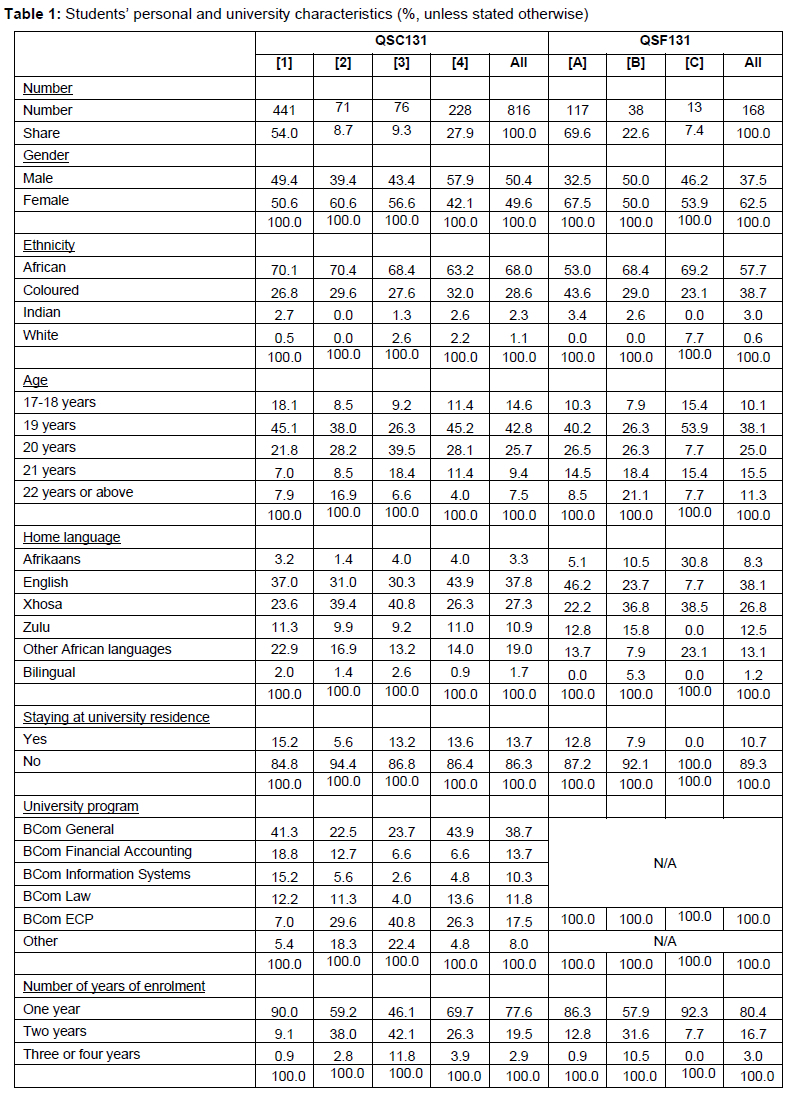
Table 1 shows that 46 per cent of QSC131 and 30 per cent of QSF131 students were identified as at-risk students in 2023. For QSC131, the group [4] at-risk students' share was the highest (27.9%) while the group [B] share was the greatest (22.6%) in the case of QSF131 students. Next, the female share was more dominant in groups [2] and [3] in QSC131 as well as group [C] in QSF131. Furthermore, the African share was higher (about 70%) in groups [2] and [3] in QSC131 and groups [B] and [C] in QSF131.
The proportions represented by students aged 20 years or above were greater in the at-risk groups in both modules. Also, for the at-risk groups from both modules, a relatively lower proportion of students reported they stayed at campus residence. Whilst all QSF131 students came from the BCom ECP (100% share), focusing on QSC131, the non-risk group [1] as well as at-risk group [4] (who were identified as at-risk students only towards the end of the semester) had the BCom three-year students representing the greatest share (41.3% and 43.9% respectively), but for at-risk groups [2] and [3], the proportion coming from BCom ECP four-year students was the greatest (29.6% and 40.8% respectively). These findings suggest that BCom ECP students were more likely to be identified as at-risk students in QSC131 early in the semester. Lastly, in general the at-risk groups from both modules were associated with longer enrolment years. This finding suggests the at-risk students might have repeated some modules they failed in their earlier years of studies at the institution.
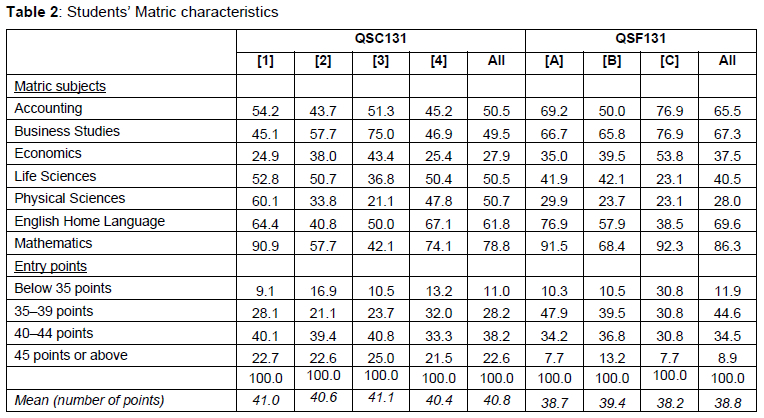
Table 2 presents the students' Matric characteristics across the at-risk categories in both modules. In both modules, it was found that a lower proportion of students from the at-risk groups (groups [2], [3] and [4] in QSC131 and groups [B] and [C] in QSF131) enrolled for Physical Sciences, English Home Language and Mathematics, compared with the non-risky groups (group [1] in QSC131 and group [A] in QSF131). On the other hand, it is interesting that the mean Matric entry points were highly similar across the various groups in both modules. In addition, whilst not shown in the table, the at-risk students identified early in the semester were associated with lower English Home Language mean entry points (it was only about 6.5, compared with the mean of 7.2 for those who were not at risk as well as 7.1 for those who were only identified as at-risk students at the end of the semester (or groups [4] and [C]).
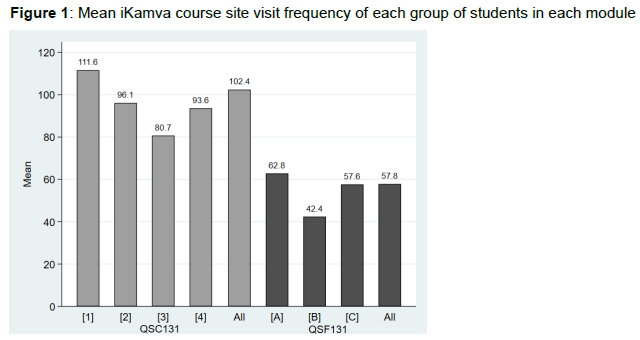
Moving on to Figure 1, the mean iKamva course site visit frequency (the 'proxy' of lecture attendance) was the highest in the non-risky group [1] (111.6) in QSC131, but it was lowest in group [3] (80.7). Similarly, this mean was the highest in the non-risky group [A] (62.8) in QSF131, but it was the lowest in group [B] (42.4). These findings imply higher iKamva course site visit frequency was associated with lower probability of being identified as at-risk students.
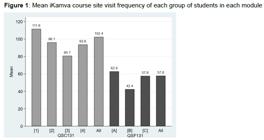
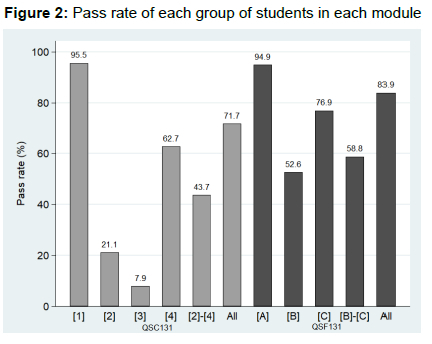
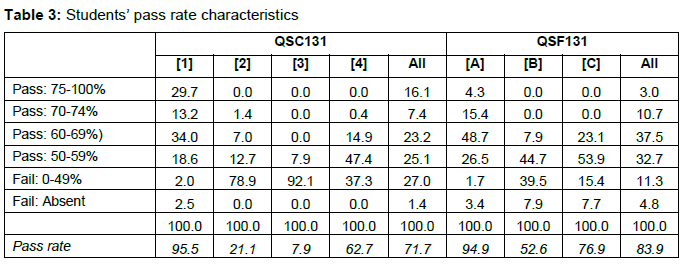
Table 3 and Figure 2 show the pass rate statistics of the two modules under study. In QSC131, the pass rate was the highest in group [1] (95.5%) but was the lowest in group [3] (only 7.9%). In fact, the pass rate was also quite low in group [2] (21.1%) but much higher in group [4] (62.7%). Moving on to QSF131 results, the pass rate was the highest in group [A] at 94.9 per cent, followed by group [C] (76.9%) and this rate was the lowest in group [B] (52.6%).
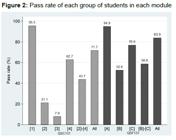
Looking at all three at-risk groups in QSC131, the overall pass rate was 43.7 per cent compared to 95.5 per cent amongst the not-at-risk students. On the other hand, upon examining the two at-risk groups altogether in QSF131, the overall pass rate was 58.8 per cent, compared to 94.9 per cent amongst the not-at-risk students. These findings imply the probability of passing the two modules remained much higher amongst the students who were not identified as at-risk during the whole semester.
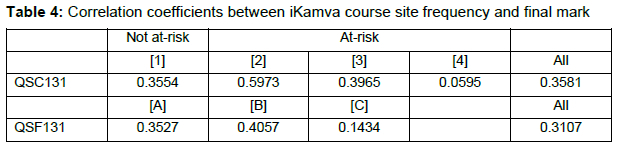
Next, Table 4 presents the correlation coefficients between iKamva course site frequency and final mark in each module, by at-risk group category. The results show that the correlation coefficient was the highest for the at-risk groups [2] and [B] identified early in the semester. Thus, this finding once again suggests the importance of at-risk students regularly visiting the online course site (with interventions being offered as additional academic support, these students would enjoy better academic success in the two modules).
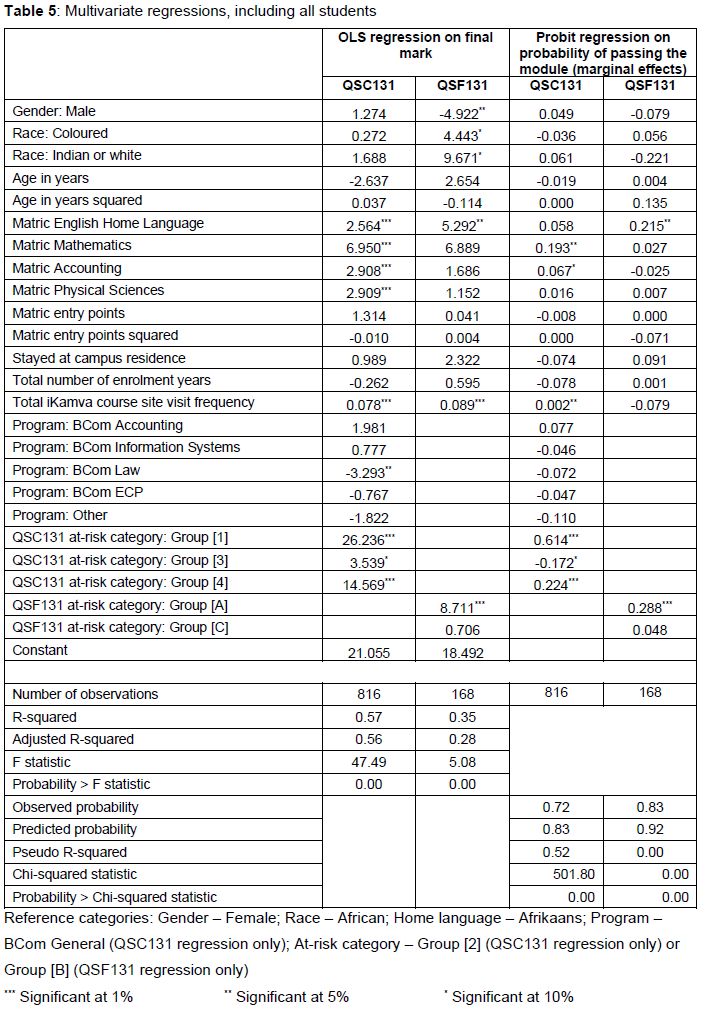
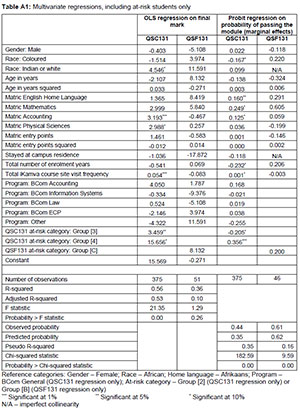
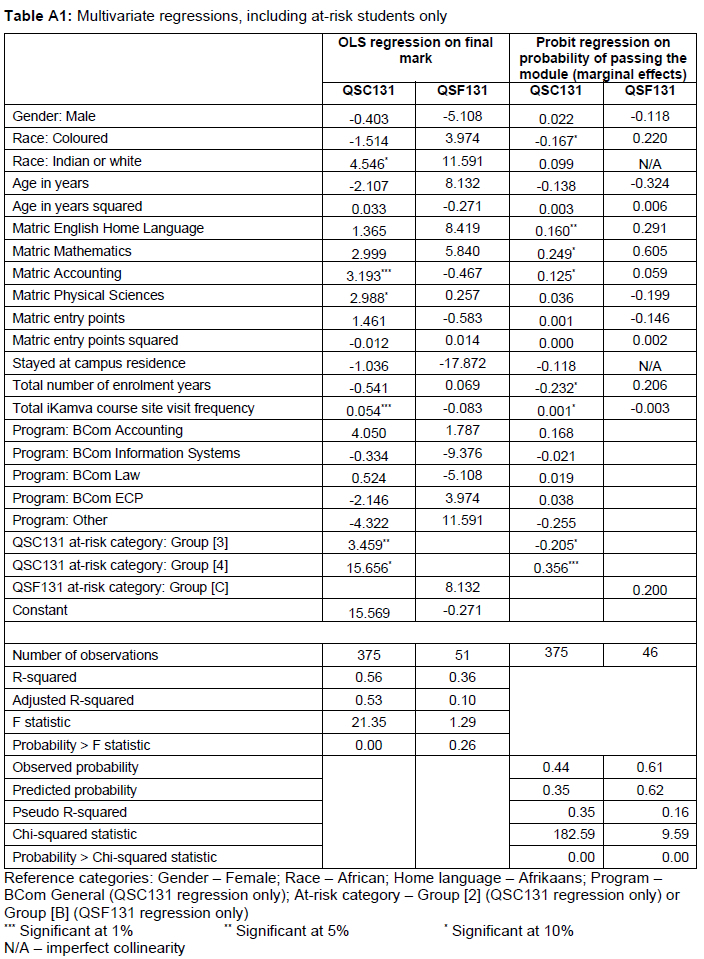
To conclude the secondary data analysis, Tables 5 and A1 show the results of multivariate regressions. The regressions in Table 5 include all students whereas those in Table A1 only include at-risk students. First, looking at the OLS regressions on final mark of all students and focusing on the statistically significant results, QSC131 students who enrolled for Mathematics in Matric obtained nearly seven marks higher than those who enrolled for Mathematical Literacy, after controlling for differences in other characteristics. Moreover, those who enrolled for English Home Language, Accounting and Physical Sciences also performed significantly better (by more than 2.5 marks), ceteris paribus. Also, higher iKamva course site frequency led to better academic performance. Furthermore, comparing with the reference at-risk group [2], the non-risky group [1] obtained more than 26 marks higher on average, whereas the risky groups [3] and [4] obtained 3.5 and 14.5 marks higher on average respectively, ceteris paribus.
Moving on to the QSF131 OLS regression on final mark, first, males performed significantly worse (about five marks lower on average) than females, whereas Coloured, Indian and white students performed significantly better than African students, ceteris paribus. Next, students who enrolled for English Home Language in Matric performed significantly better (final mark was 5.3 marks higher on average, compared with those who enrolled for English first or second additional language). Furthermore, just like what happened in QSC131, higher iKamva course site frequency was associated with a higher final mark. Lastly, the non-risky group [A] obtained 8.7 marks significantly higher on average, compared to the reference category (group [B]).
As far as the statistically significant results of probit regressions are concerned by considering all students, for QSC131, after controlling for differences in other characteristics, students who enrolled for Matric Mathematics and Accounting were 19.3 per cent and 6.7 per cent more likely to pass the module, respectively. An additional visit on the iKamva course site was associated with 0.2 percentage points increase in the probability of passing the module. Furthermore, compared with the at-risk group [2], students from groups [1] and [4] were 61.4 per cent and 22.4 per cent more likely to pass the module, respectively, whereas group [3] students (i.e. those who were identified as at-risk students only midway through the semester) were 17.2 per cent less likely to pass the module. For the QSF131 probit regressions, only two explanatory variables came through as statistically significant. First, ceteris paribus, students who enrolled for Matric English Home Language were 21.5 per cent more likely to pass the module. Secondly, compared with at-risk group [B] students, the non-risky group [A] students were 28.8 per cent more likely to pass the module.
Lastly, Table A1 in the Appendix shows the findings of the OLS and probit regressions, after only including the at-risk students. First, none of the explanatory variables were statistically significant in both regressions relating to QSF131, and this is not surprising because the sample size became extremely small (only about 50). Focusing on the results of the QSC131 regressions, the OLS regression shows that at-risk students who were Indian or white, with Matric Accounting and Physical Science, with higher iKamva course site frequency, and coming from either at-risk groups [3] or [4] were associated with significantly greater final mark, after controlling for differences in other characteristics.
As far as the QSC131 probit regression is concerned, the results suggest that at-risk Coloured students with longer enrolment years suffered significantly lower likelihood of passing the module, whereas students who enrolled for Matric English Home Language, Mathematics and Accounting as well as those with higher iKamva course site frequency enjoyed significantly greater probability of passing the module. Lastly, compared with at-risk group [2] (i.e. those who were identified as at-risk students early in the semester), students from group [3] were 20.5 per cent less likely to pass the module whereas students from group [4] were 35.6 per cent more likely to pass the module, ceteris paribus. Both findings were statistically significant.
Survey Findings
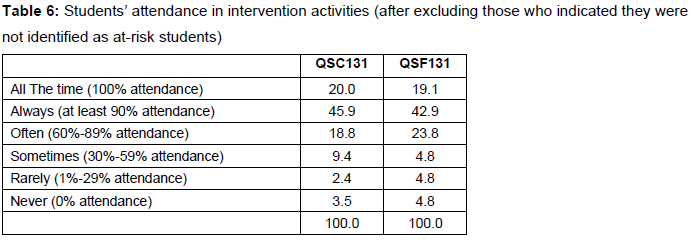
A total of 125 students from QSC131 and 36 students from QSF131 modules took part in the primary survey, that is, the respective response rates were 15 per cent and 21 per cent. Note that 40 of the 125 QSC131 survey participants reported they were not identified as at-risk students, while the corresponding number was 15 of the 36 QSF131 survey participants. For the remaining students who were identified as at-risk students and took part in the survey, Table 6 shows that two-thirds of the QSC131 students self-reported they attended 90-100 per cent of the intervention activities, while this share was 62 per cent in the case of the QSF131. Also, about 20 per cent reported they attended 60-89 per cent of intervention activities. Thus, in general, the findings suggest high attendance of these intervention activities.
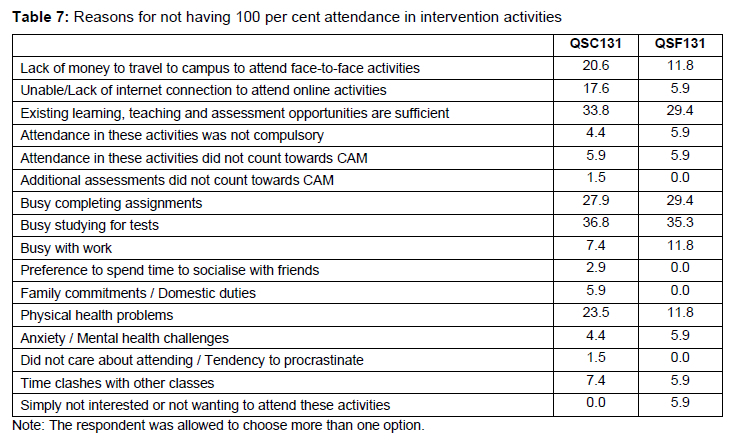
Those with 0-99 per cent intervention activities' attendance were asked to declare the reasons for not having 100 per cent attendance; Table 7 shows that for both modules, five reasons stood out as most dominant: Busy studying for tests; busy completing assignments; existing learning, teaching and assessment opportunities are sufficient; physical health problems; lack of money to travel to campus to attend face-to-face activities.
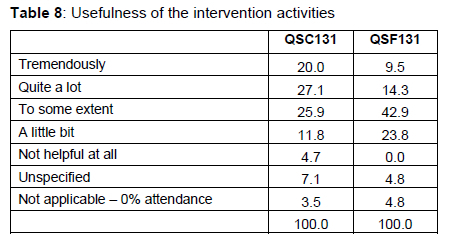
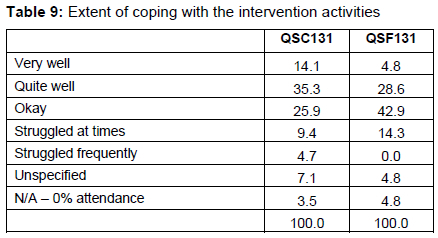
Table 8 shows that the majority of students thought the intervention activities were helpful, but the "tremendously" and "quite a lot" shares were higher in QSC131 (nearly 50% altogether); on the contrary, in QSF131, it is rather the shares of "to some extent" and "a little bit" being most dominant (67% altogether). Next, Table 9 shows that nearly half of QSC131 at-risk students said they coped very well or quite well with the intervention activities, but the corresponding proportion was lower at only 33 per cent when it comes to the QSF131 at-risk students.
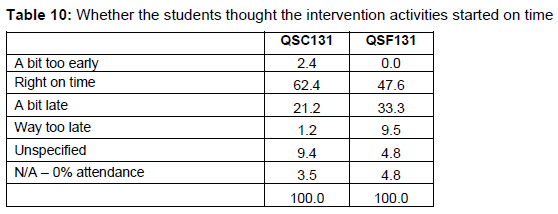
Table 10 shows that over 62 per cent of QSC131 at-risk students said the intervention activities started right on time, but it was lower at 48 per cent for the QSF131 at-risk students. In fact, one-third indicated these activities started a bit late. These findings may partially explain why a lower proportion of the students said they coped very well or quite well with these activities in Table 8. The findings also suggest the importance to identify at-risk students and subsequently execute the interventions at the right time before it is too late. We are reminded of the Macakova and Wood (2022) study on implicit theories of ability. In this context, early interventions can contribute to the individual's belief that he/she is able, ultimately leading to academic achievement. On the contrary, the introduction of interventions later in the academic year, can affect self-efficacy and render these interventions useless.
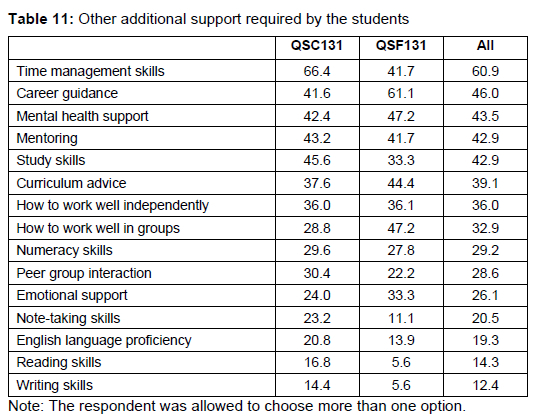
Lastly, all survey participants - regardless of their at-risk status and whether they attended the intervention activities upon being classified as at-risk students - were asked to declare the other additional support they required. Table 11 shows that a relatively higher proportion of students (at least 40% - upon looking at all students from both modules) indicated they would like to receive additional support in these areas: time management skills (60.9%), career guidance (46.0%), mental health support (43.5%), mentoring (42.9%) and study skills (42.9%). The responses are generally in line with the empirical studies reviewed earlier (Bevitt et al. (2010), Lewin and Mawoyo (2014) and Mthimunye and Daniels (2019). These studies also found that students would have liked to receive additional support.
DISCUSSION
Our study highlights the differences between students at-risk enrolled in the B.Com three-year and four-year programmes. One of the main differences relate to the four-year students being more likely to be identified as at-risk of failing QSC131 early in the semester. To this end, the literature relating to the introduction of an early warning system, accompanied by appropriate interventions, has relevance for student success. As observed by Cassells (2018), additional interventions such as tutorial classes can enhance the academic performance of students. Moreover, these interventions should incorporate both social and academic dimensions (McGhie, 2012; Lewin and Mawoyo, 2014; Mthimunye and Daniels, 2019; Van Zyl et al., 2020). As reflected through Tinto's student integration model student success encompasses both academic and social integration.
Another finding relates to students' preparedness for university. We found that for QSC131 those students who passed Matric level Mathematics, English Home Language, Accounting and Physical Sciences performed significantly better in the module. On the other hand, more students from the at-risk groups across both modules had not been enrolled for Physical Sciences, English Home Language and Mathematics in Grade 12. These findings align to the earlier work of Ozga and Sukhnandan (1998) who found that non-completion of undergraduate studies at a UK based university was attributed to the lack of preparedness for university studies, amongst other things. Similarly, the literature points to the influence of course engagement after enrolling in university on student performance (Zulu 2008). The findings of our study reveal that the number of students who frequently visited the iKamva course site across QSC131 and QSF 131 were highest for the students not at-risk. To this end, the work of Zulu (2008) highlights student behaviours such as not attending classes and late submission of assignments as reasons explaining student failure.
CONCLUSION
More specifically, our study highlights two major issues related to interventions that support students at risk of dropping out or not successfully completing a module. First, that the timing of interventions is paramount. When considering at risk students across both modules, those at greater risk of not completing the module were those who either failed the second term test or the first class test or first assignment. Moreover, it appears the extent to which students were able to cope with the intervention activities may have been influenced by the timing of the intervention. As mentioned earlier, a higher percentage of students enrolled in QSC131 responded that they coped well with the intervention activities and that these activities started on time. On the contrary, a lower percentage of students enrolled in QSF131 responded that they coped well and that the activities started a bit late. In this regard, our findings appear to align with studies that highlight the effects of an early warning system on student success (Porter and Parkinson 2010; Cassells 2018; Van Zyl et al. 2020). We are also reminded of the Macakova and Wood (2022) study on implicit theories of ability. In this context, early interventions can contribute to the individual's belief that he/she is able, ultimately leading to academic achievement. On the contrary, the introduction of interventions later in the academic year, can affect self-efficacy and render interventions useless.
Second, students face competing deadlines that make it difficult to participate in intervention activities. The submission of assignments and studying for tests may conflict with the time of an intervention. In addition, the lack of finances and or inability to connect online to participate in an intervention activity may result in students not being able to benefit from an intervention. Not only does this require broad consultation about submission deadlines, etc. amongst academics involved in the teaching of modules across a programme and/or qualification. But it also requires consideration to infrastructure support necessary for the successful implementation of an intervention. Due consideration should also be given to factors beyond the control of students. These include physical and mental health problems, family trauma, etc. to facilitate greater inclusivity and opportunity for at risk students participating in intervention activities. As was highlighted through the study of Bevitt et al. (2010) broadly encompassing interventions that include consideration to both academic content and personal circumstances are more likely to result in an increase in class attendance, and improved academic performance.
Third, regular class attendance (we use visits to the iKamva site as the 'proxy' variable) remained an important factor determining the at-risk students' academic success. That is, interventions cannot be regarded as a "miracle pill" to help all 100 per cent at-risk students to pass. The interventions still matter and help the students to some extent, but other factors like high class attendance, Matric results and the other forms of non-academic support remain equally important.
AREAS FOR FUTURE RESEARCHThe study primarily relied on quantitative data to assess the impact of the interventions designed to improve student performance in the HPMs. Due to the high failure rate, level of difficulty or module pre-requisite programme rules for progression, these modules required targeted interventions. By using a quantitative approach to measure the students' performance provided valuable statistical insights.
A study on the subject matter using qualitative data may provide a richer contextual understanding and allow for a deeper exploration of the impact of interventions for HPMs. Therefore, a similar study could be conducted in the future, but from a qualitative data analysis perspective.
REFERENCES
ACKNOWLEDGEMENT
The authors acknowledge the data assistance provided by Mr Niyaaz Davids.
LITERATURE REVIEW
-
Beck, Hall, and William Davidson. 2001. "Establishing an early warning system: Predicting low grades in college students from Survey of Academic Orientations Scores." Research in Higher Education 42(6): 709-723. https://doi.org/10.1023/A:1012253527960
» https://doi.org/10.1023/A:1012253527960 -
Bevitt, Debbie, Chris Baldwin, and Jane Calvert. 2010. "Intervening early: Attendance and performance monitoring as a trigger for first year support in the Biosciences." Bioscience Education 15(1): 1-14. https://doi.org/10.3108/beej.15.4
» https://doi.org/10.3108/beej.15.4 -
Cassells, Laetitia. 2018. "The effectiveness of early identification of 'at risk' students in higher education institutions." Unpublished study. [Online]. Available: https://repository.up.ac.za/bitstream/handle/2263/62832/Cassells_Effectiveness_2018.pdf [Accessed 15 August 2023].
» https://repository.up.ac.za/bitstream/handle/2263/62832/Cassells_Effectiveness_2018.pdf -
Espinoza, Penelope, and Gaspare Genna. 2021. "Hi, I want to talk to you about your progress: A large course intervention for at-risk college students." Journal of College Student Retention: Research, Theory & Practice 23(1): 227. https://doi.org/10.1177/1521025118790054
» https://doi.org/10.1177/1521025118790054 - Essop, Ahmed. 2020. "The changing size and shape of the higher education System in South Africa, 2005-2017." Johannesburg: Ali Mazrui Centre for Higher Education Studies.
-
Jayaprakash, Sandeep, Erik Moody, Eitel Lauria, James Regan, Joshua Baron. 2014. "Early alert of academically at-risk students: An open source analytics initiative." Journal of Learning Analytics 1(1): 6-47. https://doi.org/10.18608/jla.2014.11.3
» https://doi.org/10.18608/jla.2014.11.3 - Lewin, Thandi, and Monica Mawoyo. 2014. "Student access and success: Issues and interventions in South African universities." Woodstock: South African Institute for Advancement.
-
Lourens, Arina, and David Bleazard. 2016. "Applying predictive analytics in identifying students at risk: A case study." South African Journal of Higher Education 30(2): 129-142. http://dx.doi.org/10.20853/30-2-583
» http://dx.doi.org/10.20853/30-2-583 - Louw, Alwyn. 2005. "Staking van studies aan landbouopleidingsinstellings in die Wes Kaap:waarskynlike oorsake en moontlike strategieë vir studente-ondersteuning." Unpublished Doctorate dissertation. Stellenbosch: Stellenbosch University.
-
Macakova, Viviana, and Claire Wood. 2022. "The relationship between academic achievement, self-efficacy, implicit theories and basic psychological needs satisfaction among university students." Studies in Higher Education 47(2): 259-269. https://doi.org/10.1080/03075079.2020.1739017
» https://doi.org/10.1080/03075079.2020.1739017 -
Mayet, Razia. 2016. "Supporting at-risk learners at a comprehensive university in South Africa." Journal of Student Affairs in Africa 4(2): 1-12. https://doi.org/14426/jsaa.v4i2.1527
» https://doi.org/14426/jsaa.v4i2.1527 - McGhie, Venicia. 2012. "Factors impacting on first-year students' academic progress at a South African university." Unpublished Doctorate dissertation. Stellenbosch: Stellenbosch University.
- Mngomezulu, Samukelisiwe Dorothy. 2014. "Academic intervention experiences of 'at-risk' students: A case of an undergraduate programme in a South African university." Unpublished Doctorate dissertation. Durban: University of KwaZulu-Natal.
- Mthimunye, Katlego. 2019. "An intervention towards the improvement of academic performance, success and retention among Bachelor of Nursing students at a higher education institution in the Western Cape." Unpublished Doctorate dissertation. Bellville: University of the Western Cape.
-
Mthimunye, Katlego, and Felicity Daniels. 2019. "The development and validation of an intervention for the improvement of academic performance and success of nursing students at a university in the Western Cape, South Africa." International Journal of Africa Nursing Sciences 11(2019): 100156. https://doi.org/10.1016/j.ijans.2019.100156
» https://doi.org/10.1016/j.ijans.2019.100156 -
Murray, Mike. 2014. "Factors affecting graduation and student dropout rates at the University of KwaZulu-Natal." South African Journal of Science 110(11/12): 1-6. http://dx.doi.org/10.1590/sajs.2014/20140008.
» http://dx.doi.org/10.1590/sajs.2014/20140008 -
Nimy, Eli, Moeketsi Mosia, and Colin Chibaya. 2023. "Identifying at-risk students for early intervention - A probabilistic machine learning approach." Applied Sciences 13: 3869. https://dx.doi.org/10.3390/app13063869
» https://dx.doi.org/10.3390/app13063869 -
Ozga, Jenny, and Laura Sukhnandan. 1998. "Undergraduate non-completion: Developing an explanatory model." Higher Education Quarterly 52(3): 316-333. https://doi.org/10.1111/1468-2273.00100
» https://doi.org/10.1111/1468-2273.00100 - Porter, Anna, and Ann Parkinson. 2010. "First year at risk intervention pilot project: An intervention to support first year students experiencing early assessment failure." Paper presented at the 13th Pacific Rim First Year in Higher Education Conference, Adelaide, 27-30 June.
- Siegfried, John, and Rendigs Fels. 1979. "Research on teaching college economics: A survey." Journal of Economic Literature 17(3): 923-969.
- Tinto, Vincent. 1975. "Dropout from higher education: a theoretical synthesis of recent research." Review of Educational Research 65(1): 89-125.
-
Tower, Marion, Rachel Walker, Keithia Wilson, Bernadette Watson, and Glenyss Tronoff. 2015. "Engaging, supporting and retaining academic at-risk students in a Bachelor of Nursing: Setting risk markers, interventions and outcomes." International Journal of the First Year in Higher Education 6(1): 121-134. https://doi.org/10.5204/intjfyhe.v6i1.251
» https://doi.org/10.5204/intjfyhe.v6i1.251 - University of the Western Cape (UWC). 2023. "2023 General Calendar." Bellville: University of the Western Cape.
- University of the Western Cape (UWC) Business Intelligence Unit. 2023. "Pass rate statistics of each module". Bellville: University of the Western Cape.
- Wenger, Etienne. 1998. "Communities of practice: learning, meaning, and identity." New York: Cambridge University Press.
- Wilson, Keithia, and Alf Lizzio. 2008. "A 'just in time intervention' to support the academic efficacy of at-risk first-year students." Paper presented at the 11th Pacific Rim First Year in Higher Education Conference, Hobart, 30 June - 2 July.
- Van Zyl, André, Graham Dampier, and Nkosini Ngwenya. 2020. "Effective institutional intervention where it makes the biggest difference to student success: The University of Johannesburg (UJ) Integrated Student Success Initiative (ISSI)." Journal of Student Affairs in Africa 8(2): 59-71.
- Zhang, Yi, Qiang Fei, Munir Qiang, and Carolyn Davis. 2014. "An examination of the impact of early intervention on learning outcomes of at-risk students." Research in Higher Education Journal 26(1): 1-12.
- Zulu, Connie. 2008. "An exploratory study of first-year students at a historically black university campus in South Africa: their academic experiences, success and failure." Africa Education Review 5(1): 3047.