Exploring primary school teachers' perceptions and approaches towards learning science teachers: A systematic literature review
Abstract
South African students perform extremely poorly on international benchmarking tests of science such as the Trends in Mathematics and Science Study (TIMSS). While there are several reasons for underperformance in science, ranging from lack of human and material resources to teachers' lack of content knowledge in science, one the significant factors impacting science achievement in schools relates to how teachers teach the subject. We locate this article theoretically in the work of Vygotsky (1986) who conceives of learning as developmental and indicates how teaching can transform children cognitively. As the central mechanism for transmitting conceptual knowledge in a classroom, how teachers teach science and how they assume science should be taught is crucial to understanding students' outcomes. In this systematic literature review, we investigate teachers' perceptions of how science should be taught for optimal student outcomes as well as investigating what pedagogical methods lead to optimal learning.
science teaching; teachers' perceptions; elementary school; socio-cultural theory
INTRODUCTION
South Arican landscape of teaching Natural Science
The landscape of education in South Africa is marked by a complex interplay of historical, social, and pedagogical factors that influence the quality of teaching and learning (Kok and van Schoor, 2014). Among the various subjects that form the core of the curriculum, natural sciences stand out as a critical area where effective teaching can significantly impact learners' understanding, interest, and engagement with the world around them. The role of teachers, especially at the foundation phase, is pivotal in shaping young minds to appreciate and comprehend the basics of natural sciences (Ramnarain and Fortus, 2013). However, research suggests that South African student teachers face considerable challenges in delivering the curriculum effectively, primarily due to insufficient content knowledge and a lack of effective teaching strategies (Spaull, 2015; Hoadley 2017; Hardman, 2022).
The significance of this problem is further compounded by the broader context of education in South Africa, where the quality of science teaching has been a longstanding concern. The poor academic performance of learners in this subject area highlights a pressing need for systemic change. Community Engagement activities have emerged as valuable opportunities for enhancing the educational experience, not only for school students but also for the university students who participate as volunteers (Meiring, 2019; Bogdanović et al., 2022). These activities extend the learning beyond the confines of traditional science education, promoting civic engagement and social responsibility among future educators.
Despite the recognised importance of improving science teaching, there remains a gap in understanding the specific needs and challenges faced by teachers in the foundation phase. The misinterpretation of the curriculum, as documented in the literature, points to a disconnect between the intended pedagogical approaches and the practices adopted by teachers in the classroom (Set, Hardman and Ashipala, 2017). This disconnect suggests that a deeper exploration of teachers' perceptions and experiences is crucial for developing targeted interventions that can support effective teaching strategies.
This research aims to bridge this gap by investigating the perceptions of teachers regarding the teaching of Natural Sciences. By focusing on the teachers' perspectives, the study seeks to uncover the underlying factors that influence their teaching practices, including their beliefs about science education, their confidence in delivering the curriculum, and their understanding of the pedagogical approaches best suited for engaging young learners in natural sciences.
Understanding teachers' perceptions and experiences is fundamental to addressing the barriers to effective science teaching and to fostering an educational environment where all learners can explore, understand, and appreciate the natural world. This research, therefore, not only seeks to contribute to the academic discourse on science education but also aims to inform policy and practice, ultimately leading to improved outcomes for learners across South Africa (Botes, 2022).
Science teacher's background and identity
The argument of this section centres on the pivotal role of teachers' identities, belief systems, and attitudes towards science teaching in shaping their effectiveness in responding to classroom diversity and teaching science concepts, particularly within the South African context. It draws on various strands of evidence from the literature to underscore the complexity of the issue and the multifaceted approaches required to address it.
Firstly, the socialisation process of teachers, influenced by their schooling experiences, observed classroom practices, and community responses to diversity, shapes their individual belief systems. These belief systems, in turn, significantly affect their ability to understand and respond to the diverse value systems of their learners, which is crucial for successful classroom management and instruction (Vandeyar, 2017).
Secondly, there is a highlighted concern about the preparedness of South African teachers, with research suggesting a need for improved education to effectively teach the curriculum. This includes enhancing their content knowledge and teaching strategies, as many teachers currently lack in these areas (Sewry et al., 2014; Bogdanović et al., 2022). Specifically, Kok and van Schoor (2014) observation points to the need for pre-service and in-service training that equips teachers to present science in ways that are cognizant of learners' social and cultural backgrounds, emphasizing the challenge in developing science teacher education modules for foundation phase teacher education in South Africa.
Moreover, the development of teachers' professional identity is linked to their teaching efficacy, professional development, and their adaptability to educational change (Vandeyar, 2017). Teachers' perceptions of their professional identity influence various aspects of their teaching practice and their long-term commitment to the profession (Meiring, 2019). The literature also identifies specific factors affecting learners' attitudes towards science, such as gender, personal characteristics, the teacher and curriculum, and the inherent difficulties in comprehending science subjects (Olivato and Silva, 2023; Ogunleye, 2009; Sewry et al., 2014). Notably, teachers' attitudes towards science teaching and their self-efficacy in teaching science play critical roles in determining their classroom practices (Meiring, 2019). Teachers with high self-efficacy are more likely to adopt student-centred activities and inquiry-based methods, which are shown to be more effective and increase pupil success (Liu, 2019). Conversely, teachers with low self-efficacy tend towards teacher-centred approaches, which may not be as effective in engaging students or fostering a deep understanding of science concepts.
The formation of attitudes toward science teaching begins during the pre-service phase and is influenced by a range of factors, including previous science knowledge, achievement levels in science, and the learning environment. These attitudes are crucial as they affect the development of student teachers' approaches to teaching science (Ambusaidi and Alhosni, 2023). The argument highlights the critical interplay between teachers' identities, belief systems, and self-efficacy in science teaching and their ability to effectively teach and engage students, particularly in the context of diverse South African classrooms. It underscores the need for targeted educational interventions that address these areas to enhance teacher preparedness and effectiveness in science education. To this end, this research is guided by two principal research questions (RQ) that aim to delve into the understanding and instructional practices of science teachers in primary schools:
RQ 1: What are science teachers' perceptions of how children learn science in primary schools, and how do these perceptions influence their instructional practices?
RQ 2: How they (teachers) think learners learn and how they think they should teachscience?
Together, these research questions aim to provide a comprehensive understanding of the interplay between teachers' perceptions of learning and their teaching practices in the context of science education in primary schools.
THEORETICAL FRAMEWORKThis review is concerned with good teaching in science, but what does effective pedagogy look like? We draw on the work of Vygotsky (1987; 1986), Hedegaard (1998; 2020) and Davydov (1989) to outline a model of pedagogy that has been shown, over 80 years of research, to develop children cognitively. For Vygotsky, developmental teaching requires the structured guidance, or mediation, of a culturally more competent other, in a unique social space opened between student and teacher during problem solving. This unique social space Vygotsky referred to as the Zone of Proximal Development (1986). The ZPD represents a truly social concept in that it indicates that all higher cognitive functions, what we today would call executive functions, initially begin as real relations between a teacher and taught, before becoming internalised as the student's own knowledge. It is within the ZPD that abstract concepts are taught, and meaning is co-constructed by student and teacher.
Vygotsky distinguishes between two concepts: the scientific (or abstract) and the spontaneous (or everyday) concept. Not to be confused with concepts in science, scientific concepts refer to all abstract concepts that must be taught and cannot be learnt empirically (Davydov, 1990). Spontaneous concepts, on the other hand, are learnt through empirical engagement with the world. It is important to stress that these concepts depend on each other for the development of a true concept, that is, a concept that a child acquires through development. Hedegaard (1998) proposes a method for teaching where the scientific and the everyday interpenetrate each other through the pedagogical process. She calls this the double-move and indicates that merging of these two concepts requires a merging of the abstract with the real-life everyday experiences of the child. The abstract concepts ascend to the concrete when the child uses the concept across different contexts (Hedegaard, 2020). Teaching then, requires that teachers can draw the students' everyday concepts into the abstract concepts during problem solving tasks. With this theoretical background in mind, the article is geared towards answering the following main question:
What are teachers' perceptions of how science should be taught in primary school?
Our focus at the primary school level is informed by our developmental understanding that children can learn science at much younger ages than was previously thought possible in the 20th century (Fleer, 2010; Egan, 2002; Haynes and Murris, 2012).
METHODOLOGY
To formulate the RQ we used the Population, Intervention, Comparison, Outcome (PICO) model. PICO is a tool for distilling the essential components of a research topic into concepts (Arksey & O'Malley, 2005). This model, as elucidated by (Gough et al., 2017), proved instrumental in identifying key concepts, including study population, intervention, and outcome. Application of the PICO model to the proposed review questions led to the determination of crucial components:
Population (P)
Teacher OR school teacher OR Educator OR School educator
Intervention (I)
Primary school Children OR Primary school Learners OR Primary school Students
Comparison (C)
Science OR Physics
Outcome (O)
Pedagogy OR Teaching practice OR Teaching instruction OR Teaching OR Learning
Throughout the review, the PICO model served dual purposes. Firstly, it ensured validity through a conceptual framework, restricting the examination and analysis to review questions containing essential elements such as population, holistic approach intervention, and holistic approach outcome. Secondly, it facilitated methodological validity by guiding the review process, directing search strategies, screening procedures, and data extraction based on the identified key concepts.
Searching Process
The development of database search strings involved collaboration with a university librarian, centring on key concepts inherent in the review question. These key concepts were initially linked using the Boolean operator OR and subsequently by the Boolean operator AND. To strike a balance between sensitivity and specificity across all database search fields, we employed truncation and proximity operators as additional tools. The search strategy exhibited variability based on the specific characteristics of each database. The following inclusion criteria were used: research from 2016-2024; English language; theoretical or empirical studies that were peer reviewed. The following exclusion criteria were used: Target group: Not in primary education and higher education; Language: Non-English; Publishing type: Non-peer reviewed papers e.g. reports, proceedings, conference papers, reviews; Focus on: Literacy or Mathematics
Selection of databases
Four prominent databases were chosen for their extensive collections and relevance to the research topic. These databases are:
EBSCOhost: This database is selected for its diverse range of resources, including Academic Search Premier, Africa-Wide Information, eBook Collection (EBSCOhost), ERIC, General Science Abstracts (H.W. Wilson), Humanities International Complete, APA PsycArticles, APA PsycInfo, and Teacher Reference Center. EBSCOhost is renowned for its comprehensive coverage of a multitude of disciplines, making it a valuable resource for gathering diverse academic perspectives.
Scopus: Recognized for its extensive citation database of peer-reviewed literature, Scopus offers a broad view of the world's research output in the fields of science, technology, medicine, social sciences, and arts and humanities.
Web of Science: This database is a trusted and versatile research platform, offering a vast collection of scientific literature from journals, conference proceedings, and patents. Web of Science is particularly valued for its high-quality sources and its citation indexing feature.
ScienceDirect: As a leading database for scientific and technical research, ScienceDirect provides access to a rich repository of full-text scholarly articles and book chapters, primarily in the fields of physical sciences and engineering, life sciences, health sciences, and social sciences.
The search strategy within these databases was executed in two distinct phases:
First Phase: This phase focuses on the international context. It aims to identify and compile studies and literature that provide a global perspective on the research topic. This broader search helps in understanding the universal aspects and global trends related to the subject matter.
Second Phase: The focus shifts to local studies, homing in on research specifically conducted within the local or national context. This phase is crucial for understanding how the research topic is addressed and perceived in a more localized setting, providing insights into regional variations and specificities.
This two-step approach ensures a comprehensive and nuanced understanding of the research topic, encompassing both global and local perspectives, thereby enriching the study's overall contextual relevance and depth.
Data analysis
The data analysis for this study was conducted using ATLAS.ti, scientific software designed for qualitative data analysis. In the initial phase, all articles were systematically integrated into a dedicated project within ATLAS.ti, aptly named 'Science Teacher Perceptions.' The organization of documents was a critical step in the analysis; to this end, two distinct folders were created. The first folder encompassed 14 research papers under the category 'Non-South African Studies,' while the second folder, labelled 'South African Studies,' comprised 9 papers. This categorisation was strategic, aiming to investigate whether the perceptions of science teachers in South Africa are uniquely influenced by their geographical and resource contexts, or if these perceptions align with global trends irrespective of location.
To guarantee a comprehensive analysis, every article was subjected to a two-phase reading approach. The first reading aimed to acquaint myself with the content and overall context of the articles, ensuring a basic understanding of each study. The subsequent reading was more focused, with an emphasis on meticulously coding the data. This coding procedure was crucial for uncovering significant patterns and insights within the research. Initially, coding was conducted at a descriptive level to grasp the context of each individual study thoroughly. Following this, coding at a relational level was undertaken to discern the connections between codes, facilitating the development of a coherent coding schema. This methodical approach ensured a deep and structured analysis of the literature.
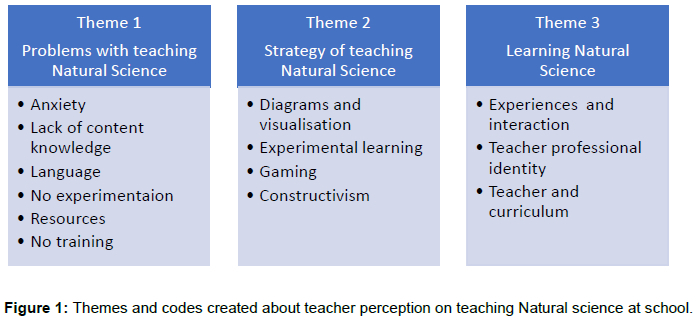
The coding led to the emergence of three distinct themes. These themes, along with their respective codes, are delineated in Figure 1. The themes were identified through a combination of descriptive and content analysis, ensuring a rich, nuanced understanding of the data. This structured approach in ATLAS.ti not only facilitated an organized analysis but also enabled a clear visualization of the relationships between different concepts and themes derived from the data.
Co-occurrence analysis
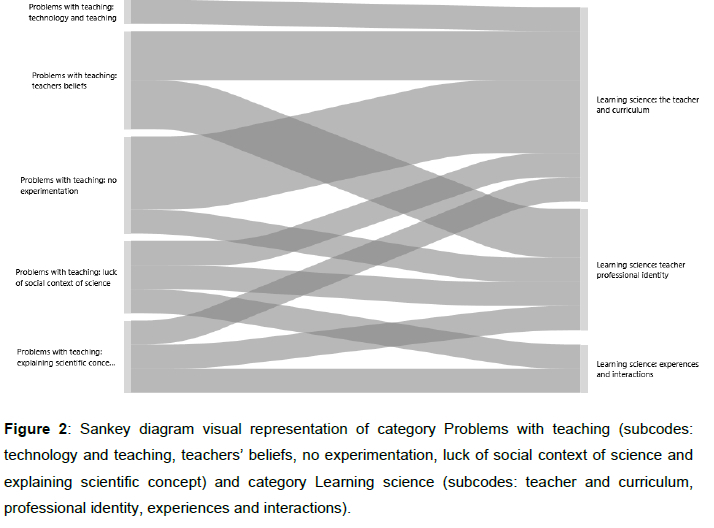
Below we represent a Sankey diagram (see figure 2), which is a specific type of flow diagram that visualises the movement or flow from one set of items to another. It is often used to depict relationships between different variables or categories, showing how they are connected and the relative magnitude of these connections. In the context of code co-occurrence analysis, a Sankey diagram might be used to visualise the relationships between different coded categories.
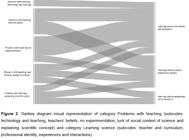
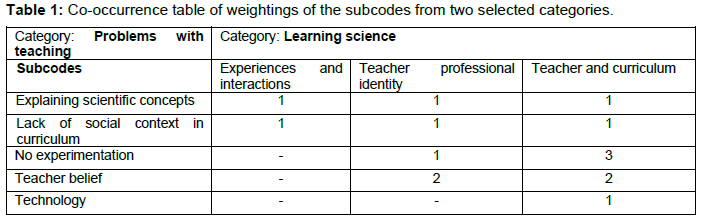
The Sankey diagram (see figure 2) showed a relationship between teaching and learning science, with one side outlining problems with teaching and the other side indicating aspects of learning science. The flows between them would indicate how these problems and learning aspects are connected, potentially providing insights into areas where teaching practices can impact learning outcomes in science education. Figure 2 serves as a visual presentation of data in understanding the relationships and weightings between the elements it describes. (see table 1).
The analysis of data, particularly focusing on Table 1, unveils a substantial emphasis on the co-occurrence of two specific subcodes: the lack of experimental engagement with natural science concepts and the dynamic interaction between teacher guidance and curriculum content. The discussions among teachers highlighted a significant concern regarding the absence of practical experimentation within the teaching of natural sciences. They articulated a need for curricula that are more oriented towards practical experimentation to bolster the comprehension and elucidation of scientific concepts. This sentiment is echoed in the studies by Ndjangala, Abah, and Mashebe (2021), and Olivato and Silva (2023), which argue for the necessity of laboratory activities in practical lessons. These activities not only clarify and reinforce scientific concepts but also engage learners through hands-on experiences. This mode of learning, particularly kinaesthetic learning where students partake in physical activities, is crucial. Without such experimental practices, student performance in natural sciences could be significantly compromised.
Further insights into the teaching challenges are offered by Novljan and Pavlin (2022), who delve into the experiences of Slovenian in-service primary school teachers with outdoor lessons. Their findings reveal a spectrum of challenges, from specific content difficulties to logistical issues such as safety, time, space, weather conditions, and curriculum demands. Despite the presence of innovative ideas for outdoor activities close to schools, these practical obstacles hinder their implementation, underscoring the complexities involved in enriching the curriculum with experiential learning opportunities.
Another critical challenge identified pertains to the interplay between teacher professional identity and the curriculum. This aspect was pinpointed as a significant factor underpinning teaching challenges and relates directly to the study's first two research questions. It highlights the dual role teachers play in not only delivering curriculum content but also in moulding the learning environment through their professional identity development. This relationship between teacher identity and curriculum interaction presents a nuanced challenge, emphasizing the influence of teacher development on both curriculum delivery and the overall quality of the learning experience.
The context of technology education in South African schools brings additional challenges, especially regarding teachers' lack of formal training in both content knowledge and instructional methods for the technology design process, as discussed by Kok and van Schoor (2014). The proposal for access to high-quality curriculum materials and professional development initiatives stands as a vital step towards enhancing teachers' understanding and pedagogical capabilities. Moreover, the promotion of peer collaboration is seen as essential. Liu (2019) further explores the intersection of teacher learning and professional knowledge, stressing its importance in the effective integration of science and technology education.
The exploration into teacher education, particularly at the University of Pretoria as noted by Kok and van Schoor (2014), reveals the implementation of knowledge-generating activities among Bachelor of Education students within technology education modules. However, the precise educational phases targeted by these teachings are not clearly defined. Liu (2019) acknowledges the challenges in clearly defining technology concepts relevant to science education and calls for further research into effective teaching methodologies. The consensus among scholars, including Liu (2019) and Novljan and Pavlin (2022), underscores the foundational role of a deep understanding of the curriculum in guiding teachers' approaches to technology education in the classroom.
PROBLEMS WITH TEACHING ENCOUNTERED BY TEACHERS.
In this section, we will explore potential issues faced by school teachers in the teaching of natural sciences. Among these, two significant challenges stand out: anxiety associated with teaching and the complexity of conveying scientific concepts. According to the literature these factors not only impact the effectiveness of instruction but also influence the learning experience of students, highlighting the need for targeted support and strategies to address these concerns (Baysen and Baysen, 2022; Ogunleye, 2009)
Anxiety
The impact of anxiety on teaching environments is a multifaceted issue that has attracted considerable attention in educational research. In the South African context, studies consistently show that teachers' limited conceptual knowledge in science contributes significantly to their anxiety when teaching the subject (Spaull, 2015; Hoadley, 2017; Hardman, 2022). This anxiety not only affects classroom dynamics but also influences the teaching strategies educators choose, especially in the natural sciences.
Baysen and Baysen (2022) argue that anxiety fosters a fraught classroom atmosphere, hampering the educational process. Similarly, Ambusaidi and Alhosni (2023) demonstrate that anxiety has a dual impact, influencing both teachers and learners. Anxious teachers often unintentionally create tense learning environments, which can inhibit student engagement and exploration - a particularly concerning issue in natural sciences, where hands-on, inquiry-based learning is essential.
Further, research by Ecevit and Kingir (2022) reveals that anxiety can lead teachers to adopt overly rigid or didactic teaching methods, stifling students' natural curiosity and critical thinking. Liu (2019) reinforces this point, showing that anxious educators may avoid innovative, student-centred pedagogies in favour of safer, traditional approaches, which may ultimately disengage learners.
Adding another layer, Kırkıç and Arıkan (2023) categorise the sources of anxiety among teacher candidates as self-concern, task concern, and impact concern. These include fears of peer and student approval, managing classroom demands, and meeting students' learning needs - all of which directly affect teaching effectiveness, particularly in the demanding context of natural sciences.
Moreover, teachers with low self-efficacy are more likely to experience anxiety and develop negative attitudes towards their subject (Baysen and Baysen, 2022; Ozkan and Topsakal, 2019). This often results in reduced instructional time and the use of teacher-directed methods that are less engaging, diminishing student interest and performance in science.
The implications are clear: addressing teacher anxiety is vital not only for individual well-being but also for improving science education outcomes. Professional development programmes that focus on reducing anxiety, building teacher efficacy, and fostering reflective practice could cultivate more positive attitudes towards teaching natural sciences. Such initiatives are crucial for creating engaging, supportive classroom environments that promote effective learning and student success.
Difficulty with explaining scientific concepts
The exploration of scientific concepts within educational settings reveals a complex landscape marked by the challenges of engaging learners and fostering a deep understanding of subject matter. The tendency among educators to lean heavily on technical jargon and abstract explanations without making meaningful connections to the students' experiences is a significant barrier to learning. As Kok and van Schoor (2014) highlight, the disconnection between scientific teaching and the learners' interests and experiences can lead to a decline in both achievement and interest in science from an early age. This issue is further compounded when instruction veers towards rote learning, devoid of inspiration or relevance to the students' lives.
The criticism by Liu (2019) of the prevailing emphasis on enjoyment over conceptual understanding in science teaching points to a critical balance that must be struck. While making science enjoyable is crucial for engagement, it should not detract from developing a robust understanding of scientific principles. The lack of confidence among teachers in their scientific knowledge is a key factor contributing to this imbalance. Meiring (2019) and Ecevit and Kingir (2022) advocate for the enhancement of science teaching self-efficacy through targeted science method courses, suggesting that bolstering teachers' confidence can lead to more effective and conceptually focused instruction.
The integration of procedural knowledge, particularly through the inclusion of design and technology (D&T) in science curricula, is posited by De Villiers, Plantan and Gaines (2016) as a means to provide a practical application for scientific knowledge while enriching the content necessary for design tasks. However, the content-heavy nature of many curricula often leaves little room for in-depth exploration, resulting in a rushed coverage of topics that adversely affects student learning. This situation is exacerbated by the demands placed on teachers to develop critical life skills in their students, such as critical thinking and problem-solving, within the constraints of a packed curriculum.
Furthermore, the adaptation to new topics within the curriculum poses challenges for teachers in terms of understanding and pedagogical content knowledge (PCK), a problem that Vandeyar (2017) identifies as not being limited to disadvantaged educational settings but prevalent across diverse environments. The difficulty in explaining scientific concepts is also linked to the skill of interpreting diagrams, a crucial aspect of science education that Ozakan and Topsakal (2019) and Umdu Topsakal and Oversby (2013) explore. The inability of some teachers to accurately interpret diagrammatic elements such as arrows, lines, and boxes underscores a significant challenge in effectively conveying complex information through visual aids.
The specific case of teaching the physics of light, as discussed by Kırkıç and Arıkan (2023), illustrates the broader issue of educators struggling to convey conceptual understanding due to limited content knowledge. The reliance on textbooks and a teacher-centered approach reduces the opportunity for interactive discussions and exploration, pointing to the need for improved support and resources for teachers. This support would enable educators to present scientific concepts in a manner that is both accessible and engaging, thereby enhancing the overall learning experience for students.
STRATEGIES FOR TEACHING NATURAL SCIENCE.
This section explores effective teaching strategies for natural science, focusing on the integration of gaming and constructivism. These approaches aim to enhance student engagement and facilitate deeper understanding through interactive and experiential learning methods.
Gaming
The strategy for imparting natural science through gaming, with a focus on educational board games, has been recognised for its pedagogical advantages, particularly within the training of pre-service teachers. Botes (2022) highlights the objective for these educators in training to amalgamate theory with practice through the creation of educational science board games. This innovative method necessitates not only a profound understanding and application of educational theories but also the cultivation of personal attributes such as creativity and improvisation throughout the game development process. Board games, by their nature, support a breadth of learning domains cognitive, affective, and psychomotor thereby facilitating multi-sensory engagement amongst students. Moreover, this approach aligns seamlessly with instructional goals, utilising interactive gameplay to motivate students and cultivate a learning environment that is both inventive and exploratory. The dynamic interaction between educational content and student involvement underscores the significance of experimentation and hands-on application in science education.
Within this educational model, pre-service teachers specialising in natural science are introduced to the pedagogical benefits of game-based learning as part of their teaching modules. Meiring (2019) articulates the expectation that these future educators not only assimilate theoretical knowledge but also demonstrate proficiency in translating theory into practice by designing their own educational science board games, rooted in the foundational principles of game-based teaching. This endeavour aims to bridge the theoretical and practical divide, encapsulated by the transition "from theory to practice." The process of creating these educational tools presents an invaluable opportunity to explore how pre-service teachers navigate the integration of pedagogical theories into the tangible format of board games.
The efficacy of game-based education in tailoring educational exercises to fulfil specific learning outcomes is advocated by Kırkıç and Arıkan (2023). This strategy permits educators to incorporate lesson topics into diverse game features, such as simulations and role-playing, enhancing the adaptability of educational board games. According to Novljan and Pavlin (2022), board games act as an effective conduit to engage learners across cognitive, affective, and psychomotor domains, stimulating the development of intellectual capabilities, emotional responses, and physical coordination.
Further exploration into the experiences of pre-service teachers in developing educational science board games reveals the necessity of engaging all five senses - seeing, hearing, smelling, touching, and moving highlighting the multifaceted nature of learning and expression within educational contexts (Prasertpong et al., 2023). The alignment of lesson objectives with the instructional aims of board games, as noted by Olivato and Silva (2023), motivates learners to acquire knowledge through gameplay. Alyousef (2023) adds that this approach not only engages learners but also stimulates their creative thinking processes, illustrating the profound impact of integrating educational board games into science teaching methodologies.
Constructivism theory for teaching science
This section delves into the constructivist1 philosophy of learning, as influenced by theorists such as Piaget (1976) and Vygotsky (1987), and its application in shaping instructional materials for science education. Constructivism posits that learners must actively engage with the material they are learning, requiring direct experiences and reflective thinking to assimilate knowledge effectively (Kok and van Schoor, 2014; Meiring, 2019). This approach is foundational to constructivist learning, which advocates for hands-on and minds-on techniques as essential for exemplary science learning using an inquiry-based learning method to spark learner engagement (Ecevit and Kingir, 2022; Sagdic and Sahin, 2023; Ogunleye, 2009).
Practical classes, planned with a constructivist ethos, offer opportunities for students to learn through inquiry, facilitating learning in a social context. This study corroborates previous findings that Pre-Service Teachers (PSTs) generally favour a constructivist teaching-learning approach, influenced by current curricular demands (De Villiers et al., 2016). However, discrepancies exist in the adoption of constructivist versus traditional teaching methods, highlighting a need for more focused training in constructivist methodologies. Faced with a class to teach, research indicates that teachers often revert to a traditional chalk and talk methodology when teaching science (Hardman, 2022; Hoadley, 2017).
Teachers' pedagogical content knowledge (PCK) is crucial for transforming their understanding of subject content into accessible learning experiences for students. Research shows a direct correlation between teachers' content knowledge and their use of inquiry-based teaching strategies, suggesting that deficiencies in content knowledge led to a reliance on more traditional, less interactive pedagogical methods (Ramnarain and Fortus, 2013). This investigation into teachers' perceptions of their content knowledge and PCK underscores the importance of deep subject matter understanding in facilitating effective science education.
CONCLUSION
This study has delved into the literature surrounding teachers' perceptions of teaching natural science in schools, comparing insights from both South African and international contexts. The review highlighted the diverse challenges teachers face in delivering this hands-on subject, particularly the difficulty of explaining scientific concepts without access to laboratories and practical experiments. Furthermore, it revealed that some educators experience anxiety about teaching natural science, stemming from inadequate training, the challenge of teaching a diverse group of learners, and unfamiliarity with students' cultural and historical backgrounds, which complicates the task of relating concepts to real-life applications.
In response to these challenges, the literature review also explored innovative strategies employed by teachers to enhance the teaching of physics. It emphasised the adoption of gaming through technology and the constructivist approach as effective methods to engage students and facilitate a deeper understanding of scientific principles. These strategies highlight the potential for creative pedagogical techniques to overcome the barriers to teaching natural science effectively.
REFERENCES
- Alyousef, I. 2023. "A Sense of Responsibility of Science Teachers Towards Students' Learning." Pegem Journal of Education and Instruction 13 (3): 239-248.
- Arksey, H., and O'malley, L. 2005. Scoping studies: towards a methodological framework. International journal of social research methodology, 8(1), 19-32.
- Ambusaidi, A. K., and K. Z. Alhosni. 2023. "Mathematics and Science Teachers' Perceptions of the Factors Influencing Teaching and Professional Identity." Problems of Education in the 21st Century 81 (3): 303-326.
- Baysen, E., and F. Baysen. 2022. "Experimentation Anxieties of Pre-School and Primary School Teacher Candidates." South African Journal of Education 42 (1).
- Bogdanović, I. Z., J. D. Stanisavljević, D. D. Rodić, T. N. Rončević, and Z. A. Zouhor. 2022. "The Impact of Using the Modified Know-Want-Learn Strategy in Physics Teaching on Students' Metacognition." South African Journal of Education 42 (4).
- Botes, W. 2022. "Pre-Service Teachers' Experiences on the Development of Educational Science Board Games." European Journal of STEM Education 7 (1): 2.
- Davydov, V. V. 1989. Udviklende undervisning pii virksomhedsteoriens grundlag [Developmental teaching based on activity theory]. Moscow: Sputnik.
-
De Villiers, R., T. Plantan, and M. Gaines. 2016. "The Incorporation of the USA 'Science Made Sensible' Programme in South African Primary Schools: A Cross-Cultural Approach to Science Education." Education as Change 20 (1): 239-258. https://doi.org/10.17159/1947-9417/2016/1484.
» https://doi.org/10.17159/1947-9417/2016/1484 - Ecevit, T., and S. Kingir. 2022. "Primary Student Teachers' Teaching-Learning Conceptions, Attitudes and Self-Efficacy Beliefs toward Science Teaching." Journal of Turkish Science Education 19 (3): 773-785.
- Egan, K. 2002. Getting It Wrong from the Beginning: Our Progressive Inheritance from Herbert Spencer, John Dewey, and Jean Piaget. New Haven: Yale University Press.
- Fleer, M. 2010. Early Learning and Development: Cultural-Historical Concepts in Play. New York: Cambridge University Press.
- Gough, D., Thomas, J., and Oliver, S. 2017. An introduction to systematic reviews. SAGE
- Hardman, J. 2022. A Cultural-Historical Approach Towards Pedagogical Transitions. Bloomsbury.
- Haynes, J., and K. Murris. 2012. Picturebook, Pedagogy and Philosophy. New York: Routledge.
- Hedegaard, M., 1998. "Situated learning and cognition: Theoretical learning and cognition." Mind, Culture, and Activity, 5(2), pp.114-126.
- Hedegaard, M., 2020. "Ascending from the Abstract to the Concrete in School Teaching-the double Move between Theoretical Concepts and Children's Concepts." Psychological Science & Education, 25(5).
- Hoadley, U. 2017. Pedagogy in poverty: Lessons from twenty years of curriculum reform in South Africa. Routledge.
- Kırkıç, K. A., and E. E. Arıkan. 2023. "Primary School Teachers' Attitudes and Views toward STEM Education." Science Education International 34 (2): 132-141.
- Kok, L., and R. van Schoor. 2014. "A Science-Technology-Society Approach to Teacher Education for the Foundation Phase: Students' Empiricist Views." South African Journal of Childhood Education 4 (1): 95-110.
-
Liu, T. 2019. "Learning Difficulties in Theoretical Physics and Teaching Reform Strategies." Modern Applied Science 13 (11): 97-102. https://doi.org/10.5539/mas.v13n11p97.
» https://doi.org/10.5539/mas.v13n11p97 - Meiring, L. F. 2019. "Foundation Phase Science Teacher Identity: Exploring Evolutionary Module Development to Promote Science Teaching Self-Efficacy." South African Journal of Childhood Education 9 (1): 1-11.
- Ndjangala, M. N. N., J. Abah, and P. Mashebe. 2021. "Teachers' Views on Challenges Affecting Learners' Performance in Natural Science." International Journal of Evaluation and Research in Education 10 (1): 48-56.
- Novljan, M., and J. Pavlin. 2022. "Experiences of Slovenian In-Service Primary School Teachers and Students of Grades 4 and 5 with Outdoor Lessons in the Subject Science and Technology." Center for Educational Policy Studies Journal 12 (1): 189-215.
- Ogunleye, A. O. 2009. "Teachers and Students Perceptions of Students Problem-Solving Difficulties in Physics: Implications for Remediation." Journal of College Teaching & Learning (TLC) 6 (7).
- Olivato, J. A., and J. C. Silva. 2023. "Interdisciplinary Teaching Practices in STEAM Education in Brazil." London Review of Education 21 (1): 38.
- Ozkan, G., and U. U. Topsakal. 2019. "Science and Non-Science Teachers' Interpretation of Physics Diagrams." South African Journal of Education 39 (1): 1-11.
-
Piaget, J. 1976. "Piaget's Theory." In Piaget and His School, edited by B. Inhelder, H. H. Chipman, and C. Zwingmann, Springer Study Edition. Berlin and Heidelberg: Springer. https://doi.org/10.1007/978-3-642-46323-5_2.
» https://doi.org/10.1007/978-3-642-46323-5_2 - Prasertpong, P., K. Charmondusit, V. Taecharungroj, W. Rawang, S. Suwan, and S. Woraphong. 2023. "Factors Influencing Science and Environmental Education Learning of Blind Students: A Case of Primary School for the Blind in Thailand." International Journal of Education and Practice 11 (2): 295-307.
- Ramnarain, U., and D. Fortus. 2013. "South African Physical Sciences Teachers' Perceptions of New Content in a Revised Curriculum." South African Journal of Education 33 (1).
- Sagdic, A., and E. Sahin. 2023. "The Role of Microteaching on Pre-Service Primary School Science Teachers' Conceptual Understandings Regarding Phases of the Moon." Journal of Education in Science Environment and Health 9 (1): 29-43.
-
Set, B., J. Hadman, and D. O. Ashipala. 2017. "An Investigation into How Grade 5 Teachers Teach Natural Science Concepts in Three Western Cape Primary Schools." World Journal of Education 7 (1): 33-43. https://doi.org/10.5430/wje.v7n1p33.
» https://doi.org/10.5430/wje.v7n1p33 - Sewry, J. D., S. R. Glover, T. G. Harrison, D. E. Shallcross, and K. M. Ngcoza. 2014. "Offering Community Engagement Activities to Increase Chemistry Knowledge and Confidence for Teachers and Students." Journal of Chemical Education 91 (10): 1611-1617.
- Spaull, N. 2015. "Schooling in South Africa: How low-quality education becomes a poverty trap." South African child gauge, 12(1), 34-41.
-
Umdu Topsakal, U., and J. Oversby. 2013. "Turkish Student Teachers' Ideas about Diagrams of a Flower and a Plant Cell." Journal of Biological Education 46 (2): 81-92. https://doi.org/10.1080/00219266.2011.572988.
» https://doi.org/10.1080/00219266.2011.572988 - Vandeyar, S. 2017. "The Teacher as an Agent of Meaningful Educational Change." Educational Sciences: Theory & Practice 17 (2).
- Vygotsky, L. S. 1987. The Collected Works of L. S. Vygotsky: The Fundamentals of Defectology. Vol. 2. Springer Science & Business Media.