The slowly turning wheels on Mother Tongue-based Bilingual Education (MTbBE) finally stopped
Abstract
It was déjà vu in South Africa for scholars, particularly in language education, when President Cyril Ramaphosa announced the implementation of the Basic Education Laws Amendment (BELA) Act and the Mother Tongue-based Bilingual Education (MTbBE) this year. The announcement came at a favourable time, as the world prepared for UNESCO's celebration of International Mother Tongue Language Day on 21 February 2025. Advocacy for multilingualism has been a topic of interest for many years, and the slow wheels have turned in response to the call of MTbBE. However, the readiness of the South African Education system to accommodate MTbBE remains an unsolved puzzle. This article underscores the role of MTbBE in multilingual contexts, highlighting linguistic diversity as a fundamental human right. The study adopted a qualitative research method through a literature review by evaluating existing language ideologies and language practices that challenged the unfinished project of decolonial education in South Africa. This study aims to provide a comprehensive overview of language ideologies and policy lag that condition multilingualism and its implementation in MTbBE. At the same time, it proposes practical strategies such as translanguaging to respond to multilingual needs. Higher institutions of learning have responded well to the MTbBE call. As such, the University of Cape Town (UCT) launched their newly approved multilingual policy on 27 February, and the University of the Western Cape (UWC) is actively reviewing its language policy. The Western Cape Education Department (WCED) announced the Mother Tongue-based Bilingual Education (MTbBE) rollout on 7 April 2025. One can expect that all other institutions of learning would answer the call as it aims to address the salient and underlying language issues of the inherent past. I contend that language should be recognised as a fundamental human right. I, therefore, posit that it is a collective responsibility to uphold this right as a social justice imperative. Belonging to cultural and linguistic communities is affirmed in the Bill of Rights, including equality and human dignity. The UBUNTU philosophy is thus central to this paper as its characteristics align with my vision to encourage education practices that are culturally and linguistically responsive.
Mother tongue-based bilingual education; Multilingualism; translanguaging; social justice
INTRODUCTION AND BACKGROUND
The 20th century has seen an increase in studies exploring bilingualism and multilingualism. Historically, around the globe, people have spoken more than one named language. In Europe, America, Africa, India, and the East, it is found that languages such as English, French, Portuguese, and Spanish are the most frequently spoken. In South Africa about 23 per cent of its people identify themselves as English or Afrikaans Home Language speakers, (Albertyn and Guzula 2020), isiZulu has the largest percentage of home language speakers at 25 per cent and isiNdebele the smallest at 1.6 per cent (Statistics South Africa 2018b), yet 77 per cent of learners are expected to navigate schooling exclusively in these languages. The obvious reality is that South Africa does not have a country-wide dominant language for spoken languages (Kaiper-Marquez 2019). However, for the longest time, monolingual ideologies of the elite whites prevailed due to political power linked to colonialism and the process of nation-building (García and Otheguy 2020). Although monolingual practices were enforced, the vision of bilingualism continued even after the independence of many colonies.
Despite the dominance of monolingualism in many educational settings globally, ethnographic studies reveal that multilingualism in education is hard to suppress. Garcia and Sylvan (2011, 398) suggested that "monolingual education is no longer relevant in our globalized world". Massive movements have further accelerated linguistic complexities and resulted in increased multilingualism in society. South African townships have become home to many migrants from neighbouring countries and have hosted people from Zimbabwe, Mozambique, Lesotho, Malawi, Somalia, and the Democratic Republic of Congo, especially. The new socio-political dispensation post-1994 triggered freedom of movement within the borders (Makalela 2017; 2019). The inevitable multilingual reality sparked advocacy for multilingualism in the 21st century.
The realisation of the inevitable reality of MTbBE has been slowly attended to, as President Ramaphosa indicated in 2019 an intention to include Swahili as a language to create employment for future South Africans in the greater African continent (The Citizen 2019). Further, for political and economic reasons, we have seen the inclusion of other foreign languages in the SA curriculum, such as Mandarin, French and German. Six years later, we can now officially celebrate one of the significant amendments of MTbBE through the BELA ACT. This article draws attention to the lack of implementation of heteroglossia and multimodal practices, intentional and informal language education, curriculum, and directives for teachers.
Given South Africa's multilingual context, we have more reason to reinforce Mother Tongue-based Bilingual Education.
Multilingualism in South Africa is seen as the norm and takes on many forms (Simonsen and Southwood 2021, 13). However, the context of South African children differs from the kinds of multilingual contexts experienced by the countries mentioned above. English is the predominant and preferred lingua franca in most South African schools (Simonsen and Southwood 2021, 16), although spoken as a First Language by only 8 per cent of the population (Statistics South Africa 2018). The reason for the preferred lingua franca may be attributed to the idea that English and/or Afrikaans is seen as the language of opportunity, business, and political economy (August 2023; Probyn 2009).
A recent study done in the Western Cape indicated, there is still a growing preference for English and Afrikaans despite isiXhosa being the third official regional language. Many isiXhosa parents stated that they preferred sending their children to Afrikaans schools because of the political economy that is associated with Afrikaans in the area (August 2023). This scenario illustrates the dichotomies in the education system and underscores the lack of impartiality and objectivity embedded in longstanding power struggles. It is for this reason that multilingualism was often disregarded, even though recognised by the Constitution of SA (RSA 1996a), the South African Schools Act (RSA 1996b) and Language in Education Policy (DoE 1997). The attempts by the democratic government to embrace linguistic diversity were undermined by monolingual supremacy. As a result, there has been a mismatch between policy and its implementation. This background suggests an ideological clash between advocacy for multilingualism and the monolingual realities in practice (August 2023). This context underscores the need to roll out and implement MTbBE in all education sectors.
RECLAIMING LINGUISTIC PLURALISM AS A SOCIAL JUSTICE IMPERATIVEAttempts to decolonise apartheid transgressions, especially in an educational context, were on the high priority list of the democratic government. Drastic changes to policy were made in the first 15 years of democracy and have seen four [4] policy cycles. Some might argue that these changes were hasty and not carefully planned. These changes included:
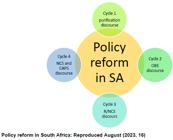
• Cycle 1: Pre-1994 was the syllabus was reviewed, and content was purged of sexist and racist language. Stakeholders had greater participation, and principles underpinning the curriculum were based on democratisation.
• Cycle 2: A completely new curriculum called C2005 was implemented in 1997. It was based on Outcomes-based education (OBE). It had a new pedagogical focus and was not prescriptive.
• Cycle 3: A Ministerial committee was appointed to review C2005 in 2000 to simplify language and enhance coherence through integration. It reduces curriculum design features to align curriculum and assessment. It also aimed to improve professional development for teachers and monitor the management process for phasing in and out. NCS was developed and implemented in 2002.
• Cycle 4: A Ministerial committee was appointed to review NCS in 2009. It has a single, coherent, and clear year plan which reconsidered teachers' administrative duties and workload. Subjects changed in the foundation and intermediate phases, and LSM was in line with the curriculum developed. Professional development for teachers was more subject-specific, and CAPS has been developed and implemented since 2011.
Healing the divisions of the past was the central aim and foundational purpose of policy reform. Reaffirming this purpose through claiming linguistic pluralism in the LiEP of (DoE 1997) was the first step. However, executing this aim was a challenge from the get-go. Lack of fundamental resources in the different indigenous languages, such as reading materials, research sources and human resources, was one of the many challenges to maintaining this farfetched dream. Constitutional commitment to the course has seen the recent implementation of the BELA Act. Though the BELA Act has sparked heated debates and even abolishment requests, specifically relating to language policies, many scholars welcomed this initiative as it is seen as a groundbreaking step in South Africa's quest to fulfil an overdue commitment to multilingual education (University of Cape Town 2025). The adoption of the BELA Act confirms that the shackles of power, oppression and privilege are broken, and the newly defined social justice is in full view.
The rollout of MTbBE serves as a clear pathway for the education system to host a variety of languages and, at the same time, achieve social justice and equity. We are conscious that policy alone cannot solve the educational challenges in South Africa, but rather these challenges should be simultaneously addressed, including teacher training, content, and resource development, pedagogical effectiveness, and conducive learning environments (Guzula 2025). Specifically directed at teacher training, Guzula (2025) recommended the alignment of teacher training programs with the languages used for instruction. In its current state, Afrikaans and English-speaking teachers receive training in their respective languages, but speakers of indigenous languages teaching literacy in African languages receive training in English (Guzula 2025). It is worth mentioning that a few public universities, amongst others, the University of the Western Cape, Nelson Mandela University, University of Johannesburg, and University of Fort Hare made substantial efforts in their B.Ed. Foundation Phase programs to incorporate isiXhosa in their teacher training programs. However, if we truly want to create a fully operational multilingual education system, it is imperative that MTbBE is implemented across schooling and teacher training programs.
I posit that if both basic and higher education departments accept collective responsibility for MTbBE, we have won the war against linguistic oppression. There is a clear interconnectedness between education departments- basic and higher education, and this interconnectedness is essential to cultivate MTbBE. Promoting linguistic human rights through MTbBE is intrinsic to the Ubuntu philosophy, which is central to this paper. Adopting the MTbBE advocates for all other principles, including humanity, dignity, social justice, equity, collective responsibility, and interconnectedness. Though the BELA ACT is contentious, I believe the adoption of the BELA ACT will transform the education system. The requirement of the BELA ACT that schools (and I suggest universities) revise their language policies on a three-year basis will not only ensure inclusivity but will advance the development of African Languages. Though some institutions of learning might want to cling to their exclusionary ways, the provision of the BELA ACT gives hope that indigenous language speakers will eventually find themselves in a space where they can share the same opportunities.
UNDERSTANDING LAG IN POLICY IMPLEMENTATION.
It is one thing to recognise cultural and linguistic diversity on paper, and it is another thing to fully integrate multilingual students' cultural and linguistic knowledge in practice. Introducing the LiEP was geared to undo injustices of the past, specifically relating to language injustices. The LiEP alerted policy actors of the alarming gap between monolingual practices in pedagogy and the lack of multilingual approaches in assessment and evaluation measures (Schissel, et al 2018). However, responding to this gap through implementation seems to be the biggest challenge. McKinney and Tyler (2019) posit that there is a notable gap in policy formulation and policy implementation on the one hand and the use of learners' home languages in achieving epistemological access and/or quality education on the other. Research done by these authors on isiXhosa learners who migrated from township schools to former Model C schools indicates that though these learners were exposed to English and Afrikaans, and had physical access to these well-resourced schools, these learners got limited or no access to quality education (McKinney and Tyler 2019). This lag in policy implementation exacerbated ongoing educational hindrance for multilingual speakers as monolingualism still prevailed in curriculum policies, teaching practices, assessment, and material development (Makalela 2017). LiEP (DoE 1997) was ready for implementation, yet we purposefully chose not to contest an enforced system of English beyond Grade 3 by the apartheid fathers for many years in the democracy. The question remains: Why did it take us so long to finally practice what we preached?
There has been substantial progress in the conceptualisation of language in applied linguistics, but it is evident that the notion of historical monolingual approaches continues to dominate (August 2023). Some might argue that many are blindsided by the Eurocentric and Anglo normative basis towards English that we purposefully disregard and overlook the heteroglossia. McKinney and Tyler (2019, 6) define heteroglossia as "the simultaneous use of a diverse range of registers, voices, named languages, or codes". Incorporating heteroglossia approaches in the current decolonised discourse, where English prevails as the dominant language, presents challenges for the education system. However, delaying the implementation of such approaches widened the gap to achieve social justice for speakers of indigenous languages, limiting their opportunity to achieve full functionings that is important to them (Maarman 2009) and finding their rightful places in society.
Learners are often labelled as deficient English learners and inadequate bilinguals rather than resourceful bi/multilingual learners who have not yet mastered English or Afrikaans (Albertyn and Guzula 2020). Yet, bilingual pedagogies were not a common practice in schools, and assessment practices assumed that learners are monolingual speakers. The lack of such practice can be attributed to the lack of bilingual teachers in a classroom with a great number of mother tongues, which makes it hard to integrate any type of bilingual support in mainstream education (Jordens et al. 2018). Surprisingly, the South African schooling system requires the average learner who wants to succeed in obtaining a matriculation school-leaving qualification to be bilingual (Guzula, Mckinney and Tyler 2016, 211). Is it thus fair to label these learners as inadequate while they had no say in the implementation process?
I contend that bi/multilingual pedagogies cannot be developed in isolation from bi/multilingual practices (August 2023, 7). When we reflect on SA's past matric results, it screams the poor state of national education. These results reflect the monolingual language regime but are infrequently acknowledged as a contributing factor (Antia 2018). Antia (2018) further posits that multilingual speakers are tested as if they are mother-tongue speakers of the examination language. This is not only detrimental to the passing of learners in any grade, but it also alerts us to the continuation of social injustice in a democratic South Africa. If we disregard the impact of the language used in the examination, we exacerbate inequalities. I therefore posit that multilingualism should be promoted through policy and practices, in both pedagogy and assessment.
Arguments to address multilingualism in pedagogy and assessment have heightened in recent years, as scholars call on policy actors to simultaneously address these major factors as a social justice imperative. It is for this reason that Bisai and Singh (2018, 308) suggest a holistic approach to measuring a child's performance, considering their personal, cultural, social, and linguistic diversity as well as learners' abilities. In doing so, it will create equal opportunities and at the same time create an education system that is feasible, effective, and inclusive. The Department of Basic Education outlines guiding principles for assessment (DBE 2011) and emphasises that it should be clear, directly linked with the critical and specific outcomes; integral to teaching and learning; balanced; comprehensive; varied; valid and fair (August 2023).
Looking at SA's schools' current examinations, it is not fair as multilingual learners cannot make sense and articulate their answers in their mother tongue. Such practice is a deliberate act that violates the linguistic rights of learners, hampering their learning and comprehension and at the same time fuelling high dropout rates in school (Albertyn and Guzula, 2020). In addition, bi/multilingual learners are often curbed by monolingual biases in assessments, resulting in learners not reaching their full potential (Schissel et al. 2018; Otheguy, Garcia and Reid 2015; Shohamy 2011). Shohamy (2011) suggest that traditional assessment holds a narrow view of language testing, which often overlooks the social, cultural, and historical context of students. As a result, multilingual learners continuously find themselves at the end of the continuum as teachers enforce language dominance of the minority's language of instruction, accompanied by a monolingual assessment, which ignores the multilingual realities of the classroom (August 2023). Research in the field of literacy suggests that one should take the strengths and weaknesses of language minority students into account when assessing these students. Assessments should be adequately prepared and tailored to meet the academic needs of the students. Regrettably, current assessment, specifically in content-area assessments, is inadequate when measuring how students will perform, as it does not meet the needs of the language minority students (August 2023; August and Shanahan 2006). So, how effective are these principles for multilingual learners if marginalisation of their mother tongue continued for thirty years in a democracy with little to no assistance to bridge the language gap? Can such an assessment be deemed fair and equitable under these circumstances? In the name of fairness, we cannot accept that the different levels of competencies as a true reflection of these learners' abilities. It is for this reason that August (2023, 7) argues that multilingual practices should not be developed in isolation from multilingual assessment practices. I thus accentuate that assumptions informing multilingual policies are wrongly premised.
LINGUISTIC LANDSCAPE: MULTIVOICEDNESS OF MULTILINGUALISM
Multilingualism is inescapable, and the need to review current pedagogical practices has been a topic of interest in recent years. Language oppression was used to perpetuate social hierarchies, and as a result, mother tongue was disregarded and undervalued in educational spaces (August 2023). To further strengthen the linguistic divide, the apartheid regime enforced spatial segregation, which further hindered linguistic development, limiting opportunities to strengthen communication in those indigenous languages. Desolately, the aim was to erase the indigenous language. Stringent action by language activists curbed the obliteration of indigenous languages as they realised that language is not only a communication tool but a powerful symbol of identity and culture (August 2023). This realisation of the inequitable linguistic amalgamation gave rise to active resistance against dominant languages, which in turn has seen indigenous language speakers reclaiming linguistic autonomy.
In an educational context, deviating from traditional language practice in classrooms was seen as a transgression, as the language of oppression, Afrikaans, was stringently enforced. In other words, language practices such code-switching and translanguaging could not be used because it has been viewed as unconventional practices (August 2023), an "illegitimate practice" (Guzula, et.al 2016), "necessary evil" (Garcia and Wei, 2014) or "smuggling in the vernacular (Probyn 2009). For example, during an English examination written by isiXhosa learners in a Cape Town school, teachers attempted to use code-switching to clarify unfamiliar English language; the principal addressed the teachers' actions as a transgression (Prinsloo and Krause 2019). The view of the principal is echoed by Makalela's (2013) sentiments that languages are put in 'boxes'. This kind of thinking hinders the possibilities of merging African Languages to support multilingual learners. Research has proven that "mobile linguistic resources" pressurise "monolingual practices and ideologies worldwide" (Makalela 2013, 111). This means that multilingualism thrives irrespective of the deliberate attempts to blatantly ignore it.
A study conducted in a monolingual school in Khayelitsha, South Africa, confirmed Makalela's sentiments as it found that a learner and his peers frequently used isiXhosa/English to solve problems in science. Learners completed tasks collaboratively in their classroom through their "exploratory talk," which is a common practice in Western Cape schools (McKinney and Tyler 2019). These learners deliberately disobeyed the monolingual language policy of the school. What was worse, strict school language policies forced learners to work around official language regulations by secretly using their mother tongue, although the school's language policy explicitly prohibits them from doing so (Jordens et al. 2018). The deliberate use of mother tongue to make meaning is evident that multilingualism cannot be suppressed, and it raises awareness of discourses that condition meaning making in traditional classrooms. Putting rules in place to try to constrain learners to use their mother tongue in the learning process contradicts learners' constitutional right, including having a right to be taught in the language of their choice.
Despite negative connotations associated with language practices such as translanguaging, research shows that meaning making for multilingual learners improved drastically. During Teachers' Day in East London, Eastern Cape, South Africa, Dlamini, a teacher, acknowledged during her speech that translanguaging helped her rural learners to make sense of difficult poetry content, which yielded positive results for her school as it improved the schools results from 65 per cent in 2017 to 88 per cent in 2018. In another study, McKinney and Tyler (2019) highlight that even though learners are only allowed to mix "isiNgesi nesiXhosa" (English and isiXhosa) when giving explanations verbally, it assisted them with meaning making, increasing their academic performance. The use of multiple languages in education as a "communicative and pedagogic resource in bilingual contexts, is often suggested to assist learners who struggle to understand difficult subject matter whilst simultaneously learning a foreign language, in many cases, the LOLT (Ferguson 2009, 231). The realities of learners in multilingual school contexts underscore the need to dismantle oppressive systems and create an educational space that is inclusive, culturally, and linguistically responsive. Learners will thus be able to embrace their mother tongue with pride.
The road to freedom was so long that it took South Africa more than 30 years postapartheid to implement the very same policies that were meant to change the narrative of language oppression. Nevertheless, the new dawn for mother tongue has finally arrived. Recently, Mrs. Dudley, a WCED official, in her presentation on [19 March 2025 at CTLI], openly acknowledged the value of language practices such as code-switching and translanguaging and stated that teachers can now use this as part of their teaching strategies. Witnessing this was a historical breakthrough for me, as I recommended in my doctoral study that "policymakers should include the use of unconventional language practices such as multilingualism in classrooms as a support strategy to enhance learners' capabilities through meaning making (August 2023, 262)." The announcement of the MTbBE rollout is a step in the right direction as it seems the 'unsolved puzzle' of the education systems' readiness to accommodate multilingual learners, as alluded to by August (2023), is finally being resolved. The benefits of MTbBE are significant as this approach will not only improve literacy and enhance meaning making, but it will foster deeper engagement with academic content (Guzula 2025) and ultimately improve learners' academic performance.
PHILOSOPHICAL FOUNDATIONS OF TRANSLANGUAGING AS AN INCLUSIVE PEDAGOGICAL STRATEGYThe era where learners were seen as passive recipients of knowledge was meant to be abolished with the apartheid era. At least, this was the aim, as it is highlighted through the different policy cycles as mentioned above. However, the unfortunate reality is that learners were still subjected to monolingual practices that suppressed their critical thinking and spontaneous responses to pedagogical content. I contend that creative and critical thinking come spontaneously when learners learn in their mother tongue. They feel less anxious; it is a known territory to them as it is part of who they are. Drawing on their entire communicative repertoire not only expands opportunities for meaningful engagements and literacy practices but also ensures a balanced and equitable learning environment (Ossa Parra and Proctor 2022, 2). Stimulating the use of HL in the classroom using multilingual strategies benefits both monolingual and bilingual children (Bosma et al. 2022). These benefits include strengthening mental connections between semantic and phonological words (Bosma et al. 2022, 1). In other words, there is an intrinsic connection with what learners think and identify; how they understand and make meaning and how they articulate it.
Translanguaging is linked to the unconventional practices tailored for diverse multilingual and multimodal practices. It is often seen as a replacement term for code-switching, codemessing, and crossing (Wei 2018, 9). Why translanguaging? From a social justice perspective, the call for translanguaging is linked to inequalities in classroom language hierarchies (Schissel, De Korne and López-Gopar 2018) that force bilingual students to perform academically with less than half of their full linguistic repertoire (Vogel and Garcia 2017). The conjoint motivation for practices such as translanguaging is that it challenges traditional language conceptualisations and provides a window of opportunity for merging African languages (Makalela 2013, 111). Further, translanguaging operates as an adaptive space that addresses the mismatch between learners' home language and the official language of instruction in South African classrooms (usually English) (Guzula et al. 2016). Multimodal meaning making is thus enhanced through the established translanguages space. Translanguaging also act as a 'third space', as it not only comprises a mixture or hybridity of first and second languages, but rather invigorates languaging with new possibilities, foregrounding creativity and power (Garcia and Wei 2014, 25). In essence, translanguaging allows learners to use their mother tongue freely, in the way they find productive when exposed to new ideas. This means, for example, the teacher presents the task in Afrikaans (as the LOLT), learners will discuss and try to make sense of the task using their mother tongue but will give feedback in Afrikaans (Murphy 2011).
The application of translanguaging, therefore, requires codified school subjects to be denaturalised as the standardised named languages, specifically minority languages that explicitly exclude multilingual learners for nation building, colonialism, racialization, and global capitalism (Garcia and Otheguy 2020, 27). If one truly wants social justice, it means that we must break the cycle of oppression and social mobility barriers by examining systems of power and privilege, building fair and just relationships between individuals and society (Kajee 2018). To ensure equality and quality in education for all, the South African education system must redress the undefined salient factors and weaknesses, including the language policy (Taylor, Fleisch and Shindler 2007). We can truly say that we achieved social justice and equity if the education system provides a clear passage for a variety of languages (Heugh et al 2016), in the case of South Africa making provision for all 11 official languages.
From a classroom perspective, translanguaging builds linguistic competence and performance in two languages, developing academic language skills in both languages that lead to complete bilingualism and biliteracy (Baker 2011, 290). In sum, incorporating translanguaging strategies in pedagogy is multifaceted:
• It aims to advance social justice;
• Support learners as they engage with and comprehend complex content and texts;
• Provide opportunities for students to develop linguistic practices for academic contexts;
• Making space for students' bilingualism and ways of knowing; and
• Support students' bilingual identities (Garcia and Otheguy 2020, 27).
More importantly, translanguaging allows learners to match their thoughts and their words. In other words, engaging in translanguaging practices is not only linguistically responsive to the needs of the learners but it also validates the identity of the learners. It further empowers people to understand their multilingual surroundings, including the different signs, visuals, audio, physical, spatial, and verbal (written). Translanguaging does not only focus on helping learners understand words, phrases, and sentences in two languages but also emphasises the use of both languages for concept formation and cognitive development. Translanguaging can thus be viewed as the vehicle that drives the use of two languages to enhance learning (August 2023). The translanguaging theory for language "acknowledges the deeply heteroglossic, multimodal and multisensory nature of communicative practice" due to its "potential to liberate multilinguals from the tyranny of monoglossic and monomodal conceptions of communicative practice as the norm" (McKinney and Tyler 2019, 7). Translanguaging lays the foundation for equality, equity, and justice, as it addresses the learners' inevitable multilingual reality that allows them to speak the language they were born to speak. It thus infuses local knowledge systems and cultures while pursuing excellence in teaching and learning in a multilingual context (Banda 2018, 211). In sum, "translanguaging pedagogies promote meaningful and transformative literacy practices that recognise and integrate multilingual students' cultural and linguistic knowledge" (Ossa Parra and Proctor 2022, 17).
UNDERSTANDING TRANSLANGUAGING IN PRACTICESTranslanguaging is often censured by policymakers, principals and some teachers because of its unofficial status, but it is a practice that could assist learners to access the curriculum, confront restricted opportunities, make meaningful contributions and actively participate in their learning processes (Guzula et al. 2016, 2013). Language within the minds of bilingual learners is seen as operating in separate compartments, or as "two solitudes" (Cummins 1979). However, this perspective of language neglects to acknowledge the strength of more spontaneous language practices of bilingual speakers (Deroo and Ponzio 2019).
As a bilingual pedagogy, one must understand that language modes are interchanged (Hungwe 2019) and students are permitted to compare ways while concepts are expressed (van der Walt 2013). Concept formation often requires the use of two languages (L1 and L2) to enhance meaning making in a multilingual context (August 2023). Engaging in translanguaging practices balances the development of a child's two languages, using the child's stronger or proficient language to develop the weaker language (Williams 2003). Additionally, multilingual shuttle between languages, using their diverse repertoires as an integrated system (Canagarajah 2011, 401). However, Lewis, Jones and Baker (2012) are of the opinion that translanguaging provides scaffolding, because learners can cope without translanguaging when their language competence is more advanced. It is also important to note that sudden switches between languages are easily compatible when you reinforce a monoglossic approach of languages with clear boundary entities. The switch may become challenging within an 11-official language context but incorporating heteroglossia is the reality of non-native speakers of the LOLT as they engage in meaning making processes. Given the transformative and productive nature of translanguaging as a heteroglossia practice, it requires deliberate pedagogical design of translanguaging (McKinney and Tyler 2019).
Ossa Parra and Proctor (2022, 3) proposed a translanguaging continuum aimed at dismantling monolingual ideologies to ensure multilingual learners have fair learning conditions. This translanguaging continuum includes three discrete points, namely listening, channelling and flowing Corriente.1 (current) and is explained as followed:
•
Listening Corriente (start of continuum): requires teachers to recognise students' naturally occurring language practice, which is mother tongue language.•
Channelling (middle of continuum): teachers embrace, accept, and promote flexibility in language use in their classrooms•
Flowing Corriente (end of continuum): here lies flowing, where teachers explicitly plan and implement instruction.In addition to the translanguaging continuum, teachers must also consider stance, design, and shift as core components of translanguaging pedagogy in their classroom practices as outlined by Henderson and Ingram (2018, 54).
•
Stance requires teachers to acknowledge students' diverse linguistic practices and to embrace students' practices for the advancement of their education.•
Design includes an integrated plan with instructional components; lesson plans and assessments shaped by students' linguistic practices that inculcate ways of knowing that increase exposure to language features required for different academic tasks.•
Shifts encompass the ability to revise and adjust instructional plans based on student feedback aimed at improving the result.Both schools and institutions of higher learning can transform society but can also reproduce social inequalities. In both domains, social equality and justice can be ensured if all stakeholders can act as agents who want to eradicate conflict that encourages social division that supports oppressive hegemonies (Kajee 2018). Reconceptualisation of learning, teaching, and assessment in a multilingual context for both basic schooling and higher education is thus important as it acknowledges linguistic and cultural diversity on all grounds. It should be a shared object across all educational spheres.
TRANSLANGUAGING TOOLKIT TO SUPPORT STUDENTS' BILINGUAL JOURNEY IN THE CLASSROOM
Translanguaging is not limited to scaffolding inside the classroom but rather defines it as the ability of students to reprocess content that can lead to deeper understanding and meaning making (Baker, 2011). To effectively incorporate translanguaging in practice and develop critical multilingual awareness in learners, teachers must demonstrate and understand the following:
• Knowledge of languages (proficiency, user domain);
• Knowledge about the two languages (subject-matter knowledge, analyst domain);
• Pedagogical practice in the two languages (teaching domain);
• Understanding of pluralism and its value for a democratic society;
• Understanding of the histories of colonial and imperialistic oppression;
• Understanding of language as a social construction (Henderson and Ingram 2018, 255);
• Understand multilingual identity in relation to language identity; and
• Understand that translanguaging is an enabler that could change people's mindsets about monolingualism and how they perceive language pedagogy.
Possessing the knowledge and understanding of the nuances of translanguaging could increase multilingual awareness and lead to a wider acceptance of multilingualism as the norm. Translanguaging provides a third space in educational contexts for learners to identify with multilingual identities and to use their mother tongue with pride, with no fear or favour. I, therefore, accentuate the use of the mother tongue to improve the depth and quality of learning. As such, allowing learners to:
• Switch between text using one language and discussing in another;
• Move around texts that have different languages;
• Discussing in one language but examining comprehension in another;
• Substitute reading language with other languages when writing, one language for discussion and the other for writing;
• Combine students' language resources; and
• Flexibly use both languages interchangeably or code-switching (Garza and Guadalupe Arreguín-Anderson 2018, 103).
Both knowledge and understandings pave the way for the advancement of social justice and are transformative for the child, the teacher and education (Kenner 2004). Translanguaging creates a pathway for learners to actively engage in their mother tongue and, at the same time, enhance inclusive and effective learning and active participation in their own learning. This increases the quality of education on the part of the learners as it bridges the gap of access to an equitable curriculum, active participation, and a feeling a sense of belonging. This paper thus calls for the interconnectedness of multiple languages as a resource for meaning making for multilingual learners by legitimising translanguaging as an official pedagogical practice.
METHODOLOGY
Multilingualism, mother tongue-based education, and translanguaging have been consistently defined in education domains. I considered a range of sources to highlight the lack of implementation of heteroglossic and multimodal practices such as translanguaging, intentional and informal language education, curriculum, policy, and multilingual-based directives for teachers. To do this, I used the Spider Tool method (Sample, Phenomenon of Interest Design, Evaluation and Research type) to purposefully select literature relevant to this study (Cook, Smith and Booth 2012).
Criteria for selection
As mentioned, this study uses the Spider Tool to identify relevant studies. The search was streamlined and narrowed down to studies (both extant and empirical) that informed mother-tongue-based bilingual education. The inclusion criteria are presented as follows:
•
Sample: Empirical case studies focusing on both primary and high school pedagogical and assessment practices, including other professionals regarding the expression of mother tongue-based bilingual education and translanguaging.•
Phenomenon of interest: for the review, translanguaging was understood as a transformative tool that enhances meaning making and promotes social justice, equality, and equity.•
Design: a research design type, in the form of an intervention, i.e. a translanguaging toolkit, was proposed as an intervention strategy to encourage mother tongue-based bilingual education. Primary and secondary data were used for analysis.•
Evaluation: any idea, strategy, and practical recommendations that promoted social justice were at the centre of the review.•
Research type: empirical data was included, as well as secondary dataMethod of Search
The search strategy was grounded in the focus fields of mother tongue-based bilingual education, translanguaging and policy documents. A range of databases was searched,
Extraction of data and Analysis
Mapping out both literature and empirical studies played a fundamental role in the extraction of data relevant to the purpose of the paper. Themes were identified as a sequence of selection criteria. Data was thus extracted and analysed according to the themes. Ryan and Bernard (2003, 58), suggest that "theme identification is one of the most fundamental tasks in qualitative research as it is seen as "a pattern in the information that at minimum describes and organises the possible observations and maximum interprets aspects of the phenomenon" Boyatzis (1998, 161). The State of the Nation address (SONA) (2025) addresses the longstanding commitment to language inequalities and the fundamental importance of mother tongue-based bilingual education. It highlights the implementation of MTbBE through the BELA ACT. The article demonstrates the ongoing call to embrace linguistic diversity as a human right. It further foregrounds translanguaging as both a pedagogical strategy and a philosophical disposition.
CONCLUSION
The focus of this paper was to highlight the essence of mother tongue language, highlighting the need to fully embrace multilingualism as an inevitable reality. The paper closely examines social justice in relation to language ideologies in a democratic South African era that has yet to acknowledge diversity in practices. This paper underscores the wasted time, with thirty years into a democracy, questioning the focus of what matters in an education system: the lack of policy implementation, and the choice not to contest the deliberate delay of mother tongue-based bilingual education. It highlights the gap in policy and practice for multilingual learners in classroom settings. It further accentuates the incorporation of translanguaging as a necessary tool to address language barriers that leave learners behind as they struggle with not knowing how to respond in the language of learning and teaching. It is my view that acknowledging translanguaging as a permissible practice not only shows appreciation and honour for the mother tongue but also outright tells learners they are part of a unity; a system that says they belong. Translanguaging is the epitome of multilingualism and the carrier of heritage.
ACKNOWLEDGING LINGUISTIC DIVERSITY: GLOBAL AND NATIONAL PERSPECTIVES ON LANGUAGE INCLUSION
The achievement of democracy in many parts of the world has redefined language policies to accommodate languages that were marginalised or not there before (August 2023). To illustrate, for example, India has a Three-Language Formula (TFL) that includes Hindi, English, and any other Indian languages, including Tamil, Gujarati, Punjabi, Urdu, and Bengali. English was the medium of instruction when India was previously under British colonialism, and the introduction of TFL was introduced to demonstrate India's independence from Britain (Hornberger and Vaish 2009). Singapore uses the bilingual policy of English and a mother tongue- Malay is the national language, while Mandarin and Tamil are the co-official languages. Belgium's official languages are Dutch, French, and German, and conversations happen to include the use of the Turkish language in schools (Jordens, Van den Branden and Van Gorp 2018). The fundamental similarity of these countries is that they have similar ideas on promoting nation-building through linguistically diverse multilingual populations. This is different from the Euro-American models that adopt only one dominant language (Hornberger and Vaish 2009).
REFERENCES
-
Albertyn, Louise and Xolisa Gazula. 2020. Multilingual classrooms boost learning. Accessed April 17, 2025. https://www.dailymaverick.co.za/opinionista/2020-03-03-multilingual-classrooms-boost-learning/
» https://www.dailymaverick.co.za/opinionista/2020-03-03-multilingual-classrooms-boost-learning/ -
Antia, Bassey E. 2018. "Multilingual examinations: Towards a schema of politicisation of language in of high school examinations in sub-Saharan Africa". International Journal of Bilingual Education and Bilingualism 24, no. 1 (May): 1-16. http://dx.doi.org/10.1080/13670050.2018.1450354
» http://dx.doi.org/10.1080/13670050.2018.1450354 -
August, Chantelle. 2023. "Exploring translingual assessment for learning in multilingual grade 10 Afrikaans home language classes." PhD diss., University of the Western Cape. https://uwcscholar.uwc.ac.za/items/4786b7ef-da43-41d6-b6ce-768ed21362bf
» https://uwcscholar.uwc.ac.za/items/4786b7ef-da43-41d6-b6ce-768ed21362bf -
August, Diane, Timothy Shanahan and Kathy Escamilla. 2006. "English language learners: Developing literacy in second-language Learners-Report of the National Literacy Panel on Language Minority Children and Youth". Journal of Literacy Research 41, no. 4 (October): 432-452. https://doi.org/10.1080/10862960903340165
» https://doi.org/10.1080/10862960903340165 -
Baker, Colin. 2011. Foundations of bilingual education and bilingualism. (3rd ed.). Clevedon: Multilingual Matters. https://criancabilingue.wordpress.com/wp-content/uploads/2013/09/colin-baker-foundations-of-bilingual-education-and-bilingualism-bilingual-education-and-bilingualism-27-2001.pdf
» https://criancabilingue.wordpress.com/wp-content/uploads/2013/09/colin-baker-foundations-of-bilingual-education-and-bilingualism-bilingual-education-and-bilingualism-27-2001.pdf -
Banda, Felix. 2018. "Translanguaging and English-African language mother tongues as linguistic dispensation in teaching and learning in a black township school in Cape Town. Current Issues in Language Planning 19, no. 2 (July): 198-217. DOI: 10.1080/14664208.2017.1353333
» https://doi.org/10.1080/14664208.2017.1353333 -
Bisai, Samrat and Smriti Singh. 2018. "Rethinking Assessment: A Multilingual Perspective." Language in India 18, no. 4 (April): 308-319. https://www.fortell.org/wp-content/uploads/2020/12/issue-39-july_2019_30_june_2019_.pdf
» https://www.fortell.org/wp-content/uploads/2020/12/issue-39-july_2019_30_june_2019_.pdf -
Bosma, Evelyn, Arthur Bakker, Linda Zenger and Elma Blom. 2022. "Supporting the development of the bilingual lexicon through translanguaging: A realist review integrating psycholinguistics with educational sciences." European Journal of Psychology of Education 38 (January): 225-247. DOI: 10.1007/s10212-021-00586-6
» https://doi.org/10.1007/s10212-021-00586-6 -
Boyatzis, Richard E. 1998. Transforming Qualitative Information: Thematic Analysis and Code Development. Thousand Oaks, California: SAGE Publications. https://books.google.co.za/books?id=_rfClWRhIKAC&printsec=frontcover&redir_esc=y#v=onepage&q&f=false
» https://books.google.co.za/books?id=_rfClWRhIKAC&printsec=frontcover&redir_esc=y#v=onepage&q&f=false -
Canagarajah, Suresh. 2011. "Codemeshing in academic writing: Identifying teachable strategies of translanguaging." The Modern Language Journal 95, no. 3 (October): 401417. https://doi.org/10.1111/j.1540-4781.2011.01207.x
» https://doi.org/10.1111/j.1540-4781.2011.01207.x -
Cooke, Alison, Debbie Smith and Andrew Booth. 2012. "Beyond PICO: The SPIDER Tool for Qualitative Evidence Synthesis." Qualitative Health Research 22, no. 10 (October): 1435-1443. https://doi.org/10.1177/1049732312452938
» https://doi.org/10.1177/1049732312452938 -
Cummins, Jim. 1979. "Cognitive/academic language proficiency, linguistic interdependence, the optimum age question, and some other matters." Working Papers on Bilingualism 19 (January): 121-129. https://www.researchgate.net/publication/234573070_CognitiveAcademic_Language_Proficiency_Linguistic_Interdependence_the_Optimum_Age_Question_and_Some_Other_Matters_Working_Papers_on_Bilingualism_No_19
» https://www.researchgate.net/publication/234573070_CognitiveAcademic_Language_Proficiency_Linguistic_Interdependence_the_Optimum_Age_Question_and_Some_Other_Matters_Working_Papers_on_Bilingualism_No_19 -
Department of Basic Education. 2011. Curriculum and Assessment Policy Statement (CAPS). English Home Language Grade 4-6. Pretoria: Government Printers. https://www.education.gov.za/Portals/0/CD/National%20Curriculum%20Statements%20and%20Vocational/CAPS%20IP%20%20HOME%20ENGLISH%20GR%204-6%20%20WEB.pdf?ver=2015-01-27-160412-720
» https://www.education.gov.za/Portals/0/CD/National%20Curriculum%20Statements%20and%20Vocational/CAPS%20IP%20%20HOME%20ENGLISH%20GR%204-6%20%20WEB.pdf?ver=2015-01-27-160412-720 -
Department of Education. 1997. Language in education policy. Pretoria: Government Printers. https://www.education.gov.za/Portals/0/Documents/Policies/GET/LanguageEducationPolicy1997.pdf
» https://www.education.gov.za/Portals/0/Documents/Policies/GET/LanguageEducationPolicy1997.pdf -
Deroo, Matthew R and Ponzio, C Christina. 2019. "Confronting ideologies: A discourse analysis of in-service teachers' translanguaging stance through an ecological lens." Bilingual Research Journal 42, no. 2 (April): 1-18. https://www.researchgate.net/publication/345466354_Confronting_ideologies_A_discourse_analysis_of_in-service_teachers'_translanguaging_stance_through_an_ecological_lens
» https://www.researchgate.net/publication/345466354_Confronting_ideologies_A_discourse_analysis_of_in-service_teachers'_translanguaging_stance_through_an_ecological_lens -
Ferguson, Gibson. 2009. "What next? Towards an Agenda or Classroom Codeswitching Research." International Journal of Bilingual Education and Bilingualism 12, no. 2 (March): 231-241. DOI:10.1080/13670050802153236
» https://doi.org/10.1080/13670050802153236 -
Garcia, Ofelia and Li Wei. 2014. Translanguaging: language, bilingualism, and education. Basingstoke: Palgrave Macmillan. https://doi.org/10.1057/9781137385765
» https://doi.org/10.1057/9781137385765 -
García, Ofelia and Ricardo Otheguy. 2020. "Plurilingualism and translanguaging: Commonalities and divergences." International Journal of Bilingual Education and Bilingualism 23, no. 1 (March): 1-20. https://doi.org/10.1080/13670050.2019.1598932
» https://doi.org/10.1080/13670050.2019.1598932 -
Garcia, Ofelia, and Claire E. Sylvan. 2011. "Pedagogies and practices in multilingual classrooms: singularities in pluralities." The Modern Language Journal 95, no. 3 (October): 385-398. https://doi.org/10.1111/j.1540-4781.2011.01208.x
» https://doi.org/10.1111/j.1540-4781.2011.01208.x -
Garza, Esther, and Maria G. Arreguín-Anderson. 2018. "Translanguaging: Developing scientific inquiry in a dual language classroom." Bilingual Research Journal 41, no. 2 (April): 101-116. DOI:10.1080/15235882.2018.1451790
» https://doi.org/10.1080/15235882.2018.1451790 -
Guzula, Xolisa., Carolyn McKinney and Robyn Tyler. 2016. "Languaging-for-learning: Legitimising translanguaging and enabling multimodal practices in third spaces." Southern African Linguistics and Applied Language Studies 34, no. 3 (December): 211-226. https://bua-lit.org.za/wp-content/uploads/2019/02/Guzula-McKinney-Tyler-2016-Proof.pdf
» https://bua-lit.org.za/wp-content/uploads/2019/02/Guzula-McKinney-Tyler-2016-Proof.pdf -
Henderson, Kathryn, I and Mitch Ingram. 2018. "Mister, you're writing in Spanglish": Fostering spaces for meaning making and metalinguistic connections through teacher translanguaging shifts in the bilingual classroom." Bilingual Research Journal 41, no. 3 (June): 253-271. DOI:10.1080/15235882.2018.1481894
» https://doi.org/10.1080/15235882.2018.1481894 -
Heugh, Kathleen, Cas Prinsloo, Matthews Makgamatha, Gerda Diedericks and Lolita Winnaar. 2016. "Multilingualism(s) and system-wide assessment: A southern perspective." Language and Education 31, no. 3 (November): 197-216. https://doi.org/10.1080/09500782.2016.1261894
» https://doi.org/10.1080/09500782.2016.1261894 -
Hornberger, Nancy and Viniti Vaish, V. 2009. "Multilingual language policy and school linguistic practice: globalization and English-language teaching in India, Singapore and South Africa." Compare 39, no. 39 (April): 305-320. https://doi.org/10.1080/03057920802469663
» https://doi.org/10.1080/03057920802469663 -
Hungwe, Vimbai. 2019. "Using a translanguaging approach in teaching paraphrasing to enhance reading comprehension in first-year students." Reading & Writing 10, no. 1 (June): 1-9. DOI:10.4102/rw.v10i1.216
» https://doi.org/10.4102/rw.v10i1.216 -
Jordens, Kathelijne, Kris Van den Branden and Koen Van Gorp. 2018. "Multilingual islands in a monolingual sea: language choice patterns during group work." International Journal of Bilingual Education and Bilingualism 21, no. 8 (September): 943-955. https://www.arts.kuleuven.be/cto/onderzoek/onderzoek-taalbeleid/turks_leren/multilingual-islands-in-a-monolingual-sea.pdf
» https://www.arts.kuleuven.be/cto/onderzoek/onderzoek-taalbeleid/turks_leren/multilingual-islands-in-a-monolingual-sea.pdf -
Kaiper-Marquez, Anna. 2019. "Critical ethnographic narrative analysis: the narratives of South African domestic workers and English language learning." SAGE Publications (December). DOI: http://dx.doi.org/10.4135/9781526480750
» http://dx.doi.org/10.4135/9781526480750 -
Kajee, Leila. 2018. You do not throw away history, you fight: Conversations about justice. In Cambridge Conference Series, 23-25 July, pp. 38-46. https://www.researchgate.net/profile/Mohamed-Alhanaee-2/publication/374820019_Cambridge_Conference_Series/links/6531240f5d51a8012b549d9c/Cambridge-Conference-Series.pdf#page=38
» https://www.researchgate.net/profile/Mohamed-Alhanaee-2/publication/374820019_Cambridge_Conference_Series/links/6531240f5d51a8012b549d9c/Cambridge-Conference-Series.pdf#page=38 -
Kenner, Charmian. 2004. Becoming biliterate: Young children learning different writing systems. Trentham: Stoke on Trent. https://www.naldic.org.uk/Resources/NALDIC/Publications%20and%20Resources/BecomingBiliterateYoungChildrenLeamingDifferentWritingSystemsNQ24.pdf
» https://www.naldic.org.uk/Resources/NALDIC/Publications%20and%20Resources/BecomingBiliterateYoungChildrenLeamingDifferentWritingSystemsNQ24.pdf -
Lewis, Gwyn, Bryn Jones and Colin Baker. 2012. "Translanguaging: Origins and development from school to street and beyond." Educational Research and Evaluation 18, no. 7 (February): 641654. https://doi.org/10.1080/13803611.2012.718488
» https://doi.org/10.1080/13803611.2012.718488 -
Maarman, Rouaan. 2009. Manifestations of 'capability poverty 'with learners attending informal settlement schools. South African Journal of Education 29, no. 3 (August): 317-331. https://www.sajoumalofeducation.co.za/index.php/saje/article/viewFile/158/163
» https://www.sajoumalofeducation.co.za/index.php/saje/article/viewFile/158/163 -
Makalela, Leketi. 2013. "Translanguaging in kasi-taal: Rethinking old language boundaries for new language planning." Stellenbosch Papers in Linguistics Plus 42 (January): 111-125. DOI:10.5842/42-0-164
» https://doi.org/10.5842/42-0-164 -
Makalela, Leketi. 2017. "Bilingualism in South Africa: Reconnecting with Ubuntu translanguaging." In Bilingual and Multilingual Education. Encyclopedia of Language and Education, edited by Ofelia García, Angel M. Lin and Stephen May, 297-309. New York: Springer. https://doi.org/10.1007/978-3-319-02258-1_14
» https://doi.org/10.1007/978-3-319-02258-1_14 -
Makalela, Leketi. 2019. "Uncovering the universals of Ubuntu translanguaging in classroom discourses." Classroom Discourse 10, no. 3-4 (October): 237-251. DOI:10.1080/19463014.2019.1631198
» https://doi.org/10.1080/19463014.2019.1631198 -
McKinney, Carolyn, and Robyn Tyler. 2019. "Disinventing and reconstituting language for learning in school Science." Language and Education 33, no. 2 (December): 141-158. https://doi.org/10.1080/09500782.2018.1516779
» https://doi.org/10.1080/09500782.2018.1516779 -
Murphy, Edna. 2011. Welcoming Linguistic Diversity in Early Childhood Classrooms: Learning from International Schools. Canada: Multilingual Matters. http://kw-look.maruzen.co.jp/0201425039.pdf
» http://kw-look.maruzen.co.jp/0201425039.pdf -
Ossa Parra, Marcela and Patrick Proctor. 2022. "The Translanguaging Pedagogies Continuum." Journal of Education 203(4): 917-924. https://doi.org/10.1177/002205742110535
» https://doi.org/10.1177/002205742110535 -
Prinsloo, Mastin and Krause, Lara S. 2019. "Translanguaging, place and complexity." Language and Education 33, no. 2 (February): 1-16. DOI: 10.1080/09500782.2018.1516778
» https://doi.org/10.1080/09500782.2018.1516778 -
Probyn, Margie. 2009. "Smuggling the vernacular into the classroom: conflicts and tensions in classroom codeswitching in township/rural schools in South Africa." International Journal of Bilingual Education and Bilingualism 12, no. 2 (January): 123-136. https://doi.org/10.1080/13670050802153137
» https://doi.org/10.1080/13670050802153137 -
Republic of South Africa. 1996a. Constitution of the Republic of South Africa. Pretoria: Government Printers. https://www.gov.za/sites/default/files/images/a108-96.pdf
» https://www.gov.za/sites/default/files/images/a108-96.pdf -
Republic of South Africa. 1996b. South African Schools Act 84 of 1996. https://www.gov.za/sites/default/files/gcis_document/201409/act84of1996.pdf
» https://www.gov.za/sites/default/files/gcis_document/201409/act84of1996.pdf -
Ryan, Gery and Russel Bernard. 2003. "Techniques to identifying Themes: Field Methods." Field Methods 15, no.1 (February): 85-109. DOI:10.1177/1525822X02239569
» https://doi.org/10.1177/1525822X02239569 -
Schissel, Jamie L. Haley De Korne and Mario López-Gopar. 2018. Grappling with translanguaging for teaching and assessment in culturally and linguistically diverse contexts: Teacher perspectives from Oaxaca, Mexico. International Journal of Bilingual Education and Bilingualism 24, no. 19 (April): 1-17. DOI:10.1080/13670050.2018.1463965
» https://doi.org/10.1080/13670050.2018.1463965 - Schissel, J.L., Leung, C., López-Gopar, M., & Davis, J. R. (2018). Multilingual learners in language assessment: assessment design communities. Language and Education, 32(2), 167-18
-
Shohamy, Elana. 2011. "Assessing multilingual competencies: Adopting construct valid assessment policies." The Modern Language Journal 95, no. 3 (October): 418-429. https://doi.org/10.1111/j.1540-4781.2011.01210.x
» https://doi.org/10.1111/j.1540-4781.2011.01210.x -
Simonsen, Hanne G. and Frenette Southwood. 2021. Child language assessment across different multilingual contexts: Insights and challenges from South and North. In Multilingualism across the Lifespan, edited by Hanne G. Simonsen and Frenette Southwood, 1st ed., 11-30. Oslo: Routledge. https://doi.org/10.4324/9781003125815
» https://doi.org/10.4324/9781003125815 -
Statistics South Africa. 2018. "General household survey." Accessed April 12, 2025. https://www.statssa.gov.za/publications/P0318/P03182018.pdf
» https://www.statssa.gov.za/publications/P0318/P03182018.pdf -
Taylor, Nick., Fleisch, Brahm and Shindler, Jennifer. 2007. "Education Scenarios for 2019." Paper Prepared for the Key Driving Forces Scenarios 2019, The Office of the Presidency. Accessed April 117, 2025. https://citeseerx.ist.psu.edu/document?repid=rep1&type=pdf&doi=1b0f631155bae9dcf7cc979dcaf2246d25facddf
» https://citeseerx.ist.psu.edu/document?repid=rep1&type=pdf&doi=1b0f631155bae9dcf7cc979dcaf2246d25facddf -
The Citizen. 2019. "Ramaphosa delivers the 2019 State of the Nation Address." The Citizen, February 7, 2019. https://www.citizen.co.za/news/south-africa/politics/watch-ramaphosa-delivers-the-2019-state-of-the-nation-address/
» https://www.citizen.co.za/news/south-africa/politics/watch-ramaphosa-delivers-the-2019-state-of-the-nation-address/ -
University of Cape Town. 2025. "A step towards multilingualism and equity in South African education." Accessed April 12, 2025. https://www.news.uct.ac.za/article/-2025-02-17-a-step-towards-multilingualism-and-equity-in-south-african-education#:~:text=Dr%20Guzula%20regards%20the%20BELA,medium%20from%20Grade%204%20onwards
» https://www.news.uct.ac.za/article/-2025-02-17-a-step-towards-multilingualism-and-equity-in-south-african-education#:~:text=Dr%20Guzula%20regards%20the%20BELA,medium%20from%20Grade%204%20onwards -
van der Walt, Christa. 2013. Multilingual Higher Education. Beyond English Medium Orientations. Bristol: Multilingual Matters. https://doi.org/10.21832/9781847699206
» https://doi.org/10.21832/9781847699206 -
Vogel, Sara and Ofelia García. 2017. Translanguaging. In George Noblit and Lisa Moll (Eds.), Oxford research encyclopedia of education, 1-21. USA: Oxford University Press USA. https://ofeliagarciadotorg.files.wordpress.com/2018/01/vogelgarciatrlng.pdf.
» https://ofeliagarciadotorg.files.wordpress.com/2018/01/vogelgarciatrlng.pdf -
Wei, Li. 2018. "Translanguaging as a Practical Theory of Language." Applied Linguistics 39, no. 1 (February): 9-30. https://doi.org/10.1093/applin/amx039
» https://doi.org/10.1093/applin/amx039 - Williams, Cen. 2003. Defnyddio trawsieithu i ddatblygu llythrennedd deuol. In Gareth Roberts and Williams Cen. (Eds.), Addysg Gymraeg -Addysg Gymreig (pp. 288-312). Bangor: School of Education.