Microsatellite-based DNA fingerprinting of selected grapevine cultivars
Abstract
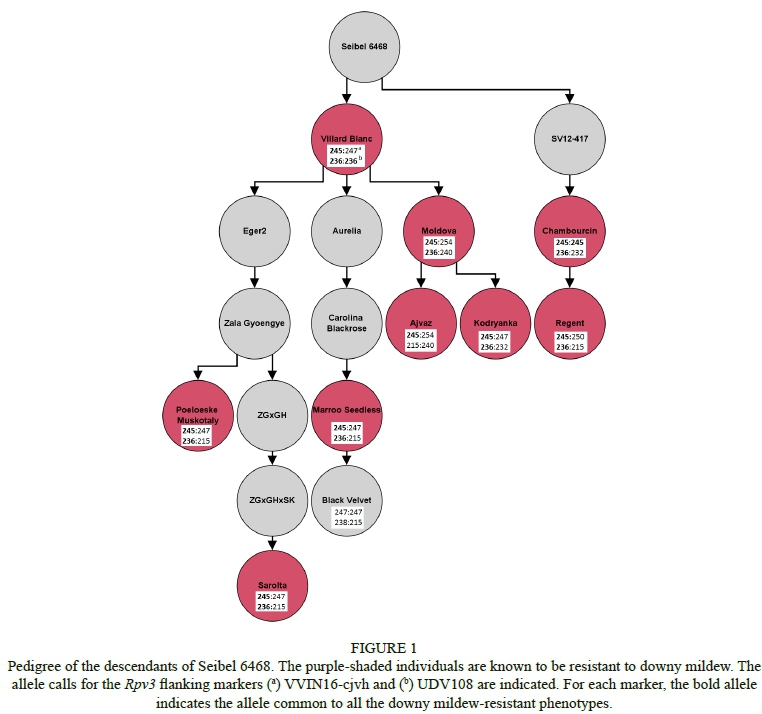
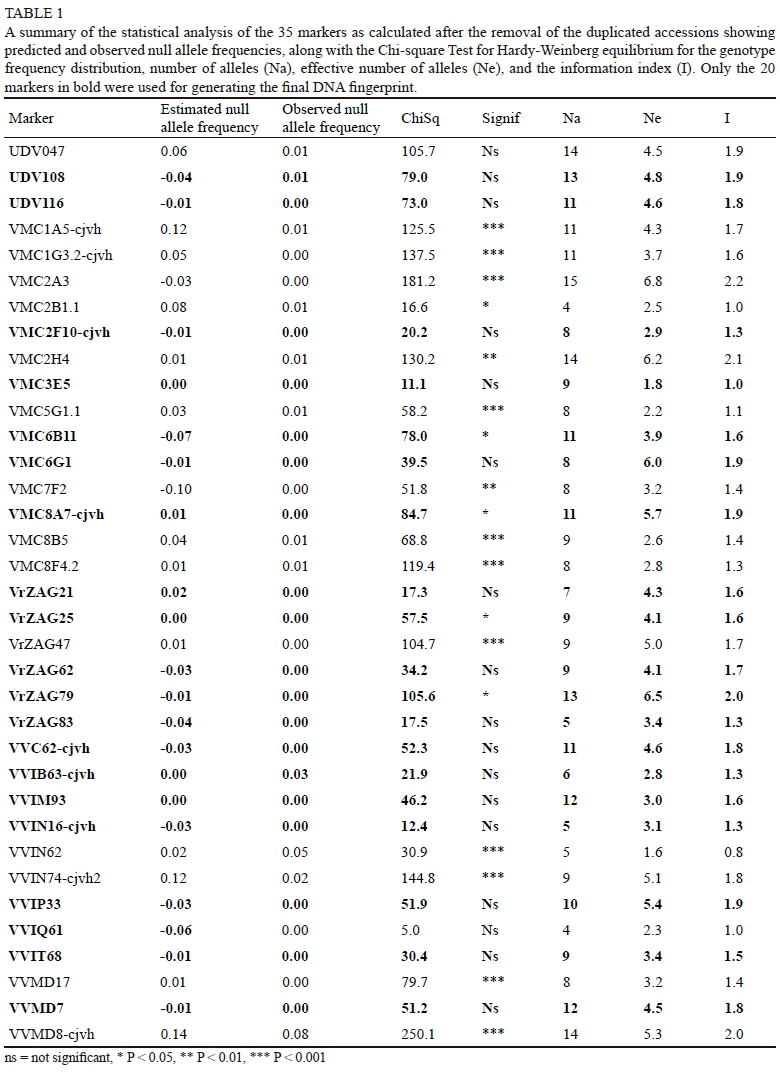
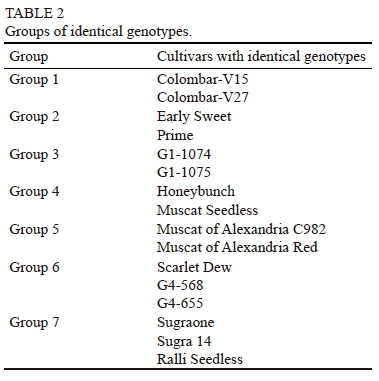
Cultivar identification by ampelography is often difficult and is sensitive to environmental conditions, thus it can be problematic to distinguish between closely related cultivars. DNA fingerprinting offers an alternative method that is not influenced by the environment and is relatively easy to perform. However, discriminating between closely related individuals can be problematic if inadequate or insufficient markers are used. Following the estimation of null allele frequencies, an initial set of 35 microsatellite markers was reduced to 20 to generate unique DNA fingerprints for the majority of 111 different grape cultivars and breeding lines. Molecular evidence was utilised to evaluate the accuracy of the reported pedigrees for several cultivars bred in South Africa (SA). The use of markers linked to known downy mildew and powdery mildew resistance loci (Rpv3 and Ren3) provided information regarding the frequency of these resistance loci in the breeding material analysed.
SSR; Vitis vinifera; pedigree; cultivar identification; fungal resistance; conserved haplotype
 Thumbnail