Evolution of Aroma Profiles and Potential in Shine Muscat Grape Berries during Ripening
Abstract
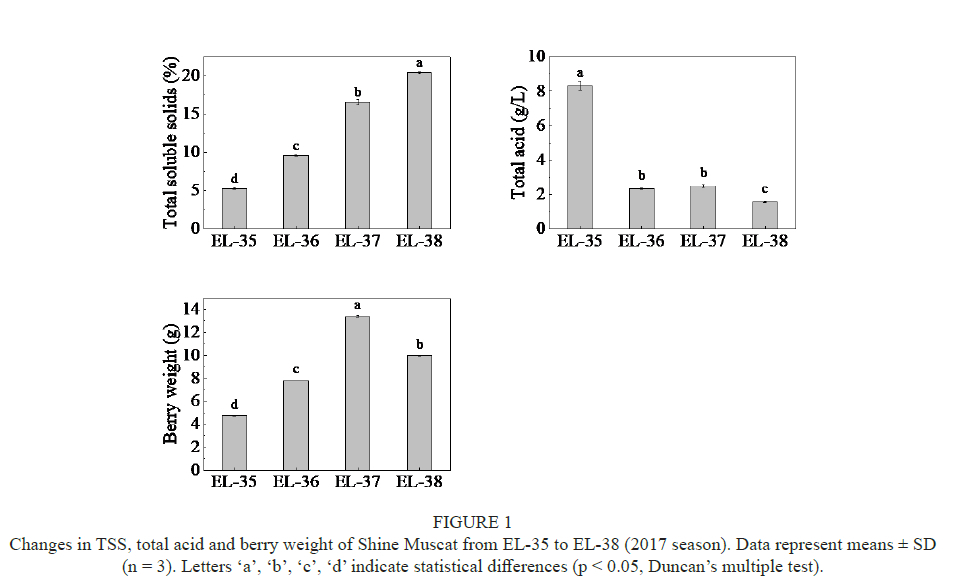
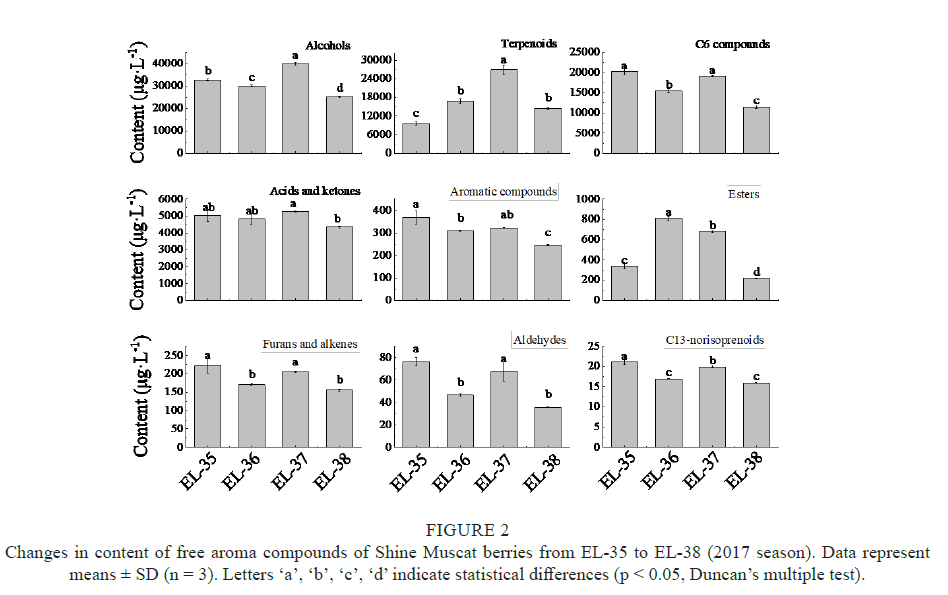
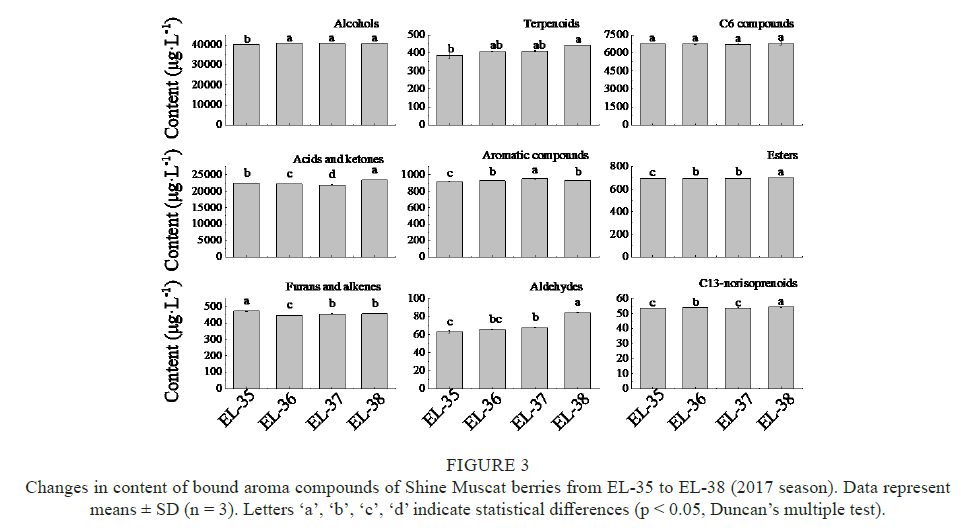
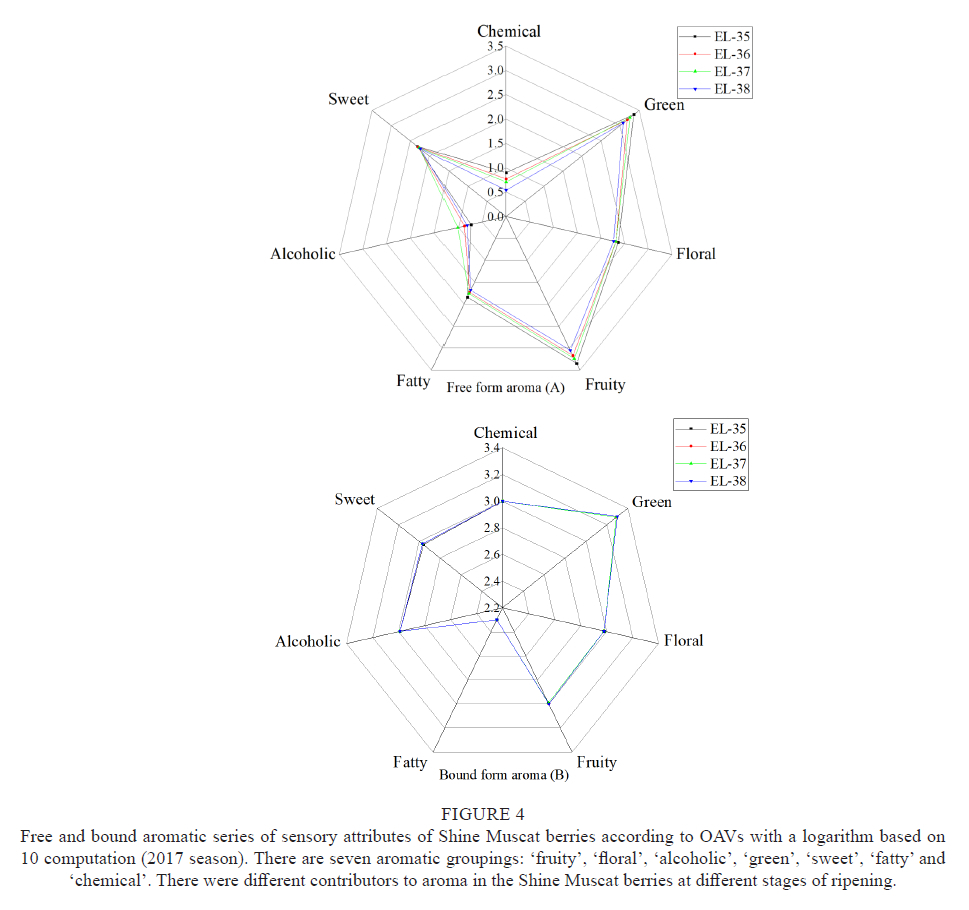
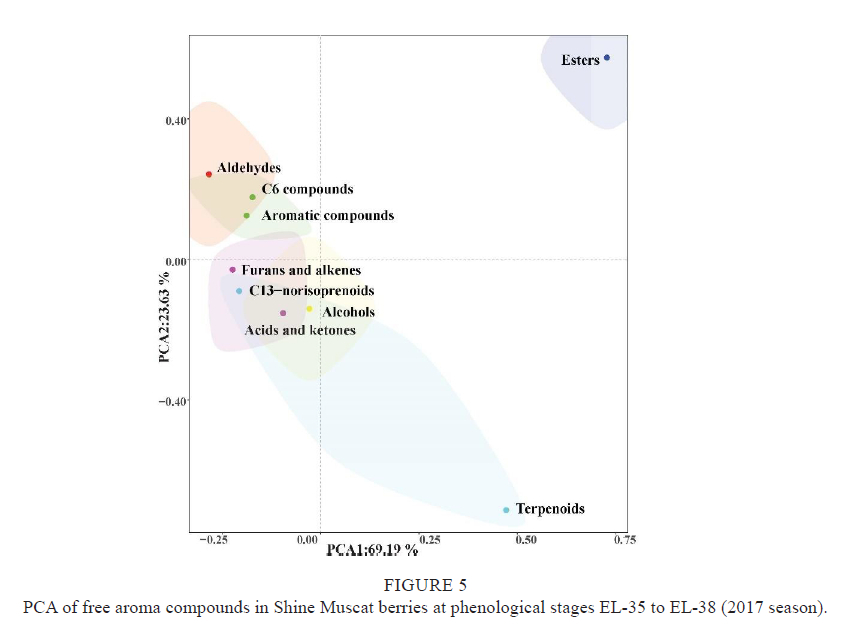
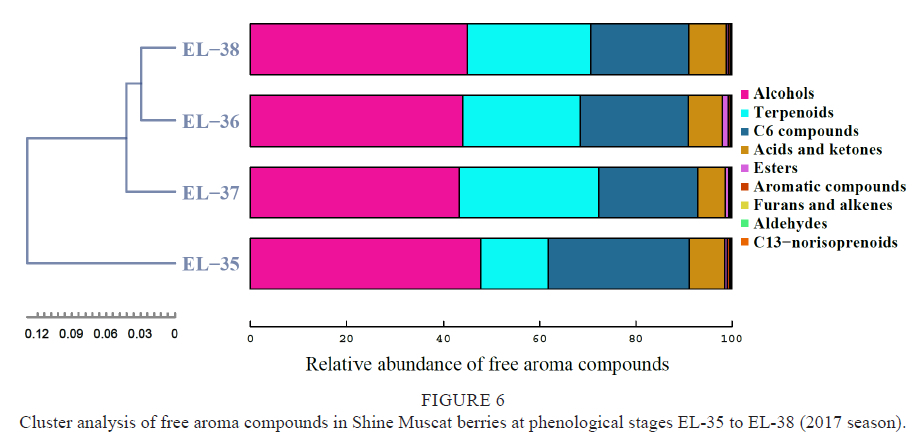
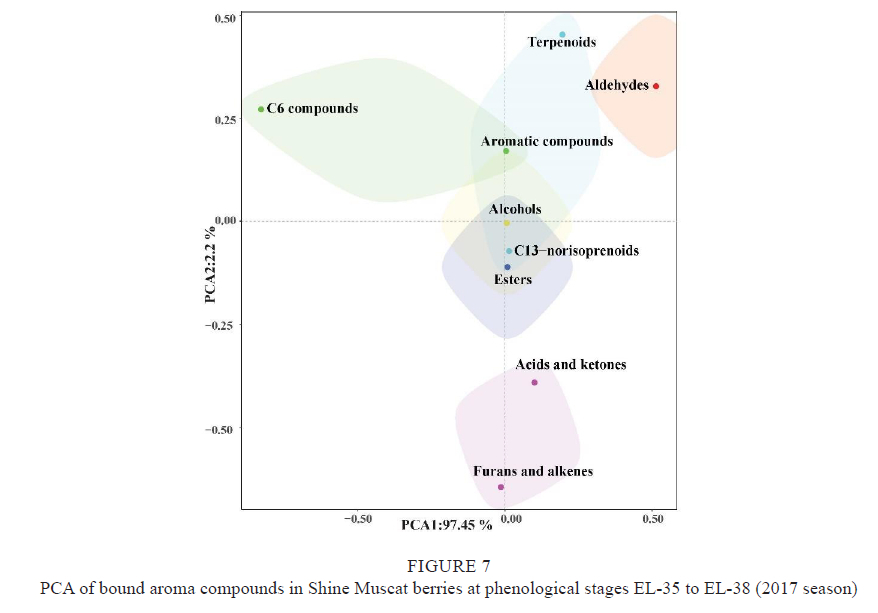
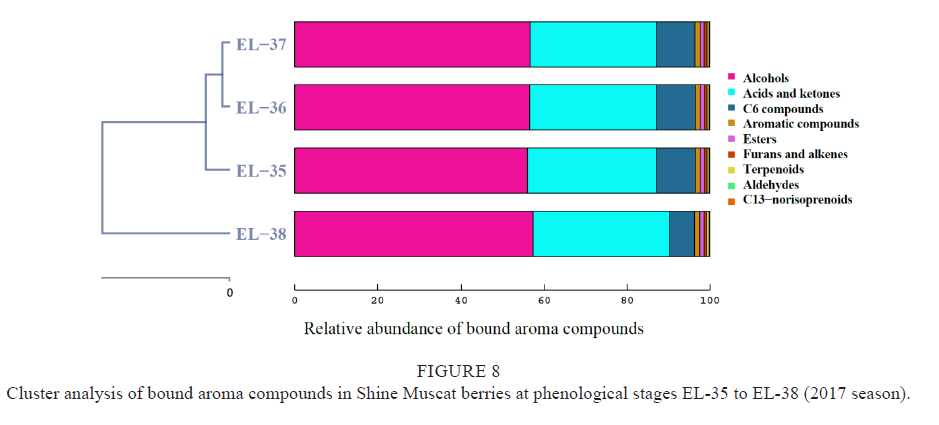
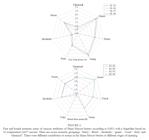
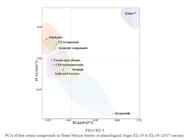
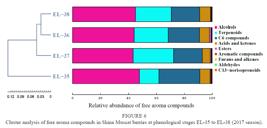
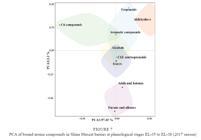
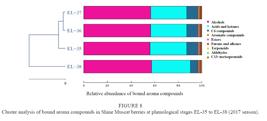
Shine Muscat, with its excellent quality and unique Muscat aroma, is emerging as one of the most profitable table grape cultivars in Asia. However, in-depth analysis of the cultivar's aroma profile before berries are harvest-ready is lacking. The aroma components and their concentrations undergo substantial changes during berry ripening, which provides an opportunity for producing some juice/wine products with special flavour. In this study, the evolution of free and bound aroma compounds in Shine Muscat grapes was analysed from EL-35 to EL-38. The main aroma attributes of harvest-ready berries were: 'green', 'sweet', 'floral' and 'fruity'. The headspace SPME-GC-MS analysis revealed that alcohols were the most abundant free and bound compounds in Shine Muscat. Furthermore, the free forms of hexanal, ß-damascenone, and (E, Z)-2,6-nonadienal determined the aroma characteristics of the grapes directly, while the bound forms of ß-damascenone, (E, Z)-2,6-nonadienal, and 2-hexanol determined the aroma of Shine Muscat that cannot to be smelled directly. Taking all indicators together, we believe that picking Shine Muscat grapes at EL-37 (when a minimum TSS of 17% has been reached) maintains its fine aroma characteristics. These results lay the foundation for the further development, utilisation and study of the aroma characteristics of Shine Muscat grapes.
Shine Muscat; free aroma compounds; bound aroma compounds; aroma potential; OAV; PCA
 Thumbnail
 Thumbnail
 Thumbnail
 Thumbnail
 Thumbnail
 Thumbnail
 Thumbnail
 Thumbnail