Evaluating Sustainable Use and Management of Winery Solid Wastes through Composting
Abstract
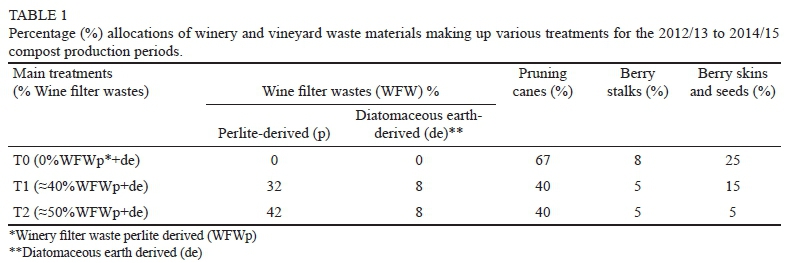
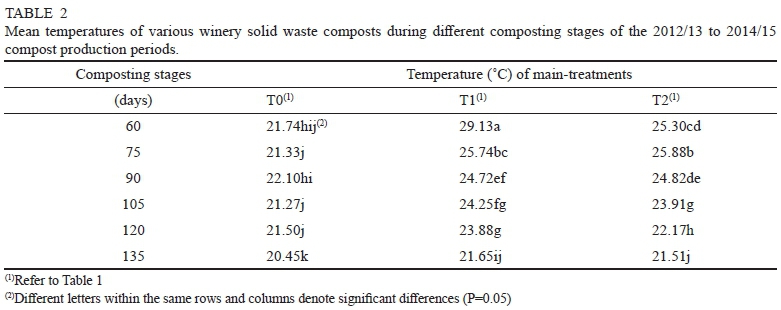
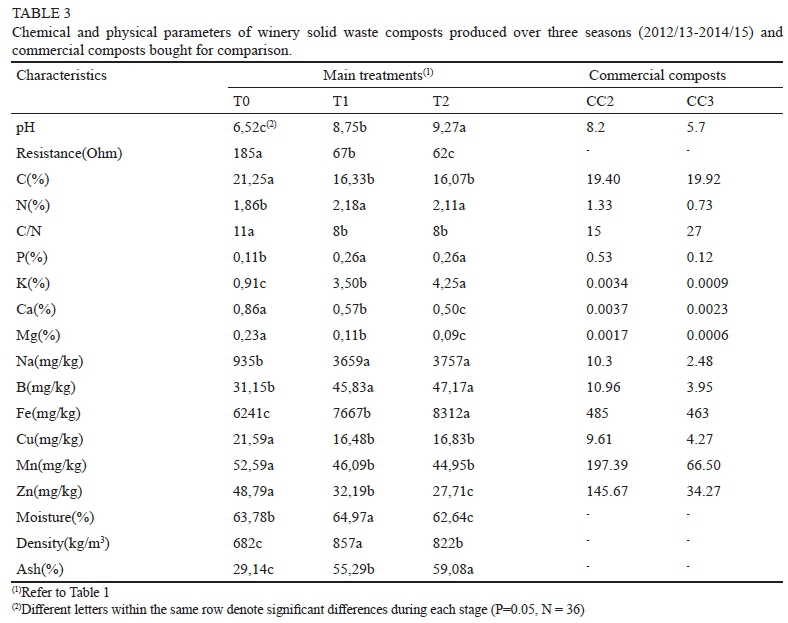
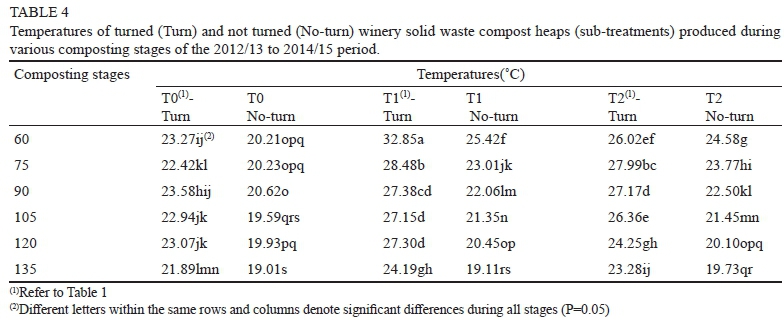
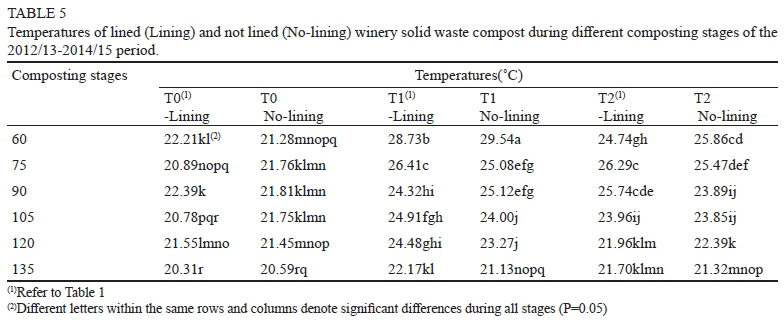
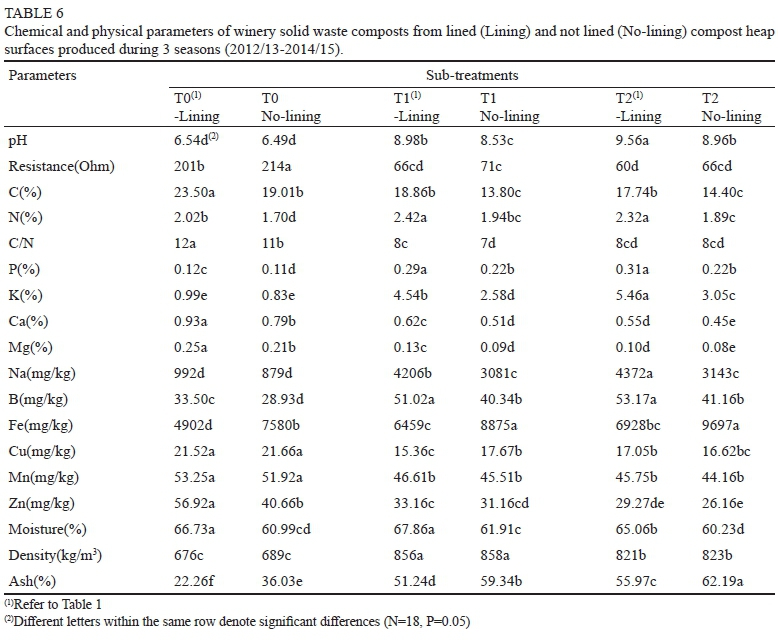
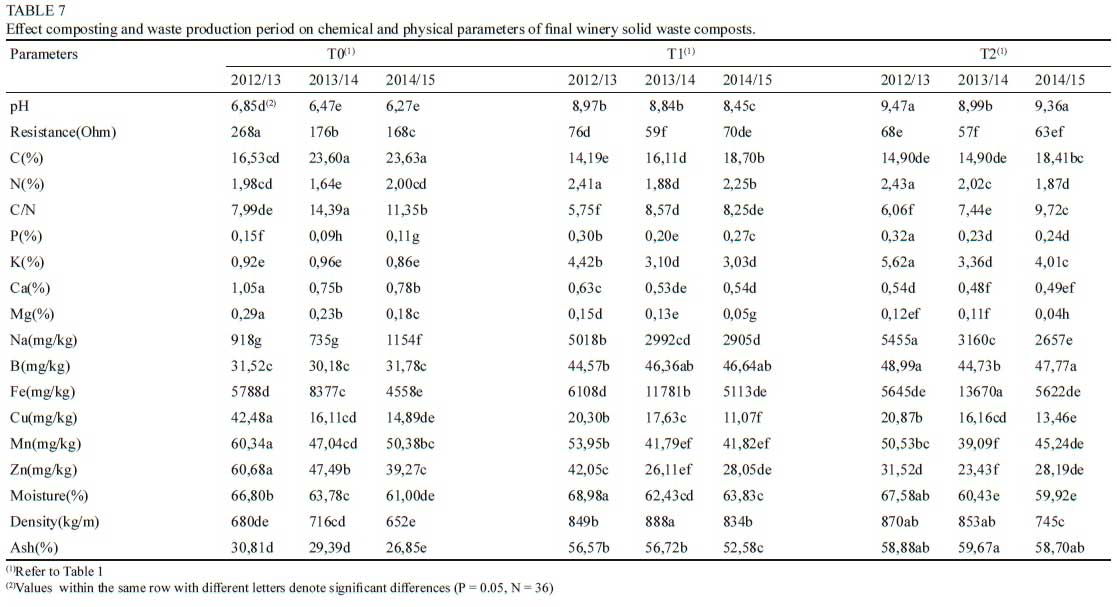
Most solid waste produced by South African wineries during wine making processes includes wine filter wastes derived from perlite and Diatomaceous earth. Wine filter wastes together with grapevine pruning canes, berry skins, seeds and stalks can be used to make compost as a waste minimization and management strategy for the wine industry. The objective of the study was to investigate the feasibility of using winery solid waste and grape products on composting. Wine filter wastes together with grapevine pruning canes and berry skins, seeds and stalks were successfully used to make compost of good quality. Compost piles that had between 40% to 50% of wine filter wastes resulted in successful composting. Turning of compost heaps increased temperatures, which was a positive factor during composting. Furthermore, some compost parameters are likely to change from season to season as composting weather conditions, quantities and probably also chemical composition of wine filter wastes generated seasonally may vary.
Bentonite lees; Compost heap; Grapevine; Winery solid waste