The impact of personal attitude, subjective norm and perceived behavioural control on entrepreneurial intention among unemployed youth in a South African township
Abstract
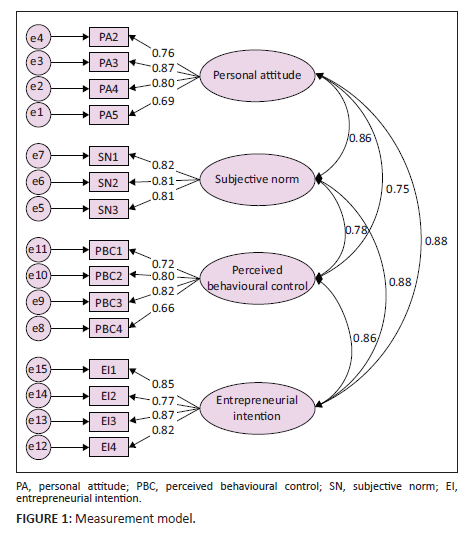
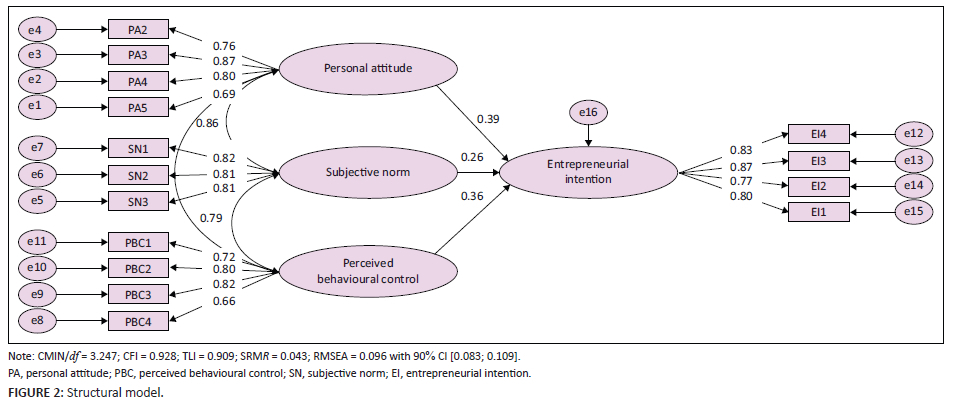
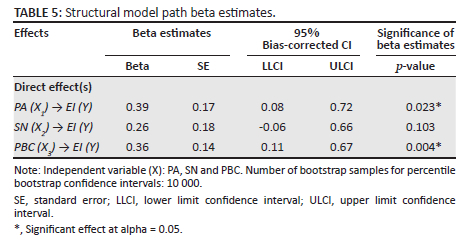
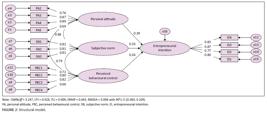
BACKGROUND: Youth unemployment continues to pose a serious socio-economic challenge in South Africa, especially within township areas. Promoting entrepreneurship has emerged as a key strategy to enhance economic participation and self-employment opportunities among the youth. AIM: The purpose of this study is to examine the extent to which personal attitudes (PA), social influence (subjective norms [SN]) and perceived behavioural control (PBC) shape entrepreneurial intentions (EIs) among unemployed young people. SETTING: The study was conducted in Mdantsane Township, located in the Eastern Cape province. METHOD: The study employed a cross-sectional quantitative research approach, involving a purposive sample of 248 unemployed youth. Data were gathered using a structured and validated questionnaire informed by the Theory of Planned Behaviour (TPB). The results were analysed through confirmatory factor analysis (CFA) and structural equation modelling (SEM). RESULTS: The results show that PA (β = 0.388, p = 0.023) and PBC (β = 0.364, p = 0.004) significantly predicted EI, indicating that positive perceptions and confidence in one's ability are strong drivers of intention. However, SN (β = 0.258, p = 0.103) did not have a significant effect, suggesting that social pressure plays a limited role in shaping EI in this context. CONCLUSION: Personal attitude and PBC significantly influence intention. Entrepreneurship programmes should therefore focus on enhancing youth self-efficacy and control perceptions while addressing structural barriers that limit agency. CONTRIBUTION: The TPB framework effectively explains EIs among unemployed youth in Mdantsane Township.
entrepreneurial intention; youth unemployment; theory of planned behaviour; structural equation modelling; township economy; South Africa
 Thumbnail
 Thumbnail