Global market opportunities for SMEs: Export/import perception and trade growth in Lesotho
Abstract
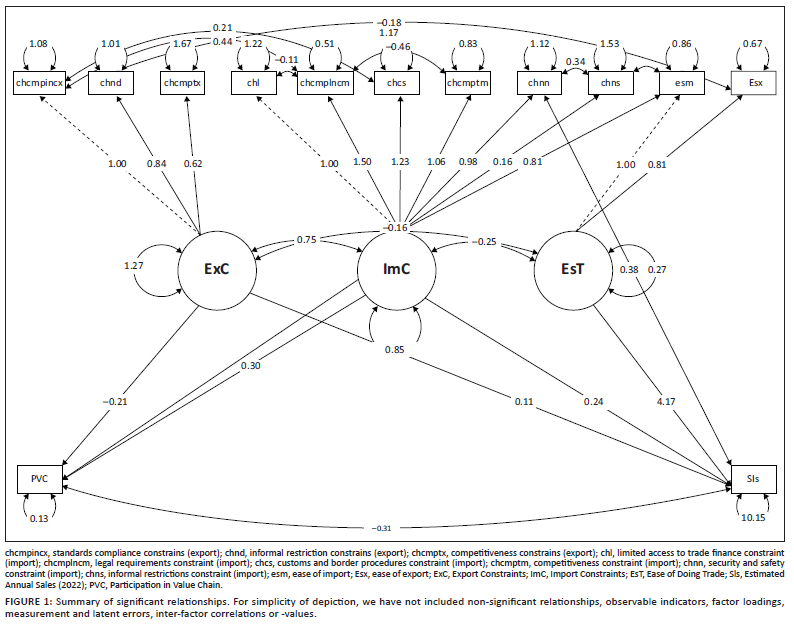
BACKGROUND: Given the economic situation of Lesotho, where small and medium-sized enterprises (SMEs) are key drivers of employment and growth, it is critical to understand the factors impacting their foreign trade operations AIM: This study examines the ease of export/import procedures on trade performance and SME participation in Lesotho SETTING: The research is based on data collected from 153 firms, 82% of which are SMEs, through a survey conducted by the National University of Lesotho - World Trade Organisation (NUL-WTO) research chair METHODS: Using structural equation modelling (SEM), the study quantifies the direct and indirect effects of perceptions of export/import ease on SME trade participation and overall trade performance RESULTS: The research reveals that favourable perceptions of export/import ease significantly impact SMEs' willingness to engage in cross-border trade. Key findings indicate that export constraints such as competitiveness, standard compliance and informal restrictions lower SME trade participation. In contrast, import constraints such as legal requirements, access to trade finance and foreign market information increase participation, highlighting the importance of niche markets and domestic competitiveness. Furthermore, the ease of doing trade positively impacts trade performance, as represented by sales CONCLUSION: Policymakers can use these findings to improve trade facilitation policies tailored to SME needs, creating a more favourable trading environment CONTRIBUTION: Methodologically, the study demonstrates how SEM can analyse complex linkages in trade dynamics, providing insights into policy initiatives to enhance Lesotho's participation in global and regional value chains and the resilience of SMEs in international markets
Lesotho SMEs; trade performance; ease of export/import; trade transaction cost; internationalisation; trade facilitations
 Thumbnail