Clearing invasive alien plants as a cost-effective strategy for water catchment management: The case of the Olifants river catchment, South Africa
Abstract
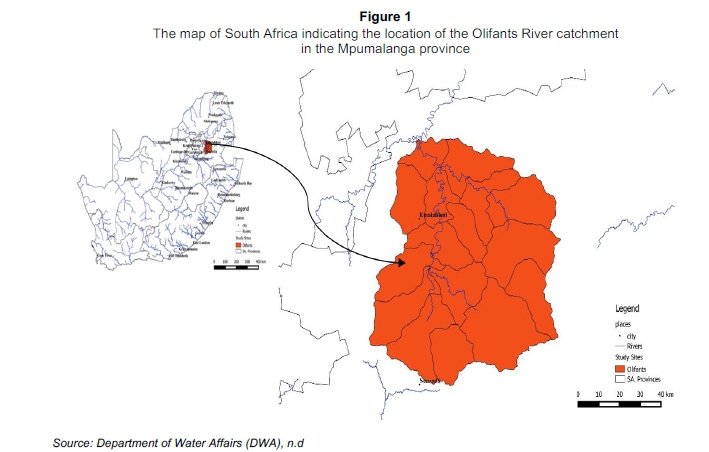
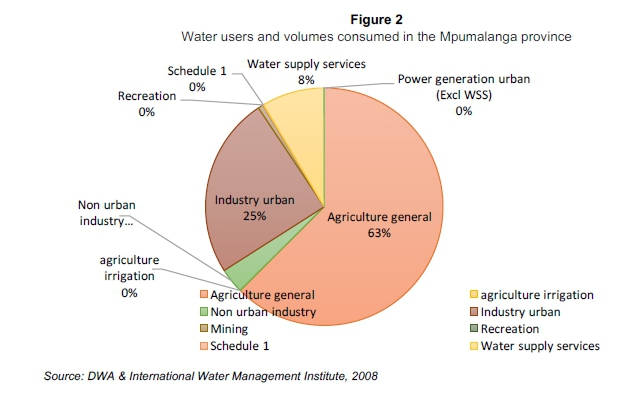
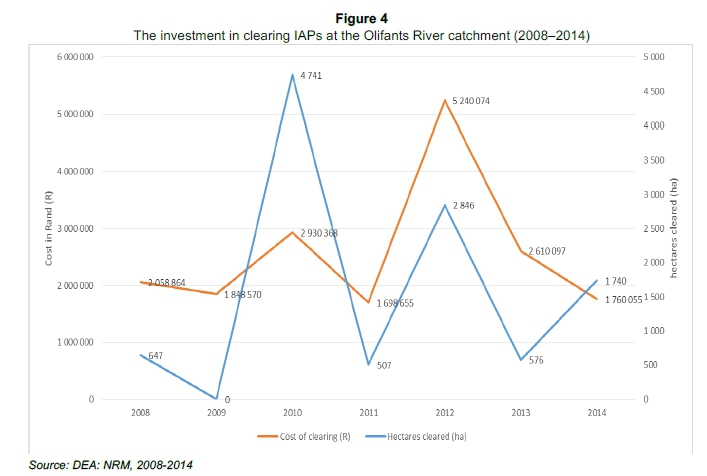
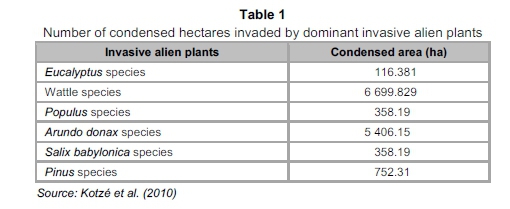
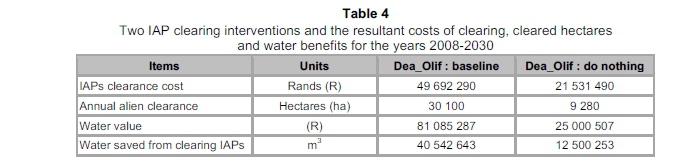
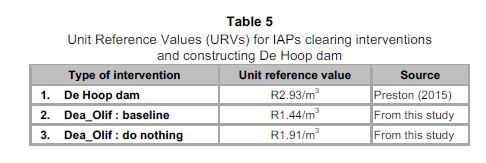
Invasive alien plants have a negative impact on ecosystem goods and services derived from ecosystems. Consequently, the aggressive spread of invasive alien plants (lAPs) in the river catchments of South Africa is a major threat to, inter alia, water security. The Olifants River catchment is one such a catchment that is under pressure because of the high demand for water from mainly industrial sources and unsustainable land-use, which includes IAPs. This study considered the cost-effectiveness of clearing IAPs and compared these with the cost of a recently constructed dam. The methods used for data collection were semi-structured interviews, site observation, desktop data analysis, and a literature review to assess the impact of IAPs on the catchments water supply. The outcomes of this study indicate that clearing invasive alien plants is a cost-effective intervention with a Unit Reference Value (URV) of R1.44/m3, which compares very favourably with that of the De Hoop dam, the URV for which is R2.93/m3. These results suggest that clearing invasive alien plants is a cost-effective way of catchment management, as the opportunity cost of not doing so (forfeiting water to the value of R2.93/m3) is higher than that of protecting the investment in the dam.
invasive alien plants; catchment management; cost-effectiveness; Unit Reference Value
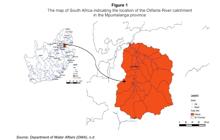 Thumbnail
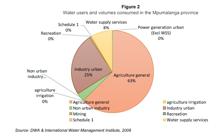 Thumbnail
 Thumbnail
 Thumbnail
 Thumbnail
 Thumbnail
 Thumbnail
 Thumbnail