Exploring men's perceptions of implicit bias and exclusion on women's advancement to senior leadership roles
Abstract
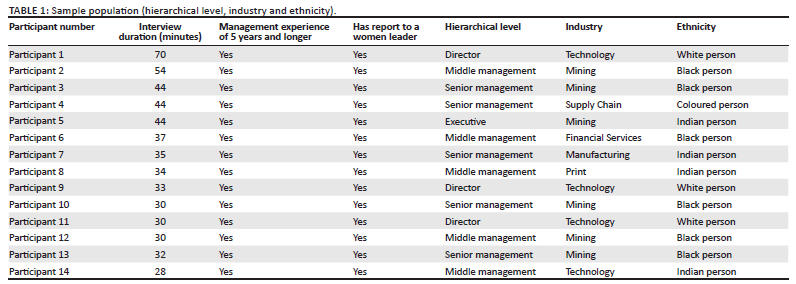
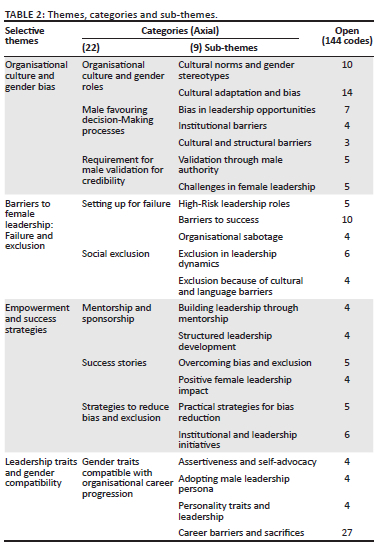
BACKGROUND: Gender bias and exclusionary practices continue to hinder women's progression into senior leadership, particularly in male-dominated sectors. Understanding men's perceptions of these biases is crucial for addressing unseen barriers and promoting an inclusive leadership environment AIM: The aim of the research was to explore male perspectives on implicit bias and exclusion that affect women's career advancement SETTING: The study focused on male-dominated industries in South Africa, including technology, mining, supply chain, manufacturing, financial services and print, to offer insights into how cultural norms and industry-specific biases influence organisational practices METHODS: A cross-sectional qualitative research approach was used, involving semi-structured interviews with male participants from diverse backgrounds within male-dominated industries. Thematic analysis, informed by the Gender Bias Scale for Women Leaders, was conducted to identify patterns of bias and potential strategies for inclusion RESULTS: The findings revealed four primary themes: organisational culture and gender bias, barriers to female leadership, empowerment strategies and leadership traits compatible with career progression. Key insights included the role of male validation, the impact of cultural expectations on Black women and the need for inclusive mentorship and re-entry programmes in physically demanding sectors CONCLUSION: The research findings underscore the importance of culturally sensitive, intersectional policies that recognise and address unique challenges faced by women, particularly black women, in leadership pathways CONTRIBUTION: Organisations should consider leadership criteria and implement targeted support systems to build a more inclusive environment that values diverse leadership qualities
gender bias; implicit bias; male perspectives; leadership advancement; intersectionality; organisational culture; diversity policies