Finance-growth nexus in sub-Saharan Africa
Abstract
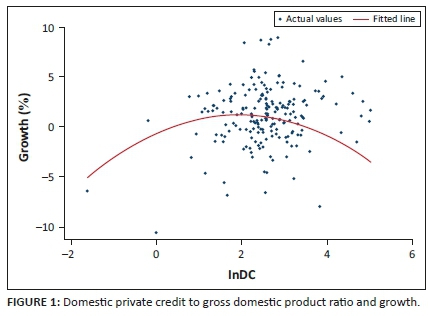
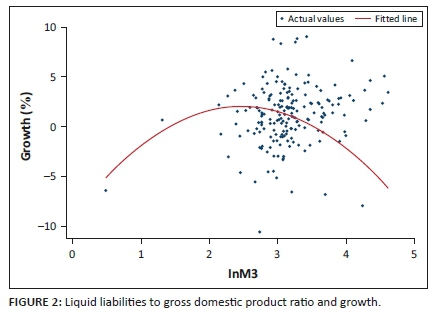
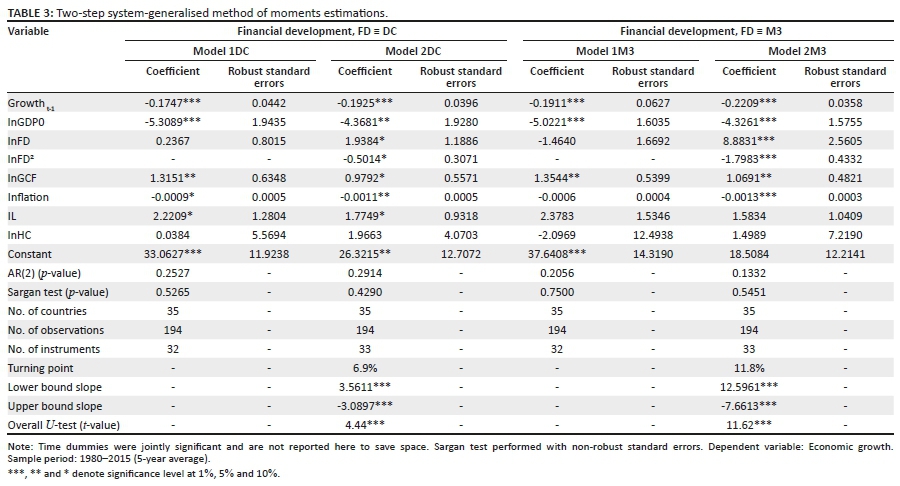
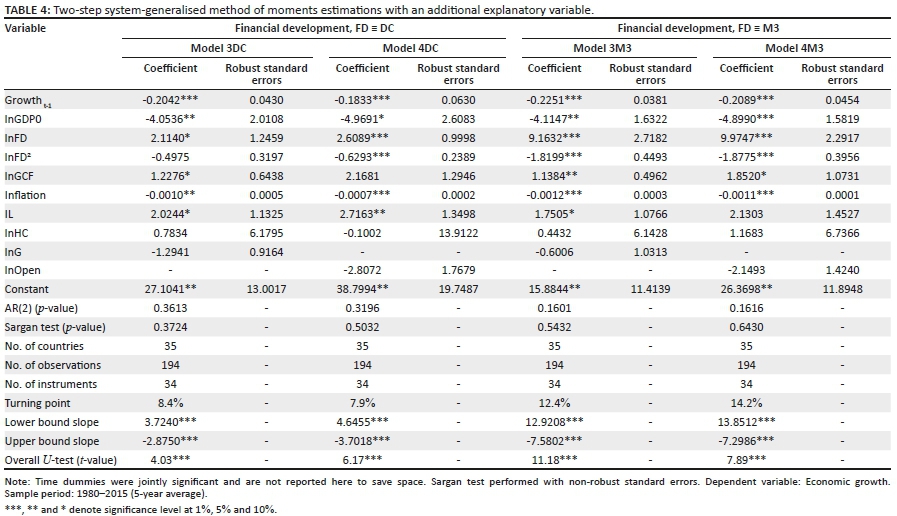
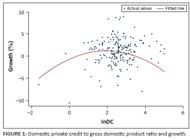
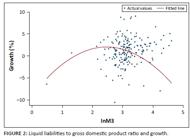
BACKGROUND: There is now significant empirical literature suggesting that finance is good for growth only up to a threshold level of financial development, becoming harmful after that level, in developed and developing countries. AIM: This study extends this literature that investigates non-linearities on the finance-growth link, by testing the inverted U-shape hypothesis in sub-Saharan African countries, which are among the least developed ones. SETTING: 36 countries from sub-Saharan Africa over the period 1980-2015. METHOD: Estimation of quadratic dynamic panel data models by system-generalised method of moments. RESULTS: Empirical results show that there is a hump-shaped relationship between financial development and economic growth in sub-Saharan African countries. CONCLUSION: Results suggest that the hypothesis of 'too much finance harms economic growth' also holds for low-income and less developed countries, but for much lower threshold levels of financial development than those of more developed and higher-income countries. As for policy implications, measures to strengthen finance quality and other growth-enhancing strategies need to be undertaken, rather than increasing finance size.
Financial development; economic growth; sub-Saharan Africa; non-linearity; dynamic panel model
 Thumbnail
 Thumbnail