Intra project team disagreement, conflict communications, and team performance in cross-functional new product project teams: a decision-making quality perspective
Abstract
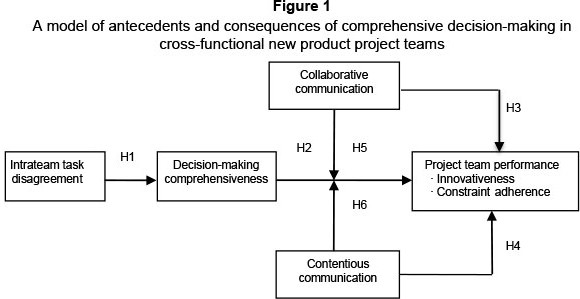
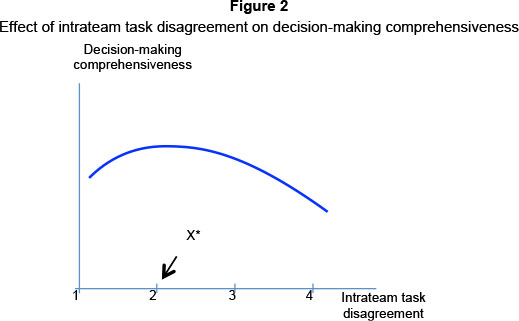
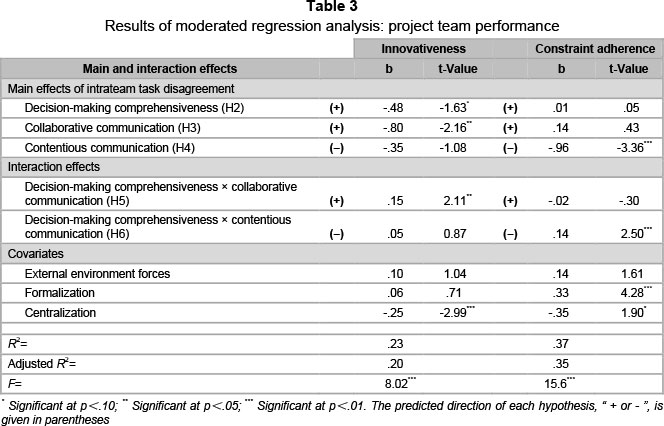
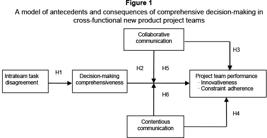
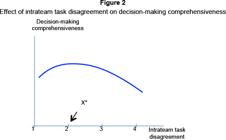
This paper develops and examines a model of the antecedents and consequences of decision-making comprehensiveness during the new product development process. This model suggests first a concave relationship between intrateam task disagreement and decision-making comprehensiveness. It also conjectures that conflict communications influence the effectiveness of decision-making comprehensiveness on new product project teams' performance. An empirical test of the proposed framework involves a survey of 220 cross-functional new product project teams. The findings show that an inverse U-shaped relationship exists between a project's intrateam task disagreement and its decision-making comprehensiveness. It also indicates that collaborative communication has a negative effect on innovativeness, whereas contentious communication adversely affects constraint adherence. However, decision-making comprehensiveness partially moderates the relationships between conflict communications and project team performance. Some managerial and research implications of the findings were also discussed in this study.
conflict communications; project team performance; decision-making
 Thumbnail
 Thumbnail