Modelling effect of valuable resources on franchise outlet performance: Dynamic sensing capability as mediator
Abstract
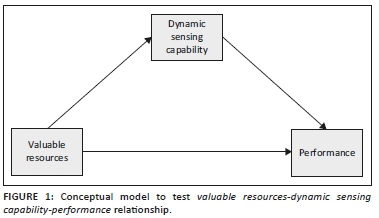
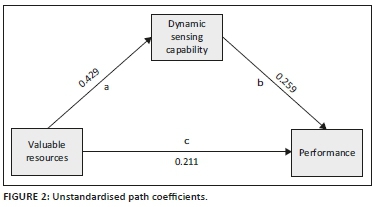
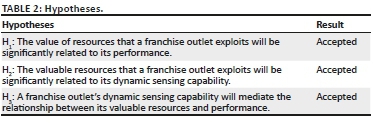
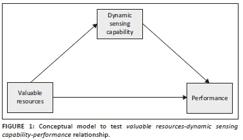
BACKGROUND: Competitive advantage and superior firm performance depend on resources and dynamic capabilities AIM: This study aims to provide insight into the franchising industry where research on the value-dynamic sensing capability-performance relationship as part of the resource-based theory (RBT) seems to be novel. Drawing on the RBT, this study examines how valuable resources and dynamic sensing capability impact franchise outlet performance SETTING: Based on a cross-sectional design, a sample of 224 South African franchise outlet managers and owner-operators in the fast food and retailing categories was surveyed METHODS: Hypotheses were tested using a single-level structural equation model for value, dynamic sensing capability and performance RESULTS: The results contribute to research on RBT in the context of franchises by providing support for the assumption that firm resources and capabilities improve performance CONCLUSION: The findings are expected to provide a strong base from which franchise managers and owner-operators can strategise for competitive advantage in an emerging economy like South Africa
Resource-based theory; resource-based view; strategy; dynamic sensing capability; performance; franchises
 Thumbnail
 Thumbnail