Exploring the necessity of corporate dynamic capability and sustainable performance
Abstract
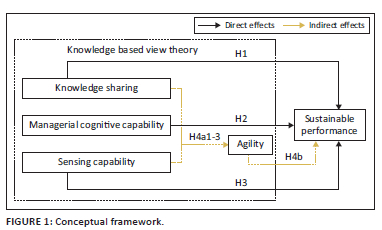
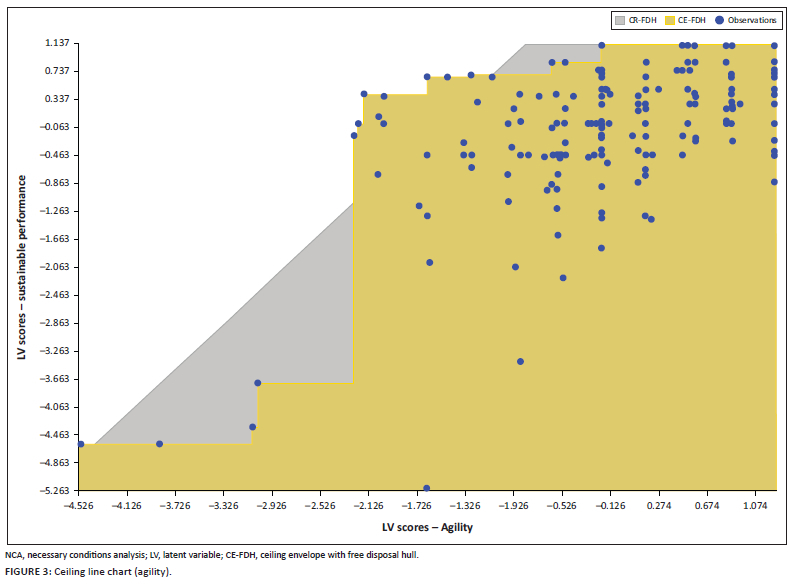
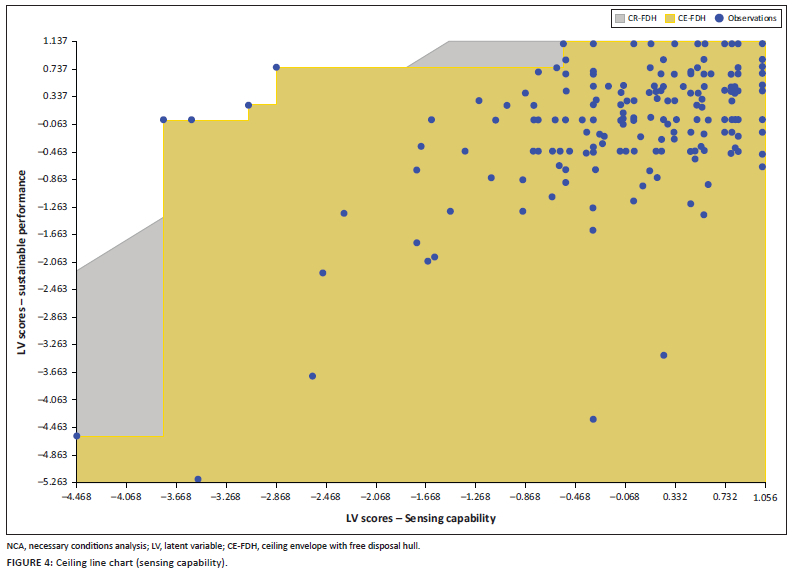
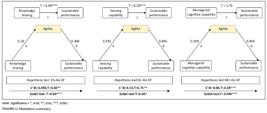
BACKGROUND: Many studies navigated corporate dynamic capability's direct and indirect effects on sustainable performance. However, there is an empirical literature conundrum regarding the sufficient and necessary condition of corporate dynamic capability that can enhance the sustainable performance of microfirms AIM: The main goal of this study is to explore the necessary and sufficient conditions for corporate dynamic capabilities that support sustainable performance and to determine if agility mediates the relationships between knowledge sharing, managerial cognitive capabilities, sensing capabilities, and sustainable performance SETTING: This study surveyed 440 Tanzanian dairy microfirms between July 2021 and January 2022 METHOD: Partial least squares-path modeling (PLS-PM) and necessary conditions analysis (NCA) were applied from the data collected from 602 managers and employees of microfirms in Tanzania RESULTS: The study confirmed that a higher degree of agility, and sensing capability among employees is necessary and sufficient for achieving sustainable performance of microfirms. Agility possibly confounds the relationships between sensing capability, knowledge sharing and managerial cognitive capability on sustainable performance CONCLUSION: Knowledge sharing, agility and sensing capability are crucial for sustainable performance, while other dynamic capability factors are not critically sufficient and necessary for growth CONTRIBUTION: The study offers valuable insights by identifying critical levels of agility, knowledge sharing, managerial cognitive capability, and sensing capability sufficient for sustainable performance in dairy microfirms. It also provides empirical evidence of agility's complementary role in mediating the effects of knowledge sharing, sensing capability, and managerial cognitive capability on sustainable performance
corporate dynamic capability; sustainable performance; microfirms; Tanzania; necessary conditions analysis
 Thumbnail
 Thumbnail
 Thumbnail
 Thumbnail
 Thumbnail