Hybrid retirement strategy in South Africa
Abstract
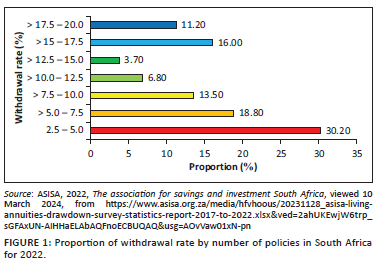
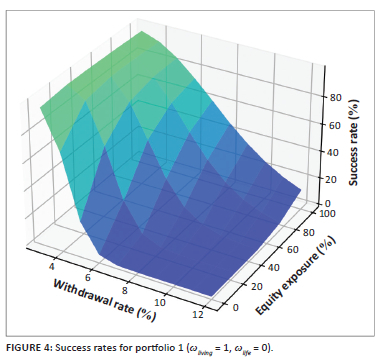
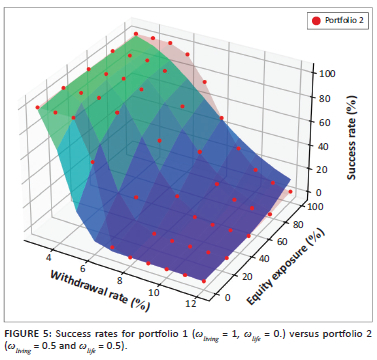
BACKGROUND: Many retirees in South Africa face the challenge of either outliving their retirement savings or living below their means. Studies suggest a 'safe' withdrawal rate of between 4% and 5%, which is below the average fund size-weighted drawdown rate of approximately 6.66% AIM: To provide a scientific basis for the success rate of a 'hybrid' retirement strategy, whereby a retiree invests a proportion of their savings in a life annuity and the remaining proportion in a living annuity, to increase the success rate for South African retirees SETTING: Historical asset class returns (equities, bonds and inflation) for South Africa were sourced for the period 1900-2020 METHOD: Bootstrap sampling of historical asset returns was employed to simulate 10 000 random scenarios to investigate the success rate of various compositions of the 'hybrid' retirement strategy RESULTS: The success rate of all 'hybrid' portfolio compositions is significantly greater than the success rate of a pure living annuity when the withdrawal rate is less than 8% CONCLUSION: In a South African context, a 'hybrid' retirement portfolio increases the probability of success for retirees withdrawing less than 8% from their portfolio - which constitutes approximately 50% of the current annuatised population - and may increase the inheritance of a retiree's heir CONTRIBUTION: Where other studies have focussed solely on the success rate of a living annuity, we have shown that a 'hybrid' retirement strategy increases a South African retiree's likelihood of retiring successfully when the withdrawal rate is less than 8%, which is approximately 50% of the annuatised population
retirement; living annuity; life annuity; bootstrap simulation; portfolio management
 Thumbnail
 Thumbnail
 Thumbnail
 Thumbnail
 Thumbnail
 Thumbnail
 Thumbnail
 Thumbnail
 Thumbnail