Participatory video as protest methodology: Student activists reaffirm the social dimension of sustainability in South African universities
In this article, we unpack the motifs of two participatory videos created by 12 African student activists at the University of the Free State, who were co-researchers in the 'Universities as Sustainable Communities' project (2021-2023). While one video highlights the importance of activism and collective action, the other underscores the values of togetherness and unity for transforming universities into sustainable communities. Both videos demonstrate what is possible when students are enabled, through participatory research, to exercise their political, epistemic and narrative capabilities and agency freedom in a different way. Importantly, the motifs echo the principles espoused in the African moral philosophy of Ubuntu and the African political philosophy of Ujamaa to reaffirm the importance of the social dimension of sustainability in South African universities.
universities; student activists; participatory research; social sustainability
Participatory video as protest methodology: Student activists reaffirm the social dimension of sustainability in South African universities
Mikateko MathebulaI; Carmen Marinez-VargasII; Faith MkwananziIII; Bertha KibonaIV
IUniversity of the Free State
IILancaster University
IIIUniversity of the Free State
IVCouncil for the Development of Social Science Research in Africa
In this article, we unpack the motifs of two participatory videos created by 12 African student activists at the University of the Free State, who were co-researchers in the 'Universities as Sustainable Communities' project (2021-2023). While one video highlights the importance of activism and collective action, the other underscores the values of togetherness and unity for transforming universities into sustainable communities. Both videos demonstrate what is possible when students are enabled, through participatory research, to exercise their political, epistemic and narrative capabilities and agency freedom in a different way. Importantly, the motifs echo the principles espoused in the African moral philosophy of Ubuntu and the African political philosophy of Ujamaa to reaffirm the importance of the social dimension of sustainability in South African universities.
Keywords: universities, student activists, participatory research, social sustainability
Introduction: Situating dimensions of sustainability in higher education literature
The paradigm of sustainable development or sustainability rests on three interconnected conceptual dimensions: the economic, environmental and social (Purvis et al., 2019). In simple terms, the economic dimension brings attention to the importance of long-term economic growth, monetary capital and maintaining systems of production that meet current consumption levels without compromising future consumption needs (Basiago, 1999). The environmental dimension highlights the importance of establishing ecosystem integrity and stability, including strategies for maintaining systems of natural resource extraction, use, and regeneration (Basiago, 1999). The social dimension underscores the importance of creating systems of social organisation that alleviate poverty, to enable individuals, groups, and societies to exist together in harmony through time (Barron et al., 2023; Basiago, 1999). Together, these dimensions of sustainability challenge how we think about the notion of material progress, and they bring attention to the "social and psychological costs associated with the dominance of instrumental rationality" (Eckersley, 1992, pp. 17-18). As such, these interdependent dimensions inform a view of sustainability as an ideal and a process towards human socio-economic well-being that is pursued harmoniously with the natural environment, usually without any definite judgement on a hierarchical relationship between the dimensions (Gehringer & Kowalski, 2023).
Although debates about the meaning and implementation of sustainable development are informed by various philosophical and ethical interpretations, most interpretations acknowledge that the dimensions of sustainability are intertwined (Hattingh, 2002). However, there remain different ways of operationalising and approaching sustainability (Mensah & Ricart Cassadevall, 2019; Purvis et al., 2019). While some scholars argue that all three dimensions should be equally prioritised and simultaneously pursued (see Bondarchika et al., 2016; Boyer et al., 2016; Moldan et al., 2012), others question whether environmental sustainability is a prerequisite of economic growth and poverty alleviation, or if economic growth and poverty alleviation come first before environmental sustainability can be addressed (Basiago, 1999). This divergence of perspective is evident in discussions on sustainability in the context of higher education. For example, higher education literature that focuses on 'education for sustainable development' (ESD) often addresses how universities should enable graduates to confront global sustainability problems in their professional and personal lives (see Price et al., 2019; Saudelli & Niemczyk, 2022; Sedlacek, 2013; Zilahy & Huisingh, 2009). However, much of this literature is based on research carried out in universities in Europe and North America, and it often lacks an intersectional view (Murray, 2018). This means that the environmental dimension of sustainability is often prioritised, especially in studies that address curriculum change (Farag & Atkas, 2024; O'Flaherty & Liddy, 2017). For example, in their systematic review of literature on sustainability in engineering education, Thürer et al. (2018) found that most studies focused on environmental issues, whereas questions related to the social, economic, political, and cultural aspects of sustainability were given minimal attention. This can lead to performative environmentalism where universities implement 'green' initiatives based on narrow, routinised operationalisations of sustainability (Lozano et al., 2015; Zhou, 2024). However, there are many programmes and initiatives, including in African universities, where the social dimension of sustainability is considered as equally important to the environmental and economic (see Lotz-Sisitka et al., 2015).
In contrast to much literature on sustainability in higher education, our article offers reflections on sustainability that explicitly reaffirm the social dimension (Hudler et al., 2021). We are aware that the social dimension of sustainability is particularly difficult to define and operationalise in comparison to other dimensions (Lempinen, 2019). This article should thus be read as a reflexive commentary on possible options for how to approach sustainability in the context of higher education. This commentary is based on a bottom-up process of knowledge creation and sharing that allowed individuals to reflect on their social, environmental, political, economic, and cultural realities. Such a bottom-up process entailed open dialogue and debate on the concept of sustainability, but also how it can be approached and operationalised when informed by contextual experiences and indigenous African values, norms, and traditions that individuals have reason to value. In our project, we therefore aimed for our research team, but especially the student activists, to have the space and time to formulate their own notions of sustainability based on what they know intuitively, and what they know drawing from academic literature, news media and everyday conversations, but also from indigenous worldviews and lived experience.
Following this introduction, we discuss the importance of acknowledging Africa as an epistemic site for sustainability, and then we map out the theoretical underpinning and approach to our research project, before we explain why we see participatory video as protest methodology. Thereafter, we describe the content of the participatory videos and discuss what the videos say about sustainability. We then provide an interpretation of the videos' motifs, including reflections on the idea that social sustainability ought to be foregrounded as a starting point for transforming universities into sustainable communities. We conclude the article with summative reflections.
Africa as an epistemic site for sustainability
Africa is an epistemic site that through coloniality has experienced not only indigenous people's knowledge being pushed to the margins (Ndlovu-Gatsheni, 2018a) but also the eradication of many indigenous practices. Among these practices are those related to the environmental dimension of sustainability, which are informed by historical cultural practices and spiritual beliefs (Egri, 1997; Spangler 1993). For example, the San, the first inhabitants of Southern Africa, followed a hunter-gatherer diet, thus arguably practising 'sustainability' by living in harmony with the earth without farming (Lee, 1979). We now know that most forms of large-scale farming and agriculture are unsustainable because they contribute to resource degradation and climate change (Chowdhury et al., 2022; Olanipekun et al., 2019). There are complex factors and dynamics that contributed to the San's hunter-gatherer lifestyle at the time, and the concept of sustainability only entered the Zeitgeist around the 1970s. Nevertheless, many ancient civilisations held the belief that planetary health and the well-being of the Earth's inhabitants are inextricably linked, and therefore engaged in less extractive ways of food production and consumption (Hughes, 1975). Moreover, many religious tenets, philosophies, and traditional beliefs across the world, including Africa, teach the importance of living in harmony with nature and with one another - which is the "logical essence" of sustainability (Mebratu, 1998, p. 518). It is therefore important to acknowledge that historical and contemporary examples of more sustainable relationships between people and planet exist across the world, and that examples of what we might now consider as sustainable practices are not new to Africa.
However, African worldviews are susceptible to neglect or being overlooked as valid sources of knowledge, so they seldom feature as a basis for thinking about sustainability in general, let alone in the context of higher education. Instead, European memory is looked at as the basis for defining valued ways of being, doing and learning about sustainability in Africa (Wa Thiong'o, 2004). This not only leads to indigenous worldviews and local knowledges being undermined, but it perpetuates the dominance of Eurocentric thinking in debates about sustainability (Grosfoguel, 2013). As Ramose (2007) suggests, the realities of individuals and groups should not be overshadowed by ontological denial masquerading as universal truths, and so Eurocentric perspectives should not be used to uncritically construct sustainability narratives for the rest of the world.
As the discussion of our findings will show, the participatory videos produced by student activists reflect a sustainability narrative that strongly foregrounds arguments that are at the core of literature on the social dimension of sustainability, or social sustainability. At a macro level, literature on social sustainability frequently makes causal links between historical events and processes - such as colonisation and chronic injustice - with present conditions like poverty, and environmental decay (Barron et al., 2023; Basiago, 1999). It thus explains how large-scale environmental degradation and climate injustice are rooted in colonialism, and perpetuated through "mundane and institutionalized ways of subalternization of non-Eurocentric, non-masculinist, and non-capitalist understandings of climate, ecology, and nature-society relations" (Sultana, 2024, p. 9). At a micro level, literature on social sustainability is concerned with values and practices that make communities thrive and that promote well-being, as defined by the individuals who live and work within those communities (Woodcraft et al., 2011). Therefore, social cohesion, social networks, and norms of reciprocity feature as important components of this dimension of sustainability (Barron et al., 2023). From this perspective, sustainable communities constitute spaces for long-term human engagement that is equitable, inclusive, connected although diverse (Bramley & Power, 2009) and sustainable in the broad sense of the term (across all three dimensions).
It is therefore important to emphasise that: 1) At its core, social sustainability is concerned with mitigating the effects of the relationship between sustained colonisation, sustained poverty, and sustained natural resource exploitation (Basiago, 1999); 2) Highlighting social sustainability in this article does not imply that African views on sustainability neglect environmental concerns or are only concerned with societal dynamics, but it does provide an example of how some university students in Africa are thinking about approaches to sustainability in the context of higher education; 3) We draw on Sen's (2009, p. 249) argument that "the environment is not only a matter of passive preservation, but also one of active pursuit". We therefore think of 'the environment' as including the results of human creation and see environmental sustainability as more than just conserving preexisting natural conditions (Sen, 2009). In other words, we believe that steps can be taken not only to stop environmental destruction, but also to support environmental flourishing through constructive human intervention across any dimension of sustainability.
Agency freedom refers to the effective opportunity to "achieve whatever the person, as a responsible agent, decides that they should achieve" (Sen, 1985, p. 204). Agency achievement, on the other hand, is the realisation of one's choices and capabilities, or the attainment of goals pursued by people - individually and collectively (Sen, 1985). As such, agency achievement is contingent on agency freedom, or the effective opportunity to pursue one's goals, aspirations, and interests (Sen, 1995; also see Alkire & Deneulin, 2009) in a social context. When it comes to sustainability in higher education, agency freedom is crucial for students to engage in activism, to express their concerns, to advocate for change, and to initiate solutions but also contribute to debates about the meaning of sustainability. Agency freedom is also crucial for enabling students to decide what they want to advocate for, and what they aspire to achieve for themselves and for others through higher education. Therefore, supporting students' agency freedom entails recognising them as epistemic contributors (Fricker, 2015) who as evidenced in our project, can make valuable input to our thinking about sustainability in higher education; so that instead of seeing them as passive bystanders, we learn from how they think about sustainability and how they might use this understanding to initiate change (Murray, 2018).
However, for agency freedom to be supported, an inclusive environment that allows a broad range of voices from diverse backgrounds and perspectives to contribute to knowledge and action on sustainability is needed. Such an environment should make room for African worldviews that students have reason to value (Mathebula & Martinez-Vargas, 2023) to better understand how students learn about and promote sustainability in an African higher education context. For these reasons, we used participatory research in our project 'Universities as Sustainable Communities'. We foregrounded the views of student activists because we were interested in unearthing what we can learn about sustainability from their own local and African perspectives, especially when they are free to imagine alternative educational futures, articulate their own understanding of sustainability, to voice their concerns, criticise policies and engage in activism - including through protest -without fear of reprisal.
We thus situate our research under a participatory paradigm (Heron & Reason, 1997) aimed at unsettling positionalities between researchers and participants. This approach fosters agency freedom (Sen, 1985) in a way that could enhance the political capabilities of the student activists (Cin & Süleymanoğlu-Kürüm, 2020; Mkwananzi et al., 2023), but also their intersecting narrative and epistemic capabilities (Walker & Mathebula, 2020). According to Masungo (2024), political capabilities involve the freedom to express political ideas, and engage in protest. These capabilities include opportunities for participation, dialogue, practical reasoning, voice, emotional expression, contextual knowledge and physical wellbeing (Masungo, 2024). With this freedom, individuals are often able to tell their stories or deploy their narrative capital to be heard and acknowledged, which Watts (2008) refers to as narrative capabilities. Epistemic capabilities encompass effective freedoms to be both a receiver and a giver in spaces of knowledge creation and dissemination (Fricker, 2015). As such, our aspiration was to support students' agency to learn about, but also express their worldviews, tell their stories and politically mobilise their knowledge on sustainability.
Over a 16-month period starting in December 2021 and concluding in April 2023, we collaborated with 12 co-researchers (student activists) from different student organisations at the University of the Free State. Our research team comprised of 16 people: four facilitators and twelve student activists. There was diversity in terms of our geographic origin and cultural backgrounds (Eswatini, Nigeria, South Africa, Spain, Tanzania, and Zimbabwe). Gender representation was equal.
Ethics clearance to conduct this study was granted by the General/Human Research Ethics Committee of the University of the Free State (Ethical Clearance number: UFS-HSD2021/1635/21).
Framing the research questions
Our project had three sets of research questions. The first set of 'internal' or conceptual research questions were aimed at stimulating our collective imagination around co-creating and co-promoting our university as a sustainable educational community, drawing from the ontologies and lifestyles valued by young people who see themselves as black/African student activists. These research questions therefore delved into the values, beliefs, and perspectives of these activists regarding what constitutes sustainability in educational spaces and what it would take for universities to be sustainable communities. For example, during the workshops we had various activities (reflective writing, group discussion, debates) to unpack how they understood and experienced the notions of community, transformation, decolonisation, and sustainability at university, but also what it meant to be black/African and what holding this identity can bring to discussions about sustainability. The second set of questions were the 'external' empirical questions, where we explored the integration of diverse knowledge systems in mapping out the practical challenges of moving from idealised conceptions of universities as sustainable communities to the action that needs to be taken to achieve this aspiration. The third set of questions, our methodological questions, considered how decolonial thinking and participatory research can work together to enhance students' abilities to promote sustainability at the university. Furthermore, our study intended to identify limitations, challenges, and lessons learned during the research process. Altogether, the research questions considered a range of valued human capabilities necessary for building universities as sustainable communities (see Martinez-Vargas, Mathebula, Mkwananzi et al., 2024).
Co-creating and analysing the data
We started off by addressing the internal research questions through workshops (individual reflections, group discussions, and debate) which broadly informed the thematic direction that the individual digital stories and the collective participatory videos would take. All workshop discussions were recorded and transcribed. We employed various analysis procedures at different stages of the project. For instance, to analyse workshop discussions, we applied a combination of reflexive thematic analysis (Braun & Clarke, 2019) alongside the capability approach (Sen, 1999) as a conceptual map. This process was collective and iterative, and we see it as a reflection of our joint interpretation of the data.
As project facilitators, we reviewed the transcripts first and then presented our analysis to the co-researchers for their input during workshops. We asked them if we had understood their views correctly, if they had any objections to the terminology and concepts we were using to summarise and retell their opinions, or if there was anything they would like to change. Based on their feedback, questions, and suggestions, we edited what we presented to them during the workshops. If co-editing was not possible, we consolidated transcripts that captured responses to the research questions and sent the first drafts to the whole group and asked them to send their contributions or edits after the workshop. All the drafting of responses to the internal research questions was done on a shared online document open to everyone on the team throughout the project's duration.
Co-producing and analysing the digital stories and participatory videos
To address the external empirical questions, we combined individual stories (through digital storytelling) and collective narratives (produced through participatory videos). Although we facilitated the production of the videos by giving feedback on the scripts, images/footage, music, and identified themes, the student activists took creative lead, directed, and produced the videos themselves.
We followed a step-by-step procedure of watching the draft videos together, having discussions in between the revisions and editing process, and then watching the final videos together, followed by further discussions. These discussions were also recorded and transcribed, as were the discussions we had during the public exhibition that concluded our project in April 2022.
We initiated a more comprehensive reflexive thematic analysis across all transcripts in December 2022, and we continue this analysis as an ongoing process using a collaborative online platform to thematically code and expand our interpretation of the data. As this process unfolds, we may revise or remove codes or themes to stimulate the most meaningful interpretation of the data (Byrne, 2022). As such, it may be necessary to repeat some of the activities undertaken during the previous phases, e.g. re-reading the transcripts, rewriting summaries, rethinking our application of the capability approach, having more rounds of discussion for feedback from the student activists etc. This means that our interpretation of the data is happening at the intersection of: 1) our reading of various datasets; 2) a conceptual map informed by the capability approach; 3) the worldviews and experiences of the student activists; 4) the analytical skills/resources of the whole research team (facilitators and student activists). This was important for us to ensure reflective engagement with the data and with the analytic process (Braun & Clarke, 2019) but also with each other.
Understanding our project as protest methodology
In addressing the methodological research question, we drew on Davis's (2021, p. 115) understanding that participatory research processes can "assist the oppressed in accessing liberation as well as protesting injustice". In addition, our previous experiences with using participatory research in other projects with young people (see Marovah & Mkwananzi, 2020; Martinez-Vargas, 2020; Martinez-Vargas, Mathebula, Cin, et al., 2024; Mathebula, 2019) meant that we had an awareness of the potential for participatory methods to unlock various epistemic capabilities (Walker & Boni, 2020) and to instill a sense of solidarity and collective voice to engage in epistemic resistance at a grassroots level (Cin et al., 2023). It was therefore important that we follow an approach that would allow activism to exist alongside but also to find expression through the research process. Most participatory methodologies are aimed at inspiring participants to take action, so it was also intuitive that a participatory approach would appeal to activists but allow them to tell their stories and advocate for change in a new way.
We therefore combined individual stories using digital storytelling and collective narratives produced through participatory videos to understand how the students came to be activists in the first place, and why despite advocating for different causes, that align with various social movements in South Africa, they found some common ground at university. We then aimed to build on this common ground and bring it to bear on action that can be taken to achieve the aspiration for universities to be more sustainable.
The digital stories were a channel through which the student activists could articulate their individual, ontologically rooted stories, as reclamation of narrative and epistemic capabilities that are undermined by more conventional methods in higher education research. Altogether, producing the digital stories and participatory videos, and sharing them with the public, became a way to spread awareness about issues that are important to student activists more collectively, and a way to contribute to debates on sustainability while advocating for change. From this perspective, we see our participatory research project as a kind of proxy for participation in protest, and therefore a 'protest methodology' with decolonial character.
Unpacking the participatory videos
The student activists produced two participatory videos that were filmed on site and feature interviews with various students at the University of the Free State. The prompt for producing the participatory videos was that we were interested in their views on the idea of making universities more sustainable. The student activists selected and interviewed participants, and they filmed and edited the videos themselves, thus producing: 'Activism as a tool for university as a sustainable community' and 'Together, we move'. The first video highlights the importance of activism and collective action for transforming universities into sustainable communities while the second video underscores the role of togetherness and unity for progressing change.
The first video starts off with interviewees narrating various definitions of activism, alluding to ideas that activism is about "servitude, and constantly surrendering your needs to serve the needs of others". This is "the action you take when you are no longer comfortable with the status quo" and "about transforming systems, policies, and traditions" as well as speaking "through the arts, debate and dialogue", but also through "writing and social media" to make sure that "the people who cannot speak, are still heard". The video goes on to mention "ethical codes and legal statutes that favour universities and criminalise activism" which deters many students from participating in protest action. Instead, the students argue that universities should be more supportive of student activists, and less punitive towards them. They argue that universities should create opportunities for meaningful two-way dialogue between management and activists. And that "activism should exist in every corner of campus, from student residences to boardrooms where management sits" because "to stay silent will never be an option". The video concludes with an aspiration for the future of universities: "We aspire for a different future, a university that builds community, centred around students' lived experiences".
The second video begins with descriptions by various interviewees about their hopes for the future of universities. One interviewee says: "My dream is for all of us to reclaim our dignity as African students" while another explains: "I want to leave the institution knowing that I helped create a safe space, for people like myself, queer people". The narrative in the video soon moves to reflections on why students are pursuing higher education, and one student says: "I'm also here as a tribute to my family, to my single mother who could not come to university. To my grandmother who could not go to school. I'm here as a tribute to my friends who are victims of alcohol and drug abuse, and of course I'm here to obtain a qualification". Interviewees in the video also talk about belonging and how important it was for them to feel connected to, or to be treated as a member of a learning community. One interviewee said: "Forming part of an organisation means that you become part of a Sisterhood and Brotherhood, a fraternity in a sense, so then forming part of that you have a lot of people who are able to assist you in many spaces; certain spaces you only get to because of knowing those individuals so in a sense they provide this family". Another expressed her gratitude: "To the University of the Free State, I am very grateful for the love and support that I received from SASCO members. During registration I had so much difficulty because NSFAS1 hadn't replied to me, I didn't even have funding [and] I met a lot of people that were not paying attention to what we go through as first-year students. So I'm grateful to that organisation, even to this day". Another explained: "I have received a lot of affection from comrades, they've given me the necessary political exposure that I was looking for. I can now express myself freely, politically". And another interviewee spoke of residences providing a sense of community. About half-way through the video, reflections turn to what the university is doing well: "It has at least been able to give us this family that we are at least able to hold each other with, and assist, and also rely on assistance". The video also captures discussions on care; one example provided is that of improving the accessibility of student counselling services on campus. The video concludes with reflections on the idea that everyone who has a stake in the university has a role to play to make universities more sustainable because "to move fast we can move alone, but to move far, we must move together".
What the participatory videos say about sustainability
Two things stand out from our analysis of the participatory videos and their motifs around the roles of activism and togetherness for transforming universities into sustainable communities. The first thing is the omission of discussions on environmental concerns. We expected more engagement on this dimension of sustainability, given its centrality in ESD literature and discussions on climate change. But only one student activist was involved in initiatives that are explicitly related to addressing environmental challenges. The second thing that stands out is the salience of discussions on the social dimension of sustainability, which are laced with Afrocentric ideals.
As alluded to earlier, the social dimension cautions against economic growth that is unconstrained by the requirements of social equity, including optimal and equitable resource use, allocation, distribution (Basiago, 1999). More specifically, as a theory of social organisation, it foregrounds the principles of equity, empowerment, accessibility, participation, sharing, and institutional stability (Basiago, 1999). These principles stand out in both videos, where student activists emphasise the importance of expressing compassionate empathy, and of developing one's humanity by building mutually beneficial and reciprocal communities of learning (Mathebula & Martinez-Vargas, 2023). Both videos allude to the importance of forming relationships through 'brotherhood', 'sisterhood', 'family' and 'community' in order to capacitate themselves and others to achieve valued learning outcomes in a fully-fledged way (Walker et al. (2022). Both videos imply that the solutions to any concerns about sustainability can, and should be generated from the ground up, and that the equitable distribution of funding and learning resources is especially important. The videos also imply that the sustainability of educational futures is contingent on connecting institutional resources and implicit normative frameworks with local ways of living, being and fighting inequalities as communities of learning (Martinez-Vargas, Mathebula, Mkwananzi et al., 2024).
As such, for the student activists, environmental sustainability is obscured by the urgency of palliating historical socio-economic inequalities and injustices that threaten the achievement of equitable learning outcomes for university students, now and in the future.
Interpreting the motifs of the participatory videos
The emphasis on community, interconnection, and sharing alongside the idea that everything that we can do for sustainability is interconnected with and dependent on the existence of others, aligns with the teachings of the African moral philosophy of Ubuntu. Ubuntu teaches that it is necessarily reciprocal interactions of mutual development between individuals, which render us human (Tutu, 1999) and that an individual's humanity is best expressed in relationship with other people (Battle, 1997). As such, the quality or essence of being a person is measured by how harmonious one's relationships are with others. Because Ubuntu also serves as a social ethic (Molefe, 2016; Rapatsa, 2016) it has normative implications for how people should relate to each other or what our moral obligation is towards others (Le Grange, 2012; Rapatsa, 2016).
The idea that 'to move far, we must move together' which is stated as a conclusion to the second video, speaks to the values espoused in the African political philosophy of Ujamaa (Nyerere, 1967). Ujamaa philosophy encourages community, cooperation, and social justice, which together serve as a cultural foundation to counter competitiveness and individualism as features of capitalist ideology that dominate higher education systems (Kibona & Woldegiorgis, 2023).
The principles that underpin the moral and political ideals of Ubuntu and Ujamaa are noticeable in both videos, suggesting that for the student activists (and for the students they interviewed in the videos) the social dimension is a more intuitive starting point, than the environmental and economic dimensions of sustainability. As Kumalo (2017) argues, our thinking about ESD necessitates a conceptual shift to understanding it through an African ethic. Together, Ubuntu and Ujamaa could form the foundation for a kind of ethno-philosophy and ethic that is rooted in Afrocentric ideals but has potential resonance with approaches to sustainability in other global South higher education contexts. Importantly, although such an ethic may foreground the social dimension, this does not imply neglecting the environmental and economic dimensions of sustainability. In contrast, any improvement on the social dimension should impact the environmental and economic positively.
Conclusion
In this article, we described student activists' views of universities as sustainable communities, which were captured in two participatory videos.
We discussed the dimensions of sustainability and highlighted that a holistic understanding incorporates environmental, economic and social sustainability. In describing how we approached our participatory research project, we explained why we see it as protest methodology and in the discussion of the findings, we described what can be learnt from the two participatory videos produced by the student activists. It was important to us that we do research in ways that enhance both agency freedom and valued capabilities, to encourage students to see themselves as active participants in changing universities rather than seeing themselves as docile recipients of sustainability initiatives that are detached from their valued ways of being and learning. In our interpretation of the data, we paid particular attention to the motifs of the participatory videos, which in subtle ways suggest incorporating African worldviews, philosophies and values in the ethos of how universities function. The videos also tell us that students value being in community, and that they value learning in community. Finally, the videos reaffirm and foreground social sustainability, suggesting that addressing sustainability should start with repairing social decay caused by poverty and systemic inequalities. Again, foregrounding social sustainability does not meanneglecting other related dimensions as these issues are integrally related (e.g. poverty is caused by economic exploitation and is exacerbated by environmental decay, extractivism and degradation). However, a focus on social sustainability is an important entry point that can be expanded with more co-engagement over time into the related dynamics of the concerns foregrounded by the students in this project).
Further exploration of this perspective could expand how we approach and operationally define sustainability in higher education - in ways that are sensitive to context, instead of ways that perpetuate European memory as the basis for defining valued ways of being, doing and learning in Africa. This can make a valuable contribution to literature on sustainability in higher education, by addressing some of the limits which we outlined in the review of literature or by explaining why social sustainability can justifiably be foregrounded as a starting point, depending on the context.
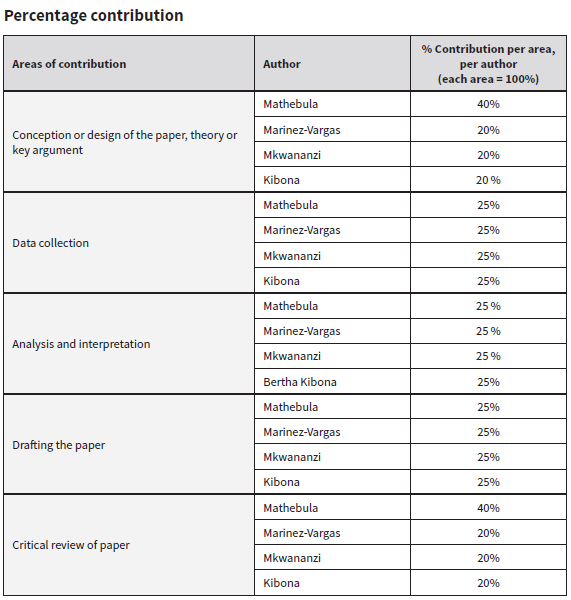
Notes on Contributors and their ContributionsLead author
Mathebula, Mikateko
Mikateko Mathebula is an Associate Professor at the Centre for Development Support, University of the Free State, South Africa. Her work examines through a capabilities lens and storytelling methodologies, the relationship between processes of higher education, development and human flourishing in South Africa.
Co-author
Marinez-Vargas, Carmen
Carmen Marinez-Vargas is a Lecturer at the Department of Educational Research, Lancaster University, Lancaster, UK. Her work is focused on the politics of knowledge and knowledge inequalities embedded in Higher Education practices, especially focusing on participatory research and the capability approach.
Co-author
Mkwananzi, Faith
Faith Mkwananzi is an Associate Professor at the Centre for Development Support, University of the Free State, South Africa. Her research interests lie at the intersection of higher education and global development, focusing on collaborative stakeholder partnerships in knowledge creation and dissemination.
Co-author
Kibona, Bertha
Bertha Kibona is a Programme Manager for the Training, Grants and Fellowship Programme at the Council for the Development of Social Science Research in Africa (CODESRIA) in Senegal. Her research interests include among other things, public good benefits of universities generated through the ways in which universities train and produce graduates to become contributors to the well-being of broader society.
Acknowledgements
We are grateful to all the student activists we worked with, who produced the digital stories and the participatory videos that we discussed in this article. Specifically, we thank Tshiamo Malatji, Tshepang Mahlatsi, Pule Mmula, Ntsako Khoza, Sanele Nkosi, Busisa Ndimba, Bethel Oamen, Aphiwe Buthelezi, Mpho Maubane, Yandiswa Ngwabeni, and Siphila Dlamini. We would also like to thank the reviewers and guest editor for their constructive feedback on an earlier drafts of this article.
References
-
Alkire, S., & Deneulin, S. (2009). An introduction to the human development and capability approach. In S. Deneulin (Ed.), An introduction to the human development and capability approach: Freedom and agency. Routledge. https://doi.org/10.4324/9781849770026
» https://doi.org/10.4324/9781849770026 -
Barron, P., Cord, L., Cuesta, J., Espinoza, S. A., Larson, G., & Woolcock, M. (2023). Social sustainability in development: Meeting the challenges of the 21st Century. New Frontiers of Social Policy, World Bank. https://openknowledge.worldbank.org/handle/10986/39537
» https://openknowledge.worldbank.org/handle/10986/39537 -
Basiago, A. D. (1999). Economic, social, and environmental sustainability in development theory and urban planning practice. Environmentalist, 19,145-161. https://doi.org/10.1023/A:1006697118620
» https://doi.org/10.1023/A:1006697118620 - Battle, M. (1997). Reconciliation: The ubuntu theology of Desmond Tutu. Pilgrim Press
-
Bondarchika, J., Jabło'nska-Sabukab, M., Linnanena, L., & Kauranne, T. (2016). Improving the objectivity of sustainability indices by a novel approach for combining contrasting effects: Happy Planet Index revisited. Ecological Indicators, 69, 400-406. https://doi.org/10.1016/j.ecolind.2016.04.044
» https://doi.org/10.1016/j.ecolind.2016.04.044 -
Boyer, R., Peterson, N., Arora, P. & Caldwell, K. (2016). Five approaches to social sustainability and an integrated way forward. Sustainability, 8, 1-18. https://doi.org/10.3390/su8090878
» https://doi.org/10.3390/su8090878 -
Bramley, G., & Power, S. (2009). Urban form and social sustainability: The role of density and housing type. Environment and Planning B: Planning and Design, 36(1), 30-48. https://doi.org/10.1068/b33129
» https://doi.org/10.1068/b33129 -
Braun, V., & Clarke, V. (2019). Reflecting on reflexive thematic analysis. Qualitative Research in Sport, Exercise and Health, 11(4), 589-597. https://doi.org/10.1080/2159676X.2019.1628806
» https://doi.org/10.1080/2159676X.2019.1628806 -
Byrne, D. (2022). A worked example of Braun and Clarke's approach to reflexive thematic analysis. Quality and Quantity, 56, 1391-1412. https://doi.org/10.1007/s11135-021-01182-y
» https://doi.org/10.1007/s11135-021-01182-y -
Cin, F. M., Walker, C., Süleymanoglu-Kürüm, R., Gunter, A., Dogan, N., Truter, L., & Olaniyan, T. C. (2023). Political participation of refugee and host community youths: Epistemic resistance through artistic and participatory spaces. Journal of Youth Studies, 1-18. https://doi.org/10.1080/13676261.2023.2273346
» https://doi.org/10.1080/13676261.2023.2273346 -
Cin, M., & Süleymanoglu-Kürüm, R. (2020). Participatory video as a tool for cultivating political and feminist capabilities of women in Turkey. In M. Walker, & A. Boni (Eds.), Participatory research, capabilities and epistemic justice: A transformative agenda for higher education (pp. 165-188). Palgrave Macmillan. https://doi.org/10.1007/978-3-030-56197-0_7
» https://doi.org/10.1007/978-3-030-56197-0_7 -
Chowdhury, S., Khan, S., Sarker, M.F.H., Islam, M.K., Tamal, M.A., & Khan, N.A. (2022). Does agricultural ecology cause environmental degradation? Empirical evidence from Bangladesh. Heliyon, 8(6). https://doi.org/10.1016/j.heliyon.2022.e09750
» https://doi.org/10.1016/j.heliyon.2022.e09750 -
Davis, C. (2021). Sampling poetry, pedagogy, and protest to build methodology: Critical poetic inquiry as culturally relevant method. Qualitative Inquiry, 27(1), 114-124. https://doi.org/10.1177/1077800419884978
» https://doi.org/10.1177/1077800419884978 - Eckersley, R. (1992). Environmentalism and political theory: Towards an ecocentric approach. UCL Press.
-
Egri, C. P. (1997). Spiritual connections with the natural environment: Pathways for global change. Organization & Environment, 10(4),407-431. https://www.jstor.org/stable/26161559
» https://www.jstor.org/stable/26161559 -
Farag, K., & Aktas, C.B. (2024). A survey of the most prevalent sustainability initiatives at universities. International Journal of Sustainability in Higher Education. https://doi.org/10.1108/IJSHE-07-2023-0285
» https://doi.org/10.1108/IJSHE-07-2023-0285 - Fricker, M. (2015). Epistemic contribution as a central human capability. In G. Hull (Ed.), The equal society (pp. 73-90). UCT Press.
-
Gehringer, A., Kowalski, S. (2023). Delimitating sustainability and its dimensions. in: mapping sustainability measurement. Sustainable Development Goals Series (pp. 15-22) Springer. https://doi.org/10.1007/978-3-031-47382-1_3
» https://doi.org/10.1007/978-3-031-47382-1_3 - Grosfoguel, R. (2007). The epistemic decolonial turn: Beyond political-economy paradigms. Cultural Studies, 21(2), 211-223.
- Hattingh, J.P. (2002). On the imperative of sustainable development: A philosophical and ethical appraisal. In E. Janse van Rensburg, J. Hattingh & R. O'Donoghue (Eds.), Environmental Education, Ethics and Action in Southern Africa (pp. 5-16). Human Sciences Research Council Publishers.
-
Heron, J., & Reason, P. (1997). A participatory inquiry paradigm. Qualitative Inquiry, 3(3), 274-294. https://doi.org/10.1177/107780049700300302
» https://doi.org/10.1177/107780049700300302 -
Hudler, K., Dennis, L., DiNella, M., Ford, N., Mendez, J., & Long, J. (2021). Intersectional sustainability and student activism: A framework for achieving social sustainability on university campuses. Education, Citizenship and Social Justice, 16(1), 78-96. https://doi.org/10.1177/1746197919886860
» https://doi.org/10.1177/1746197919886860 - Hughes, J. D. (1975). Ecology in ancient civilizations. University of New Mexico Press.
-
Kibona, B., & Woldegiorgis, E. T. (2023). Reconstructing the social responsibilities of African universities towards citizenship education: Perspectives from the ujamaa philosophy of Julius Nyerere. Curriculum Perspectives, 1-10. https://doi.org/10.1007/s41297-023-00181-3
» https://doi.org/10.1007/s41297-023-00181-3 -
Kumalo, S. (2017). Problematising development in sustainability: Epistemic justice through an African ethic. Southern African Journal of Environmental Education, 33, 14-24. https://doi.org/10.4314/sajee.v33i1.2
» https://doi.org/10.4314/sajee.v33i1.2 - Lee, R. B. (1979). The !Kung San: Men, women and work in a foraging society. Cambridge University Press.
- Lempinen, H. (2019). Arctic energy and social sustainability. Springer.
-
Le Grange, L. (2012). Ubuntu as an architectonic capability. Indilinga African Journal of Indigenous Knowledge Systems, 11(2), 139-145. https://hdl.handle.net/10520/EJC132020
» https://hdl.handle.net/10520/EJC132020 - Lotz-Sisitka, H., Hlengwa, A., Ward, M., Salami, A., Ogbuigwe, A., Pradhan, M., Neeser, M., & Lauriks, S. (Eds.). (2015). Mainstreaming environment and sustainability in African universities: Stories of change. Rhodes University Environmental Learning Research Centre.
-
Lozano, R., Ceulemans, K., Alonso-Almeida, M., Huisingh, D., Lozano, F. J., Waas, T., Lambrechts, W., Lukman, R., & Huge, J. (2015). A review of commitment and implementation of sustainable development in higher education: Results from a worldwide survey. Journal of Cleaner Production, 108 (Part A), 1-18. https://doi.org/10.1016/j.jclepro.2014.09.048
» https://doi.org/10.1016/j.jclepro.2014.09.048 - Marovah, T., & Mkwananzi, F. (2020). Graffiti as a participatory method fostering epistemic justice and collective capabilities among rural youth: A case study in Zimbabwe. In M. Walker & A. Boni (Eds.), Participatory research, capabilities and epistemic justice. A transformative agenda for higher education (pp. 215-242). Palgrave Macmillan.
- Martinez-Vargas, C. (2020). Democratic capabilities research: Exploring contextual challenges and contributions of participatory research towards epistemic justice. In M. Walker & A. Boni (Eds.), Participatory research, capabilities and epistemic justice (pp. 139-164). Palgrave Macmillan.
- Martinez-Vargas, C. (2022). Democratising participatory research: Pathways to social justice from the south. Open Book Publishers.
-
Martinez-Vargas, C., Mathebula, M., Cin, F. M., & Mkwananzi, F. (2024). Working as facilitators and co-researchers: Opportunities, tensions and complexities in educational participatory research. Educational Action Research, 1-16. https://doi.org/10.1080/09650792.2024.2342824
» https://doi.org/10.1080/09650792.2024.2342824 - Martinez-Vargas, C., Mathebula, M., Mkwananzi, M.F., Kibona, B., Malatji, T., Mahlatsi, T., Mmula, P., Khoza, N., Nkosi, S., Ndimba, B., Oamen, B., Buthelezi, A., Maubane, M., Ngwabeni, Y., Gqalane, V., & Dlamini, S. (2024). Towards an Ubuntu and capabilities-based conceptualisation of sustainable educational futures in the South African university: Perspectives from student activists. In M. Walker, A. Boni & D. Velasco (Eds). Reparative Futures and Transformative Learning Spaces (pp. 89-109). Palgrave Macmillan/Springer Nature.
-
Mathebula, M. (2019). Recognising poor black youth from rural communities in South Africa as epistemic contributors. Critical Studies in Teaching and Learning, 7(1), 64-85. https://www.ajol.info/index.php/cristal/article/view/190561
» https://www.ajol.info/index.php/cristal/article/view/190561 -
Mathebula, M., & Martinez-Vargas, C. (2023). Ubuntu as a valued capability for university students in South Africa. Journal of Student Affairs in Africa, 11(2), 17-33. https://dx.doi.org/10.24085/jsaa.v11i2.3624
» https://dx.doi.org/10.24085/jsaa.v11i2.3624 - Masungo, K. (2024). Student activism in the Global South: The formation of political capabilities in higher education. Palgrave MacMillan.
-
Mebratu, D. (1998). Sustainability and sustainable development: Historical and conceptual review. Environmental Impact Assessment Review, 18(6), 493-520. https://doi.org/10.1016/S0195-9255(98)00019-5
» https://doi.org/10.1016/S0195-9255(98)00019-5 -
Mensah, J., & Ricart Casadevall, S. (2019). Sustainable development: Meaning, history, principles, pillars, and implications for human action: Literature review. Cogent Social Sciences, 5(1). https://doi.org/10.1080/23311886.2019.1653531
» https://doi.org/10.1080/23311886.2019.1653531 -
Mkwananzi, F., Cin, F. M. & Marovah, T. (2023). Transformative youth development through heritage projects: Connecting political, creative, and cultural capabilities. International Journal of Heritage Studies, 29(6), 581-597. https://doi.org/10.1080/13527258.2023.2209058
» https://doi.org/10.1080/13527258.2023.2209058 -
Moldan B., Janouskova, S., & Hak, T. (2012). How to understand and measure environmental sustainability: Indicators and targets. Ecological Indicators, 17, 4-13. https://doi.org/10.1016/j.ecolind.2011.04.033
» https://doi.org/10.1016/j.ecolind.2011.04.033 -
Molefe, M. (2016). African ethics and partiality. Phronimon, 17, 1-19. http://dx.doi.org/10.17159/2413-3086/2016/142
» http://dx.doi.org/10.17159/2413-3086/2016/142 -
Murray, J. (2018). Student-led action for sustainability in higher education: A literature review. International Journal of Sustainability in Higher Education, 19 (6), 1095-1110. https://doi.org/10.1108/IJSHE-09-2017-0164
» https://doi.org/10.1108/IJSHE-09-2017-0164 -
Ndlovu-Gatsheni, S. (2018a). The dynamics of epistemological decolonisation in the 21st century: Towards epistemic freedom. Strategic Review for Southern Africa, 40(1),16-45. https://doi.org/10.35293/srsa.v40i1.268
» https://doi.org/10.35293/srsa.v40i1.268 - Ndlovu-Gatsheni, S. (2018b). Epistemic freedom in Africa: Deprovincialization and decolonization. Routledge.
- Nyerere, J. K. (1967). Education for self-reliance. Dar es Salaam Government Printer.
-
O'Flaherty, J., & Liddy, M. (2017). The impact of development education and education for sustainable development interventions: A synthesis of the research. Environmental Education Research, 24(7), 1031-1049. https://doi.org/10.1080/13504622.2017.1392484
» https://doi.org/10.1080/13504622.2017.1392484 -
Olanipekun, I. O., Olasehinde-Williams, G. O., & Alao, A. O. (2019). Agriculture and environmental degradation in Africa: The role of income, Science of the Total Environment, 692, 60-67. https://doi.org/10.1016/j.scitotenv.2019.07.129
» https://doi.org/10.1016/j.scitotenv.2019.07.129 -
Price, E. A. C., White, R. M., Mori, K. et al. (2021). Supporting the role of universities in leading individual and societal transformation through education for sustainable development. Discover Sustainability, 2, Article 49. https://doi.org/10.1007/s43621-021-00058-3
» https://doi.org/10.1007/s43621-021-00058-3 -
Purvis, B., Mao, Y., & Robinson, D. (2019). Three pillars of sustainability: In search of conceptual origins. Sustainability Science, 14, 681-695. https://doi.org/10.1007/s11625-018-0627-5
» https://doi.org/10.1007/s11625-018-0627-5 -
Ramose, M. B. (2007). But Hans Kelsen was not born in Africa: A reply to Thaddeus Metz. South African Journal of Philosophy, 26(4), 347-355. https://doi.org/10.4314/sajpem.v26i4.31492
» https://doi.org/10.4314/sajpem.v26i4.31492 -
Rapatsa, M. (2016). Ubuntu and capabilities approach: Basic doctrines for calibrating humanitarian action, European Review of Applied Sociology, 9(12), 12-19. https://doi.org/10.1515/eras-2016-0002
» https://doi.org/10.1515/eras-2016-0002 -
Saudelli, M. G., & Niemczyk, E. K. (2022). Education for sustainable development: Insights from Canadian and South African universities. Perspectives in Education, 40(3). https://doi.org/10.18820/2519593X/pie.v40.i3.4
» https://doi.org/10.18820/2519593X/pie.v40.i3.4 -
Sedlacek, S. (2013). The role of universities in fostering sustainable development at the regional level. Journal of Cleaner Production, 48, 74-84. https://doi.org/10.1016/j.jclepro.2013.01.029
» https://doi.org/10.1016/j.jclepro.2013.01.029 -
Sen, A. (1985). Well-being, agency and freedom: The Dewey lectures 1984. Journal of Philosophy, 82(4), 169-221. https://doi.org/10.2307/2026184
» https://doi.org/10.2307/2026184 - Sen, A. (1995). Inequality reexamined. Harvard University Press.
- Sen, A. (1999). Development as freedom. Alfred A. Knopf.
- Sen, A. (2009). The idea of justice. Belknap Press of Harvard University Press.
- Spangler, D. (1993). Imagination, Gaia, and the sacredness of the earth. In F. Hull (Ed.), Earth & spirit: The spiritual dimension of the environmental crisis (pp. 70-82). Continuum.
- Sultana, F. (2024). (Ed). Confronting climate coloniality: Decolonizing pathways for climate change. Routledge.
- Tutu, D. (1999). No future without forgiveness. Random House.
- Walker, M., & Boni, A. (Eds.) (2020). Participatory research, capabilities and epistemic justice. Palgrave Macmillan/Springer Nature.
- Walker, M., & Mathebula, M. (2020). A participatory photovoice project: Towards capability expansion of 'invisible' students in South Africa. In M. Walker & A. Boni (Eds.), Participatory research, capabilities and epistemic justice (pp. 189-213). Palgrave Macmillan/Springer Nature.
-
Wa Thiong'o, N. (2004). African identities: Pan-Africanism in the era of globalization and capitalist fundamentalism. Macalester International, 14(1), Article 9. https://digitalcommons.macalester.edu/macintl/vol14/iss1/9
» https://digitalcommons.macalester.edu/macintl/vol14/iss1/9 - Watts, M. (2008). Narrative research, narrative capital, narrative capability. In J. Satterthwaite, M. Watts & H. Piper (Eds.), Talking truth, confronting power (pp. 99-112). Trentham Books.
- Woodcraft, S., Bacon, N., Hackett, T., & Caistor-Arendar, L. (2011). Design for social sustainability: A Framework for creating thriving new communities. Young Foundation.
-
Zilahy, G., & Huisingh, D. (2009). The roles of academia in regional sustainability initiatives. Journal of Cleaner Production, 17(12),1057-1066. https://doi.org/10.1016/j.jclepro.2009.03.018
» https://doi.org/10.1016/j.jclepro.2009.03.018 -
Zhou, R. (2024). How UK universities approach sustainability: A timely review. Journal of Adult and Continuing Education. https://doi.org/10.1177/14779714241240985
» https://doi.org/10.1177/14779714241240985