Indigenous and local knowledge and climate education: Co-producing a Somali language course on climate change
Abstract
This article contributes to scholarship on the role of Indigenous and Local knowledge (ILK) in climate education. It presents a case study of the co-production of a Somali language extra-curricular course on climate change. The qualitative research methods used were literature reviews, participant observation, decolonial co-production and combining ILK with scientific knowledge. The article shows that climate education is enhanced by inclusion of ILK to complement scientific content. It does so by analysing the climate course in relation to key measures of effective climate education (informing about causes and impacts in ways that are relevant to the audience; using messengers trusted by the audience; using communication channels accessible to the audience; and informing the audience about climate solutions and motivating action to realise them). The article offers suggestions for enhancing the value and impact of the course, especially in terms of adding content about the efforts of fossil fuel companies to delay climate action and about what a just transition might look like.
Indigenous and local knowledge; climate education; climate change; co-production; Somali language
Introduction
A fundamental aspect of transforming education for sustainable futures is the development of relevant resources by affected communities in their own languages and in ways that draw on indigenous and local knowledge (ILK) (Pesanayi et al., 2019). It also requires the establishment of new, more inclusive ecologies of knowledge that are institutionalised in accessible education resources, with marginalised voices foregrounded in the co-production of those resources (Mandikonza, 2019). To be decolonial, research supporting the creation of those educational resources must also have otherwise marginalised communities and languages central in terms of production, power and resources (Herring et al., 2020). The climate crisis demands this transformation of education due to the structural injustice of those least responsible for it suffering the greatest costs, with their ILK marginal to the discussion of the crisis (Harlan et al., 2015). This article contributes to challenging that marginalisation.
The scholarly literature on climate education is vast and multifaceted (see the systematic review by Monroe et al., 2019). The literature on the value of ILK and how to combine it with scientific knowledge in relation to climate action and other environmental issues is similarly extensive (e.g. McElwee et al., 2019; Roué et al., 2022). There are also many scholarly studies which provide recommendations for and case studies of how to integrate climate change into formal educational curricula and link them to climate action, including in the global South (e.g. Vogel et al., 2015). The literature on Somalia and climate change focuses almost wholly on economic and social impacts and related needs (e.g. Rigby et al., 2023). There is a trend towards creating small scale extracurricular public education content about the climate crisis in Somalia by Somalis in English and/or Somali (e.g. ICE, n.d.). However, there is no scholarly literature on climate education in Somalia: this article is the first on this topic. In 2023 the international Transforming Education for Sustainable Futures (TESF) academic research network (https://tesf.network/), which includes numerous Somali partners, published brief reports about various research projects it funded on climate education and action in Somalia and Somaliland (self-declared autonomous from Somalia but internationally unrecognised) (TESF, n.d.). However, none of those projects or reports has been built upon so far in terms of academic papers: this article is the first to do so. The article provides a qualitative analysis of the TESF co-production of a Somali language extracurricular online course on the climate crisis created in the semi-autonomous Puntland Federal Member State of Somalia. The aim of the climate course project was to generate a short course that combines ILK and scientific knowledge that would be available to the education system and public in Somalia. The curriculum has been available online since September 2022 via the Puntland Learning Passport (PLP) website and its supporting Cilmi ('knowledge' in Somali) mobile application (MoEHE PSoS a, n.d.; b, n.d.). Puntland was the first place in Africa to adopt the UNICEF-Microsoft Learning Passport (UNICEF Microsoft, n.d.) but no scholarship has been published on the PLP and almost none on the Learning Passport in general.
Methods
In the following section we discuss the methods used in this research, namely participant observation, decolonial co-production and combining ILK with scientific knowledge.
Participant observation
Participant observation is a qualitative research method that involves combining the role of researcher and research subject (De Walt & De Walt, 2010). The researcher can draw on deep and nuanced understanding of the activity being researched. Furthermore, research subjects can interact directly with the main participant observers to articulate their perspectives and engage with them regarding their aims and perspectives. Another advantage of participant observation is that the researcher can develop trust and effective communication with participants through shared participation in the activity being observed. Those using this method need to ensure that there is clarity and consent about what can and cannot be reported from the activity. In this research project, ethics permission was granted by the research ethics committee of the University of Bristol. This included approving the recording of oral rather than written consent as appropriate to a predominantly oral culture and low literacy rate in Somalia. Participant observers also need to address the potential skewing nature of their participation such as possible loss of analytical rigour due to subjective involvement. The research addressed this concern in three ways: ensuring an active co-production role for participants as discussed below; including a range of participant observation voices in the Somali team; and extensive support from the wider TESF team through a 'values-centred' approach to Monitoring, Evaluation and Learning (MEL) (Brockwell et al., 2022, pp. 8-9) which focuses on the aims and perspectives of the participants rather than externally imposed measures of success and failure.
Decolonial co-production
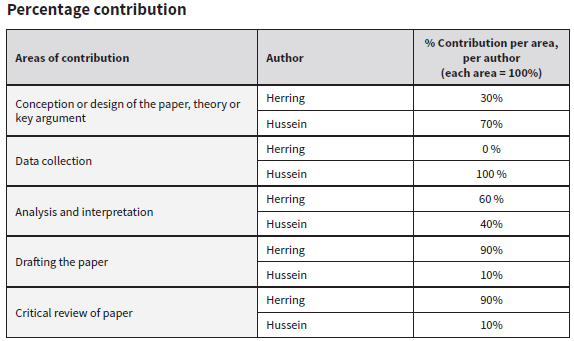
For co-production to be serious about being decolonial, decision-making authority and distribution of money should be "equitable, mutually beneficial and inclusive" (Herring et al., 2020, p. 67): this requires a central role for the Global South actors and ILK (see also Tikly, 2019). Decoloniality challenges the notion of a clear break with the end of formal colonialism by demonstrating continuities in terms of hierarchical relations of domination and subordination, including in knowledge production. Decoloniality is founded on an ethical commitment to overcoming these continuities (Hill et al., 2020). The TESF research network involved partner organisations from the UK, Somalia/Somaliland, Rwanda, South Africa and India with a core team in the UK and an international leadership team with members from the UK and the four global South hubs. Funded by the UK Research and Innovation (UKRI) Global Challenges Research Fund (GCRF), the network had the capacity to allocate around half of its funding to sub-projects in the Global South. Although UKRI GCRF funding has ended, the network continues to operate at a much reduced level of activity, self-funded by the partner institutions. The climate curriculum project was conceived by Hassan Hussein, a Somali in Puntland's Ministry of Education and Higher Education (MoEHE). The funding application was developed in collaboration with the TESF Somali Hub team including Eric Herring. The TESF Leadership Team, which includes representation from its Somali Hub, accepted the recommendation of the Somali Hub team that the funding be awarded and fed back suggestions on the proposal. The implementation of the project was led by Hussein, the Somali Principal Investigator (PI), who is experienced in instructional design, social research and ICT research and development. He worked with Microsoft and UNICEF and led the creation and rollout of the PLP. The video production team was also from a local Somali company. To enrich the co-production discussions, the PI provided data from 17 structured interviews with nomadic pastoralists (nine males and six females) in Puntland's Jarriiban district of Mudug region and Buurtinle district of Nugaal region. While the sample was not statistically representative, it allowed for the generation of themes for discussion. The team selected nomadic pastoralists as they are among the Somalis most affected by the climate crisis due to their reliance on the rains and pastures. Indeed, two of the interviewees had lost all of their livestock and had been forced to resettle in Buurtinle town. The fact that the project was co-produced inclusively in terms of often marginalised social sectors by Somalis ensured that it did not replicate a colonial extractive mode of research in which data is generated from a community by an external researcher and then outputs created about those research subjects by that external researcher. It ensured that there was no place for colonial extractivism rationalised on the grounds of good intentions to help supposed beneficiaries.
Combining Indigenous and Local Knowledge (ILK) with scientific knowledge
The approach we took to ILK was to see all forms of knowledge as being intimately connected to social contexts and power relations in terms of who produces it, how it is produced and who can make use of it. This is equally true of scientific knowledge (the testable body of facts and theories arrived at through systematic theorisation, observation, experimentation and analysis), as it is of indigenous or traditional knowledge (the assumptions, beliefs, perspectives, skills and claims of a community relating to their continuing ancestral connections to the particular lands and waterways on which they live) and local knowledge (the assumptions, beliefs, perspectives, skills and claims of a community relating to a particular context, usually with a geographical dimension) (Roué et al., 2022). Viewed in this way, ILK is not wholly culturally specific and subjective, and scientific knowledge is not wholly universal and objective. In addition, they cannot simply be merged into a single form of generic knowledge because in some respects they have different perspectives on the nature, roles and validity of knowledge. Elevating any one form of knowledge over any other as inherently superior in all respects is colonial, i.e. involving "hierarchical relations of domination and subordination ... which can be exploitative and repressive and yet rationalised at times by the colonised as well as the colonisers as benign and even altruistic, which treat the colonial as superior and progressive and the colonised as inferior and reactionary, and which are legacies of the era of formal empire" (Herring et al., 2020, p. 67). ILK and scientific knowledge can complement and advance each other. For example, ILK may learn from scientific knowledge that there are more accurate or complete explanations of climate change than those passed down across generations or gleaned from local expertise. This is different from saying that ILK is valid or has value only to the extent that it meets the criteria for scientific knowledge. Equally, scientific knowledge can learn from ILK about how to engage with the priorities, problems and aspirations of communities in particular contexts. Approached in this way, co-production which brings together ILK and scientific knowledge appropriately advances decoloniality.
Implementation
The project sought the participation of Somalia living in Puntland to co-produce the climate course. The PI invited 25 Somali stakeholders (18 males, seven females, with a mix of young, middle aged and elderly) to become a course design panel. They included an academic, a research assistant, an administrative assistant, an environmentalist with pioneering local experience in tree conservation, a media company owner and publisher of a Somali language cultural and environmental quarterly publication, six nomadic pastoralists, three farmers, six fishing community members (one of whom is also a health clinician), a primary school principal and teacher, and three media production specialists. The academic is a woman with a master's degree in environmental studies from Amoud University in Somaliland and who is a lecturer at Puntland State University in Puntland's capital Garowe. The research assistant is a woman with a master's degree in curriculum development who works for the Puntland MoEHE and a local secondary school. To maximise inclusiveness, the nomadic pastoralists, farmers and fishing community members were not required to be literate. All activities were conducted in Somali and were framed non-technically wherever possible.
All meetings about the course materials took place in Garowe, as female participants were not comfortable with going on field trips. The literature used in the climate course framework was selected in a series of meetings of the academic, research assistant, environmentalist, magazine publisher and PI. The workshops included all these participants plus the other community members indicated above who were also on the panel. The meeting participants received a stipend of $50 per session while food and drink were also provided. The first workshop (one day) involved mostly discussions about balancing the course curriculum between traditional classroom teaching and ILK. The second day synthesised the discussions and revised the course framework and content. During these workshops, every member's perspective was elicited and taken into account. For example, the magazine publisher suggested including a lesson about shifting sand dunes in coastal areas, while the environmental conservationist emphasised the importance of bringing attention to plants (e.g., canjeel) at risk of extinction. As a result, the course features these issues prominently. Throughout, the team also captured ideas to help guide the conversations in the planned field interviews.
The PI and video production team then went on field trips to the following districts in Puntland: Baargaal (Bari region), Garowe and Burtinle (Nugaal region), and Jarriiban (Mudug region). These localities are comprised of coastal villages, farm fields, and pasturelands. The purpose of the trips was to conduct interviews with pre-selected members of local communities. An interview-style video format was used where the PI and video production team used questions drawn from the course framework while allowing the subjects to answer openly and freely. This allowed the subjects' expertise and perspectives on the environment and climate change to come through while still maintaining some structure from the course framework. The interviewers drew on the content developed during the workshops while also seeking to solicit output freely from the interviewees rather than leading into specific answers to confirm preconceived notions on the part of the interviewers. The interviewers also gave the interviewees ample time to answer questions with minimal postproduction edits. Interviewees mainly chose to focus on the recurring droughts. For example, participants from all three districts chose to recount the droughts they have lived through.
In the final steps of the process, the PI commissioned the video production team to work with the academic, research assistant and environmentalist to create the video-based curriculum, with eight videos and a supporting document with summaries, explanations and references. These materials were shared with the panel participants ahead of a third workshop (half day) to obtain feedback and suggestions for revisions and edits; changes were minimal. Some of the panel participants are featured prominently in the course videos, having consented to be personally identified.
Results
The co-produced Somali language climate course is available on the PLP website and Cilmi app application (MoEHE PSoS a, n.d.; b, n.d.). The PLP was launched in July 2020 as a response to school closures that occurred during the COVID-19 pandemic as one of the first products of the Learning Passport, which is a digital learning platform for low-income countries developed by UNICEF and Microsoft with financial support from the Global Partnership for Education (GPE). It is free to access for educational institutions and learners of all kinds. The Learning Passport made Time magazine's list of the top one hundred best inventions of 2021 (De Guzman, 2021). To broaden the impact of the PLP, content was broadcast on television and radio as well as being uploaded to social media. Thousands of vulnerable students were provided with radios and solar recharging, memory cards and USB flash drives loaded with content. The programme also included braille textbooks for visually impaired students and assistive devices for hearing impaired students (GPE, no date). The PLP does not require a reliable internet connection to access its 140 courses with around 2 800 videos as its content can be downloaded and accessed offline. It can be navigated in Somali, Arabic (the other official language of Somalia) and English (used by most Somalis who have more education) but the videos are generally in Somali with some key points in English speech and text. Over 31 000 learners registered for at least one course, with a completion rate of 0.7%. With the reopening of schools as the pandemic receded, the PLP has been downgraded to a supplementary role.
The extra-curricular climate course is the only dedicated climate course on the PLP and the only PLP extra-curricular course. The extra-curricular route was chosen as the one involving fewest bureaucratic hurdles. Further work would be required to integrate it with the formal curriculum. The course is aimed at people in their teens and older in formal education but some elements such as the filmed interviews will be accessible to those with no formal education due to their ILK content in Somali. Although there are formal curriculum Geography and Social Studies PLP course sub-sections that have discussions of climate or of environmental degradation and conservation, there is no discussion of climate change, its causes or responses to it. The extra-curricular climate course is titled 'Muhiimadda Barashada iyo Fahamka Deegaanka iyo Isbeddelka Cimilada' which translates as 'The Importance of Understanding and Learning about the Environment and Climate Change'. It has eight video lessons in Somali, with English sub-titles on the introductory video, and a total run time of 44 minutes. The voiceover is by a male (the PI) and among interviewees, women feature only occasionally. The interviewees are mainly but not exclusively co-production participants.
In the Somalia-focused introductory Lesson One (two minutes) the content is ILK in order to connect to the local context and human reality of the situation in ways that are likely to appeal to the main audience i.e. Somalis. Interviewees outline their lived experience of the climate crisis, including how more frequent higher tides and fear of a worse tsunami than the one that occurred in 2004 have forced people to relocate inland. They report that their twice relocated village is being swamped by unprecedented sand dunes that are a great burden to clear, with children also involved in having to clear sand at school as well as at home.
Lesson Two (three minutes) sets out some scientific fundamentals in explaining what is meant by the environment (natural and human-made) and the importance of protecting it. Here and in other lessons, the scientific content is kept brief to maintain the engagement of those with limited formal education.
Lesson Three (seven minutes) is an overview of the political context of increased international environmental awareness, calls for climate action and related international agreements. It touches upon Rachel Carson's 1962 classic text Silent Spring about the negative environmental impacts of DDT pesticide; the 1987 UN Brundtland Commission Report Our Common Future on the need for sustainable development which meets the needs of the current generation in ways that will allow for the needs of future generations to be met; the creation of the US Environmental Protection Agency; increased concern about pollution and biodiversity loss; the 1992 Earth Summit in Brazil; the first UN Conference on the Human Environment in 1972 in Stockholm which established the UN Environmental Programme (UNEP); the 1992 Convention on Biological Diversity; the 1992 UN Framework Convention on Climate Change; the Youth Climate Summit in 2019; the 1992 UNEP Finance Initiative; and the 2015 Paris Agreement on climate change aimed at keeping global warming well below 2°C and preferably to 1.5°C compared to pre-industrial levels.
Lesson Four (two minutes) explains the scientific distinction between weather and climate.
Lesson Five (two minutes) explains in mostly simple scientific language how global warming is caused by increased percentage of solar radiation being trapped in the earth's atmosphere.
Lesson Six (three minutes) explains scientifically how burning fossil fuels is a key driver of global warming.
Lesson Seven (fifteen minutes) on more intense droughts is by far the longest segment. It is dominated by ILK that is complemented by scientific concepts. It is focused on Somalia and covers deforestation, including the cutting down of bushes and trees by nomadic pastoralists to make livestock enclosures ('xero' in Somali, 'boma' in many other places in Africa) that is now no longer sustainable. It also covers desertification and rising sea levels.
Lesson Eight (ten minutes) analyses in depth through ILK complemented by scientific concepts the problems faced by some of Somalia's coastal communities, which are being buried by drifting sand caused by desertification and weather extremes linked to climate change.
The climate course folder contains a 3 300-word study guide in Somali. It provides summaries and more in-depth explanations of the mainly scientific content of the first four lessons. The hyperlinked references to sources cover Lessons One to Six plus there is a link to a glossary. The sources are all in English and are mainly international organisations, intergovernmental organisations and national government documents. The lack of scientific content in Somali reflects the unavailability of such material.
Discussion
This discussion reflects on the achievements of the climate course in integrating Somali ILK into climate education and how it may be enhanced in future so that it contributes more to the creation of sustainable futures in which people live the lives they value while allowing nature to flourish (Tikly et al., 2020). It does so by considering the course in relation to some key themes from the literature on effective climate education combined with data from the interviews to inform the panel's co-production of the climate course. These themes are that climate education should inform about causes and impacts in ways that are relevant to the audience; be appropriate for the audience in terms of trusted messengers and accessible communication channels; and should inform the audience about climate solutions and motivate action to realise these.
Inform about causes and impacts in ways that are relevant to the audience
Climate education should inform about causes and impacts of the climate crisis in ways that audiences will find relevant (Moser, 2010, 2016; Pesanayi et al., 2019). The framing of the climate course connects directly to the concerns and priorities of many Somalis. Original high-quality footage of Somali locations predominates. Somali examples are interspersed throughout, including original animations and diagrams. The course is successful in terms of explaining the distinction between weather and climate, setting out the fundamental physical processes involved in the warming climate, indicating the role of human activity (burning fossil fuels as part of industries such as construction, consumer products, travel and food production) and elaborating extensively on climate impacts including more frequent and more intense extreme weather, droughts, flooding and desertification. 71% of the interviewees agreed that climate change is caused by human activities and 82% agreed that recurring droughts were a sign of climate change. However, only 24% and 18% accepted that carbon dioxide emissions into the atmosphere and burning fossil fuels, respectively, contribute to global warming. Instead, in response to follow up questioning, those interviewees, in line with their religious beliefs, attributed climate change to more general human sinfulness. Religion thus may appear to be a barrier to accepting climate science, but up to a quarter of the interviewees accepted scientific explanations, while still being religious and despite lacking literacy or access to much (or any) formal education.
Use messengers trusted by the audience
Audiences are more likely to accept climate information if it is presented to them by messengers they trust (Moser, 2010, 2016). The interviewees were asked to indicate how much they trusted climate information from various sources. Religious clerics scored highest in trustworthiness at 88%, followed by friends or colleagues (75%), relatives (75%), university academics (75%), community elders (69%), neighbours (69%), civil society leaders (50%), and politicians (31%). On this basis, the climate course is likely to be trusted due to the prominence in messaging by university academics and community elders. The course features a male nomadic pastoralist over the age of 80 and a female nomadic pastoralist over the age of 70, because both have lived long enough to be able to talk about their lived experience of climate change over many decades. Religious clerics are a resource that further efforts at climate education could draw on, especially bearing in mind the tendency reported above of people to attribute climate change to human sinfulness, which could be reframed from general sinfulness to the specific actions driving the climate crisis. Furthermore, the wider the climate conversation the better, so that others, especially friends, colleagues, relatives and neighbours, are getting messages across.
Use communication channels accessible to the audience
Climate education should use channels accessible to the intended audience (Moser, 2010, 2016). Low levels of internet access and literacy are major limiting factors on the reach of the climate course (DNS FRS, 2020; SNBS FRS, 2023). 28% of the population of Somalia aged ten and older have some access to the internet, with an uneven distribution of 35% of urban dwellers, 20% of rural dwellers and 2% of nomads. Nearly all who access the internet do so on mobile phones. Mobile phone ownership is widespread (85% of the population aged 15 or older); these are mostly feature phones rather than smart phones, but the ratio is moving towards smart phones. 180 learners (127 males, 48 females, five undisclosed) registered for the climate course between November 2022 and October 2023, with a 7% completion rate. The climate course was uploaded to the PLP with no promotion of any kind at the time or subsequently. It is reasonable to expect that uptake could be higher if efforts were made to publicise it or use it as the basis of revisions to Somalia's formal Social Studies and Geography curricula. Even then, almost half of the population of Somalia has never had any formal education and the most common pattern of formal education is incomplete primary school. Around half of the population is illiterate, with women, older people, rural dwellers and nomads more likely to be illiterate. This national picture was reflected among our interviewees: 82% had never attended school. Even though a large majority of interviewees said they were convinced that the climate they live in had changed for the worse, around half said they rarely hear the phrase 'isbeddelka cimilada' ('climate change' in Somali). Among the half who said that they did hear the phrase often, mainly said that radio or television were the sources, and with televisions being quite rare, this must generally mean radio. This suggests that radio could be an inexpensive and effective way to engage in climate education in Somalia, either based on the climate course or by providing complementary or alternative content.
Inform the audience about climate solutions and motivate action to realise them
Climate education should inform the audience about climate solutions and motivate the action needed to realise them (Moser, 2010, 2016; Guenther, 2020).
The climate course has a section on international efforts to take climate action, such as the 2015 Paris Agreement. However, the course could do more to explain the actions required to meet the Paris Agreement goals, including the different possible paths and options, plus the implications for Somalis. It was explained to the interviewees that burning fossil fuels (oil, natural gas, and coal) contributes 65% or more of carbon dioxide emissions into the atmosphere globally. They were then asked whether Somalia, which had signed up to the Paris Agreement, should not exploit its oil reserves to help prevent disastrous further global warming. 56% overall said they supported this idea (all female interviewees but only a minority of male ones). It is understandable that some would be willing to gamble with the climate in a desperate situation of poverty, hunger and unemployment, and unwillingness to risk seems to be driven by fear of exacerbating already terrible climate-related drought. Furthermore, countries exploiting fossil fuels can suffer from the oil curse or resource curse, in which the country ends up poorer, more authoritarian, more corrupt, more conflict prone, more unequal and more environmentally damaged, as powerful international actors form alliances with domestic elite factions for profit at the expense of the society (Ross, 2015). If this had been pointed out, the interviewees may have been even less enthusiastic about exploiting oil resources.
Fear of climate breakdown is an important motivator for climate action. Such fear is felt widely among Somalis and communicated vividly and in a sustained way by the climate course. This fear can be seen in the positions taken by the interviewees, whose situations are becoming increasingly desperate. 71% reported believing that climate change is the most dangerous threat facing their lives ahead of civil war (18%), infectious diseases (6%), and terrorism (6%). 88% rated their degree of concern about climate change at 6 or more on a 1-10 (lowest to highest) scale. None chose poverty as the greatest threat they faced. When asked to explain why they thought drought was the biggest threat they faced, more than half said: 'Drought spares nothing'. 44% said they had already lost 26-50% of their goats and sheep and up to 25% of their camels due to the recurrent droughts. 63% reported migrating more than 20 times in the previous year in search of pasture for their livestock, covering over 600 kilometres. In a normal year when drought is not a concern, a typical Somali nomadic pastoralist household changes its locations fewer than five times per year and covers less than 25 kilometres. 69% of the participants have reported knowing more than 20 households who migrated to a city after their livestock were wiped out by the 201617 or current drought. 75% said that, even though they feel unsafe in the countryside, they are not considering migrating to a city because they lack skills useful for urban employment and because most people in the cities are unemployed.
The fundamental problem for Somalis fearing climate breakdown is that their ability to do anything about it is extremely limited, especially as the climate crisis is being driven by the actions of rich, powerful actors who are mostly very distant. The climate crisis is being caused by production for and consumption by the wealthiest people in the world (Chancel, 2022). Somalia, which is among the countries most vulnerable to climate impacts while at the same time being among those least responsible for the climate crisis (generating 0.08% of global emissions), is among the least able to adapt due to being one of the poorest countries in the world (GRICCE, 2023; WPR, 2022). The climate course does not contain any coverage of these issues. As a result, responsibility for the climate crisis remains abstract and the injustice of the situation for Somalis is left unspecified. Also not covered by the climate course are the huge efforts that are being made by the fossil fuel industry and its backers to deny the reality of the climate crisis and delay action to address it (Mann, 2021). Absent too are ideas about how to achieve a just transition to a world where all can live the lives they value in harmony with nature (e.g. Raworth, 2018). Providing this context would be valuable for those taking the course.
Conclusion
Education about the climate crisis that integrates indigenous and local knowledge with scientific knowledge is necessary for inclusive and effective climate action. Climate curricula such as the one discussed in this paper are contributions to transforming education as part of the efforts to secure sustainable futures. Somalis have a tradition of naming droughts to mark their tragic histories. They called the drought of 2016-17 'Sima' ('the equaliser' in Somali) because it left no one untouched whether they were urban, rural or nomadic, whether they were rich or poor and whether they were local or diaspora. The power of such ILK framings cannot be captured fully in scientific descriptions of drought data. Somalis are aware of the climate crisis and are particularly fearful of associated increasingly frequent and intense droughts. The Somali climate course on Puntland's PLP website is a step in the right direction. The course has potential for further development in terms of climate education and enabling climate action. However, ILK and scientific knowledge alone cannot achieve that climate action because this requires individual and collective capability and opportunity to act on that knowledge. Furthermore, even when indigenous and local actors in Somalia can take some climate action based on their knowledge, they have little influence over the actions of the wealthy individuals and corporations which are driving the climate crisis and which governments and financial institutions are facilitating and subsidising. Despite overwhelming evidence about the emissions causing the climate crisis, the forces of denial and delay have up to now ensured that the actions taken are far from sufficient. The climate injustice facing Somalia is replicated not only across Africa (WMO, 2023) but also in the plights of the poor and marginalised in more wealthy countries. Understanding how the global and the local are connected is indispensable for climate education and action.
Data Access Statement
At the time the research was carried out, participants consented to the data of this study being used for this research and for no other purpose than this research. Furthermore, the small number of participants, the nature of their participation and the socio-cultural context poses a significant risk of de-anonymisation should the data be made open access. Therefore, open access to the data would contravene consent and ethics approval.
Notes on Contributors and their ContributionsLead author
Herring, Eric
Eric Herring is Professor of World Politics in the School of Sociology, Politics and International Studies at the University of Bristol. His research focuses mainly on the co-creation of locally led sustainable development in Somalia/Somaliland.
Co-author
Hussein, Hassan
Hassan Hussein is a consultant for the Ministry of Education and Higher Education of the Puntland Federal Member State of Somalia. His scholarly interests are in technology in education and sustainable development.
Acknowledgements
This research was carried out as part of the Transforming Education for Sustainable Futures (TESF) project. The support of the UK Research and Innovation Global Challenges Research Fund for TESF is gratefully acknowledged: award title 'Transforming Education Systems for Sustainable Development (TES4SD) Network Plus', award reference ES/T002646/1. We would also like to gratefully acknowledge our co-production co-investigators for their commitment and insights and Transparency Solutions for its support in its role of leading the TESF Somali Hub.
References
-
Brockwell, A.J., Mochizuki, Y., & Sprague, T. (2022). Designing indicators and assessment tools for SDG Target 4.7: A critique of the current approach and a proposal for an 'Inside-Out' strategy. Compare: A Journal of Comparative and International Education, 54(5), 731-749. https://doi.org/10.1080/03057925.2022.2129957
» https://doi.org/10.1080/03057925.2022.2129957 -
Chancel, L. (2022). Global carbon inequality over 1990-2019, Nature Sustainability, 5, 931-938. https://doi.org/10.1038/s41893-022-00955-z
» https://doi.org/10.1038/s41893-022-00955-z -
De Guzman, C. (2021). Online learning, offline - The Learning Passport', Time, 10 November. https://time.com/collection/best-inventions-2021/6112659/unicef-the-learning-passport/
» https://time.com/collection/best-inventions-2021/6112659/unicef-the-learning-passport/ - De Walt, K.M. & De Walt, B.R. (2011). Participant observation: A guide for fieldworkers (2nd ed.). Rowman & Littlefield.
-
GPE [Global Partnership for Education]. (n.d.) Somalia: Giving more children the opportunity to learn during emergencies. https://www.globalpartnership.org/results/stories-of-change/somalia-giving-more-children-opportunity-learn-during-emergencies
» https://www.globalpartnership.org/results/stories-of-change/somalia-giving-more-children-opportunity-learn-during-emergencies -
GRICCE [Grantham Research Institute on Climate Change and the Environment]. (2023). Somalia - Climate Change Laws of the World. https://climate-laws.org/geographies/somalia
» https://climate-laws.org/geographies/somalia - Guenther G. (2020). Communicating the climate emergency: Imagination, emotion, action. In C. Henry, J. Rockström & N. Stern (Eds.), Standing up for a sustainable world: Voices of change (pp. 401-408). Edward Elgar.
-
Harlan, S.L., Pellow, D.N., Bell, S.E., Holt, W.G. & Nagel, J. (2014). Climate justice and inequality. In R.D. Dunlap and R.J. Brulle (Eds.), Climate change and society: Sociological perspectives. Oxford University Press. https://doi.org/10.1093/acprof:oso/9780199356102.003.0005
» https://doi.org/10.1093/acprof:oso/9780199356102.003.0005 -
Herring, E., Ismail, L., Maydhane, Y., & McNeill, S. (2020). Decolonising development: Academics, practitioners and collaboration. Journal of Somali Studies, 7(2), 65-100. https://doi.org/10.31920/2056-5682/2020/7n2a4
» https://doi.org/10.31920/2056-5682/2020/7n2a4 -
Hill, R., Walsh, F.J., Davies, J., Sparrow, A., Mooney, M., Wise, R. M., & Tengö, M. (2020). Knowledge co-production for indigenous adaptation pathways: Transform post-colonial articulation complexes to empower local decision-making, Global Environmental Change, 65, 102016. https://doi.org/10.1016/j.gloenvcha.2020.102161
» https://doi.org/10.1016/j.gloenvcha.2020.102161 -
ICE [Institute of Climate and Environment, SIMAD University]. (n.d.) https://ice.simad.edu.so/
» https://ice.simad.edu.so/ -
Mandikonza, C. (2019). Integrating indigenous knowledge practices as context and concepts for learning of curriculum science: A methodological exploration. Southern African Journal of Environmental Education, 35, 1-16. https://doi.org/10.4314/sajee.v35i1.13
» https://doi.org/10.4314/sajee.v35i1.13 - Mann, M. 2021. The new climate war: The fight to take back our planet. Public Affairs.
-
McElwee P., Fernández-Llamazares Á, Aumeeruddy-Thomas Y, Babai, D., Bates, P., Galvin, K., Guèze, Liu, J., Molnár, Z., Ngo, H.T., Reyes-García, V., Chowdhury, R.R., Samakov, A., Shrestha, U.B, Díaz, S., & Brondízio, E.S. (2019). Working with Indigenous and local knowledge (ILK) in large-scale ecological assessments: Reviewing the experience of the IPBES Global Assessment. Journal of Applied Ecology, 57, 1666-1676. https://doi.org/10.1111/1365-2664.13705
» https://doi.org/10.1111/1365-2664.13705 -
MoEHE PSoS [Ministry of Education and Higher Education, Puntland State of Somalia]. (n.d.) a. Cilmi. https://play.google.com/store/apps/details?id=com.cilmi.unicef&hl=en&gl=US
» https://play.google.com/store/apps/details?id=com.cilmi.unicef&hl=en&gl=US -
MoEHE PSoS [Ministry of Education and Higher Education, Puntland State of Somalia] (n.d.) b. Puntland Learning Passport. https://puntland.learningpassport.unicef.org/
» https://puntland.learningpassport.unicef.org/ -
Monroe, M.C., Plate, R.R., Oxarart, A., Bowers, A., & Chaves, W.A. (2019). Identifying effective climate change education strategies: A systematic review of the research, Environmental Education Research, 25(6), 791-812. https://doi.org/10.1080/13504622.2017.1360842
» https://doi.org/10.1080/13504622.2017.1360842 -
Moser, S.C. (2010). Communicating climate change: History, challenges, process and future directions. WIREs Climate Change, 1(1), 31-53. https://doi.org/10.1002/wcc.11
» https://doi.org/10.1002/wcc.11 -
Moser, S.C. (2016). Reflections on climate change communication research and practice in the second decade of the 21st century: What more is there to say? WIREs Climate Change, 7(3), 345-369. https://doi.org/10.1002/wcc.403
» https://doi.org/10.1002/wcc.403 -
Pesanayi, T., O'Donoghue, R., & Shava, S. (2019). Think piece: Situating Education for Sustainable Development in southern African philosophy and contexts of social-ecological change to enhance curriculum relevance and the common good. Southern African Journal of Environmental Education, 35, 1-9. https://doi.org/10.4314/sajee.v35i1.15
» https://doi.org/10.4314/sajee.v35i1.15 - Raworth, K. (2018). Doughnut economics. Penguin.
-
Rigby, J.M., Stawarz, K., Preist, C., Saeed, A., Stokes, K., Elmi, M., Mohamed, A.A., & Michaelides, K. (2023). Exploring the information needs of Somaliland pastoralists: Design considerations for digital climate adaptation services. In Designing Interactive Systems Conference (DIS '23), July 10-14, 2023, Pittsburgh, PA, USA. ACM. https://doi.org/10.1145/3563657.3596061
» https://doi.org/10.1145/3563657.3596061 -
Ross, M.L. (2015). What have we learned about the resource curse? Annual Review of Political Science, 18, 239-259. https://doi.org/10.1146/annurev-polisci-052213-040359
» https://doi.org/10.1146/annurev-polisci-052213-040359 - Roué, M., Nakashima, D., & Krupnik, I. (Eds). (2022). Resilience through knowledge co-production: indigenous knowledge, science, and global environmental change. Cambridge University Press.
-
TESF [Transforming Education for Sustainable Futures]. (n.d.) Funded projects - Somalia/Somaliland. https://tesf.network/funded-projects/?project-country%5Bsomalia%5D=somalia
» https://tesf.network/funded-projects/?project-country%5Bsomalia%5D=somalia - Tikly, L. (2019). Education for sustainable development in the postcolonial world: Towards a transformative agenda for Africa. Routledge.
-
Tikly, L., Batra, P., Duporge, V., Facer, K., Herring, E., Lotz-Sisitka, H., McGrath, S., Mitchell, R., Sprague, T., & Wals, A. (2020). Transforming Education for Sustainable Futures Foundations Paper. Bristol, TESF. https://doi.org/10.5281/zenodo.4279935
» https://doi.org/10.5281/zenodo.4279935 -
DNS FRS [Directorate of National Statistics, Federal Republic of Somalia]. (2020). The Somali health and demographic survey 2020. https://somalia.unfpa.org/sites/default/files/pub-pdf/FINAL%20SHDS%20Report%202020_V7_0.pdf
» https://somalia.unfpa.org/sites/default/files/pub-pdf/FINAL%20SHDS%20Report%202020_V7_0.pdf -
SNBS FRS [Somalia National Bureau of Statistics, Federal Republic of Somalia]. (2023). Somalia Poverty Report 2023. https://nbs.gov.so/wp-content/uploads/2023/09/Somalia-Poverty-Report-2023.pdf
» https://nbs.gov.so/wp-content/uploads/2023/09/Somalia-Poverty-Report-2023.pdf -
UNICEF Microsoft. (n.d.). Learning passport - Transforming societies through education. https://www.learningpassport.org/
» https://www.learningpassport.org/ -
UN OCHA [United Nations Office for the Coordination of Humanitarian Affairs]. (2023). Somalia Humanitarian Bulletin, September. https://bitly.ws/XZcs
» https://bitly.ws/XZcs -
Vogel, C., Schwaibold, U. & Misser, S. (2015). Teaching and learning for climate change - the role of teacher materials and curriculum design in South Africa. Southern African Journal of Environmental Education, 31, 78-97. https://www.ajol.info/index.php/sajee/article/view/137673
» https://www.ajol.info/index.php/sajee/article/view/137673 -
WMO [World Meteorological Organisation]. (2023). State of the Climate in Africa 2022. https://library.wmo.int/viewer/67761/download?ñle=1330_State-of-the-Climate-in-Africa-2022_en.pdf&type=pdf&navigator=1
» https://library.wmo.int/viewer/67761/download?ñle=1330_State-of-the-Climate-in-Africa-2022_en.pdf&type=pdf&navigator=1 -
WPR [World Population Review]. (2023). Poorest countries in the world 2023. https://worldpopulationreview.com/country-rankings/poorest-countries-in-the-world
» https://worldpopulationreview.com/country-rankings/poorest-countries-in-the-world