Implementing learner-centred approaches for sustainable futures in the teaching of social studies in Malawian secondary schools
Abstract
The Malawi government introduced Social Studies in 1995 as a subject to develop active citizenship skills, and transferable skills in learners for democratic living and sustainable livelihoods. Furthermore, in 2015, the Ministry of Education reformed the secondary school curriculum from teacher-centred to student-centred. The goal was to improve the quality of education. The objectives of Social Studies are to allow learners to make decisions and carry out activities to improve their quality of life and empower learners to develop an understanding of their instantaneous environments. Since the adoption of the new curriculum, little research has been conducted to explore how secondary school teachers implement learner-centred methods, hence the focus of this article. The study used progressivism educational philosophy and associated learning theory which focuses on learner-centred, experiential learning as its framework. Three categories of public secondary schools were involved namely national, conventional, and community day schools. A qualitative design was employed. Data were generated using documents, interviews, and observations. Findings indicated that Social Studies teachers could use learner-centred approaches, though with some challenges. The study concluded that Social Studies teachers are capable of using learner-centred approaches successfully if given sufficient support such as adequate textbooks and other learning materials. The researchers noted that there is a need to provide adequate teaching and learning materials in secondary schools.
sustainable educational futures; learner-centred approaches; social studies; progressivism educational philosophy
Introduction
The Malawi government introduced the subject of Social Studies to develop active citizenship skills and transferable skills in learners for democratic living and sustainable livelihoods. In 2015, the Ministry of Education reformed the secondary school curriculum from teacher-centred to learner-centred outcomes-based education under the process known as Secondary School Curriculum and Assessment Reform (SSCAR) (Ministry of Education, Science, and Technology [MOEST], 2012). The goal was to improve the quality of education and to develop well-informed citizens. According to Uys and Gwele (2005), Outcomes-Based Education (OBE) is a competency-oriented, performance-based approach to education that is aimed at aligning education with the demands of the workplace, while at the same time developing transferable life skills, such as critical thinking and problem-solving skills. It adopts learner-centred approaches to learning. Similarly, "the purpose of Social Studies is to help the youths of Malawi have a good understanding of important contemporary issues" (MOEST, 2012, p. 33). As documented by Muthersbaugh and Kern (2012), Social Studies education is an ideal space for facilitating discussions of sustainability issues using a variety of texts. Learning for sustainable futures is thus understood as learning that seeks to meet the needs of the present without compromising the ability of future generations to meet their own needs (United Nations [UN], 1987). Sustainability education presupposes that education is decisive for creating necessary social change to mitigate climate and environmental crises (Tannock, 2021). Students as young people are seen as more receptive and able to change (Hartung, 2017), besides, they are more likely to experience the consequences of climate change and environmental crises.
Ajitoni and Olubela (2010) stated that instruction in Social Studies, as with many curriculum subjects, is aimed at training the learners of today for their roles in meeting the needs of society in the future. Social Studies can contribute to the social being of learners. Social Studies has a transformative role to play in education as it embraces holistic approaches to integrating social norms, values, attitudes, and skills in learners. Oyeleke (2011) asserted that the relevance of Social Studies is not limited to the sociocultural and political life of society alone, but it also fosters the acquisition of knowledge, values and attitudes necessary for the environmental sustainability, strengthening practices that promote sustainable development. This article suggests that considering sustainable futures in Social Studies teaching and learning should be based on learner-centred teaching approaches which are grounded in critical thinking, problem-solving, participation, and are change-oriented (UNESCO, 2012). Colgan and Maxwell (2019) summarised learner-centred education as an approach that holds that knowledge, and involves meaning-making in the cultural and societal realm of the human environment. It is this which has motivated shifts to learner-centred education, along with an emphasis on experience in education. This has led to a need to reform curricula from teacher-centred to learner-centred. This study set out to answer the following research questions: How do secondary school Social Studies teachers plan and prepare lessons that encourage learners' involvement in the teaching and learning process? What strategies do secondary school Social Studies teachers use to advance critical thinking and problem-solving skills in learners?
Methods and theoretical approaches for teaching Social Studies
This section reviews related literature on teaching Social Studies and later presents the theoretical framework.
Traditionally, teaching was considered a process of transmitting information to a learner with an empty mind. Goddard (2012) quoted John Locke as stating that children are born blank and that they become completely dependent on their learning and environmental experiences. This was conceptualised by Piaget (1977) as a 'tabula rasa'. This view of teaching and learning led to teacher-centred approaches, where the teacher is seen as a purveyor of information and the fount of all knowledge (Andrews, 2017). Several scholars have observed that the teaching of Social Studies is generally based on passive learning and listening to teachers, as well as textbook-based learning. Studies by Shaver (1979), and Wilson and Marsh (1995) have highlighted the passive nature of education in Social Studies. This approach is in conflict with the goal of teaching Social Studies which is to develop well-informed citizens who can thrive in a diverse world.
Of late, there has been a shift in emphasis from teacher-centred to learner-centred approaches in the teaching of Social Studies for sustainable futures. Adamechi and Romaine (2000) and Moyo and Namphande (2022) agreed that the focus of Social Studies is to equip the learner with practical, creative skills, values, and ingenuity to become a functional member of society. Some examples of engaging instructional methods include cooperative learning, role-playing, problem-solving, and discussions (Driscoll, 2005). One significant goal of sustainability education is to unpack the conflict resulting from the interconnectedness of issues (McClanahan, 2014). Shuttleworth and Marri (2014) argued that instruction that includes controversial sustainability issues appears to support student engagement and increase content knowledge, as well as problem-solving capability. Besides increasing content knowledge and prompting thinking about sustainability, issues-centred discussions can foster democracy and democratic thinking (Hess, 2009). Stahl (1994) emphasised that "cooperative learning provides opportunities for students to learn, practice, and live the attitudes and behaviors that reflect the goals of Social Studies education" (pp. 4-5). Therefore, using various, and more interactive, problem-oriented teaching techniques is considered best practice, and several studies acclaim positive results about the use of various instructional methods. Ding and Zhang (2018) stated that problem-solving learning is a constructional technique through which learners construct new learning around existing knowledge as they attempt to solve the problems at hand.
Aggarwal (2002) postulated that formal education aims at developing the child's capacities that can enable him or her to control his or her environment and fulfil his or her responsibilities. One such capacity is critical thinking which is developed when critical questioning skills are developed among students. Critical thinking capacity enables learners to make sound and rational decisions that they use to overcome dilemmas in their lives (Opiro, 2002). This can be achieved only if teachers employ learner-centred approaches that allow learners to develop critical thinking and problem-solving skills. Although learner-centred teaching and learning approaches have been promoted by scholars, many teachers do not put these into practice (Semerci & Batdi, 2015). Hence this study set out to explore whether the strategies that Social Studies teachers employ can promote critical thinking and problem-solving skills in learners to allow them to take care of their environments as future citizens.
This study used Progressivism as an educational philosophy and theory to make sense of the findings. Progressivism is a pragmatic theory that draws on experiential learning that develops within a social environment (Dewey, 1985). Schwartz (2012) stated that experiential learning is built upon a foundation of interdisciplinary and constructivist learning, characterised by a safe space for students to work through their process of self-discovery, thereby also foreground learner-centred approaches. Dewey (1929) argued that the only true education comes with the stimulation of the child's powers by the demands of the social situations in which he/she finds himself/herself. Thus, the educational enterprise is both a psychological and a sociological one and, as such, an educator ought to understand the learner's background to initiate him/her into the social setting, and into relevant experiential learning process (Dewey, 1929).
Progressivism emphasises several qualities that are important for the development of the child. These include experiential learning, emphasis on problem-solving and critical thinking, group work and development of social skills, education for social responsibility and democracy, accommodating each child's personal goal, and placing emphasis on different resources rather than textbooks. Labaree (2005) acknowledged that learner-centred activities make learners interact with one another and in this way, they develop social qualities of community, cooperation, justice, democratic equality, and tolerance for different points of view. This implies that knowledge is a result of the child's activities and interactions with the environment as he or she uses knowledge relevant to expand his or her experiences, and also discovers knowledge in the process. Dewey (1985) recommended three methods of teaching. These are learning by doing, learning by integration, and learning through productive and creative activities. In supporting these methods, the teacher acts as a facilitator. In this study, these premises of Progressivism theory were used as a lens to explore whether experiential learning was utilised in Social Studies lessons. One of these premises is that experiential learning develops appropriate skills that foster the transfer of knowledge from the classroom to the outside of the classroom practices that are oriented towards caring for the environment and that such experiences can also enrich classroom knowledge and activities.
Methodology and research design
The study employed a qualitative research design, which describes phenomena in words instead of numbers (Bhandari, 2022). The output of qualitative research is descriptive and it helps the researcher to better understand the feelings and experiences of the respondents. The case study approach was employed to explore how secondary school Social Studies teachers used learner-centred approaches in the teaching of Social Studies. The case study approach "explores a real-life, contemporary bounded system (a case) or multiple bounded systems (cases) over time, through detailed, in-depth data collection involving multiple sources of information, and reports a case description and case themes" (Creswell & Poth, 2018). Conducting case research is considered to be appropriate when a contemporary phenomenon is to be studied in a natural setting (Yin, 2018).
The study involved three different public secondary schools namely a national school (school A), conventional school (school B), and community day school (school C). This was to ensure that the results of the study would reflect all three contexts of public secondary schools in Malawi (Best & Kahn, 2006). National secondary schools are the oldest category of secondary schools in Malawi, designed to train the best learners sampled from Malawi Leaving School Certificate Examinations (PSLCE). They are relatively well funded, with the provision of teaching and learning materials and the staffing of teachers being highly regarded. The aim is to train the best learners of the country and students are selected from a country wide catchment area. Conventional secondary schools are the second oldest model of secondary schools; they enjoy relatively good funding with adequately qualified teachers. Learners are drawn from the district in which the schools are located. They enroll second-tier learners in respect of performance at PSLCE. Community day secondary schools serve students from surrounding areas of the school. Such schools select the third tier of students depending on PSLCE results. They are generally also located in remote areas. They are characterised by low funding, poor staffing of teachers, and all learners are selected from within the school locality. Using purposive sampling, the researchers sampled two Social Studies teachers from each secondary school to gain a balanced view of the problem under study. Only teachers who had taught in junior secondary school for three years under the new outcomes-based curriculum were selected because of their teaching experience. According to Cohen et al. (2018), in many cases, purposive sampling is used to access knowledgeable people, that is, those who have in-depth knowledge about particular issues, by virtue of their professional role, power, access to networks, expertise, or experience.
Case study research involves data collection from multiple sources of information like observations, interviews, audiovisual material and documents, and reports to achieve deep understanding of the issue under study (Zahle, 2021). Therefore, this study used the following as sources of data:
In-depth interviews
Data were generated from teachers using in-depth interviews. Participants were interviewed on how they used learner-centred methods in the teaching of Social Studies for sustainable futures. Interviews are useful for understanding complex issues by examining various ways through which individuals experience, interpret, and shape their responses to particular issues (Anastassiou, 2017). The approach was chosen because it helped participants express their views and experiences concerning the matter under study. Interviews also give the interviewer an opportunity to probe and seek further clarification for better understanding.
Lesson observations
The study used observations to generate data. This approach involves collecting data using the senses, especially looking and listening in a systematic and meaningful way (McKechnie, 2008). Junior secondary school Social Studies teachers were observed teaching to find out if lesson practices were in line with tenets of learner-centred methods. Each teacher was observed three times in the process of teaching. The researchers observed how teachers established and implemented classroom practices that involved learners in critical thinking and problem-solving skills. Observations are important as they allow the researcher to see what people do rather than what they say they do (Kabir, 2016).
Review of documents
Corbin and Strauss (2008) referred to documents as social facts which are produced, shared, and used in socially organised ways. Document review is particularly applicable to qualitative case studies and intensive studies producing rich descriptions of a single phenomenon, event, organisation, or program (Yin, 2018). In this study, lesson plans, schemes of work, and mark books were analysed, to find out if participants applied appropriate procedures for learner-centred approaches. Document review is often used in combination with other qualitative research methods as a means of data triangulation.
Data analysis and trustworthiness
Thematic data analysis was employed (Braun & Clarke, 2020). The first step was to reduce data by transcribing the interviews and reading them to make sense of what it was saying, and grouping information from interviews, classroom observations, and documents. Later the data were coded to assist in coming up with themes. The themes allowed researchers to classify patterns, which mostly revealed the challenges of using learner-centred approaches. Later, literature was used to create concepts (Peel, 2019) that informed and guided the thematic data analysis to present the findings. Trustworthiness of a study refers to the degree of confidence in data, interpretation, and methods used to ensure the quality of a study (Pilot & Beck, 2014). To ensure the authenticity of the findings, the researchers used multiple sources of data which helped in the triangulation of the findings. In addition, peer debriefing was employed in which supervisors from the university critiqued the work to ensure that the interpretations were accurate (Flynn & Bordieri, 2023).
Ethical considerations
The researchers obtained permission to conduct the study from the Education Division Manager, and the head teachers from secondary schools under study after presenting a letter of introduction from the University of Malawi. Researchers in this study made sure that all the participants had adequate information that clearly explained the nature of the study and their participation in it (Millum & Bromwich, 2018). The researchers also provided a guarantee that all responses would remain confidential and anonymous. Pseudonyms were used for the schools and participants (Brear, 2018). Schools were labeled A, B, and C while participants were labeled 1, 2, 3, 4, 5 and 6. Respondents 1 and 3 were from school A, 4 and 6 were from school B, and 2 and 5 were from school C. All the respondents participated in the study voluntarily and each one signed a consent form (Jefford & Moore, 2008).
Discussion of findings
The study explored how secondary school teachers implemented learner-centred methods in the teaching of Social Studies. Results are presented and discussed under the following themes:
■ Planning and preparation for learners' participation in the learning process, and
■ strategies Social Studies teachers use to develop critical thinking and problem-solving skills in learners.
Planning and preparation for learners' participation in the learning process
The first research question focused on Social Studies teachers' planning and preparation of lessons that encourage learners' involvement in the teaching and learning process. To answer this research question, data were collected through interviews and documents. The findings were organised according to two main elements for preparing learner-centred lessons, notably the availability of authentic activities in the lesson, and the availability of adequate teaching and learning materials in the lesson.
Availability of authentic activities in the lesson
During the in-depth interviews, it was revealed that teachers prepared learner-centred lessons by incorporating authentic activities into the lesson. Participants from all schools under study highlighted that authentic activities such as case studies and projects are important tools that should be included in learner-centred lessons. Respondent 1 from school A remarked:
There should be some authentic activities in the lesson or issues-based lesson that will encourage learners to take an active part in the lesson instead of emphasising so much on the teacher...
Participant 6 from School B added,
It could be group work, case study, or students are supposed to research, those are some of the activities that learners can be involved in.
This is in line with what Labaree (2005) said that activities make learners interact with one another and in this way, they develop social qualities of community, cooperation, justice, democratic equality, and tolerance for different points of view. Such qualities are necessary for preparing children to operate in a democratic society. Furthermore, some Social Studies educators have suggested using structured discussions as a teaching method to teach controversial issues like pollution and resource depletion and to promote civic engagement (Campbell, 2019). Kruidenier and Morrison (2013) articulated the importance of in-depth, sustained engagement with sustainability issues to inform students and to prompt their thinking about taking action related to environmental issues. Documents such as schemes of work and lesson plans indicated that at school B teachers included teaching methods that embrace hands-on activities in their lesson plans such as role-play, discussion, research, and group work. For instance, in the lesson plan prepared by Participant 4 from school B, the section on learners' activities showed that learners were to be in groups to discuss the importance of pension schemes. This can enhance learners' participation in the lesson since they are required to work together in such groups. However, researchers observed that teachers did not include issues-based aspects in their lessons, though the verbatim indicated such.
Document analysis at School C indicated that teachers did not prepare schemes of work and lesson plans. The researchers observed that the practice was influenced by inadequate teaching and learning resources. This might have affected learners' participation during the teaching and learning process for teachers might not have the necessary teaching and learning resources as well as a guide to follow during the lesson presentation. Similarly, at School A, lesson plans showed that teachers emphasised lecture methods and question and answer approaches. This might also have affected learners' participation in the lesson, for most times the question-and-answer method requires learners to answer questions individually. The practice at schools A and B appear to be contrary to the tenets of progressivism theory and learner-centred education which emphasises experiential learning built upon a foundation of interdisciplinary and constructivist learning, characterised by a safe space for students to work through their own process of self-discovery, engagement in purposeful endeavours, connections between the classroom and the outside world and opportunity to operate outside perceived comfort zones of the learners as indicated above. This may have a negative impact on livelihoods for sustainable futures since students cannot develop necessary knowledge, skills, and values for sustainability education.
Availability of adequate teaching and learning resources
Respondents of the study indicated that the availability of adequate teaching and learning resources enhances the planning and preparation of learner-centred lessons. Participant 5 from school C had this to say:
Teachers may come up with a lecturing method because of lack of teaching and learning resources. Maybe you have two or three textbooks, you have a class of 60 students how can you go about learner-centered methods?
Besides, informant 3 from school A said,
We have problems of lack of learning materials like we have only one book for Social Studies so you are asking the students to go and research; where are they going to get the information?
The study indicated that when there are insufficient teaching and learning materials it can be difficult for teachers to plan and prepare lessons that can promote learner participation. This finding agrees with the observation by Gross (2003) who noted that the availability of teaching and learning resources easily creates a conducive educational environment. This finding was validated with document data at School B, where it was indicated in the schemes of work that resource books and newspapers would be utilised in groups and case studies. At School A, schemes of work displayed that learners were to do research in the library using resource books, computers, and textbooks. It should be recalled that School A is a national school that is relatively well endowed with resources, but School A favoured teacher-centred approaches as indicated above. However, they had resources to encourage learners to undertake self-directed research and learning activities. The purpose and role of teaching and learning resources does not only consist of making the educational process more attractive and interesting but also of encouraging active learning, the development of different skills, and the adoption of desirable values and attitudes in students. This shows that the availability of adequate teaching and learning resources will help teachers to employ learner-centred methods such as group work, case studies, and research. When there are adequate teaching and learning resources, learners can work on their own for projects utilising the available resources. Such interactions among learners create interest in them to learn and they develop necessary skills for them to take care of their environment. Dewey (1985) stated that to facilitate learning, the forms of skills to be acquired and the subject matter to be learned must generate interest in learners. Dewey supported learning by doing, as he observed that children learn better when they are actively engaged because they are engrossed in the present and not a distant future. From the findings, it can be argued that students in the three schools were exposed to different experiences due to differences in the availability of resources, with School A having better resources and hence being able to develop necessary skills for problem-solving and decision-making in students followed by School B. With such experiences, better-resourced schools can develop students that are capable of action that can promote environmental sustainability, if teachers also use more learner-centred approaches and activities as outlined above. The next section on strategies used in class aims to provide further insight into future practice.
Strategies Social Studies teachers use to develop critical thinking and problem-solving skills in learners
The study also explored strategies Social Studies teachers use to advance critical thinking and problem-solving skills in learners. Data were generated through in-depth interviews and observations. Participants from all schools emphasised that they ask thought-provoking questions and use interactive teaching methods to develop critical thinking and problem-solving skills in learners. These are discussed below.
Asking thought-provoking questions
During the in-depth interviews, respondents from all schools under study agreed that they ask thought-provoking questions to develop critical thinking and problem-solving skills in learners, in the teaching and learning process. Respondent 1 from school A stressed that:
You have to ask them thought-provoking questions, that wiH stimulate them to think deeper than expected...
Furthermore, participant 2 from school C added,
It is good that you ask them thought-provoking questions and situations that they should analyse and come up with the solutions..."
Participant 4 from school B concluded:
To develop critical thinking in learners, you give them questions that will make them think...
Thought-provoking questions help learners to not only assimilate information but to think through it to make the right judgment over a certain situation. Nagra (2015) recommended that scientific inquiry is rooted in the ability to ask questions, gather data, analyse information, and draw conclusions. Observation data also confirmed this. For instance, at school C and school A participants used the question-and-answer method during the lesson presentation. Teachers asked higher-order questions when students gave wrong answers, the teacher probed for clarification of the answers from learners. This helped learners to think through their responses before presenting them to the whole class. At school B it was observed that teachers mostly used collaborative teaching methods. For example, participant 6 emphasised group work as reflected above. When students were presenting the findings from their discussions, the teacher asked them thought-provoking questions to validate their findings. Learners at school A were asked to present findings on the topic of the importance of financial institutions. For example, one finding was that it provides employment; and participant 1 asked this question to probe for more information: "How do you think financial institutions provide employment?"
This helped learners to think critically when giving their responses to the questions that were asked. This finding links well with Progressivism theory as it places significant emphasis on active learning, urging students to actively partake in hands-on exercises, critical thinking, and the tangible application of knowledge (Derakhshan et al., 2022), although the focus here was more on question and answer, rather than learning by doing or experiential learning.
Use of interactive teaching approaches
The study indicated that Social Studies teachers develop critical thinking and problem-solving skills in learners by employing collaborative teaching approaches in the teaching process. In-depth interviews confirmed this as all respondents from all schools under study established that they use collaborative teaching strategies to develop critical thinking and problem-solving skills in learners. Participant 5 from school C commented:
We use case studies. The case studies give more real stories. Let's say there is a problem in that case study so they think about how they are going to solve that problem if they were the ones in that case...
Participant 6 from school B added that to develop critical thinking in students, I use a discussion method, this develops critical thinking as it requires learners to reflect on the issues". Participant 3 from school A stated: "You can bring the case studies where they read about a situation where they think like they are in that situation and how they can help themselves to get out of it... "
This finding is in line with Dewey's Progressivism theory which emphasises interactive learning. In this case, interaction with the environment is essential for the learning process since education is an experience that is subject to constant change. Passive recipients of knowledge, on the other hand, learn very little if anything at all (Dewey, 1938). Kalpana (2014) indicated that problem-solving learning facilitates the development of reasoning skills as the collaborative approach enables them to compare different approaches to draw a logical conclusion.
In spite of these interview findings, observations showed that despite this, the lecture method dominated some lessons. Limitations in resources led to the dominance of lecture methods, especially at school C. On the other hand, observations at school B indicated that teachers employed case studies, group work, and other learner-centred methods to engage students in the lessons. Learners were engaged in tasks that motivated them to think critically as they were analysing situations under the tasks given during the learning process. At school A teachers involved learners in the teaching and learning process mainly using question and answer and think pair and share methods. Researchers observed that although active strategies were utilised, they were not adequately used. The lack of teaching and learning resources and overcrowded classrooms influenced the inadequate use of learner-centred approaches. In this case, it can be argued that there are some links between the practices in schools and progressive learning theory, which is embedded in experiential learning (Dewey, 1985). Nevertheless, the study indicated that teachers were not able to achieve all the objectives of Social Studies due to the challenges in the context in which the curriculum was implemented. This would eventually lead to shortcomings in the development of skills for sustainable futures as students especially from poor and overcrowded schools such as school C would have access to fewer experiential learning opportunities.
Conclusion
The study found that Social Studies teachers were able to plan and prepare lessons that enhance learner participation in the teaching and learning process, though with some challenges. When it came to classroom practice, the study found that the context in which learner-centred approaches were implemented hindered the effectiveness of the process. This has negative implications for sustainability education as students may not develop the necessary knowledge, skills, and values to embrace sustainable futures. Nevertheless, the findings indicated that Social Studies teachers were able to involve learners in critical thinking and problem-solving skills practices. However, the process was frustrated by certain challenges, such as inadequate teaching and learning materials and overcrowded classrooms. The study observed differences in opportunities that would offer experiential learning to students between the different categories of schools. This variation can pose a threat to efforts for environmental sustainability as citizens would have differences in their commitment to the environment. The study further noted that the context in which learner-centred teaching methods were implemented hindered the teachers' efforts to achieve the tenets of progressivism learning theory. Learners, in turn, might not be able to develop the necessary skills for sustainable futures. The study recommends that there is a need to provide in-service training for teachers to use learner-centred methods in overcrowded classrooms as it was revealed that some of the teachers lacked the necessary skills and knowledge to use learner-centred methods, for instance, issue-based approach in such an overcrowded environment. Strategies such as those proposed by Mokuku et al. (2013) for issue-based teaching with large classes can be further investigated in Malawi. In addition, there is a need to provide adequate teaching and learning materials in secondary schools, as this may allow teachers to plan and use learner-centred approaches effectively, although this should move beyond question and answer, and individual research. Lastly, enough classroom blocks should be constructed to create spacious classrooms, as it was indicated in the study that overcrowded classrooms stalled the effective implementation of learner-centred approaches in the teaching process. Thus, the study shows the need to give attention to both pedagogical and structural dynamics to strengthen learner-centred approaches and progressivist philosophies of education for Social Studies in Malawi.
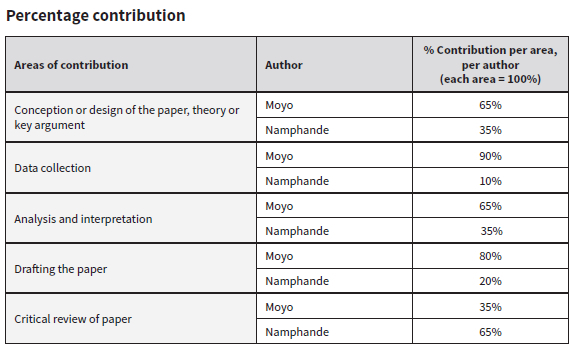
Notes on Contributors and their ContributionsLead author
Moyo, McRhonex Dziwe
Moyo is a PhD student at the University of Denver (Curriculum and Instruction). He holds a Master of Education (Curriculum Studies, Social Studies Education) from the University of Malawi. He taught at African Bible College for seven years and served as a Dean of Students for two years. His research interests include environmental education, citizenship education; pedagogy and critical thinking, special education; democracy in education; and politics and human rights education.
Co-author
Namphande, Peter Ngwinjo
Namphande has a PhD in Social Studies Education from the University of Malawi. He is the Executive Dean of the School of Education at the University of Malawi. His research interests include citizenship education; pedagogy and school practices; democracy in education; human rights education; and environmental education.
References
- Adamechi, B. C., & Romaine, H. A. (2000). Issues, problems, and prospects of free compulsory and qualitative education in Nigeria. Nigerian Educational Publishers.
- Aggarwal, J. C. (2002). Theory and practice of education. Vikas Publishing House
- Ajitoni, S. O., & Olubela, R. A. (2010). Promoting best practices in environmental education in African countries: The transformative roles of social studies teachers, International Journal of Contemporary Issues in Education, 2(2), 45-53.
-
Anastassiou, A. (2017). Sexting and young people: A review of the qualitative literature. The Qualitative Report, 22(8), 2231-2239. https://doi.org/10.46743/2160-3715/2017.2951
» https://doi.org/10.46743/2160-3715/2017.2951 -
Andrews, K. (2017). Culture, curriculum, and identity in education [Book review]. Journal of Ethnic and Cultural Studies, 4(2), 99-101. https://doi.org/10.29333/ejecs/85
» https://doi.org/10.29333/ejecs/85 - Best, J. W., & Kahn, J. V. (2006). Research in education. Pearson.
-
Bhandari, P. (2022). What is qualitative research? Methods and examples. https://www.scribbr.com/methodology/qualitative-research/
» https://www.scribbr.com/methodology/qualitative-research/ -
Braun, V., & Clarke, V. (2020). One size fit all? What counts as quality practice in (reflexive) thematic analysis? Qualitative Research in Psychology, 18(3), 328-352. https://doi.org/10.1080/14780887.2020.1769238
» https://doi.org/10.1080/14780887.2020.1769238 -
Brear M. (2018). Swazi co-researcher participants' dynamic preferences and motivations for, representation with real names and (English-language) pseudonyms - An ethnography. Qualitative Research, 18(6), 722-740. https://doi.org/10.1177/1468794117743467
» https://doi.org/10.1177/1468794117743467 -
Campbell, D. E. (2019). What social scientists have learned about civic education: A review of the literature. Peabody Journal of Education, 94(1), 32-47. https://doi.org/10.1080/0161956X.2019.1553601
» https://doi.org/10.1080/0161956X.2019.1553601 - Cohen, L. Manion, L., & Morrison, K. (2018). Research methods in education (8th ed.). Routledge.
- Colgan, A. D., & Maxwell, B. (2019). The importance of philosophy in teacher education: Mapping the decline and its consequences. Routledge.
- Corbin, J., & Strauss, A. (2008). Basics of qualitative research: Techniques and procedures for developing grounded theory (3rd ed.). Sage.
- Creswell, J. W., & Poth, C. N. (2018). Qualitative inquiry and research design: Choosing among five approaches. Sage.
-
Derakhshan, A., Greenier, V., & Fathi, J. (2022). Exploring the interplay between a loving pedagogy, creativity, and work engagement among EFL/ESL teachers: A multinational study. Current Psychology, 1-20. https://doi.org/10.1080/01434632.2023.2248064
» https://doi.org/10.1080/01434632.2023.2248064 -
Dewey, J. (1929). My pedagogic creed. Journal of National Education Association, 18(9), 291- 295. https://doi.org/10.1177/2515127420910679
» https://doi.org/10.1177/2515127420910679 - Dewey, J. (1985). Democracy and education (1916). Carbondale & Edwardsville: Southern Illinois University.
-
Ding, Y., & Zhang, P. (2018). Practice and effectiveness of web-based problem-based learning approach in a large class-size system: A comparative study. Nurse Education Practice, 31,161-164. http://dx.doi.org/10.1016/j.nepr.2018.06.009
» http://dx.doi.org/10.1016/j.nepr.2018.06.009 - Driscoll, M. P. (2005). Psychology of learning for instruction (3rd ed.). Environment and Development, Boston.
- Flynn, M. K., & Bordieri, M. J. (2023). Using debriefing as a tool to enhance the educational value of undergraduate research participation. Teaching of Psychology, 00986283231211535
-
Goddard, C. (2012). Semantic primes, semantic molecules, semantic templates: Key concepts in the NSM approach to lexical typology. Linguistics, 50(3), 711-743. https://doi.org/10.1515/ling-2012-0022
» https://doi.org/10.1515/ling-2012-0022 - Gross, G. (2003) Special needs education in primary school a practical guide (3rd ed.). Open University Press.
- Hartung, C. (2017). Conditional citizens: Rethinking children and young people's participation (Volume 5). Springer.
- Hess, D. E. (2009). Controversy in the classroom: The democratic power of discussion. Routledge.
-
Jefford, M., & Moore, R. (2008). Improvement of informed consent and the quality of consent documents. The Lancet Oncology, 9(5), 485-493. https://doi.org/10.1016/S1470-2045%2808%2970128-1
» https://doi.org/10.1016/S1470-2045%2808%2970128-1 -
Kabir, S. M. S. (2016). Methods of data collection. In Basic guidelines for research: An introductory approach for all disciplines (Chapter 9, pp. 201-275). Bangladesh: Book Zone Publication. https://www.researchgate.net/publication/325846997_METHODS_OF_DATA_COLLECTION
» https://www.researchgate.net/publication/325846997_METHODS_OF_DATA_COLLECTION -
Kalpana, T. (2014). A constructivist perspective on teaching and learning: A conceptual framework. International Research Journal of Social Sciences, 3(1), 27-29. https://www.researchgate.net/publication/363841518
» https://www.researchgate.net/publication/363841518 -
Kruidenier, D. & Morrison, S. (2013). Avoid the banking model in social and environmental justice education: Interrogate the tensions. Educational Studies, 49, 430-442. http://dx.doi.org/10.1080/00131946.2013.825803
» http://dx.doi.org/10.1080/00131946.2013.825803 -
Labaree, D. (2005). Progressivism, schools and schools of Education: American romance. Pedagogica Historica, 41(1), 275-288. https://doi.10.1080/0030923042000335583
» https://doi.10.1080/0030923042000335583 -
McClanahan, L. G. (2014). Essential elements of sustainability education. Journal of Sustainability Education, 6. http://www.jsedimensions.org/wordpress/wp-content/uploads/2014/05/McClanahan-Lauren-JSE-May-2014-PDF-Ready.pdf
» http://www.jsedimensions.org/wordpress/wp-content/uploads/2014/05/McClanahan-Lauren-JSE-May-2014-PDF-Ready.pdf - McKechnie, L. E. F. (2008). Observational research. In L. M. Given (Ed.), The Sage encyclopedia of qualitative research methods (pp. 573-577). Sage.
-
Millum, J., & Bromwich, D. (2018). Understanding, communication, and consent. Ergo, an Open Access Journal of Philosophy, 5(20201214), 45-68. doi:10.3998/ergo.12405314.0005.002
» https://doi.org/10.3998/ergo.12405314.0005.002 - Ministry of Education, Science, and Technology (MoEST). (2012). Secondary school assessment and curriculum review. National Symposium Report, Zomba, Malawi.
- Mokuku, T., Ramakhula, L, & Jobo, M. (2013). Learners' experiences of peer tutoring in the context of outdoor learning: The case of a primary school in Lesotho. Southern African Journal of Environmental Education, 29, 180-192.
-
Morse, J. M. (2008). Confusing categories and themes. Qualitative Health Research, 18(6), 727-728. https://doi.org/10.1177/1049732308314930
» https://doi.org/10.1177/1049732308314930 - Moyo, M. D., & Namphande, P. N. (2022). Challenges facing the implementation of learner- centred methods in the teaching of Social Studies in Malawian secondary schools. Multidisciplinary Journal of Language and Social Sciences Education, 5(1), 146-162.
-
Muthersbaugh, D., & Kern, A. (2012). Pre-service teachers' use of images in integrating environmental sustainability lessons. Journal of Teacher Education for Sustainability, 14, 67-79. http://dx.doi.org/10.2478/v10099-012-0006-8
» http://dx.doi.org/10.2478/v10099-012-0006-8 -
Nagra, H. (2015). Technology-enhanced, inquiry-based learning in the science classroom. http://hdl.handle.net/1828/6942.
» http://hdl.handle.net/1828/6942 - Opiro, W. (2002). An introduction to guidance and counseling: A guide to the guidance and counseling practitioners in schools. Kampala: Unpublished booklet.
-
Oyeleke, O. (2011). The democratization process and classroom teachings in Nigeria. Citizenship Social and Economics Education, 10(1), 56. https://doi.org/10.2304/csee.2011.10.1.56
» https://doi.org/10.2304/csee.2011.10.1.56 -
Peel, K. L. (2019). The fundamentals for self-regulated learning: A framework to guide analysis and reflection. Educational Practice and Theory, 41(1), 23-49. http://dx.doi.org/10.7459/ept/41.1.03
» http://dx.doi.org/10.7459/ept/41.1.03 - Piaget, J. (1977). The development of thought. Equilibration of cognitive structures. Blackwell.
- Polit, D. F., & Beck, C.T. (2014) Essentials of Nursing Research. Lippincott Williams & Wilkins.
-
Schwartz, M. (2012). Best practices in experiential learning. Learning and Teaching Office, Ryerson University. http://www.ryerson.ca/lt
» http://www.ryerson.ca/lt -
Semerci, Ç., & Batdi, V. (2015). A meta-analysis of constructivist learning approach on learners' academic achievements, retention and attitudes. Journal of Education and Training Studies, 3(2), 171-180. https://doi.org/10.11114/jets.v3i2.644
» https://doi.org/10.11114/jets.v3i2.644 - Shaver, J. P., et al. (1979). The status of social studies education: Impressions from three NSF studies. Social Education, 43(2), 150-153.
- Shuttleworth, J. M., & Marri, A. R. (2014). Teaching sustainability as a social issue: Learning from dialogue in the social studies classroom. In H. E. Muga & K. D. Thomas (Eds.), Cases on pedagogical innovations for sustainable development (pp. 328-347). IGI Global.
-
Spady, W. (1994). Outcomes-based education: Critical issues and answers. Curriculum Perspectives, 21-34. https://nles.eric.ed.gov/fulltext/ED380910.pdf
» https://nles.eric.ed.gov/fulltext/ED380910.pdf - Stahl, R. (Ed.). (1994). Cooperative learning in social studies: A handbook for teachers. Addison-Wesley.
- Tannock, S. (2021). Educating for radical social transformation in the climate crisis. Springer.
-
UNESCO. (2012). United Nations Decade of Education for Sustainable Development (20052014); Shaping the Education of Tomorrow. UNESCO. http://www.cbd.int/nnancial/mainstream/unesco-report2012.pdf.accessed22/08/2016
» http://www.cbd.int/nnancial/mainstream/unesco-report2012.pdf.accessed22/08/2016 - United Nations. (1987). Report of the World Commission on Environment and Development: Our Common Future (Brundtland Report). United Nations General Assembly.
- Uys, L. R., & Gwele, N. S. (2005). Curriculum development in nursing: Process and innovation. Routledge.
-
Wilson, E. K., & Marsh, G. E. (1995). Social studies and the internet revolution. Instructional technology. Social Education, 59(4), 198-202. https://www.learntechlib.org/p/79015/
» https://www.learntechlib.org/p/79015/ - Yin, R. K. (2018). Case study research and applications: Designs and methods (6th ed.). Sage.
-
Zahle, J. (2021). Objective data sets in qualitative research. Synthese, 199, 101-117. https://doi.org/10.1007/s11229-020-02630-2
» https://doi.org/10.1007/s11229-020-02630-2