Pre-service Teachers' Understandings and Practices of Climate Change
Abstract
Globally, climate change (CC) is one of the most critical challenges of the 21st century with far-reaching environmental social, economic and political impacts. Climate change education (CCE) is essential to educate citizens about CC, its effects, adaptations, and mitigations, including how lifestyles need to be adjusted. Educators at both schooling and higher education levels therefore should be informed and well-equipped to educate about CC. Pre-service teachers (PSTs) need more exposure to both climate science content and pedagogical content knowledge relating to climate science teaching. Research on how pre-service teachers' understandings and practices are influenced by their learnings about CC is lacking. This study investigated 40 pre-service science teachers' understandings and practices on CC, before and after a Biological Science for Educators module, in a Bachelor of Education undergraduate programme, at a South African university. The data generation methods in this qualitative, interpretive study included questionnaires and in-depth individual and focus group interviews. The findings indicate an improvement in the PSTs' understandings and practices about climate change in their local environments and their conceptual knowledge, after the module teaching. Their climate change practices were, however, embedded only in their immediate contexts. The module teaching approach to climate change education requires change as limited aspects of CC were taught and more action-oriented activities should be included. Thus, a holistic (rather than piecemeal) approach to CCE is needed to deepen pre-service teachers' understandings and practices and this study proposes an adaptable, action-oriented CCE model for PSTs.
climate change; climate change education; pre-service science teachers; understandings; practices; mitigation; adaptations
Introduction
Globally, climate change (CC) is one of the most critical challenges of the 21st century, with far-reaching impacts on the environment and society, affecting and limiting global economies (Abbass et al., 2022). The Intergovernmental Panel on Climate Change (IPCC, 2014) refers to CC as a long-term alteration in the state of the climate that can be detected by variations in its mean or variability, typically for decades or longer. Natural internal processes or external forces may cause CC, for example, volcanic eruptions and human interference. The United Nations Framework Convention on Climate Change (United Nations, 1992) regards CC as a climatic shift caused directly or indirectly by human action that modifies the composition of the global atmosphere in addition to the natural climatic changes observed over comparable periods. The effects of CC have become increasingly evident, especially in developing countries (Hoegh-Guldberg et al., 2019).
Education therefore has a vital role to play in helping citizens to understand the science of CC and to develop the knowledge, skills, and attitudes necessary to address it effectively. Climate change education (CCE) aims to transform both teachers and learners into active agents of change by moving beyond knowledge and transmission of facts to promoting climate literacy, critical thinking and a sense of agency. It aims to provide understanding of the complex interactions between natural and societal systems, enabling informed decisions for mitigation and adaptation for coping with CC effects. The role of education in fostering climate literacy and empowering individuals to take informed action is ever more critical (Kolenatý et al., 2022; Trott, 2020). A sustainable climate change education model that is adaptable and action-oriented for pre-service teachers is proposed in this study to inform their learning and engagement through relevant activities, to improve their understanding and practices of climate change.
Climate change awareness, understandings and practices are important in today's world. CCE must play an extensive role in education curricula, preparing learners for an uncertain future due to the consequences of CC, including both ecological and human dimensions (Stevenson et al., 2017). Mochizuki and Bryan (2015) argued that CCE should be taught as part of Education for Sustainable Development, since it incorporates environmental, political, social, and economic factors. Further, it has current implications for immediate action concerning food, health and shelter security that people can plan to survive and sustain to maintain an optimal ecosystem with no or limited long term environmental damage. Teaching about CC includes concepts of mitigation and adaptation, and their strategies. CCE is often based on two main approaches: adaptation and mitigation. Adaptation involves adjusting practices to reduce vulnerability to climate impacts, while mitigation focuses on decreasing greenhouse gas (GHG) emissions to curb climate change (UNESCO [United Nations Educational Scientific and Cultural Organization], 2021). Effective adaptation measures vary depending on context but generally aim either to lessen susceptibility to climate risks or to leverage potential benefits from changing climates. Teaching about climate change includes developing the concepts of mitigation and adaptation, and associated strategies to cope with emergencies and drastic environmental changes. Mitigation, for example, includes, the reduction of the release of GHG and adaptation, adjustments and coping with changes in climate (UNESCO, 2021) are critical in CCE. Mitigation and adaptation are important in the global fight against climate change with each approach contributing unique solutions tailored to the challenges and resources available in different contexts. Through ongoing efforts in education, policy, and technology, nations worldwide should continue to build resilience and reduce GHG emissions, working collectively, to address this pressing global issue (Messerli et al., 2019). Mitigation strategies focus on reducing GHG emissions or enhancing carbon sinks to balance emissions.
Climate change affects various aspects of life, including health, water availability, and food security, therefore the need for effective mitigation and adaptation strategies is urgent. Successful mitigation and adaptation hinge on the acknowledgment of climate change as a human-caused issue, making it essential for educators to have a comprehensive understanding of the phenomenon (IPCC, 2014). Education is central, especially through the work of science teachers, who are at the forefront of imparting knowledge about environmental and scientific concepts (Ramadhan et al., 2019). Even though there is a growing interest in CCE research, we know little about PSTs' knowledge and misconceptions are common (Seroussi et al., 2019). Without a strong foundation in climate science and its associated social and ethical dimensions, pre-service teachers may struggle to convey the urgency and complexity of climate change to their future learners. Moreover, there is a lack of consensus on effective CCE strategies, and teachers often face obstacles in integrating climate change concepts into their teaching practices (Monroe et al., 2019).
The science curriculum at the schooling level in South Africa is often criticised for being too theoretical (De Beer, 2016), which poses additional challenges for PSTs in effectively teaching climate change (Eilam, 2022). Although governmental initiatives have acknowledged the importance of CCE, its integration into the curriculum remains minimal. The National Curriculum Statement in education policy in South Africa includes climate change, however allocated time and content are limited, leaving significant gaps in comprehensive education on this critical issue (Matsepe & Maluleke, 2024).
Studies confirm that PSTs possess misconceptions and lack a comprehensive understanding of climate change, thus they run the risk of teaching inaccurate information, skills and behaviour, which could hinder their students' ability to grasp and act on the complexities of climate change (Seroussi et al., 2019; Tolppanen et al., 2021). In addressing these concerns, teacher education programmes must incorporate experiential learning opportunities that allow PSTs to engage with real-world climate issues. The interaction of poor teacher understanding and curriculum challenges significantly reduces teacher quality and their pedagogical content knowledge in CCE, often resulting in the delivery of surface knowledge and poor strategies used in teaching. Teaching can often cover simply an overview of topics and a lack of awareness of misconceptions, for example, confusing ozone depletion with climate change. In addition, an overcrowded curricula, limited resources, and lack of professional support can lead to teachers avoiding in-depth difficult scientific concepts, lack of connection to other topics, and relying on traditional teacher-centred teaching. Furthermore, teachers are often unable to connect complex climate science to practical, local contexts and this prevents the development of effective, action-oriented teaching methods. In addressing these concerns, teacher education programmes must incorporate deep content of climate science, experiential learning opportunities and field time that will allow PSTs to engage with real-world climate issues.
This study identifies the misconceptions and gaps of PSTs with regard to climate change and contributes to a CCE curriculum model with recommendations for educational policy and curriculum development aligning with Education for Sustainable Development (ESD). ESD is concerned with thinking and actions to increase awareness and engagement with environmental issues in the education sector.
The research question addressed is: What are pre-service science teachers' understandings and practices about climate change before and after exposure to a climate change intervention, in a Biological Science for Educators module?
Global response to climate change education
Education for Sustainable Development (ESD) and CC are closely linked, yet distinct in scope and focus. ESD is a broad, holistic educational approach aimed at creating a sustainable future across economic, social, and environmental dimensions, while CC refers specifically to the effects of long-term, human-induced alterations in global weather patterns and temperatures. CCE plays a critical role in raising awareness and preparing future generations for climate action, with a focus of teachers' knowledge in climate science and must be promoted in the education sector.
Many countries have focused on the creation of CC policies and by introducing and/ or integrating CCE in school curricula, higher education modules and educational courses, lectures, discussions and student seminars. Curriculum changes can be systemic and include biophysical, socio-economic and socio-psychological understandings and skills (Vogel et al., 2015), teaching methods can include narratives and innovative hands-on and field investigations. The effects of the courses on individual practices and agency provide opportunities for capacity building, knowledge exchange and the spread of CCE across education disciplines and institutions (Kemeni Kambiet & Mbah, 2025).
Several countries, including China, have been enhancing their focus on CCE to provide individuals with the necessary understandings to address these challenges. The challenges are addressed through educational campaigns, seminars, public forums and direct actions (Esringü & Toy, 2022). In Finland, CCE is being advanced through courses like Climate, which were developed with the help of experts in the disciplines of Climate Science and Pedagogy, implemented in eleven higher education institutions. Online materials, exams, and collaborative projects are included in this course, which has a positive response from both students and faculty (Tolppanen et al., 2022). Even a short course on climate change can be transformative to some students and changes their understandings and perceptions of climate change (Tolppanen et al., 2022). These initiatives show the critical importance of education in addressing climate change, as well as showing a relatively global commitment to enhancing understanding, promoting attitude changes, and initiating societal transformation to mitigate the effects of climate change.
Climate change education faces several significant gaps and challenges that hinder its effectiveness. These include lack of resources and knowledge for equipping people with coping strategies for climate change, regarding mitigation and adaptation strategies (Sibanda & Manik, 2022), which contributes to addressing the concerns of climate change. However, climate change action strategies are yet to achieve results in mitigating and adapting to climate change, considering the gaps described. One of the reasons for the gaps is the lack of consensus on what should be included in CCE and how it should be approached, leading to inconsistencies in curriculum design and implementation (Reid, 2019). Moreover, there is insufficient integration of CCE across different subjects and disciplines, limiting opportunities for interdisciplinary learning and making it harder for students to see the broader implications of climate change (Reid, 2019).
Gaps and challenges in higher education and in teacher education
Climate change education can be taught as a stand-alone subject or integrated into other subjects (Chopra et al., 2019). Some educational institutions in South Africa have implemented and advocated for Environmental Education (EE) in the last three decades but formal teaching is still an issue. In-service teachers lack general EE knowledge and do not know how to integrate it (Damoah et al., 2024). EE is a broad, lifelong process developing skills to understand and act on general ecological issues. CCE is a specialised, urgent sub-component focusing specifically on atmospheric changes, mitigation, and adaptation. EE covers broad environmentalism, is comprehensive, covers ecosystems, biodiversity, pollution, and conservation while CCE addresses the specific immediate crisis to be actionable where climatic science is focused. CCE focuses on issues within the climate crisis such as flooding and drought, greenhouse gases, and strategies of resilience.
Enhancing CCE is also necessary at tertiary levels, as increased awareness can inspire climate activism among youth leading to corresponding adaptation and mitigation behaviours. Access to and understanding of CC knowledge can impact students' quality of life and their sense of responsibility in terms of environmental stewardship. University students, especially those in developing countries, are well-positioned to contribute to climate change mitigation, as they often embrace technology and understand its role in supporting action-oriented education (Mugambiwa & Dzomonda, 2018). Monroe et al. (2019) have argued that technologically, students may be empowered with provision of tools and information, necessary for impactful climate action. Developing climate change knowledge among university students is crucial especially in regions disproportionately affected by climate impacts, as this enables students to participate effectively in implementing strategies for climate adaptation and mitigation. Despite the growing recognition of the significance of climate change education in teacher preparation programmes, there are substantial gaps in the way these programmes address the requirements of PSTs. Many programmes, according to Eilam (2022), fail to offer adequate climate science content or pedagogical instruction that is tailored to climate change education.
Even when climate change is included in teacher education programmes, it is often presented as a scientific issue, without sufficient attention given to the social, political, and ethical dimensions of the problem. As a result, PSTs may lack the interdisciplinary knowledge needed to engage their students in meaningful discussions about the broader implications of climate change for society and the environment.
Pre-service science teachers' understanding of climate change
One of the challenges in CCE is the prevalence of misconceptions among PSTs. According to Nation and Feldman (2021), misconceptions about the causes and effects of climate change, such as it not being real and the idea that human activities do not contribute, are common amongst PST, with many holding erroneous beliefs about topics such as the greenhouse effect, global warming, and the role of human activity in driving climate change. These misconceptions can have serious implications for the quality of climate change education in schools. Teachers who do not fully understand the science of climate change are less likely to effectively convey accurate information to their students, potentially perpetuating misunderstandings and hindering efforts to foster climate literacy.
Research also indicates that gaps in PSTs' knowledge of climate change impacts their ability to teach this critical topic effectively (Boon, 2016; Eilam, 2022). Pre-service teachers can lack confidence in discussing climate change due to their inadequate grasp of scientific principles and socio-political complexities (Breitenmoser et al., 2024; Drewes et al., 2018). Despite school students leading climate change actions, the educational system has yet to adequately acknowledge the climate crisis (Irwin, 2020). Many teachers are unaware of the issue or are uncertain how to address it. Education has the potential to support effective strategies for mitigating and adapting to climate change (IPCC, 2014), however, its effectiveness in policy implementation is hindered by a lack of cross-disciplinary collaboration. The literature review confirms that there is a gap in CCE in the South African school curriculum, particularly regarding its consequences for human health. It is in this context that curriculum reform in CCE is urgently needed for teacher education tertiary institutions (Sibanda & Manik, 2022).
Studies show that PSTs generally have a basic grasp of climate change; however, their understanding is often superficial and occasionally inconsistent (Bhattacharya, 2016; Sağbilge, 2022). Although PSTs are cognisant of the fundamental causes and consequences of climate change, they frequently encounter difficulties in comprehending the scientific intricacies that underlie it, including the greenhouse effect, carbon cycles, and the correlation between climate change and extreme weather events (Winter et al., 2022). Additionally, there is a frequent misunderstanding among PSTs, particularly in relation to the distinction between weather variability and climate change (Lombardi et al., 2020).
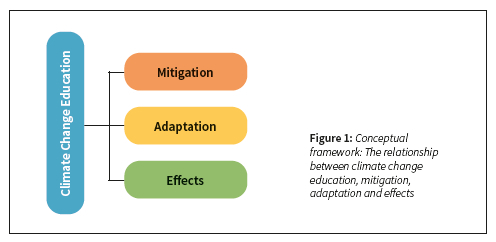
The conceptual framework illustrated in Figure 1 highlights the dynamic relationship between CCE, mitigation, adaptation, and the effects of CCE.
This framework portrays the integrative role of CCE in enhancing understandings and action across these critical areas (Stevenson et al., 2017). The effects of CCE, as illustrated in the framework, encompass its influence on learners' knowledge, attitudes, and behaviours.
Methodology
This study employed an interpretivist paradigm, which is consistent with the research objective of investigating the comprehensions of climate change education among pre-service teachers. This paradigm enables a more insightful and nuanced comprehension of the subject matter by embracing the complexity of diverse perspectives (Thanh & Thanh, 2015), contributing to a more informed and proactive society.
This study's use of the interpretivist paradigm enabled a comprehensive examination of the way PSTs develop their comprehension of climate change. In this paradigm, reality is not perceived as an objective entity that can be discovered, but rather as a construct that is influenced by human interaction and interpretation. This study utilised a questionnaire to generate data facilitating the analysis of the understandings and practices of PSTs in the context of climate change education. As Jenner et al. (2004) explained, perception is an active constructive and sensory process of production, which implies that individuals interact with their social and cultural environments to attribute meaning to a variety of phenomena. This is consistent with the study's emphasis on the ways in which the worldviews, experiences, and contexts of PSTs affect their comprehension of climate change. Additionally, the subjective nature of interpretive epistemology recognises that the observer's perspectives, values, and heritage can influence the external reality that is obtained (Pervin & Mokhtar, 2022). Using this paradigm, the study was able to deeply explore the socially constructed realities of PST and provide insights into the educational implications of their understandings for climate change education. This method not only emphasised the intricacies of their viewpoints but also highlighted the value of context-specific interpretations in the development of meaningful educational practices.
A qualitative approach with methods designed to explore PSTs' individual understandings and practices (behaviours, motivations and emotional responses to climate change education) was implemented. A combination of questionnaires, individual interviews, and focus group discussions were used to generate data providing both a broad overview and an in-depth analysis of the PSTs' knowledge and practices. A qualitative research approach was used to understand the complex motivations behind the PSTs' actions and attitudes toward climate change, and it allowed for exploration of their individual experiences.
This study was conducted at a tertiary institution in KwaZulu-Natal, South Africa. Forty PSTs who enrolled in the 'Biological Science for Educators' module agreed to participate in the study. The module aimed to equip PSTs with essential knowledge, theories, skills, attitudes and values related to environmental education, particularly in biodiversity, ecosystem ecology, and climate change. It was designed to foster a comprehensive understanding of environmental issues, and it emphasised both theoretical and practical learning through fieldwork sessions. Students participated in three on-campus fieldwork sessions and a three-day off-campus field experience at an environmental educational centre, providing them with hands-on exposure to environmental studies. Assessment was equally weighted between coursework and exams, with assignments including fieldwork reports, research projects and presentations that encouraged critical engagement with ecological concepts and climate change.
Participants were selected through purposive sampling, ensuring that they were both accessible and willing to participate. These sampling strategies were crucial for gathering rich data efficiently, with purposive sampling specifically targeting individuals who could provide insights into climate change education and curriculum enhancement. All 40 PSTs completed questionnaires before and after the module, and from this group, ten participants were randomly selected for in-depth interviews. When analysing the data, participants were assigned pseudonyms to ensure confidentiality and protect their identities.
The questionnaire for the study was based on other climate change teaching tools that were found online and in relevant literature. The questions were altered and academic supervisors verified them for validity. A pilot study was then conducted using the questionnaire with a small group of pre-service science teachers who were not involved in the study. Further changes to the questionnaire were implemented in response to their feedback to enhance the clarity of the topics and link them with the research objectives. Similarly, the semi-structured interview guide was enhanced by asking two researchers in science education to review and test it. This ensured that the questions were effective in generating detailed responses that corresponded with the themes that emerged from the questionnaire. Feedback led to adjustments in the wording of certain questions and the overall flow of the interview process. By addressing potential issues early on, the pilot study enhanced the trustworthiness of the subsequent interviews, ultimately resulting in richer and more focused data generation.
Data gathering occurred in two phases: Phase 1 involved administering a questionnaire at the beginning and Phase 2 involved re-administering the questionnaire after the climate change section of the module was completed, followed by interviews with the ten randomly selected PSTs. These interviews provided a more detailed exploration of the participants' perspectives, allowing the researcher to assess whether and how the module had influenced their understanding and practices related to climate change education; questions included "Where did you hear about climate change?" and "Can you define climate change?" Ethical processes were followed throughout, ensuring the protection of participants' rights and the integrity of the research and ethics clearance was obtained from the university.
Qualitative descriptive analyses were used to process the interview and questionnaire data. This involved reading the transcripts, identifying key findings, and clustering them into themes.
Content analysis was applied to uncover repeating patterns, viewpoints, keywords and statements within the data. By focusing on the recurrence of ideas and perceptions, this approach provided a detailed understanding of how the module impacted PSTs' engagement with CCE. The themes and categories identified in this study were validated through a systematic process involving multiple phases of analysis. First, codes were developed from the qualitative data which included important themes and ideas from pre-service teachers (PSTs) responses. These codes were then grouped into broader categories based on similarity and correspondence with current knowledge on climate change.
Findings
Findings from this study showed how pre-service science teachers conceptualise and respond to environmental issues, shedding light on the role that teacher education can play in shaping effective climate change instruction in schools. Findings also portray the gaps in knowledge, misconceptions, as well as the effectiveness of the module in influencing PSTs' understandings and practices.
Pre-service teachers understanding of climate change
The study explored PSTs' understanding and practices regarding climate change. Although the term 'climate change' was recognised by all participants, their understanding of it varied. Questionnaire responses showed clear differences in how PSTs conceptualised climate change, with some participants demonstrating more scientifically aligned understandings and others providing more limited explanations. For example, when asked what they understood about climate change before the module, participant NN stated that "[CC is] caused by the constant heat and rainfalls or colds that we experience daily and it causes a lot of damage to our environment" whereas participant A described climate change as "the long-term changes in the earth's temperature, wind patterns and precipitation which is driven by human activities such as burning of fossil fuels, overpopulation and use of vehicles". The follow-up interviews with ten participants reiterated these questionnaire findings and did not reveal different patterns of understanding, indicating continued variation in PSTs' conceptualisations of climate change.
Perspectives on environmental concerns
Participants were asked to identify major environmental concerns through a questionnaire covering pollution, flooding, traffic, poor waste management, climate change and overpopulation. These options were chosen to cover a wide range of environmental problems that participants may face. The most frequently chosen concern was pollution, which was mainly due to its direct impact on participants' health and ecosystems. Pollution was identified by 32 out of 40 participants, often in combination with other environmental issues. For example, one participant stated they had "experienced water pollution in the past few months. Due to water shortage, they must fetch water from rivers, however that was challenging as people throw dirt there" (PST-F).
Flooding was also a common issue due to personal encounters of loss and damage, with 31 of 40 participants selecting flooding as a major concern. For example, one participant explained that they had "experienced flooding in my town. People were left homeless, died, animals too" (PST-BB).
Despite the fact that climate change was not the most frequently discussed issue, it was still identified by 23 out of 40 participants, often alongside pollution and flooding. Those who acknowledged its importance emphasised the need for effective mitigation strategies and often its effects of extreme temperatures. As one participant noted, "with climate change I have experienced the sun reaching 43 degrees and cold that is below 0 degrees, which is unpleasant and made me sick" (PST-U).
Gaps in scientific knowledge and conceptual understanding
Although PSTs understood fundamental climate change concepts, they prioritised other environmental concerns, such as pollution and flooding, which were chosen by 80% of participants because of their personal experiences. For example, one participant stated that pollution is the "most environmental issue experienced, and it is affecting people's health and the environment" (PST-A, pre-module), while another described having "experienced flooding last year that destroyed homes and roads" (PST-NN, pre-module).
The questionnaire data revealed gaps in detailed understandings of climate change, especially in the context of broader effects such as impacts on ecosystems, the economy, and biodiversity loss. This was evident in responses where participants acknowledged climate change but struggled to explain its mechanisms. For example, one PST described climate change as the "reason for floods. If climate is not changing floods would not occur" (PST-NN, pre-module), while another noted that it "may [be] due to a lot of factors like pollution and overpopulation" (PST-A, pre-module).
Numerous participants acknowledged that human activities are significant contributors to climate change; however, they had difficulty, for example, understanding the specific processes that connect greenhouse gas emissions to changes in ecosystems and weather patterns. For example, 22 participants before the module mentioned the use of fossil fuels and ten participants before the module and five after the module understood that overpopulation can affect the climate, but they could not clearly explain how.
Practices and mitigation strategies
Before the climate change module, PSTs mainly practised simple eco-friendly habits like throwing away trash and saving energy. However, they also recognised the significance of more broad systemic changes, such as policy reforms and business regulations, in the context of climate change. Education and awareness are important for encouraging sustainable practices and getting support for climate policies.
After finishing the module, PSTs showed more understanding of how climate change works and were more committed to acting. They felt more confident about talking about the science of climate change and how it affects society, like supply of food and the loss of plant and animal life. Furthermore, when interviewed, there was an increased awareness of incorporating climate change action into their teaching practices. For example, Participant O stated, "Teachers can be the agent that could educate people about taking action for climate change" highlighting the pivotal role educators play in promoting climate awareness and action. The module also addressed the importance of multi-level collaboration, showing the responsibilities of governments, businesses, and communities in promoting collective action.
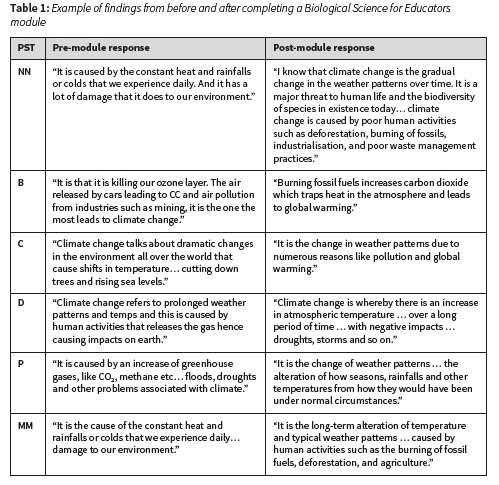
Table 1 below illustrates the development of teachers' understandings of climate change following participation in the CC module.
Discussion
The findings presented in Table 1 indicate differences in how pre-service science teachers (PSTs) articulated their understandings of climate change before and after engagement in the Biological Science for Educators module. However, the pre- and post-module responses also show that PSTs' explanations of the interconnectedness between climate change causes and effects remained uneven and, in some cases, limited.
Although PSTs continued to choose pollution and local flooding as their major environmental concerns, pre-service teachers showed a stronger understanding of climate change effects regarding health consequences and food security problems. As shown in Table 1, PSTs continued to prioritise visible and locally experienced issues such as pollution and flooding in both pre- and post-module responses, which suggests that climate change was often framed in relation to immediate environmental experiences rather than as a systemic and global phenomenon. This outcome concurs with research by Monroe et al. (2019) which indicated that environmental education sometimes helps to reinforce rather than address the misinterpretations.
The findings indicate that PSTs frequently drew on personal and local experiences when articulating their understandings of climate change, both before and after engagement in the module. Although personal experiences are powerful, Lewandowsky (2021) has argued that, especially when they are not fully supported with thorough scientific explanations, they can lead to simplistic climate change models. Focusing on human actions like greenhouse gas emissions without fully understanding the science behind them, PSTs may have led to an enhanced but still incomplete understanding of the causes and effects of climate change.
As illustrated in Table 1, post-module responses from some participants often referred to shared responsibility involving governments, communities, as well as industries; however, PSTs' descriptions of large-scale or structural actions remained limited. This limitation is what Hochachka (2024) characterises as the "action gap" in climate change education where, despite the rising climate concern and knowledge, there exists a gap where climate concern often does not lead to action. This gap could have resulted from the module's emphasis on personal responsibility without enough attention to structural and policy-level solutions.
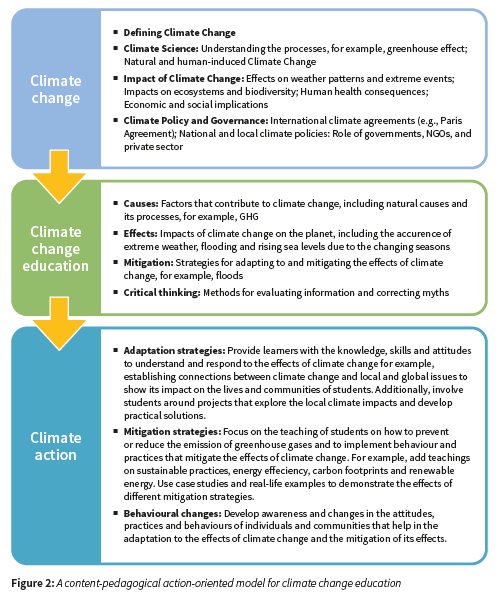
Pre-service science teachers' pre-module responses often included local activities and excluded global actions, indicating limited articulation of the interconnectedness of climate systems. In post-module responses, several participants (H, B, C, P, BB, EE, MM) emphasised shared responsibility for addressing climate change. For example, Participant A stated: "All sectors of society have the power and responsibility to educate people and take action against climate change". Similarly, Participant C noted that "governments, communities and businesses must work together to reduce the effects of climate change". These responses demonstrate how some PSTs articulated responsibility for climate action differently over time, incorporating both individual and structural roles. Effective climate change education, according to Green et al. (2021), should combine systems thinking to enable students to understand the intricate connections and it can improve students' capabilities to analyse and solve sustainability problems. The lack of a strong systems thinking approach in the curriculum certainly hampered PSTs' capacity to completely understand the worldwide consequences of local actions. This may suggest that deeply rooted beliefs about climate change are difficult to shift within a single module. Changing deeply rooted beliefs requires ongoing educational interventions challenging present viewpoints and advancing critical thinking. Based on the literature review, the climate change framework, and the findings of this study, a content-pedagogical action-oriented model for climate change education was developed (see Figure 2 on the following page).
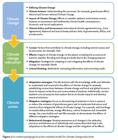
The model in Figure 2 is designed to be adaptive and applicable across diverse educational settings, including schools, communities, higher education institutions and its approach on specific context can be tailored, acknowledging diverse needs and challenges. Continuous assessing, reflecting, and evaluating climate change, climate change education and action are important for understanding the depth and impacts of climate change, developing and improving policies and educational content, as well as ensuring effective and responsible climate action. The model also extends beyond theoretical knowledge by emphasising practical engagement and individual responsibility. The model encourages direct involvement from individuals empowering them to take informed actions and contribute to climate resilience and adaptation efforts. In addition, the model provides a structured but flexible approach that integrates scientific knowledge, pedagogical strategies and actionable steps which help to bridge the action gap between understanding climate change and implementing meaningful actions. Through continuous evaluation and adaptation, the model proposes that CCE remains responsive to climate change consequences and educational needs. Furthermore, the model's focus on adaptability and action-orientation distinguishes it from other CCE frameworks because traditional frameworks often emphasise cognitive knowledge and raising awareness. The model also incorporates context-specific knowledge systems including indigenous and community-based perspectives often overlooked by conventional models. Furthermore, it confronts the limitations of standardised approaches through its emphasis on educator independence and adaptability which benefits under-resourced or diverse educational settings with inflexible curricula. Finally, the model highlights the potential transformative impact for CCE of integration of critical thinking skills and content specific actionable knowledge.
Conclusion
This study explored pre-service science teachers' understandings and practices before and after teaching on climate change in a higher education biology education module and the study revealed significant knowledge gaps, especially with respect to mitigation and adaptation strategies. Despite awareness, PSTs often deprioritise climate change compared to pollution and flooding which demonstrates inadequate understanding of key concepts and a heavy reliance on personal experiences. They also show minimal awareness of causal connections and often fail to propose concrete solutions to address climate change.
Implications and recommendations
The implications of this study are multifaceted. Firstly, the findings can contribute to teacher professional development by stressing the importance of climate change education. By equipping pre-service teachers with extensive, accurate and relevant knowledge as well effective pedagogical strategies, professional development can prepare educators to teach this complex topic confidently. This, in turn, can lead to improved learner outcomes, as teachers with a comprehensive understanding of climate change are more likely to convey accurate information and foster a sense of urgency and responsibility among their learners.
Curriculum development and capacity development are critical implications of this study. The findings could prompt revisions in teacher education curricula to include comprehensive climate change education components that cover scientific, social and ethical aspects. The study stresses the importance of allowing pre-service teachers to not only understand the scientific basis of climate change but to also be aware of its broader implications for society and the environment.
Moreover, by fostering an increased awareness and commitment to action, educators who are well-versed in climate change are more likely to engage in and promote sustainable practices within their schools and communities.
Lastly, the study's findings can serve as a foundation for policy advocacy by highlighting the areas where pre-service teachers need more support and education; stakeholders can advocate for changes in educational policy that prioritise climate change education in teacher professional development programmes. This aligns with global efforts such as the United Nations Educational, Scientific and Cultural Organization (UNESCO) Sustainable Development Goals (SDGs), which emphasise the importance of quality education in achieving a more sustainable future.
Notes on Contributors and their ContributionsLead author
Govender, Caitlin
Caitlin Govender holds a master's degree in Education and is a PhD candidate in Science Education. Her scholarly work focuses on Education for Sustainable Development, climate change education and curriculum transformation in teacher education.
Co-author
Govender, Nadaraj
Professor Nadaraj Govender holds a PhD in Physics, NRF-rated C2 and research in multidisciplinary Science Education. He has published 47 peer-reviewed papers and presented 66 conference papers. He has supervised 12 PhDs and 12 masters students.
Co-author
James, Angela
Professor Angela James holds a PhD in Curriculum and Instructional Design and Development (Science Education). She has published journal articles, conference proceedings and chapters. She has also edited a book on Higher Education Curricula in VUCA and designed curriculum tools.
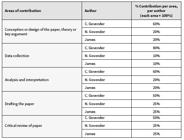
Percentage contribution
References
Literature review
-
Abbass, K., Qasim, M. Z., Song, H., Murshed, M., Mahmood, H., & Younis, I. (2022). A review of the global climate change impacts, adaptation, and sustainable mitigation measures. Environmental Science and Pollution Research, 29(28), 42539-42559. https://doi.org/10.1007/s11356-022-19718-6
» https://doi.org/10.1007/s11356-022-19718-6 - Bhattacharya, D. (2016). Conceptualizing in-service secondary school science teachers' knowledge base for promoting understanding about the science of global climate change. [Unpublished thesis]. University of Minnesota.
- Boon, H. J. (2016). Pre-service teachers and climate change: A stalemate? Australian Journal of Teacher Education, 41(4), 39-63.
-
Breitenmoser, P., Keller-Schneider, M., & Niebert, K. (2024). Navigating controversy and neutrality: Pre-service teachers' beliefs on teaching climate change. Environmental Education Research, 1-19. https://doi.org/10.1080/13504622.2024.2375335
» https://doi.org/10.1080/13504622.2024.2375335 -
Chopra, R., Joshi, A., Nagarajan, A., Fomproix, N., & Shashidhara, L. (2019). Climate change education across the curriculum. In W. Leal Filho & S. Hemstock (Eds.), Climate change and the role of education (pp.53-69). Springer. https://doi.org/10.1007/978-3-030-32898-6_4
» https://doi.org/10.1007/978-3-030-32898-6_4 -
Damoah, B., Khalo, X., & Adu, E. (2024). South African integrated environmental education curriculum trajectory. International Journal of Educational Research, 125, https://doi.org/10.1016/j.ijer.2024.102352
» https://doi.org/10.1016/j.ijer.2024.102352 -
De Beer, J. (2016). Re-imagining science education in South Africa: The affordances of indigenous knowledge for self-directed learning in the school curriculum. Journal for New Generation Sciences, 14(3), 34-53. https://journals.co.za/doi/pdf/10.10520/EJC-6ceea187c
» https://journals.co.za/doi/pdf/10.10520/EJC-6ceea187c -
Drewes, A., Henderson, J., & Mouza, C. (2018). Professional development design considerations in climate change education: Teacher enactment and student learning. International Journal of Science Education, 40(1), 67-89. https://doi.org/10.1080/09500693.2017.1397798
» https://doi.org/10.1080/09500693.2017.1397798 -
Eilam, E. (2022). Climate change education: The problem with walking away from disciplines. Studies in Science Education, 58(2), 231-264. https://doi.org/10.1080/03057267.2021.2011589
» https://doi.org/10.1080/03057267.2021.2011589 -
Esringü, A. & Toy, S. (2022). The effect of climate change education on the knowledge and awareness levels of Atatürk University Students. Kent Akademisi, 15(2), 595-610. https://doi.org/10.35674/kent.1041157
» https://doi.org/10.35674/kent.1041157 -
Green, C., Molloy, O., & Duggan, J. (2021). An empirical study of the impact of systems thinking and simulation on sustainability education. Sustainability, 14(1), 394. https://doi.org/10.3390/su14010394
» https://doi.org/10.3390/su14010394 -
Hochachka, G. (2024). When concern is not enough: Overcoming the climate awareness-action gap. Ambio, 53(8), 1182-1202. https://doi.org/10.1007/s13280-024-01999-5
» https://doi.org/10.1007/s13280-024-01999-5 -
Hoegh-Guldberg, O., Jacob, D., Taylor, M., Guillen Bolaños, T., Bindi, M., Brown, S., Camilloni, I. A., Diedhiou, A., Djalante, R., & Ebi, K. (2019). The human imperative of stabilizing global climate change at 1.5 C. Science, 365(6459). https://doi.org/10.1126/science.aaw6974
» https://doi.org/10.1126/science.aaw6974 -
IPCC [Intergovernmental Panel on Climate Change]. (2014). Climate change 2014: Mitigation of climate change. Contribution of Working Group III to the fifth assessment report of the Intergovernmental Panel on Climate Change. R. Pichs-Madruga, Y. Sokona, E. Farahani, S. Kadner, K. Seyboth, A. Adler, I. Baum, S. Brunner, P. Eickemeier, B. Kriemann, J. Savolainen, J. Schlömer, C. von Stechow, T. Zwickel, & J. C. Minx (Eds.). Cambridge University Press. https://www.ipcc.ch/site/assets/uploads/2018/02/ipcc_wg3_ar5_full.pdf
» https://www.ipcc.ch/site/assets/uploads/2018/02/ipcc_wg3_ar5_full.pdf -
Irwin, R. (2020). Climate change and education. Educational Philosophy and Theory, 52(5), 492-507. https://doi.org/10.1080/00131857.2019.1642196
» https://doi.org/10.1080/00131857.2019.1642196 - Jenner, B., Flick, U., Von Kardoff, E., & Steinke, I. (2004). A companion to qualitative research (Vol. 1). Sage.
-
Kemeni Kambiet, P. L. & Mbah, M. F. (2025). Climate change education in African higher education institutions: Insights into current practices and future directions. In M.F. Mbah, P. Molthan-Hill & E.L. Molua (Eds.), Practices, perceptions and prospects for climate change education in Africa (pp. 335-369). Springer. https://doi.org/10.1007/978-3-031-84081-4_17
» https://doi.org/10.1007/978-3-031-84081-4_17 -
Kolenatý, M., Kroufek, R., & Cincera, J. (2022). What triggers climate action: The impact of a climate change education program on students' climate literacy and their willingness to act. Sustainability, 14(16), 10365. https://doi.org/10.3390/su141610365
» https://doi.org/10.3390/su141610365 -
Lewandowsky, S. (2021). Climate change disinformation and how to combat it. Annual Review of Public Health, 42(1), 1-21. https://doi.org/10.1146/annurev-publhealth-090419-102409
» https://doi.org/10.1146/annurev-publhealth-090419-102409 -
Lombardi, D., Uslu, B., & Bailey, J. M. (2020). Extreme weather events and the climate crisis: What is the connection. The Earth Scientist, 36(3), 22-26. https://www.nestanet.org/resources/Documents/Advocacy/TES/2015-2020/Summer16.pdf
» https://www.nestanet.org/resources/Documents/Advocacy/TES/2015-2020/Summer16.pdf -
Matsepe, D. & Maluleke, M. (2024). Infusing climate change education into Curriculum and Assessment Policy Statement (CAPS) as a resilience strategy in South Africa: Towards a theory of change. E-Journal of Humanities, Arts and Social Sciences, 5, 73-82. https://doi.org/10.38159/ehass.2024596
» https://doi.org/10.38159/ehass.2024596 - Messerli, P., Murniningtyas, E., Eloundou-Enyegue, P., Foli, E. G., Furman, E., Glassman, A., Hernández Licona, G., Kim, E. M., Lutz, W., & Moatti, J.-P. (2019). Global sustainable development report 2019: The future is now - science for achieving sustainable development. United Nations.
-
Mochizuki, Y. & Bryan, A. (2015). Climate change education in the context of education for sustainable development: Rationale and principles. Journal of Education for Sustainable Development, 9, 4-26. https://doi.org/10.1177/0973408215569109
» https://doi.org/10.1177/0973408215569109 -
Monroe, M. C., Plate, R. R., Oxarart, A., Bowers, A., & Chaves, W. A. (2019). Identifying effective climate change education strategies: A systematic review of the research. Environmental Education Research, 25(6), 791-812. https://doi.org/10.1080/13504622.2017.1360842
» https://doi.org/10.1080/13504622.2017.1360842 -
Mugambiwa, S. S. & Dzomonda, O. (2018). Climate change and vulnerability discourse by students at a South African university. Jàmbá: Journal of Disaster Risk Studies, 10(1), 1-6. https://doi.org/10.4102/jamba.v10i1.476
» https://doi.org/10.4102/jamba.v10i1.476 - Nation, M. T. & Feldman, A. (2021). Environmental education in the secondary science classroom: How teachers' beliefs influence their instruction of climate change. Journal of Science Teacher Education, 32(5), 481-499.
-
Pervin, N. & Mokhtar, M. (2022). The interpretivist research paradigm: A subjective notion of a social context. International Journal of Academic Research in Progressive Education and Development, 11(2), 419-428. https://doi.org/10.6007/IJARPED/v11-i2/12938
» https://doi.org/10.6007/IJARPED/v11-i2/12938 -
Ramadhan, S., Sukma, E., & Indriyani, V. (2019). Environmental education and disaster mitigation through language learning. IOP Conference Series: Earth and Environmental Science, Volume 314, 1st International Conference on Environmental Sciences (ICES2018) 15-16 November 2018, West Sumatra, Indonesia. https://doi.org/10.1088/1755-1315/314/1/012054
» https://doi.org/10.1088/1755-1315/314/1/012054 -
Reid, A. (2019). Climate change education and research: possibilities and potentials versus problems and perils? Environmental Education Research, 25(6), 767-790. https://doi.org/10.1080/13504622.2019.1664075
» https://doi.org/10.1080/13504622.2019.1664075 - Sağbilge, K. (2022). Investigation of science teachers' topic-specific pedagogical content knowledge regarding climate, weather and seasons from the dual perspective. [Unpublished thesis]. Middle East Technical University.
-
Seroussi, D.-E., Rothschild, N., Kurzbaum, E., Yaffe, Y., & Hemo, T. (2019). Teachers' knowledge, beliefs, and attitudes about climate change. International Education Studies, 12(8), 33-45. https://doi.org/10.5539/ies.v12n8p33
» https://doi.org/10.5539/ies.v12n8p33 -
Sibanda, A. & Manik, S. (2022). Environmental Education efforts in a rural drought-prone district in Zimbabwe: Micro innovations with growth potential. Journal of Geography Education in Africa, 5, 77-95. https://doi.org/10.46622/jogea.v5i1.4114
» https://doi.org/10.46622/jogea.v5i1.4114 -
Stevenson, R. B., Nicholls, J., & Whitehouse, H. (2017). What is climate change education? Curriculum Perspectives, 37, 67-71. https://doi.org/10.1007/s41297-017-0015-9
» https://doi.org/10.1007/s41297-017-0015-9 - Thanh, N. C. & Thanh, T. (2015). The interconnection between interpretivist paradigm and qualitative methods in education. American Journal of Educational Science, 1(2), 24-27.
-
Tolppanen, S., Claudelin, A., & Kang, J. (2021). Pre-service teachers' knowledge and perceptions of the impact of mitigative climate actions and their willingness to act. Research in Science Education, 51, 1629-1649. https://doi.org/10.1007/s11165-020-09921-1
» https://doi.org/10.1007/s11165-020-09921-1 -
Tolppanen, S., Kang, J., & Riuttanen, L. (2022). Changes in students' knowledge, values, worldview, and willingness to take mitigative climate action after attending a course on holistic climate change education. Journal of Cleaner Production, 373, 133865. https://doi.org/10.1016/j.jclepro.2022.133865
» https://doi.org/10.1016/j.jclepro.2022.133865 -
Trott, C. D. (2020). Children's constructive climate change engagement: Empowering awareness, agency, and action. Environmental Education Research, 26(4), 532-554. https://doi.org/10.1080/13504622.2019.1675594
» https://doi.org/10.1080/13504622.2019.1675594 -
United Nations. (1992). United Nations Framework Convention on Climate Change. https://unfccc.int/resource/docs/convkp/conveng.pdf
» https://unfccc.int/resource/docs/convkp/conveng.pdf -
UNESCO [United Nations Educational Scientific and Cultural Organization]. (2021). Climate change education. https://www.unesco.org/en/climate-change/education
» https://www.unesco.org/en/climate-change/education -
Vogel, C., Schwaibold, U., & Misser, S. (2015). Teaching and learning for climate change: The role of teacher materials and curriculum design in South Africa. Southern African Journal of Environmental Education, 31, 78-97. https://doi.org/10.4314/SAJEE.V31I1.137673
» https://doi.org/10.4314/SAJEE.V31I1.137673 -
Winter, V., Kranz, J., & Möller, A. (2022). Climate change education challenges from two different perspectives of change agents: Perceptions of school students and pre-service teachers. Sustainability, 14(10), 6081. https://doi.org/10.3390/su14106081
» https://doi.org/10.3390/su14106081