Identifying the Key Behaviours to Promote Sustainable Constructions in Nigeria: A Principal Component Analysis
Abstract
The burgeoning field of sustainable construction necessitates a profound re-evaluation of traditional building practices, with a transition towards eco-friendly, energy-efficient, and socially responsible methodologies in building construction. We studied a unique population of students in Building Technology Education (BTE) whose bi-directional training makes them relevant for environmental education both in classrooms and in actual building construction. We conveniently surveyed 171 students and 47 building construction experts using a 29-item questionnaire. "Restoring brownfields for low-cost habitable buildings" and "retraining manpower in sustainable methods" ranked highest in the Relative Importance Index. Validity checks confirmed participant sufficiency, and Principal Component Analysis revealed seven themed components: support for the local economy, manpower and social norms; value for humans and nature; reducing resource consumption and waste generation; use of integrated design approach and building site assessment; recycling and reusing of materials; attention to land use; and incremental green technology integration. These themes collectively offer a comprehensive framework for training future professionals to champion sustainability both in the classrooms and in the actual building construction operations. Thus, this study addressed diverse facets of construction sustainable behaviours, discovering the multifaceted and interconnected nature of sustainable construction and necessary behaviours.
building technology education; construction sustainable behaviours; principal component analysis; sustainable construction
Introduction
Building construction continues to grow in leaps and bounds, to accommodate population growth, as well as rural-urban migration upshots. Likewise, the environmental footprint of the construction sector increases impact on all fronts: depleting natural resources, increasing environmental pollution, incessant waste generation, and unending deforestation (Karji et al., 2020). The global climate change impacts parallel the positive economic growth driven by the building construction sector, with detrimental effects on the triple bottom line of sustainability (i.e., people, planet, and profit). Since a society can only run an economy in an environment, the three pillars (society, economy, and environment) have become inseparable. Thus, in striving to meet housing demands, building construction practices that contribute to the sustainability agenda and also mitigate climate change impacts among young learners (Alsaati et al., 2020; Drejeris & Kavolynas, 2014), have become a critical focus today.
Sustainability is a pathway to create an all-round balance, now and in the future. Sustainability in the economy encourages policies for promoting innovations designed to enhance productivity and industrialisation without harm to the future. It opens up businesses, creating more jobs, and thereby tackling unemployment (Chan et al., 2017). Environmentally, sustainability enforces systems that integrate reduction in resource consumption, recycling, investment in alternatives, preventing over-exploitation of non-renewable resources, and integrating more renewable resources (Ahn et al., 2013; Kibert, 2013). Social sustainability fosters both individual and collective roles in ensuring working and business conditions of no detrimental consequences to health, comfort, and rights to life (Karji et al., 2020). In the building construction sector, sustainable construction practices and green building have been developed to ensure alignment of the built environment with a sustainability vision.
Sustainable construction is the practice of creating structures using environmentally responsible processes and resource-efficiency throughout a building's life-cycle from siting to design, construction, operation, maintenance, renovation and deconstruction (Environmental Protection Agency [EPA], n.d.). Sustainable construction is guided by principles (Kibert, 2013) which focus on reducing resource consumption, reusing and recycling resources, protecting nature, eliminating toxics, applying life-cycle costing, and focusing on quality. In practice, following sustainable construction principles ensures that building construction phases such as planning, development, design, construction, use and operation, maintenance, modification and deconstruction, pay attention to the use of land, materials, water, energy and the environment (Allcott & Mullainathan, 2010; Heeren et al., 2016; Kibert, 2013). Engaging the principles of sustainable construction produces green or high-performance buildings. Green buildings feature the use of renewable energy (for example, solar energy), efficient use of energy, water and other resources, good indoor environmental quality, pollution and waste reduction, use of recycled, recyclable and reusable materials in constructions, integrating green building technologies (GBTs) (Darko & Chan, 2018), to name a few.
The burgeoning field of sustainable construction necessitates a profound re-evaluation of traditional building practices, urging a transition towards eco-friendly, energy-efficient, and socially responsible methodologies, hence the need for construction sustainable behaviours (CSB). At the crux of this transformation are the students of building technology education programmes, who, as future professionals, wield the power to either perpetuate outdated norms or champion innovative sustainable paradigms. This study aspires to unravel the key behaviours that hold the potential to drive sustainable construction practices among these budding professionals in Nigeria.
This study considers a vital population, whose impact on building construction spans across two sectors, education and the actual building construction operations. Building Technology Education (BTE) students with bi-directional study are vital in the quest for behavioural adjustment and in driving high-level sustainability consciousness among younger learners. Thus, the significance of this study extends beyond theoretical discourse, branching into practical implications for both academia and industry. BTE stands to gain insights into refining its curricula, ensuring that the identified key behaviours are seamlessly woven into the educational fabric. Consequently, graduates can embark on their professional journeys armed with not only technical prowess but also a staunch commitment to sustainable practices. Moreover, the research findings could resonate with policymakers and regulatory bodies, prompting a re-evaluation of existing norms and regulations surrounding building construction practices in Nigeria, especially those concerned with the principal components.
Central to this investigation is the application of Principal Component Analysis (PCA), a statistical method revered for its ability to distill intricate datasets into essential components (Matsunaga, 2010). By deploying PCA, this research aims to unravel underlying patterns and latent relationships within a multitude of behaviours that underpin sustainable construction. In doing so, it seeks to unearth pivotal behaviours that significantly correlate with sustainable construction practices, potentially unlocking a blueprint for educational interventions and policy frameworks. However, the landscape of sustainable construction is a complex terrain, fraught with challenges and multifaceted considerations. As such, this research also contemplates the potential barriers that impede the adoption of these key behaviours. Factors such as economic constraints, lack of awareness, and institutional barriers could thwart the translation of intent into action (Darko & Chan, 2018). By acknowledging these obstacles and solutions provided in the literature, this study strives for a comprehensive understanding of the intricate interplay between behaviour, education, and sustainable construction in the Nigerian context.
Methodology
The study consists of survey research, based on questionnaire responses from 218 participants. The participants comprised 171 300-level and 400-level building technology education students in 11 universities in Nigeria, and 47 building construction workers who were conveniently drawn for their perspectives and experience into the study. Building technology education undergraduate students receive dual-purpose training that prepares them to teach building construction and related technology subjects in secondary schools, colleges of education, polytechnics or universities, and also to practise the skills of building construction in designing, erecting and supervising ongoing projects. As such, the students are in touch with both the theory and practical skills needed for effective building construction. Thus, different building construction sites were visited by the researchers, and two assistants, to ascertain the opinions of the supervisors, engineers and site-workers. The dual-purpose nature of the BTE programme, by implication, touches two sectors, education and industry, with education being an agreed means of transferring and sustaining ideas, concepts and behaviours. Deductively, BTE students have a significant role to play in the ESD movement, and sustainable construction advocacy and practice.
The instrument for data collection was a questionnaire titled Construction Sustainable Behaviour Questionnaire (CSBQ) comprising two sections, A and B. Section A elicited demographic information, and section B had 29 items on construction sustainable behaviours, developed from literature review and principles of sustainable constructions. The items were measured using a 5-point Likert scale ranging from Not at all Important = 1 to Extremely Important = 5. Participants were asked to indicate the extent to which the behaviour is important in achieving sustainable construction in building sites. Before the instrument was taken to the field, five experts face-validated the instrument, among which were three building technology education lecturers with practical experience, and two contractors who had handled multi-million government projects, that would have accommodated conscious sustainability infusions. Corrections such as rewording, exclusions and inclusions led to the finalisation of 29 items. The instrument was administered directly and retrieved after completion. A total of 216 copies were returned, with 3 incompletely filled copies, thus 213 copies were used for the data analysis. The reliability test on the data with Cronbach's alpha showed a coefficient of .798, and the literature judged .70 to be acceptable.
Data analysis was done using descriptive statistics, relative importance index (RII), and principal component analysis (PCA), in both MS Excel and SPSS version 26. MS Excel was used to organise the data and calculate the RII, as well as rank using RANK.EQ syntax; SPSS was used for the rest of the analysis. Due to the diversity and high number of behavioural items (i.e. 29 behaviours), PCA was conducted to reduce the number of variables and deduce the most important construction behaviours that would yield practical results towards aligning with sustainable construction principles in building sites. The results of the data analysis are presented in the next section.
Results
Relative importance index and descriptives
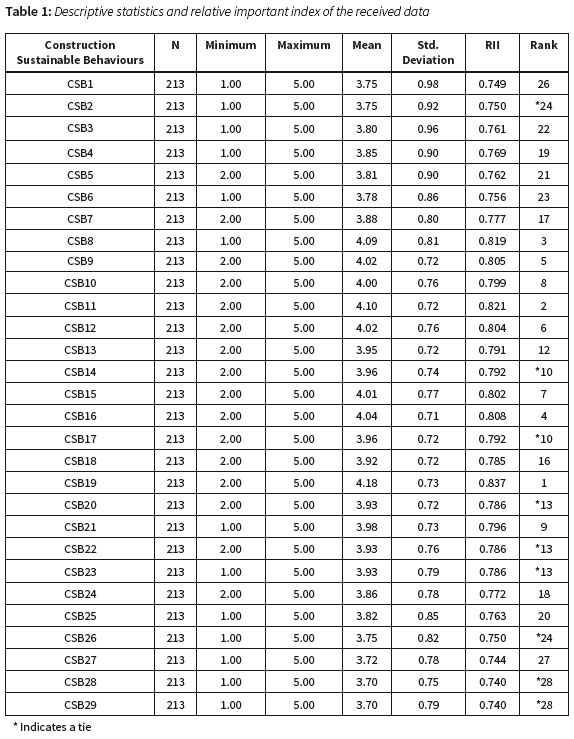
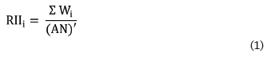
The first recommended test in identifying the most important factors such as the CSB, is the relative importance index (RII). RII of each CSB in Table 1 was calculated using the following equation (1), as seen in the literature relating to construction studies (Karji et al., 2020).
where:
RII = the relative importance index for CSB i
ΣWi = the sum of all ratings from students & building construction workers for CSB i
A = the higher possible rating permissible in the questionnaire (i.e., 5 for this study)
N = the total number of respondents (i.e., 213 for this study)
Table 1 shows easily interpretable values. The minimum and maximum responses (between 1 and 5) show how the participants rated the items. The behavioural items have mean scores above 3.50 with the least being 3.70 for items 28 and 29. Likewise, standard deviations were all below 1.0. Table 1 also shows the RII, which ranges between 0 and 1, indicating participants' ratings of the lowest and highest relative importance, respectively. The RII was used to rank-order the CSB, and many ties were observed. According to Table 1, "restoring brownfields, and contaminated fields for low-cost habitable buildings" (RII = .837) was rated to have the highest relative importance, while "purchasing buy-back or secondhand building materials for construction" and "observing company's attention towards employees and sustainability before buying goods" (RII = .740) were jointly-rated to have the lowest impacts as behaviours expected to stir sustainable building constructions.
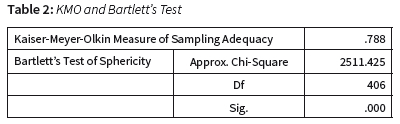
To ascertain the adequacy of the participants sampled, Kaiser-Meyer-Olkin (KMO) measure of sampling adequacy (MSA) was used. Table 2 shows the KMO test results; we obtained MSA value = .788, which was above the acceptable threshold of 0.5 recommended by Kaiser (1974). It also satisfied the higher recommendation by Beaumont (2012) that MSA value > .70 should be accepted, while below should be discarded. Similarly, Bartlett's Test of Sphericity for the items showed associated p-value of 0.000, making the data suitable for factor analysis.
Principal Component Analysis (PCA)
This study ascertained the participants' rating of how important each behaviour is in aligning the building construction sector towards sustainable constructions. Thus, PCA is used to summarise information, thereby reducing large sets of variables into fewer numbers of components (Matsunaga, 2010). This is a common approach in research, used to reduce a large number of variables to a smaller amount called the principal components. PCA achieves this by first identifying variables that are similar, which can be grouped to form a new variable, capable of explaining the components. To arrive at a conclusion, we observed the communalities to know if all the items would be retained for the analysis, and then observed the eigenvalue test, the scree plot, and the proportion of variance explained, in order to choose the principal components.
(1) Communalities
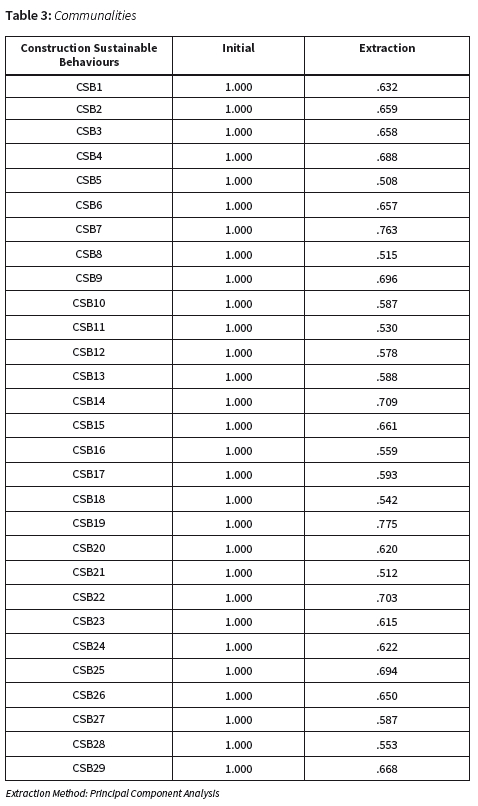
Communality is the total amount of variance each variable shares with all other variables included in a PCA analysis. It is also called common variance (Santos et al., 2019). Table 3 shows communalities of the items; all items had communalities above .50, suggesting that the items met the requirement for factor analysis (Field, 2013). Having communality values equal to or above .50, principal component extraction with promax rotation was therefore used to determine the underlying group potentials of the 29 items. Promax rotation is essential when correlation of components or factors is necessary. Unlike varimax rotation, which analyses components on orthogonal basis, without correlations among the components, promax does the orthogonal and goes further to raise the factor loadings, thereby giving maximally distinguishable correlated components (Matsunaga, 2010).
Table 3 shows highest and lowest communality values of .775 (CSB19) and .508 (CSB5) respectively, against the initial communalities set at 1.00. The communalities show the proportion of variance in each variable that is explained by the extracted factors. These values range from .508 to .775, indicating that a larger proportion of the variance is accounted for by the common factors. The communalities thus provide insight into how much of each variable's variance is captured by the factors, and guide decisions on retaining or removing variables to improve the model's overall explanatory power.
(2) Total variance explained
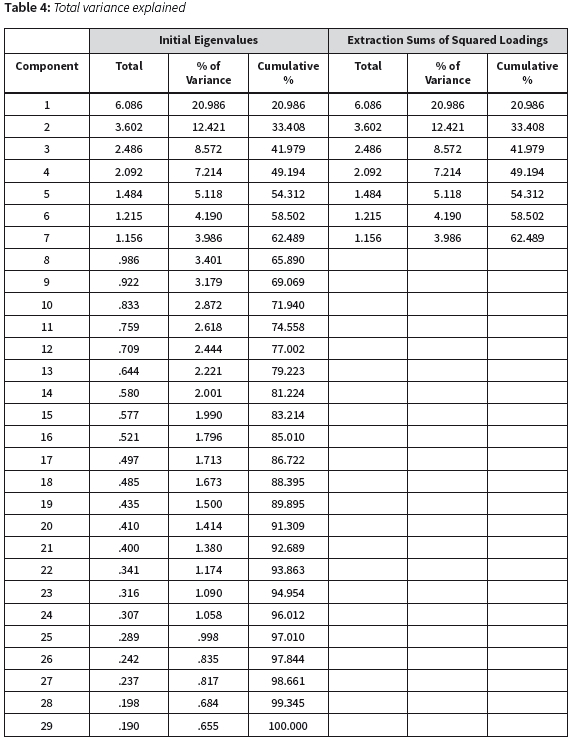
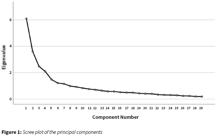
Table 4 shows seven underlying group potentials with eigenvalues greater than 1 extracted in this study. In observing the eigenvalue of the components, as shown in Table 4, seven components (1-7) have values greater than 1, and those seven underlying groupings explain 62.489% of the variance, which is higher than the recommended 60% (Malhotra, 2006). Thus, only seven items make up the components, while items 8 - 29 will be overlooked or classified to explain the principal components.
(3) Scree plot
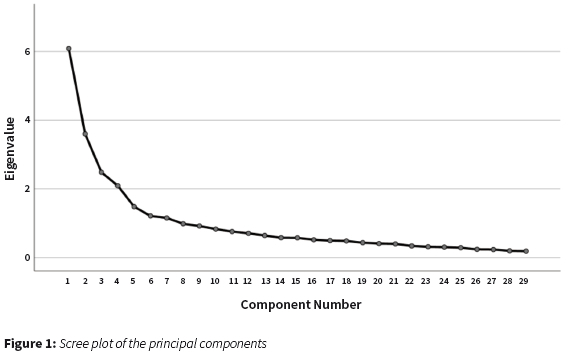
The scree plot in Figure 1 shows a common line diagram plotted with eigenvalues from the highest to the least values of the components. Figure 1 shows the principal components, and the points of division necessitating the seven groupings. A scree plot has a common rule, whereby components before the elbow shape are accepted as the required number necessary to explain each of the groupings at every point. Similarly, as in Table 4, components 1-7 are above the elbow, while components 8-29 are after, and thus can be disregarded.
(4) Pattern matrix
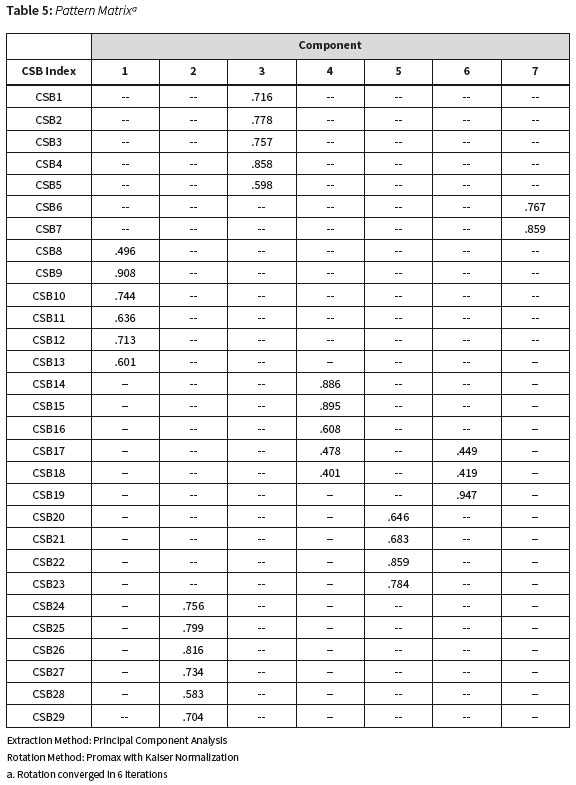
To better understand the seven components and how they relate to the 29 construction sustainable behaviours, we observed the component matrix and the pattern matrix (Table 5). The component matrix simply shows the correlation of each item with its components. But the squared loadings of each item across components already accounted for their communalities. Hence, we interpreted the grouping of components based on the pattern matrix. Table 5 shows the pattern matrix, revealing the correlation and factor loading of each of the variables and the principal components. The loading values in a pattern matrix are crucial in determining which items to retain or eliminate during a factor analysis. High loading values indicate a strong correlation between an item and a specific factor, suggesting that the item is a good representative of that factor. Conversely, low loading values suggest a weak association, implying that the item may not effectively contribute to the factor's overall structure. Items with low loading values are typically eliminated to enhance the clarity and reliability of the factors, ensuring that only the most relevant and significant items are retained for further analysis. This process helps in refining the measurement model by focusing on items that meaningfully contribute to the underlying constructs. Hence, the pattern matrix reveals the alignment of each component to the factor(s) that best represents the components.
In order to resolve cross-loading items and eliminate a number of items (reduction of a data set) under the components, we used the highest loading with the cutoff approach. Factor loading cut-off has been seen in several research studies, but there has been no concession on the threshold (Matsunaga, 2010). Thus, acceptance of items has been based on cutoff factor loadings of .40, .50, .60, and .70, but Karji et al. (2020) suggest a cutoff > .55. Likewise, we judged Table 5 using the > .55 cut-off criterion for CSB under each of the seven components, while for cross-loaded factors, the highest loading value > .55 is taken.
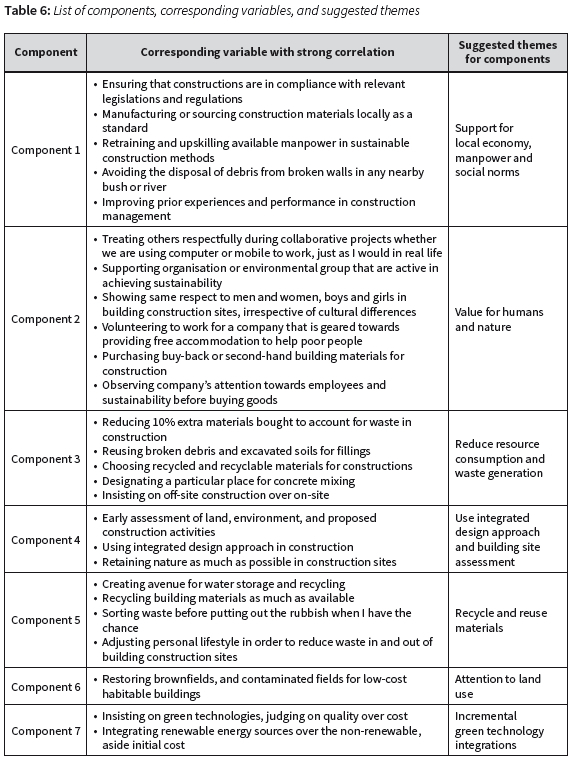
Table 5 shows that only three items (CSB 8, 17 and 18) have factor loadings below the stipulated threshold >.55, and were completely disregarded. Even when CSB 17 and CSB 18 were cross-loaded, both ends had low factor loadings. On the other hand, component 1 has strong correlations with CSB 9-13, component 2 correlates with CSB 24-28, component 3 also correlates with CSB 1-5 etc. The correlating factors and components after elimination are shown in Table 6, with the suggested names of the components.
Table 6 shows the components, corresponding variables and the suggested themes. Naming is done by observing each component and the underlying group variables. We interpreted the ideas of the behaviours relating to each component, listed out possible connotations, and relied on the importance of the related variables in naming the components. Thus, the suggested themes for components 1-7 include support for local economy, manpower and social norms; value for human and nature; reduce resource consumption and waste generation; use integrated design approach and building site assessment; recycle and reuse materials, attention to land use; and green technology integration.
Discussion
This study delved into a critical aspect of sustainable development within the context of building construction and education in Nigeria. This research appears to be of great significance due to the growing emphasis on sustainable practices worldwide and the role that education plays in shaping the future of construction.
Findings on the relative importance index (RII) show behaviours that hold the most weight among respondents and can inform targeted educational interventions and policy measures. For instance, findings of this study on "restoring brownfields, and contaminated fields for low-cost habitable buildings", and "retraining and upskilling available manpower in sustainable construction methods", being the sustainability practices that are of topmost importance, imply that people want more housing projects to be part of the sustainability movement and also indicate the willingness of the respondents to be trained. This finding could serve as a guide to curriculum development in building technology education programmes towards sustainability in Nigeria. Also, by pinpointing the behaviours that matter most for sustainable construction, educators can tailor their courses to address these aspects more effectively. This could involve integrating practical exercises, case studies, and real-world projects that emphasise the identified key behaviours. On the other hand, behaviours found to be underemphasised or overlooked could indicate gaps in the current educational approach. Addressing these gaps through awareness campaigns, workshops, and interactive learning experiences could help bridge the knowledge-action gap. Ultimately, the Rll underscores what is known against the unknown or unfamiliar practices capable of fostering sustainability constructions. Hence, the PCA analysis further highlights areas requiring immediate attention according to the suggested themes.
Theme one, "Support for Local Economy, Manpower, and Social Norms" underscores the multifaceted nature of sustainability, encompassing economic, social, and cultural dimensions. By promoting the utilisation of local resources, and skilled labour, and respecting cultural norms in construction practices, this theme aligns with the principles of sustainable development. Moreover, local sourcing of materials and labour can have a substantial impact on community empowerment and economic resilience (Ma Uly, 2011), and honouring social norms and cultural practices within construction activities reflects a commitment to social responsibility and inclusivity (Kim & Seock, 2019; Morris et al., 2015). Following the classification of components, this study shows the importance of harmonising construction with local economies, fostering local skills, and respecting the cultural fabric of communities as a worthy approach towards sustainability.
Second in the themes suggested is "Value for Human and Nature" which encapsulates the essence of sustainability, emphasising the imperative of fostering a harmonious coexistence between humanity and the environment. This theme equally aligns with the principles of sustainable development, highlighting the significance of making choices that not only benefit human well-being but also uphold the integrity of the natural world. As reasoned by Aguilar-Luzón et al. (2020), Bennett et al. (2018) and Dietz et al. (2005), true sustainability necessitates a comprehensive consideration of ecological and social factors. It recognises that promoting human welfare should go hand in hand with environmental stewardship. In exemplifying this theme, one may point to practices that prioritise clean energy sources, environmentally responsible construction techniques, and community well-being. This approach harmonises with international sustainability goals, particularly the United Nations' Sustainable Development Goals, which address a wide array of human and environmental challenges with the aim of fostering a more equitable and ecologically sound future.
Thirdly, "Reduce Resource Consumption and Waste Generation" is a fundamental tenet of sustainability, emphasising the necessity of using resources efficiently and minimising waste. This concept aligns with the principles of a circular economy which upholds practices capable of ensuring resources are conserved, reused, and recycled to reduce environmental impact (Siew, 2019). As demonstrated by research (Amaral et al., 2020; Guo et al., 2022; Ma Uly, 2011), adopting this theme can have profound ecological and economic benefits, by not only reducing the strain on natural resources but also lowering waste disposal costs, which is essential for long-term sustainability. This theme further buttresses the notion that building construction professionals can contribute to a more sustainable future by decreasing their ecological footprint and enhancing resource efficiency.
In addition, the fourth theme suggested "Use Integrated Design Approach and Building Site Assessment", underscoring the critical importance of a holistic perspective in construction practices. By integrating design and site assessment, it becomes possible to optimise not only the building's performance but also its environmental impact. As advocated in studies like Kibert (2013) and Kibert et al. (2001), this theme promotes a comprehensive understanding of the site's context and requirements, which in turn can lead to more efficient resource utilisation, lower energy consumption, and minimised environmental disturbances (Kibert, 2013). This theme aligns well with sustainability goals with an emphasis on minimising the environmental footprint while optimising the functionality and efficiency of the built environment.
The fifth theme "Recycle and Reuse Materials", like the third theme, epitomises the essence of sustainability by minimising resource consumption and waste generation. Studies like that of Llatas et al. (2022) emphasise the significance of recycling and reusing materials in construction not only for conserving natural resources but also for reducing the environmental impact associated with manufacturing new materials. As already highlighted, the aim of keeping resources in use for as long as possible, thereby reducing the need for constant extraction and production of new materials, is an approach in support of the circular economy agenda (Siew, 2019).
"Attention to Land Use" is the sixth theme suggested in this study. This theme underscores the significance of responsible land management practices, which are fundamental to sustainable development. Studies like that by Xiong et al. (2018) highlight the importance of effective land use planning in minimising urban sprawl, protecting natural habitats, and ensuring efficient use of resources. In line with global sustainability goals, such as the United Nations' Sustainable Development Goal 11, which aims to make cities and human settlements inclusive, safe, resilient, and sustainable, this theme is vital and key. Hence, attention to land use is paramount in achieving more compact, resource-efficient urban environments that enhance the quality of life for inhabitants and reduce the environmental impact associated with uncontrolled land development (Kibert, 2013; Xiong et al., 2018).
Lastly, the theme "Incremental Green Technology Integration" embodies the concept of gradual, step-by-step progress towards a more sustainable future. This theme underscores the initial investment cost challenges towards green technologies (Darko & Chan, 2018), thus suggesting gradual integrations of these technologies, with the intention of full upgrade in the near future. As demonstrated in research such as that by Song et al. (2023) embracing incremental green technology allows for integrating eco-friendly innovations without significant disruptions to existing systems. This approach resonates with the principles of behavioural economics, where small, continuous changes can lead to significant overall improvements in sustainability. Incremental green technology integration also acknowledges that the journey towards sustainability is an ongoing process and that each small step taken can contribute to a more eco-conscious and resource-efficient future (Söderholm, 2020; UNESCO, 2017).
Conclusion
The seven themes suggested in this study collectively encompass a holistic vision of sustainability within the context of building construction and development. The first theme, "Support for Local Economy, Manpower, and Social Norms" emphasises the importance of respecting local communities, traditions, and economic systems. "Value for Human and Nature" recognises the interdependence of human well-being and environmental health. "Reduce Resource Consumption and Waste Generation" underscores the importance of efficiency and responsible resource management. "Use Integrated Design Approach and Building Site Assessment" advocates for a comprehensive, context-sensitive approach to building construction. "Recycle and Reuse Materials" promotes the circular economy and resource conservation. "Attention to Land Use" highlights responsible land management for sustainable urban development. Lastly, "Incremental Green Technology Integration" encourages the gradual integration of eco-friendly innovations to progress towards a more sustainable future.
In the context of building technology education, these seven themes collectively offer a comprehensive framework for training future professionals to champion sustainability both in classrooms and in actual building construction operations. These themes, collectively, provide a well-rounded educational framework that equips future construction professionals with the knowledge and values essential for building a more sustainable, efficient, and responsible future in the construction industry. Thus, this study addressed diverse facets of construction sustainable behaviours using the responses from BTE students and construction professionals, discovering the multifaceted and interconnected nature of sustainable construction and necessary behaviours.
Limitations of the Study
Despite the insightful findings, the study has several limitations. First, the use of a convenient sampling method may limit the generalisability of the results, as the sample may not be representative of the broader population involved in sustainable construction. Additionally, the relatively small sample size, particularly the 47 building construction experts, might not adequately capture the diversity of perspectives in the field. The study's focus on students in Building Technology Education (BTE) also narrows its scope, potentially overlooking other important stakeholders in sustainable construction.
Also, the reliance on self-reported data from a 29-item questionnaire may introduce potential biases, including social desirability bias, where respondents might overstate their adherence to sustainable practices. On the analysis, limitations of the Relative Importance Index (RII) include reliance on subjective responses, making its accuracy contingent on the respondents' understanding of the questions and the consistency of their rating scales. RII may not adequately capture the complexity and interdependencies of factors in real-world scenarios, as it treats each factor independently, and does not account for the dynamic nature of importance, which can change over time or with varying contexts. Lastly, while Principal Component Analysis (PCA) revealed meaningful themes, its subjective interpretations may equally affect conclusions. These limitations suggest the need for further research with more diverse and larger samples, employing additional methodologies to validate the findings.
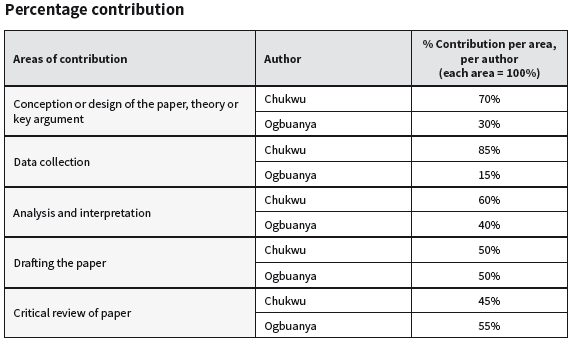
Notes on Contributors and their ContributionsLead author
Chukwu, Daniel Uchenna
Dr Chukwu is a lecturer in the Department of Industrial Technical Education, Faculty of Vocational and Technical Education, University of Nigeria, Nsukka. His areas of specialisation span building/woodwork technology education, including skill development, teacher education, school production unit for entrepreneurial development, and TVET, among others.
Co-author
Ogbuanya, Theresa Chinyere
Prof. Ogbuanya is a professor of Industrial Technical Education with a focus on Electrical/ Electronic Technology Education. She is a research fellow at the University of the Free State, Bloemfontein, South Africa, and her scholarly work is far-reaching as she trains and mentors many graduate students and researchers.
References
-
Aguilar-Luzón, M. C., Carmona, B., Calvo-Salguero, A., & Castillo Valdivieso, P. A. (2020). Values, environmental beliefs, and connection with nature as predictive factors of the pro-environmental vote in Spain. Frontiers in Psychology, 11, 1043. https://doi.org/10.3389/fpsyg.2020.01043
» https://doi.org/10.3389/fpsyg.2020.01043 -
Ahn, Y. H., Cho, C.-S., & Lee, N. (2013). Building information modeling: Systematic cour development for undergraduate construction students. Journal of Professional Issues it Engineering Education and Practice, 139(4), 290-300. https://doi.org/10.1061/(ASCE)EI.1943-5541.0000164
» https://doi.org/10.1061/(ASCE)EI.1943-5541.0000164 - Allcott, H., & Mullainathan, S. (2010). Behaviour and energy policy. Science, 327, (5970), 1204-1205
-
Alsaati, T., El-Nakla, S., & El-Nakla, D. (2020). Level of sustainability awareness among university students in the Eastern Province of Saudi Arabia. Sustainability, 12(8), Article 8. https://doi.org/10.3390/su12083159
» https://doi.org/10.3390/su12083159 -
Amaral, R. E. C., Brito, J., Buckman, M., Drake, E., Ilatova, E., Rice, P., Sabbagh, C., Voronkin, S., & Abraham, Y. S. (2020). Waste management and operational energy for sustainable buildings: A review. Sustainability, 12(13), Article 13. https://doi.org/10.3390/su12135337
» https://doi.org/10.3390/su12135337 -
Bennett, N. J., Whitty, T. S., Finkbeiner, E., Pittman, J., Bassett, H., Gelcich, S., & Allison, E. H. (2018). Environmental stewardship: A conceptual review and analytical framework. Environmental Management, 61(4), 597-614. https://doi.org/10.1007/s00267-017-0993-2
» https://doi.org/10.1007/s00267-017-0993-2 - Beaumont, R. (2012). An introduction to principal component analysis and factor analysis using SPSS 19 and R (psych package). Journal of Geophysical Research, 24, 8-9.
-
Chan, A. P. C., Darko, A., & Ameyaw, E. E. (2017). Strategies for promoting green building technologies adoption in the construction industry - An international study. Sustainability, 9(6), Article 6. https://doi.org/10.3390/su9060969
» https://doi.org/10.3390/su9060969 -
Darko, A., & Chan, A. P. C. (2018). Strategies to promote green building technologies adoption in developing countries: The case of Ghana. Building and Environment, 130, 74-84. 10.1016/j.buildenv.2017.12.22
» https://doi.org/10.1016/j.buildenv.2017.12.22 -
Dietz, T., Fitzgerald, A., & Shwom, R. (2005). Environmental values. Annual Review of Environment and Resources, 30(1), 335-372. https://doi.org/10.1146/annurev.energy.30.050504.144444
» https://doi.org/10.1146/annurev.energy.30.050504.144444 -
Drejeris, R., & Kavolynas, A. (2014). Multi-criteria evaluation of building sustainability behavior. Procedia - Social and Behavioral Sciences, 110, 502-511. https://doi.org/10.1016/j.sbspro.2013.12.894
» https://doi.org/10.1016/j.sbspro.2013.12.894 -
Environment Protection Agency. Green Building. http://www.epa.gov/greenbuilding/pubs/about.htm.
» http://www.epa.gov/greenbuilding/pubs/about.htm - Field, A. (2013). Discovering statistics using IBM SPSS statistics (4th ed.). Sage.
-
Guo, D., Wang, X., Feng, T., & Han, S. (2022). Factors influencing the waste separation behaviors of urban residents in Shaanxi Province during the 14th National Games of China. International Journal of Environmental Research and Public Health, 19(7), 4191. https://doi.org/10.3390/ijerph19074191
» https://doi.org/10.3390/ijerph19074191 - Heeren, A.J., Singh, A.S., Zwickle, A.K., Koontz, T.M., & McCreery, A.C. (2016). Is sustainability knowledge half the battle? An examination of sustainability knowledge, attitudes, norms, and efficacy to understand sustainable behaviours. International Journal of Sustainability in Higher Education 17(5), 613-632.
-
Karji, A., Namian, M., & Tafazzoli, M. (2020). Identifying the key barriers to promote sustainable construction in the United States: A Principal Component Analysis. Sustainability, 12(12), Article 12. https://doi.org/10.3390/su12125088
» https://doi.org/10.3390/su12125088 - Kaiser, H. F. (1974). An index of factorial simplicity. Psychometrik, 3(1), 31-36.
- Kibert, C. J. (2013). Sustainable construction: Green building design and delivery. John Wiley & Son.
- Kibert, C. J., Sendzimir, J., & Guy, B. (2001). Construction ecology: Nature as a basis for green buildings. Routledge.
-
Kim, S.H., & Seock, Y.-K. (2019). The roles of values and social norm on personal norms and pro-environmentally friendly apparel product purchasing behavior: The mediating role of personal norms. Journal of Retailing and Consumer Services, 51, 83-90. https://doi.org/10.1016/j.jretconser.2019.05.023
» https://doi.org/10.1016/j.jretconser.2019.05.023 -
Llatas, C., Quiñones, R., & Bizcocho, N. (2022). Environmental impact assessment of construction waste recycling versus disposal scenarios using an LCA-BIM tool during the design stage. Recycling, 7(6), 82. http://dx.doi.org/10.3390/recycling7060082
» http://dx.doi.org/10.3390/recycling7060082 -
Ma Uly. (2011). No waste: Managing sustainability in construction. Taylor & Francis. https://www.taylorfrancis.com/books/mono/10.4324/9781315247915/waste-uly-ma
» https://www.taylorfrancis.com/books/mono/10.4324/9781315247915/waste-uly-ma - Malhotra, N. K. (2006). Marketing research: An applied orientation (5th ed.). Pearson/ Prentice Hall.
-
Matsunaga, M. (2010). How to factor-analyze your data right: Do's, don'ts, and how-to's. International Journal of Psychological Research, 3(1), 97-110. https://doi.org/10.21500/20112084.854
» https://doi.org/10.21500/20112084.854 -
Morris, M.W., Hong, Y., Chiu, C., & Liu, Z. (2015). Normology: Integrating insights about social norms to understand cultural dynamics. Organizational Behavior and Human Decision Processes, 129, 1-13. https://doi.org/10.1016/j.obhdp.2015.03.001
» https://doi.org/10.1016/j.obhdp.2015.03.001 -
Santos, R.D.O., Gorgulho, B.M., Castro, M.A.D., Fisberg, R.M., Marchioni, D.M., & Baltar, V.T. (2019). Principal Component Analysis and Factor Analysis: Differences and similarities in nutritional epidemiology application. Revista Brasileira de Epidemiologia, 22, e190041. https://doi.org/10.1590/1980-549720190041
» https://doi.org/10.1590/1980-549720190041 -
Siew, R. (2019). Are we ready for circular economy? Towards zero waste in construction. Sustainable Buildings, 4(2). https://www.sustainable-buildings-journal.org/articles/sbuild/full_html/2019/01/sbuild190004/sbuild190004.html
» https://www.sustainable-buildings-journal.org/articles/sbuild/full_html/2019/01/sbuild190004/sbuild190004.html -
Söderholm, P. (2020). The green economy transition: The challenges of technological change for sustainability. Sustain Earth, 3(6). https://doi.org/10.1186/s42055-020-00029-y
» https://doi.org/10.1186/s42055-020-00029-y -
Song, Y., Zhang, Z., Sahut, J. & Rubin, O. (2023). Incentivizing green technology innovation to confront sustainable development. Technovation, 126, https://doi.org/10.1016/j.technovation.2023.102788
» https://doi.org/10.1016/j.technovation.2023.102788 -
UNESCO (2017). Greening technical and vocational education and training: A practical guide for institutions. https://unesdoc.unesco.org/ark:/48223/pf0000259632
» https://unesdoc.unesco.org/ark:/48223/pf0000259632 -
Xiong, C., Beckmann, V., & Tan, R. (2018). Effects of infrastructure on Land Use and Land Cover Change (LUCC): The Case of Hangzhou International Airport, China. Sustainability, 10(6), 2013. http://dx.doi.org/10.3390/su10062013
» http://dx.doi.org/10.3390/su10062013