The analysis of formative assessment practices, strategies and tools in primary schools
Abstract
The study reported on here was conducted to explore, identify, and understand formative assessment tools, strategies and practices used by primary school teachers to enhance effective teaching and learning. The study was conducted in the Groot Letaba and Shamavunga circuits in the Mopani district of the Limpopo province, South Africa. This study was based on the attribution theory, constructivist paradigm, phenomenological design and the qualitative research approach. A purposeful sampling method was used to select 4 teachers who participated in this study. Individual interviews and observation were used to collect qualitative data from all the participants. The thematic data analysis method was used to analyse all the collected data. The findings reveal that the participating teachers in all schools used formative assessments to assess learners and improve teaching and learning. The findings also reveal the challenges experienced by teachers and learners and the use of formative assessment as the most suitable strategy for effective learner assessment. The findings of this study significantly contributed to insights by all major stakeholders of the schools, namely, teachers, learners, parents and the Department of Basic Education. The findings of this study will assist teachers in improving learners' assessment and academic performance. Therefore, it is recommended that instructional leaders improve learners' formative assessment by arranging professional development sessions and assisting the teachers in designing assessment practices, strategies and tools.
academic performance; assessment; curriculum; formative assessment; learners; learning; subjects; teachers
Introduction
One of teachers' primary duties is assessing learners. The purpose of the assessment of learners is to determine how much learning and teaching has occurred (Mege, 2014) or to evaluate the learners' academic performance (Carless, 2015). This implies that teachers assess the learners' work to establish what their learners know and can do, with the main purpose of helping learners learn independently. According to Cowdroy and Williams (2007:89), a close partnership exists between teaching, learning, and assessment because the subject matter or content and how it is taught are often procured from assessment standards. Therefore, assessment fundamentally impacts instruction and acquisition of knowledge or skills because it establishes the criteria that direct learning and teaching.
In education, two major assessment categories have been identified, namely formative and summative assessments (Sharkey & Murnane, 2006). In this study we focused on the use of formative assessment to improve teaching and learning in primary schools. Popham (2011) defines formative assessment as a procedure that includes collecting and investigating assessment-generated confirmation to determine how and when to modify instructional projects or learning strategies to accomplish learning objectives. Formative assessment refers to frequent, interactive assessment of learners' development and understanding to recognize their needs and adjust teaching appropriately (Alahmadi, Alrahaili & Alshraideh, 2019). This definition indicates that formative assessment is a collaborative procedure that teachers and learners use to inform teaching and learning, address specific learning difficulties and support learning growth over time. Teachers' role is to design and implement relevant, valid, reliable formative assessment strategies and tools to support learners in acquiring knowledge and skills.
In South Africa, teaching, learning and assessment are based on an outcomes-based approach (Ornstein & Hunkins, 2013). Outcomes-based education (OBE) is a process that incorporates the re-organisation of curriculum and assessment and describes applications in training to reflect the accomplishment of obtaining information and proficiency in place of the expansion of direction ability (Pradhan, 2021). Asim, Vaz, Ahmed and Sadiq (2021) posit that OBE is used in pedagogy because it arranges everything in a pedagogical system based on what all learners should be able to do after learning. According to Spady (1994, as cited by Davis, 2003), learning outcomes are descriptions of skills, knowledge and competencies displayed by learners in the accomplishment of the learning process. Although formative and summative assessment are equally significant in promoting the quality of education in schools, formative assessment provides instant feedback about learners' progress. GTL Brown (2022) states that formative assessment is used for immediate interaction within the classroom to help learners achieve set objectives through questions and feedback, while summative assessment is used to assess the overall learning outcomes of learners at the end of a teaching unit. Furthermore, studies (e.g., Black & Wiliam, 1998; Granberg, Palm & Palmberg, 2021; Park, 2020) propose that formative assessment practices are the most effective classroom interventions because they support teaching and learning. Formative assessment is an ongoing procedure that provides learners with constructive timely feedback, helping them achieve their learning goals and enhancing their achievement (Vogt, Tsagari, Csépes, Green & Sifakis, 2020).
We were motivated to conduct this study because of the lack of research findings about formative assessment strategies and practices that may be used by primary school teachers to facilitate effective teaching and learning in the Groot Letaba and Shamavunga circuits. This study is significant because it contributes to formative assessment strategies, tools and practices that may be used by primary school teachers to facilitate effective teaching and learning. The main purpose of this study was to explore the effective implementation of formative assessment practices, strategies, and tools to facilitate pedagogic practices in primary schools. In this study, primary schools in the Groot Letaba and Shamavunga circuits were preferred because of the challenges experienced by teachers and learners regarding formative assessment. The two circuits are situated in rural areas of the Mopani district, and do not have sufficient teaching and learning resources. Rural areas also generally struggle to attract effective teachers.
This study was guided by the following primary research question: "What does formative assessment mean to primary school teachers in the Groot Letaba and Shamavunga circuits?" The following secondary research questions supported the primary question:
• Why are primary school teachers using formative assessment practise, strategies and tools to facilitate effective teaching and learning?
• Which formative assessment strategies and practices can primary school teachers use to facilitate effective teaching and learning?
• What challenges do teachers and learners experience in the formative assessment of learners?
• What are the benefits of using formative assessment in primary schools?
Significance of the Study
The findings of this research will assist policymakers in formulating policies and developing a framework for improving assessment in schools. The findings will also provide scholars globally with knowledge and skills on designing new practices, strategies, and tools for implementing effective formative assessment in schools. The findings will assist teachers to implement effective assessment strategies and will also improve the academic performance of learners in primary schools.
Literature Review
The concept "literature review" refers to a survey of scholarly articles, books and other sources relevant to a particular issue and area of research (Ramdhani, Ramdhani & Amin, 2014:48). A literature review is conducted through careful selection and analysis of various sources of information, including books, journals, theses, reports, conference proceedings, unpublished manuscripts and articles from academic journals (Sajeevanie, 2021). A literature review is a description of the literature relevant to a particular field or topic in order to give an overview of what has been said in this regard. Furthermore, a review that critically assesses the state of knowledge on a particular topic makes it possible to identify gaps in current understanding thereof (Paré, Wagner & Prester, 2024). In this article, the literature review includes the theoretical framework, functions or benefits of formative assessment, preparation for formative assessment practices, and tools for learners in schools.
The Theoretical Framework of the Study
This research is based on the assessment theory introduced by Professor Donald Kirkpatrick in 1959 in the United States of America (USA). The model is one of the pioneer models used widely in evaluating training development as it is deemed simple and easy to understand (Du, 2021; La Duke, 2017). Numerous authors have adapted Kirkpatrick's model using four levels of effectiveness evaluation. In a recent study, Alsalamah and Callinan (2021:3) used Kirkpatrick's 1959 four-level model of training criteria to evaluate head teacher training programmes using both their own and their supervisors' perspectives. Donald Kirkpatrick formulated the four assessment phases, namely reaction, learning, behaviour and results. According to the assessment theory, assessment starts at Level 1 and proceeds through Levels 2, 3 and 4 (Winfrey, 1999). The first level is reactions and its main objective is to evaluate whether learners perceive the instruction and training as charming, fascinating, beneficial and appropriate to their subject matter or programme (Winfrey, 1999). According to Kurt (2018), the primary objective of the reaction level is to assess how the learners react to learning by asking questions. This level provides answers to three questions: Are the learners quenched and gratified? What are their opinions? Were the teaching and learning resources appropriate to their tasks? The responses concentrate on what the learners imagine of the content and are evaluated by reaction questions. Reaction evaluation is significant in learning because it enhances the quality of teaching programmes, leading to learners' improved academic performance (Winfrey, 1999).
The second level of Kirkpatrick's assessment theory is learning (Kirkpatrick, 1996). The main purpose of Level 2 is to gauge each learner' s learning grounded on whether learners can learn the intentional knowledge, skills, attitudes, conviction, and dedication to learning (Kirkpatrick, 1996). At this level, the assessor (teacher) wishes to get responses to the following question: How have they developed? At this stage assessment may promote the assessment above the gratification of the learners because it endeavours to evaluate the degree to which learners have developed with regard to perceptions, knowledge, behaviour and skills (Kirkpatrick, 1996). Learning outcomes may include changes in perceptions, knowledge, behaviour and skills. At this level, the procedures or approaches progress from official to unofficial testing to self-evaluation and team evaluation. The aim of assessment at this stage is to distinguish between learners' prior knowledge and the current knowledge that they learnt during the instruction and training programme.
Level 3 of Kirkpatrick's assessment theory is behaviour or transfer. Evaluation of the behaviour is the level at which the people under training apply learning and change their conduct. Based on the situation, this can be done immediately and several months after learning (Kirkpatrick, 1996). Level 3 evaluates whether the learning influenced the learners and whether they were implementing the knowledge and skills they had learnt. At this level, the assessor (teacher) should respond to the following question related to instruction: Are the skills, knowledge or attitudes recently gained by the learners currently used during their daily activities? (Kirkpatrick, 1996).
Level 4, results, is the final stage of the Kirkpatrick assessment theory. The role of Level 4 is to evaluate the effectiveness of training with regard to improvement of an organisation served (Winfrey, 1999). The question at this level is: How has training changed the organisation? This level evaluates how the programme has resulted in improvement with regard to the organisation's goals and objectives (Kirkpatrick, 1996).
Each continuous assessment level, in Kirkpatrick's assessment theory is related to the information presented on the lower level. Therefore, each consecutive stage is a substitute for a more accurate assessment while necessitating a more meticulous and time-consuming evaluation. The implementation of Kirkpatrick's assessment theory designs an applicative assessment scheme to clearly describe the aim and objectives, evaluate the outcomes, and distinguish spheres of influential percussion (Winfrey, 1999). Kirkpatrick's assessment theory presents apparent assessment phases to implement, works with traditional and digital learning programmes, gives organisational leaders relevant insight into their complete learning programmes, and may be used by teachers in schools.
In this study, Kirkpatrick's four-level assessment strategy is implemented to assess the productiveness of teaching and learning programmes, assesses how the learners think about the programme, assesses the quantity of learning acquired, changes the degree of learners' behaviour, and indicates the honest benefits of the teaching and learning programme (Gill & Sharma, 2013).
Functions or benefits of formative assessment
The primary focus of formative assessment is to monitor learners' learning to provide ongoing feedback that can be used by teachers to improve their teaching and by learners to improve their learning. Researchers have shown that feedback has a significant effect on learners when a teacher provides feedback while assessing learners' work before the learner can move on to subsequent activities (Boud & Soler, 2016; Brookhart, 2017; Irons, 2008; Sadler, 2010). According to Trumbull and Lash (2013), formative assessment assists learners in owning their learning when they understand its objective to improve learning. This view is confirmed by Voinea (2018) who asserts that the role of formative assessment is to gather evidence about the learner's learning progress and to channel this knowledge back to the learners through feedback. Learners may reduce the gap separating their present level of learning from the goals by using the feedback received from teachers and their peers. Teachers may use assessment by identifying learners' misconceptions and bridging gaps in learning through meaningful feedback (Dixon & Worrell, 2016). By revising, refining and reflecting on their learning products, learners gain better and more intimate knowledge of quality criteria. They may practice these to improve their own learning (Voinea, 2018). Formative assessment provides teachers, school leaders and learners with accurate information about the learners' current performance levels, gaps in their learning outcomes, growth in their learning across time, specific difficulties they experience with current learning tasks, and possible reasons for those difficulties (Lane, Parrila, Bower, Bull, Cavanagh, Forbes, Jones, Leaper, Khosronejad, Pellicano, Powell, Ryan & Skrebneva, 2019).
Similarly, formative assessment allows teachers to monitor learners' learning, adapt their teaching to meet learner's learning needs, and help with learners' learning retention by bringing what learners have learnt to the top of their minds (Australian Education Research Organisation, 2021).
Formative assessment of teaching consists of different approaches to continuously evaluate teaching. A teacher who applies formative assessment all the time will identify the strengths and weaknesses of the learners and be able to modify teaching methods and evaluations to turn the classroom into an environment that promotes active learner participation in activities to achieve learning outcomes (Menéndez, Napa, Moreira & Zambrano, 2019).
According to Tunnell (2021), formative assessment is used by teachers to make adjustments in learning in order to ensure that learning outcomes are achieved and it allows teachers to measure and track learners' progress in real time and change the course curriculum and instruction as necessary. According to Andrade and Heritage (2018), formative assessment also provides feedback and enhances learners' metacognition, their ability to improve learner learning. Johnson (2024) emphasises that teachers use formative assessment to close the gap between where the learner is to where they want the learner to be. Furthermore, teachers also use assessment information to adjust their teaching strategies, with an emphasis on learning progress and achievement, rather than failure. Formative assessment effectively boosts academic achievements and promotes metacognitive awareness, as demonstrated by Wafubwa and Csikos (2022).
Teachers use formative assessment to help learners improve their performance through answering questions and peer and self-assessment in order to achieve and demonstrate their full learning potential (Johnson, 2024). Similarly, Jamie (2020) asserts that teachers use formative assessment to assess skills and content that have been derived from the backward planning process in order to assess the key learning milestones in the unit or learning sequence, to ensure that learners' responses either clearly demonstrate mastery of the skills and content, or show exactly where mastery is lacking or misunderstanding occurs. Furthermore, to allow learners to consider their own progress and determine positive next steps. It is, therefore, clear that teachers also implement formative assessment strategies and tools in order to improve teaching and learning in all subjects. The functions and benefits of assessment reveal that the formative assessment for learning is part of the teaching process and everything taught must be assessed to ensure that learners have learnt the required material.
Types of assessments
Stakke (2024) distinguishes three broad types of assessment, namely, diagnostic, formative, and summative assessment.
• Diagnostic assessment: Diagnostic assessment is used before learning to determine what learners already know and can do.
• Formative assessment: Formative assessment takes place during instruction. Formative assessment is used throughout the learning process and helps teachers make adjustments to instruction and activities as needed.
• Summative assessment: Summative assessment is used at the end of a unit or lesson to determine what the learners have learned. By comparing diagnostic and summative assessment, teachers and learners can get a clearer picture of how much progress they have made.
Other types of assessment fall within these three broad categories, such as criterion-referenced, ipsative and norm-referenced assessment.
• Criterion-referenced assessment: In this common type of assessment, a learner's knowledge is compared to a standard learning objective. Most summative assessment is designed to measure learners' mastery of specific learning objectives.
• Ipsative assessment: In education, ipsative assessment involves assignments used to compare a learner's present performance to their own past performance to chart achievement over time.
• Normative assessment: Normative assessment is used to compare learners' achievement with that of their peers. Learners receive a ranking based on their score and potentially on other factors as well.
These assessments take place throughout the learning process helping learners and teachers gauge learning within those three broad categories (Stakke, 2024). In this study, formative assessment was preferred because of the following:
a) Low stakes or no stakes
Most formative assessments aren't graded, or at least aren't used in calculating learners' grades at the end of the grading period. Instead, they form part of the daily give-and-take between teachers and learners.
b) Planned and part of the lesson
Rather than just being quick check-for-understanding questions many teachers may ask on the fly, formative assessment is built into a lesson or activity. Teachers consider the skills or knowledge they want to check on, and use one of many methods to gather information on learners' progress.
Using various formative assessment strategies and tools to assess learners
One of the objectives of this study was to explore the use of formative assessment strategies and practices by primary school teachers to facilitate effective teaching and learning. According to Harlen (2015), teachers use formative assessment strategies and tools to monitor children's ideas in relation to lesson goals and the use of this information to decide next steps progress towards achieving these goals. This modality of assessment differs from summative assessment which is usually more concerned with the finished product. Instead, formative assessment focuses on the process for "what the next steps are on an individual [whether 'individual' is defined as a sole pupil or a group of pupils] and personal level" (Booth, 2017, cited in Kinsella & Fautley, 2021:73), in order to arrive at a finished product. Formative assessment is carried out while the learner is still learning (Dwiyanti & Suwastin, 2021). In general terms, formative assessment is concerned with helping learners develop their learning (Buyukkarci & Sahinkarakas, 2021). Furthermore, Gloria, Sudarmin, Wiyanto and Indriyanti (2018) state that when formative assessment is used appropriately, it can promote the development of 16 mental habits, including persistence, impulse control, listening with empathy and understanding, thinking flexibly, metacognition, aiming for accuracy, questioning and problem solving, applying prior knowledge to new contexts, gathering information using all senses, creating imagining and awe, taking responsible risks, finding humour, thinking interdependently, and remaining open to ongoing education.
Researchers also recommend that teachers prepare themselves effectively before implementing formative assessment in schools (Cullinane, 2011; Evans, 2020; Lambert, 2012; Mikre, 2010; Thomas, 2019). Cullinane (2011) emphasises that before using the formative assessment strategies and tools described below, teachers should prepare themselves as follows:
• The teacher should practice the strategies and tools of formative assessment chosen to observe whether the learners perform in the chosen circumstance.
• In introducing new formative assessment strategies and tools, the teachers must know what is required to improve formative assessment strategies and tools.
• The teachers should ensure that they can construct answers to the formative assessment strategies and tools they have selected to use in order to ensure that learners will not have difficulty providing answers.
• When learners answer questions or participate in a discussion, the teacher should command them to go back to the class and conduct visual communication so that the conversation is not just educator-learner administered but also learner-learner administered.
Visual communication utilizes images typography and layout to convey meaning and evoke emotions (Ci, 2024). According to Lester (2013), visual communication is based on both the eye that performs the act of seeing and the brain that makes sense of all sensory information received.
After preparing themselves, the teachers may use the following formative assessment strategies and tools to assess the learners:
Multiple-choice questions (MCQs). Two-level MCQs are used at intervals while teaching, and the learners are given a few questions with four possible answers from which to choose the correct answer. When designed properly, MCQs may demand a greater level of analytical thinking, enabling examiners to evaluate learners' integration of knowledge, problem-solving skills, and application of knowledge (Riggs, Kang & Rennie, 2020; Stevens, Palocsay & Novoa, 2023).
Observation. The educator moves through the classroom and watches the learners while they do their work in order to determine whether they are learning effectively (Lambert, 2012). This is a strategy that instructors may use to deal with different learners. Puspita and Suyatno (2020) state that the children's strengths, weaknesses, personality traits, interests, learning styles and needs are identified through observation.
One-sentence summary. The teacher should select an important class topic or work that they expect learners to learn in order to summarise. Teachers request learners to summarise in a written sentence which responds to seven questions about the subject matter, namely, who, what, where, when, which, why, and how (Lambert, 2012).
K-W-L Chart. A K-W-L chart is a graphic organiser that helps learners arrange information before, during and after a unit or a lesson (Evans, 2020). When a teacher presents a lesson, the learners write down what they know about the subject matter (K) and what they are preparing to know about it (W). After the lesson presentation, learners write down their current learning (L) (Evans, 2020).
Questioning. Question generation is a common cognitive activity used in teaching and learning to improve learners' engagement (Salmon & Barrera, 2021). Research also suggests that questioning helps learners generate new ideas and inventions, as well as more rational solutions (Rothstein & Santana, 2017). Cullinane (2011) indicates that teachers may divide the class into pairs or groups, give all the learners questions, and instruct them to write down answers to all the questions within a time frame of approximately 5 to 10 minutes.
Interview assessment. If a teacher wants to dig deeper into learners' understanding of content, they may try discussion-based assessment methods (Thomas, 2019). Casual chats with learners in the classroom will help learners to feel at ease when they learn.
Misconceptions and errors. Misconceptions and errors are often helpful to determine whether learners understand why something is incorrect or why a concept is complex (Thomas, 2019).
According to the Assessment and Moderation Policy of South Africa, Number 13/3/P, teachers must comply with assessment principles when implementing assessment, namely fairness, validity, reliability and practicability, which results in credibility (Republic of South Africa [RSA], 2010). Fairness is related to the assessment procedures; validity is related to the assessment design; reliability is associated with the conduct of the assessment, and practicability is associated with the financial and time implications of assessment credibility (RSA, 2010). The literature review presents the theoretical framework of the research which is a model or support that provides a base upon which this study was administered (Adom, Hussein & Agyem, 2018). The theoretical framework contributes to an improved comprehension of primary school teachers' appraisal tools, strategies and practices for improving teaching and learning. Therefore, formative assessment is assessment for, of, and about learning in schools.
Research Methodology
Methodology is defined as a group of strategies that researchers use in a specific field to achieve a relevant, and credible understanding of occurrences, procedures or matters at various phases (Rahi, 2017). According to Dawson (2019), research methodology is the primary principle that guides one's research. With this research we aimed to identify and understand assessment tools, strategies and practices used by primary school teachers to improve teaching and learning in the Groot Letaba and Shamavunga circuits. The aim with this section was to present and discuss the research design and methodology used to collect empirical data in this research. The objectives with this study are as follows:
• To explore why and how primary school teachers should implement formative assessment tools, strategies and practices to facilitate effective teaching and learning.
• To investigate the benefits of using formative assessment in primary schools.
• To recommend effective assessment tools, strategies and practices that primary school teachers may use to improve teaching and learning.
This section includes a discussion of the research paradigm. The research design, research approach, research population, sampling, data collection methods, data analysis, limitations of the study, ethical considerations, and trustworthiness and credibility of the research are discussed.
Research Paradigm
A research paradigm refers to a group of original presuppositions and concepts on human's perceptions of the world, which provide a deliberating structure to guide all research activities during empirical investigations (Wahyuni, 2012). A research paradigm is thus a group of concepts about the world and how it should be understood and studied. Babbie (2014) describes paradigms as the plans or structures for monitoring and understanding what we observe and how we understand it, thus, providing ways of looking at reality. According to Corbin and Strauss (2015), the term "paradigm" is described as the category of assumptions and emotional positions about the essence of authenticity (Corbin & Strauss, 2015). In other words, a research paradigm controls and directs how the researcher should conduct a study. To be specific, a research paradigm is a group of perspectives of the world and how it should be studied and understood. Our research was centred on the constructivist paradigm because it relates to uniqueness, multiple realities, and creating of meaning by engaging with people. Constructivism or interpretivism is based on the view that reality is created by social circumstances and how people understand those circumstances (Rahi, 2017). The constructivist paradigm assisted us to design relevant research methods in order to respond to all the research questions. The constructivist paradigm of this study is formative assessment, because it is based on the views that reality is created by social circumstances and how people understand those circumstances. In this study, the social circumstances are teaching, learning and assessment of learners.
Research Design
The conception "research design" means the plan or framework for research which is used as support in gathering and evaluating the information (Pandey & Pandey, 2015:18). Akhtar (2016) defines research design as a structure of study or a paste that grasps all the components of a study project simultaneously. The definition is supported by Babbie (2014) who describes research design as a strategy that will be implemented by the researcher when conducting the research process. Denzin and Lincoln (2017) define research design as a category of procedures and rules which should be pursued by a researcher when addressing a research problem. Kumar (2014) describes research design as a scheme that exemplifies the procedure to be pursued in obtaining answers to research. Creswell (2014) states that research design determines the categories of investigation undertaken, using qualitative, quantitative, and mixed method strategies that present particular orientation for processes in research.
A qualitative phenomenological research design was implemented in this study aimed at improving assessment to enhance the effectiveness of instruction and learning in schools. The phenomenological research design also assisted us to design relevant research methods which enabled us to respond to all the research questions. The phenomenological research design aligns with the theories of learners' evaluation. The phenomenon studied is learners' formative assessment which is aimed at enhancing the effectiveness of instruction and learning in schools.
Research Approach
A research approach refers to a scheme and the process of gathering information, evaluation and elucidation (Chetty, 2016). Denzin and Lincoln (2017) define qualitative research as a situated activity that locates the observer in the world rather than focusing on investigations about the quantity or numerical data. Qualitative research is an approach for exploring and understanding the meaning that individuals or groups ascribe to a social or human problem (Creswell, 2014). In this study, we used a qualitative design in order to understand formative assessment of learners and to understand a particular personal or communal problem based on designing a complex, coordinated resemblance, designed with words. The qualitative research approach assisted us to design relevant interview questions in order to arrive at relevant responses in response to the research problem.
The research methodology included selecting the research site, the population of the research, sampling, data collection and analysis of data.
Selection of the research site
A research site is a place where researchers conduct research, such as schools, hospitals and universities (Creswell, 2014). In this study, we used purposive sampling to select four primary schools in the Groot Letaba and Shamavunga circuits of the Mopani district in the Limpopo province. The selection criteria were as follows:
• A combination of schools performing well and poorly.
• The schools were all Quintile 1 schools, which means that learners do not pay school fees and the schools receive funding from the Department of Basic Education (DBE).
• The selected schools all taught learners from Grade R to Grade 7.
• The schools were located in close proximity to my (primary researcher's) place of residence which enabled me to visit them with ease.
Population of the study
The term population means the categories of objects or the whole group of people selected by the researcher to acquire information on the phenomenon under study (Schooenenboom & Johnson, 2017). Neuman (2011), defines population as the category of humans in which a sample is selected and the pool of humans in which the research questions are implemented. Similarly, Rahi (2017) describes a population as all objects or human beings that the researcher wishes to analyse. Additionally, Brynard, Hanekom and Brynard (2014:38) describe population as a category of events, items or human beings, who possess similar characteristics, which motivates the researcher to conduct their research. In this research, the study population included all educators at the two selected schools in the Groot Letaba and Shamavunga circuits. This population was preferred because it comprised individuals participating in learner assessment.
Sampling of the study
Pandey and Pandey (2015) describe sampling as choosing a given number of subjects from a described population in order to represent that population. Guest, Namey and Mitchell (2013) indicate that sampling is the process of choosing a subset of items from a defined population for inclusion in a study. Schutte and Steyn (2015) describe sampling as a process through which any part of a population is taken to represent that population. A sample is a section of the entire or a sub-division of measurements taken from the population. Purposive sampling was implemented to select the research participants, comprising four participants from two schools. This means that we applied our own judgement in selecting competent participants for the research (Creswell, 2014).
In this study, sampling criteria were used for selecting the four teachers. Sampling criteria are the principles, standards or rules used for selecting the sample (Creswell, 2014). In this study, the sampling criteria determined the research problem, purpose, design and practical implications of the research topic. Seven types of purposive sampling methods are used in research, namely, maximum variation sampling, homogeneous sampling, typical case sampling, extreme or deviant case sampling, critical case sampling, total population sampling and expert sampling (Creswell, 2014). In this study, maximum variation sampling, which is also known as heterogeneous sampling, was used to select the two schools from the Groot Letaba circuit and two schools from the Shamavunga circuit for participation in the study. As the name implies, a maximum variation sample is made up of extremes or is chosen to ensure a wide variety of participants. Maximum variation sampling or heterogeneous sampling, is a purposive sampling technique used to capture a wide range of perspectives relating to the phenomenon under study, ranging from those conditions that are viewed to be typical, to those conditions that are more extreme in nature (Creswell, 2014). The term "conditions" refers to the units such as the people, cases, organisations, events or pieces of data that are of interest to the researcher (Creswell, 2014). The basic principle behind maximum variation sampling is to gain greater insight into the phenomenon by looking from all angles. Maximum variation sampling contains cases that are purposefully different from each other (Creswell, 2014). In this study, maximum variation sampling was used to explore, identify, and understand formative assessment tools, strategies and practices used by primary school teachers to improve teaching and learning. We selected four teachers of various age groups, with varied qualifications and experience who taught at the four schools. The participating primary school teachers all had more than 5 years' teaching experience. Table 1 shows the profile of the participating teachers.
Two of the participants were female and two were male between the ages of 41 and 58 years of age. The participants' teaching experience ranged from 15 to 30 years. Two participants held honours degree, one held a bachelor's degree and one held a teachers' diploma.
Data collection
Data collection is the procedure of using tools to gather and evaluate information, which enables researchers to respond to the research questions (Creswell, 2014). Before collecting the data, we approached the principals of the two schools in the Groot Letaba and Shamavunga circuits to request permission to conduct the study. We also addressed letters to the selected teachers to request them to participate in the study and sign a consent form. We then met with each participant to explain the aim and significance as well as their participation in the study. The participants also agreed to participate in individual interviews at the schools after school hours.
We used individual interviews to gather information from the four teachers. An individual interview is a qualitative research strategy implemented to gather information by exclusively communicating with one participant (Babbie, 2014). We used individual interviews to collect data about primary school teachers' formative assessment tools, strategies and practices to improve teaching and learning in the Groot Letaba and Shamavunga circuits. In this study, nine interview questions were used to collect information from the four teachers. The nine interview questions were based on the following research questions:
• Why are primary school teachers using formative assessment practices, strategies and tools to facilitate effective teaching and learning?
• Which formative assessment strategies and practices can primary school teachers use to facilitate effective teaching and learning?
• What challenges do teachers and learners experience in the formative assessment of learners?
• What are the benefits of using formative assessment in primary schools?
During the interviews, the participants were permitted to speak freely while we supported the argument to cover all the questions. We used an interview schedule to manage the individual interviews. An interview schedule is a register of research questions that supports the interviewer using the schedule (Creswell, 2014). The interview schedule provided a structure and progression for the research questions and assisted us in maintaining a degree of consistency across all interviews with different participants of the study. Each interview lasted about 60 minutes and the respondents' responses were recorded on tape. The tape recording of the interview allowed us to focus on the answers provided by the participants.
After collecting the data, we used data saturation as an indicator of whether a sample is sufficient for the phenomenon under study. Walker (2012) asserts that the concept data saturation is not easy to describe, but in a qualitative research project, it is used to determine whether enough data were collected and whether the research questions were answered sufficiently and accurately (Walker, 2012). Similarly, O'Reilly and Parker (2013) indicate that a researcher can be reasonably assured that further data collection would yield the same findings and serve to confirm emerging themes and conclusions. Data saturation means you have collected enough data to confidently draw conclusions. Research experts recommend many strategies of data saturation. McMillan and Schumacher (2010) assert that data saturation may be accomplished by conducting 20 to 30 interviews and that the interviews should be conducted for 1 hour or more. According to Bernard (2011) the number of interviews required for qualitative research in order to achieve saturation cannot be quantified but the interview questions should be arranged to enable the interviewer to ask all participants similar questions. In this study, we ensured data saturation by choosing the relevant and experienced participants, interviewed four participants, identifying patterns and themes more effectively by the diversity of perspective and experience presented in the data. In this study, we were satisfied with the data collected, because sufficient and relevant information in response to the interview questions were provided by the participants.
We also conducted observation of two teachers from School A and B to see how they implemented formative assessment. We visited the two schools and requested the principal to allow us to observe the formative assessment of two teachers. The request was approved and the teachers were informed about the observation.
Data analysis of functions or benefits of formative assessment
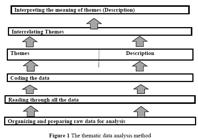
Babbie (2014) describes data analysis as a process of examining and explaining collected data in order to extract an explanation, understand, and establish experiential knowledge and skills. After having collected the data, we used the thematic data analysis method to analyse the data. Figure 1 below illustrates the six steps that were followed in the analysis of the data.
The purpose of analysing the data is to describe the data explicitly, select typical and non-representative information, identify dissimilarities, coordinate, and respond to the research questions (Babbie, 2014). In order to grasp the many constituent aspects of one's data, one must break it down into understandable information. According to Dudovskiy (2018), the thematic strategy of analysing information is a process that focuses on information presented textually, verbally and in multifaceted formats. Sandelowski (1996) indicates that the thematic data analysis method aims to change and analyse qualitative information in a meticulous and academic style because, in qualitative analysis, information is regarded as substitutes of personal exercises and talking. The thematic strategy is the procedure of reducing gathered information into themes or categories (Babbie, 2014).
Step 1: Organising and preparing
After collecting the information, we created the transcriptions of the interviews, which assisted us to better understand the research. In this step we also sorted and arranged the data into various categories according to the source of the data.
Step 2: Read through all the data
In this step we studied the interview transcripts and acquired a general meaning of the information. We focused on the diverse definitions of the information in order to understand the participants' general opinions. We then wrote notes in the margins and started recording thoughts about the data.
Step 3: Coding the data
In this step we reviewed the transcripts and named and labelled the fundamental sections of the information. We picked one document, went through it and asked ourselves what that document was about. We wrote our opinions in the margins. After having read several transcripts, we made a list of topics and clustered similar topics together. We revisited the data, abbreviated the topics as codes and wrote the codes next to the appropriate segments of the text. Then we found the most descriptive wording from the topics and turned them into categories. We categorised connected topics and abbreviated each category. Then we assembled the data belonging to each category in one place.
Step 4: Generating a description and theme
Description involves a comprehensive presentation of the data. In this step we used the codes to generate a small number of themes or categories. These themes were the ones that appeared as major findings and we used them to create headings and subheadings.
Step 5: Interrelate themes
In this step we used a narrative passage to provide the results of the data analysis. We interconnected the themes into a story line and built extra layers of complex analysis. We implemented tables to assist in the discussions.
Step 6: Interpretation
Interpretation was the final step of data analysis. In this step we explained the information. We derived the meaning by comparing the findings with the data acquired from the literature and theoretical framework of the study. Thematic analysis was preferred in this study because it is regarded as an effective tool for assessing the views of various research participants (Nowell, Norris, White & Moules, 2017).
In this paragraph we focus on a summary of the thematic data analysis. After transcribing the participants' individual interviews, we read through the transcripts to gain a general understanding of the data. The views concerning possible groups were written down in the margins. We then checked all participants' responses, shortened them as codes, and recorded the codes next to the suitable text categories. We also recorded the most expressive texts for the headings and converted them into groups or themes. All related topics were assembled to reduce the number of groups. We also recognised the interrelationships between the different groups, and then focussed on the abbreviation for each category. Finally, we elucidated and reported the results of the research.
Trustworthiness of the Study
The concept "trustworthiness of the study" refers to the degree of alignment between the descriptions of the research context and the reality of the phenomenon being studied (McMillan & Schumacher, 2010). According to Polit and Hungler (2013), trustworthiness encompasses the reliability of the information, the clarity of the presentation and the strategies implemented to ensure the overall quality of the research. Researchers should establish clear protocols and procedures to ensure that their study is credible and worthy of readers' consideration (Amankwaa, 2016). Various criteria are used to uphold the trustworthiness and credibility of the research findings. In this study, the following quality criteria for qualitative research were implemented to guarantee its trustworthiness:
Credibility of the Study
The term "credibility" is described as the degree of correspondence between the realities of the world and the explanations of the phenomena (McMillan & Schumacher, 2010). In research, credibility is used to create the belief that the results of a qualitative study are authentic, acceptable and convincing from the participants' point of view (Polit & Hungler, 2013). Researchers use different criteria to ensure the credibility of a research study. In this research, we implemented the following strategies to guarantee the credibility of qualitative data.
Prolonged engagement
A qualitative researcher needs to spend more time with respondents and in context to identify and document themes, patterns, and value and develop trust (Enworo, 2023; Eryilmaz, 2022; Riazi, Rezvani & Ghanbar, 2023). To spend extensive time in the research field means that the researcher should pose question to the participants until data saturation is achieved (Brink, Van der Walt & Van Rensburg, 2012). Data saturation is associated with ensuring that enough data are available to ensure that the research questions are answered (Walker, 2012). When data saturation is achieved, it is no longer necessary to conduct further study because all questions have been answered (O'Reilly & Parker, 2013). When a researcher stays in the field until data saturation is achieved, a deep comprehension of the opinions, experiences and cultures of the participants is acquired (Brink et al., 2012). Various strategies of data saturation are recommended by various research experts. McMillan and Schumacher (2010) indicate that data saturation may be achieved by conducting 20 to 30 interviews and that the interviews should last an hour or more. Bernard (2011) emphasises that the number of interviews needed for a qualitative study to reach saturation could not be quantified but the interview questions should be structured to facilitate asking multiple participants the same questions. According to Creswell (2015), reaching saturation is achieved by conducting 20 to 60 interviews. In our study, data saturation was achieved by selecting the key informants of the study, interviewing 24 participants, constructing a saturation grid wherein major topics were listed vertically and interviews to be conducted were listed horizontally, asking the interviewees the same questions. Individual interviews lasted about 1 hour each and focus-group interviews lasted about 1 hour and 30 minutes each. We also probed many participant responses in order to acquire more information about their responses. Staying in the field for 1 hour with each participant assisted us to acquire complete information about instructional leadership.
Use of heterogeneous sample
The trustworthiness and credibility of this study were ensured through the use a heterogeneous research sample. Heterogeneity means that the samples are different and a heterogeneous sample is a sample which is composed of items or individuals that are different from one another (Creswell, 2014).
In this study, the sample included two female and two male participants. The participants included three middle-aged participants and only one old participant. The sample also included one participant with 30 years' teaching experience, one participant with 18 years' teaching experience, one participant with 15 years' experience and one participant with 23 years' experience
Member checking
In this study we guaranteed the trustworthiness and credibility of the study by allowing the participants to review the data that they had provided. Review of data or member checking refers to participants' verification of the data through casual conversations in informal settings (McMillan & Schumacher, 2010). Schutte and Steyn (2015) regard member checks as the most significant process to bolster the credibility of a study.
In this study, member checks relating to the correctness of the information provided were conducted during the interviews and after the data collection process. We asked the participants to read all the interview transcripts of their individual interviews. The focus of the member checks was whether the participants' words matched what they actually intended to communicate.
Triangulation
According to Noble and Heale (2019), research triangulation refers to the process that helps to increase the credibility and validity of research. Triangulation is used to develop a comprehensive understanding of the phenomenon under study (Polit & Beck, 2014). In this study triangulation was done through the use of document analysis, non-participant observation and individual interviews. The document analysis and non-participant observation methods allowed us to collect data without talking to anyone. The individual interviews allowed us to compare our views with the interviewees' views and also to probe the interviewees' attitudes, beliefs and experiences for details and reasons to gain greater understanding.
Transferability (generalizability)
We used transferability to guarantee the trustworthiness of the study. According to Guba and Lincoln (2005), transferability, which is also called generalisability, refers to the degree to which the findings of qualitative research can be transferred to other settings. Transferability is established by providing the readers with evidence that the study findings may be applicable to other contexts, situations, times and populations. In this study, we guaranteed transferability of the findings by providing a comprehensive context and the key assumptions of this study. We ensured that the findings of this study could be credibly transferred to other situations or contexts in order to make judgements.
Dependability (Consistency)
Researchers may also guarantee the trustworthiness of a study by ensuring dependability of the study. Guba and Lincoln (2005) define dependability of a study as the quality of being able to be counted on or relied upon. Polit and Beck (2012) explain that dependability is data consistency over similar contexts (Cope, 2014; Enworo, 2023; Ghafouri & Ofoghi, 2016; Hanson, Ju & Tong, 2019; Polit & Beck, 2012). Dependability, or consistency, is similar to reliability in quantitative research (Branson & Branson, 2015). The role of dependability is to ensure that the same findings of a study are obtained when measured by the same standard (Guba & Lincoln, 2005). In this study we used the effective and credible data collection and data analysis methods to ensure dependability of the study.
Confirmability
In this research, we also used confirmability to guarantee the trustworthiness of the study. According to Guba and Lincoln (2005), confirmability refers to the extent to which the research findings or results are acceptable or supported by other people. We ensured confirmability by implementing different processes for evaluating and re-evaluating the information during the research process. On completion of the study we conducted a data audit in which we examined the data collection, the analysis of the research process and investigation into any bias or distortion.
Ethical Considerations
According to Babbie (2014), the term ethics refers to the moral principles that assist people to know what is acceptable or unacceptable in the communities and is used by researchers as moral standards of evaluating the acceptability of their behaviour while conducting a study. In this research, the following moral principles were adhered to.
Informed consent
We ensured the ethical principles of this study by guaranteeing that all the participants provided informed consent. The term "informed consent" refers to permission given by the prospective participants in full knowledge of the possible consequences of the research (Grady, Cummings, Rowbotham, McConnell, Ashley & Kang, 2017). In this research, informed consent was obtained after providing the participants with comprehensive details of all features of the study. We achieved this by contacting all the participants in order to notify them of the purpose, significance and the advantages of participating in the research.
Plagiarism
Perkins (2010:para. 4) defines the term "plagiarism" as the procedure of not providing acknowledgement to an initial source of perception or literacy. In this research, we avoided plagiarism by duly acknowledging all materials that were used in the study.
Permission to conduct the research
We obtained permission to conduct the research from the Groot Letaba and Shamavunga circuits. We achieved this by writing letters to the circuit managers and principals of the selected schools.
Minimisation of risk to participants
We also adhered to the ethical principles by minimising the risks to the participants. We prevented risk to the participants by ensuring that the participants never experienced any injury, inconvenience, embarrassment or tension while participating in the study. This was achieved by meeting all participants to explain how the study would be conducted and ensuring that the normal working hours of the participants were not interrupted.
Voluntary participation
Voluntary participation is an ethical research principle and consideration covered by international law and many codes of scientific conduct. Researchers must ensure that participants are not pressurised when working with vulnerable groups of individuals (Bhandari, 2022). This was achieved by meeting each prospective participant to inform them that they were not compelled to be involved in research. We also provided the participants with sufficient time to decide whether they would participate in the study or not. The individuals who wanted to participate were also informed that they were free to terminate their participation in the study without prejudice at any time.
Right to privacy (confidentiality)
Allen, Grigsby and Peters (2015) describes the ethical principle of the right to privacy or confidentiality as a state in which the researcher is aware of the names of participants but decides to safeguard or hide the participants' names. In this study, the right to privacy was achieved by not making the names of the individuals who participated in the research known to safeguard their integrity. The right to privacy was also guaranteed by ensuring that all the information collected during the interview sessions was stored in a locked cupboard. All the collected data were used only by the researcher no persons not involved in the study had access to the data.
Limitations of the Study
All the potential weaknesses of research that the researcher is not able to control are called the limitations of a study (Creswell, 2014). This is typical of qualitative research which seeks to obtain detailed in-depth understanding and does not seek to prove hypotheses or to generalise. During the design of this study we realised two limitations of the study, namely, conducting the study only in one district and at four schools. Despite this limitation, the findings of this study are relevant because the four schools represent all schools.
Findings of the Study
The aim of this section is to present, interpret and analyse the data collected from the individual interviews. All the findings of this study are related to or based on assessment theory, introduced by Donald Kirkpatrick. According to Kurt (2018), the primary objective of the assessment theory is to assess how the learners react to learning by asking questions. The thematic analysis method was used to analyse the data collected from the four participating teachers. An analysis of the data produced the four main themes discussed below, which are based on four research questions of the study.
Why Primary School Teachers Use Formative Assessment Practices, Strategies and Tools to Facilitate Effective Teaching and Learning
This theme was based on the first research question: Why do primary school teachers use formative assessment practices, strategies and tools to facilitate effective teaching and learning? The participants were requested to explain why primary school teachers used formative assessment practices, strategies and tools. An analysis of the participants' responses revealed the following reasons why formative assessment strategies and tools are used by teachers to facilitate effective teaching and learning.
To explore what the learners know
An analysis of the participants' responses revealed that formative assessment strategies and tools were used to explore what the learners already knew. Participants 1, 2, 3 and 4 responded as follows:
The function of formative assessment is beneficial to learners because each assessment strategy has its specific role in the deliverance of the curriculum. I use formative assessment to check and satisfy myself about the learners' knowledge and performance. Using various types of formative assessment afford teachers the opportunity to check the performance of learners that leads to decision-making about curriculum deliverance and planning. (Participant 1)
Formative assessment aims to check the extent to which a particular skill has been attained in order to measure how much knowledge has been gained (Participant 2).
The aim of formative assessment is to collect information about the learner's performance or progress. This also helps in giving direction to the learning process. Various types of formative assessment are crucial to the learner's learning progress. Educators are also guided by learners' performance in all types of assessment to continue helping the learners informed by their results. (Participant 3)
I use formative assessment to assess learners to get an idea of the level of my learners, to track progress and to have overall progress for the term or academic year. I use it to gauge the level of our learners and take it from there to track if what is being taught is understood to change the teaching style and, above all, to get an overall idea of the whole term. (Participant 4)
The above extracts indicate that formative assessment is used to check the learners' knowledge and performance, to measure how much knowledge has been gained and gauge the level of the learners' knowledge. This finding is in line with the first level of the assessment theory (Winfrey, 1999), namely, reactions (Winfrey, 1999). According to the assessment theory, the main objective of reactions is to evaluate whether learners perceived the instruction and training as charming, fascinating, beneficial and appropriate to their subject or programme. This implies that the main aim of this level is to explore why formative assessment is used by teachers.
To explore the challenges experienced by learners
An analysis of the participants' responses revealed that formative assessment strategies and tools were used to explore the challenges experienced by learners. The participants responded as follows:
Formative assessment enables teachers to detect the problem areas and learning needs that are often unique and specific and offers the teachers an opportunity to make amendments and improvements. The weak areas of learners can be identified so that educators can have a good record of how learners will be assisted in the next grade. (Participant 1)
Formative assessment is used to identify content areas found to be difficult to learners so that learners experiencing barriers to learning can get assistance and ensure that the teacher has ample time to make amends after the problem areas were identified. (Participant 2)
The aims and benefits of formative assessment are to assist the learners to know their strengths and weaknesses and identify areas for development. It allows them to improve and develop their confidence (Participant 3).
The formative assessment feedback helps the teachers identify areas of the content that are difficult for learners. It assists educators in identifying problematic areas and provides parents with progress reports of their children's learning (Participant 4).
The above participant responses reveal that teachers used strategies of formative assessment to detect problem areas and learning needs that are often unique and specific. Furthermore, formative assessment is used to identify content areas that learners find difficult, to know their strengths and weaknesses and to identify areas for development.
To improve teaching and learning
An analysis of the participants' responses reveal that formative assessment strategies and tools were used to improve teaching and learning as is shown in the following responses:
The results of formative assessment assist teachers to plan for intervention strategies for improvement (Participant 1).
It is also used to analyse the learners' results in comparison with the previous year's results to check if the school is not deteriorating or is improving in terms of results (Participant 2).
Using formative assessment will inform the school on how the curriculum can be managed. It will lead to proper and effective teaching improvement plans (Participant 3).
Formative assessment helps the teachers check if they have achieved their goals. When using formative assessment, it will inform how the instruction and curriculum of the school can be modified to reach all learners. It also provides evidence of what is happening in the classroom during teaching and learning. (Participant 4)
From the above it is clear that formative assessment was used to analyse the learners' results in order to improve teaching and learning, and to inform the school how the curriculum can be improved. The participants indicated that they assessed the learners to evaluate their ability to learn according to a particular method, assessed whether the learners understood what was being taught, and checked the extent to which a particular skill has been attained.
Discussion
The findings reveal that teachers used formative assessment to determine learners' knowledge and evaluate learning at the end of the lesson. The findings are in line with the first level of the assessment theory, namely, reactions (Winfrey, 1999). Its main objective is to evaluate whether learners perceived the instruction and training as charming, fascinating, beneficial and appropriate to their subject or programme. According to Johnson (2024), the purpose of formative assessment is to close the gap between where the learner is to where they want to be. According to Sasser (2018), formative assessment allows teachers to check for understanding during the lesson instead of waiting until the completion of the lesson to assess learners' learning.
The findings are confirmed by Adedoyin and Chisiyanwa (2018), who indicate that formative assessment of learners is used to assist and improve learners' learning and assists teachers in improving their teaching, while assessment of learning is used to grade and approve the learners' academic performance by measuring what and how much learners have learnt. The findings also reveal that the teachers used assessment to improve teaching and learning, to make teaching and learning more effective, to customise their teaching plans, and to allow them to check learners' performance, resulting in decision-making about curriculum deliverance and planning. This is confirmed by J Brown (1999) who indicates that formative assessment refers to helping learners develop during learning. The findings reveal that the teachers always asked learners questions while teaching. The aim with the questions was to explore whether the learners understood what the teacher was teaching. Approximately five learners were allowed to answer the question. If the answers were answered incorrectly, the teacher provided the correct answer, which supported the teacher in improving teaching. The findings also reveal that the teacher expected the learners to discuss what they had learnt during the lesson. The teacher listened to the discussion and corrected the learners where necessary. The outcomes also reveal that one of the effective assessment strategies and practices that primary school teachers can implement to enhance effective instruction and learning is to give learners classwork after each lesson. Meador (2017) asserts that teachers who use regular, ongoing formative assessment in their classrooms find that learner engagement and learning increases and teachers are able to use the data generated from formative assessment to drive instructional changes for the entire group and individual instruction.
The Formative Assessment Strategies and Practices that are used by Primary School Teachers to Facilitate Teaching and Learning
This theme was based on the second research question: Which formative assessment strategies and practices can primary school teachers use to facilitate effective teaching and learning? The findings of the study reveal that primary school teachers used the formative assessment strategies, practices and tools discussed below to improve teaching and learning:
Asking questions while teaching
An analysis of the participants' responses reveal that one of the strategies of assessment was asking questions while teaching, which is clear from the following responses:
I use formative assessment by asking the learners questions while I am teaching them. I ask them the questions to find out if they understand what I am busy teaching them. I always take five answers (Participant 1).
Formative assessment is used by asking learners questions during my teaching. I don't want to continue teaching while they don't understand me; I provide correct answers when they give me wrong answers (Participant 3).
Formative assessment assists us to see whether the learners understand what I am busy teaching them; sometimes, I start the lesson again (Participant 4).
The above reveals that teachers used formative assessment by asking learners questions while they were teaching, provided learners with correct answers when they provide incorrect answers and repeated a lesson when the learners didn't understand.
An analysis of the participants' responses also reveal that discussion was one of the formative assessment strategies used, which is clear from the following responses:
I use formative assessment by involving my learners in discussions during the lesson. The learners enjoy the discussions and understand what I am teaching them (Participant 2).
One of the formative assessments I use is to engage my learners in discussing what I am teaching. What they discuss indicates what they understand about the subject matter (Participant 3).
From the above it is clear that teachers involved the learners in discussions during the lessons and their discussion indicated that they understood what they were learning.
Classwork
An analysis of the participants' responses revealed that classwork was another strategy of formative assessment:
In all my lessons, I give learners classwork to see if they understood what I have just taught them. The questions are written on the board (Participant 1).
I use classwork as a formative assessment to discover if learners understood what I taught them by writing down in their books (Participant 2).
At the end of each lesson, I write classwork questions on the chalkboard. Classwork is my main formative assessment because the learners show their understanding by writing down the answers in their books (Participant 3).
All of us use classwork as formative assessment to determine how the learners understand the subject matter presented during that period. My learners enjoy classwork (Participant 4).
The above shows that the participants required of learners to do classwork to determine whether they understood what they were learning. Questions were written on the chalkboard and the learners wrote the answers in their books.
Homework and projects
The participants also revealed that homework and projects was another strategy of formative assessment:
I like to give my learners homework and projects because they respond to a topic based on a lesson I taught them. They do homework and projects as formative assessments at home (Participant 2).
I also use a special formative assessment called 'project and homework.' I give learners a topic for the project and homework and give them 3 to 5 days to complete it (Participant 4).
The above reveals that the teachers expected of learners to do homework and projects at home as formative assessment because they responded to a topic based on a particular lesson.
These responses are related to the second level of Kirkpatrick's assessments theory, learning (Kirkpatrick, 1996). The main purpose of Level 2 of the assessment theory is to gauge each learner's learning grounded on whether learners can learn intentional knowledge, skills, attitudes, convictions, and dedication to learning (Kirkpatrick, 1996).
The Challenges Experienced by Teachers and Learners in the Formative Assessment of Learners
This theme was based on the third research question: "What challenges do teachers and learners experience in the formative assessment of learners?" We requested the participants to explain which problems teachers and learners experienced in the formative assessment of learners. The findings reveal the following.
Learners do not understand questions because they are not able to read questions effectively
An analysis of the participants' responses revealed that one of the challenges of formative assessment was that the learners did not understand the questions because they were not able to read questions effectively. The participants responded as follows in this regard:
There are many challenges that I experience as a teacher during the assessment of learners. Many learners struggle to complete their tasks in the stipulated time. Learners are not able to read with comprehension and struggle to follow the instructions or interpret the questions correctly. (Participant 1)
My challenge is that learners are not able to read questions with understanding. Learners are lacking in terms of reading with understanding. Learners' performance differs to such an extent that one cannot believe that learners were taught in one class by one educator; some learners are performing well while others are doing badly. Some learners can answer oral questions than written questions because they are not able to read with comprehension. (Participant 4)
The findings reveal that learners were not able to read questions with understanding which forced them to provide irrelevant responses which also resulted in learners struggling to complete the tasks in the stipulated time.
A lack of resources and insufficient time
An analysis of the participants' responses also reveal that one of the challenges of formative assessment was a lack of resources and insufficient time. The participants responded as follows:
Many learners struggle to complete their tasks in stipulated time (Participant 1).
No, I do not have sufficient time; I assess learners during the presentation of the lesson whereby I assess them orally and give them activities and classwork. I do not have time to use different types of assessments because I have a lot of work to cover. (Participant 2)
My challenge is the lack of resources or textbooks or teaching aids, but our principal fights to provide it by borrowing or asking from nearby schools (Participant 3).
The above reveal that the teachers did not have sufficient time to assist the learners because they had a lot of work to do. Another challenge was a lack of teaching and learning resources like textbooks and teaching and learning aids.
Some learners do not do their homework and projects
The participants indicated that the learners did not do their homework and projects.
I am worried because I have learners who don't like to do homework and projects and those learners always fail tests (Participant 1).
One of my main challenges of formative assessment is that there are learners who always fail to do their homework and I always punish them. I don't think they understand what I am teaching them (Participant 2).
The above reveal that learners did not do their homework and projects.
The findings reveal that teachers were experiencing challenges while they taught. These challenges were that some learners did not do their homework and projects, a lack of resources and insufficient time, and learners who did not understand the questions. These challenges are in line with the assessment theory. According to Level 2 of the assessment theory, the aim of formative assessment is to gauge each learner's learning on whether learners can learn intentional knowledge, skills, attitudes, convictions, and dedication to learning (Kirkpatrick, 1996). At this level, the assessor (teacher) wishes to explore how learners have developed and whether they had experienced challenges. According to the assessment theory, assessment at this stage involves evaluating the degree to which learners have improved their knowledge and skills (Kirkpatrick, 1996).
The Benefits of Using Formative Assessments in Primary Schools
This theme is based on the fourth research question: What are the benefits of using formative assessments in primary schools? We requested the participants to explain the benefits of using formative assessments in primary schools. The findings reveal the following.
Formative assessment helps teachers to collect information which indicates learners' needs
An analysis of the participants' responses reveal that formative assessment assisted teachers to understand the learners' needs.
Using formative assessment assist me to see what the learners don't understand and how I must assist them (Participant 1).
The important benefit of using formative assessment is that it assists me to see what the learners want me to assist them (Participant 2).
Formative assessment assists me to see how the learners want me to assist them to be successful (Participant 3).
The participants revealed that formative assessment assisted them to understand what the learners didn't understand in order to take remedial action.
Formative assessment improves the academic performance of learners
An analysis of the participants' responses revealed that formative assessment improved the learners' academic performance.
Formative assessment is very important because it promotes the academic achievement of our learners (Participant 1).
The important benefit of formative assessment is that it improves the academic performance of learners (Participant 2).
Yes, the important benefit of formative assessment is that it assist learners to improve their achievement at school (Participant 3).
Formative assessment is the best strategy of improving the achievement of learners at our school (Participant 4).
The above quotes from teachers indicate that the important benefit of using formative assessment was to improve their learners' academic achievement so that they could be promoted to progress to the next grade.
The findings reveal significant benefits of formative assessment, namely, assisting teachers to collect information on learner needs and improving learners' academic performance. Kirkpatrick's assessment theory creates a practical evaluation framework to explicitly outline the aim of assessing and identify areas of significant impact (Winfrey, 1999).
According to Level 3 of Kirkpatrick's assessment theory, it is not enough to learn something but fail to apply it to change their behaviour. At Level 3 of Kirkpatrick's assessment theory the learners' learning is evaluated to determine whether they were implementing the knowledge and skills that they had learnt (Kirkpatrick, 1996). Trumbull and Lash (2013) suggest that formative assessment enables learners to take responsibility for their learning by understanding its purpose of improving their performance. This view is confirmed by Voinea (2018), who asserts that the role of formative assessment is to gather evidence about the learner's learning progress to assist them to reach their full potential.
Summary of Findings
The findings reveal that teachers used formative assessment to determine the learners' knowledge and evaluate learning at the end of the lesson. The participants indicated that they assessed the learners to evaluate their ability to learn in a particular way, assess whether they understood what they had been taught that day, and checked the extent to which a particular skill had been attained. The findings agree with those by Adedoyin and Chisiyanwa (2018) who indicate that formative assessment is used to assist and improve learners' learning and to assist teachers in improving their teaching. Assessment of learning is used to grade and approve the learners' academic performance by measuring what and how much the learners had learnt. The participants also indicated that they used formative assessment to identify problem areas, to identify learners with learning barriers in order to assist them, to develop methods to address problems, implement remedial work and inform decision-making, adjustment methods, and planning of future lessons. The findings also reveal that the teachers used assessment to improve teaching and learning, customise their teaching plans, and allow teachers to check learners' performance, resulting in decision-making about curriculum deliverance and planning. J Brown (1999) confirms that the concept of formative assessment refers to helping learners to develop during learning. The findings reveal that the teachers always asked learners questions while teaching. The aim with the questions was to explore the learners' understanding of what the teacher was teaching. About five learners were allowed to answer each question. The teachers corrected incorrect answers to improve their teaching. The findings also reveal that after presenting a lesson, the teacher expected of learners to discuss what they had learnt. The teacher listened to the discussion and corrected the learners where necessary. The outcomes also reveal that one of the effective assessment strategies and practices that primary school teachers can implement to enhance effective instruction and learning is to give classwork after each lesson. Classwork is another form of formative assessment which explores whether the learners understood the lesson and indicated to the teacher whether the lesson needed to be repeated or not. The findings also reveal that after presenting lessons, the teachers wrote some questions on the chalkboard and instructed the learners to answer the questions quickly and also to respond to certain questions as homework. Homework is very important as it forces learners to study the content of the lesson at home, thus expanding their understanding of the content. The findings also reveal that the teachers instructed learners to do certain projects at home to improve their understanding of the subject matter presented. The findings also reveal that learners were unable to answer the questions correctly because they were not able to read with comprehension and struggled to follow the instructions or interpret the questions. According to Jones (2014), reading and writing skills in English First Additional Language is a universal problem because many learners struggle to understand the questions. The outcomes of our study also reveal that many learners struggled to complete their tasks within the stipulated time due to lack of resources. The findings also reveal that not all learners did their homework and projects, which negatively impacted on their academic performance. The teachers always punished the learners who did not do their homework and projects.
The findings of this study will assist the government and teachers to design effective formative assessment practices, strategies and tools to improve learners' academic performance. In our observation of four teachers, we discovered that the teachers conducted formative assessment during lesson presentation. Lastly, the findings reveal that many teachers were experiencing challenges in implementing learner assessment. We recommended that instructional leaders should improve the formative assessment of learners by arranging professional development sessions and assisting teachers in designing assessment practices, strategies and tools.
Conclusion
With this study we aimed to identify and understand formative assessment tools, strategies and practices used by primary school teachers in enhancing effective teaching and learning in the Groot Letaba and Shamavunga circuits of the Mopani district in the Limpopo province of South Africa. This study was based on the assessment theory, constructivist paradigm, phenomenological design, and qualitative research approach. The population of this study were teachers from two selected schools from the circuits indicated above. Purposive sampling was implemented to select the four research participants from two schools.
Individual interviews were used to answers to the research questions. We also conducted observations of two teachers at Schools A and B to see how they implemented formative assessment. The primary findings of this study addressed the research questions. Moreover, the findings reveal the aims and benefits of using formative assessments in primary schools, the formative assessment strategies and practices used by primary school teachers to improve teaching and learning, and the challenges experienced by teachers and learners in the formative assessment of learners.
We believe that the findings of the study will contribute to improving teaching, learning, assessment, and the academic performance of learners. We also believe that the topic of the study, will garner attention from global scholars to acquire more knowledge and skills in designing new formative assessment practices, strategies and tools. The findings of this research will assist policymakers in formulating policies and developing a framework for improving assessment in schools. The findings of this study will also shed light on what is expected of teachers to improve their teaching.
Authors' Contributions
Both authors contributed to the article and approved the final version
Notesi. This article is based on the doctoral thesis of Abbey Ngamba.
ii. Published under a Creative Commons Attribution Licence.
References
- Adedoyin O & Chisiyanwa L 2018. Issues in assessment practices at Botswana private tertiary institutions as perceived by undergraduate students. Asian Journal of Education and e-Learning, 6(1):20-32.
-
Adom D, Hussein EK & Agyem JA 2018. Theoretical and conceptual framework: Mandatory ingredients of a quality research. International Journal of Scientific Research, 7(1):438-441. Available at https://www.researchgate.net/publication/322204158_THEORETICAL_AND_CONCEPTUAL_FRAMEWORK_MANDATORY_INGREDIENTS_OF_A_QUALITY_RESEARCH. Accessed 31 August 2025.
» https://www.researchgate.net/publication/322204158_THEORETICAL_AND_CONCEPTUAL_FRAMEWORK_MANDATORY_INGREDIENTS_OF_A_QUALITY_RESEARCH -
Akhtar MI 2016. Research in social science: Interdisciplinary perspectives. Kanpur, India: Social Research Foundation. Available at https://www.researchgate.net/publication/308915548_Research_Design. Accessed 2 June 2021.
» https://www.researchgate.net/publication/308915548_Research_Design -
Alahmadi N, Alrahaili M & Alshraideh D 2019. The impact of the formative assessment in speaking test on Saudi students' performance. Arab World English Journal, 10(1):259-270. https://doi.org/10.2139/ssm.3367580
» https://doi.org/10.2139/ssm.3367580 -
Allen N, Grigsby B & Peters ML 2015. Does leadership matter? Examining the relationship among transformational leadership, school climate, and student achievement. International Journal of Educational Leadership Preparation, 10(2): 1-22. Available at https://files.eric.ed.gov/fulltext/EJ1083099.pdf. Accessed 26 July 2025.
» https://files.eric.ed.gov/fulltext/EJ1083099.pdf -
Alsalamah A & Callinan C 2021. Adaptation of Kirkpatrick's four-level model of training criteria to evaluate training programmes for head teachers. Education Sciences, 11(3):116. https://doi.org/10.3390/educsci11030116
» https://doi.org/10.3390/educsci11030116 - Amankwaa L 2016. Creating protocols for trustworthiness in qualitative research. Journal of Cultural Diversity, 23(3):121-127.
- Andrade HL & Heritage M 2018. Using formative assessment to enhance learning, achievement, and academic self-regulation. London, England: Routledge.
-
Asim HM, Vaz A, Ahmed A & Sadiq S 2021. A review on Outcomes Based Education and factors that impact student learning outcomes in tertiary education system. International Education Studies Journal, 14(2):1-11. https://doi.org/10.5539/ies.v14n2p1
» https://doi.org/10.5539/ies.v14n2p1 -
Australian Education Research Organisation 2021. Formative assessment: Know where your students are in their learning. Available at https://www.edresearch.edu.au/sites/default/files/2021-03/AERO-Tried-and-tested-guide-Formative-assessment.pdf. Accessed 20 February 2023.
» https://www.edresearch.edu.au/sites/default/files/2021-03/AERO-Tried-and-tested-guide-Formative-assessment.pdf - Babbie E 2014. The practice of social research (14th ed). Belmont, CA: Thompson Wadsworth.
- Bernard HR 2011. Research methods in anthropology (5th ed). Oxford, England: AltaMira Press.
-
Bhandari P 2022. Ethical considerations in research | Types & examples. Available at https://www.scribbr.co.uk/research-methods/ethical-considerations/. Accessed 25 July 2025.
» https://www.scribbr.co.uk/research-methods/ethical-considerations/ -
Black P & Wiliam D 1998. Assessment and classroom learning. Assessment in Education: Principles, Policy & Practice, 21(10):7-74. https://doi.org/10.1080/096595980050102
» https://doi.org/10.1080/096595980050102 -
Boud D & Soler R 2016. Sustainable assessment revisited. Assessment & Evaluation in Higher Education, 41(3):400-413. https://doi.org/10.1080/02602938.2015.1018133
» https://doi.org/10.1080/02602938.2015.1018133 - Branson JS & Branson A 2015. Evaluating qualitative research.
- Brink H, Van der Walt C & Van Rensburg G 2012. Fundamentals of research methodology for health care professionals (3rd ed). Cape Town, South Africa: Juta.
- Brookhart SM 2017. How to give effective feedback to your students (2nd ed). Alexandria, VA: Association for Supervision and Curriculum Development.
-
Brown GTL 2022. The past, present and future of educational assessment: A transdisciplinary perspective. Frontiers in Education, 7:1060633. https://doi.org/10.3389/feduc.2022.1060633
» https://doi.org/10.3389/feduc.2022.1060633 -
Brown J 1999. Bowen family systems theory and practice: Illustration and critique. Australian & New Zealand Journal of Family Therapy, 20(2):94-103. https://doi.org/10.1002/j.1467-8438.1999.tb00363.x
» https://doi.org/10.1002/j.1467-8438.1999.tb00363.x - Brynard DJ, Hanekom SX & Brynard PA 2014. Introduction to research (3rd ed). Pretoria, South Africa: Van Schaik.
-
Buyukkarci K & Sahinkarakas S 2021. The impact of formative assessment on students' assessment preferences. The Reading Matrix: An International Online Journal, 21(1): 142-161. Available at https://www.readingmatrix.com/files/24-o03594m3.pdf. Accessed 24 July 2025.
» https://www.readingmatrix.com/files/24-o03594m3.pdf - Carless D 2015. Excellence in university assessment: Learning from award-winning practice. London, England: Routledge.
-
Chetty P 2016. Importance of research approach in research. Available at www.projectguru.in/publications/selecting-research-approach-business-studies/. Accessed 10 June 2021.
» www.projectguru.in/publications/selecting-research-approach-business-studies/ -
Ci L 2024. The power of visual communication: The impact of graphic design in the digital age. International Journal of Advancements in Technology, 15(6):317. https://doi.org/10.35841/0976-4860.24.15.317
» https://doi.org/10.35841/0976-4860.24.15.317 -
Cope DG 2014. Methods and meanings: Credibility and trustworthiness of qualitative research. Oncology Nursing Forum, 41(1):89-91. https://doi.org/10.1188/14.ONF.89-91
» https://doi.org/10.1188/14.ONF.89-91 - Corbin J & Strauss A 2015. Basics of qualitative research: Techniques and procedures for developing grounded theory (4th ed). Thousand Oaks, CA: Sage.
- Cowdroy R & Williams A 2007. Aligning teaching and assessment: The key to greatly improved graduate quality and sustainable teaching efficiency. In S Frankland (ed). Enhancing teaching and learning through assessment. Hong Kong: Springer.
- Creswell JW 2014. Research design: Qualitative, quantitative, and mixed methods approaches (4th ed). Thousand Oaks, CA: Sage.
- Creswell JW 2015. Research design: Qualitative, quantitative, and mixed methods approaches (4th ed). Thousand Oaks, CA: Sage.
-
Cullinane A 2011. Formative assessment classroom techniques. Resource & Research Guides, 2(13):1-4. Available at https://www.researchgate.net/profile/Alison-Cullinane-2/publication/283328368_Formative_Assessment_Classroom_Techniques/links/5633c92408ae758841121b50/Formative-Assessment-Classroom-Techniques.pdf. Accessed 24 July 2025.
» https://www.researchgate.net/profile/Alison-Cullinane-2/publication/283328368_Formative_Assessment_Classroom_Techniques/links/5633c92408ae758841121b50/Formative-Assessment-Classroom-Techniques.pdf -
Davis MH 2003. Outcome-based education. Journal of Veterinary Medical Education, 30(3):258-263. https://doi.org/10.3138/jvme.30.3.258
» https://doi.org/10.3138/jvme.30.3.258 - Dawson C 2019. Introduction to research methods: A practical guide for anyone undertaking a research project (5th ed). London, England: Robinson.
- Denzin NK & Lincoln YS (eds.) 2017. The Sage handbook of qualitative research (5th ed). Los Angeles, CA: Sage.
-
Dixon DD & Worrell FC 2016. Formative and summative assessment in the classroom. Theory Into Practice, 55(2):153-159. https://doi.org/10.1080/00405841.2016.1148989
» https://doi.org/10.1080/00405841.2016.1148989 -
Du J 2021. Research and practice of training effect evaluation system based on Kirkpatrick Model-taking teacher training system of Zhejiang Open University as an example. Chinese Studies, 10(2):123-146. https://doi.org/10.4236/chnstd.2021.102009
» https://doi.org/10.4236/chnstd.2021.102009 -
Dudovskiy J 2018. An ultimate guide to writing a dissertation in business studies: A step-by-step assistance. Available at https://static1.squarespace.com/static/5530dddfe4b0679504639dc1/t/65f9bbd052269a478741e89c/1710865372066/The+Ultimate+Guide+to+Writing+a+Dissertation.pdf.PDF. Accessed 31 August 2025.
» https://static1.squarespace.com/static/5530dddfe4b0679504639dc1/t/65f9bbd052269a478741e89c/1710865372066/The+Ultimate+Guide+to+Writing+a+Dissertation.pdf.PDF -
Dwiyanti KE & Suwastin NKA 2021. Assessment for writing skills in online learning. Lingua Scientia, 28(1):8-19. https://doi.org/10.23887/ls.v28i1.29069
» https://doi.org/10.23887/ls.v28i1.29069 -
Enworo OC 2023. Application of Guba and Lincoln's parallel criteria to assess trustworthiness of qualitative research on indigenous social protection systems. Qualitative Research Journal, 23(4):372-384. https://doi.org/10.1108/QRJ-08-2022-0116
» https://doi.org/10.1108/QRJ-08-2022-0116 -
Eryilmaz Ö 2022. Are dissertations trustworthy enough? The case of Turkish Ph.D. dissertations on social studies education. Participatory Educational Research, 9(3):344-361. https://doi.org/10.17275/per.22.70.9.3
» https://doi.org/10.17275/per.22.70.9.3 - Evans O 2020. The first class you: Quick tips to achieve first class degree (2nd ed). Lagos, Nigeria: Hevanz International.
-
Ghafouri R & Ofoghi S 2016. Trustworthy and rigor in qualitative research. International Journal of Advanced Biotechnology and Research, 7(4):1914-1922. Available at https://www.researchgate.net/profile/Raziyeh-Ghafouri/publication/322715130_Trustworth_and_Rigor_in_Qualitative_Research/links/5a6acf3ba6fdcc2aedee29b7/Trustworth-and-Rigor-in-Qualitative-Research.pdf. Accessed 23 July 2025.
» https://www.researchgate.net/profile/Raziyeh-Ghafouri/publication/322715130_Trustworth_and_Rigor_in_Qualitative_Research/links/5a6acf3ba6fdcc2aedee29b7/Trustworth-and-Rigor-in-Qualitative-Research.pdf - Gill M & Sharma G 2013. Evaluation of vocational training programmes from the trainees' perspective: An empirical study. Pacific Business Review International, 6(5):35-43.
-
Gloria RY, Sudarmin S, Wiyanto & Indriyanti DR 2018. The effectiveness of formative assessment with understanding by design (UbD) stages in forming habits of mind in prospective teachers. Journal of Physics: Conference Series, 983(1):012158. https://doi.org/10.1088/1742-6596/983/1/012158
» https://doi.org/10.1088/1742-6596/983/1/012158 -
Grady C, Cummings SR, Rowbotham MC, McConnell MV, Ashley EA & Kang G 2017. Informed consent. The New England Journal of Medicine, 376(9):856-867. https://doi.org/10.1056/NEJMra1603773
» https://doi.org/10.1056/NEJMra1603773 -
Granberg C, Palm T & Palmberg B 2021. A case study of a formative assessment practice and the effects on students' self-regulating learning. Studies in Educational Evaluation, 68:100955. https://doi.org/10.1016/j.stueduc.2020.100955
» https://doi.org/10.1016/j.stueduc.2020.100955 - Guba EG & Lincoln YS 2005. Paradigmatic controversies, contradictions, and emerging confluences. In NK Denzin & YS Lincoln (eds). The Sage handbook of qualitative research (3rd ed). Thousand Oaks, CA: Sage.
-
Guest G, Namey EE & Mitchell ML 2013. Collecting qualitative data: A field manual for applied research. London, England: Sage. https://doi.org/10.4135/9781506374680
» https://doi.org/10.4135/9781506374680 -
Hanson CS, Ju A & Tong A 2019. Appraisal of qualitative studies. In P Liamputtong (ed). Handbook of research methods in health social sciences (Vol. 2). Singapore: Springer. https://doi.org/10.1007/978-981-10-5251-4_119
» https://doi.org/10.1007/978-981-10-5251-4_119 -
Harlen W 2015. Helping children's development of inquiry skills. Inquiry in Primary Science Education, 1:5-19. Available at https://ipsejournal.com/wp-content/uploads/2015/03/3-ipse-volume-1-no-1-wynne-harlen-p-5-19.pdf. Accessed 12 August 2024.
» https://ipsejournal.com/wp-content/uploads/2015/03/3-ipse-volume-1-no-1-wynne-harlen-p-5-19.pdf - Irons A 2008. Enhancing learning through formative assessment and feedback. New York, NY: Routledge.
-
Jamie K 2020. How can I use formative assessment to plan instruction and help students drive their own learning? Available at https://www.commonsense.org/education/articles/teachers-essential-guide-to-formative-assessment. Accessed 12 August 2024.
» https://www.commonsense.org/education/articles/teachers-essential-guide-to-formative-assessment - Johnson E 2024. Formative assessment: Why is it still important for your teaching?
- Jones V 2014. Effective classroom management in practical classroom management. US: Pearson Education.
- Kinsella V & Fautley M 2021. Giving value to musical creativity. In J Finney, C Philpott & G Spruce (eds). Creative and critical projects in classroom music: Fifty years of sounds and silence. London, England: Routledge.
- Kirkpatrick D 1996. Great ideas revisited. Techniques for evaluating training programs. Revisiting Kirkpatrick's four-level model. Training and Development, 50(1):54-59.
- Kumar R 2014. Research methodology: A step-by-step guide for beginners (4th ed). London, England: Sage.
- Kurt S 2018. Kirkpatrick model: Four levels of learning evaluation. Educational Technology, 10(24):16.
- La Duke P 2017. How to valuate training: Using the Kirkpatrick model. Professional Safety, 62(8):20-21.
- Lambert K 2012. OCPS curriculum services. London, England: Routledge Falmer.
-
Lane R, Parrila R, Bower M, Bull R, Cavanagh M, Forbes A, Jones T, Leaper D, Khosronejad M, Pellicano L, Powell S, Ryan M & Skrebneva I 2019. Formative assessment evidence and practice literature review. Melbourne, Australia: AITSL. Available at https://web.archive.org/web/20210308113311/https://www.lpofai.edu.au/media/u5ahfia0/literature-review.pdf. Accessed 31 July 2025.
» https://web.archive.org/web/20210308113311/https://www.lpofai.edu.au/media/u5ahfia0/literature-review.pdf - Lester PM 2013. Visual communication: Images with messages (6th ed). Belmont, CA: Wadsworth.
- McMillan JH & Schumacher S 2010. Research in education: A conceptual introduction. New York, NY: HarperCollins.
-
Meador E 2017. What is a formative assessment? Available at https://www.thoughtco.com/what-is-formative-assessment-3194255. Accessed 23 February 2023.
» https://www.thoughtco.com/what-is-formative-assessment-3194255 -
Mege CA 2014. Influence of school environmental factors on teaching-learning process in public primary schools in lower Nyokal division, Homa-Bay district, Kenya. MEd dissertation. Nairobi, Kenya: University of Nairobi. Available at https://erepository.uonbi.ac.ke/bitstream/handle/11295/77873/Mege_Influence%20of%20School%20Environmental%20Factors%20on%20Teaching-learning%20Process%20in%20Public%20Primary%20Schools%20in%20Lower%20Nyokal%20Division%2c%20Homa-bay%20District%2c%20Kenya.pdf?sequence=3&isAllowed=y. Accessed 22 July 2025.
» https://erepository.uonbi.ac.ke/bitstream/handle/11295/77873/Mege_Influence%20of%20School%20Environmental%20Factors%20on%20Teaching-learning%20Process%20in%20Public%20Primary%20Schools%20in%20Lower%20Nyokal%20Division%2c%20Homa-bay%20District%2c%20Kenya.pdf?sequence=3&isAllowed=y -
Menéndez IYC, Napa MAC, Moreira MLM & Zambrano GGV 2019. The importance of formative assessment in the learning teaching process. International Journal of Social Sciences and Humanities, 3(2):238-249. https://doi.org/10.29332/ijssh.v3n2.322
» https://doi.org/10.29332/ijssh.v3n2.322 -
Mikre F 2010. The roles of assessment in curriculum practice and enhancement of learning. Ethiopian Journal of Education and Sciences, 5(2):101-114. https://doi.org/10.4314/ejesc.v5i2.65376
» https://doi.org/10.4314/ejesc.v5i2.65376 - Neuman WL 2011. Social research methods: Qualitative and quantitative approaches (7th ed). London, England: Pearson Education.
-
Noble N & Heale R 2019. Triangulation in research, with examples. Evidence-Based Nursing, 22(3):67-68. https://doi.org/10.1136/ebnurs-2019-103145
» https://doi.org/10.1136/ebnurs-2019-103145 -
Nowell LS, Norris JM, White DE & Moules NJ 2017. Thematic analysis: Striving to meet the trustworthiness criteria. International Journal of Qualitative Methods, 16(1):1-13. https://doi.org/10.1177/1609406917733847
» https://doi.org/10.1177/1609406917733847 -
O'Reilly M & Parker N 2013. 'Unsatisfactory saturation': A critical exploration of the notion of saturated sample sizes in qualitative research. Qualitative Research, 13(2):190-197. https://doi.org/10.1177/1468794112446106
» https://doi.org/10.1177/1468794112446106 - Ornstein AC & Hunkins FP 2013. Curriculum: Foundations, principles, and issues (6th ed). New York, NY: Pearson.
- Pandey P & Pandey MM 2015. Research methodology: Tools and techniques. Romania: Bridge Centre.
-
Paré G, Wagner G & Prester J 2024. How to develop and frame impactful review articles: Key recommendations. Journal of Decision Systems, 33(4):566-582. https://doi.org/10.1080/12460125.2023.2197701
» https://doi.org/10.1080/12460125.2023.2197701 -
Park M 2020. Students' problem-solving strategies in qualitative physics questions in a simulation-based formative assessment. Poster presented at the 2020 annual meeting of the American Educational Research Association. https://doi.org/10.3102/1569740
» https://doi.org/10.3102/1569740 -
Perkins P 2010. 5 ways to improve your visibility as a leader. Available at http://www.blackenterprise.com/5-ways-to-improve-your-visibility-as-a-leader. Accessed 3 March 2025.
» http://www.blackenterprise.com/5-ways-to-improve-your-visibility-as-a-leader - Polit D & Beck B 2014. Nursing research: Principles and methods. Philadelphia, PA: Lippincott Williams & Wilkins.
- Polit DF & Beck CT 2012. Nursing research: Generating and assessing evidence for nursing practice (9th ed). Philadelphia, PA: Lippincott Williams & Wilkins.
- Polit DF & Hungler CT 2013. Essentials of nursing research: Appraising evidence for nursing practice (7th ed). Philadelphia, PA: Wolters Kluwer.
- Popham WJ 2011. Expanding dimensions of instructional objectives. Upper Saddle River, NJ: Prentice-Hall.
-
Pradhan D 2021. Effectiveness of outcomes based education (OBE) toward empowering the students' performance in an engineering course. Journal of Advances in Education and Philosophy, 5(2):58-65. https://doi.org/10.36348/jaep.2021.v05i02.003
» https://doi.org/10.36348/jaep.2021.v05i02.003 -
Puspita RR & Suyatno 2020. Teacher observation assessment for primary education. ETERNAL. (English Teaching Journal), 11(2):78-82. https://doi.org/10.26877/etemal.v11i2.7565
» https://doi.org/10.26877/etemal.v11i2.7565 -
Rahi S 2017. Research design and methods: A systematic review of research paradigms, sampling issues and instruments development. International Journal of Economics & Management Sciences, 6(2):403. https://doi.org/10.4172/2162-6359.1000403
» https://doi.org/10.4172/2162-6359.1000403 -
Ramdhani A, Ramdhani MA & Amin AS 2014. Writing a literature review research paper: A step-by-step approach. International Journal of Basic and Applied Sciences, 3(1):47-56. Available at https://digilib.uinsgd.ac.id/5129/1/08IIBAS%283%29%281%29.pdf. Accessed 17 July 2025.
» https://digilib.uinsgd.ac.id/5129/1/08IIBAS%283%29%281%29.pdf - Republic of South Africa 2010. Assessment and Moderation Policy, Number 13/3/P. Pretoria: Government Printers.
-
Riazi AM, Rezvani R & Ghanbar H 2023. Trustworthiness in L2 writing research: A review and analysis of qualitative articles in the Journal of Second Language Writing. Research Methods in Applied Linguistics, 2(3):100065. https://doi.org/10.1016/j.rmal.2023.100065
» https://doi.org/10.1016/j.rmal.2023.100065 -
Riggs CD, Kang S & Rennie O 2020. Positive impact of multiple-choice question authoring and regular quiz participation on student learning. CBE-Life Sciences Education, 19(2):Ar. 16. https://doi.org/10.1187/cbe.19-09-0189
» https://doi.org/10.1187/cbe.19-09-0189 - Rothstein D & Santana L 2017. Make just one change: Teach students to ask their own questions. Cambridge, MA: Harvard Education Press.
-
Sadler DR 2010. Beyond feedback. Developing student capability in complex appraisal. Assessment & Evaluation in Higher Education, 35(5):535-550. https://doi.org/10.1080/02602930903541015
» https://doi.org/10.1080/02602930903541015 -
Sajeevanie TL 2021. Literature review and academic research. International Journal of Creative Research Thoughts, 9(1):2713-2720. Available at https://www.researchgate.net/publication/349098708_Literature_Review_and_Academic_Research. Accessed 16 July 2025.
» https://www.researchgate.net/publication/349098708_Literature_Review_and_Academic_Research -
Salmon AK & Barrera MX 2021. Intentional questioning to promote thinking and learning. Thinking Skills and Creativity, 40:100822. https://doi.org/10.1016/j.tsc.2021.100822
» https://doi.org/10.1016/j.tsc.2021.100822 -
Sandelowski M 1996. Using qualitative methods in intervention studies. Research in Nursing & Health, 19(4):359-364. https://doi.org/10.1002/(SICI)1098-240X(199608)19:4%3C359::AID-NUR9%3E3.0.CO;2-H
» https://doi.org/10.1002/(SICI)1098-240X(199608)19:4%3C359::AID-NUR9%3E3.0.CO;2-H -
Sasser E 2018. What are the advantages & disadvantages of formative assessment? Available at https://classroom.synonym.com/advantages-disadvantages-formative-assessment-28407.html#google_vignette. Accessed 3 March 2025.
» https://classroom.synonym.com/advantages-disadvantages-formative-assessment-28407.html#google_vignette -
Schooenenboom J & Johnson RB 2017. How to construct a mixed methods research design. Kölner Zeitschriftfür Soziologie und Sozialpsychologie, 69(Suppl. 2):107-131. https://doi.org/10.1007/s11577-017-0454-1
» https://doi.org/10.1007/s11577-017-0454-1 -
Schutte F & Steyn R 2015. The scientific building blocks for business coaching: A literature review. South African Journal of Human Resource Management, 13(1):Art. #657, 11 pages. https://doi.org/10.4102/sajhrm.v13i1.657
» https://doi.org/10.4102/sajhrm.v13i1.657 -
Sharkey NS & Murnane RJ 2006. Tough choices in designing a formative assessment system. American Journal of Education, 112(4):572-588. https://doi.org/10.1086/505060
» https://doi.org/10.1086/505060 -
Stevens SP, Palocsay SW & Novoa LJ 2023. Practical guidance for writing multiple-choice test questions in introductory analytics courses. INFORMS Transactions on Education, 24(1):51 -69. https://doi.org/10.1287/ited.2022.0274
» https://doi.org/10.1287/ited.2022.0274 -
Thomas L 2019. 7 smart, fast ways to do formative assessment. Available at https://www.edutopia.org/article/7-smart-fast-ways-do-formative-assessment. Accessed 20 February 2023.
» https://www.edutopia.org/article/7-smart-fast-ways-do-formative-assessment -
Trumbull E & Lash A 2013. Understanding formative assessments: Insights from learning theory and measurement theory. San Francisco, CA: WestEd. Available at https://www2.wested.org/www-static/online_pubs/resource1307.pdf. Accessed 4 August 2025.
» https://www2.wested.org/www-static/online_pubs/resource1307.pdf -
Tunnell L 2021. Formative assessment: Pros and cons you need to know. Education Advanced, 1 December. Available at https://www.educationadvanced.com/blog/formative-assessment-pros-and-cons. Accessed 20 February 2023.
» https://www.educationadvanced.com/blog/formative-assessment-pros-and-cons -
Vogt K, Tsagari D, Csépes I, Green A & Sifakis N 2020. Linking learners' perspectives on language assessment practices to Teachers' Assessment Literacy Enhancement (TALE): Insights from four European countries. Language Assessment Quarterly, 17(4):410-433. https://doi.org/10.1080/15434303.2020.1776714
» https://doi.org/10.1080/15434303.2020.1776714 - Voinea L 2018. Formative assessment as assessment for learning development. Revista de Pedagogie, 66(1):7-23.
- Wafubwa RN & Csikos C 2022. Impact of formative assessment instructional approach on students' mathematics achievement and their metacognitive awareness. International Journal of Instruction, 15(2):119-138. https://doi.org/10.29333/iji.2022.1527a
-
Wahyuni D 2012. The research design maze: Understanding paradigms, cases, methods and methodologies. Journal of Applied Management Accounting Research, 10(1):69-80. Available at https://papers.ssm.com/sol3/papers.cfm?abstract_id=2103082. Accessed 31 August 2025.
» https://papers.ssm.com/sol3/papers.cfm?abstract_id=2103082 -
Walker J 2012. Care of patients undergoing joint replacement. Nursing Older People, 24(1):14-20. https://doi.org/10.7748/nop2012.02.24.1.14.c8898
» https://doi.org/10.7748/nop2012.02.24.1.14.c8898 - Winfrey EC 1999. Kirkpatrick's four levels of evaluation. In B Hoffman (ed). Encyclopaedia of educational technology.
Revised: 18 February 2025
Accepted: 24 April 2025
Published: 31 August 2025