Relationship between self-efficacy, learning strategies, and learning styles of teacher candidates (Anadolu University example)
Abstract
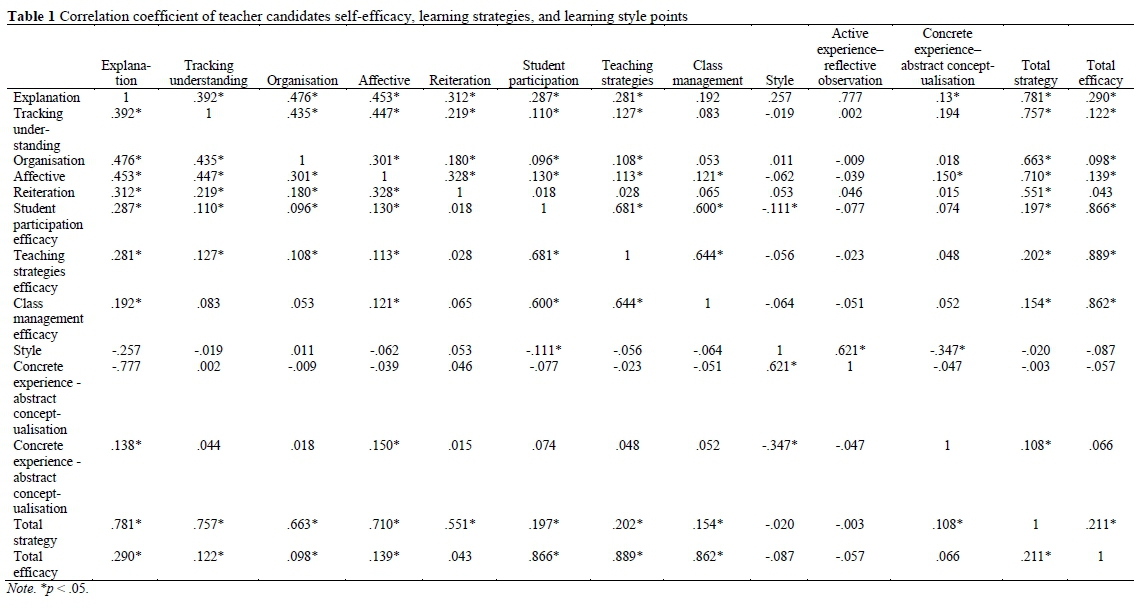
The purpose of this study is to analyse the relationship between the perceptions of self-efficacy, as well as learning styles and strategies of teacher candidates at Anadolu University, in terms of various variables. We used correlational analysis to define the relationship between efficacy, learning styles, and strategies. The research population of the study comprised teacher candidates who were selected by "convenience sampling" among teacher candidates from various teacher education programs and levels at Anadolu University Faculty of Education. Three different assessment tools were used for data collection: the "Teacher Self-Efficacy Scale" was used to assess the self-efficacy perceptions of teacher candidates; the "Kolb Learning Styles Inventory III" was used to determine the learning styles of teacher candidates; and the "Learning Strategies Scale" was used to define the learning strategies of the teacher candidates. The study revealed a low level of relationship between the self-efficacy perceptions of teacher candidates, their learning styles, and the learning strategies they employ.
learning strategies; learning styles; self-efficacy