Lexical inferencing: perceptions and actual behaviours of Turkish English as a Foreign Language Learners' handling of unknown vocabulary
Abstract
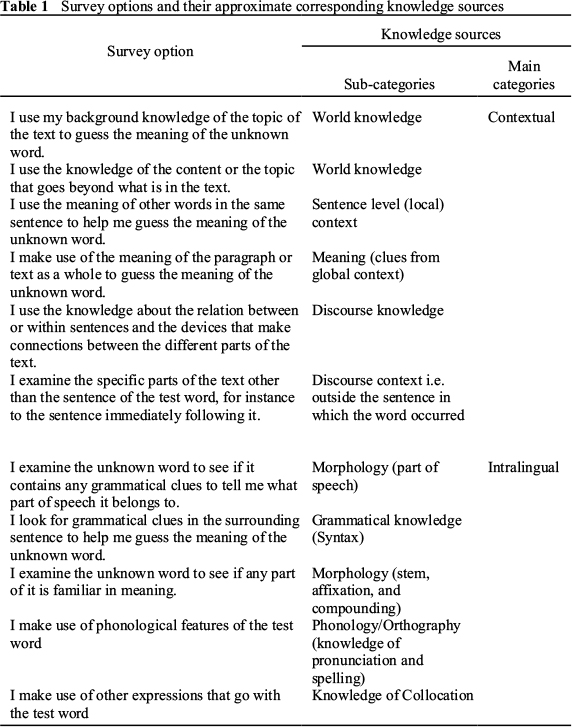
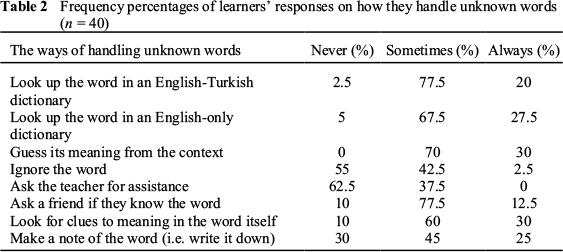
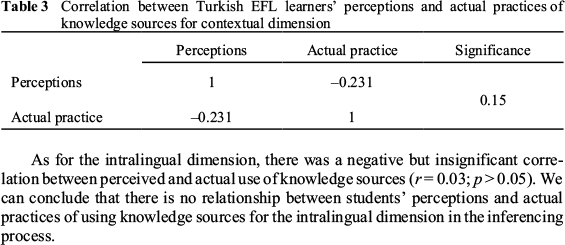
The purpose of this study was to examine Turkish English as a Foreign Language Learners' (EFL) handling of unknown words while reading English texts. The study also examines the relationship between these learners' perceptions and actual practices in the employment of knowledge sources while trying to guess the meaning of unknown words. The participants involved in this study were 40 pre-service teacher education students between the ages of 18-22 years old. Data were collected through mixed (qualitative and quantitative) methods, namely, by a twofold vocabulary strategy survey and a lexical inference test. Pearson correlation coefficients were conducted to determine what relationships exist among the perceived behaviours and actual practices of learners for unknown words. The results of the correlation analyses identified an insignificant correlation between the actual practices and perceptions of students for the contextual and intralingual knowledge sources.
contextual knowledge sources; intralingual knowledge sources; lexical inference