Intersecting indigenous parenting practices and student conduct in Zimbabwean primary schools
Abstract
Corporal punishment was banned in Zimbabwean schools in 2013 and replaced by alternative disciplinary measures. Literature shows that detaining students after school, manual labour, suspension, and exclusion are inappropriate disciplinary measures and can lead to violence, hostility, and discord among teachers, students, and parents. In this article we report on a study in which indigenous parenting approaches that may be applied to address disciplinary difficulties in primary schools in Zimbabwe, which may have worldwide implications, were investigated. A qualitative and instrumental case study design was employed with in-depth interviews and focus group discussions with participants. Twelve general teachers, 2 guidance and counselling teachers, 2 educational psychologists, 4 parents, and 12 Grade 7 students were purposely sampled. Indigenous knowledge systems and Africanisation theory provided theoretical insights. The findings demonstrate that indigenous parenting approaches in which traditional folktales and proverbs, rapport-building strategies, praise and rewards are applied could help to maintain positive student conduct in primary schools in Zimbabwe. These findings could be relevant to schools worldwide. We recommend incorporating indigenous parenting methods into teacher-training curricula in teacher colleges and universities.
indigenous knowledge systems; indigenous parenting practices; student conduct; student discipline
Introduction
An effective school climate, characterised by a calm learning environment, is crucial for student learning (Nene, 2013). However, the issue of student indiscipline has become increasingly pressing in Zimbabwe since the abolition of corporal punishment (Mamaleka, 2019; Muzingili & Muntanga, 2020). According to Gwenzi, Anaduaka, Katunze, Sam and Kamuna (2021), Zimbabwean parents still assert that physical punishment is the main method of disciplining children and refute the redundance of physical punishment. Concerns raised by Zimbabwean parents often centre on perceived loss of disciplinary tools for parents and educators, the potential for increased unruly student behaviour and the potential for violence to become normalised in educational settings. The argument that parents generally purport is that although corporal punishment is viewed as harsh, it is a necessary method for instilling discipline and that the banning of corporal punishment could lead to a breakdown in order. Teachers are struggling to find effective alternative disciplinary measures and have turned to Western literature for guidance. This overreliance on Western disciplinary practices may overlook traditional African beliefs and parenting practices, leading to a strained relationship between teachers and parents (Mamaleka, 2019; Muzingili & Chikoko, 2019).
African society has become estranged from its history, culture, and identity, leading to a cultural and intellectual crisis (Muzingili & Muntanga, 2020). In the context of school discipline, Mamaleka (2019) claims that Western disciplinary methods often contradict African traditional values, rendering them ineffective and inadequate. Following the implementation of the ban on corporal punishment in Zimbabwean schools, alternative disciplinary methods such as police intervention, detention, manual labour for children, suspension, and exclusion from school are used, resulting in violence, animosity, and division among students, teachers, and parents (Chiromo, 2021).
Given that each society's unique way of managing student conduct is based on its experiences and history, a one-size-fits-all approach may not always effectively tackle school-based indiscipline (Osborne & Longhorne, 2017). This indicates that each school should be given the authority to develop disciplinary measures most suited to its students' needs. Based on the previous, we conducted a study in which we explored stakeholder perceptions of the potential benefits of incorporating indigenous parenting traditions into positive student behaviour management programmes.
The Zimbabwean ban on physical punishment has raised concerns about the quality of teaching and learning, particularly its effects on student conduct (Magwa, 2018; Mushohwe, 2018; Muzingili & Chikoko, 2019). Western-style discipline measures have been criticised for their inapplicability to African youth. In this qualitative study, we asked: What indigenous parenting techniques may be used to promote positive discipline in primary schools in Zimbabwe?
Literature Review
Numerous studies have investigated alternative disciplinary strategies to corporal punishment, focusing on Western disciplinary techniques (Valdebenito, Eisner, Farrington, Ttofi & Sutherland, 2018). Nevertheless, no study has investigated how indigenous parenting approaches may be used to manage children's behaviour positively in the African environment.
Scholars are increasingly concerned about student disobedience in the classroom (Muzingili & Muntanga, 2020). Countries such as Zimbabwe have prohibited physical punishment as a method of school discipline (Mamaleka, 2019). However, this has made it challenging to develop alternate ways for efficiently managing student behaviour (Nene, 2013). In the hunt for alternative discipline tactics in schools, African cultural values and parenting practices have been overlooked (Muzingili & Chikoko, 2019). Traditional African parenting techniques and disciplinary methods have been demonstrated to combat indiscipline among African students efficiently (Muzingili & Muntanga, 2020). Indigenous parenting methods, profoundly entrenched in African cultural values and traditions, may provide a valuable foundation for managing student behaviour and encouraging responsible school conduct that fosters learning and development (Muzingili & Chikoko, 2019). This implies that, when behaviour management reflects the values, beliefs and traditions of the community, it is often more meaningful and accepted by both children and parents.
Parenting skills refer to parents' abilities and strategies to promote their children' s physical, emotional, social, and cognitive development (Bornstein, 2015). Indigenous parenting skills are traditional knowledge and practices passed down from generation to generation within a particular culture. In Zimbabwe, like many other African countries, indigenous parenting skills have been eroded by colonialism, Westernisation, and globalisation. This erosion has resulted in the breakdown of the family unit, increased conduct problems in schools, and a decline in children's academic performance.
Indigenous parenting skills
According to Ali, Dada, Isiaka and Salmon (2014), indigenous parenting skills are based on the belief that children are a blessing and a gift from God. Therefore, parents have a sacred duty to raise their children in a way that honours their culture, traditions, and values (Ali et al., 2014). In Zimbabwe, indigenous parenting skills are grounded in ubuntu, which means humanity, community, and interconnectedness. Ubuntu parenting emphasises the importance of respect, empathy, and cooperation in child-rearing. Incorporating indigenous parenting skills into classroom management to support positive discipline may create a more respectful, community-oriented and emotionally supported learning environment. Drawing from key ubuntu principles, these approaches emphasise collective responsibility, storytelling, observation, respect for elders and emotional regulation, all of which can be used as powerful educational tools. It also highlights the critical role of extended family members, community leaders, and spiritual mentors in shaping children' s behaviour (Mhaka-Mutepfa, Mpofu & Cumming, 2015).
For example, teachers acting in loco parentis may integrate indigenous parenting skills by recognising and respecting diverse family structures, cultural practices and communication styles. This means that the teacher may incorporate the methods expected and tolerated in the community to manage the child's behaviour. In the classroom, the teacher may use traditional stories to illustrate the consequences of certain behaviour. Furthermore, the teacher may model calm responses to conflict or misbehaviour. The presence of invited elders or parents in the classroom to share cultural practices or stories may reinforce respectful behaviour.
Conduct problems in schools
Conduct problems are disruptive, aggressive, and oppositional behaviour that violate social norms and rules (Reef, Diamantopoulou, Van Meurs, Verhulst & Van der Ende, 2011). In Zimbabwe, conduct problems in schools are widespread and include bullying, theft, vandalism, and physical fights. These problems are often attributed to the breakdown of the family unit, poverty, unemployment, and exposure to violence in the media and society at large (Mhaka-Mutepfa et al., 2015).
Using indigenous parenting skills to reduce conduct problems
According to research, employing indigenous parenting practices in schools helps lessen behavioural problems (Mhaka-Mutepfa et al., 2015). In a study conducted in Nigeria, for example, it was discovered that children of parents who used traditional parenting practices like corporal punishment, verbal reprimands, and privilege withdrawal showed higher levels of conduct problems than children of parents who used indigenous parenting practices like praise, encouragement, and positive reinforcement (Akinsola, 2011). Similarly, in a South African study it was found that indigenous parenting methods such as storytelling, role modelling, and involvement in cultural events were linked to reduced behavioural issues in school-aged children (Mhaka-Mutepfa et al., 2015).
Interventions have been created in Zimbabwe to promote the adoption of indigenous parenting methods to prevent behavioural issues at school. For example, the Family Abilities Training Programme (FATP) is a community-based intervention to improve parents' knowledge and skills in child-rearing. The curriculum emphasises indigenous parenting principles such as respect, empathy, and collaboration. According to research done in Zimbabwe, children of parents who participated in the Family Skills Training Programme (FSTP) displayed lower levels of behavioural issues than those of parents who did not (Muzingili & Tembo, 2025).
Theoretical Framework
Indigenous knowledge systems (IKS) and Africanisation theories provide a helpful framework for understanding and addressing school parenting and child behavioural problems. IKS refers to a particular cultural community' s traditional knowledge and practices, shaped by the community' s environment and cultural beliefs (Njokanma, 2018). Key tenets of African knowledge systems include holism, relationality and reciprocity, orality and intergenerational transmission, storytelling, context-specific and localised places and ecosystems, collective ownership, ethical responsibility and following cultural protocols and spiritual and ethical foundations (Khupe, 2020; Orlovic Lovren, 2019; Shrestha, L'Espoir Decosta & Whitford, 2025; Zidny, Sjöström & Eilks, 2020).
Africanisation theories refer to adopting and adapting African-centred approaches to various aspects of life, including education (Chaumba, 2016). IKS and Africanisation theories, considering the cultural disconnection hypothesis and cultural legacies, contend that African society has undergone a cultural and intellectual detachment from its history, culture, and identity (Muzingili & Muntunga, 2020). This cultural gap has resulted in disregarding traditional African parenting techniques and disciplining methods favouring Western approaches (Mamaleka, 2019). According to the cultural disconnection hypothesis, Western discipline methods do not apply to the African child and can lead to resentment, hostility, and discord among teachers, students, and parents (Muzingili & Muntanga, 2020).
In the context of parenting and child behavioural problems in schools, IKS can inform a more culturally sensitive approach to discipline grounded in the community's traditional practices and beliefs (Njokanma, 2018). For example, storytelling is a longstanding tradition in African societies and effectively imparts moral lessons and shapes behaviour (Chaumba, 2016). By incorporating storytelling and other IKS-based practices into parenting and discipline strategies, schools and educators may create a more inclusive and supportive environment that recognises and values the cultural heritage of the students and their families (Njokanma, 2018).
Africanisation theories may help address the problem of a cultural mismatch between Western-style discipline methods and African cultural practices and beliefs (Chaumba, 2016). By adopting an African-centred approach to discipline and education, schools may move away from a one-size-fits-all mentality and embrace practices that align with the cultural context and values of the community (Njokanma, 2018). This may include a greater emphasis on community engagement, guidance and counselling, and positive reinforcement for good behaviour instead of punishment and exclusion (Chaumba, 2016).
Integrating IKS and Africanisation theories may provide a more holistic and culturally sensitive approach to addressing school, parenting and child behaviour problems. By recognising and valuing the unique knowledge and practices of the community, schools and educators may create a more inclusive and supportive environment that promotes positive behaviour and academic success for all students (Chaumba, 2016; Njokanma, 2018).
Africanisation theory is used to understand many indigenous parenting practices on child discipline. Africanisation theory was deemed appropriate for use in this study because it promotes the prerogative of Africans to practise what they know, believe and understand without oppression or being undermined. The Africanisation theory focuses on placing Africans at the centre of their culture, without oppression, as it seeks to liberate Africans from the oppression of Western practices. It is believed that Western disciplinary strategies produce learners with behaviour which ranges from serious ones, such as drug abuse, assault, theft, rape, and murder, to minor ones, such as truancy, all of which negatively affect teaching and learning. The reality of the African context should inform disciplinary strategies used in primary schools. This implies that the viewpoints of African people should be considered on what should be done to maintain discipline in African schools. Similarly, Ali et al. (2014) assert that traditional methods still exist in any discipline system. In this sense, indigenous knowledge can, thus, provide a robust basis from which alternative strategies to corporal punishment can be developed.
Muzingili and Chikoko (2019) propose the cultural legacy theory, which posits that each community has dynamic methods of managing children' s behaviour for positive outcomes. The community' s experiences and history shape these methods. The cultural legacy theory suggests that embracing indigenous parenting techniques rooted in African cultural values and traditions can provide a beneficial framework for managing student behaviour that emphasises the importance of community, respect, and discipline. They may also include storytelling, proverbs, and other cultural practices to help children learn positive values and behaviour. A growing body of research supports the cultural legacy theory. For example, Chiromo (2021) found that indigenous parenting techniques were associated with lower levels of school indiscipline among Zimbabwean children. The study also found that these techniques were associated with higher academic achievement and prosocial behaviour. The cultural legacy theory provides a promising framework for understanding and addressing school indiscipline in African contexts. By embracing indigenous parenting techniques, schools can create a more positive and supportive environment for learning.
Western disciplinary frameworks are predominantly rooted in positivist and behaviourist paradigms, and emphasising rule enforcement, individual accountability, and hierarchical authority structures. Discipline is often framed as a corrective mechanism aimed at maintaining order and optimising academic performance (Zidny et al., 2020). This approach tends to be reactive, with punitive measures such as detention, suspension, or exclusion being common responses to misbehaviour. The teacher is positioned as the central authority figure, and discipline is administered through institutionalised rules and consequences (Shrestha et al., 2025).
On the other hand, IKS offers a holistic and relational approach to discipline, grounded in communal values, spiritual ethics, and intergenerational knowledge transmission. Discipline within indigenous contexts is not isolated from the broader educational experience but is embedded in the moral and social fabric of the community. It is proactive and restorative, emphasising the restoration of harmony and the reintegration of individuals into the community through dialogue, storytelling, and ceremonial practices (Khupe, 2020). Authority is distributed and relational and is often transmitted by elders and community leaders who draw on their lived experience (Orlovic Lovren, 2019).
Although Western approaches to behaviour management prioritise behavioural correction and compliance, IKS approaches foreground moral character and social responsibility. Misbehaviour is viewed not as a violation of rules but as a disruption of relationships, requiring communal reflection and healing. This aligns with Ubuntu and indigenous epistemologies that view knowledge as lived, contextual, and spiritually grounded (Zidny et al., 2020). Moreover, when Western approaches reflect individualistic values, personal achievement and autonomy, it has the potential to lead to disruptive educational settings where students may not conform to dominant norms (Shrestha et al., 2025).
Methodology
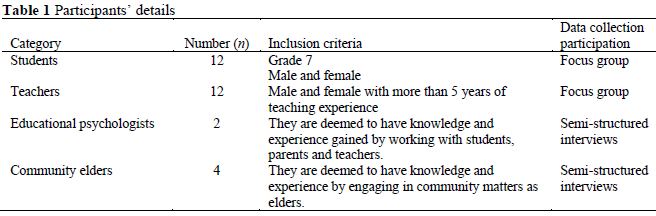
With this qualitative study we sought to explore and identify indigenous parental techniques that may be harnessed to manage primary school discipline issues in Zimbabwe. We employed a case study design, using semi-structured interviews and focus group discussions to collect data. Case studies allow numerous data collecting and analysis methodologies (Baxter & Jack, 2008). We intended to explore indigenous parenting techniques and their impact on African children's behaviour by embracing diverse stakeholders' perspectives. To attain this goal, parents, general teachers, guidance and counselling teachers, two educational psychologists, students, and four community elders were interviewed. Similarly two focus group discussions were facilitated for both learners and teachers. The combination of interviews and focus group data provided a rich source of information about indigenous disciplinary strategies. A thematic analysis was conducted, which entailed reading and re-reading the interview transcripts, grouping and coding recurring themes and supporting the analysis with relevant literature. We were involved in checking the coded group, improving the trustworthiness and rigor of the data analysis. Participants signed informed consent forms to show their willingness to participate in the study. No coercion was used in the recruitment of participants for the study and no payment was offered in return for participation. Participant confidentiality and protection were assured by not asking participants to disclose their personal details.
Twelve students, 12 general teachers, two educational psychologists, and four community elders were purposely selected from two primary schools in the Masvingo district, Zimbabwe. Furthermore, 12 Grade 7 learners were purposely selected to participate in the study. Grade 7 learners (typically 12-13 years old) are at the upper end of primary school and are developmentally more mature than younger learners. This maturity enables them to examine indigenous disciplinary strategies, reflect on their experiences with greater depth, understand and articulate their thoughts on abstract concepts like parenting, discipline, values and cultural practices. In other words, Grade 7 learners can participate meaningfully in focus group discussions. The potential for rich and important data determined participant selection in the study. Table 1 lists the participants' details.
Data Collection and Analysis
Data were gathered from individual interviews with community elders and educational psychologists. Focus group discussions in separate groups were conducted with students and teachers. Data were analysed using the six phases of thematic analysis (Braun & Clarke, 2006). Interview transcripts were read and re-read to align with the first step or familiarisation with the data. In the second step, the data were coded. In this case, coding schemes were used to simplify the correlations between the data. In the third instance, patterns and repetitions in the data sets were recorded. In the fourth step, the developing themes were reviewed to verify their relevance to the coded extracts. Themes were then refined to generate clear names in the fifth step and finally in the sixth step, selected extracts were analysed in relation to the research question to produce a scholarly report. Both authors independently coded the data and jointly developed the themes.
Ethics approval was obtained from the appropriate authority after meeting privacy, confidentiality, informed consent, assent and voluntary participation requirements. Before entering research sites, permission was sought from the Ministry of Primary and Secondary Education in Zimbabwe. The purpose of the study was explained to the participants and they were also informed that they were allowed to withdraw from the study at any time without consequences (Friedriksen & Rhodes, 2004). Member checking processes were conducted after the analysis process, which contributed to the rigour and trustworthiness of the findings. The quality assurance criteria of dependability, conformability, transferability and credibility were employed.
Results
The results in this section are divided into three main themes, based on the responses in the interviews and focus group discussions:
• Incorporating oral storytelling traditions into student behaviour management.
• Using consequences and incentives in behaviour management practices.
• Applying traditional indigenous guidance and counselling methods to encourage positive behaviour.
Incorporating Oral Storytelling Traditions and Proverbs into Student Behaviour Management
The study participants emphasised the importance of employing traditional storytelling and proverbs to regulate student behaviour in schools. Traditionally, storytelling by parents and elders in the community helps children to imitate the desired behaviour displayed by characters in the story and to understand the consequences of negative actions. Furthermore, traditional metaphorical storytelling requires the child to listen attentively, focus intently and develop strong imaginations (Williamson & Anzalone, 2001). Children learn new coping skills to deal with negative emotions and to conduct their actions in that way. For example, a community elder explained: "During storytelling, grandparents would tell young children stories which depict attributes such as giving, caring for one another, greed [and] selfishness. This was a learning mechanism that helped elders very much in the management of disciplined"
When responding to the same question during interviews, one of the community elders expressed her sentiments as follows:
During our young days, we did not need scolding to know what is right from wrong. Our aunties would just say, 'The eagle does not chase flies' and we understood, that means do not waste your energy on petty fights. A single proverb could stop a quarrel, because it made us think. It stayed with us longer than any punishment could.
A teacher elaborated as follows: "Likewise, as teachers, we should tell stories that help learners to understand the consequences of negative actions!" The educational psychologist confirmed that "storytelling by elders has relevance to the management of discipline in primary schools in the absence of corporal punishment. Storytelling may help children to imitate the desired behaviour displayed by characters in the story."
Another teacher added that
when I use proverbs during lessons, students pause, they listen. Yesterday one student was being dishonest about his work. I did not lecture. I just said, 'A crooked path never leads home.' Later that day, he came and told me the truth. The words did the teaching.
Students also expounded on storytelling's value in shaping positive behaviour: "Teachers can use traditional stories to mould our behaviour. Through listening to stories, we can imitate good behaviour and understand the consequences of negative behaviour. Punitive and harsh disciplinary measures may not always achieve the intended objectives."
Using Consequences and Incentives in Behaviour Management Practices
Effective methods of promoting positive behaviour in students include learning from the consequences of their actions and incentives for good behaviour. Participants in the study believed that exploring the consequences of negative behaviour, rather than physical punishment, could help students understand the impact of their actions and develop self-regulatory skills. Additionally, participants proposed that teachers followed indigenous behavioural management approaches of provided incentives or rewards for good behaviour, which could be effective tools for promoting positive outcomes. When used with clear expectations and consistent feedback, rewards can help improve academic outcomes and promote positive behaviour.
In traditional African parenting practices, parents use incentives to motivate their children to accomplish tasks and strengthen desired behaviour. Participants believed that teachers should follow these indigenous methods to positively reinforce the desired behaviour and provide rewards through praise or other incentives. By reinforcing positive behaviour through rewards and teaching children about the consequences of their actions, educators can promote a culture of self-discipline and positive behaviour in schools.
Using natural and logical consequences instead of physical punishment is a more effective method of promoting positive student behaviour (Larzelere & Kuhn, 2005). During the interview process, a community elder explained: "Indigenous parenting practices were believed to improve child discipline. The best way to maintain discipline in schools is to teach children the consequences of their actions. In the past, we taught children to make intelligent and informed decisions."
The Educational Psychologist's point of view was that
exploring [the] consequences of negative behaviour is a major start towards establishing discipline in schools and can help learners become involved in decision-making. This method used by elders in the past may be employed in this modern world to reign in untoward behaviour. Students affirmed this viewpoint and explained that "if teachers explore the consequences of negative behaviour, we remain focused and able to know what is good and what is wrong."
Incentives or rewards for good behaviour can also be an effective tool for promoting positive outcomes in children. In support of this view, one of the community elders narrated her experiences as follows:
Traditionally, parents used totems to motivate their children to successfully accomplish the tasks set out for them and strengthen the desired behaviour in the indigenous education. This implies that teachers should make it a point to reward learners by praising them, shaking hands, saying ' good' and ' correct' , and so forth in order to stamp in the desired behaviour.
An educational psychologist confirmed that teachers should follow parents' indigenous methods, which seem to have worked for them in the past. For example,
There is urgent need to reconsider indigenous disciplinary methods. Indigenous parents used rewards to control the unruly behaviour of children. Following this logic, teachers should positively reinforce the desired behaviour. This can be done by giving positive comments, for example, saying ' good. ' This would automatically stamp in the desired behaviour in the learner.
Teacher participants in the focus group discussion confirmed that traditionally, parents encouraged self-discipline through rewards. One teacher said that "as teachers, we may need to reinforce positive behaviour by ever rewarding the child whenever she/he does/shows good behaviour. These rewards may be in the form of praises, which in the end will help reinforce the good behaviour."
Students, too, expected to be rewarded for positive conduct and behaviour: " We also need some rewards when we have done good things and when we behave well. If we are rewarded for positive responses, we are likely to present positive behaviour, and also, our friends will copy the good things. "
Applying Traditional Indigenous Guidance and Counselling to Encourage Positive Behaviour
According to the results of the study, counselling may replace corporal punishment. Indigenous African parents may employ folktales and talks to teach their children morality, values, and decision-making. One community elder recounted: "During storytelling grandparents would tell young children stories which depicted attributes such as giving, caring for another, greed, selfishness and so on." The Educational psychologist confirmed this but also pointed out the challenge of a lack of necessary teacher skills:
Traditionally, parents teach their children beliefs, norms, values that help to shape the behaviour of children. In the same vein, teachers should teach learners the acceptable social behaviour in classroom during guidance and counselling sessions. However, it is important to note that most primary school teachers do not have guidance and counselling skills.
The teachers also shared the same sentiments on the use of traditional disciplinary strategies in place of corporal punishment in maintaining discipline in primary schools. One of the teachers expressed her views as follows: "As teachers we should embrace good African traditional parenting practices so that they can nurture well-behaved and responsible youth for the African continent in the absence of corporal punishment."
Students supported the view that conversations and guidance are appropriate alternatives to physical punishment:
Teachers should call us and talk to us when we make mistakes. Their expectations should be fair and clearly communicated. They should teach us the importance of keeping the school rules and the behaviour they expect from us without beating us.
Discussion of the Findings
Stories are powerful tools for transmitting cultural values, promoting positive behaviour in children and creating vivid, memorable examples that children can easily understand and internalise. Rahim and Rahiem (2012) assert that through reading and telling of stories, children become familiar not only with a variety of examples of good and bad deeds, regulations and punishments but also learn the reasons for acting, problem-solving, weighing action before taking it, and empathy. In other words, storytelling may help elicit and encourage favourable behaviour. Mamaleka (2019) adds that children are taught stories to teach them appropriate relationships with the environment and people and promote moral development. The indigenous discipline style of storytelling was critical in reducing misbehaviour among children in the past (Pewewardy, 2002). Similarly, Simango and Mafa (2022) assert that folktales (ngano) would be narrated by the elderly people to the younger ones to encourage qualities such as giving and caring for one another. Aligned to IKS, behaviour management was not punitive but transformative; often aiming at restoring harmony and communal cohesion. Traditionally, behaviour was shaped by community storytelling sessions led by elders and proverbs were also used to teach ethical behaviour, communal responsibility and conflict resolution. These approaches move away from punitive discipline and toward a relational, restorative model. The use of indigenous parenting practices in schools decolonises behaviour management, moving it away from Western, authoritarian models towards relational and dialogic African models. This implies that traditionally, storytelling by elders in the community would help children to imitate the desired behaviour displayed by characters in the story and to understand the consequences of negative actions. Following the above discussion, classroom teachers should use non-violent methods such as storytelling and proverbs to discipline learners. Such methods play a critical role in disciplining learners aside from corporal punishment.
Exploration of the consequences of negative actions is a strategy that both parents and teachers can use to teach children what they want them to do and how they want them to behave. Two types of consequences are recognised: natural consequences and imposed consequences. Natural consequence occurs without intervention from the teacher and parents. For example, a student copies another student's homework instead of doing it himself; the student does not understand the material and performs poorly on the test. This implies that no teacher or parent intervention is needed; the consequence (poor test performance) arises naturally from misconduct (cheating). On the other hand, imposed consequences result from the intervention of the teacher or parent. Teachers and parents should use imposed consequences to teach certain lessons for which natural consequences could be too dangerous or too late. According to Simango and Mafa (2022), traditionally, parents use proverbs to explore the consequences of negative behaviour. Proverbs are generalised truths accumulated through the experience of proceeding generations with an educational value derived from the past for young ones to emulate or avoid (Simango & Mafa, 2022). They add that these teachings through proverbs also cultivate a sense of responsibility in young persons. For example, Rina manyanga hariputirwi, which translates to terrible things done in secret cannot be hidden forever, would encourage children not to do bad things and act deceptively, as these actions always come to light (Simango & Mafa, 2022). The above implies that indigenous disciplinary strategies, such as using proverbs to explore the consequences of negative actions, can be alternatives in African schools that may help cultivate positive discipline in children. According to IKS tenets, this approach moves away from punitive discipline towards a relational and restorative approach to discipline. Instead of imposing punitive punishment, teachers could guide students to understand the natural outcomes of their actions and emphasise community acknowledgement of positive growth.
Kudenga (2017) says that positive reinforcement will motivate children or individuals to increase the likelihood of engaging in that behaviour again. This implies that positive reinforcement presents a motivating stimulus to the person after the desired behaviour is exhibited, making the behaviour more likely to happen again. According to Kudenga (2017), the teacher can also list learners' names on notice boards, write positive comments in a child's exercise book or present pens to those who do well. This shows that a reward is added following desired behaviour. Educational experts who oppose corporal punishment argue that the use of positive reinforcement techniques reduces the frequency and severity of student misbehaviour. Similarly, an example is drawing from IKS. In indigenous education, parents use totems to motivate their children to successfully accomplish the tasks set out for them. This implies that teachers should intentionally reward learners by praising them, shaking hands, saying "good" and "correct", and so forth. This would automatically instil the desired behaviour in the learner without corporal punishment.
Finally, guidance and counselling techniques such as cognitive-behavioural therapy have also promoted positive behaviour in children (Weisz & Kazdin, 2010). These techniques can help children understand the reasons behind their actions and develop the skills needed to regulate their behaviour. These techniques involve working with children to understand the root causes of negative behaviour and providing them with the tools and support needed to make positive changes (Osher, Fisher, Amos, Katz, Dwyer, Duffey & Colombi, 2015). By combining these techniques with positive reinforcement, schools in the Masvingo district may provide children with the guidance and support they need to succeed academically and socially.
According to Kudenga (2017), counselling can be defined as the provision of professional assistance and guidance in resolving personal or psychological problems. Students who display inappropriate or disruptive behaviour may have personal or psychological problems as the driving force. If these are resolved, the students may change their behaviour. School counsellors work with teachers and administrators to help create school environments that stimulate growth and learning. Within schools, the discipline process has great potential for affecting both positively and negatively, not only student behaviour but also such critical areas as attitudes, self-concept and self-esteem. Some students may not conform to their teachers' requirements for reasons outside their control. They may not have enough to eat or travel a long distance to school, their parents may expect them to work when they are not at school, they may need to take care of their younger siblings, or their parents may quarrel often. These external factors affect their abilities to concentrate and the amount of time and energy they can devote to school (Repeal 43 Committee, 2015). According to psychologists and educators who oppose corporal punishment, under these circumstances, beating a child is unlikely to be a productive punishment. A teacher is more likely to elicit appropriate behaviour if the teacher understands the child' s situation and offers guidance and counselling to the student and the student's family. Aligned with Africanisation theory, indigenous parents use verbal reprimands reflective of the society's culture to yield desired behaviour. Elders, family members and spiritual leaders traditionally play the role of counsellors and moral guides. Counselling is done orally and communally, using proverbs and storytelling to guide behaviour. Indigenous African societies have long had systems of guidance and counselling, although not formalised in Western psychological terms. These systems are embedded in cultural, communal and spiritual life, making them naturally suited to behavioural guidance.
Conclusion
With this study we shed light on the unique challenges in primary schools in the Masvingo district of Zimbabwe in promoting positive discipline practices among students. The findings highlight stakeholders' views of the potential influence that indigenous parenting practices and cultural beliefs incorporated into the classroom may have on positive student discipline. The findings of this study confirm the need for schools to work in partnership with parents and communities to foster positive behaviour management in educational settings, thereby enhancing learning outcomes.
Despite their differences in approaching student positive behaviour, there is growing recognition of the value of integrating IKS into educational settings. Blended approaches incorporating both indigenous and Western perspectives may enhance student engagement, cultural identity, and social cohesion. However, such integration requires curricular adjustments, a transformation of school culture, teacher training, and a re-evaluation of institutional power dynamics to develop culturally responsive learning environments. We suggest that indigenous positive reinforcement techniques can be effectively integrated into local contexts to promote better learning outcomes for students. Overall, the study reinforces the need for future research to focus on indigenous parenting practices and consider cultural contexts by engaging in culturally sensitive dialogue to promote positive discipline practices in schools. A limitation of this study was that it might be influenced by participants' and researchers' cultural biases, leading to an incomplete, inaccurate or different understanding of indigenous parenting practices.
Authors' Contributions
Both authors contributed equally to the research analysis, interpretations and writing of this manuscript.
Notesi. Published under a Creative Commons Attribution Licence.
Acknowledgements
We thank Zimbabwe's Ministry of Primary and Secondary Education for permitting us to undertake our fieldwork in primary schools; we also thank all participants for sharing their experiences with us.
References
-
Akinsola EF 2011. Relationship between parenting style, family type, personality dispositions and academic achievement of young people in Nigeria. Ife PsychologIA, 19(2):246-267. https://doi.org/10.4314/ifep.v1912.69539
» https://doi.org/10.4314/ifep.v1912.69539 -
Ali AA, Dada IT, Isiaka GA & Salmon SA 2014. Types, causes and management of indiscipline acts among secondary school students in Shomolu Local Government area of Lagos State. Journal of Studies in Social Sciences, 8(2):254-287. Available at https://www.infinitypress.info/index.php/jsss/article/view/790. Accessed 23 June 2023.
» https://www.infinitypress.info/index.php/jsss/article/view/790 -
Baxter P & Jack S 2008. Qualitative case study methodology: Study design and implementation for novice researchers. The Qualitative Report, 13(4):544-559. https://doi.org/10.46743/2160-3715/2008.1573
» https://doi.org/10.46743/2160-3715/2008.1573 - Bernstein MH 2015. Children's parents. In MH Bornstein, T Leventhal & RM Lerner (eds). Handbook of child psychology and developmental science: Ecological settings and processes (7th ed., Vol. 4). Hoboken, NJ: John Wiley & Sons.
-
Braun V & Clarke V 2006. Using thematic analysis in psychology. Qualitative Research in Psychology, 3(2):77-101. https://doi.org/10.1191/1478088706qp063oa
» https://doi.org/10.1191/1478088706qp063oa - Chaumba J 2016. Africanisation theories and the implications for education. African Journal of Education and Development, 9(1):1 -10.
-
Chiromo L 2021. Exploring disciplinary measures in two Zimbabwean secondary schools: An investigation into a restorative justice approach. PhD thesis. Durban, South Africa: University of KwaZulu-Natal. Available at https://researchspace.ukzn.ac.za/server/api/core/bitstreams/c23968f2-2363-448f-8256-223ea7b184b4/content. Accessed 20 July 2024.
» https://researchspace.ukzn.ac.za/server/api/core/bitstreams/c23968f2-2363-448f-8256-223ea7b184b4/content -
Friedriksen K & Rhodes J 2004. The role of teacher relationship in the lives of students [Special issue]. New Directions for Youth Development, 2004(103):45-54. https://doi.org/10.1002/yd.90
» https://doi.org/10.1002/yd.90 - Gwenzi GD, Anaduaka US, Katunze MN, Sam ST & Kamuna L 2021. The prevailing social attitudes towards child discipline in Zimbabwe. African Journal of Social Work, 11(5):213-221.
-
Khupe C 2020. Indigenous knowledge systems. In B Akpan & TJ Kennedy (eds). Science education in theory and practice: An introductory guide to learning theory. Cham, Switzerland: Springer. https://doi.org/10.1007/978-3-030-43620-9_30
» https://doi.org/10.1007/978-3-030-43620-9_30 -
Kudenga M 2017. Feelings of parents on the use of corporal punishment in schools in Zimbabwe. International Journal of Science and Research, 6(8):151-156. https://doi.org/10.21275/14071702
» https://doi.org/10.21275/14071702 -
Larzelere RE & Kuhn BR 2005. Comparing child outcomes of physical punishment and alternative disciplinary tactics: A meta-analysis. Clinical Child and Family Psychology Review, 8(1):1-37. https://doi.org/10.1007/s10567-005-2340-z
» https://doi.org/10.1007/s10567-005-2340-z -
Magwa L 2018. Exploring the role of student-teacher relationships in the educational, social and emotional lives of Form 5 students in Masvingo District, Zimbabwe. PhD thesis. Pretoria, South Africa: University of South Africa. Available at http://hdl.handle.net/10500/25001. Accessed 20 July 2024.
» http://hdl.handle.net/10500/25001 -
Mamaleka MM 2019. Developing guidelines for indigenous parenting practices: A case study of Makhuduthamaga Municipality at Sekhukhune district, Limpopo Province, South Africa. PhD thesis. Cape Town, South Africa: University of the Western Cape. Available at https://uwcscholar.uwc.ac.za:8443/server/api/core/bitstreams/76f8a791-d1cc-457f-8ad3-b30135db508d/content. Accessed 20 July 2024.
» https://uwcscholar.uwc.ac.za:8443/server/api/core/bitstreams/76f8a791-d1cc-457f-8ad3-b30135db508d/content -
Mhaka-Mutepfa M, Mpofu E & Cumming R 2015. Impact of protective factors on resilience of grandparent carers fostering orphans and non-orphans in Zimbabwe. Journal of Aging and Health, 27(3):454-479. https://doi.org/10.1177/0898264314551333
» https://doi.org/10.1177/0898264314551333 - Mushohwe B 2018. A ray of hope for outlawing of corporal punishment in Zimbabwe: A review of recent developments. University of Zimbabwe Law Journal, 1(1):76-91.
-
Muzingili T & Chikoko W 2019. Indigenous children discipline styles in Zimbabwe: Nature and implications on children protection practices. African Journal of Social Work, 9(2):76-86. Available at https://www.ajol.info/index.php/ajsw/article/view/192208. Accessed 21 June 2023.
» https://www.ajol.info/index.php/ajsw/article/view/192208 -
Muzingili T & Muntanga W 2020. Opportunities and challenges associated with the use of indigenous parenting practices on child discipline. African Journal of Social Work, 10(2):61-69. Available at https://www.ajol.info/index.php/ajsw/article/view/198841. Accessed 6 June 2023.
» https://www.ajol.info/index.php/ajsw/article/view/198841 -
Muzingili T & Tembo T 2025. Life skills training and resilience of youth existing institutional care in Zimbabwe using capability theory: An interpretive phenomenology study. Residential Treatment for Children & Youth:1-31. https://doi.org/10.1080/0886571X.2025.2541398
» https://doi.org/10.1080/0886571X.2025.2541398 -
Nene FZ 2013. The challenges of managing learner discipline: The case of two schools in Pinetown District. MEd dissertation. Durban, South Africa: University of KwaZulu-Natal. Available at https://researchspace.ukzn.ac.za/server/api/core/bitstreams/36a435bc-562d-462c-a286-0832d6bf8d3e/content. Accessed 4 August 2024.
» https://researchspace.ukzn.ac.za/server/api/core/bitstreams/36a435bc-562d-462c-a286-0832d6bf8d3e/content - Njokanma F 2018. The role of indigenous knowledge systems in promoting sustainable development in Africa. African Journal of Sustainable Development, 7(2):52-62.
-
Orlovic Lovren V 2019. Traditional and indigenous knowledge: Bridging past and future sustainable development. In W Leal Filho, AM Azul, L Brandli, P Özuyar & T Wall (eds). Life on land: Encyclopedia of the UN sustainable development goals. Cham, Switzerland: Springer. https://doi.org/10.1007/978-3-319-71065-5_96-1
» https://doi.org/10.1007/978-3-319-71065-5_96-1 -
Osborne D & Langhorne E 2017. The danger of centralized school discipline. U.S.News, 7 July. Available at https://www.usnews.com/opinion/knowledge-bank/articles/2017-07-07/schools-should-choose-their-own-discipline-policies. Accessed 5 July 2023.
» https://www.usnews.com/opinion/knowledge-bank/articles/2017-07-07/schools-should-choose-their-own-discipline-policies -
Osher D, Fisher D, Amos L, Katz J, Dwyer K, Duffey T & Colombi GD 2015. Addressing the root causes of disparities in school discipline: An educator's action planning guide. Washington, DC: National Centre on Safe Supportive Learning Environments. Available at https://www.spptap.org/wp-content/uploads/2016/10/15-1547-NCSSLE-Root-Causes-Guide-FINAL02-mb.pdf. Accessed 21 December 2025.
» https://www.spptap.org/wp-content/uploads/2016/10/15-1547-NCSSLE-Root-Causes-Guide-FINAL02-mb.pdf - Pewewardy C 2002. Learning styles of American Indian/Alaska native students: A review of the literature and implications for practice. Journal of American Indian Education, 41(3):22-56.
-
Rahim H & Rahiem MDH 2012. The use of stories as moral education for young children. International Journal of Social Science and Humanity, 2(6):454-458. https://doi.org/10.7763/lJSSH.2012.V2.145
» https://doi.org/10.7763/lJSSH.2012.V2.145 -
Reef J, Diamantopoulou S, Van Meurs I, Verhulst FC & Van der Ende J 2011. Developmental trajectories of child to adolescent externalizing behavior and adult DSM-IV disorder: Results of a 24-year longitudinal study. Social Psychiatry and Psychiatric Epidemiology, 46:1233-1241. https://doi.org/10.1007/s00127-010-0297-9
» https://doi.org/10.1007/s00127-010-0297-9 -
Repeal 43 Committee 2015. Global initiative to end all corporal punishment of children. Available at https://www.repeal43.org/. Accessed 12 October 2015.
» https://www.repeal43.org/ -
Shrestha RK, L'Espoir Decosta JNP & Whitford M 2025. lndigenous knowledge systems and socio-cultural values for sustainable tourism development: lnsights from lndigenous Newars of Nepal. Journal of Sustainable Tourism, 33(1):143-167. https://doi.org/10.1080/09669582.2024.2316298
» https://doi.org/10.1080/09669582.2024.2316298 -
Simango T & Mafa l 2022. Child disciplinary practices versus child rights in Zimbabwe: Viewed through social work lenses. Qualitative Sociology Review, 18(1):114-131. https://doi.org/10.18778/1733-8077.18.1.06
» https://doi.org/10.18778/1733-8077.18.1.06 -
Valdebenito S, Eisner M, Farrington DP, Ttofi MM & Sutherland A 2018. School-based interventions for reducing disciplinary school exclusion: A systematic review. Campbell Systematic Reviews, 14(1):i-216. https://doi.org/10.4073/csr2018.1
» https://doi.org/10.4073/csr2018.1 - Weisz JR & Kazdin AE (eds.) 2010. Evidence-based psychotherapy for children and adolescents. New York, NY: Guilford Press.
- Williamson GG & Anzalone ME 2001. Sensory integration and self-regulation in infants and toddlers: Helping very young children interact with their environment. Washington, DC: Zero to Three.
-
Zidny R, Sjöström J & Eilks l 2020. A multi-perspective reflection on how indigenous knowledge and related ideas can improve science education for sustainability. Science & Education, 29:145-185. https://doi.org/10.1007/s11191-019-00100-x
» https://doi.org/10.1007/s11191-019-00100-x
Revised: 17 June 2025
Accepted: 26 September 2025
Published: 31 December 2025